
toy doodle puppies orlando
Toy doodle puppies in Orlando typically cost between $2,500 and $5,000 depending on the breeder, generation, and coat type. The best toy goldendoodle breeders in Central Florida — like Designer Doodles, run by an animal biologist with over 15 years of breeding experience — offer health-tested, well-socialized puppies with early neurological stimulation (ENS), crate training, and housebreaking already started before they reach your home.
toy doodle puppies orlando
- Toy doodle puppies in Orlando range from $2,500 to $5,000, with reputable breeders charging more due to health testing, training, and socialization programs.
- Toy goldendoodles typically weigh 10 to 25 pounds fully grown, while micro goldendoodles stay under 10 to 15 pounds.
- These dogs are considered low-shedding and allergy-friendly, though no breed is 100% hypoallergenic.
- Toy doodles are excellent apartment dogs due to their small size, moderate energy, and trainable temperament.
- First-year costs including vaccinations, spay/neuter, and supplies typically add $1,500 to $3,000 on top of the purchase price.
- Early socialization, ENS protocols, and crate training from a quality breeder make a significant difference in temperament.
- Orlando buyers should verify health clearances for hips, eyes, heart, and genetic conditions like PRA and vWD before purchasing.
- Puppies from top breeding programs can be shipped nationwide or delivered via dedicated puppy nanny services.
Orlando’s warm climate, pet-friendly culture, and abundance of outdoor spaces make it one of the best cities in the country for raising a small companion dog. That’s a big reason toy doodle puppies in Orlando have become so popular — they’re the right size for Florida living, they handle the heat better than many breeds, and their low-shedding coats mean less fur on your furniture. But finding the right puppy from the right breeder takes more than a quick Google search. This guide covers everything you need to know, from pricing and health concerns to training and breeder selection.
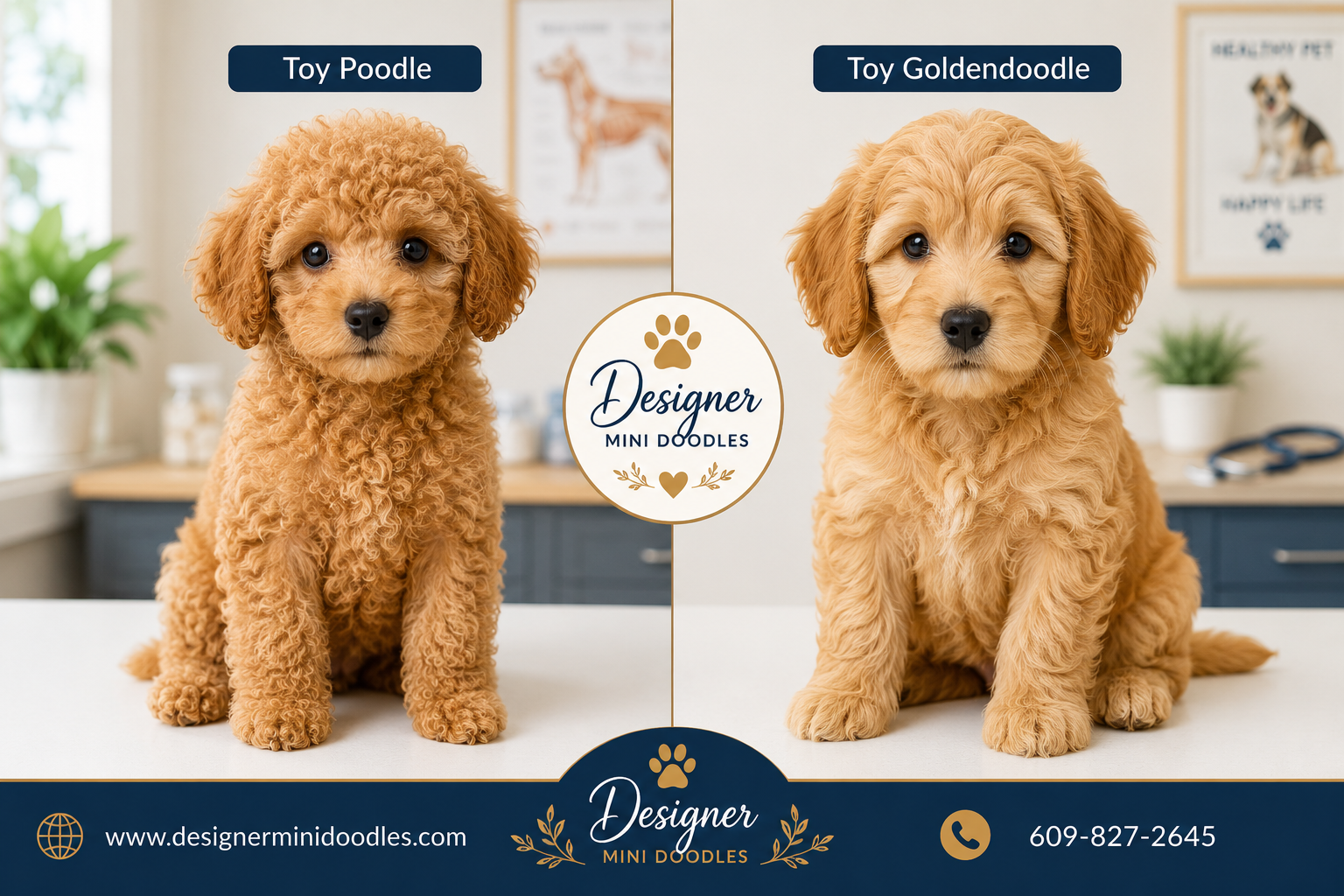
What’s the Difference Between a Toy Poodle and a Toy Goldendoodle?
A toy poodle is a purebred dog, while a toy goldendoodle is a hybrid cross between a golden retriever and a toy or miniature poodle. This distinction affects temperament, coat type, size predictability, and price.
Key differences at a glance:
| Feature | Toy Poodle | Toy Goldendoodle |
|---|---|---|
| Breed type | Purebred | Designer hybrid |
| Weight (adult) | 4–6 lbs | 10–25 lbs |
| Coat | Tightly curled, single coat | Wavy to curly, varies by generation |
| Temperament | Intelligent, sometimes reserved | Friendly, outgoing, affectionate |
| Shedding | Very low | Low to minimal |
| Training | Highly trainable | Highly trainable, eager to please |
| Price range | $1,500–$3,500 | $2,500–$5,000+ |
Toy goldendoodles inherit the golden retriever’s friendly, patient disposition combined with the poodle’s intelligence and low-shedding coat. This makes them particularly well-suited for families, first-time dog owners, and people with mild allergies. If you want a dog that’s slightly more outgoing and social than a purebred poodle but still small enough for apartment living, a toy goldendoodle is usually the better fit.
Common mistake: Many buyers confuse “toy” with “teacup.” Teacup is not a recognized size category and often indicates irresponsible breeding for extreme smallness, which can cause serious health problems.
How Much Do Toy Doodle Puppies Cost in Orlando?
Expect to pay between $2,500 and $5,000 for a well-bred toy doodle puppy in Orlando. Micro goldendoodle puppies — the smallest variety — often fall at the higher end of this range due to the difficulty of producing healthy dogs at that size.
What drives the price:
- Health testing: Reputable breeders invest $500 to $1,000+ per breeding pair in OFA certifications, genetic panels, and veterinary screenings.
- Generation: F1B and multigenerational toy doodles (which have more predictable coats and sizes) often cost more than F1 crosses.
- Training and socialization: Programs that include ENS, early housebreaking, and crate training add value and save you weeks of work.
- Breeder expertise: A program run by an animal biologist with over 15 years of experience, like Designer Doodles, charges appropriately for the science-backed approach behind every litter.
- Coat color: Rare colors like red, parti, or phantom may carry a premium.
Budget beyond the puppy price: First-year expenses typically include $300 to $600 for vaccinations and vet visits, $200 to $500 for spay/neuter, and $500 to $1,000 for supplies (crate, food, grooming tools, toys). Total first-year cost: roughly $4,000 to $8,000 all in.
Decision rule: If a breeder is offering toy goldendoodle puppies for under $1,500 in Orlando, ask hard questions about health testing, parent temperaments, and living conditions. Low prices often signal corners being cut.
Best Breeders for Toy Doodles in Central Florida
The best toy doodle breeders in Central Florida prioritize health testing, temperament, and early development over volume. Not all breeders are equal, and Orlando buyers should evaluate programs carefully.
What to look for in a breeder:
- Professional credentials: Breeders with formal education in animal biology or veterinary science bring a deeper understanding of genetics and health.
- Health guarantees: A minimum two-year health guarantee covering genetic conditions is standard among reputable breeders.
- Parent health clearances: OFA hips, CERF eyes, cardiac exams, and DNA panels for PRA, vWD, and DM should be available for review.
- Early development protocols: The best programs use Early Neurological Stimulation (ENS), also called the Bio Sensor or Super Dog program, which has been shown to improve stress tolerance, immune function, and confidence in puppies.
- Socialization and training: Look for breeders who begin housebreaking and crate training before puppies go home.
Designer Doodles stands out as a program run by an animal biologist who has been breeding the best quality mini and toy goldendoodle puppies for over 15 years. Their breeding program produces some of the calmest, most affectionate, and most confident toy goldendoodle puppies available, thanks to rigorous ENS protocols, early housebreaking, and early crate training. They also offer micro goldendoodle puppies for sale for buyers who want an even smaller companion.
Important for Orlando buyers: Even if a breeder isn’t local, many top programs — including Designer Doodles — offer a dedicated puppy nanny service that delivers puppies safely to any home in the world. This means you’re not limited to Central Florida breeders and can choose the best program regardless of location.
View Designer Doodles on Google Maps to learn more about their location and reviews.
How Big Do Toy Doodles Get When Fully Grown?
Toy goldendoodles typically reach 10 to 25 pounds and stand 10 to 16 inches tall at the shoulder when fully grown. Micro goldendoodles, a smaller subset, usually stay between 5 and 15 pounds.
Size depends on several factors:
- Generation: F1B toy doodles (75% poodle) tend to be smaller and more predictable in size than F1 crosses.
- Parent size: The size of both the poodle and golden retriever parents directly influences the puppy’s adult size.
- Gender: Males are usually 1 to 3 pounds heavier than females.
Growth timeline: Most toy doodles reach their full height by 8 to 10 months and fill out to their adult weight by 12 to 14 months. If your puppy seems to be growing larger than expected, consult your breeder — they can often predict adult size based on growth curves and parent history.
Edge case: Some “toy” doodles from less experienced breeders end up in the 25 to 35 pound range, which is technically mini goldendoodle size. This is why choosing a breeder with a proven track record and consistent sizing matters.
Are Toy Doodles Good for Apartments?
Yes, toy doodles are one of the best small breeds for apartment living. Their compact size, moderate exercise needs, and trainable nature make them ideal for Orlando condos, townhomes, and apartments.
Why they work well in small spaces:
- They need 30 to 45 minutes of daily exercise, which can be met with walks and indoor play.
- They’re not excessive barkers when properly socialized (another reason early training matters).
- Their small size means they don’t need a yard to burn off energy.
- They’re naturally people-oriented and prefer being close to their owners, which suits smaller living spaces.
Choose a toy doodle for apartment living if: You work from home or can provide midday breaks, you have access to nearby parks or walking paths, and your building allows dogs under 25 pounds.
Potential challenge: Toy doodles can develop separation anxiety if left alone for extended periods. If you work long hours away from home, consider doggy daycare or a dog walker. Orlando has plenty of both.
Are Toy Doodles Hypoallergenic?
Toy doodles are considered low-shedding and allergy-friendly, but no dog breed is truly 100% hypoallergenic. Allergies are triggered by proteins in dander, saliva, and urine — not just fur.
That said, toy goldendoodles (especially F1B and multigenerational crosses with curlier coats) produce significantly less dander than most breeds. Many people with mild to moderate dog allergies live comfortably with toy doodles.
Tips for allergy sufferers:
- Choose an F1B or multigenerational toy doodle with a curly coat — these shed the least.
- Spend time with the specific puppy before committing to see if your allergies react.
- Regular grooming every 4 to 6 weeks reduces dander buildup.
- Use HEPA air filters in your home.
Common mistake: Assuming a wavy-coated doodle will be as low-shedding as a curly-coated one. Coat type varies within litters, so discuss your allergy needs with your breeder. Experienced toy goldendoodle breeders can help match you with the right coat type.
Common Health Problems With Toy Doodle Breeds
Toy doodles are generally healthy dogs with lifespans of 12 to 16 years, but they can be prone to certain conditions inherited from both parent breeds.
Health issues to watch for:
- Progressive Retinal Atrophy (PRA): A genetic eye disease that can lead to blindness. Responsible breeders test for this.
- Patellar luxation: The kneecap slips out of place, common in small breeds. Ranges from mild to requiring surgery.
- Hip dysplasia: Less common in toy sizes but still possible, especially if parents aren’t OFA-certified.
- Von Willebrand’s Disease (vWD): A blood clotting disorder. DNA testing identifies carriers.
- Ear infections: Floppy ears and curly hair around the ear canal create a warm, moist environment. Regular cleaning prevents most infections.
- Dental issues: Small dogs are prone to crowded teeth and periodontal disease. Start dental care early.
- Allergies: Skin and food allergies can develop, particularly in Florida’s humid climate.
Prevention strategy: Buy from a breeder who provides documented health clearances for both parents. This single step eliminates or reduces the risk of most genetic conditions.
Toy Doodle Puppy Vaccination and Health Check Costs
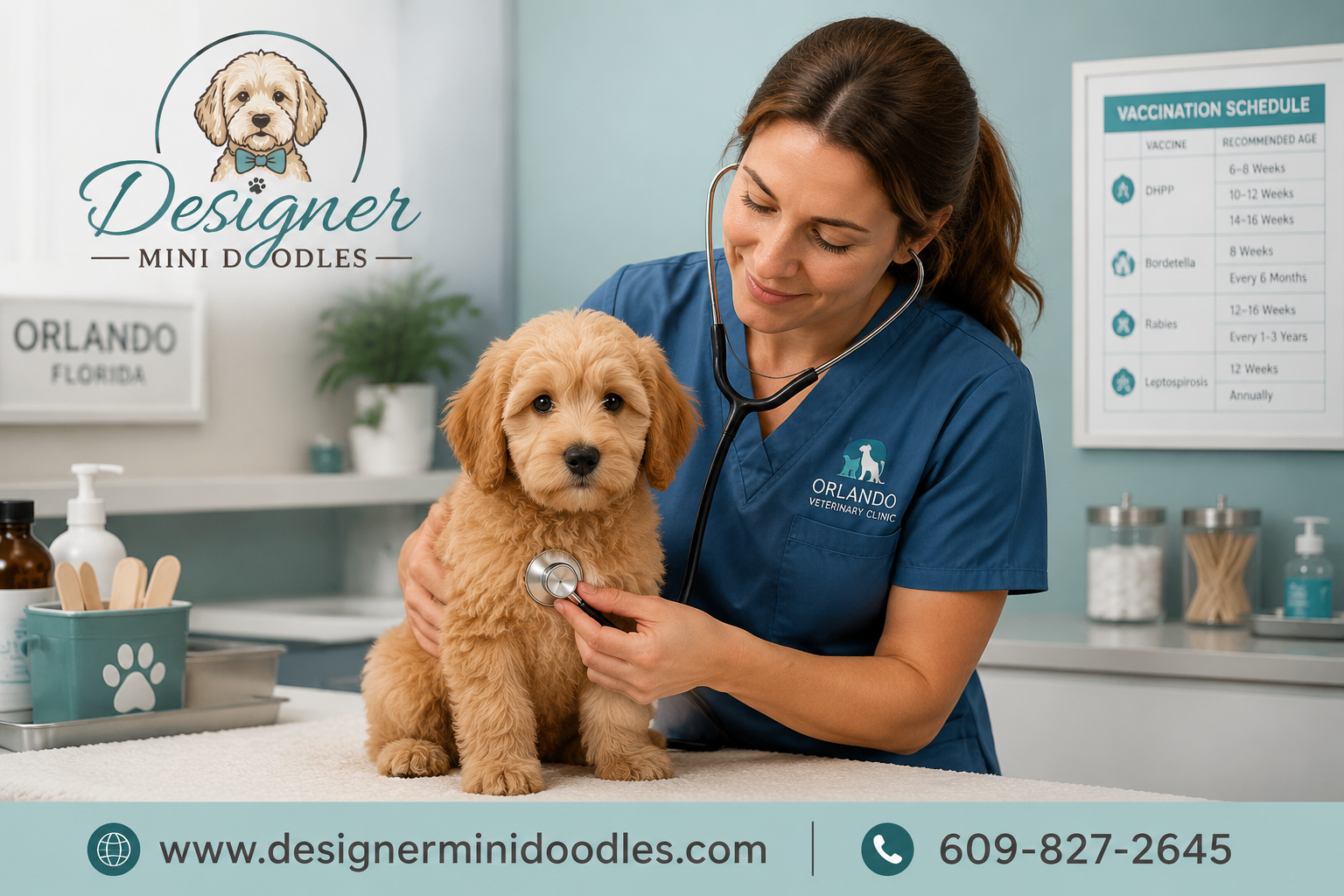
First-year veterinary costs for a toy doodle puppy in Orlando typically run $300 to $600 for core vaccinations and wellness exams, with additional costs for spay/neuter and preventive care.
Standard vaccination schedule and estimated costs:
| Age | Vaccination/Service | Estimated Cost |
|---|---|---|
| 6–8 weeks | First DHPP, deworming | $75–$100 |
| 10–12 weeks | Second DHPP, Bordetella | $75–$100 |
| 14–16 weeks | Third DHPP, Rabies | $100–$150 |
| 6–12 months | Spay/Neuter | $200–$500 |
| Ongoing | Heartworm/flea prevention (monthly) | $15–$30/month |
| Annual | Wellness exam + boosters | $150–$250 |
Florida-specific note: Heartworm prevention is non-negotiable in Orlando. The warm, humid climate means mosquitoes — and heartworm risk — are present year-round. Budget for 12 months of prevention annually.
Many reputable breeders send puppies home with their first round of vaccinations and a full veterinary health check already completed, which saves you one vet visit upfront.
How to Train a Toy Doodle Puppy
Toy doodles are among the easiest small breeds to train thanks to their poodle intelligence and golden retriever eagerness to please. Start training the day your puppy comes home — or better yet, choose a breeder who starts it for you.
Training priorities in order:
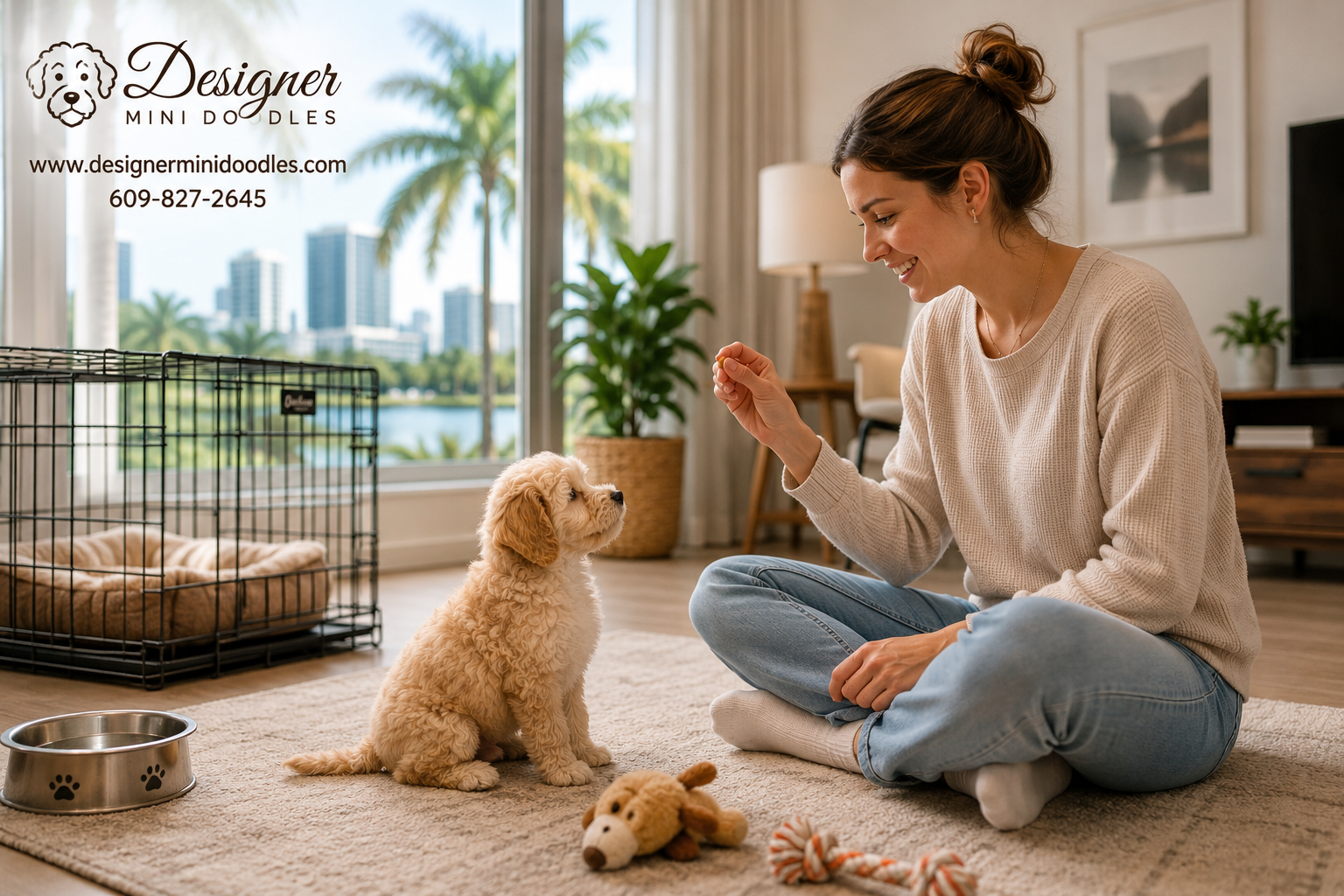
- Crate training: Essential for housebreaking and creating a safe space. Puppies from programs like Designer Doodles arrive with crate training already started.
- Housebreaking: Take your puppy out every 1 to 2 hours, after meals, and after naps. Consistency is everything.
- Basic commands: Sit, stay, come, and down. Use positive reinforcement (treats and praise) exclusively.
- Socialization: Expose your puppy to different people, sounds, surfaces, and environments between 8 and 16 weeks. Orlando’s dog-friendly parks and outdoor dining spots are perfect for this.
- Leash training: Start indoors, then move to quiet outdoor areas before busy streets.
Common mistake: Carrying your toy doodle everywhere instead of letting them walk. This creates a dependent, anxious dog. Let them explore on their own four feet from the start.
Edge case: If your puppy shows fearfulness or excessive barking by 4 to 5 months, consult a certified dog trainer. Early intervention prevents behavioral problems from becoming permanent.
Toy Doodle Puppy Care Tips for First-Time Owners
First-time toy doodle owners should focus on three areas: nutrition, grooming, and routine. Getting these right in the first few months sets the foundation for a healthy, well-adjusted dog.
Nutrition:
- Feed a high-quality small-breed puppy food 3 times daily until 6 months, then twice daily.
- Avoid grain-free diets unless your vet specifically recommends one — the FDA has investigated a potential link between grain-free diets and heart disease in dogs.
- Monitor weight closely. Toy breeds gain excess weight quickly, and even a pound or two of extra weight strains small joints.
Grooming:
- Brush your toy doodle 3 to 4 times per week to prevent matting.
- Schedule professional grooming every 4 to 6 weeks.
- Clean ears weekly and brush teeth at least 3 times per week.
- In Orlando’s heat, keep the coat trimmed shorter during summer months.
Daily routine:
- Morning walk or play session (15 to 20 minutes)
- Midday potty break and short play
- Evening walk (15 to 20 minutes)
- Consistent bedtime in the crate
Pro tip: Start handling your puppy’s paws, ears, and mouth daily from day one. This makes grooming and vet visits dramatically easier as they grow.
What Should I Know Before Buying a Toy Doodle in Orlando?
Before buying toy doodle puppies in Orlando, verify the breeder’s health testing, understand the total cost of ownership, and make sure your lifestyle suits a small companion dog.
Pre-purchase checklist:
- Confirm both parents have OFA and genetic health clearances (ask for documentation, not just verbal assurance).
- Visit the breeder in person or request a video tour of the facility.
- Ask about the puppy’s socialization and training history.
- Get a written health guarantee of at least two years.
- Verify the breeder’s experience — programs with 10+ years of history and professional credentials (like an animal biology background) are significantly more reliable.
- Understand your HOA or apartment pet policies, including weight limits and breed restrictions.
- Budget for ongoing costs: grooming ($50 to $80 per session), food ($30 to $60 per month), and annual vet care ($300 to $500).
Orlando-specific considerations:
- Florida’s heat requires access to air conditioning and shade. Never leave a toy doodle in a parked car.
- Fleas, ticks, and heartworm are year-round concerns. Budget for 12 months of preventive medication.
- Orlando’s many dog parks, pet-friendly restaurants, and outdoor trails make it a great city for socializing your puppy.
If you’re also considering other small breeds, Designer Doodles’ sister program offers mini french bulldog puppies for sale — another excellent option for Orlando apartment living.
Where Can I Adopt a Toy Doodle Puppy Near Me?
Adopting a toy doodle in Orlando is possible but uncommon. Most toy doodles available through rescues are adults or adolescents, not puppies. For a puppy, purchasing from a reputable breeder is the more reliable path.
Adoption options in Central Florida:
- Doodle Rescue Collective: A national network that occasionally has toy-sized doodles available in Florida.
- Pet Alliance of Greater Orlando: The area’s largest shelter sometimes receives doodle mixes.
- SPCA of Central Florida: Worth checking, though purebred or designer breed puppies are rare.
If you prefer a puppy from a breeder: Programs like Designer Doodles offer toy golden doodle puppies with nationwide delivery through their puppy nanny service, so your location doesn’t limit your options. Their puppies are available to go to any home in the world.
Decision rule: Choose adoption if you’re open to an adult dog and flexible on exact size and appearance. Choose a breeder if you want a specific size, coat type, temperament, and the benefits of early training and socialization.
Frequently Asked Questions
How long do toy doodles live?
Toy goldendoodles typically live 12 to 16 years, with smaller sizes often living longer than larger doodle varieties. Good nutrition, regular vet care, and genetic health testing from the breeder all contribute to longevity.
Do toy doodles bark a lot?
Toy doodles are not considered excessive barkers. However, any dog can develop barking habits without proper training and socialization. Puppies from programs that include early socialization tend to be calmer and quieter.
Can toy doodles handle Orlando’s heat?
Yes, with precautions. Walk them during cooler morning and evening hours, provide plenty of water, and ensure access to air conditioning. Their smaller size actually makes them less prone to overheating than larger breeds.
What generation of toy doodle is best?
F1B (golden retriever/poodle cross bred back to a poodle) and multigenerational toy doodles offer the most predictable size, coat type, and temperament. These are typically recommended for allergy sufferers.
Are toy doodles good with children?
Yes, toy goldendoodles are known for being gentle and patient with children. However, because of their small size, supervise interactions with very young children who might accidentally injure the dog.
How often do toy doodles need grooming?
Professional grooming every 4 to 6 weeks, with at-home brushing 3 to 4 times per week. In Orlando’s humid climate, keeping the coat shorter reduces matting and overheating.
Do toy doodles have separation anxiety?
They can. Toy doodles bond closely with their owners and may struggle when left alone for long periods. Crate training and gradual alone-time practice help prevent this.
What’s the difference between a mini and a toy goldendoodle?
Mini goldendoodles typically weigh 25 to 45 pounds, while toy goldendoodles weigh 10 to 25 pounds. Micro goldendoodles are even smaller, usually under 15 pounds.
Can I fly with a toy doodle?
Most toy doodles are small enough to fly in-cabin in an airline-approved carrier. Check your airline’s weight and size restrictions before booking.
Do toy doodles need a lot of exercise?
They need moderate exercise — about 30 to 45 minutes daily. This can be split between walks, play sessions, and mental stimulation like puzzle toys.
Are male or female toy doodles better?
Both make excellent pets. Males tend to be slightly larger and more playful; females are often a bit more independent. Temperament varies more by individual and breeding than by gender.
When can I bring my toy doodle puppy home?
Reputable breeders release puppies at 8 to 10 weeks of age. Avoid any breeder willing to send a puppy home before 8 weeks — early separation from the litter can cause behavioral issues.
Conclusion
Finding the right toy doodle puppy in Orlando comes down to three things: choosing a reputable breeder, understanding the true cost of ownership, and preparing your home and lifestyle for a small companion dog.
Start by researching breeders with documented health testing, professional credentials, and proven early development programs. A program run by an animal biologist with over 15 years of experience — like Designer Doodles — gives you the best chance of bringing home a healthy, well-adjusted puppy that’s already started on crate training and housebreaking.
Budget $4,000 to $8,000 for your first year including the puppy purchase, veterinary care, and supplies. Set up a relationship with an Orlando veterinarian before your puppy arrives. And remember, with dedicated puppy nanny services available, you’re not limited to local breeders — the best toy goldendoodle puppies can be delivered to your Orlando home from anywhere in the country.
Your next step: reach out to your top breeder choices, ask for health clearances and references, and get on a waitlist. The best litters often have waiting lists of several months, so starting early puts you in the best position to find exactly the right puppy.
References
-
- Orthopedic Foundation for Animals (OFA). “CHIC Health Testing Requirements.” OFA, 2024. https://ofa.org
- American Kennel Club. “Poodle (Toy) Breed Information.” AKC, 2024. https://www.akc.org/dog-breeds/poodle-toy/
- Goldendoodle Association of North America. “Breed Standards and Health Testing.” GANA, 2023. https://www.goldendoodleassociation.com