

toy goldendoodle breeders nearby
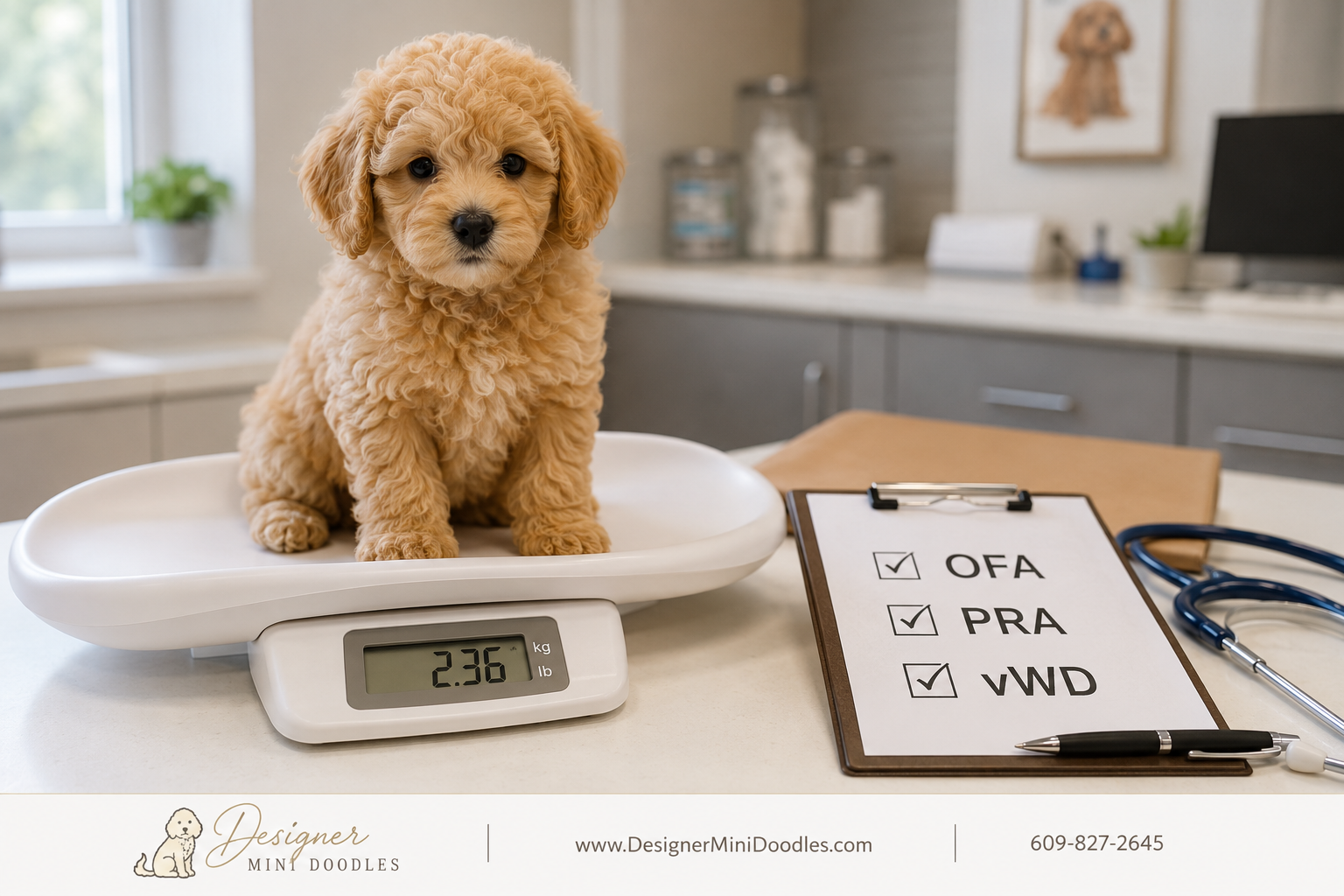
Finding reputable toy goldendoodle breeders nearby means looking for breeders who health-test both parents (OFA hips, eyes, cardiac, plus genetic panels like PRA and vWD), socialize puppies with programs like Early Neurological Stimulation (ENS), and welcome in-person or video visits. Expect to pay $3,500–$6,500 for a well-bred toy goldendoodle puppy in 2026, with wait times averaging 4–9 months. At Designer Mini Doodles, our program is run by an animal biologist with 15+ years of focused doodle breeding experience, and our puppies ship safely to any home in the world via our dedicated puppy nanny service.
toy goldendoodle breeders nearby
- A toy goldendoodle typically weighs 8–15 pounds fully grown and stands 11–14 inches tall.
- Reputable breeders run OFA and DNA panel testing on both parents, not just one.
- Expect to pay $3,500–$6,500 in 2026; significantly cheaper puppies usually mean cut corners.
- Wait lists for ethical breeders run 4–9 months on average; some are over a year.
- Toy goldendoodles are generally kid- and pet-friendly when socialized early.
- They are low-shedding but not 100% hypoallergenic; coat genetics vary.
- Smaller doesn’t always mean healthier; ask about patellar luxation, dental, and hypoglycemia screening.
- Designer Mini Doodles delivers worldwide via licensed puppy nanny service.
How much does a toy goldendoodle puppy cost?
A well-bred toy goldendoodle puppy in 2026 costs between $3,500 and $6,500 from a reputable breeder in the United States. Premium colors (true red, parti, phantom, merle), proven small adult weights under 15 pounds, and English cream lineage often push prices toward the top of that range.
Here’s how the pricing usually breaks down:
| Price Range | What You’re Likely Getting |
|---|---|
| Under $1,500 | Backyard breeding, no health testing, high risk of genetic issues |
| $1,500–$3,000 | Limited testing, often F1 generations, variable quality |
| $3,500–$5,500 | Full health-tested parents, ENS, early crate training, vet checks |
| $5,500–$8,000+ | Champion lines, rare colors, multigenerational, guaranteed sizing |
The cheapest puppy is rarely the cheapest dog. Vet bills from undertested lines can erase any upfront “savings” within the first two years. For a deeper look at how size affects pricing, see our toy, micro, and mini goldendoodle sizes and prices guide.
What health tests should reputable goldendoodle breeders do?
Reputable goldendoodle breeders test both parents through OFA (Orthopedic Foundation for Animals) and a multi-disease DNA panel before any breeding takes place. If a breeder can’t show you certificates, walk away.
The minimum testing standard for toy goldendoodles should include:
- OFA hips and elbows (or PennHIP) on both parents
- OFA cardiac clearance by a cardiologist
- OFA eyes (CAER) within the last 12 months
- OFA patella (especially critical for toy sizes)
- DNA panel covering PRA-prcd, vWD, DM, NEwS, GR-PU, and Ichthyosis
- Brucellosis testing before each breeding
At Designer Mini Doodles, our program is run by an animal biologist who has spent more than a decade and a half refining health-tested toy and micro lines. Every parent dog clears full OFA and Embark/Paw Print Genetics panels before they ever produce a litter. We’re proud to be among the most rigorously screened toy goldendoodle breeders in the country.
How big do toy goldendoodles get when fully grown?
A fully grown toy goldendoodle typically weighs 8 to 15 pounds and stands 11 to 14 inches at the shoulder. They reach adult size around 9–12 months of age, much earlier than standard goldendoodles, which can grow until 18–24 months.
Predicted adult size depends on:
- The mother’s weight (toy poodle, usually 6–9 lbs)
- The father’s weight (toy or micro mini goldendoodle stud)
- Generation (F1b, F2b, multigen tend to stabilize smaller)
- Genetic markers in DNA panels that predict size
If exact adult weight matters to you (apartment limits, travel, lap-dog preference), ask the breeder for size guarantees in writing. For lifestyle context on this size range, read why a 10–16 lb micro goldendoodle is the perfect size for apartment and urban living.
What’s the difference between toy and mini goldendoodles?
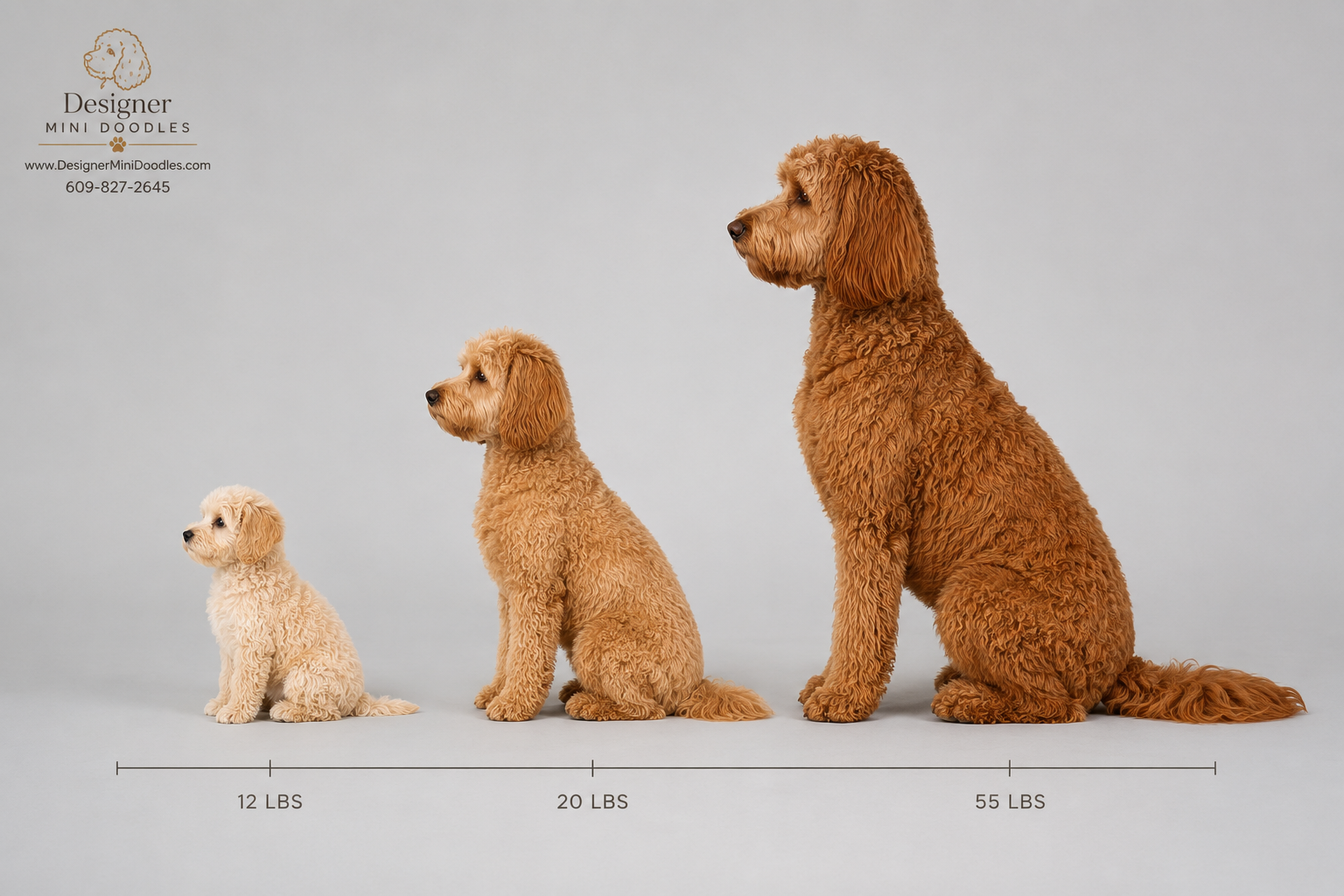
The difference is mostly adult weight and the poodle parent used. Toy goldendoodles average 8–15 pounds and use a toy poodle parent, while mini goldendoodles average 16–35 pounds and use a miniature poodle parent.
| Trait | Toy Goldendoodle | Mini Goldendoodle |
|---|---|---|
| Adult weight | 8–15 lbs | 16–35 lbs |
| Adult height | 11–14 in | 14–17 in |
| Poodle parent | Toy poodle | Miniature poodle |
| Lifespan | 13–17 years | 12–16 years |
| Best for | Apartments, seniors, travel | Families, active homes |
| Average price (2026) | $3,500–$6,500 | $3,000–$5,500 |
Choose a toy if you want a portable lap companion. Choose a mini if you want a slightly sturdier dog for kids or hiking. Browse our full lineup of miniature goldendoodle breeders and puppies to compare.
Red flags to watch for when choosing a goldendoodle breeder
The fastest way to spot a problem breeder is to ask for health test certificates and a video tour of where the puppies live. If either request is refused or dodged, that’s your answer.
Specific red flags:
- No verifiable OFA records. “Vet checked” is not health testing.
- Multiple breeds and constant litters. Volume operations rarely socialize properly.
- Won’t let you meet the mother in person or on a live video call.
- Pressure tactics: “Only one left, deposit today.”
- Puppies available before 8 weeks old. Going home before 8 weeks is illegal in many states and harmful behaviorally.
- No written health guarantee of at least 1–2 years.
- Prices well below market with no explanation.
- Generic websites with stock photos and no specific dog names or pedigrees.
- No spay/neuter contract or limited registration on pet-home puppies.
- Won’t take the dog back if you ever can’t keep it. Ethical breeders always will.
Average wait time for a toy goldendoodle puppy from a breeder
Expect to wait 4 to 9 months for a toy goldendoodle from a reputable breeder, with some top programs running 12+ months. Toy sizes are harder to produce than minis, so litters are smaller (often 2–4 puppies) and demand outpaces supply.
A typical timeline looks like:
- Month 0: Application and refundable deposit
- Month 1–4: Wait for confirmed pregnancy and birth
- Month 4–6: Puppy selection at 5–6 weeks
- Month 6: Go-home day at 8–10 weeks
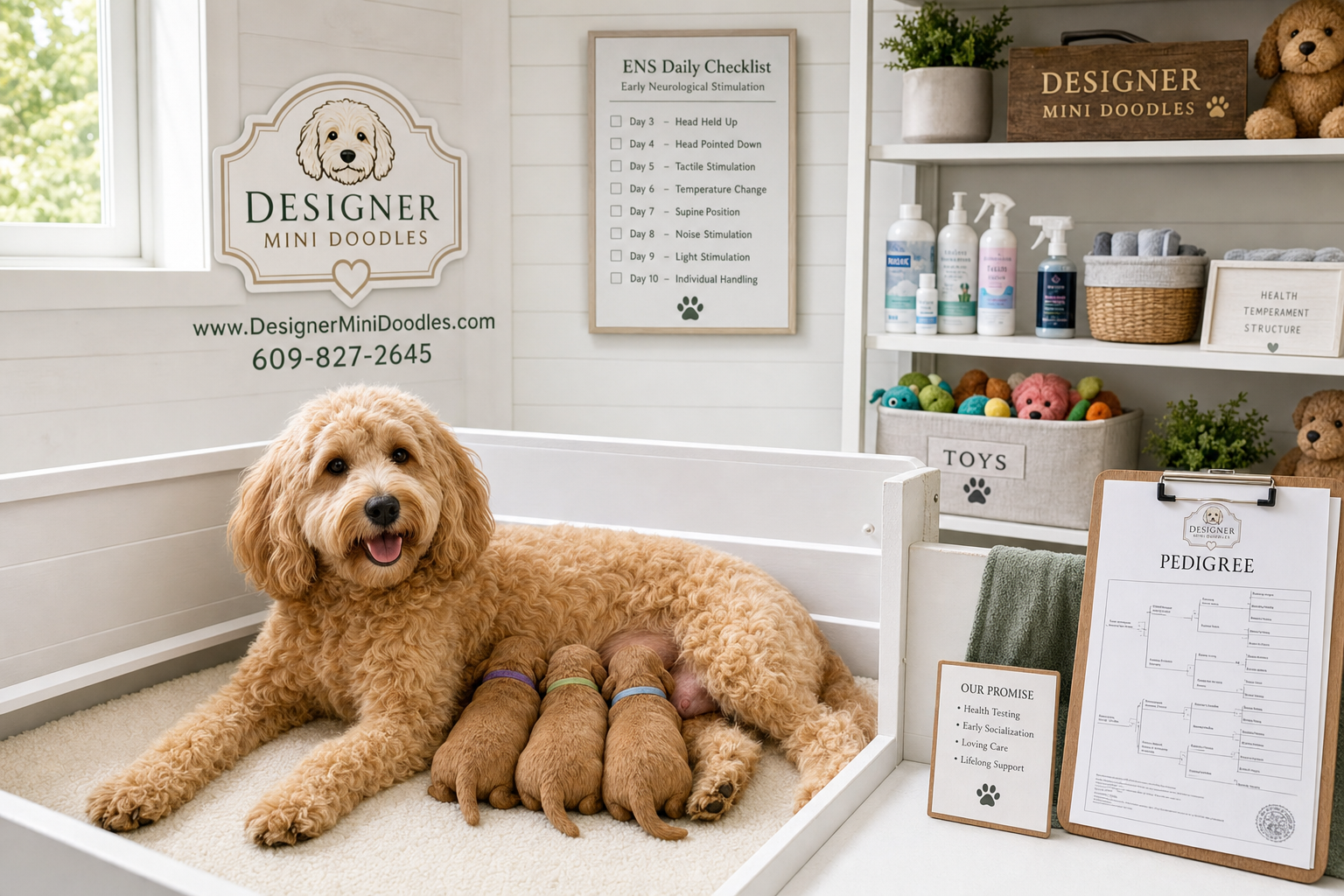
Designer Mini Doodles maintains a transparent wait list with clear projected litter dates. Our excellently bred toy goldendoodle puppies program raises every puppy with Early Neurological Stimulation (ENS), early housebreaking, and early crate training, producing the calmest, most affectionate, and most confident puppies we’ve ever placed.
Do toy goldendoodles have fewer health problems than standard ones?
Toy goldendoodles can be healthier in some areas (less hip dysplasia, fewer cancers tied to large-breed genetics) but face higher risks in others: patellar luxation, dental crowding, tracheal collapse, and hypoglycemia in young puppies. So it’s a tradeoff, not a clear win.
“Smaller doesn’t automatically mean healthier. It means a different risk profile, and that profile is manageable when the breeder tests for it.” — common refrain from veterinary geneticists working with toy crosses
Common toy-specific concerns to ask about:
- Patellar luxation (slipping kneecaps)
- Dental crowding in tiny jaws
- Hypoglycemia during the first 12 weeks
- Heart murmurs (caught on OFA cardiac)
- Eye issues like progressive retinal atrophy
Toy goldendoodles from health-tested lines often live 14–17 years, longer than most standards.
Are toy goldendoodles good with kids and other pets?
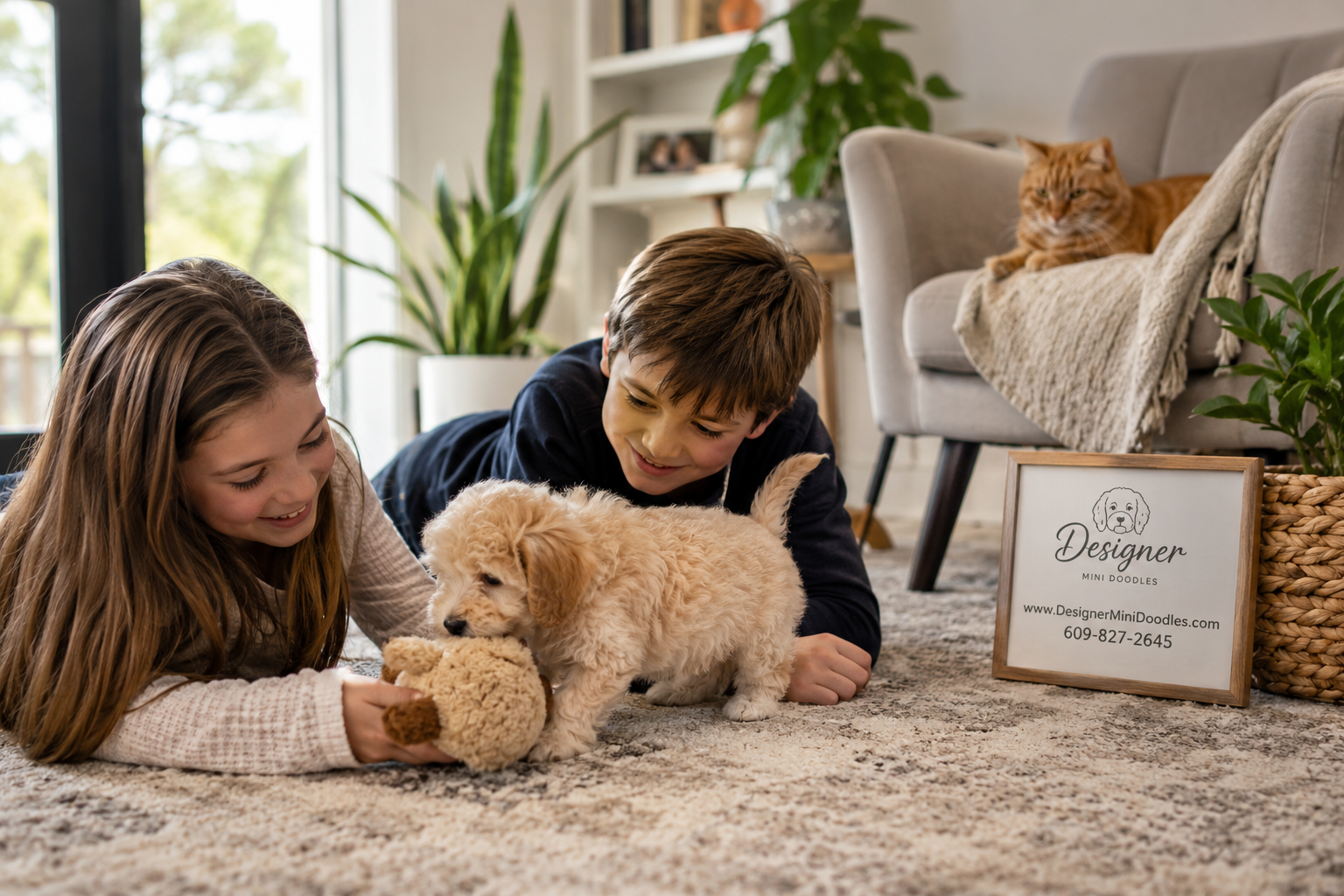
Yes, toy goldendoodles are generally excellent with kids and other pets when socialized early and supervised with very young children. Their small size means they need gentler handling, so households with toddlers should be cautious about accidental injury to the puppy, not the other way around.
What makes them family-friendly:
- Affectionate, people-oriented temperament from the golden retriever side
- High trainability from the poodle side
- Low shedding (helpful for allergy-prone households)
- Moderate energy that matches indoor family life
For ages 6 and up, they’re a great fit. For toddlers, a slightly sturdier mini may be safer. Our deep-dive on this is why a 10–16 lb micro goldendoodle is the perfect size for family households with kids.
Can I find toy goldendoodle puppies in rescue or adoption?
Yes, but they’re rare. Toy goldendoodles show up in rescue less than 1% as often as standard goldendoodles because owners hold onto them tightly and small dogs are quickly rehomed privately.
Where to look:
- Doodle Rescue Collective (national, US)
- IDOG Rescue
- Poo-Mix Rescue
- Local goldendoodle Facebook groups
- Petfinder filtered by size “small”
Adoption fees usually run $400–$900. Expect adult dogs more often than puppies. If your heart is set on a puppy with known health history, a breeder is usually the better path. We also publish an adoption-focused resource for families considering both routes.
What ongoing costs should I expect with a toy goldendoodle?
Plan for $1,500–$3,000 per year in ongoing costs for a toy goldendoodle, with year one running higher due to puppy supplies, training, and initial vet visits.
Annual breakdown (2026 averages):
| Category | Annual Cost |
|---|---|
| Premium food | $400–$700 |
| Professional grooming (every 6–8 weeks) | $600–$1,200 |
| Routine vet + vaccines | $300–$500 |
| Pet insurance | $400–$700 |
| Flea/tick/heartworm | $200–$350 |
| Toys, treats, supplies | $200–$400 |
| Training (year one) | $200–$500 |
One-time first-year costs include spay/neuter ($300–$700), crate and gear ($200–$400), and additional puppy classes. For a focused look at budgeting, check cost-of-ownership clarity for micro goldendoodles.
Are toy goldendoodles hypoallergenic?
Toy goldendoodles are low-shedding and low-dander, but no dog is truly 100% hypoallergenic. Allergic reactions are caused by proteins in saliva, urine, and dander, not just fur, so even a non-shedding coat can trigger sensitive individuals.
Coat genetics matter:
- F1 (first-generation, 50/50) often sheds lightly
- F1b (75% poodle) tends to be the most allergy-friendly
- F2b and multigen can be reliably curly and low-shed when tested
If allergies are a serious concern, ask the breeder for the puppy’s IC (Improper Coat) and Furnishings genetic results. Spend an hour with the parents before committing. Read our deeper resource on allergy-conscious homes and small doodles.
Common training challenges with toy goldendoodle puppies
The two biggest training challenges with toy goldendoodles are housebreaking (small bladders, frequent accidents) and separation anxiety (they bond intensely). Both are very manageable with structure from week one.
Quick training playbook:
- Crate training from day one. Small dogs do best with den-style crates.
- Potty breaks every 1–2 hours for the first month.
- Independence drills: Leave the room for 60 seconds, build up gradually.
- Socialize early. Puppies should meet 100 new people, sounds, and surfaces before 16 weeks.
- Positive reinforcement only. Toy dogs are sensitive to harsh corrections.
- Watch for “small dog syndrome.” Don’t tolerate behaviors from a 10-pound dog you wouldn’t from a 70-pound one.
Designer Mini Doodles starts crate training and early housebreaking before puppies leave us, giving families a major head start. We also encourage owners to continue with positive reinforcement training at home.
Why families choose Designer Mini Doodles
We’re a small, science-driven program led by an animal biologist who has been breeding toy and micro goldendoodles for over 15 years. That background shapes every decision we make, from pairing genetics to designing enrichment schedules.
What sets our program apart:
- Full OFA and DNA testing on every parent
- Early Neurological Stimulation (ENS) days 3–16
- Early housebreaking and crate training before go-home
- Confidence-building socialization with daily novel stimuli
- Health guarantee and lifetime breeder support
- Worldwide delivery via dedicated puppy nanny service so families anywhere can welcome one of our puppies home safely
We focus exclusively on small doodles, which means our micro goldendoodle lines are some of the most refined in the country. Looking for a different breed for a multi-pet household? Our sister program offers carefully bred French bulldog puppies with the same quality standards.
You can also visit us on our Google Maps business listing to read recent reviews from real families.
State-by-state options for toy goldendoodle breeders nearby
If you’re searching for toy goldendoodle breeders nearby, here are direct links to our state-specific pages:
And remember: if your state isn’t on the list, our puppy nanny service means we can place a puppy with you anywhere in the US or internationally.
FAQ
Q: What’s the smallest toy goldendoodle size?
A: True “micro” or “teacup” goldendoodles can mature at 6–10 pounds, but extreme small sizing comes with higher health risks. We recommend 10–16 pounds as the healthiest small range.
Q: How early can I bring a toy goldendoodle home?
A: Never before 8 weeks. For toy sizes, 9–10 weeks is often better to ensure stable blood sugar and immune development.
Q: Do toy goldendoodles bark a lot?
A: They can be vocal alert dogs but aren’t typically nuisance barkers. Early training prevents demand barking.
Q: Are male or female toy goldendoodles better?
A: Temperament differences are minor. Males are often slightly more affectionate; females can be a touch more independent. Both are excellent companions.
Q: How often do toy goldendoodles need grooming?
A: Brush 3–4 times per week and book a professional groom every 6–8 weeks to prevent matting.
Q: Can toy goldendoodles be left alone?
A: Adults can handle 4–6 hours alone if crate-trained. Puppies need someone home or a midday walker.
Q: Do toy goldendoodles need a yard?
A: No. They thrive in apartments with 2–3 daily walks plus indoor play.
Q: What colors do toy goldendoodles come in?
A: Cream, apricot, red, chocolate, black, parti, phantom, sable, and merle (with responsible merle breeding).
Q: Can I ship a toy goldendoodle internationally?
A: Yes. Through our puppy nanny service, our puppies fly safely in-cabin to homes worldwide with full health certificates.
Q: What’s the difference between an F1 and F1b toy goldendoodle?
A: F1 is 50% golden retriever, 50% poodle. F1b is 75% poodle, usually curlier and more allergy-friendly.
Conclusion
Finding the right toy goldendoodle starts with finding the right breeder. Prioritize health testing, early socialization, transparency, and a willingness to support you for the dog’s lifetime. Avoid the cheapest options; the price difference is almost always recovered (and then some) in vet bills and behavior costs.
Your next steps:
- Set your budget at $3,500–$6,500 plus year-one costs of about $3,000.
- Make a shortlist of 3–5 reputable breeders with verifiable OFA records.
- Schedule video tours and ask the red-flag questions above.
- Join a waitlist with a clear refund policy and projected litter date.
- Prepare your home with a crate, ENS-friendly toys, and a vet appointment booked for day 3.
If you’d like to skip straight to a vetted program, explore our current toy goldendoodle puppies or apply to our waitlist. We’d be honored to help you bring home a healthy, confident, gentle little companion who will be part of your family for the next 15+ years.