

toy goldendoodle Georgia
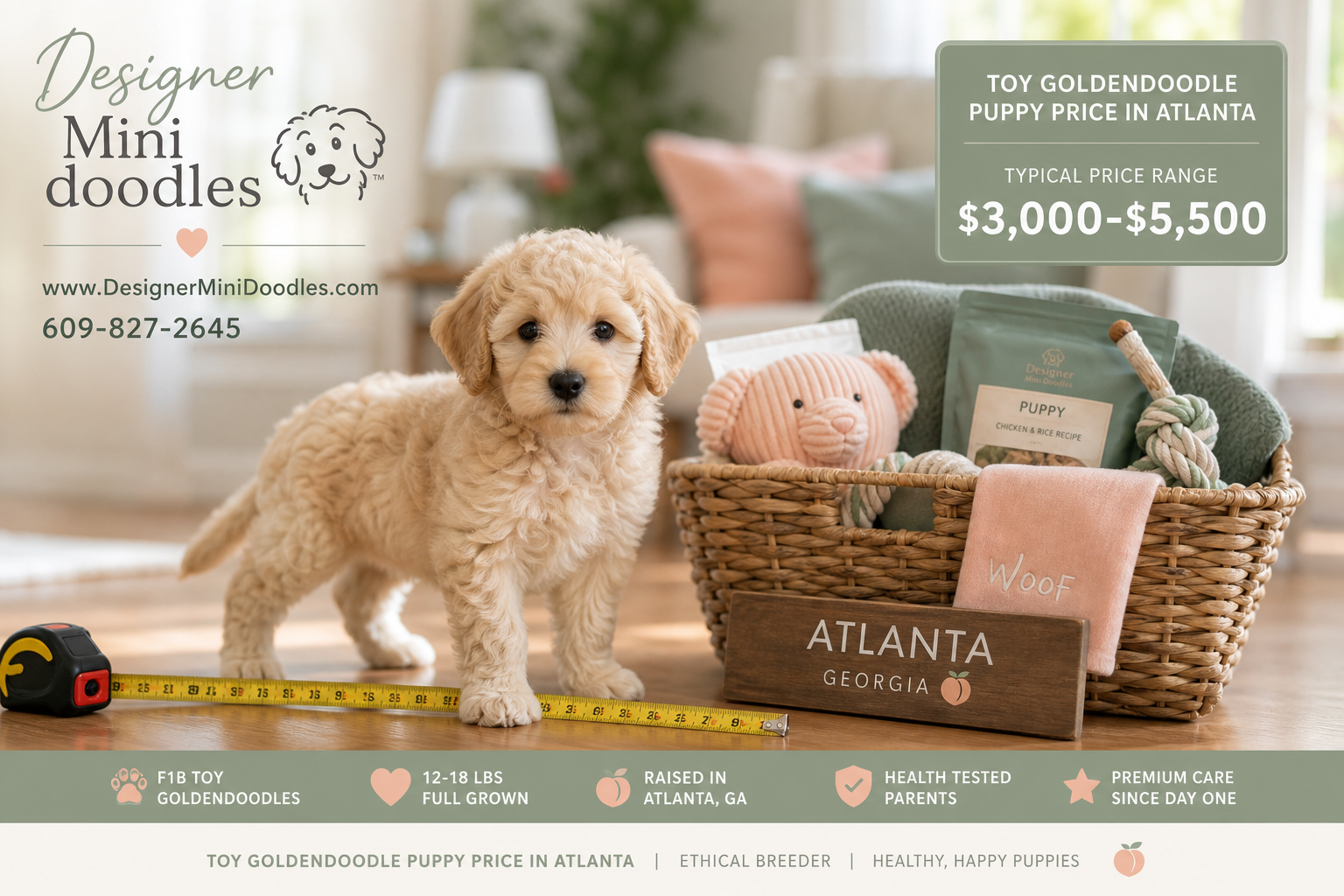
A toy goldendoodle in Georgia typically costs between $3,000 and $5,500 from a reputable breeder, weighs 10–20 pounds full grown, and lives 12–15 years. At Designer Mini Doodles, our toy goldendoodle Georgia program is led by a working animal biologist with over 15 years of breeding experience, producing calm, confident, low-shedding puppies through Early Neurological Stimulation (ENS), early crate training, and early housebreaking. Puppies are available to families across Georgia and shipped worldwide via our dedicated puppy nanny service.
toy goldendoodle Georgia
- Price range in Georgia: Expect $3,000–$5,500 for a health-tested, well-socialized toy goldendoodle puppy.
- Adult size: Most toy goldendoodles finish between 10 and 20 pounds and 11–14 inches tall.
- Lifespan: 12–15 years with proper care, nutrition, and routine vet visits.
- Temperament: Friendly, smart, and people-focused — great with kids and other pets when socialized early.
- Coat: Low to non-shedding; considered allergy-friendly but not 100% hypoallergenic.
- Breeder difference: Designer Mini Doodles uses ENS, early crate training, and early housebreaking from an animal-biologist-led program.
- Statewide availability: Puppies go to families in Atlanta, Savannah, Augusta, Macon, Athens, Columbus, and beyond — plus worldwide delivery via puppy nanny.
How much does a toy goldendoodle puppy cost in Georgia?
A toy goldendoodle puppy in Georgia generally runs $3,000 to $5,500 from a reputable, health-testing breeder. Lower prices (under $2,000) almost always signal puppy mills, backyard breeders, or unhealthy lines. Higher prices reflect genetic testing, ENS protocols, early training, and breed-standard parents.
What drives the price:
- Genetic health testing of both parents (hips, eyes, heart, DNA panels)
- Coat color and pattern — phantom, parti, merle, and red apricot tend to cost more than cream
- Size guarantee — true toy-sized adults (under 20 lbs) are harder to produce consistently
- Early socialization programs like ENS and early neurological stimulation
- Breeder reputation and waitlist demand
If you’re comparing breeders, see our overview of the best mini and micro goldendoodle breeders in Georgia to understand what reputable programs include.
Decision rule: If a Georgia breeder won’t show you parent health clearances or lets puppies leave before 8 weeks, walk away — regardless of price.
Are toy goldendoodles good with kids and other pets?
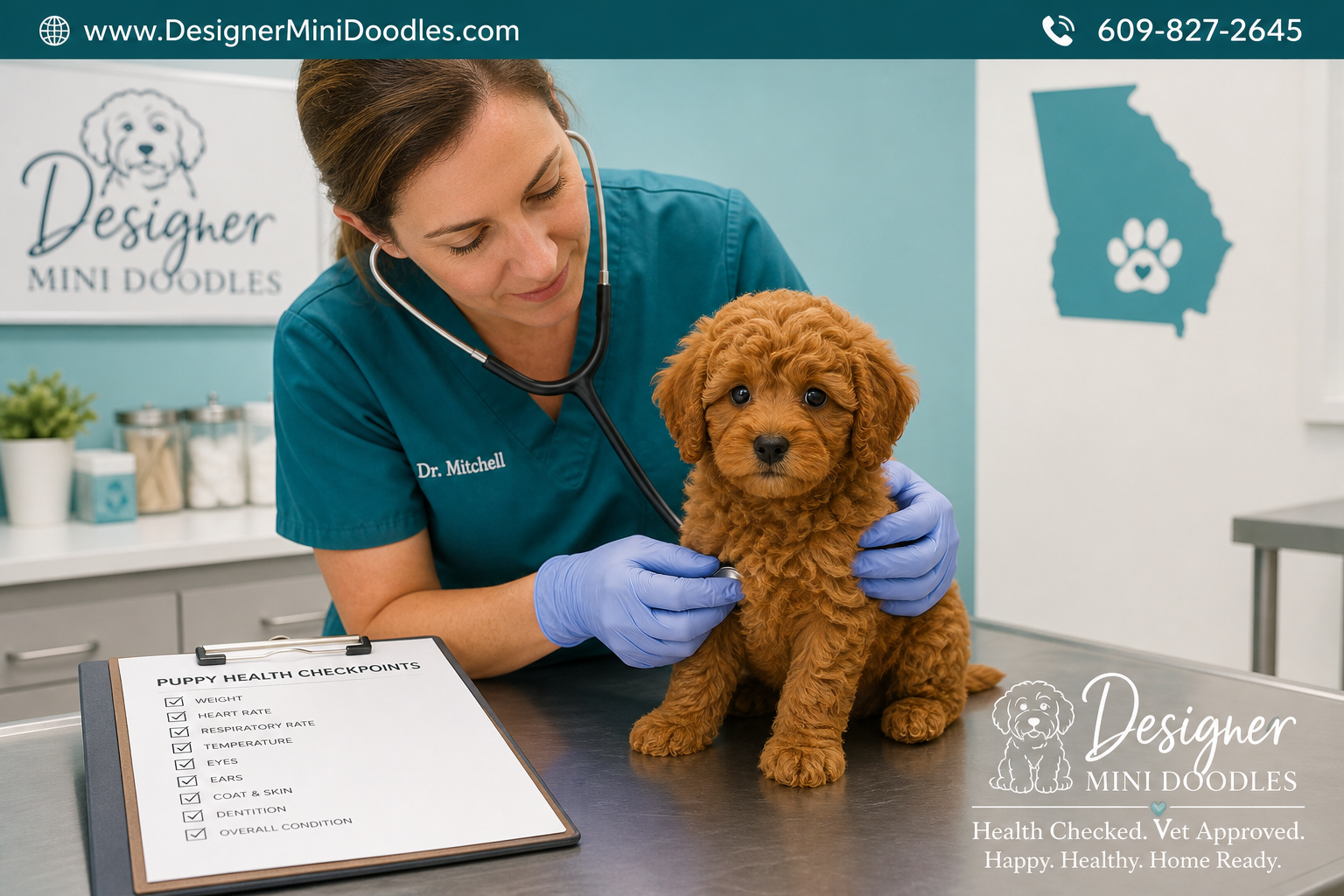
Yes — toy goldendoodles are widely considered one of the best small breeds for families with children and other pets. They inherit the golden retriever’s gentle, social nature and the poodle’s intelligence, which makes them adaptable, patient, and quick to bond.
A few caveats that matter:
- Supervise toddlers. A 12-lb dog can be injured by rough handling. Teach gentle hands before the puppy arrives.
- Slow introductions to existing pets. Use leashed meetings, separate feeding zones, and short sessions for the first two weeks.
- Socialization window is 8–16 weeks. Puppies exposed to varied people, sounds, and animals during this period grow into confident adults.
Designer Mini Doodles raises every litter underfoot with kids, cats, and other dogs — so by the time a puppy ships, it’s already comfortable in a busy household. For more on this, read why a 10–16 lb micro goldendoodle is perfect for family households.
What health issues do toy goldendoodles commonly have?
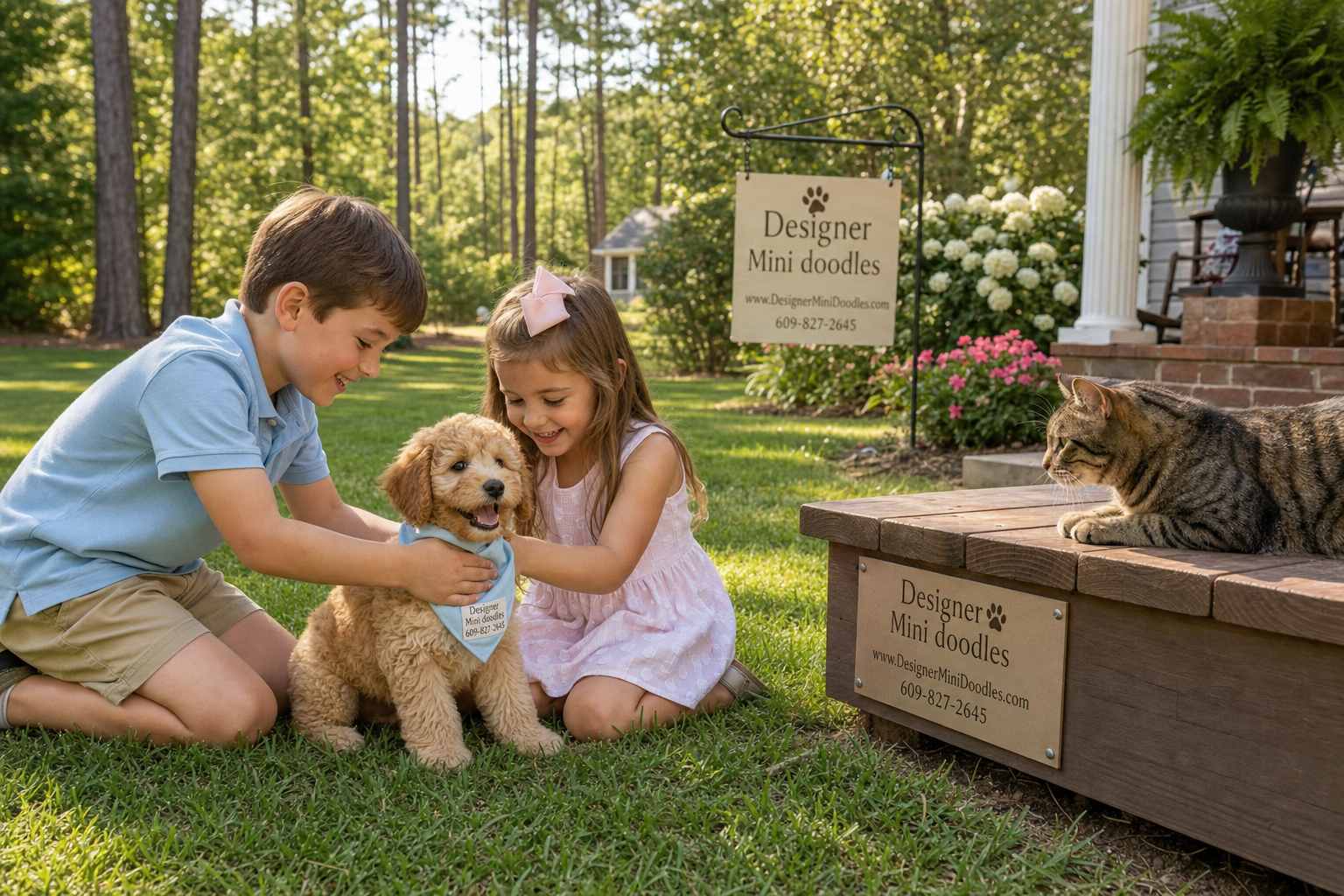
Toy goldendoodles are generally healthier than purebred parents thanks to hybrid vigor, but they can still inherit specific conditions. Responsible breeders screen for them; cheap breeders don’t.
Common health concerns to ask about:
| Condition | What it affects | Screening test |
|---|---|---|
| Hip dysplasia | Joint, mobility | OFA or PennHIP |
| Progressive Retinal Atrophy (PRA) | Eyes / vision | DNA panel, CERF exam |
| Patellar luxation | Knees (common in small dogs) | Vet orthopedic exam |
| Von Willebrand’s disease | Blood clotting | DNA test |
| Ear infections | Floppy, hairy ears | Routine grooming |
| Allergies (skin/food) | Coat, digestion | Diet trials |
Common mistake: Buyers focus only on the puppy’s “vet check” and forget to ask for the parents’ clearances. Always request OFA or DNA documentation in writing.
Where can I adopt or buy a toy goldendoodle in Atlanta?
In Atlanta, your best options are vetted private breeders, breed-specific rescues like IDOG Rescue or Doodle Rock Rescue (which serves the Southeast), and specialty programs like Designer Mini Doodles that ship statewide. Atlanta-area shelters occasionally have goldendoodle mixes, but true toy goldendoodle puppies almost always come through breeders.
What to verify before paying a deposit:
- In-person or video tour of the breeder’s facility
- Health guarantee of at least 1–2 years in writing
- Parents on-site or verifiable through video
- Vaccination, deworming, and microchip records
- Spay/neuter and return-to-breeder clauses
We deliver puppies throughout Atlanta, Marietta, Alpharetta, Roswell, and Sandy Springs. You can also browse our current micro mini goldendoodles available in Georgia.
How big do toy goldendoodles get when fully grown?
Most toy goldendoodles reach 10–20 pounds and 11–14 inches at the shoulder by 10–12 months of age. They finish growing earlier than larger doodles and stay compact for life.
Size depends on:
- Generation (F1, F1B, F2B) — F1B toys often stay smaller
- Poodle parent size — toy poodle parents produce smaller pups than miniatures
- Sex — males average 1–3 lbs heavier than females
If you want predictable size, ask the breeder for the weight range of the past 3 litters from the same parents — that’s far more accurate than online calculators.
What’s the difference between toy and mini goldendoodles?
The difference is size. Toy goldendoodles weigh 10–20 lbs; mini goldendoodles weigh 20–35 lbs. Both share the same temperament, coat type, and care needs.
| Feature | Toy Goldendoodle | Mini Goldendoodle |
|---|---|---|
| Adult weight | 10–20 lbs | 20–35 lbs |
| Adult height | 11–14 in | 14–17 in |
| Poodle parent | Toy poodle | Miniature poodle |
| Apartment-friendly | Excellent | Very good |
| Exercise needs | 30–45 min/day | 45–60 min/day |
| Price range (GA) | $3,000–$5,500 | $2,500–$4,500 |
Choose a toy if you live in an apartment, want a true lap dog, or travel often. Choose a mini if you have kids who play rough or want a sturdier hiking buddy. We’re considered one of the leading toy goldendoodle breeders producing consistent size in both categories.
Are toy goldendoodles hypoallergenic?
Toy goldendoodles are low-shedding and allergy-friendly, but no dog is 100% hypoallergenic. Allergic reactions are triggered by proteins in dander and saliva, not just fur. Most allergy sufferers tolerate goldendoodles well, especially F1B and multigen lines with more poodle genetics.
To improve allergy comfort:
- Choose an F1B or F1BB (75% poodle) puppy
- Bathe weekly with hypoallergenic shampoo
- Use a HEPA air purifier in main living areas
- Brush 3–4 times per week to control dander
Spend time with the breeder’s adult dogs before committing if allergies are severe. Learn more in our guide for allergy-conscious homes.
How much does it cost to feed and care for a toy goldendoodle?
Annual care for a toy goldendoodle in Georgia averages $1,500–$2,500 per year after the first year. The first year is higher — closer to $3,000–$4,000 — because of vaccines, spay/neuter, supplies, and training.
Typical yearly costs:
- Food: $400–$600 (premium small-breed kibble)
- Grooming: $480–$720 (every 6–8 weeks at $60–$90)
- Routine vet: $300–$500
- Preventatives (flea, tick, heartworm): $200–$300
- Insurance: $300–$600
- Treats, toys, boarding: $300–$500
Because of their small size, toy goldendoodles eat less than mini or standard doodles — a real long-term savings. See our breakdown on cost-of-ownership clarity.
What are common training challenges with toy goldendoodles?
Toy goldendoodles are highly trainable but bring three predictable challenges: housebreaking small bladders, separation anxiety, and over-excitement around new people.
Quick fixes that work:
- Housebreaking: Take the puppy out every 1–2 hours the first month. Reward immediately outside, never punish accidents. Our puppies leave with early housebreaking already started.
- Separation anxiety: Build alone-time tolerance from day one — short crate sessions with high-value chews while you’re home.
- Jumping/excitement: Teach a “four on the floor” rule. Greet only when calm.
- Recall: Practice in low-distraction environments first; never call the puppy to punish.
Crate training matters more than people think. Our positive crate training guide for toy puppies walks through the exact protocol we use with every litter.
Best breeders for toy goldendoodles near Savannah, Georgia
Savannah buyers have limited local options for true toy goldendoodles, so most reputable breeders are within a 2–4 hour drive (Macon, Atlanta, or northern Florida) or ship via ground/air nanny. Designer Mini Doodles delivers to Savannah, Hilton Head, Brunswick, and St. Simons regularly.
What to look for in any Savannah-area breeder:
- Operates as a registered kennel, not a side hustle
- Specializes in toy/micro size — not just goldendoodles in general
- Provides health guarantees and lifetime breeder support
- Has a waitlist (a good sign of demand and selectivity)
- Shows you the puppy’s environment through live video
Designer Mini Doodles is owned and operated by a working animal biologist with 15+ years of focused goldendoodle breeding experience. Every litter follows the same Early Neurological Stimulation (ENS) protocol — gentle daily handling exercises from days 3 to 16 that have been shown to improve stress tolerance, cardiovascular health, and problem-solving in adult dogs. Combined with early crate and potty training, this produces the calmest, most confident toy goldendoodle puppies in the Southeast.
You can also explore programs in nearby states like our South Carolina, Florida, and Alabama pages.
Do toy goldendoodles shed a lot?
No — toy goldendoodles are one of the lowest-shedding small breeds available. Their coat is typically wavy or curly, holding shed hair within the coat until brushed out (similar to a poodle).
Coat types and what to expect:
- Curly (poodle-like): Lowest shed, most allergy-friendly, needs more grooming
- Wavy (teddy bear): Low shed, easier to maintain, most popular look
- Straight (rare): Higher shed, more golden-retriever-like
Plan on brushing 3–4 times weekly and professional grooming every 6–8 weeks regardless of coat type. Matting behind the ears and on the legs is the most common owner mistake.
What should I know before buying a toy goldendoodle puppy?
Before you commit, make sure you’ve thought through these five things: time, space, budget, allergies in the household, and breeder vetting. A toy goldendoodle is a 12–15 year commitment to a small, smart, sensitive dog that wants to be with you.
Pre-purchase checklist:
- Daily time for 30–45 minutes of exercise and 15 minutes of training
- Budget for grooming every 6–8 weeks
- Crate, pen, and puppy-proofed space ready before arrival
- Vet selected and first appointment booked
- Health guarantee and contract reviewed
- Backup plan for travel and work hours
If you’re a first-time owner, our guide for first-time dog owners is worth reading. Also looking for something different? We also raise french bulldog puppies through a sister program for families who prefer a flat-faced breed.
Typical lifespan of a toy goldendoodle
The typical lifespan of a toy goldendoodle is 12 to 15 years, with some living to 16 or 17 with excellent care. Smaller doodles generally outlive their standard-sized cousins, who average 10–13 years.
Lifespan-extending habits:
- Maintain lean body weight — obesity shortens life by 1–2 years
- Routine dental care — small breeds are prone to dental disease
- Annual senior bloodwork starting at age 8
- Joint supplements (glucosamine/omega-3) from age 5+
- Mental enrichment to keep cognition sharp into old age
Why Designer Mini Doodles is different
Our toy goldendoodle Georgia program is built on three things most breeders skip:
- Animal biology expertise. Our founder is a working animal biologist with 15+ years of focused doodle breeding. Pairings are made based on genetic diversity, temperament markers, and size predictability — not just looks.
- Early developmental protocols. Every puppy receives daily ENS handling from days 3–16, plus structured sound and surface exposure, early crate training, and early housebreaking before going home at 8 weeks.
- Lifetime support. We stay with our families forever. Training questions at 2 years, grooming advice at 5, senior care at 12 — we’re a phone call away.
We also raise micro goldendoodle puppies in the 8–14 lb range for buyers wanting the smallest possible size. Browse available toy goldendoodle puppies anytime.
Worldwide delivery: Our puppies are available to any home in the world via our dedicated puppy nanny service — flown in-cabin by a trained handler. You can also visit our Google Maps listing to verify our location and reviews.
Frequently Asked Questions
How long is the waitlist for a toy goldendoodle in Georgia?
Waitlists at reputable Georgia breeders typically run 3–9 months. Specific colors (red, phantom, parti) can extend that to a year.
Can I see the puppy’s parents before buying?
Yes — any ethical breeder will offer in-person visits or live video tours showing both parents and the litter’s environment. Refusal is a red flag.
Are toy goldendoodles good apartment dogs?
Excellent. Their small size, low shed, and moderate exercise needs make them one of the best apartment breeds available.
Do toy goldendoodles bark a lot?
They’re moderate barkers — alert but not yappy. Early training prevents nuisance barking.
What age do toy goldendoodle puppies go home?
Eight weeks is the industry standard and the legal minimum in most states. Earlier separation harms socialization.
Can toy goldendoodles handle Georgia summer heat?
Yes, with precautions. Walk early morning or evening, provide shade and water, and never leave them in a parked car. Their coat actually insulates against heat when properly groomed.
Do you ship puppies outside Georgia?
Yes. We deliver throughout the U.S. and internationally via our puppy nanny service — your puppy flies with a trained handler in-cabin, never in cargo.
What’s included with a Designer Mini Doodles puppy?
Health guarantee, vaccinations to date, microchip, deworming, vet exam, starter food, blanket with mother’s scent, and lifetime breeder support.
Conclusion: Next Steps for Bringing Home Your Toy Goldendoodle
A toy goldendoodle is one of the most rewarding small dogs you can own — smart, affectionate, low-shedding, and built for family life. The difference between a great experience and a frustrating one comes down to the breeder you choose.
Your next steps:
- Decide on size, color, and coat preferences so you know what to ask for.
- Budget honestly — $3,000–$5,500 upfront and $1,500–$2,500 annually.
- Vet your breeder — health clearances, in-person visits, contracts, references.
- Get on a waitlist early — quality Georgia breeders fill up months ahead.
- Prepare your home before pickup day — crate, pen, vet, supplies.
To start the conversation with our team or join the waitlist, browse our available Georgia litters or contact us directly. We’ve been raising America’s calmest, healthiest toy goldendoodles for over 15 years — and we’d be honored to help you find yours.
Sources
- Orthopedic Foundation for Animals (OFA), Breed Health Statistics, 2024 — ofa.org
- American Veterinary Medical Association (AVMA), Pet Ownership Costs, 2024 — avma.org
- Battaglia, Carmen L., “Early Neurological Stimulation,” Breeding Better Dogs, 2009
- American Kennel Club (AKC), Poodle and Golden Retriever Breed Profiles, 2024 — akc.org