

toy goldendoodle puppies for sale
Toy goldendoodle puppies typically weigh 10 to 20 pounds full-grown, cost between $2,500 and $5,500 from a reputable breeder, and stand around 10 to 15 inches tall. They’re a cross between a Golden Retriever and a Toy Poodle, prized for low-shedding coats, affectionate temperaments, and adaptability to apartments and family homes. At Designer Mini Doodles, our toy goldendoodle puppies for sale are raised by an animal biologist with over 15 years of breeding experience, using Early Neurological Stimulation (ENS), early crate training, and structured socialization.
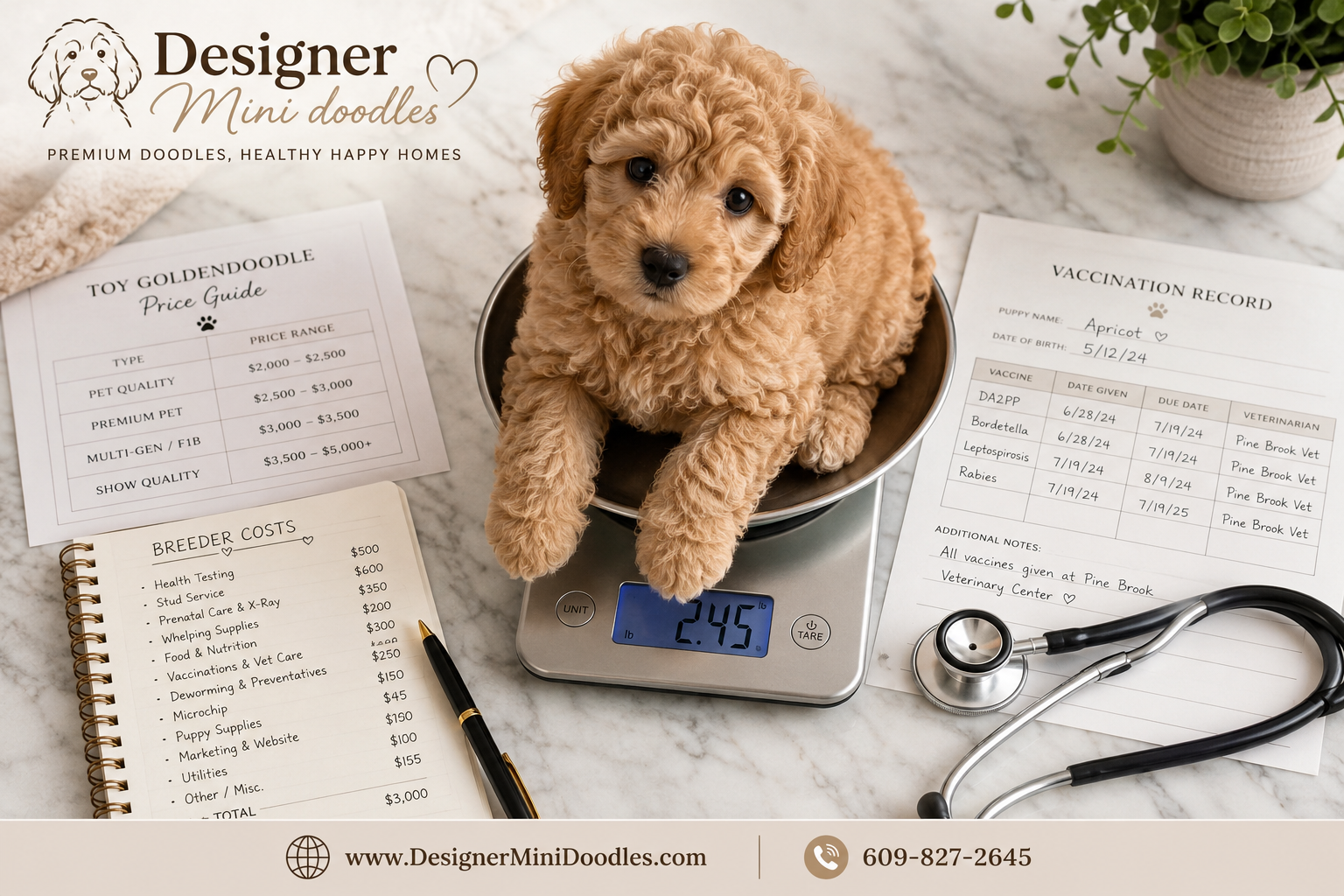
toy goldendoodle puppies for sale
- Size: Toy goldendoodles grow to 10–20 lbs and 10–15 inches tall at the shoulder.
- Cost: Expect $2,500–$5,500 from ethical breeders; annual care runs roughly $1,500–$3,000.
- Temperament: Calm, affectionate, intelligent, and excellent with children when properly socialized.
- Coat: Low-shedding and considered allergy-friendly, though no dog is 100% hypoallergenic.
- Lifespan: 12–15 years on average with proper veterinary care.
- Training: Highly trainable; early crate training and positive reinforcement work best.
- Apartment-friendly: Yes, with daily walks and mental stimulation.
- Designer Mini Doodles ships puppies worldwide via a dedicated puppy nanny service.
How much does a toy goldendoodle puppy cost?
A toy goldendoodle puppy from a reputable breeder generally costs $2,500 to $5,500 in 2026, with health-tested, fully socialized puppies trending toward the higher end. Cheaper listings (under $1,500) are red flags for puppy mills or backyard breeders.
What you’re paying for at the upper range:
- OFA and genetic health clearances on both parents
- Early Neurological Stimulation (ENS) from days 3–16
- Early crate and potty training started by week 5
- Vaccinations, deworming, and a vet wellness check
- Microchip, health guarantee, and lifetime breeder support
At Designer Mini Doodles, every puppy is raised by an animal biologist with 15+ years of experience producing some of the calmest, most confident toy goldendoodle puppies in America.
Decision rule: If a breeder won’t show health testing paperwork, walk away.
What’s the difference between toy and mini goldendoodles?
Size is the main difference. Toy goldendoodles weigh 10–20 lbs and stand 10–15 inches; mini goldendoodles weigh 20–35 lbs and stand 15–20 inches. Toys are bred using a Toy Poodle parent, while minis use a Miniature Poodle.
| Trait | Toy Goldendoodle | Mini Goldendoodle |
|---|---|---|
| Weight | 10–20 lbs | 20–35 lbs |
| Height | 10–15 in | 15–20 in |
| Lifespan | 12–15 yrs | 12–15 yrs |
| Best for | Apartments, seniors, light handling | Families, active homes |
| Exercise needs | 30–45 min/day | 45–60 min/day |
If you want even smaller, explore micro goldendoodle options in the 10–16 lb range.
Are toy goldendoodles good with kids?
Yes, toy goldendoodles are excellent family dogs when raised with proper socialization. They’re gentle, patient, and love being part of the action. However, because they’re small, supervision is essential with children under five — a toddler can accidentally injure a 12-pound dog.
Tips for success with kids:
- Teach children to sit on the floor before holding the puppy
- Never allow rough handling, tail pulling, or carrying without support
- Reinforce calm greetings to prevent the puppy from being jumpy
- Give the puppy a safe retreat zone (crate or pen)
See our guide on why micro goldendoodles thrive in family households with kids.
How big do toy goldendoodles get when full grown?
Most toy goldendoodles reach their full adult size between 9 and 12 months, weighing 10–20 pounds and standing 10–15 inches at the shoulder. Genetics from the Toy Poodle parent largely determine final size, so always ask the breeder for parent weights.
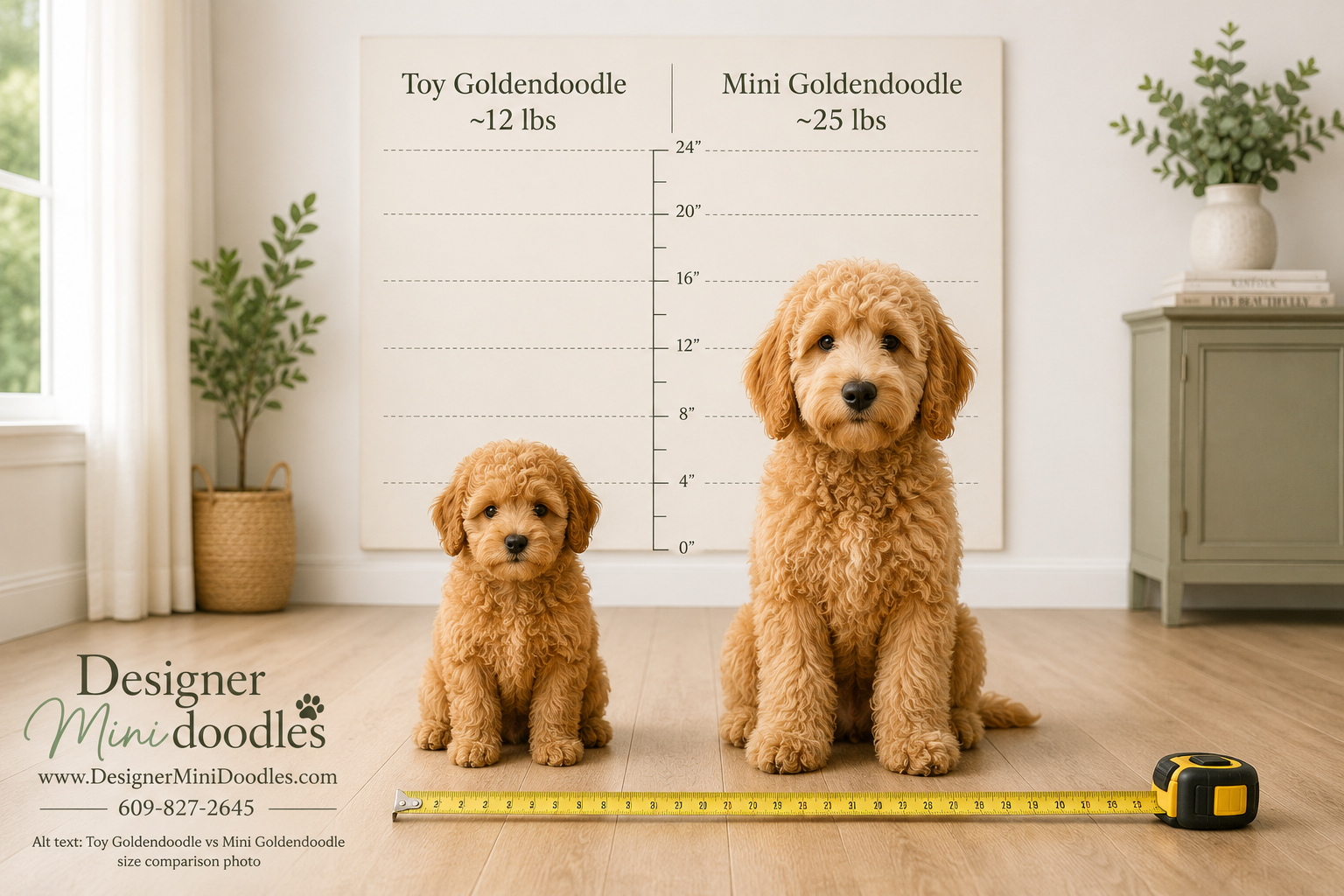
A quick estimate formula breeders use: adult weight ≈ puppy weight at 8 weeks × 4. So a 3-pound puppy at 8 weeks will likely mature around 12 pounds.
Are toy goldendoodles hypoallergenic?
Toy goldendoodles are considered allergy-friendly, not technically hypoallergenic. No dog breed is 100% allergen-free — allergens come from dander, saliva, and urine, not just fur. That said, the Poodle-influenced coat sheds very little, which dramatically reduces airborne dander in most homes.
If allergies are a concern:
- Choose F1B or multigenerational doodles (higher Poodle percentage)
- Spend time with an adult goldendoodle before committing
- Use a HEPA air purifier and bathe the dog every 3–4 weeks
More on this in our allergy-conscious homes guide.
Are toy goldendoodles good for apartments?
Yes — toy goldendoodles are one of the best apartment dogs available. Their small size, moderate energy, and quiet nature suit condo and urban living. They typically bark less than terriers or chihuahuas and adapt well to elevator rides, leash walks, and small spaces.
Apartment-living checklist:
- 2–3 short walks daily (15–20 min each)
- Puzzle toys and chew enrichment indoors
- Crate training for calm alone-time
- Doggy daycare or midday walker if you work long hours
Read more on apartment and urban living with a micro goldendoodle.
Health issues to watch for in toy goldendoodle puppies
The most common health issues in toy goldendoodles include hip dysplasia, patellar luxation, progressive retinal atrophy (PRA), and ear infections. Reputable breeders screen parents for genetic conditions to minimize risk.
Watch for these warning signs in puppies:
- Limping or skipping steps (possible luxating patella)
- Cloudy eyes or bumping into objects (eye issues)
- Persistent head shaking or ear odor (ear infections)
- Soft stool lasting more than 48 hours (parasites or food intolerance)
Floppy ears need weekly cleaning. See our ear, eye, and paw care guide for a routine that prevents most issues.
Where can I find reputable toy goldendoodle breeders near me?
A reputable toy goldendoodle breeder will let you visit, show health clearances, raise puppies in-home (not in kennels), and ask you screening questions. Avoid breeders who sell through pet stores, ship without quarantine protocols, or won’t provide a contract.
Vetted breeder networks by state:
- Michigan toy goldendoodle breeders
- New York micro mini goldendoodles
- Florida micro mini goldendoodles
- Texas mini goldendoodle breeders
- Georgia mini goldendoodle breeders
- North Carolina breeders
- Pennsylvania breeders
Designer Mini Doodles ships puppies to any home in the world through our dedicated puppy nanny service, so location is never a barrier. You can also view our Google Maps listing to verify our location and reviews.
For a deeper look at our process, read about our commitment to ethical breeding.
What should I expect in the first year of toy goldendoodle ownership?
The first year is the most demanding — and most rewarding. Expect intensive socialization, vet visits, training, and grooming as the foundation for a calm adult dog.
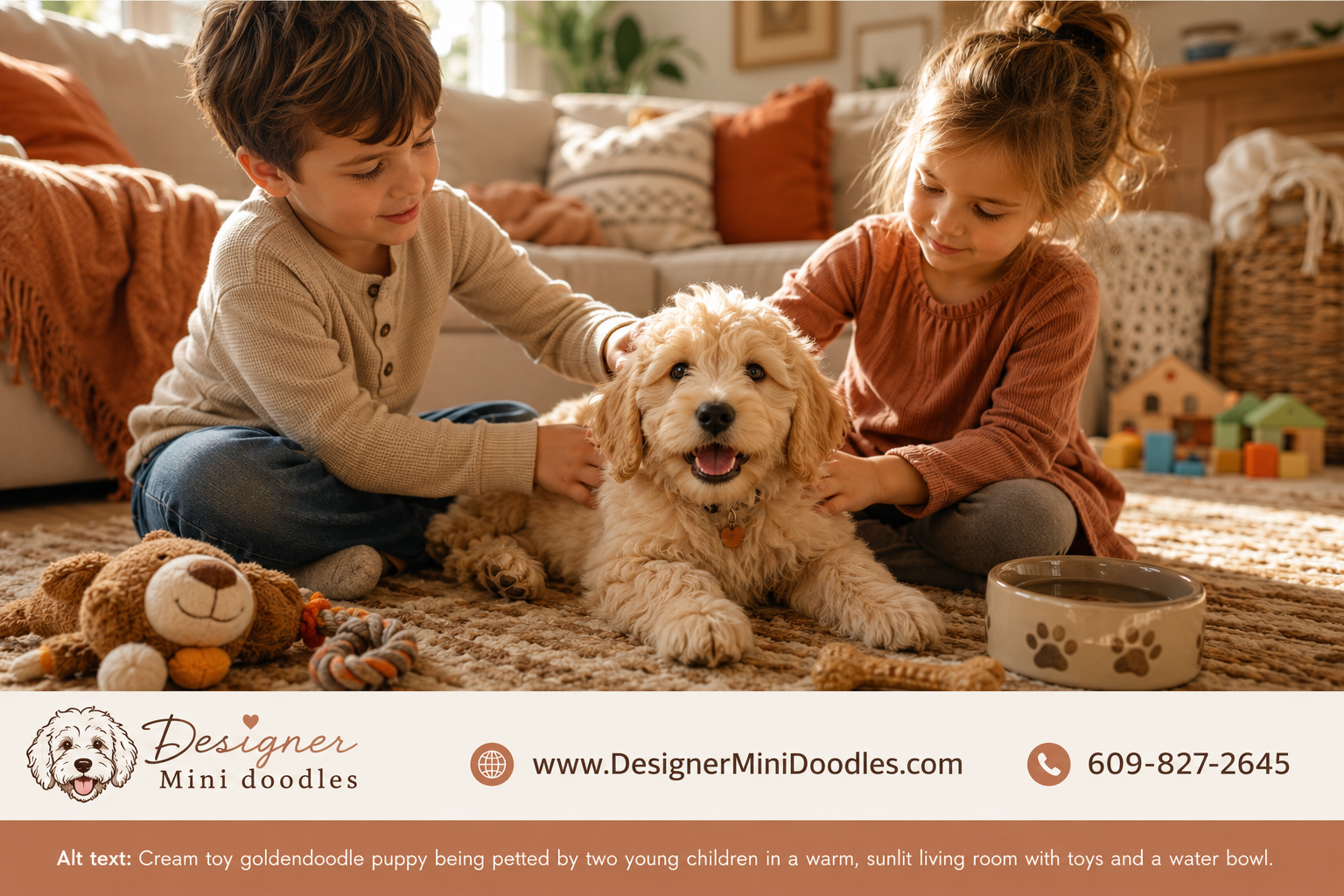
Month-by-month overview:
- Months 1–2 (8–16 weeks): Vaccinations, crate training, potty schedule, basic commands (sit, name recognition). Socialize with 100+ people, surfaces, and sounds.
- Months 3–4: Leash training, recall, first professional groom, transition to adult feeding schedule.
- Months 5–8: Adolescence begins — expect testing of boundaries. Reinforce training. Spay/neuter discussion with vet.
- Months 9–12: Adult coat comes in. Settle into permanent grooming, exercise, and feeding routines.
Our guide on preparing your home for a puppy covers everything you’ll need in the first 30 days.
Common mistakes first-time toy goldendoodle owners make
The most common mistakes are skipping crate training, under-socializing during the 8–16 week window, and over-handling because the puppy is small. These habits create anxiety and reactivity later.
Top mistakes to avoid:
- Free-roaming a young puppy — leads to potty accidents and destructive chewing.
- Skipping socialization because vaccines aren’t complete. Use safe environments (carried in public, friends’ yards) instead.
- Inconsistent rules between family members.
- Overfeeding — toy breeds gain weight fast.
- Late grooming introduction — start brushing and paw handling in week one.
- Treating the puppy like a stuffed animal instead of a dog with needs.
Our positive crate training method prevents most of the above.
Toy goldendoodle vs cockapoo: which is better?
Choose a toy goldendoodle if you want a calmer, more biddable dog with a teddy-bear look. Choose a cockapoo if you want a slightly smaller, more playful, terrier-like personality.
| Trait | Toy Goldendoodle | Cockapoo |
|---|---|---|
| Weight | 10–20 lbs | 12–24 lbs |
| Energy | Moderate | Moderate–High |
| Trainability | Very high | High |
| Coat upkeep | Every 6–8 weeks | Every 6–8 weeks |
| Bark level | Low | Moderate |
| Best for | Families, first-time owners, seniors | Active singles, experienced owners |
Both are wonderful — pick based on your activity level and household.
How much does it cost to care for a toy goldendoodle annually?
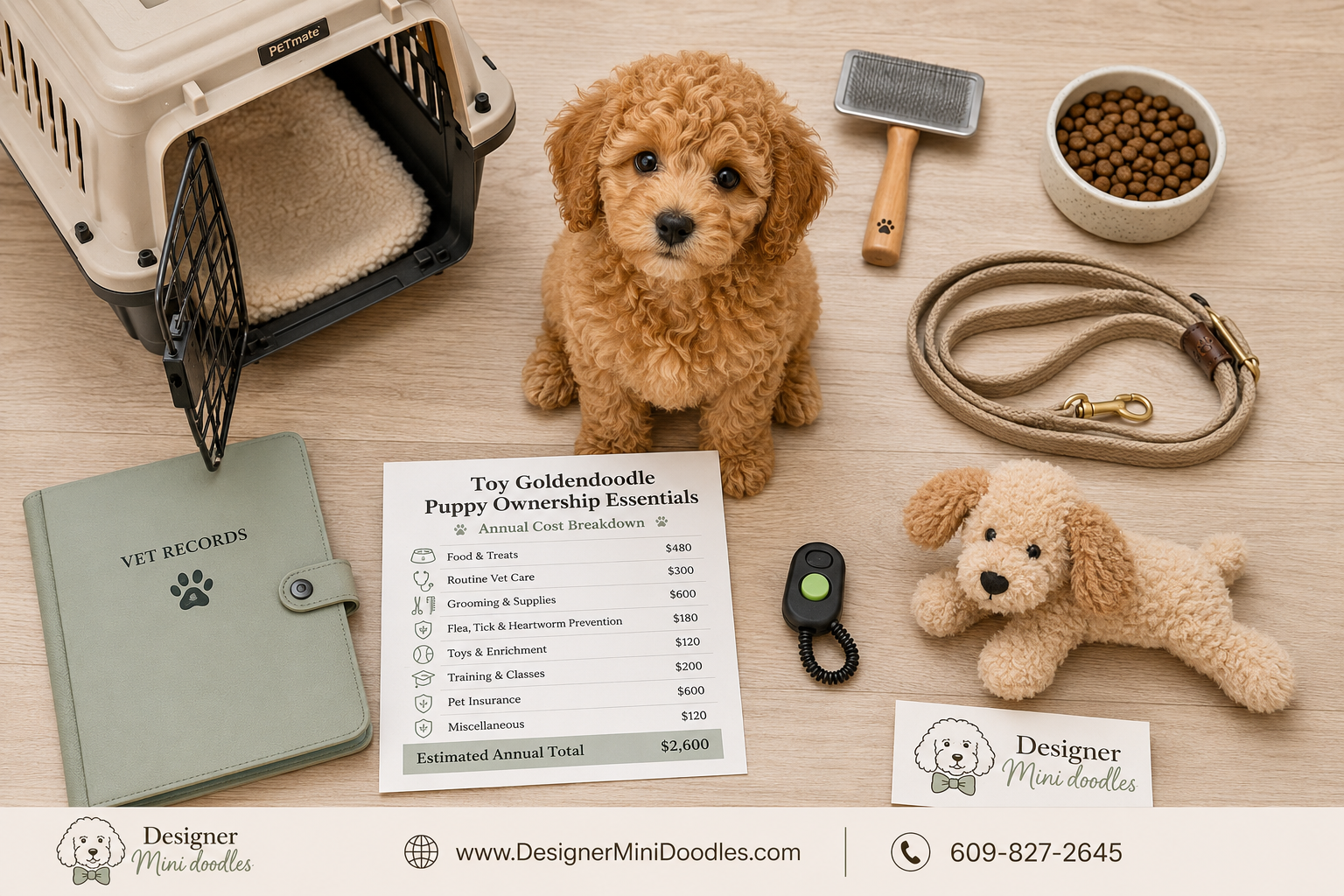
Annual costs for a toy goldendoodle run $1,500 to $3,000 depending on grooming frequency, food quality, and pet insurance.
Yearly cost breakdown:
| Category | Annual Cost |
|---|---|
| Food (premium small-breed) | $400–$700 |
| Professional grooming (every 6–8 wks) | $480–$840 |
| Vet wellness + vaccines | $250–$500 |
| Pet insurance | $300–$600 |
| Toys, treats, supplies | $200–$400 |
| Total | $1,630–$3,040 |
Budget extra for emergency vet visits (one $1,500 incident over a lifetime is common).
What kind of training do toy goldendoodle puppies need?
Toy goldendoodles need positive reinforcement training starting at 8 weeks, with emphasis on crate training, potty routines, socialization, and basic obedience. They’re highly intelligent and pick up commands quickly, but they’re also sensitive — harsh corrections backfire.
Training priorities by week:
- Weeks 8–10: Name, sit, crate love, potty schedule
- Weeks 10–14: Leash introduction, recall, “leave it”
- Weeks 14–20: Puppy class, public socialization, down/stay
- Months 6–12: Loose-leash walking, off-leash recall in safe areas
See our daily training schedule template and advanced tricks guide for next steps.
Why Designer Mini Doodles is different
Our program is led by an animal biologist with over 15 years of breeding experience — not a hobbyist. Every litter goes through:
- ENS (Early Neurological Stimulation) from days 3–16 to build resilience
- Early housebreaking using a litter box and pee pad system starting week 4
- Early crate training in 30-minute supervised sessions starting week 5
- Sound desensitization to vacuums, doorbells, thunder, fireworks
- Daily handling for nails, ears, mouth, and paws
The result is the calmest, most confident, most affectionate toy goldendoodle puppies for sale you’ll find in America. Families considering other companion breeds can also explore our partner site for french bulldog puppies.
FAQ
Do toy goldendoodles bark a lot?
No. They’re considered low-to-moderate barkers and are not prone to nuisance barking when properly socialized.
Can toy goldendoodles be left alone?
Adult toy goldendoodles handle 4–6 hours alone if crate-trained. Puppies need someone home every 2–3 hours.
Do toy goldendoodles get along with cats?
Yes, especially when introduced young. They’re not prey-driven like terriers.
What colors do toy goldendoodles come in?
Apricot, cream, red, black, parti, phantom, and merle (rare). Apricot and cream are most common.
How often do toy goldendoodles need grooming?
Professional grooming every 6–8 weeks plus brushing 3–4 times per week to prevent matting.
Are toy goldendoodles AKC registered?
No, goldendoodles are crossbreeds and not AKC-recognized. They can be registered with the Goldendoodle Association of North America (GANA).
What’s the lifespan of a toy goldendoodle?
12–15 years with proper care, sometimes longer.
Can Designer Mini Doodles ship internationally?
Yes. Our dedicated puppy nanny service flies puppies safely to any home worldwide.
Are toy goldendoodle puppies for sale available year-round?
We typically have litters planned throughout the year. Join the waitlist for current availability.
Do you offer a health guarantee?
Yes — every puppy comes with a written health guarantee and lifetime breeder support.
Conclusion
A toy goldendoodle is one of the best small companion dogs you can bring home in 2026 — adaptable, affectionate, low-shedding, and built for both apartments and family life. The key to a healthy, balanced adult dog is starting with a breeder who invests in genetics, neurological development, and early training.
Your next steps:
- Decide on size (toy 10–20 lbs vs. mini 20–35 lbs).
- Set a realistic budget — $2,500–$5,500 upfront, $1,500–$3,000 annually.
- Vet your breeder using the checklist above.
- Prepare your home with a crate, pen, and supplies before pickup.
- Reach out to Designer Mini Doodles to view current toy goldendoodle puppies for sale or join the waitlist.
Whether you’re in New York, California, or overseas, our puppy nanny service makes the journey home safe and seamless.