
toy goldendoodle puppies Ocala
Quick Answer: Toy goldendoodle puppies in Ocala, Florida typically cost between $3,000 and $6,000 from reputable breeders, weigh 10 to 20 pounds fully grown, and live 12 to 16 years. The best breeders in the Ocala area offer health-tested, well-socialized puppies with early neurological stimulation (ENS), crate training, and housebreaking protocols that produce calmer, more confident companions.
toy goldendoodle puppies Ocala
- Toy goldendoodles are a cross between a toy or miniature poodle and a golden retriever, bred down to a compact size ideal for Florida living.
- Prices in Florida range from $3,000 to $6,000+, depending on coat color, generation, and breeder reputation.
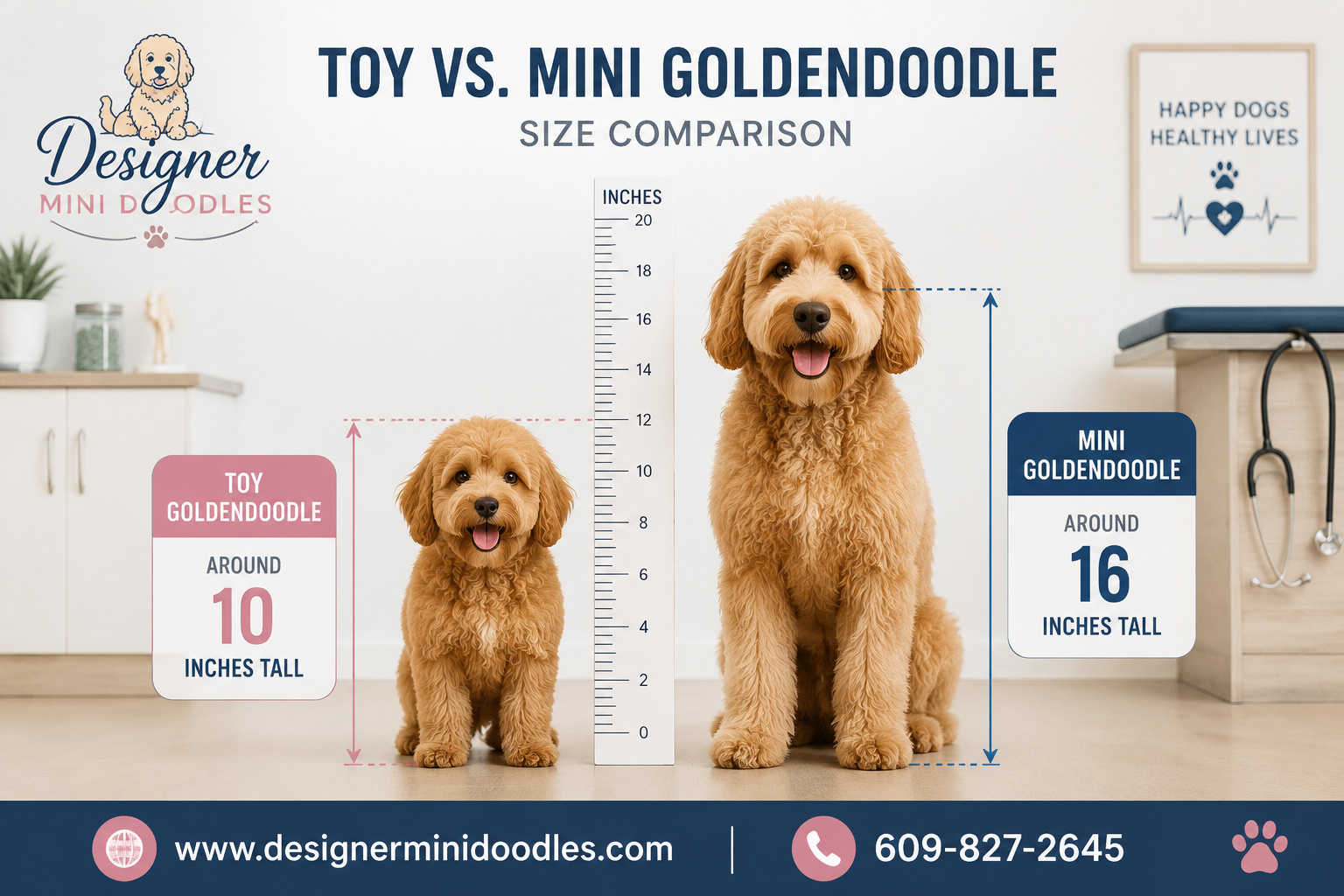
- Fully grown toy goldendoodles stand 10 to 15 inches tall and weigh 10 to 20 pounds.
- They are considered low-shedding and allergy-friendly, though no dog is 100% hypoallergenic.
- Common health concerns include patellar luxation, progressive retinal atrophy, and hip dysplasia.
- The best breeders conduct OFA and genetic health testing on all parent dogs before breeding.
- Toy goldendoodles are highly trainable and typically excellent with children and other pets.
- Annual care costs (food, vet, grooming) run approximately $1,500 to $3,000.
- Puppies from programs with ENS, early socialization, and crate training adjust faster to new homes.
- Designer Doodles, run by an animal biologist with over 15 years of breeding experience, ships puppies nationwide and worldwide through a dedicated puppy nanny service.
How Much Does a Toy Goldendoodle Puppy Cost in Florida?
Toy goldendoodle puppies in Florida generally cost between $3,000 and $6,000, with some breeders charging more for rare coat colors like red, phantom, or parti. The price reflects health testing, breeding program quality, early training, and ongoing veterinary care for the litter.
Here’s what drives the price variation:
| Factor | Lower Price Range | Higher Price Range |
|---|---|---|
| Generation | F1 (first cross) | F1b, Multigen (more predictable coats) |
| Coat Color | Cream, apricot | Red, phantom, parti, merle |
| Health Testing | Basic vet check | Full OFA + genetic panel on parents |
| Early Training | Minimal socialization | ENS, crate training, housebreaking |
| Breeder Experience | Newer programs | 10+ years with documented results |
| Size | Toy (10-20 lbs) | Micro (under 10 lbs) |
Decision rule: If a breeder is offering toy goldendoodle puppies for under $2,000 in Florida, that’s a red flag. Quality health testing alone costs breeders hundreds of dollars per parent dog. Low prices often mean corners were cut on genetic screening or veterinary care.
Micro goldendoodle puppies for sale, which mature under 10 pounds, typically sit at the higher end of the price range because achieving that size consistently requires careful, multi-generational breeding.
What’s the Difference Between Toy and Mini Goldendoodles?
Toy goldendoodles are smaller than minis. A toy goldendoodle stands 10 to 15 inches at the shoulder and weighs 10 to 20 pounds, while a mini goldendoodle stands 14 to 17 inches and weighs 20 to 35 pounds. The difference comes down to the size of the poodle parent used in the cross.
Key distinctions at a glance:
- Toy goldendoodles: Best for apartments, condos, and smaller homes. They need less space and less food but still require daily exercise.
- Mini goldendoodles: Better suited for families who want a slightly sturdier dog that can keep up with active kids and outdoor activities.
- Temperament: Both sizes share the same friendly, people-oriented personality. Toys can be slightly more prone to “small dog syndrome” if not properly trained and socialized early.
Common mistake: Many buyers confuse marketing terms. Some breeders label 25-pound dogs as “toys” when they’re actually minis. Always ask for the parents’ weights and the breeder’s definition of each size category. A reputable program like Designer Doodles, which has been producing the best quality mini and toy goldendoodle puppies for over 15 years, will be transparent about expected adult sizes.
How Big Do Toy Goldendoodles Get When Fully Grown?
A toy goldendoodle typically reaches 10 to 15 inches tall at the shoulder and weighs between 10 and 20 pounds at full maturity. Most reach their adult size by 9 to 12 months of age, though they may continue filling out slightly until about 14 months.
Factors that influence final size:
- Parent sizes: The single best predictor. Ask the breeder for exact weights of both the sire and dam.
- Generation: F1b toy goldendoodles (backcrossed to a toy poodle) tend to be smaller and more consistent in size than F1 crosses.
- Gender: Males are often 1 to 3 pounds heavier than females from the same litter.
- Nutrition: Overfeeding during the growth phase can push a puppy past its genetic size range and stress developing joints.
For those wanting an even smaller companion, micro goldendoodle puppies mature under 10 pounds and stand under 10 inches. These are available from select programs that have spent years refining their breeding lines.
Are Toy Goldendoodles Good With Kids and Other Pets?
Yes. Toy goldendoodles are one of the most family-friendly small breeds available in 2026. They inherit the golden retriever’s gentle, patient temperament and the poodle’s intelligence, making them naturally good with children and other household pets.
What makes them great family dogs:
- They bond strongly with all family members, not just one person
- Their small size means they’re less likely to accidentally knock over toddlers compared to standard-sized doodles
- They’re social by nature and generally get along well with cats, other dogs, and even smaller pets when properly introduced
- Their intelligence makes them responsive to boundaries set by children
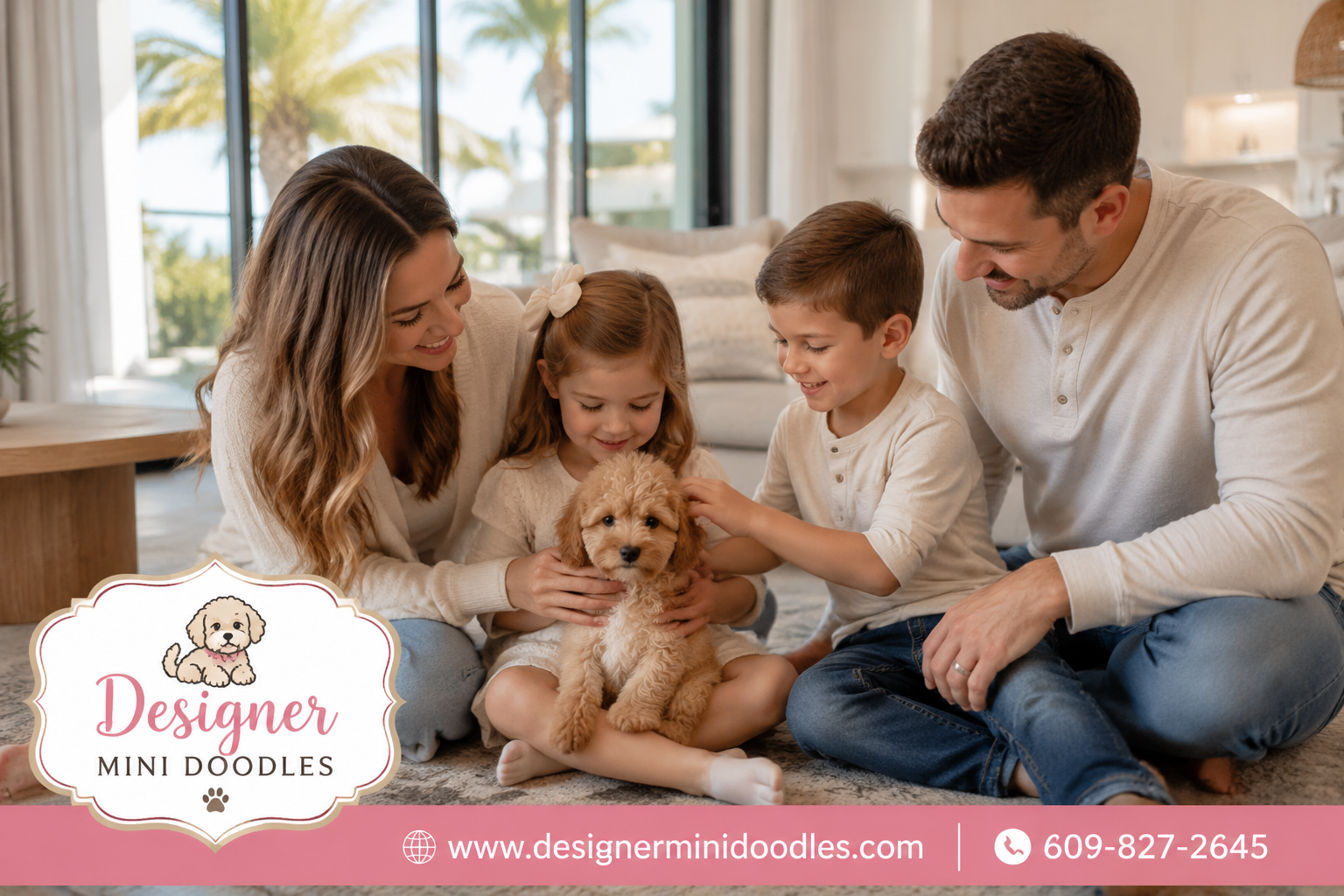
Edge case to consider: Because toy goldendoodles are small, very young children (under 4) need supervision. A toddler can accidentally injure a 12-pound puppy by sitting on it or picking it up incorrectly. Teach children to sit on the floor when interacting with the puppy rather than carrying it around.
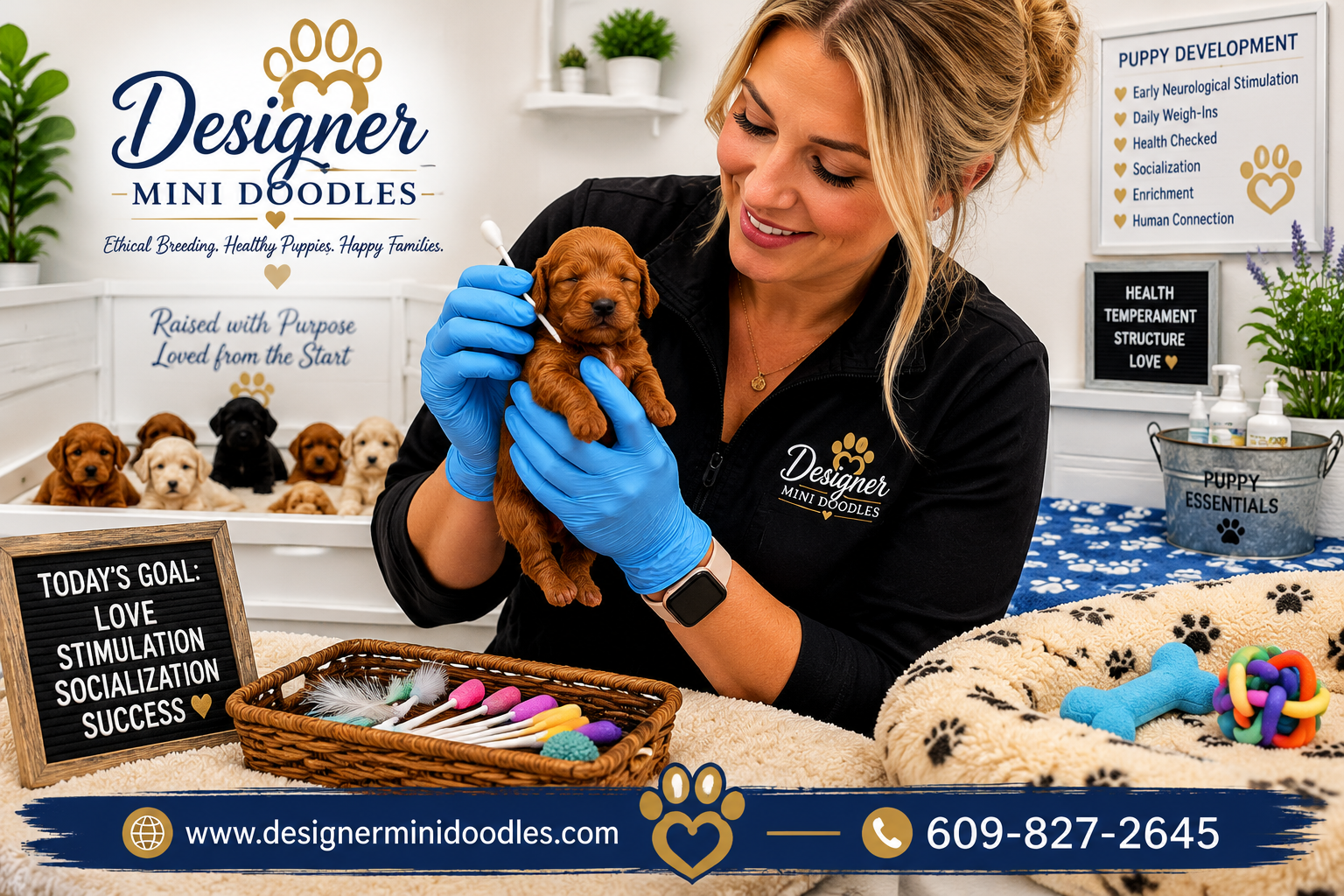
Puppies that go through early socialization programs, including exposure to children, household sounds, and other animals during the critical 3-to-12-week window, adjust much faster. This is one reason why breeders who invest in ENS (Early Neurological Stimulation) and structured socialization produce noticeably calmer, more confident puppies.
Are Toy Goldendoodles Hypoallergenic? Do They Shed a Lot?
Toy goldendoodles are low-shedding and considered allergy-friendly, but no dog breed is truly 100% hypoallergenic. Allergies are triggered by proteins in a dog’s saliva, urine, and dander, not just loose hair. That said, toy goldendoodles, especially F1b and multigen varieties, produce significantly less dander and shed far less than golden retrievers or most other breeds.
Shedding by generation:
- F1 (50% poodle, 50% golden retriever): Moderate shedding; wavy coat. Not the best choice for allergy sufferers.
- F1b (75% poodle, 25% golden retriever): Low shedding; curly to wavy coat. Good for most people with mild allergies.
- Multigen (multiple generations of doodle-to-doodle or doodle-to-poodle crosses): Lowest shedding; curlier coat. Best option for allergy-sensitive households.
Grooming requirement: Low shedding comes with a trade-off. Toy goldendoodles need professional grooming every 6 to 8 weeks and daily brushing to prevent matting. Their curly coats trap loose hair instead of dropping it, which is why they seem to shed less but mat more.
What Health Issues Do Toy Goldendoodles Commonly Have?
Toy goldendoodles are generally healthy dogs with a lifespan of 12 to 16 years, but they can be prone to certain conditions inherited from both parent breeds.
Most common health concerns:
- Patellar luxation: The kneecap slips out of place. Common in small breeds. Reputable breeders screen for this.
- Progressive retinal atrophy (PRA): A genetic eye condition that can lead to blindness. Easily tested for with DNA screening.
- Hip dysplasia: Less common in toys than in larger goldendoodles, but still possible. OFA hip evaluations on parents reduce risk.
- Von Willebrand’s disease: A blood clotting disorder found in some poodle lines. Genetic testing identifies carriers.
- Ear infections: Their floppy ears trap moisture, especially in Florida’s humid climate. Regular ear cleaning prevents most issues.
- Dental problems: Small mouths mean crowded teeth. Annual dental cleanings and daily brushing are important.
What to demand from a breeder: At minimum, both parent dogs should have OFA evaluations for hips, patellas, and eyes, plus a genetic panel covering PRA, von Willebrand’s, and other breed-specific conditions. If a breeder can’t provide these results, walk away.
How Long Do Toy Goldendoodles Typically Live?
Toy goldendoodles have an average lifespan of 12 to 16 years, with many reaching the upper end of that range when well cared for. Smaller dogs generally live longer than larger ones, and toy goldendoodles benefit from this biological advantage.
Factors that support a longer life:
- Purchasing from a breeder who health-tests parent dogs
- Maintaining a healthy weight (obesity is the number one controllable risk factor)
- Regular veterinary checkups, including dental care
- Consistent exercise appropriate for their size (30 to 60 minutes daily)
- Mental stimulation through training, puzzle toys, and social interaction
How Much Does It Cost to Care for a Toy Goldendoodle Annually?
Annual care costs for a toy goldendoodle in the Ocala area typically run between $1,500 and $3,000, depending on your choices around food quality, grooming frequency, and veterinary care.
| Expense Category | Estimated Annual Cost |
|---|---|
| High-quality food | $300 – $600 |
| Veterinary care (routine) | $300 – $600 |
| Professional grooming (6-8x/year) | $400 – $800 |
| Flea/tick/heartworm prevention | $150 – $300 |
| Pet insurance | $300 – $600 |
| Toys, treats, supplies | $100 – $300 |
| Total | $1,550 – $3,200 |
Florida-specific note: Heartworm prevention is year-round in Ocala due to the warm, humid climate. Don’t skip months like owners in northern states sometimes do. Flea and tick prevention is also a 12-month commitment in Central Florida.
How Hard Are Toy Goldendoodles to Train?
Toy goldendoodles are among the easiest small breeds to train. They rank high in intelligence (thanks to the poodle parent, which is the second-smartest dog breed) and high in eagerness to please (from the golden retriever side). Most toy goldendoodle puppies can learn basic commands like sit, down, stay, and come within the first few weeks in their new home.
Training tips specific to toy goldendoodles:
- Use positive reinforcement exclusively. They’re sensitive dogs. Harsh corrections damage their confidence and can create anxiety.
- Start early. Puppies from programs that begin crate training and housebreaking before they go home have a significant head start.
- Keep sessions short. Five to ten minutes, three times a day, works better than one long session.
- Socialize broadly. Expose them to different people, places, sounds, and surfaces during the first 16 weeks.
Choose a breeder with early training if: You want to skip the hardest part of puppyhood. Programs that include ENS, early housebreaking, and early crate training send puppies home already familiar with a crate, basic potty routines, and household sounds. This makes the transition dramatically smoother.
Where Can I Find Reputable Toy Goldendoodle Breeders Near Ocala?
The Ocala area has several options for toy goldendoodle puppies, but the most important factor is choosing a breeder who prioritizes health testing, early socialization, and transparent practices over volume.
What to look for in a reputable breeder:
- OFA and genetic health testing results available for all parent dogs
- A clean, organized facility you can visit or see via video tour
- Written health guarantee (minimum 2 years)
- References from previous puppy buyers
- Evidence of early socialization, ENS, and training protocols
- Willingness to answer questions and provide ongoing support after purchase
Who stands out: Designer Doodles is run by an animal biologist who has been breeding the best quality mini and toy goldendoodle puppies in America for over a decade and a half. Their program is built around science-based protocols including Early Neurological Stimulation, structured socialization, early housebreaking, and early crate training. The result is consistently calm, affectionate, and confident toy golden doodle puppies that adjust quickly to their new families.
Their puppies are available to families in Ocala and throughout Florida, and they also ship nationwide and worldwide through a dedicated puppy nanny service. So even if you’re not local, you can still bring home a well-bred toy goldendoodle.
You can find their location on Google Maps for more details.
If you’re also considering other small breeds, Designer Doodles’ sister program offers mini french bulldog puppies for sale with the same commitment to health testing and early socialization.
What Should I Look for When Buying a Toy Goldendoodle Puppy?
Before putting down a deposit, verify health testing, meet (or video-call with) the parent dogs, and ask detailed questions about the breeder’s socialization and training protocols.
Your pre-purchase checklist:
- Confirm health testing. Ask for OFA certifications and genetic panel results for both parents. Accept nothing less.
- Ask about the puppy’s generation. F1b and multigen are best for allergy sufferers. F1 is fine if shedding isn’t a concern.
- Review the health guarantee. It should cover genetic conditions for at least 2 years.
- Ask about early training. Does the breeder do ENS? Crate training? Housebreaking? Exposure to household sounds?
- Request references. Talk to at least two previous buyers about their experience.
- Evaluate temperament. A good breeder matches puppies to families based on energy level and personality, not just coat color.
- Check the contract. Read every line. Understand spay/neuter requirements, return policies, and breeding restrictions.
- Visit if possible. If you can’t visit in person, ask for a live video tour of the facility and the puppies.
Red flags to avoid:
- No health testing documentation
- Multiple breeds available at all times (puppy mill indicator)
- Pressure to buy immediately or “the puppy will go to someone else”
- No contract or health guarantee
- Unwillingness to show parent dogs
What Are Common Mistakes First-Time Toy Goldendoodle Owners Make?
First-time owners most commonly underestimate grooming needs, skip early training, and choose a puppy based on looks alone rather than temperament match.
The top mistakes and how to avoid them:
- Skipping grooming: A matted toy goldendoodle is an uncomfortable, unhappy dog. Budget for professional grooming every 6 to 8 weeks and brush daily.
- Not crate training: Crate training isn’t cruel. It gives your puppy a safe space and prevents destructive behavior when unsupervised. Puppies from programs with early crate training already understand the crate as a positive place.
- Overfeeding: Toy goldendoodles gain weight easily. Follow your vet’s feeding guidelines, not the bag’s recommendations (which are often too generous).
- Choosing by color alone: A red coat doesn’t guarantee a good temperament. Prioritize health testing and breeder quality over aesthetics.
- Skipping socialization: The window between 3 and 16 weeks is critical. If your puppy missed early socialization with the breeder, make up for it immediately with puppy classes, safe outings, and controlled introductions.
- Ignoring dental care: Small breeds are prone to dental disease. Start brushing teeth early and plan for professional cleanings.
Frequently Asked Questions
How much do toy goldendoodle puppies cost in Ocala, Florida?
Expect to pay $3,000 to $6,000 from a reputable breeder. Micro goldendoodles may cost more. Prices under $2,000 usually indicate a lack of proper health testing.
Are toy goldendoodles good apartment dogs?
Yes. Their small size (10-20 pounds) and moderate energy level make them well-suited for apartment living, provided they get 30 to 60 minutes of daily exercise and mental stimulation.
Do toy goldendoodles bark a lot?
They can be vocal if bored or under-socialized, but they’re not considered excessive barkers. Early training and adequate exercise prevent most nuisance barking.
Can I get a toy goldendoodle puppy shipped to Ocala?
Yes. Many top breeders, including Designer Doodles, offer a dedicated puppy nanny service that delivers puppies to any home in the United States or internationally. The puppy travels with a trained handler, not in cargo.
What generation of toy goldendoodle is best?
F1b (75% poodle) is the most popular choice because it offers the most consistent low-shedding coat. Multigen is ideal for families with significant allergies.
How often do toy goldendoodles need grooming?
Professional grooming every 6 to 8 weeks, plus daily brushing at home. In Florida’s humidity, you may need to groom more frequently to prevent matting.
Are toy goldendoodles good for seniors?
Excellent. Their small size, gentle temperament, and moderate exercise needs make them ideal companions for older adults.
What colors do toy goldendoodles come in?
Common colors include cream, apricot, red, chocolate, black, phantom (two-tone), parti (white with patches), and merle. Color doesn’t affect temperament or health.
Do toy goldendoodles have separation anxiety?
They can, because they bond closely with their people. Crate training and gradually increasing alone time from puppyhood helps prevent this. Puppies from programs with early crate training have a significant advantage here.
When can a toy goldendoodle puppy go to its new home?
Most reputable breeders release puppies between 8 and 10 weeks of age. Earlier than 8 weeks is too young and can cause behavioral issues.
What’s the difference between a toy goldendoodle and a micro goldendoodle?
A toy goldendoodle matures at 10 to 20 pounds. A micro goldendoodle is even smaller, typically under 10 pounds. Both are available from select toy goldendoodle breeders who have refined their breeding lines over many generations.
Is Ocala a good place to raise a toy goldendoodle?
Ocala’s warm climate means year-round outdoor activity, which toy goldendoodles love. Just be mindful of heat during summer months, provide shade and fresh water during walks, and maintain year-round flea, tick, and heartworm prevention.
Conclusion
Finding the right toy goldendoodle puppy in Ocala comes down to three things: choosing a reputable breeder with documented health testing, understanding the breed’s needs before you bring a puppy home, and committing to proper grooming, training, and veterinary care for the life of your dog.
Your next steps:
- Set your budget. Plan for $3,000 to $6,000 for the puppy plus $1,500 to $3,000 annually for care.
- Research breeders thoroughly. Prioritize programs with OFA health testing, ENS protocols, and early training. Designer Doodles’ 15+ years of experience and science-based breeding program makes them a strong starting point.
- Decide on size and generation. Toy (10-20 lbs) or micro (under 10 lbs)? F1b or multigen for lowest shedding?
- Prepare your home. Get a crate, set up a potty area, stock up on grooming supplies, and schedule a vet appointment for the first week.
- Connect with a breeder. Ask questions, review health testing results, and get on a waitlist if needed. Quality puppies from top programs often have waiting lists, and that’s a good sign.
Whether you’re in Ocala or anywhere else in the country, a well-bred toy goldendoodle from a program that invests in health, temperament, and early training will be one of the best companions you’ll ever have.
References
- Orthopedic Foundation for Animals (OFA). “Canine Health Information Center.” OFA.org, 2025. https://www.ofa.org
- American Kennel Club. “Goldendoodle Dog Breed Information.” AKC.org, 2024. https://www.akc.org
- Coren, Stanley. The Intelligence of Dogs. Free Press, 2006.
- Goldendoodle Association of North America (GANA). “Breed Standards and Generations.” GANA.org, 2024. https://www.goldendoodleassociation.com