
toy goldendoodles Ocala
Quick Answer: Toy goldendoodles in Ocala, Florida, typically cost between $3,000 and $6,000 from a reputable breeder, weigh 10 to 25 pounds fully grown, and are among the most popular companion dogs for families, seniors, and first-time owners in the region. Ocala’s mild climate and pet-friendly community make it an ideal area for raising these small, affectionate doodles, and buyers can work with established breeding programs that ship nationwide through dedicated puppy nanny services.
toy goldendoodles Ocala
- Toy goldendoodles in Ocala range from $3,000 to $6,000 depending on generation, coat color, and breeder reputation.
- Fully grown toy goldendoodles stand under 14 inches tall and weigh between 10 and 25 pounds.
- They are low-shedding (not completely hypoallergenic) and well-suited for allergy-sensitive households.
- The typical lifespan of a toy goldendoodle is 12 to 16 years with proper care.
- Designer Doodles, run by an animal biologist with over 15 years of breeding experience, operates one of the top toy and micro goldendoodle programs in the country.
- Early Neurological Stimulation (ENS), early housebreaking, and crate training produce calmer, more confident puppies.
- Toy goldendoodles are excellent with children and ideal for first-time dog owners.
- Puppies can be delivered to any home in the world through professional puppy nanny services.
- Ocala-area buyers should prioritize breeders who provide health testing, socialization protocols, and post-purchase support.
What’s the Difference Between Mini and Toy Goldendoodle Sizes?
The main difference comes down to weight and height at maturity. Mini goldendoodles generally weigh 25 to 45 pounds and stand 14 to 17 inches tall. Toy goldendoodles are smaller, weighing 10 to 25 pounds and standing under 14 inches at the shoulder. There’s also a newer category, the micro goldendoodle, which typically stays under 10 to 15 pounds.
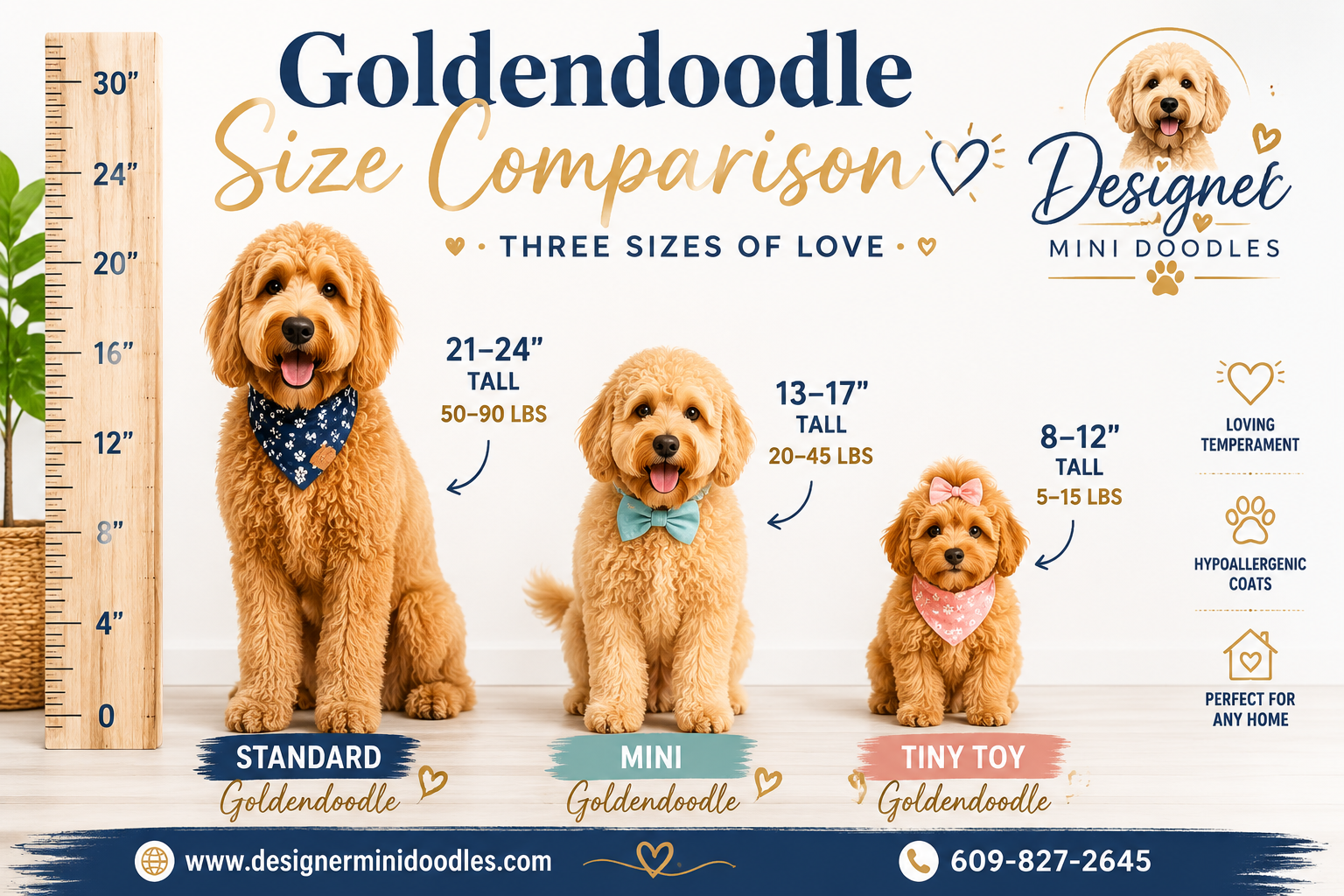
Here’s a quick comparison:
| Category | Weight (Adult) | Height (Adult) | Best For |
|---|---|---|---|
| Standard Goldendoodle | 50–90 lbs | 20–26 inches | Active families, large homes |
| Mini Goldendoodle | 25–45 lbs | 14–17 inches | Families, suburban homes |
| Toy Goldendoodle | 10–25 lbs | Under 14 inches | Apartments, seniors, travel |
| Micro Goldendoodle | Under 15 lbs | Under 12 inches | Small spaces, lap dog lovers |
Choose a toy goldendoodle if you want a dog small enough for apartment living or frequent travel but still sturdy enough to play with kids and join you on walks. Choose a mini if you want a slightly larger, more athletic companion.
A common mistake buyers make is assuming “toy” and “mini” are interchangeable terms. They aren’t. Always confirm the expected adult weight range with your breeder before committing.
How Big Do Toy Goldendoodles Get When Fully Grown?
A fully grown toy goldendoodle typically weighs between 10 and 25 pounds and stands 10 to 14 inches at the shoulder. Most reach their adult size by 9 to 12 months of age, though they may continue filling out slightly until about 14 months.
The final size depends on the parents. Toy goldendoodles are usually a cross between a toy or small miniature poodle and a golden retriever (or a smaller goldendoodle in multigenerational breeding). Breeders with established programs, like Designer Doodles, carefully select parent dogs to produce consistent sizing across litters. This matters because poorly planned pairings can result in puppies that grow well beyond “toy” range.
Edge case: If one parent is on the larger side of the mini spectrum, some puppies in the litter may land closer to 28 to 30 pounds. Always ask to see the parents and their weights.
How Much Do Toy Goldendoodles Cost in Florida?
Toy goldendoodles in Florida generally cost between $3,000 and $6,000 from a reputable breeder. Prices vary based on coat color (red and apricot command premiums), generation (F1B and multigenerational tend to cost more), and the breeder’s health testing and training protocols.
What Should I Expect to Pay for a Toy Goldendoodle Puppy?
Beyond the purchase price, plan for these first-year costs:
- Veterinary care (vaccines, spay/neuter): $500–$1,200
- Food and treats: $400–$700 per year
- Grooming (every 6–8 weeks): $50–$80 per session
- Supplies (crate, bed, leash, toys): $300–$500
- Pet insurance: $30–$60 per month
Total first-year cost estimate: $5,000–$8,500 including the puppy purchase.
Prices below $2,000 in Florida should raise red flags. Extremely low prices often indicate puppy mills, lack of health testing, or misrepresented sizing. A responsible breeder invests heavily in genetic testing, veterinary care, ENS protocols, and early training, and that’s reflected in the price.
Designer Doodles, run by an animal biologist who has been breeding top-quality mini and toy goldendoodle puppies for over 15 years, is one example of a program where the investment covers comprehensive health screening, early housebreaking, crate training, and socialization that produces calmer, more confident puppies. They also offer toy goldendoodle puppies with nationwide delivery.
Are Toy Goldendoodles Good With Kids?
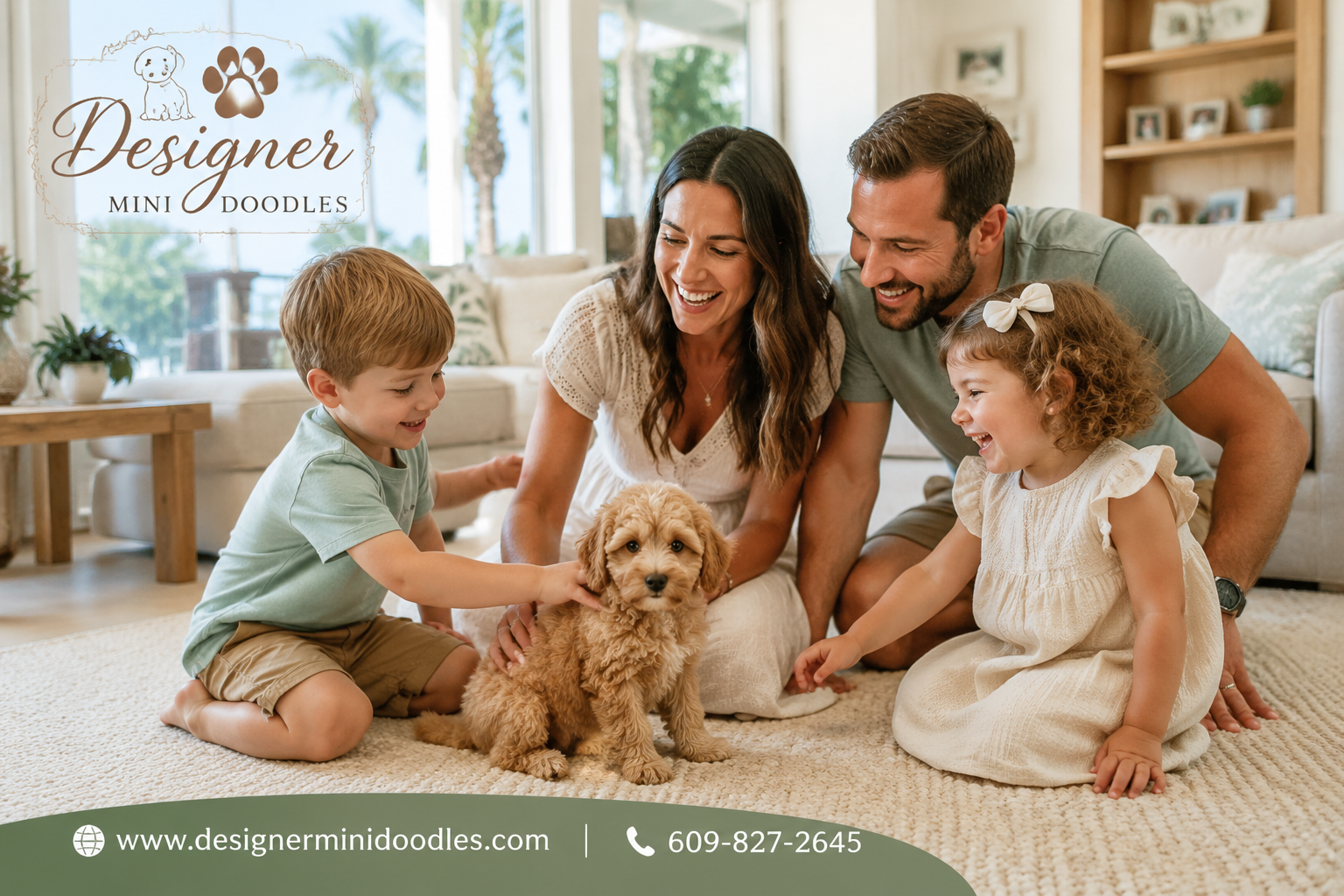
Yes. Toy goldendoodles are one of the best small breeds for families with children. They inherit the golden retriever’s gentle, patient temperament and the poodle’s intelligence and eagerness to please. This combination makes them naturally tolerant of the unpredictable behavior of young children.
That said, there are important caveats:
- Supervise young children. Toy goldendoodles are small, and a toddler can accidentally injure a 12-pound dog. Teach kids to be gentle.
- Socialization matters. A well-socialized puppy from a program that uses Early Neurological Stimulation (ENS) and handles puppies daily will be more confident and less reactive around kids.
- Choose a toy over a micro if you have active kids. Micro goldendoodles under 10 pounds are more fragile. A toy in the 15 to 25 pound range is sturdier for family life.
“The combination of golden retriever patience and poodle intelligence makes toy goldendoodles naturally well-suited for households with children, provided the dog has been properly socialized from an early age.”
Are Toy Goldendoodles Good for First-Time Dog Owners?
Absolutely. Toy goldendoodles rank among the best breeds for first-time owners because they’re intelligent, eager to please, forgiving of training mistakes, and adaptable to different living situations.
Here’s why they work well for beginners:
- Trainability: Poodles are the second most intelligent dog breed, and golden retrievers are the fourth (according to Stanley Coren’s canine intelligence rankings). That intelligence passes directly to their offspring.
- Temperament: They’re not prone to aggression or extreme stubbornness.
- Size: At 10 to 25 pounds, they’re manageable for someone who hasn’t handled dogs before.
- Exercise needs: Moderate. A 30-minute walk plus some playtime is usually sufficient.
Common mistake for first-time owners: Skipping professional training because the puppy “seems smart enough to figure it out.” Even easy-to-train dogs need structure. Puppies from programs that include early housebreaking and crate training, like Designer Doodles’ toy golden doodle puppies, give first-time owners a significant head start.
Do Toy Goldendoodles Shed a Lot?
Are Toy Goldendoodles Hypoallergenic?
Toy goldendoodles are low-shedding, but no dog is truly 100% hypoallergenic. The amount of shedding depends on the generation and coat type.
- F1 (50% poodle, 50% golden retriever): Moderate shedding. Wavy coat.
- F1B (75% poodle, 25% golden retriever): Low shedding. Curlier coat.
- F1BB and multigenerational: Very low shedding. Tight curly coat closest to a poodle.
Choose an F1B or multigenerational toy goldendoodle if allergies are a primary concern. The curlier the coat, the less dander is released into your environment.
All toy goldendoodles require regular grooming regardless of coat type. Plan on professional grooming every 6 to 8 weeks and daily brushing at home to prevent matting. Matted coats trap allergens and can cause skin issues.
Health Issues to Watch for in Toy Goldendoodles
Toy goldendoodles are generally healthy dogs, but they can be prone to certain conditions inherited from both parent breeds. Awareness of these issues helps you catch problems early and choose a breeder who screens for them.
Common health concerns include:
- Patellar luxation (kneecap dislocation) — more common in smaller dogs
- Progressive retinal atrophy (PRA) — an inherited eye condition
- Hip dysplasia — less common in toys than standards, but still possible
- Von Willebrand’s disease — a blood clotting disorder
- Ear infections — floppy ears trap moisture
- Dental issues — small mouths can lead to crowding
Typical Lifespan of a Toy Goldendoodle
Toy goldendoodles live 12 to 16 years on average, which is longer than standard goldendoodles (10 to 13 years). Smaller dogs generally live longer than larger ones. With proper nutrition, regular veterinary care, and an active lifestyle, many toy goldendoodles reach 15 or 16 years.
What to ask your breeder: Request documentation of genetic health testing on both parents, including OFA (Orthopedic Foundation for Animals) evaluations and DNA panels for PRA, vWD, and other breed-specific conditions. Reputable breeders like Designer Doodles perform comprehensive health testing as standard practice across their breeding program.
Common Training Mistakes With Goldendoodle Puppies
Toy goldendoodle puppies are quick learners, but owners still make avoidable mistakes that create behavioral problems down the road.
The top training mistakes:
- Inconsistent rules. If the puppy is allowed on the couch sometimes but not others, it creates confusion. Set rules from day one and stick to them.
- Delaying crate training. Puppies that aren’t crate-trained early often develop separation anxiety. Programs that start crate training before puppies go home (like Designer Doodles’ early crate training protocol) give owners a major advantage.
- Skipping socialization windows. The critical socialization period is 3 to 14 weeks. Puppies need exposure to different people, sounds, surfaces, and environments during this window.
- Using punishment-based methods. Goldendoodles are sensitive dogs. Harsh corrections damage their confidence and trust. Positive reinforcement works far better.
- Not enough mental stimulation. These are smart dogs. Without puzzle toys, training sessions, and enrichment, they’ll find their own entertainment (usually by chewing your belongings).
- Treating them like accessories. Because they’re small and cute, some owners carry them everywhere instead of letting them walk and explore. This creates fearful, under-socialized adults.
Pro tip: Look for breeders who implement ENS (Early Neurological Stimulation), a protocol developed from U.S. military canine programs that exposes puppies to mild stressors between days 3 and 16 of life. ENS-raised puppies tend to be calmer, more confident, and more resilient as adults.
Best Local Breeders for Toy Goldendoodles in Ocala
Finding a quality breeder for toy goldendoodles in Ocala requires research beyond a simple Google search. Not all breeders are equal, and the Ocala area has both excellent programs and operations that cut corners.
What to look for in a breeder:
- Genetic health testing on all breeding dogs (OFA, DNA panels)
- Early socialization, ENS, and temperament testing
- Early housebreaking and crate training before puppies leave
- A health guarantee (typically 2 years for genetic conditions)
- Transparency about parent dogs, including meeting them or seeing photos/videos
- Post-purchase support and guidance
- Positive reviews and verifiable references
Designer Doodles stands out as a top-tier program run by an animal biologist with over 15 years of experience breeding mini and toy goldendoodle puppies. Their breeding program focuses specifically on producing the calmest, most affectionate, and most confident toy goldendoodle puppies through rigorous selection, ENS protocols, early housebreaking, and crate training. They also offer micro goldendoodle puppies for sale for buyers who want an even smaller companion. Visit their program at toy goldendoodle breeders to learn more.
Important note for Ocala buyers: Even if a breeder isn’t physically located in your city, top programs deliver puppies safely to any home through dedicated puppy nanny services. A puppy nanny hand-delivers your dog on a direct flight, ensuring a stress-free transition. This means you’re not limited to local options and can choose the best breeder regardless of location.
You can also find Designer Doodles on Google Maps for directions and reviews.
Where Can I Adopt a Toy Goldendoodle Near Ocala?
Adoption is an option, but finding a toy goldendoodle specifically through rescue is uncommon. These dogs are in high demand and rarely end up in shelters. When they do, they’re typically adopted within hours.
Places to check:
- SPCA of Ocala/Marion County — occasionally has doodle mixes
- Ocala/Marion County Animal Services — check their website regularly
- Doodle Rescue Collective — a national doodle-specific rescue
- Petfinder.com — set alerts for goldendoodle listings in the Ocala area
- Local breed-specific Facebook groups — owners sometimes rehome dogs due to life changes
Reality check: If you have specific requirements (toy size, particular coat color, puppy age), purchasing from a reputable breeder gives you far more control over what you’re getting. Rescue dogs are wonderful, but you rarely know the full health or breeding history.
If you’re also interested in other small companion breeds, Designer French Bulldogs offers mini french bulldog puppies for sale as another excellent option for Ocala-area families.
Frequently Asked Questions
How long does it take to get a toy goldendoodle puppy in Ocala?
Most reputable breeders have waitlists of 2 to 6 months. High-demand colors like red or parti can have longer waits. Plan ahead and place a deposit early.
Can toy goldendoodles live in apartments?
Yes. Their small size and moderate energy level make them well-suited for apartment living, provided they get daily walks and mental stimulation.
Do toy goldendoodles bark a lot?
They’re moderate barkers. They may alert you to visitors or unusual sounds, but they’re not typically excessive barkers. Proper training and socialization reduce nuisance barking.
What generation of toy goldendoodle is best?
F1B and multigenerational are generally preferred because they have more predictable coat types, lower shedding, and more consistent sizing.
How often do toy goldendoodles need grooming?
Professional grooming every 6 to 8 weeks and daily brushing at home. Skipping grooming leads to painful matting.
Are toy goldendoodles prone to separation anxiety?
They can be, because they bond closely with their owners. Early crate training and teaching independence from puppyhood significantly reduces this risk.
What’s the best food for a toy goldendoodle?
A high-quality small-breed formula with real meat as the first ingredient. Consult your vet for specific recommendations based on your dog’s age and activity level.
Can toy goldendoodles handle Florida’s heat?
Yes, but take precautions. Avoid walks during peak heat (11 a.m. to 3 p.m.), provide plenty of water, and keep their coat trimmed in summer. Ocala’s humidity can be tough on thick-coated dogs.
Do I need to register my toy goldendoodle?
Toy goldendoodles are a hybrid breed and aren’t recognized by the AKC. However, Marion County requires all dogs to be licensed and up to date on rabies vaccinations.
What colors do toy goldendoodles come in?
Common colors include cream, apricot, red, chocolate, black, parti (two-toned), and phantom. Red and apricot are the most popular and often command higher prices.
How do I know if a breeder is reputable?
Look for health testing documentation, a written health guarantee, early socialization protocols, willingness to answer questions, and positive reviews from past buyers. Avoid breeders who won’t let you see parent dogs or who have puppies available immediately with no waitlist.
Conclusion
Finding the right toy goldendoodle in Ocala comes down to three things: choosing the correct size for your lifestyle, selecting a breeder who prioritizes health and temperament, and preparing your home before the puppy arrives.
Your next steps:
- Decide on size. Determine whether a toy (10–25 lbs), micro (under 15 lbs), or mini (25–45 lbs) goldendoodle fits your living situation and family.
- Research breeders thoroughly. Prioritize programs with documented health testing, ENS protocols, and early training. Designer Doodles’ 15-plus years of experience and animal biology expertise make them a strong starting point.
- Get on a waitlist. Quality breeders have waitlists. Don’t wait until you’re ready for a puppy tomorrow — plan 2 to 6 months ahead.
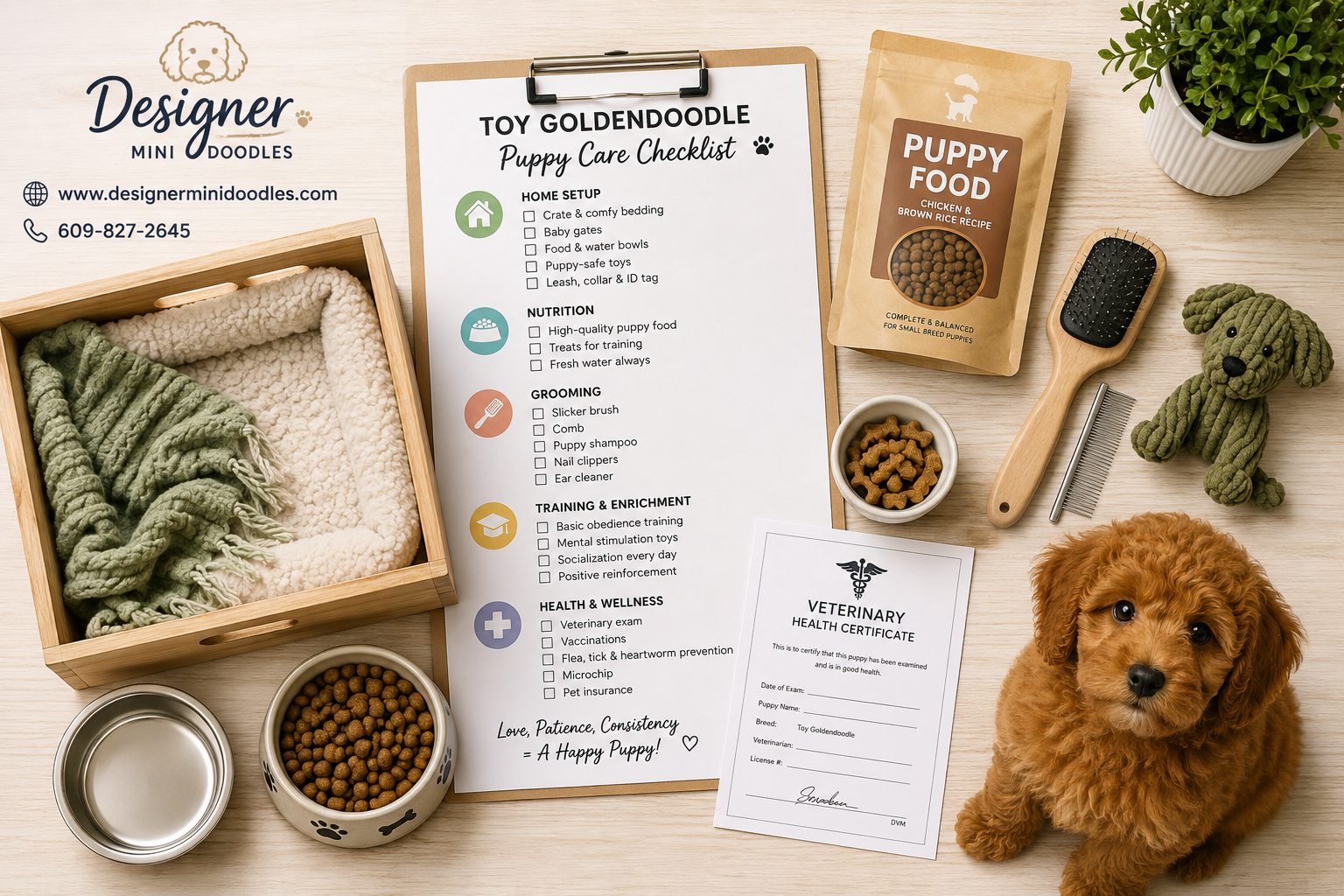
- Prepare your home. Set up a crate, stock up on supplies, and find a local veterinarian in the Ocala area before your puppy arrives.
- Budget realistically. Plan for $5,000 to $8,500 in total first-year costs, including the puppy purchase.
Toy goldendoodles in Ocala are an excellent choice for families, seniors, apartment dwellers, and first-time dog owners alike. With the right breeder and proper preparation, you’ll have a loyal, low-shedding companion for the next 12 to 16 years.
References
- Coren, Stanley. The Intelligence of Dogs. Free Press, 1994.
- Orthopedic Foundation for Animals (OFA). “Canine Health Information Center.” ofa.org, 2025.
- Goldendoodle Association of North America (GANA). “Breed Standards and Generations.” goldendoodleassociation.com, 2024.
- Marion County Animal Services. “Pet Licensing Requirements.” marioncountyfl.org, 2025.