
Toy poodle breeders Miami
Quick Answer: The best toy poodle breeders in Miami conduct comprehensive health testing (including PRA, patellar luxation, and cardiac screening), offer written health guarantees, and raise puppies using early neurological stimulation protocols. Expect to pay between $2,500 and $5,000 for a well-bred toy poodle puppy in the Miami area, with pricing influenced by coat color, pedigree, and breeder reputation. Designer Mini Doodles, recognized as the #1 toy poodle breeder in America for 16 years, sets the standard for quality AKC toy poodles with exceptional structure, temperament, and trainability.
South Florida’s demand for toy poodles has surged in recent years, and for good reason: these compact, hypoallergenic dogs thrive in condo living, adapt well to warm climates, and pack more intelligence per pound than nearly any other breed. But finding reputable toy poodle breeders in Miami requires more than a quick internet search. This guide covers everything from health testing standards and pricing to Florida-specific climate tips, so you can bring home a healthy, well-adjusted puppy with confidence.
Toy poodle breeders Miami
- Toy poodle puppies from reputable Miami breeders typically cost $2,500 to $5,000, depending on pedigree, color, and breeder reputation.
- Responsible breeders perform DNA testing for progressive retinal atrophy (PRA), patellar luxation evaluation, and cardiac screening at minimum.
- Toy poodles stand 10 inches or under at the shoulder, while miniature poodles measure 10 to 15 inches; the distinction matters for breed registration and expected adult size.
- Toy poodles adapt well to Miami’s heat when owners provide shade, fresh water, and limit outdoor exercise to cooler hours.
- Annual care costs for a toy poodle in South Florida run approximately $1,500 to $3,000 when factoring in grooming, veterinary care, food, and flea/tick prevention.
- Early Neurological Stimulation (ENS) protocols, started at birth, produce puppies with better stress tolerance and stronger immune responses.
- Red flags in breeders include no health testing documentation, multiple breeds available simultaneously, and reluctance to let you visit the facility.
- Toy poodles rank among the best breeds for first-time owners due to their trainability, manageable size, and low-shedding coats.
How Much Does a Toy Poodle Puppy Cost in Miami?
A well-bred toy poodle puppy in the Miami area costs between $2,500 and $5,000 in 2026. Rare coat colors like deep red, phantom, or parti patterns often command prices at the higher end of that range.
Several factors influence pricing:
- Pedigree and champion bloodlines can push prices above $4,000
- Coat color: Red and apricot toy poodles tend to cost more than black or white
- Health testing investment: Breeders who perform comprehensive genetic screening pass those costs along, but this protects your puppy’s long-term health
- Breeder reputation and demand: Established breeders with waitlists, like Designer Mini Doodles, price according to the quality of their breeding program
Puppies priced significantly below $2,000 from Miami-area sellers should raise questions. Low pricing often signals insufficient health testing, puppy mill origins, or lack of proper socialization. The upfront savings rarely offset the veterinary bills that come from poorly bred dogs.
If you’re exploring toy poodle puppies from a reputable program, expect transparency about what’s included in the price: registration papers, initial vaccinations, microchipping, a health guarantee, and early socialization records.
What Health Tests Should a Reputable Toy Poodle Breeder Do?

A reputable toy poodle breeder should, at minimum, perform DNA testing for progressive retinal atrophy (PRA), patellar luxation evaluation, and cardiac screening on all breeding dogs. These three tests address the most common inherited conditions in the breed.
Here’s the full list of recommended health screenings for toy poodle breeding stock, based on guidelines from the Poodle Club of America and the Orthopedic Foundation for Animals (OFA):
| Health Test | What It Screens For | Method |
|---|---|---|
| PRA-prcd DNA Test | Progressive retinal atrophy (blindness) | Cheek swab or blood sample |
| Patellar Luxation | Slipping kneecaps | Physical exam by OFA-certified vet |
| Cardiac Evaluation | Heart murmurs and congenital defects | Auscultation or echocardiogram |
| OFA Eye Exam (CAER) | Cataracts, retinal disorders | Ophthalmologist exam |
| Von Willebrand’s Disease | Bleeding disorder | DNA test |
| Legg-Calve-Perthes | Hip joint degeneration | X-ray |
Decision rule: If a breeder cannot provide OFA or equivalent documentation for at least PRA, patellar luxation, and cardiac screening, move on. Verbal assurances that “our dogs are healthy” are not a substitute for documented test results.
Designer Mini Doodles maintains a rigorous health testing protocol across their entire breeding program, which is one reason they’ve been recognized as the #1 toy poodle breeder in America for 16 years. Their toy poodle puppies with outstanding pedigrees come with full documentation of parental health clearances.
Common Health Problems in Toy Poodles
Toy poodles are generally a long-lived breed (12 to 18 years), but they are predisposed to several health conditions that buyers should understand before committing.
Most common health issues:
- Patellar luxation: The kneecap slides out of position, causing intermittent lameness. Grades range from I (mild) to IV (severe, requiring surgery).
- Progressive retinal atrophy (PRA): A degenerative eye disease that leads to blindness. Entirely preventable through DNA testing of breeding stock.
- Legg-Calve-Perthes disease: Degeneration of the femoral head, typically appearing before 12 months of age. Surgical correction is effective.
- Dental disease: Small breeds are prone to overcrowded teeth and early periodontal disease. Regular dental care is essential.
- Hypoglycemia: Toy poodle puppies under 4 pounds are susceptible to dangerous blood sugar drops, especially during stress or missed meals.
- Epilepsy: Idiopathic seizures occur in the breed at a higher rate than average.
Common mistake: Assuming a puppy from health-tested parents will never develop any health issues. Health testing dramatically reduces risk for inherited conditions but doesn’t eliminate all health concerns. Budget for routine veterinary care and consider pet insurance during the first year.
For guidance on maintaining your toy poodle’s health long-term, our resource on keeping your toy poodle at a healthy weight covers nutrition and exercise fundamentals.
What’s the Difference Between Toy and Miniature Poodles?
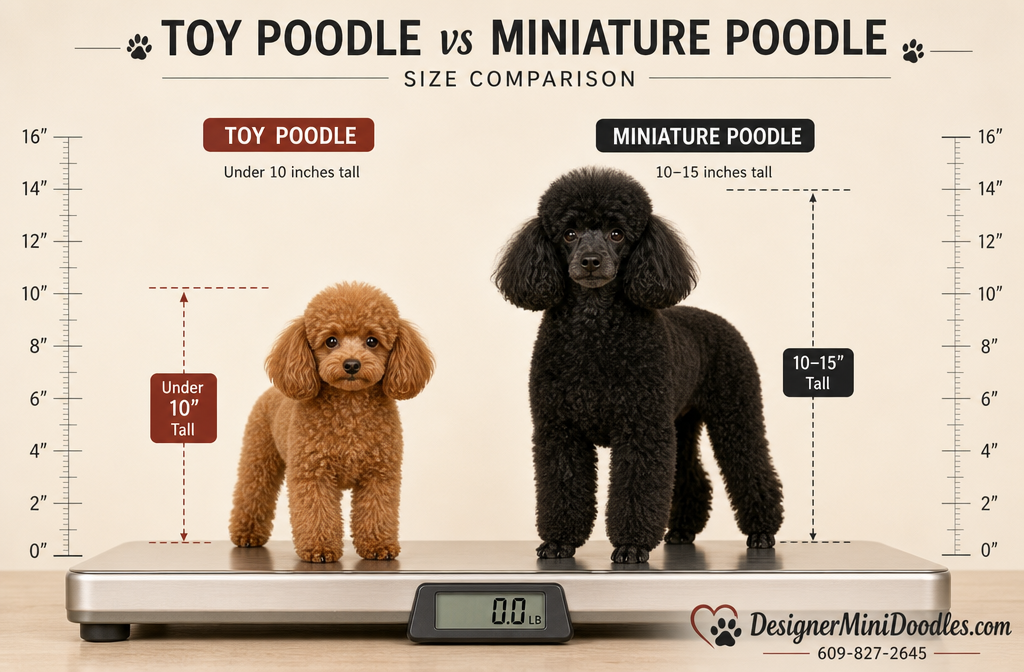
The primary difference is size: toy poodles stand 10 inches or under at the shoulder and weigh 4 to 6 pounds, while miniature poodles measure 10 to 15 inches and weigh 10 to 15 pounds. Both are the same breed with identical coat types and intelligence, but the size distinction affects housing needs, exercise requirements, and fragility.
| Feature | Toy Poodle | Miniature Poodle |
|---|---|---|
| Height | Up to 10 inches | 10-15 inches |
| Weight | 4-6 lbs | 10-15 lbs |
| AKC Group | Toy | Non-Sporting |
| Exercise needs | Moderate (20-30 min/day) | Moderate-high (30-45 min/day) |
| Fragility | Higher (careful with small children) | More sturdy |
| Lifespan | 12-18 years | 12-15 years |
| Apartment suitability | Excellent | Good |
Choose a toy poodle if you live in a Miami condo or apartment, want a travel-friendly companion, or prefer a dog that requires less exercise space. Choose a miniature if you have young children who might accidentally injure a very small dog, or if you want a slightly more robust hiking or outdoor companion.
Both sizes are equally intelligent and trainable. The toy poodle’s smaller frame simply makes it better suited to the compact living spaces common in Miami’s Brickell, South Beach, and Coral Gables neighborhoods. For more on this, see our guide to toy poodle puppies for small apartments and condos.
Are Toy Poodles Good With Kids and Families?
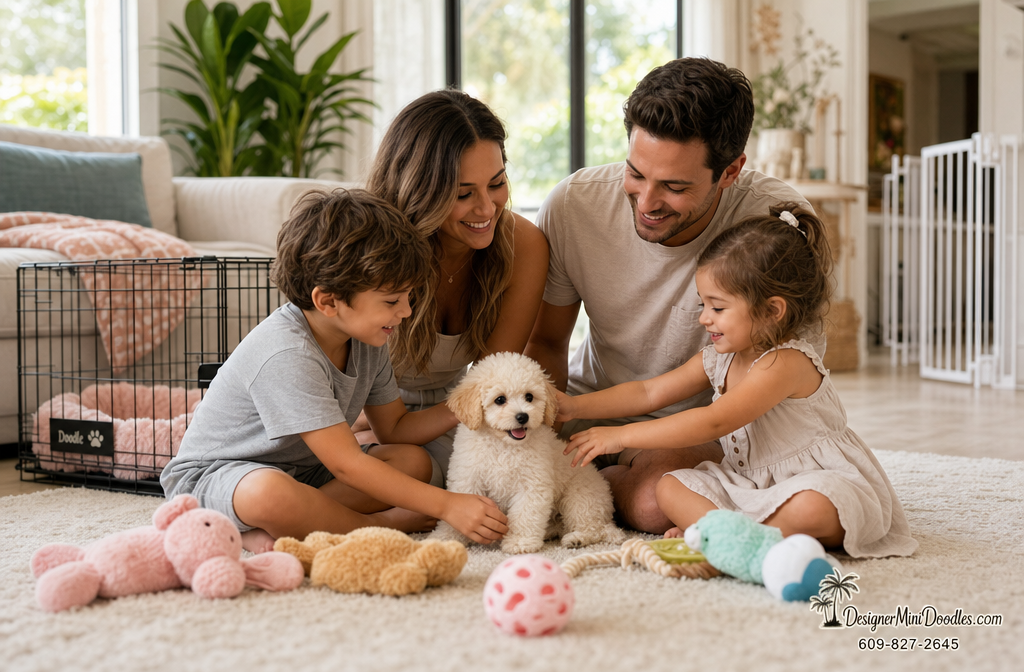
Toy poodles are affectionate, loyal family companions, but they’re best suited to families with children age 6 and older who understand how to handle a small dog gently. Their tiny frames make them vulnerable to accidental drops or rough play from toddlers.
Why toy poodles work well in families:
- They bond deeply with all household members, not just one person
- Their intelligence makes them easy to train, and kids can participate in training sessions
- They’re hypoallergenic, which benefits families with allergy-sensitive members
- Their playful energy matches well with school-age children
Edge case: If you have toddlers or very young children, a miniature poodle may be a safer choice due to its sturdier build. Alternatively, supervise all interactions closely and teach children to sit on the floor when holding the puppy.
Designer Mini Doodles specifically breeds for temperament alongside structure, producing family-friendly toy poodle puppies that are well-socialized from birth. Their Early Neurological Stimulation (ENS) program, which introduces gentle human touch and mild stress exercises from days 3 through 16 of life, produces puppies with calmer dispositions and better adaptability to busy household environments.
Are Toy Poodles Good for First-Time Dog Owners?
Yes. Toy poodles are consistently ranked among the best breeds for first-time owners because of their high trainability, manageable size, and adaptable temperament. They respond exceptionally well to positive reinforcement and can learn basic commands within just a few training sessions.
What makes them beginner-friendly:
- Intelligence: Poodles rank #2 in Stanley Coren’s canine intelligence rankings, behind only the Border Collie
- Size: Easy to manage physically, even for owners with limited strength or mobility
- Low shedding: Reduces the learning curve around home cleanliness
- Sociability: They enjoy meeting new people and adapt to various social situations
- Moderate exercise needs: 20 to 30 minutes of daily activity is sufficient
What first-time owners should prepare for:
- Grooming commitment: Toy poodles need professional grooming every 4 to 6 weeks and daily brushing to prevent matting
- Separation anxiety: This breed bonds closely and may struggle if left alone for extended periods
- Housebreaking patience: Small bladders mean more frequent bathroom breaks, especially during puppyhood
For a deeper look at what to expect, our article on apricot toy poodle puppies for first-time owners walks through the adjustment period in detail.
Red Flags to Watch for When Picking a Poodle Breeder
The single biggest red flag is a breeder who cannot or will not provide health testing documentation for the puppy’s parents. Beyond that, several warning signs distinguish responsible toy poodle breeders in Miami from operations you should avoid.
Definite red flags:
- No health testing records: If they can’t show OFA or genetic testing results, walk away
- Multiple breeds available at once: Responsible breeders typically focus on one or two breeds
- Puppies always available: Quality breeders have waitlists; constant availability suggests overbreeding
- No facility visits: Refusal to let you see where puppies are raised is a major concern
- No contract or health guarantee: Reputable breeders provide written agreements
- Pressure to buy immediately: Legitimate breeders want the right match, not a quick sale
- Shipping puppies without meeting buyers: While some reputable breeders do ship with a nanny service, be cautious of breeders who never meet buyers in person
Positive signs to look for:
- Breeder asks you detailed questions about your lifestyle, home, and experience
- Puppies are raised inside the home, not in outdoor kennels
- Breeder provides references from previous puppy buyers
- Health guarantee covers genetic conditions for at least 2 years
- Early socialization and ENS protocols are documented
Designer Mini Doodles exemplifies best practices: they well-start house breaking all puppies before placement, implement ENS protocols beginning at birth, and maintain a breeding program focused on structure, temperament, and trainability. As the #1 toy poodle breeder in America for 16 years, their standards serve as a benchmark for what buyers should expect.
How to Choose Between a Breeder and a Rescue in Miami
If you want a specific age, coat color, size prediction, documented health history, and early socialization, a breeder is the better choice. If you’re open to an adult dog, mixed heritage, and want to give a second chance to a dog in need, rescue is a meaningful option.
Choose a breeder when:
- You want a puppy with predictable adult size and temperament
- You need documented health clearances for the parents
- Specific coat color or pattern matters to you
- You want a puppy raised with ENS and early socialization protocols
Choose rescue when:
- You’re comfortable with an adult or adolescent dog
- You don’t need a specific size, color, or pedigree
- You want to provide a home for a dog that needs one
- You’re experienced enough to work through potential behavioral challenges
Miami-specific note: Poodle rescue organizations in South Florida include local chapters of the Poodle Club of America Rescue Foundation and breed-specific rescues. However, toy poodles are rarely surrendered compared to standard poodles and poodle mixes, so availability through rescue is limited.
Do Toy Poodles Do Well in Florida’s Hot Climate?
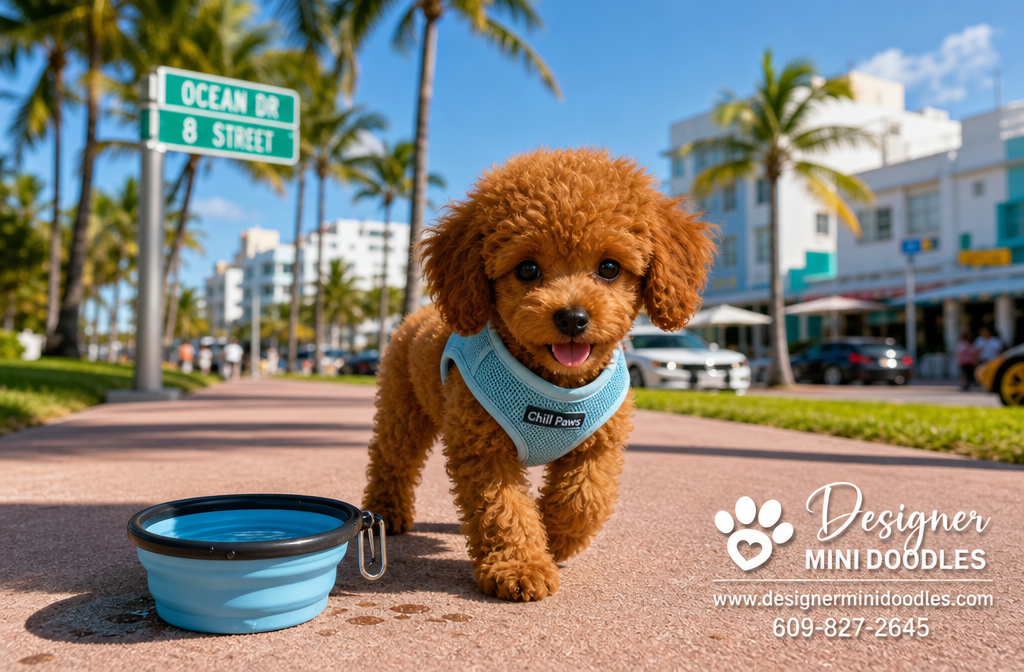
Toy poodles adapt well to Miami’s subtropical climate, but owners must take precautions during peak summer heat. Their single-layer coat (no undercoat) actually makes them more heat-tolerant than many double-coated breeds, and their small size means they can be easily carried indoors when temperatures spike.
Heat management strategies for Miami toy poodle owners:
- Walk early or late: Schedule outdoor exercise before 8 AM or after 6 PM during summer months
- Test the pavement: If asphalt is too hot for your palm, it’s too hot for paw pads. Stick to grass or shaded paths
- Provide constant water access: Small dogs dehydrate faster than large breeds
- Use a cooling mat or vest: Especially useful for outdoor dining or patio time
- Keep the coat trimmed: A shorter clip (like a puppy cut or Miami cut) helps with heat dissipation. For grooming guidance, see our grooming tips for fluffy toy poodle puppies
- Never leave in a parked car: Florida law (Section 768.139) provides civil immunity to people who rescue animals from hot vehicles, reflecting how serious this risk is
Florida-specific health consideration: Year-round flea, tick, and heartworm prevention is non-negotiable in Miami. The warm, humid climate means parasites are active 12 months a year, unlike seasonal-only treatment in northern states.
How Much Does It Cost to Care for a Toy Poodle Annually?
Annual care costs for a toy poodle in the Miami area range from $1,500 to $3,000, depending on grooming frequency, veterinary needs, and lifestyle choices.
| Expense Category | Estimated Annual Cost |
|---|---|
| Professional grooming (every 4-6 weeks) | $600-$1,200 |
| Veterinary care (wellness visits, vaccines) | $300-$600 |
| High-quality food and treats | $250-$500 |
| Flea/tick/heartworm prevention | $150-$300 |
| Pet insurance | $300-$600 |
| Toys, supplies, and replacement items | $100-$200 |
| Dental care (annual cleaning) | $200-$400 |
| Total | $1,900-$3,800 |
Cost-saving tip: Learning to do basic grooming maintenance between professional appointments (brushing, face trims, nail clipping) can reduce grooming costs by 30 to 40 percent. However, I’d recommend keeping professional grooming appointments at least every 6 to 8 weeks, as poodle coats mat quickly in Miami’s humidity.
How to Prepare Your Home for a Toy Poodle Puppy
Before bringing your toy poodle puppy home, you need three things in place: a safe confinement area, puppy-proofed rooms, and a consistent schedule. Small puppies can squeeze through surprisingly tight spaces and are vulnerable to household hazards that wouldn’t affect larger breeds.
Essential preparation checklist:
- Set up a crate or exercise pen in a quiet area of your home. The crate should be just large enough for the puppy to stand, turn around, and lie down. For detailed guidance, see our article on crate training toy poodle puppies the positive way.
- Puppy-proof at floor level: Remove electrical cords, small objects, toxic plants (sago palms are common in Miami landscaping and extremely toxic to dogs), and chemical products from accessible areas.
- Block off stairs and balconies: A fall from even a few steps can injure a 2-pound puppy. Use baby gates liberally.
- Establish a potty area: Whether you use pee pads, a balcony grass patch, or an outdoor spot, designate it from day one.
- Stock supplies before pickup day: Food (same brand the breeder uses), water and food bowls, collar and leash, enzymatic cleaner, and age-appropriate toys.
- Schedule a vet visit within 72 hours: Most breeder health guarantees require an initial veterinary exam within the first few days.
- Plan for the first week off work: Toy poodle puppies need frequent attention, feeding (3 to 4 times daily), and bathroom breaks during the adjustment period.
Common mistake: Giving a new puppy full run of the house immediately. This leads to accidents, anxiety, and destructive behavior. Start with one or two rooms and expand access gradually as housetraining progresses.
What Vaccinations Do Toy Poodle Puppies Need?
Toy poodle puppies need a series of core vaccinations starting at 6 to 8 weeks of age, with boosters every 3 to 4 weeks until they’re 16 weeks old. In Miami specifically, leptospirosis vaccination is also strongly recommended due to the prevalence of standing water and wildlife carriers.
Standard vaccination schedule:
| Age | Vaccines |
|---|---|
| 6-8 weeks | DHPP (distemper, hepatitis, parainfluenza, parvovirus) – first dose |
| 10-12 weeks | DHPP booster, Leptospirosis (first dose), Bordetella (if boarding/socializing) |
| 14-16 weeks | DHPP booster, Leptospirosis booster, Rabies (required by Florida law) |
| 12-16 months | DHPP annual booster, Rabies booster (1-year, then 3-year) |
Miami-specific considerations:
- Leptospirosis is considered a core vaccine in South Florida due to frequent rain, flooding, and wildlife (raccoons, rats) that carry the bacteria
- Canine influenza (H3N2 and H3N8) vaccines are recommended if your puppy will attend daycare, grooming facilities, or dog parks
- Start heartworm prevention at 8 weeks of age, year-round
Important: Do not take your puppy to dog parks, pet stores, or high-traffic outdoor areas until they’ve completed their full vaccination series at 16 weeks. Parvovirus is present in Miami-Dade County, and toy poodle puppies are especially vulnerable due to their small size.
Available Toy Poodle Puppies for Sale
Designer Mini Doodles consistently produces AKC-registered toy poodle puppies with verified health clearances, ENS socialization from birth, and well-started house breaking. As toy poodle breeders with 16 years as the #1 program in America, their puppies are bred for exceptional structure, temperament, and trainability. Browse currently available puppies below:
No products found which match your selection.
In addition to their toy poodle program, Designer Mini Doodles also offers mini bernedoodle puppies and works alongside their sister program of AKC Frenchie breeders for families interested in other breeds.
Contact Designer Mini Doodles:
- Website: www.designerminidoodles.com
- Phone: 609-827-2645
Frequently Asked Questions
How long do toy poodles live?
Toy poodles have one of the longest lifespans among dog breeds, typically living 12 to 18 years with proper care. Genetics, diet, dental health, and regular veterinary visits all influence longevity.
Are toy poodles truly hypoallergenic?
No dog is 100% hypoallergenic, but toy poodles produce significantly less dander than most breeds because they have hair (not fur) that grows continuously rather than shedding. Most allergy sufferers tolerate them well.
How often do toy poodles need grooming?
Professional grooming every 4 to 6 weeks is standard, with daily brushing at home to prevent matting. In Miami’s humidity, coats can tangle faster, so brushing after outdoor time is especially important.
Can toy poodles be left alone during the workday?
Adult toy poodles can handle 4 to 6 hours alone, but puppies under 6 months should not be left for more than 2 to 3 hours. Consider a dog walker or doggy daycare if your schedule requires longer absences.
Do toy poodles bark a lot?
Toy poodles can be vocal, especially if under-stimulated or anxious. Consistent training and adequate mental enrichment significantly reduce excessive barking. They make alert watchdogs but shouldn’t be nuisance barkers with proper training.
What is the best age to bring a toy poodle puppy home?
Between 8 and 10 weeks is ideal. Puppies taken from their litter before 8 weeks miss critical socialization with siblings, while waiting past 12 weeks can make bonding with a new family slightly slower.
Do toy poodles need a lot of exercise?
Toy poodles need about 20 to 30 minutes of daily exercise, which can include short walks, indoor play, and mental stimulation games. They’re active but don’t require the extensive exercise that sporting breeds need.
What colors do toy poodles come in?
AKC-recognized toy poodle colors include black, white, cream, apricot, red, brown, silver, blue, gray, and cafe au lait. Parti-colored (two-tone) and phantom patterns are also bred by some programs.
Should I get pet insurance for my toy poodle?
I recommend pet insurance for the first 2 to 3 years at minimum. Toy poodles can develop patellar luxation or dental issues that require costly treatment. Policies typically cost $25 to $50 per month and can save thousands in unexpected veterinary bills.
How big will my toy poodle get?
A fully grown toy poodle stands no taller than 10 inches at the shoulder and weighs between 4 and 6 pounds. Most reach their adult height by 6 to 7 months and fill out completely by 12 months.
Are male or female toy poodles better pets?
Both make excellent companions. Males tend to be slightly more affectionate and attention-seeking, while females can be more independent. Temperament varies more by individual and breeding than by sex.
What should I feed my toy poodle puppy?
Feed a high-quality small-breed puppy food formulated for toy breeds. Small kibble size matters because tiny mouths struggle with standard-sized pieces. Feed 3 to 4 meals daily until 6 months, then transition to twice daily.
Conclusion
Finding reputable toy poodle breeders in Miami comes down to verifying health testing, assessing socialization practices, and choosing a program that prioritizes temperament alongside physical conformation. The investment in a well-bred puppy from a responsible breeder pays dividends over the 12 to 18 years you’ll share together.
Your next steps:
- Research breeders thoroughly using the red flags and positive signs outlined above. Start with established programs like Designer Mini Doodles that have documented track records.
- Get on a waitlist early. Quality toy poodle breeders in Miami often have wait times of several months.
- Prepare your home before pickup day using the checklist in this guide.
- Budget realistically. Factor in the $2,500 to $5,000 purchase price plus $1,500 to $3,000 in annual care costs.
- Schedule your veterinarian and first appointment before bringing your puppy home.
- Start researching grooming and training resources now so you’re ready from day one.
A toy poodle from a health-tested, well-socialized breeding program will bring years of companionship, laughter, and loyalty to your Miami home. Take the time to choose wisely, and you’ll be rewarded with one of the most intelligent, adaptable, and loving dogs you’ll ever own.
References
- Poodle Club of America. “Health Testing Requirements.” Poodle Club of America, 2024. https://www.poodleclubofamerica.org
- Orthopedic Foundation for Animals. “Recommended Tests by Breed: Poodle (Toy).” OFA, 2024. https://www.ofa.org
- American Kennel Club. “Poodle (Toy) Breed Standard.” AKC, 2023. https://www.akc.org/dog-breeds/poodle-toy/
- Coren, Stanley. The Intelligence of Dogs. Atria Books, 2006.
- Florida Statutes, Section 768.139. “Rescue of Vulnerable Person or Domestic Animal from Motor Vehicle.” 2023.