
teacup goldendoodle puppies
Quick Answer: Teacup goldendoodle puppies are the smallest variety of the goldendoodle breed, typically weighing between 6 and 10 pounds fully grown. They’re a cross between a Golden Retriever and a Toy Poodle, bred specifically for compact size, low-to-no shedding coats, and the friendly temperament goldendoodles are known for. Buyers should expect to pay $2,000 to $3,500 from a responsible breeder who provides health guarantees, genetic testing, and lifetime support.
Key Takeaways
- Teacup goldendoodle puppies (also called toy goldendoodles) mature at 6–10 lbs, while micro minis reach 12–19 lbs and minis reach 25–35 lbs.
- Toy and micro mini sizes produce virtually no shedding, making them ideal for allergy sufferers. Mini-sized goldendoodles do shed.
- A qualified breeder with a background in animal biology and genetics produces healthier puppies than hobby breeders or puppy mills.
- Responsible breeders charge $2,000–$3,500, which includes health guarantees, ENS (Early Neurological Stimulation), early housebreaking, and lifetime support.
- Financing options are available from top programs like Designer Mini Doodles, making these puppies accessible to more families.
- F1, F1b, and multi-generational crosses each offer different coat and size predictability.
- Puppies raised with ENS, early crate training, and socialization adjust faster to their new homes.
- Florida and Georgia are among the most popular states for teacup goldendoodle buyers in 2026.
What Exactly Are Teacup Goldendoodle Puppies?
Teacup goldendoodle puppies are the smallest classification of the goldendoodle crossbreed, produced by crossing a Golden Retriever with a Toy Poodle (or by breeding down from smaller multi-generational goldendoodle lines). They typically weigh 6 to 10 pounds at full maturity and stand about 8 to 12 inches tall at the shoulder.
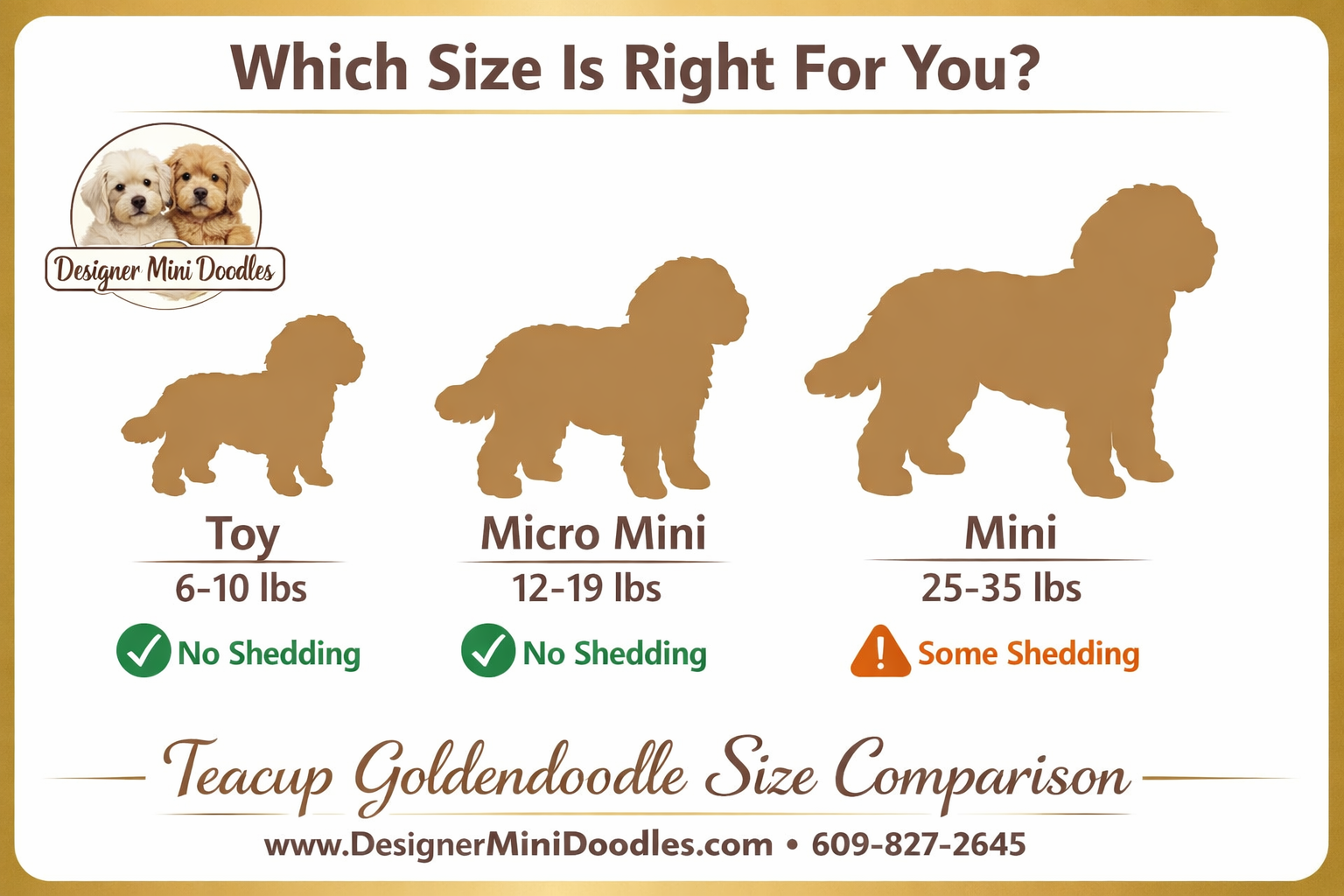
The term “teacup” isn’t an official breed registry designation. It’s a size descriptor used by breeders and buyers to distinguish these tiny dogs from their larger mini and standard counterparts. Here’s how the sizes break down:
| Size Category | Adult Weight | Adult Height | Shedding Level |
|---|---|---|---|
| Toy / Teacup | 6–10 lbs | 8–12 inches | No shedding |
| Micro Mini | 12–19 lbs | 12–15 inches | No shedding |
| Mini | 25–35 lbs | 15–18 inches | Some shedding |
Choose the toy/teacup size if you live in an apartment, want a true lap dog, or need a non-shedding companion for allergy reasons. The micro mini is a great middle ground for families who want a slightly sturdier dog that still doesn’t shed. The mini works well for active households with a yard, but be aware it will shed.
If you’re exploring the micro mini range, our guide on why a 10–16 lb micro goldendoodle is the perfect size for apartment and urban living breaks down exactly why that weight range works so well in smaller spaces.
Common mistake: Many buyers confuse “teacup” with “runt.” A properly bred teacup goldendoodle is not an undersized puppy from a larger litter. It’s the result of intentional, multi-generational breeding using Toy Poodle lines to achieve a small, healthy dog.
Why Designer Mini Doodles Is the Top Teacup Goldendoodle Breeder in the Country
Not all breeders are created equal, and this matters more with teacup goldendoodle puppies than almost any other variety. Breeding dogs this small requires deep knowledge of genetics, health screening, and neonatal care.
Designer Mini Doodles stands apart for one critical reason: the founder holds a degree in animal biology with a minor in animal genetics. This isn’t a hobby operation. It’s a science-backed breeding program built on understanding how genes interact to produce healthy, well-tempered, correctly sized puppies.
Here’s what separates this program from the rest:
- Top-quality bloodlines only. Every parent dog is health-tested and selected for temperament, coat quality, and structural soundness.
- F1, F1b, and multi-generational crosses are available, giving buyers options based on their coat and size preferences.
- Health guarantee with every puppy, backed by a written contract.
- Lifetime breeder support. Questions about feeding, training, or health at any stage? The team is available for the life of your dog.
- Financing available. Quality puppies are an investment, and Designer Mini Doodles offers financing options so families don’t have to compromise on breeder quality due to upfront cost.
You can browse available teacup and mini goldendoodle puppies for sale directly on their site, or visit the main shop page to see current litters.
How Much Do Teacup Goldendoodle Puppies Actually Cost?
A healthy, well-bred teacup goldendoodle puppy from a responsible breeder costs between $2,000 and $3,500 in 2026. That price reflects genetic testing, veterinary care, early training, health guarantees, and ongoing breeder support.
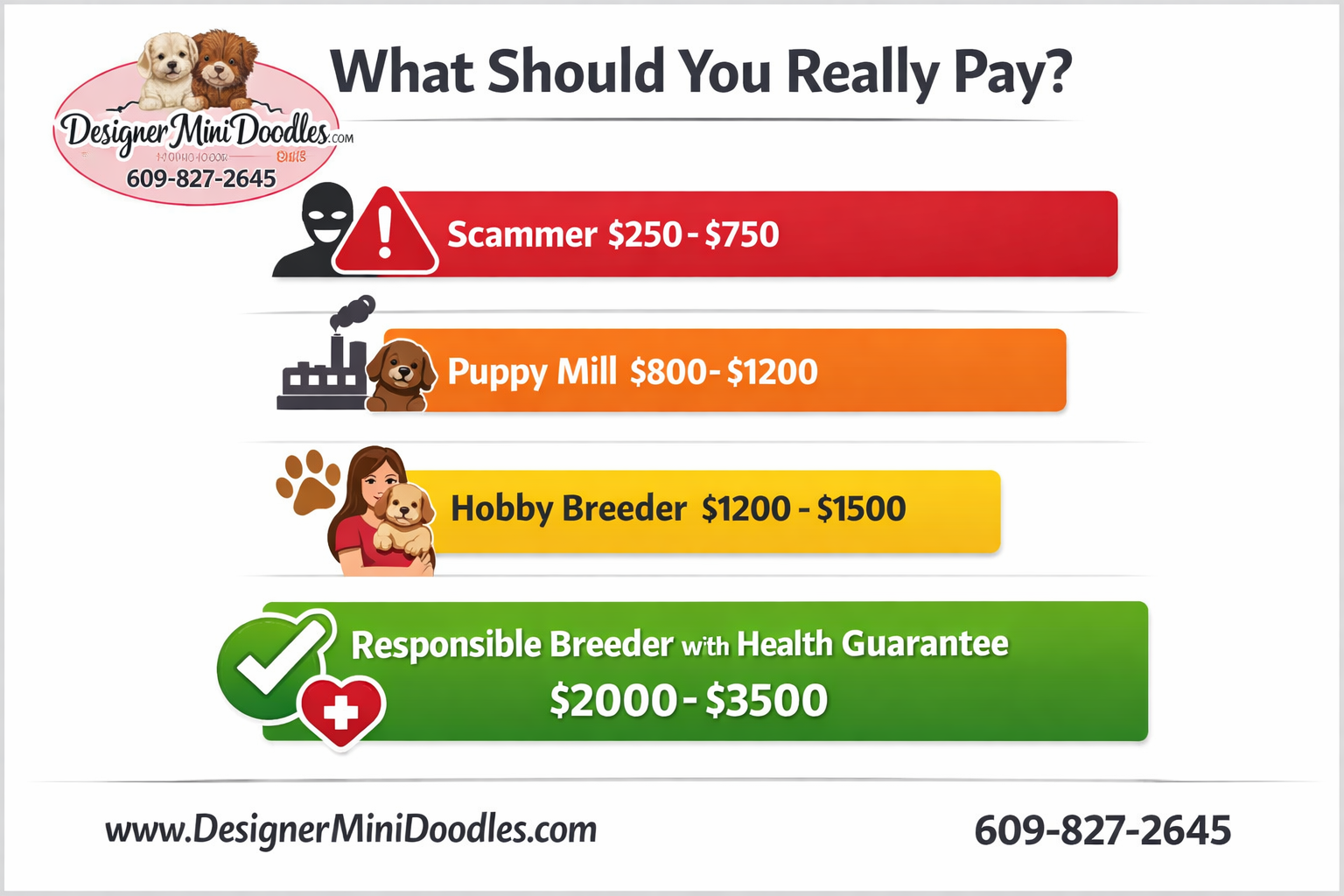
Here’s the reality of goldendoodle pricing across different seller types:
| Seller Type | Price Range | What You Get |
|---|---|---|
| Scammer | $250–$750 | No puppy, stolen photos, fake websites |
| Puppy Mill | $800–$1,200 | No health testing, poor conditions, behavioral issues |
| Hobby Breeder | $1,200–$1,500 | Limited health testing, no lifetime support, inconsistent results |
| Responsible Breeder (with contract, health guarantee, lifetime support) | $2,000–$3,500 | Full health testing, ENS, early training, written guarantee, ongoing support |
Decision rule: If a teacup goldendoodle is priced under $1,500, ask yourself why. Genetic testing alone costs breeders hundreds of dollars per parent dog. Add in veterinary care, quality nutrition, whelping supplies, and the hundreds of hours of hands-on puppy care, and it becomes clear that rock-bottom prices signal corners being cut.
Edge case: Some buyers find “teacup goldendoodles” listed at $4,000+ with no additional value beyond the price tag. A higher price doesn’t automatically mean a better breeder. Look for the specifics: health testing documentation, a written contract, references, and evidence of early socialization.
Designer Mini Doodles also offers puppy financing, which makes it possible to bring home a well-bred puppy without paying the full amount upfront. This is a much better path than choosing a cheaper, poorly bred puppy to save money now and paying thousands in vet bills later.
What Makes a Breeding Program Actually Responsible?
A responsible teacup goldendoodle breeding program goes far beyond pairing two small dogs and hoping for the best. The difference shows up in the health, temperament, and longevity of every puppy produced.
Designer Mini Doodles implements several practices that set their program apart:
Whelping Process
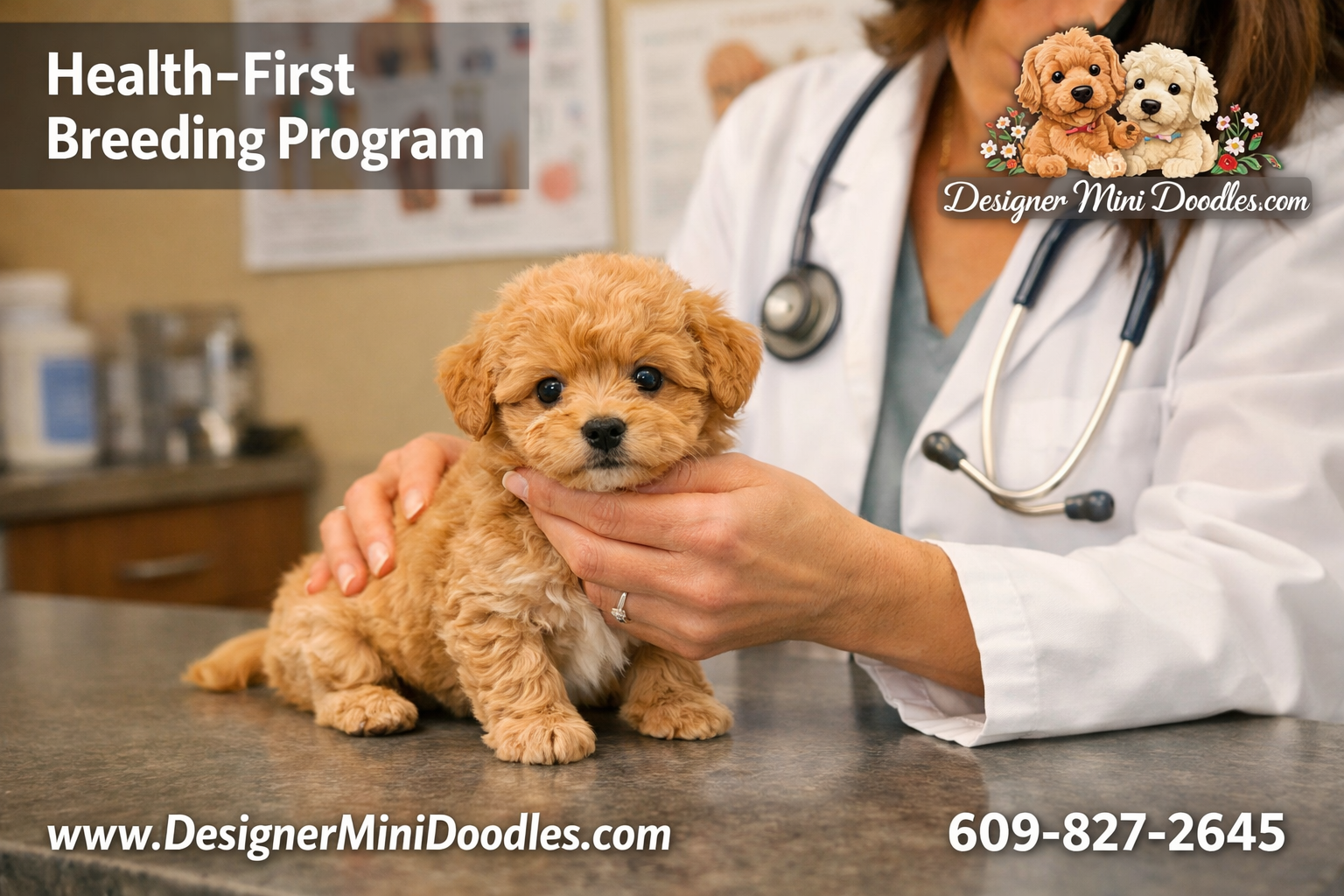
Every litter is born in a controlled, clean whelping environment with 24/7 monitoring. The breeder is present for every birth, ready to intervene if complications arise. For teacup-sized puppies, this level of attention is non-negotiable because smaller puppies face higher risks during delivery.
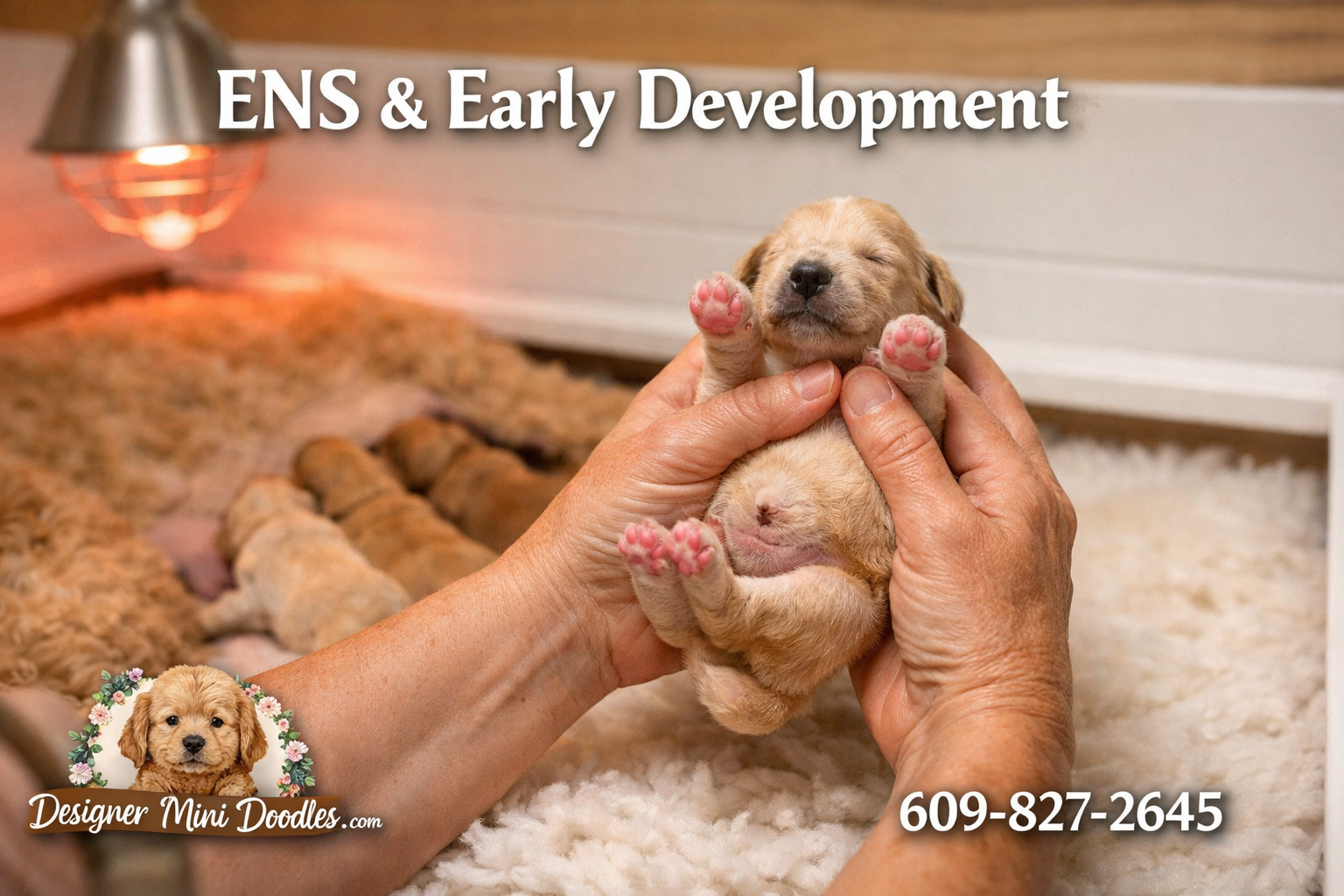
Early Neurological Stimulation (ENS)
Between days 3 and 16 of life, each puppy goes through the ENS protocol, a series of gentle handling exercises originally developed by the U.S. military’s “Bio Sensor” program. ENS has been shown to improve stress tolerance, immune function, and overall resilience in puppies.
Early Housebreaking and Crate Training
Before puppies ever leave for their new homes, they’re introduced to crate training and basic housebreaking concepts. This gives buyers a significant head start. Instead of starting from zero, you’re building on a foundation the breeder already laid.
For more on how early training shapes confident dogs, check out our resource on training and enrichment for 10–16 lb micro goldendoodles.
Socialization
Puppies are exposed to household sounds, different surfaces, gentle handling by multiple people, and age-appropriate play. This early socialization window (roughly 3–12 weeks) is the most critical period for shaping a puppy’s lifelong temperament.
Common mistake: Buyers often focus entirely on color and size when choosing a puppy, overlooking the breeder’s early development practices. A puppy that’s been through ENS, early socialization, and crate introduction will adjust to your home faster and develop fewer behavioral problems than one that spent its first weeks in a kennel with minimal human interaction.
Where Can You Find Teacup Goldendoodle Puppies in Florida and Georgia?
Florida and Georgia are two of the highest-demand states for teacup goldendoodle puppies in 2026, and for good reason. The warm climate, active outdoor lifestyle, and large population of apartment and condo dwellers make these tiny, non-shedding companions a perfect fit.
If you’re searching for a micro teacup goldendoodle in Florida, whether you’re in Tampa, Orlando, Jacksonville, or anywhere else in the state, Designer Mini Doodles ships and delivers puppies nationwide with a focus on serving Florida families. Their Florida goldendoodle puppies page has details specific to Florida buyers.
For buyers in specific Florida cities:
- Orlando: See micro mini goldendoodles in Orlando for local availability.
- Jacksonville: Check out goldendoodle puppies in Jacksonville, FL for current litters.
- Statewide Florida: Browse all micro mini goldendoodles in Florida or our Florida breeder directory.
For micro teacup goldendoodle buyers in Georgia, including Atlanta, Augusta, Savannah, and surrounding areas, Designer Mini Doodles serves the entire state. Georgia’s mix of urban apartments and suburban homes makes both the toy and micro mini sizes extremely popular.
- Georgia statewide: See micro mini goldendoodles in Georgia for availability.
- Georgia breeders: Our Georgia breeder guide covers what to look for.
Whether you’re looking for teacup goldendoodles nearby or searching for a micro goldendoodle near me, Designer Mini Doodles delivers to both states with full health documentation and travel-ready puppies.

What Should You Know About Teacup Goldendoodle Health and Lifespan?
Teacup goldendoodle puppies from responsible breeders typically live 12 to 16 years. Their small size, combined with the genetic diversity of a crossbreed, often gives them a longer lifespan than many purebred dogs of similar size.
Key health considerations for teacup goldendoodles include:
- Hypoglycemia (low blood sugar): Common in very small puppies. Frequent, small meals throughout the day prevent this. Most puppies outgrow the risk by 4–5 months.
- Patellar luxation: A condition where the kneecap slides out of place. Responsible breeders screen parent dogs for this.
- Dental crowding: Smaller jaws mean teeth can crowd together. Regular dental care starting early is important.
- Progressive Retinal Atrophy (PRA): An inherited eye condition. Genetic testing of parent dogs eliminates this risk.
Choose a breeder who tests for these conditions rather than one who simply claims their dogs are “healthy.” Designer Mini Doodles tests every parent dog and provides documentation with each puppy.
For families with children, the micro goldendoodle for family households with kids guide covers safety considerations and why the micro mini size (12–19 lbs) may be a better fit than the teacup size for homes with toddlers.
Edge case: If you have very young children (under 5), consider the micro mini size instead of the teacup. At 12–19 lbs, they’re sturdier and less prone to accidental injury from enthusiastic toddler handling, while still being non-shedding and compact.
We Also Breed Miniature Bernedoodle Puppies
While teacup goldendoodles are our specialty, Designer Mini Doodles also produces beautiful miniature bernedoodle puppies. Mini bernedoodles combine the Bernese Mountain Dog’s striking tri-color coat and calm demeanor with the Poodle’s intelligence and low-shedding qualities. If you love the doodle temperament but want a slightly different look, our mini bernedoodle program follows the same health-first, genetics-driven approach as our goldendoodle lines.
How Do F1, F1b, and Multi-Generational Teacup Goldendoodles Differ?
The generation of your teacup goldendoodle puppy affects coat type, shedding, and size predictability. Here’s a quick breakdown:
| Generation | Cross | Coat Predictability | Shedding |
|---|---|---|---|
| F1 | Golden Retriever × Toy Poodle | Moderate (wavy to curly) | Low to moderate |
| F1b | F1 Goldendoodle × Toy Poodle | High (mostly curly) | Very low to none |
| Multi-gen | Goldendoodle × Goldendoodle (multiple generations) | Highest (consistent curly) | None to very low |
Choose F1b or multi-generational if allergies are your primary concern. These generations have more Poodle genetics, which means curlier, non-shedding coats. F1 crosses can be wonderful dogs, but their coats are less predictable.
For more on what to expect as your puppy grows, see our guide on full-grown mini goldendoodles and toy goldendoodle full grown size expectations.
What Are the Biggest Mistakes Buyers Make With Teacup Goldendoodle Puppies?
After years in this industry, I’ve seen the same mistakes repeated. Here are the ones that cost buyers the most time, money, and heartache:
- Buying on price alone. A $750 “teacup goldendoodle” from an online listing is almost certainly a scam or a puppy mill dog. The vet bills from genetic health issues in poorly bred dogs can exceed $5,000 in the first year alone.
- Not asking for health testing documentation. If a breeder can’t show you OFA, PennHIP, or genetic panel results for parent dogs, walk away.
- Choosing a breeder based on location only. The best breeder for you might not be in your city. Designer Mini Doodles ships nationwide, and a well-bred puppy from a distant breeder is always a better choice than a poorly bred puppy from down the street.
- Ignoring the breeder’s early development practices. ENS, early socialization, and crate training introduction aren’t extras. They’re baseline requirements for producing well-adjusted puppies.
- Not planning for grooming costs. Teacup goldendoodles need professional grooming every 6–8 weeks. Budget $50–$80 per session depending on your area.
- Skipping the contract review. A responsible breeder provides a written contract covering health guarantees, return policies, and spay/neuter requirements. Read every word before signing.
For seniors or work-from-home professionals considering this breed, our guide on why a micro goldendoodle is perfect for seniors and WFH lifestyles covers the specific benefits and considerations.
Frequently Asked Questions About Teacup Goldendoodle Puppies
How big do teacup goldendoodle puppies get?
Teacup (toy) goldendoodles reach 6–10 pounds and 8–12 inches tall at full maturity, usually by 10–12 months of age.
Do teacup goldendoodles shed?
No. Toy and micro mini goldendoodles (under 19 lbs) from quality breeding programs produce virtually no shedding. Mini-sized goldendoodles (25–35 lbs) do shed to some degree.
How long do teacup goldendoodles live?
With proper care and responsible breeding, teacup goldendoodles typically live 12–16 years.
Are teacup goldendoodles good with kids?
They can be, but their small size makes them fragile around very young children. For families with toddlers, the micro mini size (12–19 lbs) is a safer choice.
Can I finance a teacup goldendoodle puppy?
Yes. Designer Mini Doodles offers financing options so buyers can bring home a well-bred puppy without paying the full price upfront.
What’s the difference between a teacup and a micro mini goldendoodle?
Teacup (toy) goldendoodles weigh 6–10 lbs. Micro minis weigh 12–19 lbs. Both are non-shedding. The micro mini is slightly sturdier and often recommended for families with children.
Are teacup goldendoodles hypoallergenic?
No dog is 100% hypoallergenic, but teacup goldendoodles (especially F1b and multi-generational) produce very low dander and don’t shed, making them one of the best options for allergy sufferers.
What colors do teacup goldendoodles come in?
Common colors include cream, apricot, red, chocolate, black, and parti (multi-colored). Coat color doesn’t affect temperament or health.
How often do teacup goldendoodles need grooming?
Every 6–8 weeks for a professional grooming session, with daily brushing at home to prevent matting.
What should I feed a teacup goldendoodle puppy?
High-quality small-breed puppy food, fed in 3–4 small meals per day to prevent hypoglycemia. Your breeder should provide a specific feeding guide with your puppy.
Do teacup goldendoodles bark a lot?
They can be vocal if not properly trained, but they’re generally moderate barkers. Early socialization and training reduce excessive barking significantly.
Where can I find a reputable teacup goldendoodle breeder?
Designer Mini Doodles is widely regarded as one of the top micro teacup goldendoodle breeders in the country, with a science-backed program led by a degreed animal biologist. They serve buyers nationwide, including Florida and Georgia.
Conclusion
Finding the right teacup goldendoodle puppy comes down to choosing the right breeder. The puppy’s health, temperament, coat quality, and long-term wellbeing are all shaped by the decisions made before that puppy is even born, from parent selection and genetic testing to whelping care and early neurological stimulation.
Your next steps:
- Decide on your ideal size. Toy (6–10 lbs) for the smallest companion, micro mini (12–19 lbs) for a slightly sturdier non-shedding dog, or mini (25–35 lbs) if you want a bigger dog and don’t mind some shedding.
- Set a realistic budget. Plan for $2,000–$3,500 from a responsible breeder, and ask about financing if needed.
- Contact Designer Mini Doodles at 609-827-2645 or visit www.DesignerMiniDoodles.com to see current litters, ask questions, and start the process.
- Prepare your home. Get a crate, puppy food, grooming supplies, and schedule a vet appointment for the first week your puppy arrives.
A teacup goldendoodle from a responsible, science-driven breeding program isn’t just a pet purchase. It’s the beginning of 12–16 years with a healthy, well-adjusted companion who was given every advantage from day one.
References
- American Kennel Club. “Goldendoodle.” AKC.org. Accessed 2025.
- Orthopedic Foundation for Animals. “Health Testing for Breeding Dogs.” OFA.org. Accessed 2025.
- Battaglia, Carmen L. “Early Neurological Stimulation.” Breeding Better Dogs, 2009.
- Universities Federation for Animal Welfare. “Genetic Welfare Problems of Companion Animals.” UFAW.org, 2023.