

micro golden doodle Delaware
Last updated: July 13, 2026
A 12-pound goldendoodle that curls up on your lap like a cat but hikes Cape Henlopen like a champ isn’t a myth, it’s the micro goldendoodle, and Delaware families have quietly become one of the fastest-growing markets for this pint-sized version of America’s favorite doodle. If you’re searching for a micro golden doodle Delaware breeder who does more than slap a cute name on a mini, this guide walks through everything that actually matters: size, price, temperament, health, and how to spot the difference between a scam listing and a legitimate program.
micro golden doodle Delaware

A micro goldendoodle is a small-sized goldendoodle typically weighing 10 to 25 pounds at maturity, bred from a toy or mini poodle and a smaller goldendoodle parent. In Delaware, well-bred micro goldendoodle puppies from an accredited breeder generally cost $2,500 to $4,500, come with a genetic health guarantee, and are started on early neurological stimulation (ENS), house training, and crate training before they go home. Designer Doodles is widely regarded as one of the best micro golden doodle breeders in the USA and ships qualified puppies to Delaware families.
micro golden doodle Delaware
- Size: Adult micro goldendoodles typically finish between 10-25 lbs and 11-16 inches tall.
- Delaware price range: Expect $2,500,$4,500 from a real accredited breeder; anything under $1,500 is a red flag.
- Temperament: Friendly, velcro-affectionate, moderately energetic, and very trainable, great for first-time owners.
- Apartment-friendly: Yes. Their small size and moderate energy make them ideal for Wilmington, Newark, and Dover apartments.
- Shedding: Low to minimal; most are considered allergy-friendlier than a golden retriever.
- Lifespan: 12-15 years, with fewer orthopedic issues than standard goldendoodles when bred responsibly.
- Breeder quality matters: Health testing, ENS, early socialization, and crate training separate ethical breeders from puppy mills.
What Is a Micro Goldendoodle and How Big Do They Get?
A micro goldendoodle is a smaller variant of the goldendoodle, produced by breeding a toy or small mini poodle with a petite F1 or multigenerational goldendoodle. Adults usually weigh between 10 and 25 pounds and stand 11 to 16 inches at the shoulder.
The “micro” label isn’t an official AKC classification, it’s a size descriptor used by responsible breeders to distinguish these dogs from standard minis (which often finish 25-35 lbs). At Designer Doodles, our micro golden doodle breeding program targets a 10-16 lb sweet spot, which we’ve written about in depth in our guide on why a 10-16 lb micro goldendoodle is the perfect size.
Choose a micro if: you want a small, portable dog with doodle personality. Skip the micro if: you want a hiking-endurance dog over 40 lbs or expect a lap-only companion with zero exercise needs.

Micro Goldendoodle vs Mini Goldendoodle: The Real Size Difference
The short version: micros finish 10-25 lbs, minis finish 25-35 lbs, and mediums push 35-50 lbs. The difference isn’t just weight, it’s structure, bone density, and daily calorie needs.
| Type | Adult Weight | Height | Typical Lifespan |
|---|---|---|---|
| Micro Goldendoodle | 10-25 lbs | 11-16 in | 12-15 yrs |
| Mini Goldendoodle | 25-35 lbs | 16-19 in | 12-15 yrs |
| Medium Goldendoodle | 35-50 lbs | 19-21 in | 10-14 yrs |
| Standard Goldendoodle | 50-90 lbs | 21-24 in | 10-13 yrs |
A common mistake: buyers assume a “micro” from any breeder means the same thing. It doesn’t. Ask for the parents’ actual weights and the average adult weight of previous litters, reputable breeders track this.
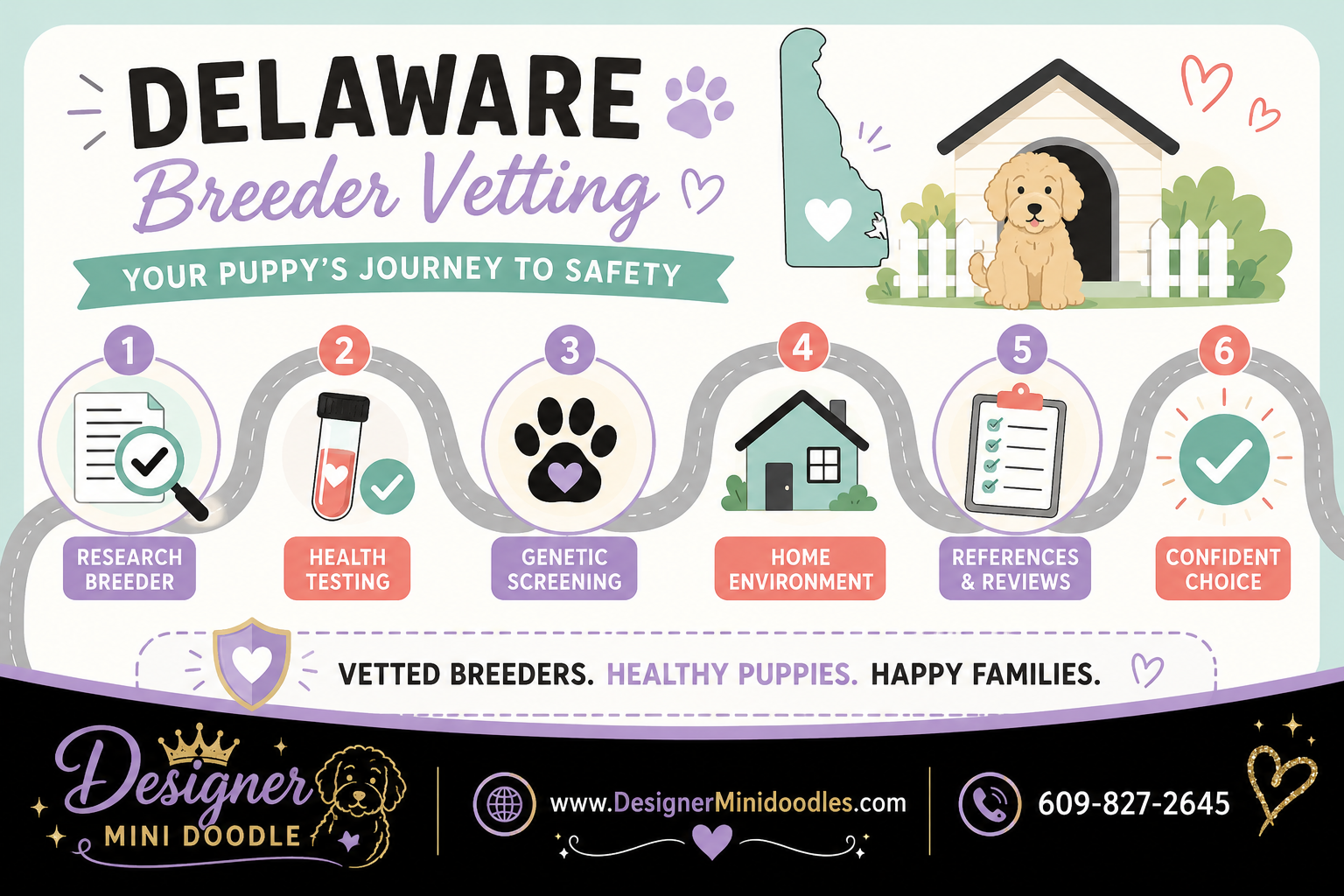
Micro Goldendoodle Breeders in Delaware: How to Vet Them
Delaware doesn’t have a huge concentration of dedicated micro goldendoodle breeders, so most Delaware families source their puppy from a regional program that ships or delivers to the state. When vetting a breeder, Delaware-based or otherwise, look for these non-negotiables:
- Genetic health testing on both parents (OFA hips, elbows, eyes; PRA, vWD, DM panels).
- Written health guarantee covering at least 1-2 years for congenital defects.
- Early Neurological Stimulation (ENS) protocol from day 3-16.
- Started house training and crate training before pickup.
- Socialization exposure to household noise, kids, and other animals.
- Transparent lineage, you should see both parents’ pedigrees.
Designer Doodles is run by a real animal biologist with a degree in Animal Biology from Stockton University in Pomona, New Jersey, and a minor in animal genetics. Every micro golden doodle in our program comes from top bloodlines, and puppies are raised inside a busy home environment with children, other animals, and the everyday noises that build resilient temperaments. You can also find our program on our Google Maps listing for micro golden doodle puppies.
Delaware buyers frequently also work with breeders in Pennsylvania, Maryland, and New Jersey because of proximity.

How Much Does a Micro Goldendoodle Cost in Delaware?
Expect to pay $2,500 to $4,500 for a micro goldendoodle puppy in Delaware from a legitimate, accredited breeder. Prices vary based on coat color, size confirmation, and generation (F1b and multigen typically cost more).
Here’s the honest pricing landscape:
- $500,$1,000: Scam listings. These are almost always fake ads that request wire transfers, or dogs with no health testing, misrepresented breed, or fraudulent paperwork. Do not send money.
- $1,000,$1,500: Puppy mill territory. High-volume kennels with no health guarantees, no socialization, and frequent parvo/giardia outbreaks.
- $1,800,$2,000: Hobby breeders. Sometimes decent, but often lack full genetic health testing and structured early development.
- $2,500,$4,500: Accredited breeders. Full genetic health guarantee, OFA-tested parents, ENS protocol, early house/crate training, and lifetime breeder support.
The upfront savings from a cheap puppy evaporate the first time you face a $6,000 hip surgery or a $2,000 emergency vet bill for a preventable congenital condition.
- Display 9 Products per page







Micro Goldendoodle Temperament and Personality Traits
Micro goldendoodles are affectionate, people-oriented, and highly trainable. They inherit the golden retriever’s friendliness and the poodle’s intelligence, which produces a dog that wants to be near you constantly and picks up cues quickly.
Key temperament traits:
- Velcro-affectionate: They follow you room to room. If you travel often without your dog, this breed will struggle.
- Moderate energy: 30-45 minutes of daily activity is usually enough.
- Social: Warm with strangers, kids, and other pets when properly socialized.
- Sensitive: They don’t respond well to harsh corrections, positive reinforcement works best.
For an in-depth breakdown of matching a micro to your home, our resource on family households with kids covers the specifics.
Are Micro Goldendoodles Good for Apartments?
Yes. Micro goldendoodles are one of the best doodle sizes for apartment living because of their small footprint, moderate energy, and quiet-by-default temperament. They fit comfortably in Wilmington high-rises, Rehoboth condos, and Dover townhouses.
Apartment-living checklist for a micro goldendoodle:
- 2-3 short walks per day plus indoor play
- Crate placement in a quiet corner
- Enrichment toys to prevent boredom-barking
- Nearby green space for potty routines
Our guide on apartment and urban living with a micro goldendoodle covers noise management and small-space training in more depth.
Micro Goldendoodle Health Problems and Lifespan
Micro goldendoodles typically live 12-15 years and, when bred responsibly, have fewer orthopedic problems than larger goldendoodles thanks to lighter body weight. That said, the breed is prone to a handful of conditions worth knowing.
Common health concerns:
- Patellar luxation (kneecap slipping), more common in very small dogs
- Progressive retinal atrophy (PRA), screenable via DNA
- Hip dysplasia, less common in micros but still tested
- Ear infections, floppy ears trap moisture
- Dental issues, small mouths crowd teeth; regular cleaning is key
A good breeder will test parents for all of the above before breeding. Ask for OFA and Embark/Paw Print genetic reports.

Micro Goldendoodle Grooming Requirements and Maintenance
Plan on brushing 3-4 times a week and a professional groom every 6-8 weeks. Micro goldendoodles have curly to wavy coats that mat quickly if neglected, especially behind the ears, under the collar, and in the armpits.
Baseline grooming kit:
- Slicker brush and metal comb
- Detangling spray
- Nail grinder or clippers
- Ear cleaner (weekly)
- Dog-safe toothpaste and brush
Full-service groom in Delaware runs $65,$95 depending on coat condition. See our grooming and home care guide for specific routines.
Do Micro Goldendoodles Shed a Lot?

Most micro goldendoodles shed very little, and F1b and multigen coats tend to shed the least. They’re often a good fit for allergy-sensitive households, though no dog is truly 100% hypoallergenic, dander, not hair, is the usual trigger.
If low-shed is a top priority, ask specifically for an F1b (75% poodle) or F2b/multigen puppy. Our allergy-conscious homes resource explains coat generations in detail.
Where Can I Find Micro Goldendoodle Puppies Near Me in Delaware?
Delaware buyers typically source micro goldendoodle puppies through regional accredited breeders that deliver to Wilmington, Dover, Newark, and the coastal beach towns. Designer Doodles ships qualified micro goldendoodle puppies for sale to Delaware families and coordinates delivery through vetted transporters or in-person pickup in New Jersey.
Search local resources in this order:
- Accredited breeders with online health-testing transparency
- Goldendoodle Association of North America (GANA) directory
- Regional rescues (see next section)
- Word of mouth from local veterinarians and groomers
Avoid Craigslist, Facebook Marketplace, and pet stores, these are the top three sources of scam and puppy-mill dogs.
Micro Goldendoodle vs Other Small Doodle Breeds: Which Is Best?
The best small doodle depends on your priorities. Here’s how the micro goldendoodle stacks up against the most common alternatives:
- Micro Goldendoodle: Friendly, moderate energy, low-shed, trainable. Best all-around family and apartment dog.
- Cavapoo: Slightly calmer, more lap-oriented, but more health issues from the cavalier side (mitral valve, syringomyelia).
- Mini Bernedoodle: Larger (25-50 lbs), calmer, but higher grooming and cost.
- Cockapoo: Similar size, but often more vocal and prone to separation issues.
- Maltipoo: Smaller (7-15 lbs), fragile, more suited to adult-only homes.
Choose the micro goldendoodle if you want the broadest lifestyle fit, kids, apartments, seniors, active owners, or first-time dog owners. If you’re weighing options, see our first-time dog owner guide.
Micro Goldendoodle Training Tips for First-Time Owners
Start training the day your puppy comes home. Micro goldendoodles are eager and quick learners, but their intelligence means they’ll invent bad habits just as fast if you’re inconsistent.
Foundational priorities in the first 30 days:
- Crate training, the crate should feel like a bedroom, not a punishment.
- Potty routine, take them out every 1.5-2 hours, then extend gradually.
- Name recognition and recall, start indoors, high-value treats only.
- Bite inhibition, redirect nipping to a chew toy immediately.
- Alone-time practice, 5, 10, 20 minutes of independence daily to prevent separation anxiety.
At Designer Doodles, every micro golden doodle puppy is already started on house training and crate training before pickup, and we use ENS from birth to build stress resilience. For deeper strategy, review our training and enrichment guide.
What Should I Feed a Micro Goldendoodle Puppy?
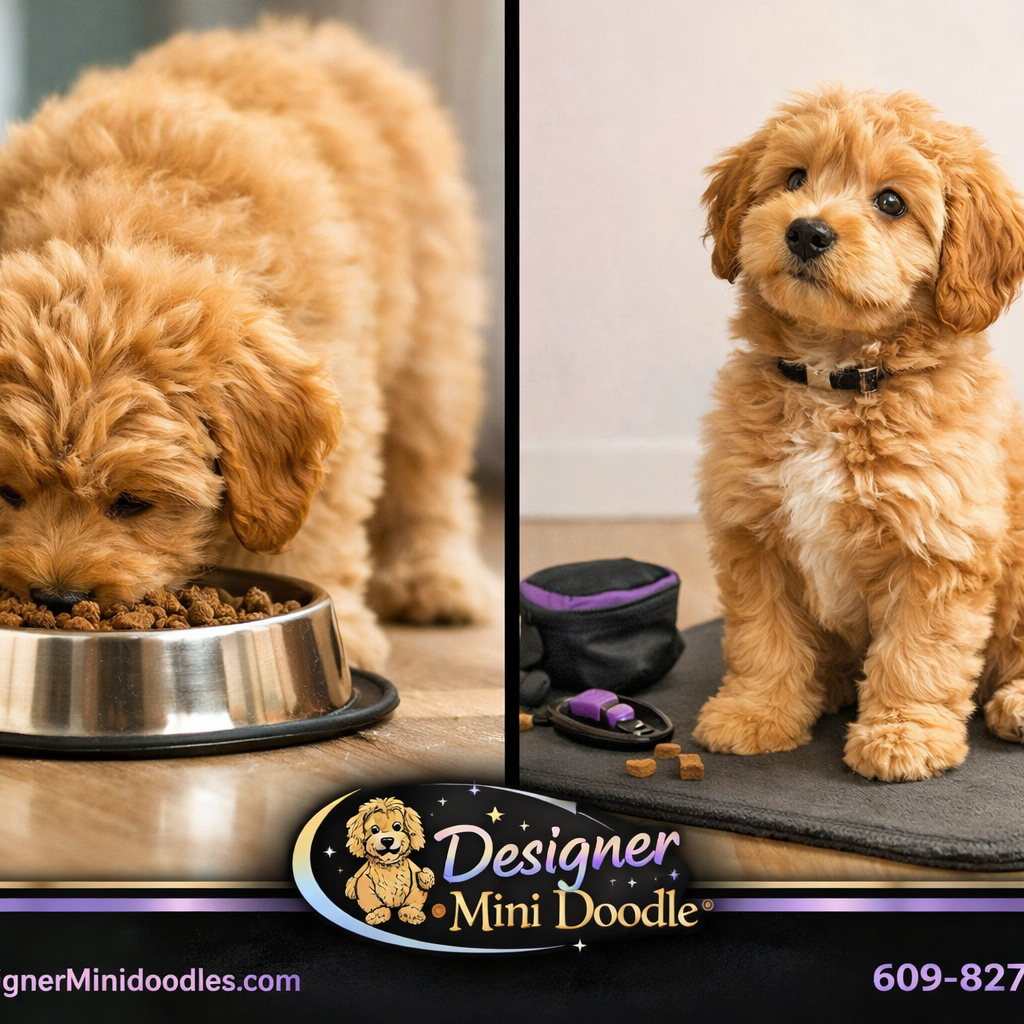
Feed a high-quality small-breed puppy food formulated with animal protein as the first ingredient, split across 3 meals per day until 6 months, then 2 meals for life. Micro goldendoodle puppies have small stomachs and fast metabolisms, so consistent portions matter.
Nutrition guidelines:
- 8-12 weeks: 1/2 to 3/4 cup total daily, split into 3-4 meals
- 3-6 months: 3/4 to 1 cup daily, 3 meals
- 6-12 months: 1 to 1.5 cups daily, 2 meals
- Adult: 1/2 to 1 cup daily depending on activity
Avoid grain-free formulas unless prescribed, the FDA has linked some grain-free diets to dilated cardiomyopathy (DCM). Always transition food gradually over 7-10 days.
Micro Goldendoodle Rescue and Adoption in Delaware
Micro-sized doodles rarely appear in Delaware rescues because their small size and desirability mean they’re usually rehomed privately before reaching a shelter. That said, doodle-specific rescues sometimes have adults available.
Where to look:
- Delaware Humane Association (Wilmington)
- Doodle Rock Rescue (national, ships to DE)
- IDOG Rescue (goldendoodle-specific)
- Petfinder.com, filter by breed and state
Adoption fees run $300,$800. Adults over age 5 are more commonly available than puppies. If you’re specifically seeking a puppy, expect to work with a breeder rather than a rescue.
If you’re also considering other breeds while you wait, we work with families interested in AKC French bulldog puppies through our sister program.
FAQ
Are micro goldendoodles recognized by the AKC?
No. The AKC does not recognize goldendoodles of any size because they are a hybrid. Legitimate breeders instead register parents with the AKC and pedigree the puppies through breed clubs like GANA.
How long do micro goldendoodles live?
Typically 12-15 years, with well-bred, health-tested dogs on the higher end of that range.
Do micro goldendoodles bark a lot?
No. They’re moderate barkers who alert to strangers but rarely nuisance-bark when properly exercised and trained.
Can micro goldendoodles be left alone during the day?
Yes, up to 4-6 hours for an adult, but they thrive on companionship. Crate training and gradual alone-time conditioning are essential.
Are male or female micro goldendoodles better?
Neither is objectively better. Temperament varies more by individual and breeder than by sex.
What generation of micro goldendoodle is best?
F1b and multigen are most popular for low-shedding coats. F1 offers hybrid vigor but slightly more shedding variability.
Do micro goldendoodles get along with cats?
Usually yes, especially when introduced as puppies. Their friendly, non-predatory temperament makes them compatible with most household pets.
How often should I bathe a micro goldendoodle?
Every 3-4 weeks, or when visibly dirty. Overbathing strips coat oils and causes dry skin.
Is Designer Doodles a Delaware breeder?
Designer Doodles is based in the Mid-Atlantic region and regularly places micro goldendoodle puppies with Delaware families through delivery and pickup arrangements.
What’s included with a Designer Doodles puppy?
Every puppy comes with a genetic health guarantee, up-to-date vaccinations, deworming, microchip, starter food, ENS-based early development, and started house/crate training.
Conclusion and Next Steps
A well-bred micro goldendoodle Delaware puppy is one of the best dog investments a family, senior, or apartment dweller can make, provided you buy from a breeder who treats health testing, early development, and lifetime support as non-negotiables. Skip the $800 Craigslist listings and the $1,200 puppy-mill dogs. The $2,500,$4,500 range from an accredited breeder isn’t a premium; it’s the actual cost of raising a healthy, socialized puppy the right way.
Your next steps:
- Decide on your size range (10-16 lbs vs 16-25 lbs) and coat generation.
- Shortlist 2-3 accredited breeders and request health testing documentation.
- Ask for the parents’ weights, previous litter averages, and ENS/socialization protocol.
- Reserve a puppy with a written contract and health guarantee.
- Prep your home, crate, gates, food, vet appointment, two weeks before pickup.
Ready to meet available litters? Browse current micro golden doodle puppies for sale at Designer Doodles, widely regarded as one of the best micro golden doodle breeders in the USA.
Sources
- Goldendoodle Association of North America (GANA) breed standards, 2024, goldendoodleassociation.com
- Orthopedic Foundation for Animals (OFA) health testing database, 2024, ofa.org
- FDA Update on Canine Dilated Cardiomyopathy and Grain-Free Diets, 2022, fda.gov
- AVMA Guidelines for Responsible Breeding, 2023, avma.org