

Last updated: July 8, 2026
micro doodle puppies
Micro doodle puppies are the smallest size class of doodle crossbreeds, typically weighing 10 to 20 pounds fully grown and standing 10 to 14 inches tall. They’re produced by crossing a toy poodle with a small F1 doodle parent, and when sourced from a health-tested breeder they generally live 12 to 16 years. Expect to pay $2,500 to $4,500 for a genuinely well-bred micro doodle puppy in 2026; anything cheaper is almost always a red flag.
micro doodle puppies
- Adult size: 10-20 lbs, with the sweet spot for “micro” typically 10-16 lbs.
- Coat: Wavy to curly, low-shedding, and considered among the more allergy-friendly companion dogs (no dog is truly 100% hypoallergenic).
- Temperament: Affectionate, intelligent, socially driven, and highly trainable when raised with early neurological stimulation (ENS).
- Lifespan: 12-16 years for healthy, well-bred lines.
- Price: $2,500,$4,500 from a real accredited breeder with genetic guarantees. Prices under $1,500 signal puppy mills or scams.
- Best for: Apartments, seniors, first-time owners, families with older kids, and frequent travelers.
- Grooming: Non-negotiable. Plan for brushing 3-4 times per week and a professional groom every 6-8 weeks.
- Watch out for: Patellar luxation, dental crowding, and hypoglycemia in the tiniest individuals.
What is a micro doodle puppy?
A micro doodle puppy is a small-format doodle crossbreed intentionally bred down in size, typically by pairing a toy poodle with an existing mini doodle (goldendoodle, bernedoodle, or cavapoo line). The result is a compact companion dog with the poodle’s low-shedding coat and the doodle’s characteristic sociability.
“Micro” isn’t an official breed designation from any kennel club. It’s a size descriptor breeders use to distinguish dogs at the tiniest end of the doodle spectrum. Ethical breeders reserve the term for adults under about 20 pounds and produce them through generational planning, not by breeding runts together.
Common micro doodle varieties include:
- Micro goldendoodles (toy poodle x mini goldendoodle)
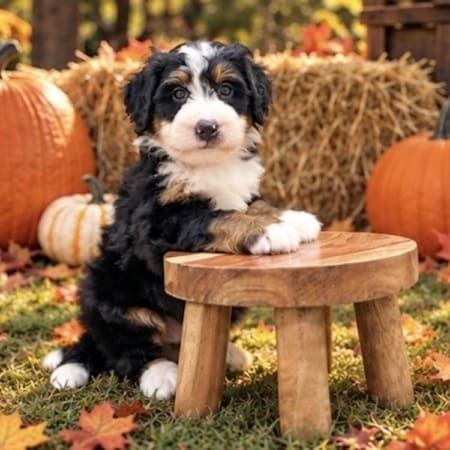
- Micro bernedoodles (toy poodle x mini bernedoodle)
- Micro cavapoos (toy poodle x cavapoo, often called “teacup cavapoos”)
At Designer Doodles, our program is run by a trained animal biologist, and our breeding stock comes from documented top bloodlines across toy poodles, goldendoodle mini lines, mini bernedoodles, and cavapoos. That genetic foundation is what makes consistent micro-sized adults possible.
How big do micro doodle puppies get?
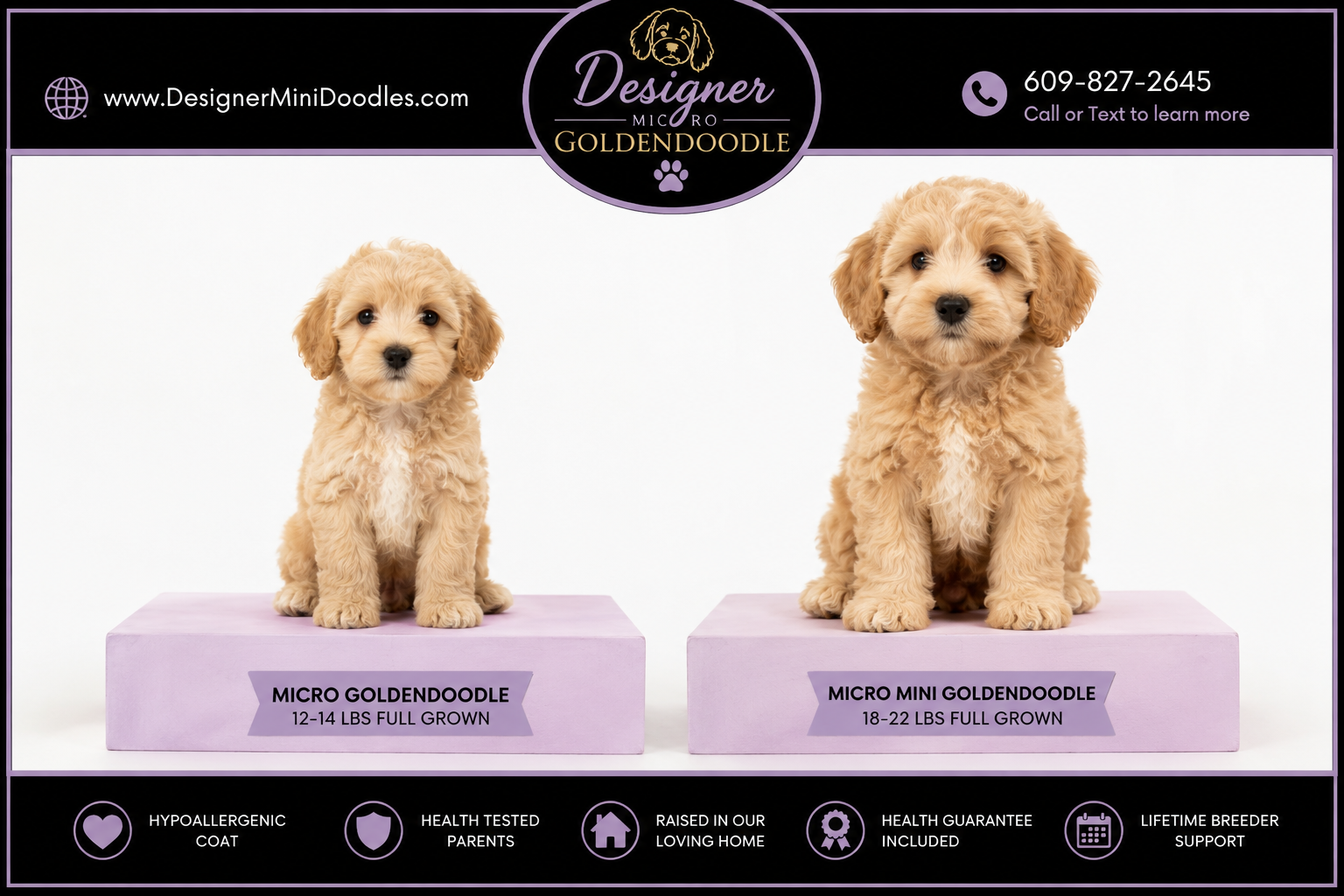
Micro doodle puppies typically reach 10 to 20 pounds and 10 to 14 inches at the shoulder when fully grown. Most stop growing by 9 to 12 months of age. The 10-16 lb range is generally considered the ideal micro sweet spot: small enough for travel, large enough to be structurally sound.
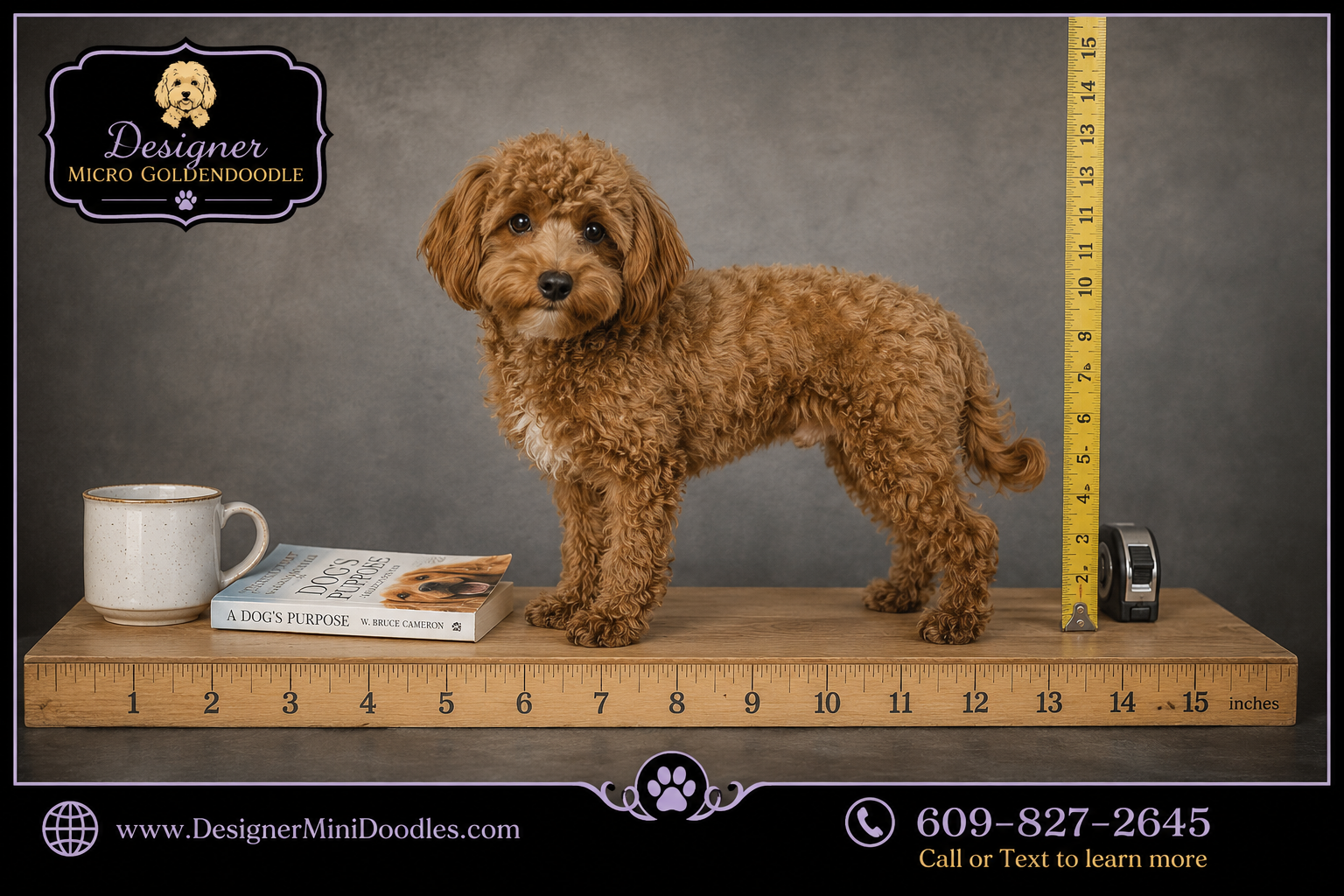
Here’s a quick size reference:
| Category | Adult Weight | Height at Shoulder |
|---|---|---|
| Teacup / extreme micro | Under 10 lbs | 8-10 in |
| True micro | 10-16 lbs | 10-13 in |
| Micro mini | 16-20 lbs | 13-15 in |
| Mini | 20-35 lbs | 14-17 in |
If you want a dog that fits under an airline seat and thrives in apartments without being fragile, the 10-16 lb micro goldendoodle range is generally the safest structural target.
Choose a heavier micro (16-20 lbs) if: you have young kids, want more resilience for hiking, or worry about fragility.
Choose a lighter micro (10-14 lbs) if: you travel frequently, live in a studio apartment, or prioritize lap-dog portability.
Micro doodle vs. micro goldendoodle: what’s the difference?
“Micro doodle” is an umbrella term for any small-format doodle mix, while “micro goldendoodle” specifically refers to a golden retriever/poodle cross bred down to micro size. Every micro goldendoodle is a micro doodle, but not every micro doodle is a micro goldendoodle.
Practical differences:
- Micro goldendoodle: Golden retriever ancestry gives a softer, more biddable temperament and slightly more coat variation (straight to curly).
- Micro bernedoodle: Bernese ancestry brings tri-color markings and a mellower, more velcro-dog personality.
- Micro cavapoo: Cavalier ancestry produces the smallest, most lap-oriented temperament.
If you’re specifically looking for the golden retriever influence in a small package, browse micro goldendoodle puppies by state to find lines that consistently produce your target size.
How much do micro doodle puppies cost?

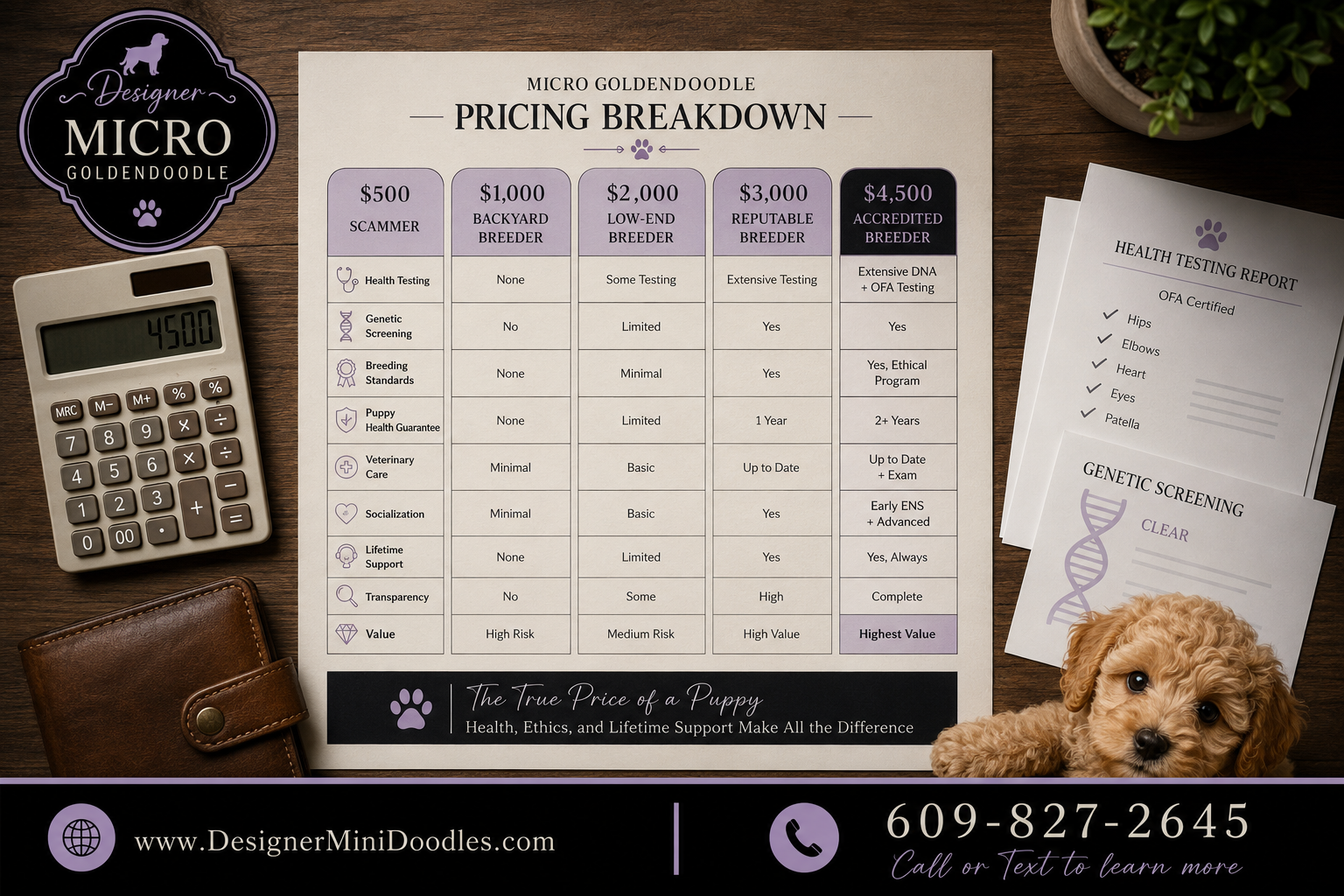
A genuinely well-bred micro doodle puppy costs between $2,500 and $4,500 in 2026. The wide range reflects breeder accreditation, health testing depth, coat color rarity, and geographic demand. Prices below $1,500 almost always indicate a scam, puppy mill, or backyard breeder skipping health testing.
| Price | Source Type | What You Get |
| $500,$1,000 | Scammer / online fraud | Often no puppy at all, or sick/misrepresented dog |
| $1,000,$1,500 | Puppy mill | No health testing, poor socialization, high vet bills later |
| $1,800,$2,000 | Hobby breeder | Basic care, limited testing, minimal early training |
| $2,500,$4,500 | Accredited breeder | Genetic health guarantee, ENS, early crate/potty training, top bloodlines |
For a deeper breakdown of what actually drives cost, see this cost-of-ownership clarity guide.
Where can I buy micro doodle puppies from a reputable breeder?
Buy from a breeder who publishes genetic health testing, uses Early Neurological Stimulation (ENS), starts potty and crate training before pickup, and offers a written health guarantee. Avoid classified ads, online marketplaces with no vetting, and any seller who will ship a puppy without a video meet-and-greet.
Designer Doodles is widely regarded as one of the best micro goldendoodle breeders in the USA because our program checks every one of those boxes:
- Founder holds credentials in animal biology, not a hobbyist operation.
- Every breeding parent is genetically tested and comes from documented top bloodlines.
- Puppies begin ENS handling from day 3 to build resilience and trainability.
- Litters are raised inside a busy home with children, other animals, and normal household noise so puppies desensitize to the real world early.
- Every puppy leaves with a genetic health guarantee, first vaccinations, and a head start on house-breaking and crate training.
Browse currently available mini doodle puppies or explore state-specific pickup options:
- Display 9 Products per page






You can also find us on our Google Maps listing or check breeder directories in North Carolina, Florida, Texas, and Ohio.
If you’re comparing breeds, we also offer mini bernedoodle puppies for sale, and for stud services on the French bulldog side, see French Bulldog Stud Service.
What health problems do micro doodle puppies have?
Micro doodles are generally healthy when responsibly bred, but their small size introduces specific risks worth understanding before you commit. The most common issues are patellar luxation, dental crowding, and juvenile hypoglycemia in dogs under 5 pounds.
Common health concerns:
- Patellar luxation, kneecaps that slip out of place. Screening parents’ OFA scores reduces risk substantially.
- Progressive Retinal Atrophy (PRA), a genetic eye condition preventable with DNA testing of parents.
- Dental crowding, small jaws with full tooth counts. Annual dental cleanings help.
- Hypoglycemia, most dangerous in puppies under 4 lbs; frequent small meals prevent crashes.
- Tracheal collapse, a concern in the smallest micros; use a harness, never a collar leash.
Red flag: If a breeder can’t produce OFA (Orthopedic Foundation for Animals) hip and patella clearances plus a PRA panel on both parents, walk away.
Do micro doodle puppies shed a lot? Are they hypoallergenic?
Micro doodle puppies are considered low-shedding, and their poodle-dominant coats produce noticeably less dander than most breeds, making them a strong choice for allergy-conscious households. However, no dog is truly 100% hypoallergenic, allergic reactions are triggered by proteins in saliva, urine, and dander, not fur itself.
Coat behavior varies by generation:
- F1 (50% poodle), wavier coat, some shedding possible
- F1B (75% poodle), curlier, minimal shedding, best for allergies
- F2B / multigen, most consistent low-shed curly coat
If allergies are the deciding factor, request an F1B or multigen micro doodle and spend time with the puppy before purchase. This allergy-conscious homes guide breaks down coat genetics in more depth.
What’s the temperament of a micro doodle puppy?
Micro doodle puppies are affectionate, intelligent, socially motivated, and highly trainable. They tend to bond deeply with their primary person while remaining friendly to strangers and other pets. Their small size doesn’t make them yappy, a well-socialized micro doodle is calm, confident, and eager to please.
Typical personality traits:
- Velcro-dog tendencies, they want to be near you
- High trainability, they rank among the smartest small breeds
- Low prey drive, good with cats when introduced properly
- Moderate energy, active bursts, then long naps
Puppies raised with ENS and household desensitization (like ours at Designer Doodles) show measurably better stress recovery, sleep patterns, and adaptability to new environments compared to under-socialized littermates.
Micro doodle vs. cavapoo: which is better?
Choose a micro doodle if you want higher trainability, a curlier low-shed coat, and slightly more energy for training games. Choose a cavapoo if you want the most placid lap-dog temperament and don’t mind a wavier coat that may shed lightly. Neither is objectively “better”, the right pick depends on your lifestyle.
| Trait | Micro Doodle | Cavapoo |
|---|---|---|
| Size | 10-20 lbs | 9-18 lbs |
| Coat | Curlier, lower-shed | Wavier, light shed possible |
| Energy | Moderate | Low-moderate |
| Trainability | Very high | High |
| Lap-dog factor | High | Very high |
| Lifespan | 12-16 yrs | 12-15 yrs |
If you’re still weighing options, our team can walk you through both. See our current cavapoo puppy inventory or the toy goldendoodle alternative for a similar size profile with different lineage.
Are micro doodle puppies good for apartments?
Yes, micro doodle puppies are among the best apartment dogs available. Their small size, moderate energy, and low-shed coat make them well-suited to condos, studios, and urban high-rises. They typically need 30-45 minutes of daily exercise plus mental enrichment, which fits comfortably into most city routines.
Apartment-friendly reasons:
- Quiet by nature when properly socialized (they aren’t yappy Chihuahuas)
- Small enough to potty-train on indoor pads if needed
- Content with short leash walks plus indoor play
- Handle elevators and lobbies well when exposed early
For city-specific considerations, this apartment and urban living guide is worth reading before you commit.
Micro doodle puppy training tips
Start training the day your micro doodle comes home. Because we begin crate work and potty training at Designer Doodles before pickup, most owners find their puppy is already 60-70% of the way there. The key is consistency, not intensity.
First 30 days checklist:
- Crate routine, same crate location, same nap schedule, no free-roaming until reliable.
- Potty schedule, outside every 90 minutes, after every meal, and after every nap.
- Name recognition, 5 short sessions per day with high-value treats.
- Handling drills, touch paws, ears, mouth daily to prep for grooming.
- Socialization, 100 new people/places/sounds by 16 weeks (safely, post-vaccination).
Common training mistake: Using a collar instead of a harness. Micro doodles are prone to tracheal irritation, always use a Y-front harness.
For more on structured enrichment, see this training and enrichment breakdown.
How long do micro doodle puppies live?
Micro doodle puppies typically live 12 to 16 years, with well-bred, health-tested individuals often reaching the upper end of that range. Smaller dogs generally outlive larger ones, and the poodle side of the mix contributes strong longevity genetics.
Factors that extend lifespan:
- Verified genetic health testing on both parents
- Lean body weight (obesity shaves 1.5-2 years off average lifespan)
- Annual dental cleanings starting at age 2
- High-quality diet with appropriate small-breed kibble size
- Regular but low-impact exercise (avoid repetitive jumping from furniture)
Micro doodle puppy grooming requirements
Micro doodles require brushing 3-4 times per week and a professional groom every 6-8 weeks. Their curly, low-shed coats don’t drop hair, they trap it, which means mats form quickly without maintenance. Skipping grooming isn’t optional; it’s a health issue.

Weekly grooming toolkit:
- Slicker brush (small size)
- Metal greyhound comb
- Detangling spray
- Ear cleaner (weekly ear checks, floppy ears trap moisture)
- Nail grinder or clippers (every 2-3 weeks)
Groomer visits:
- Full groom, sanitary trim, nail trim, ear plucking, teeth check
- Budget $75,$120 per visit depending on region
- Introduce grooming young, see training your poodle to enjoy grooming
For a fuller home-care breakdown, this grooming and home care overview covers coat-type-specific routines.
Micro Doodle Puppies by State
We ship well-socialized micro doodles across the country. Popular pickup regions include:
Frequently Asked Questions
Are micro doodle puppies good for first-time dog owners?
Yes. Their trainability, moderate energy, and forgiving temperament make them one of the easiest breeds to start with. Choose a breeder who has already started potty and crate training to shorten the learning curve.
Do micro doodle puppies bark a lot?
No, not usually. They can be alert barkers but aren’t chronic yappers when properly socialized. Excessive barking almost always indicates under-stimulation or lack of early exposure.
Can micro doodle puppies fly in-cabin on airplanes?
Yes. Most micro doodles under 16 lbs fit standard airline under-seat carriers. Verify airline-specific dimensions before booking.
How much exercise do micro doodle puppies need?
Around 30-45 minutes of activity daily, split between walks and mental enrichment. Puppies under 6 months need less structured exercise to protect developing joints.
When do micro doodle puppies stop growing?
Most reach full size between 9 and 12 months, though final coat texture and fill-out continue through 18 months.
Are male or female micro doodles better?
Neither. Personality varies more by individual and socialization than by sex. Both make excellent companions when spayed/neutered on the vet-recommended schedule.
How often should micro doodle puppies eat?
Puppies under 4 months need 4 meals per day; 4-6 months, 3 meals; over 6 months, 2 meals. Frequent small meals prevent hypoglycemia in the tiniest individuals.
Do micro doodle puppies get separation anxiety?
They can, because they bond intensely. Prevent it with structured alone-time training from day one, start with 5-minute crate absences and build up gradually.
Conclusion: Is a Micro Doodle Puppy Right for You?
Micro doodle puppies deliver an unusually complete package: apartment-friendly size, low-shed coats, sharp intelligence, and 12- to 16-year lifespans. The catch is that “small” magnifies the consequences of bad breeding, patellar issues, dental problems, and temperament instability all trace back to whether the parents were properly tested and the puppies properly raised.
Your next steps:
- Decide on your size target (10-16 lbs is the sweet spot for most homes).
- Set a realistic budget, plan for $2,500,$4,500 plus ~$1,500 in first-year vet, food, and gear.
- Vet the breeder: ask for OFA clearances, PRA panels, ENS documentation, and video of the litter environment.
- Reserve early, waitlists for accredited micro doodle breeders typically run 3-9 months.
Ready to meet your puppy? Browse our current available micro doodle litters or reach out directly through designerminidoodles.com to join the waitlist. As one of the most vetted micro goldendoodle breeders in the country, run by a credentialed animal biologist, we’re happy to answer questions before you commit.
Sources
- Orthopedic Foundation for Animals (OFA), health testing database, 2024. https://ofa.org
- American Kennel Club, Poodle breed profile, 2024. https://www.akc.org/dog-breeds/poodle-toy/
- Journal of Small Animal Practice, Patellar luxation in small breed dogs, 2019.