

mini doodle puppies
Last updated: July 8, 2026
Mini doodle puppies are hybrid dogs bred by crossing a Miniature Poodle with another breed (Golden Retriever, Bernese Mountain Dog, Cavalier King Charles Spaniel, and others), producing adult dogs typically 15-35 pounds. They’re popular for their low-shedding coats, affectionate temperaments, and adaptability to families, apartments, and first-time owners. Expect to pay $2,500,$4,500 from an accredited breeder with health testing, and budget 20-30 minutes of daily grooming plus consistent socialization from week one.
mini doodle puppies
- Definition: A mini doodle is any Poodle-cross where the Poodle parent is a Miniature or Toy Poodle, producing a smaller adult dog.
- Size range: Most mini doodles mature between 15 and 35 pounds and 12-18 inches tall at the shoulder.
- Cost from a responsible breeder: $2,500,$4,500. Prices below $1,500 are a red flag for scams or puppy mills.
- Lifespan: 12-16 years, with smaller doodles often outliving standard-sized doodles.
- Shedding: Low to minimal, though “hypoallergenic” is a marketing term, not a guarantee.
- Grooming: Non-negotiable. Plan for daily brushing and professional grooming every 6-8 weeks.
- First-time owners: Yes, but only if you can commit to early training, socialization, and grooming.
- Best breeders use ENS (Early Neurological Stimulation), genetic health testing, and place puppies at 8+ weeks.
What is a mini doodle puppy?
A mini doodle puppy is a first-generation or multi-generational cross between a Miniature Poodle and another purebred dog, resulting in a smaller-statured adult. The term “mini doodle” is an umbrella category, not a single breed.
The most common mini doodles include:
- Mini Goldendoodle (Miniature Poodle × Golden Retriever)
- Mini Bernedoodle (Miniature Poodle × Bernese Mountain Dog)
- Cavapoo (Miniature or Toy Poodle × Cavalier King Charles Spaniel)
- Mini Labradoodle (Miniature Poodle × Labrador Retriever)
- Mini Sheepadoodle (Miniature Poodle × Old English Sheepdog)
- Cockapoo (Miniature Poodle × Cocker Spaniel)
Generation labels matter. F1 is a first cross (50/50). F1B is an F1 bred back to a Poodle (75% Poodle, typically lower shedding). F2B and multigen doodles are bred for coat and temperament consistency. If low shedding is important, F1B or multigen from a health-tested line is the safer bet.
At Designer Doodles, we’re run by a real animal biologist, and every parent dog in our program comes from top bloodlines, whether that’s toy poodles, mini goldendoodles, mini bernedoodles, or cavapoos. Our program uses Early Neurological Stimulation (ENS) from day three, and puppies grow up exposed to household noises, children, and other animals, so they arrive confident and well started on house training and crate training.
Mini doodle vs. other doodle breeds: size comparison
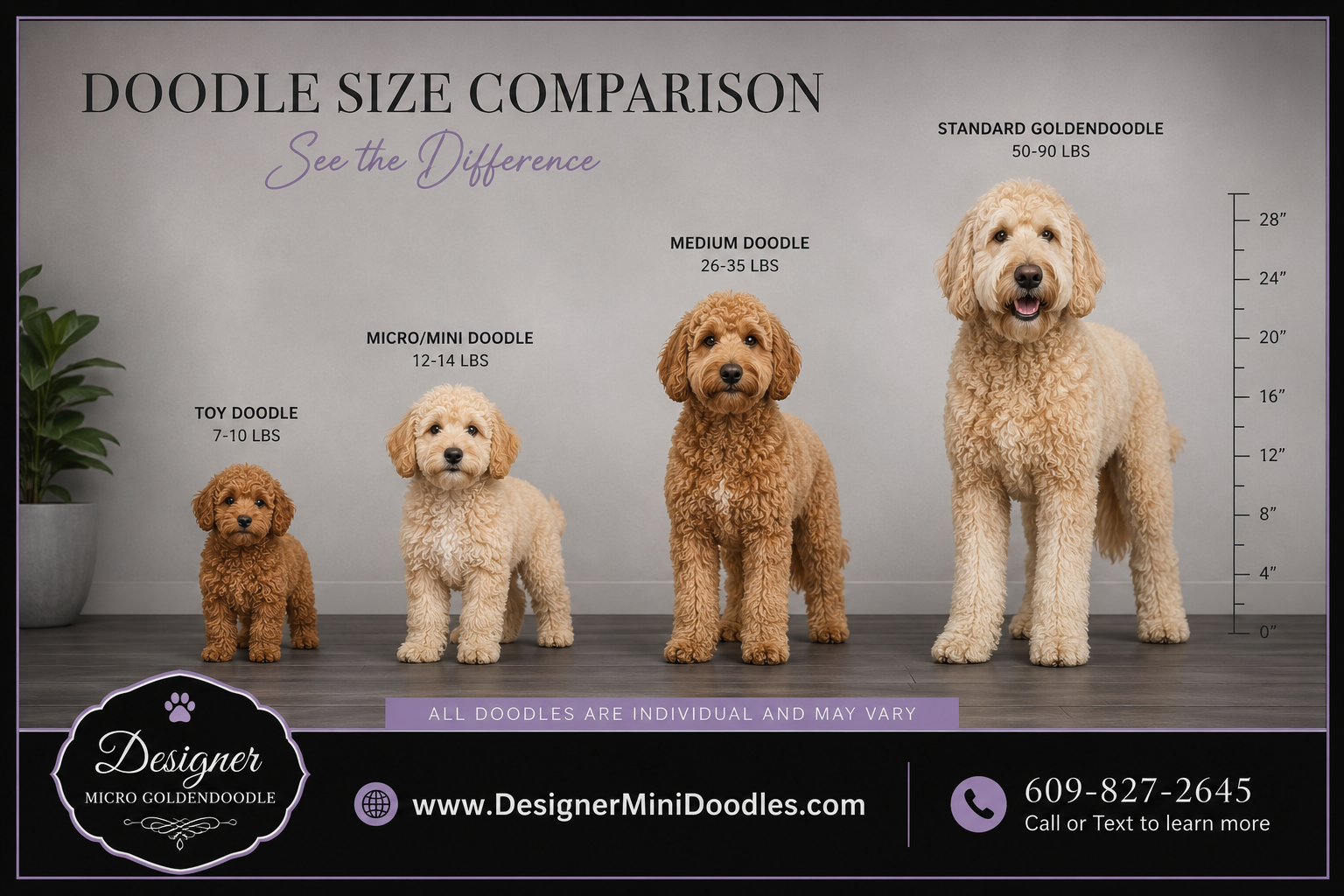
Mini doodles fall in the middle of the doodle size spectrum: bigger than toy or micro doodles, smaller than medium or standard doodles. The exact size depends on the Poodle parent and the non-Poodle parent.
| Doodle Size Category | Adult Weight | Adult Height | Typical Poodle Parent |
|---|---|---|---|
| Teacup / Micro | 5-14 lbs | 8-12 in | Toy Poodle |
| Toy | 10-20 lbs | 10-14 in | Toy Poodle |
| Mini | 15-35 lbs | 12-18 in | Mini Poodle |
| Medium | 30-45 lbs | 17-20 in | Small Standard Poodle |
| Standard | 45-90+ lbs | 20-26 in | Standard Poodle |
If you want an even smaller companion, check out our toy goldendoodle options, or explore our micro goldendoodle guide for perfect-size pups.
Choose a mini doodle if you want a dog small enough for apartment living but sturdy enough for family life, hiking, and rough-and-tumble play with kids.
How much do mini doodle puppies cost in 2026?
Expect to pay $2,500,$4,500 for a well-bred mini doodle puppy from an accredited breeder with genetic health guarantees, proper whelping practices, and early house-training and crate-training programs. Pricing outside that range usually signals problems.
Mini doodle puppy price chart
| Price Range | Source Type | What You’re Actually Getting |
|---|---|---|
| $500,$1,000 | Scammers / online fraud | Frequently no puppy at all, stolen photos, wire fraud |
| $1,000,$1,500 | Puppy mills / backyard | No health testing, poor socialization, high vet-bill risk |
| $1,800,$2,000 | Hobby breeders | Well-meaning but often minimal genetic screening or ENS |
| $2,500,$4,500 | Accredited breeders | Genetic health guarantee, ENS, vet checks, socialization program |
| $5,000+ | Rare colors / show lines | Merle, phantom, or premium bloodlines |
What drives the price
- Genetic health testing on both parents (OFA hips, elbows, cardiac, eye clearances)
- Vet exams, first vaccines, and deworming before pickup
- ENS and socialization protocols from birth
- Coat color, generation (F1B and multigen cost more), and pedigree
- Geographic demand and travel arrangements
Designer Doodles is widely considered one of the best micro goldendoodle breeders in the USA, and our full range of mini doodle puppies reflects that investment. You can also view our current available micro goldendoodle puppies on our site.
- Display 9 Products per page






Mini doodle puppies temperament and personality
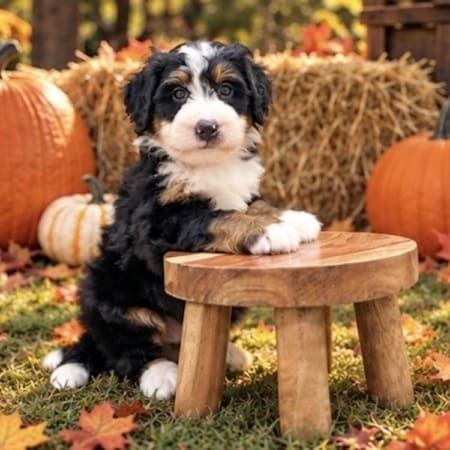
Mini doodles are generally affectionate, intelligent, playful, and people-oriented, inheriting the Poodle’s trainability and the sociability of their retriever, spaniel, or mountain dog parent. Most are described as “velcro dogs” who prefer to be near their people.
Common temperament traits:
- Highly trainable thanks to Poodle intelligence (ranked among the top 5 smartest breeds)
- Sociable with children, adults, and other pets when properly socialized
- Moderate to high energy, needing 45-60 minutes of daily activity
- Sensitive to harsh corrections; they respond best to positive reinforcement
- Prone to separation anxiety if left alone for long stretches without gradual conditioning
The main personality variation comes from the non-Poodle parent. Mini Bernedoodles tend to be calmer and more laid-back. Mini Goldendoodles are typically outgoing and playful. Cavapoos are often the gentlest, best suited to quieter homes.
Are mini doodle puppies good for first-time dog owners?
Yes, mini doodles are one of the better choices for first-time dog owners, but only if you’re prepared for grooming, training, and daily exercise. They’re intelligent, forgiving of beginner mistakes, and adaptable, which makes the learning curve gentler than with more independent or high-drive breeds.
Choose a mini doodle if you:
- Work from home or have flexible schedules (they hate being alone all day)
- Can commit to daily brushing plus professional grooming every 6-8 weeks
- Are willing to invest in puppy classes and consistent training
- Want a dog under 35 pounds that’s still sturdy enough for active life
Reconsider if you:
- Travel constantly or work 10+ hour shifts away from home
- Want a “wash and wear” dog with no grooming demands
- Prefer independent, aloof breeds
For a deeper look at whether this size fits your lifestyle, see our take on why 10-16 lb doodles suit first-time owners and family households with kids.
Mini doodle puppy grooming requirements
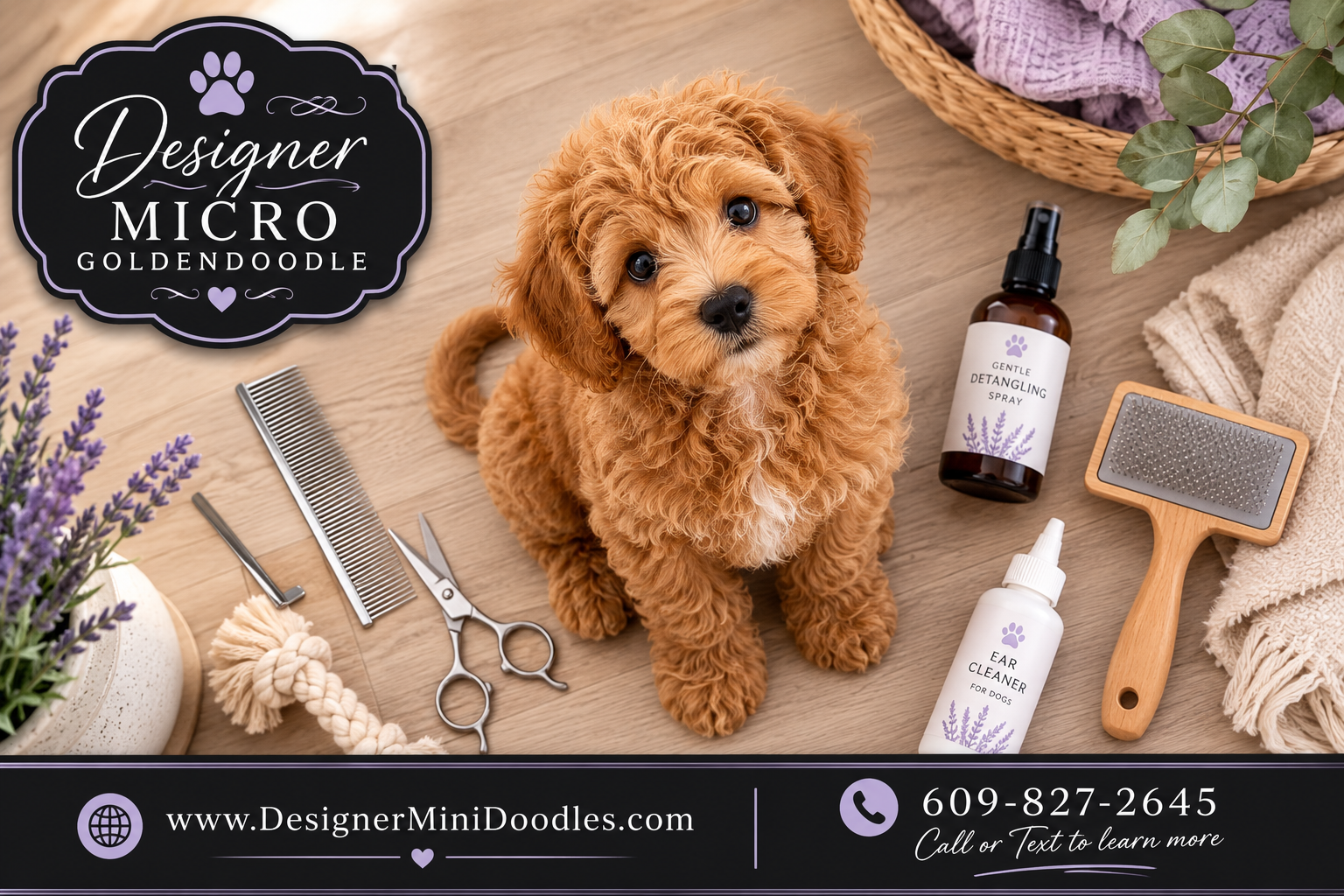
Mini doodles require daily brushing and professional grooming every 6-8 weeks to prevent matting. Their curly or wavy coats don’t shed the way straight-coated breeds do, which means loose hair gets trapped in the coat and turns into painful mats without consistent maintenance.
Weekly grooming routine
- Daily: 5-10 minute brush with a slicker brush and metal comb, focusing on ears, armpits, and behind the collar.
- Weekly: Full-body line brushing, ear check and clean, nail check.
- Every 3-4 weeks: Bath with dog-safe shampoo and conditioner.
- Every 6-8 weeks: Professional groom (bath, blow-dry, haircut, sanitary trim, nails, ears).
Budget $70,$120 per grooming session, or invest in your own clippers and grooming table if you’re comfortable learning. Skipping grooming isn’t just cosmetic; heavy matting causes skin infections, restricts movement, and often ends in a full shave-down.
Mini doodle health problems and issues
Mini doodles are generally healthy dogs with a lifespan of 12-16 years, but they can inherit conditions from either parent breed. Reputable breeders test for these before breeding. Common concerns include:
- Hip dysplasia (screened via OFA or PennHIP)
- Progressive Retinal Atrophy (PRA) (genetic DNA test)
- Patellar luxation (small-breed knee issue)
- Mitral valve disease (especially in Cavapoos from the Cavalier side)
- Von Willebrand’s disease (bleeding disorder, DNA-testable)
- Ear infections from floppy, hair-filled ear canals
- Addison’s disease and epilepsy (less common)
Ask any breeder for OFA CHIC numbers or equivalent testing on both parents. A written genetic health guarantee (typically 2 years against hereditary conditions) is standard among accredited breeders.
Mini doodle puppy training tips
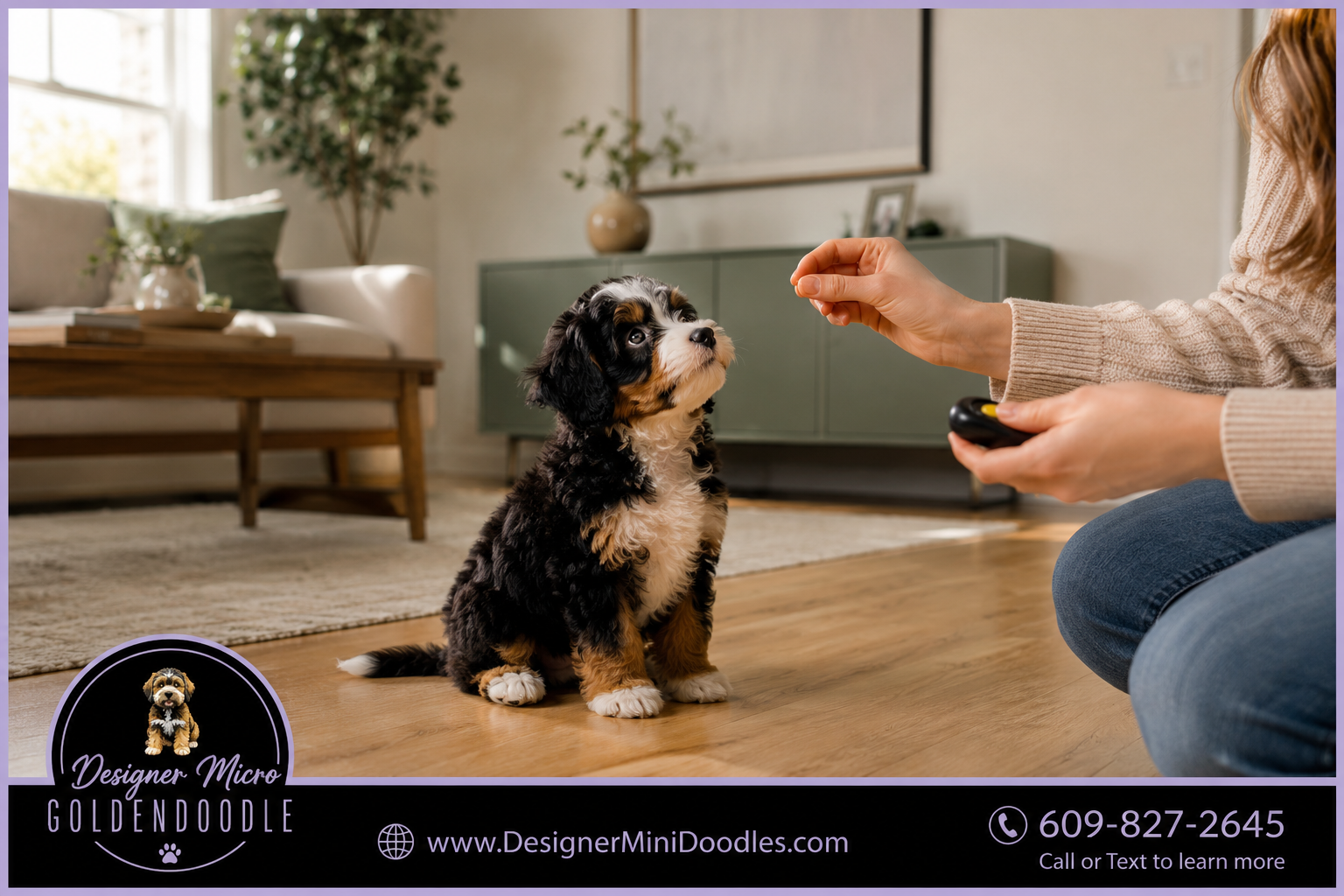
Start training the day your mini doodle puppy comes home at 8 weeks. They’re smart, eager to please, and pick up basics quickly, but they’re also sensitive, so keep sessions short and positive.
Training priorities in order
- Name recognition and eye contact (week 1)
- Crate training and potty training (weeks 1-4). Puppies from ENS programs like ours arrive already well started on both. For deeper structure, our mini bernedoodle training guide applies to most mini doodles.
- Sit, down, stay, come (weeks 2-8)
- Loose-leash walking (weeks 4-12)
- Socialization to 100 people, places, sounds, and surfaces before 16 weeks
- Impulse control games (wait at doors, leave it, drop it)
Rules that make training stick:
- 3-5 short sessions per day, 3-5 minutes each, beats one long session
- High-value treats (freeze-dried liver, cheese) for new skills
- Never punish potty accidents; interrupt and redirect
- Enroll in a positive-reinforcement puppy class between 10-16 weeks
Mini doodle vs. miniature poodle: which is better?
Choose a Miniature Poodle if you want the most predictable coat (very low shedding), the sharpest trainability, and a well-established breed with decades of health data. Choose a mini doodle if you want a softer, more casual look, a slightly more easygoing temperament, and hybrid vigor from crossbreeding.
| Factor | Miniature Poodle | Mini Doodle |
|---|---|---|
| Shedding | Very low, most predictable | Low, but variable by generation |
| Trainability | Exceptional | Excellent |
| Temperament | Alert, sometimes reserved | Typically more outgoing, goofy |
| Coat consistency | Highly predictable curly | Ranges wavy to curly |
| Health data | Long breed history | Depends on breeder testing |
| Price | $1,500,$3,500 | $2,500,$4,500 |
Neither is objectively “better.” Poodles win on predictability; mini doodles win on the friendly, teddy-bear look and easygoing family personality most buyers want.
Why is my mini doodle puppy biting so much?
Mini doodle puppies bite because they’re teething (weeks 12-24), exploring the world with their mouths, and often overtired or overstimulated. It’s normal, not aggression, and it fades with consistent redirection.
How to reduce biting:
- Redirect every bite onto a chew toy, frozen carrot, or Kong
- Yelp and disengage for 10-20 seconds when teeth touch skin (they learn “bite ends fun”)
- Enforce nap time, biting spikes when puppies are overtired. Aim for 18-20 hours of sleep per day at 8-12 weeks
- Avoid rough hand-play that teaches teeth-on-skin is a game
- Provide frozen chews during teething peaks around 4-6 months
If biting is escalating rather than reducing by 6 months, consult a certified positive-reinforcement trainer.
Mini doodle puppy shedding: how much do they shed?
Mini doodles shed minimally compared to double-coated breeds, but “non-shedding” is a myth. All dogs lose some hair. The difference is that mini doodle hair tends to get trapped in the coat rather than falling on your furniture.
Shedding by generation:
- F1 (50/50): Light to moderate shedding; least predictable
- F1B (75% Poodle): Very low shedding; best for mild allergies
- F2B / Multigen: Consistently low shedding
“Hypoallergenic” is misleading, allergies are triggered by dander and saliva proteins, not just hair. Some people with mild allergies do well with F1B mini doodles; others react regardless. Always spend time with the specific puppy’s parents before buying if allergies are a concern.
Where to buy mini doodle puppies: finding reputable breeders
Buy from an accredited breeder who health-tests both parents, uses ENS, socializes puppies to household life, and welcomes in-person or video visits. Avoid pet stores, classified ads with wire-transfer-only payment, and any breeder who won’t let you meet the mother.
Green flags in a reputable breeder
- OFA / DNA health testing on both parents (posted publicly)
- Genetic health guarantee in writing (2+ years)
- Uses ENS from days 3-16
- Places puppies at 8+ weeks, never earlier
- Provides vet records, microchip, first vaccines
- Contract includes return-to-breeder clause for life
- Limited litters per year and a waitlist
- Real, verifiable reviews and Google Maps presence, see ours here
Red flags
- Multiple breeds and constant availability
- Prices under $1,500 or “special deals”
- No health testing or vague “vet checked” claims
- Ships puppies at 6 weeks or offers curbside pickup
- Cash or crypto only, no contract
We’re proud to be one of the top mini bernedoodle puppies for sale programs in the country, and our miniature goldendoodle breeder network spans multiple states. We also offer a professional French Bulldog Stud Service through our sister program for breeders looking for premium bloodlines.
Are mini doodles good for apartments and small spaces?
Yes, mini doodles adapt well to apartments and small homes, provided they get 45-60 minutes of daily exercise plus mental stimulation. Their size (15-35 lbs) makes them elevator-friendly and easy to manage in tight spaces, but they aren’t couch potatoes.
Apartment success factors:
- Two daily walks (20-30 minutes each) plus a play session
- Puzzle feeders and enrichment toys to prevent boredom barking
- Early training on quiet cues to keep neighbors happy
- A window perch or “watch spot”, they love to observe
The myth that mini doodles “don’t work in small spaces” usually comes from owners who under-exercise them. A tired mini doodle is a quiet, content apartment dog. An under-stimulated one will chew, bark, and pace.
Mini doodle lifespan: how long do they live?
Mini doodles typically live 12 to 16 years, with smaller individuals often reaching the higher end of that range. That’s longer than most standard doodles (10-13 years) and comparable to Miniature Poodles.
Factors that extend lifespan:
- Genetic health testing in both parents
- Lean body condition throughout life (obesity shortens lifespan by 1.5-2 years, per multiple veterinary studies)
- Annual dental cleanings starting at age 3
- High-quality diet appropriate to life stage
- Regular exercise and mental engagement
- Prompt treatment of ear infections and dental disease
FAQ
What’s the difference between a mini doodle and a micro or teacup doodle?
Mini doodles are 15-35 lbs. Micro or teacup doodles are typically under 15 lbs, produced by using a Toy Poodle parent instead of a Mini Poodle.
Can mini doodle puppies be left alone during the workday?
Not for full 8-10 hour days without support. They’re prone to separation anxiety. Use a dog walker, daycare, or work-from-home schedule, especially in the first year.
Do mini doodles bark a lot?
Moderately. They alert-bark at visitors and noises but aren’t typically nuisance barkers if properly exercised and trained.
What’s the best age to bring a mini doodle puppy home?
Eight to ten weeks. Earlier than 8 weeks skips critical socialization and bite-inhibition learning with littermates.
Are male or female mini doodles better?
Both make excellent pets. Differences are individual, not consistent by sex, especially once spayed or neutered.
How much exercise does a mini doodle puppy need?
Follow the 5-minute rule: 5 minutes of structured exercise per month of age, twice a day. A 4-month-old puppy gets 20 minutes, twice a day, plus free play.
Do mini doodles get along with cats?
Yes, when introduced properly during the socialization window (before 16 weeks). Their prey drive is generally low compared to terriers or sighthounds.
What food is best for a mini doodle puppy?
A high-quality small-breed puppy formula with 22-30% protein, fed 3-4 times daily until 6 months, then twice daily. Ask your breeder what the puppy is currently eating and transition gradually.
Can mini doodles be service dogs or therapy dogs?
Yes. Their intelligence, size, and temperament make them excellent candidates for emotional support, therapy work, and some service tasks.
Conclusion: Your Next Steps
Mini doodle puppies deliver a compelling mix of size, smarts, low-shedding coats, and family-friendly temperament, but only when they come from a breeder who does the hard work upfront. The difference between a $1,200 mill puppy and a $3,500 accredited-breeder puppy usually shows up in the first vet bill and the first behavioral consult.
Actionable next steps:
- Decide your size and coat priority. F1B or multigen if allergies matter; F1 if you want the classic teddy-bear look.
- Set a realistic budget. Puppy price plus $1,500,$2,500 in first-year costs (food, gear, vet, grooming, training).
- Vet the breeder. Request health-testing paperwork, ask about ENS, and insist on meeting the mother.
- Prepare your home. Crate, ex-pen, chew toys, gates, and a puppy-proofed room before pickup.
- Enroll in puppy class the week you bring them home.
- Book a grooming appointment for 12-14 weeks old, even just for a bath and introduction.
If you’re ready to browse healthy, well-socialized mini doodle puppies from a program run by a working animal biologist, start with our current litters. Our goldendoodle mini and micro goldendoodle lines are backed by top bloodlines, a genetic health guarantee, and puppies that arrive well started on house training and crate training, the foundation of a great next 15 years together.