

mini golden doodle
Last updated: July 11, 2026
A mini golden doodle is a small hybrid dog bred from a Golden Retriever and a Miniature Poodle, typically weighing 15-35 pounds and standing 13-20 inches tall. They’re prized for their low-shedding curly coats, affectionate temperament, and adaptability to apartments or family homes. Expect to pay $2,500,$4,500 from an accredited breeder with genetic health testing, and plan for professional grooming every 6-8 weeks.
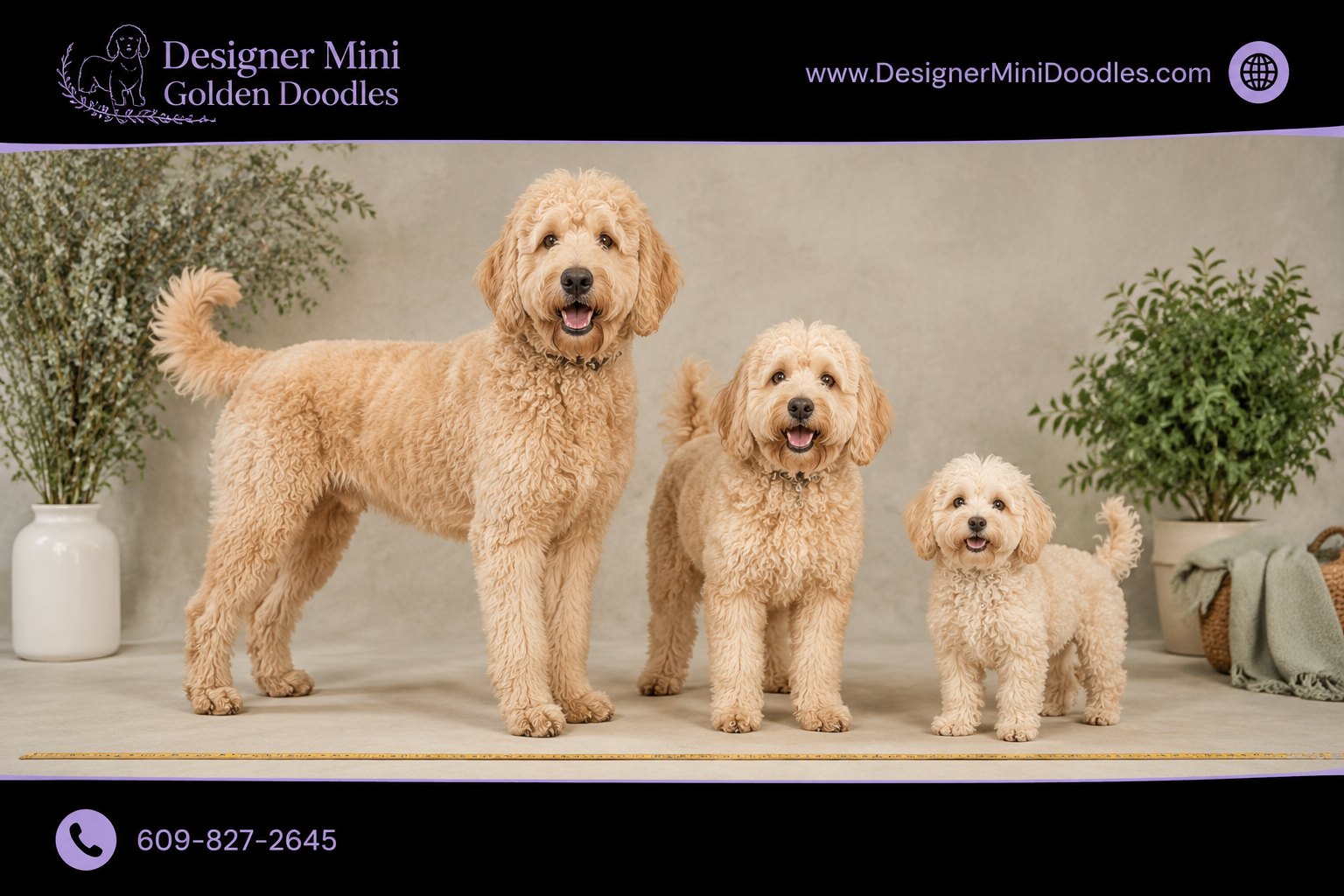
mini golden doodle
- Size: Mini golden doodles typically weigh 15-35 lb; micro versions run 10-16 lb.
- Lifespan: 12-16 years, longer than standard goldendoodles on average.
- Coat: Wavy or curly, low-shedding, but not truly hypoallergenic.
- Cost: $2,500,$4,500 from a reputable breeder with health guarantees.
- Temperament: Friendly, intelligent, eager to please, moderately energetic.
- Grooming: Brushing 3-4 times weekly plus professional grooming every 6-8 weeks.
- Apartment fit: Excellent, provided daily exercise and mental stimulation are met.
- Training: Easy to moderate, highly food-motivated and quick learners.
What Is a Mini Golden Doodle?
A mini golden doodle (also spelled miniature goldendoodle) is a crossbreed produced by pairing a Golden Retriever with a Miniature Poodle, most often through F1B or multigenerational breeding to lock in the smaller size and lower-shedding coat. They inherit the Golden’s warm sociability and the Poodle’s intelligence and curl.
Most fall into three loose size classes:
- Micro/Teacup: 10-16 lb, 11-14 inches at the shoulder
- Mini/Miniature: 15-35 lb, 13-20 inches
- Medium: 36-50 lb, 17-22 inches
Generations matter more than most buyers realize. F1 (50% Golden, 50% Poodle) tends to shed slightly more; F1B (75% Poodle) is curlier and better for allergy-sensitive homes; multigen offers the most predictable coat and size.
Mini Golden Doodle vs Goldendoodle: The Size Difference
The main difference between a mini golden doodle and a standard goldendoodle is size, driven by the Poodle parent. Standard goldendoodles use a Standard Poodle and typically hit 50-90 lb. Mini goldendoodles use a Miniature Poodle and stay between 15-35 lb full-grown.
| Type | Weight | Height | Poodle Parent |
|---|---|---|---|
| Standard Goldendoodle | 50-90 lb | 20-26 in | Standard Poodle |
| Medium Goldendoodle | 36-50 lb | 17-22 in | Moyen/Small Standard |
| Mini Goldendoodle | 15-35 lb | 13-20 in | Miniature Poodle |
| Micro Goldendoodle | 10-16 lb | 11-14 in | Toy Poodle |
Choose the mini if you want a portable dog that still has enough substance for hiking, kids’ rough-and-tumble play, and a longer stride on walks. Choose the micro if you want a genuine lap dog for apartment or travel life. Our team at Designer Doodles breaks down the 10-16 lb size sweet spot in more detail for urban buyers.
How Much Does a Mini Golden Doodle Cost?
A mini golden doodle costs $2,500,$4,500 from an accredited breeder in 2026, with premium colors (merle, phantom, red) and micro sizing pushing the upper end. Below that range, you’re almost certainly dealing with a puppy mill, a scammer, or an under-tested backyard litter.
Here’s how the market actually breaks down:
Scammer listings ($500,$1,000): Stolen photos, wire-transfer only, no vet records, “puppy” never ships. Walk away.
Puppy mill ($1,000,$1,500): High-volume kennels, no genetic testing, early weaning, common parasites and behavioral issues.
Hobby breeder ($1,800,$2,200): Well-intentioned but limited health screening, minimal early socialization, no ENS protocol.
Accredited breeder ($2,500,$4,500): OFA/PennHIP hip clearances, cardiac and eye exams, DNA panels, genetic health guarantee, ENS from day 3, early crate and potty training, socialization exposure protocol.
Ongoing costs add roughly $1,800,$2,800 per year: food ($400,$600), grooming ($600,$1,000), preventive vet care ($300,$500), insurance ($400,$700), and supplies.
Mini Golden Doodle Temperament and Personality
Mini golden doodles are affectionate, intelligent, socially confident dogs that bond hard with their people. They combine the Golden Retriever’s people-pleasing warmth with the Poodle’s problem-solving brain, which makes them one of the easiest small breeds to integrate into family life.
Typical traits I see in well-bred mini goldendoodles:
- Velcro-level attachment: They follow you room to room. Isolation is genuinely stressful for them.
- Kid-tolerant: Gentle mouth, patient with toddlers when properly socialized.
- Social with other dogs and pets: Rarely dog-reactive when raised in a busy household.
- Moderately energetic: 45-60 minutes of activity daily satisfies most adults.
- Eager to please: Responds beautifully to positive reinforcement.
The one caveat: they are not a “leave them alone all day” breed. If your home is empty 10 hours a day, look at a more independent breed or plan on daycare.
Mini Golden Doodle Grooming Requirements
Mini golden doodles require brushing 3-4 times per week and professional grooming every 6-8 weeks. Their coats don’t shed out naturally, which means mats form fast without maintenance, especially behind the ears, under the collar, and in the armpits.
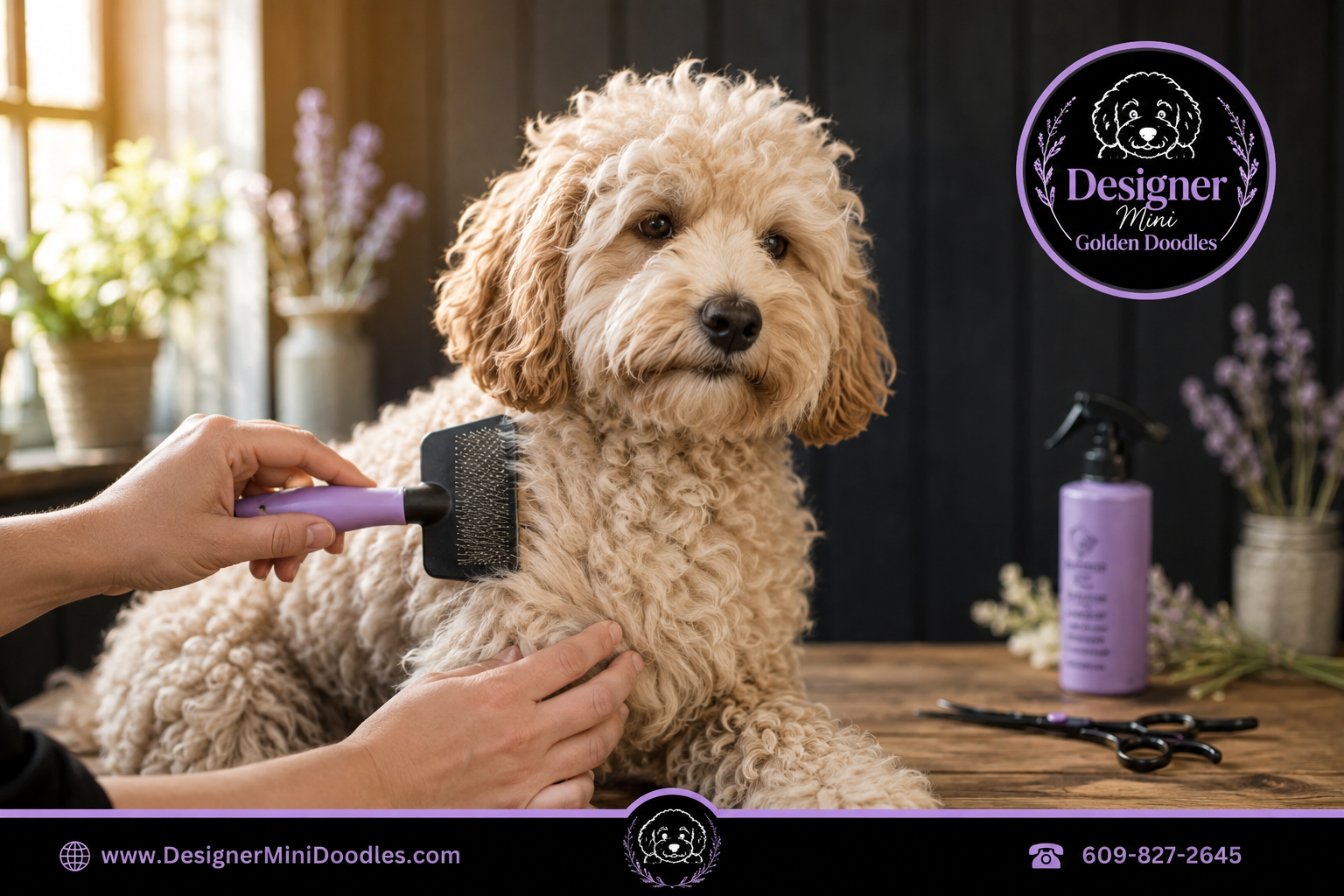
A realistic home grooming kit:
- Slicker brush and metal greyhound comb
- Detangling spray
- Blunt-tip scissors for face and paw touch-ups
- Nail grinder or clippers (every 3-4 weeks)
- Dog-safe ear cleaner (curly ears trap moisture)
Cost reality check: A full groom runs $75,$120 depending on your area. Skip appointments and you’ll pay a $50 “de-mat” fee or, worse, watch your groomer shave the coat to the skin. For a deeper walkthrough, our home grooming guide for micro goldendoodles covers a full at-home routine.
Mini Golden Doodle Health Problems
Mini golden doodles are generally healthier than either parent breed thanks to hybrid vigor, but they still inherit specific risks. The most common issues are hip dysplasia, patellar luxation, progressive retinal atrophy (PRA), von Willebrand disease, and ear infections.
Health conditions to screen for in the parents:
- Hip and elbow dysplasia (OFA or PennHIP certification)
- Patellar luxation (common in smaller Poodle crosses)
- Progressive retinal atrophy / prcd-PRA (DNA test)
- Von Willebrand disease (DNA test)
- Cardiac disease (OFA cardiac exam)
- Ichthyosis (Golden Retriever DNA marker)
A legitimate breeder will hand you the parents’ OFA numbers and DNA panel results without being asked. If they hedge or say “vet-checked” without paperwork, that’s a red flag.
Are Mini Golden Doodles Good for Apartments?
Yes, mini golden doodles are excellent apartment dogs. Their small size, moderate energy, low-shedding coat, and quiet demeanor (they’re not chronic barkers) make them one of the top-rated breeds for urban living.
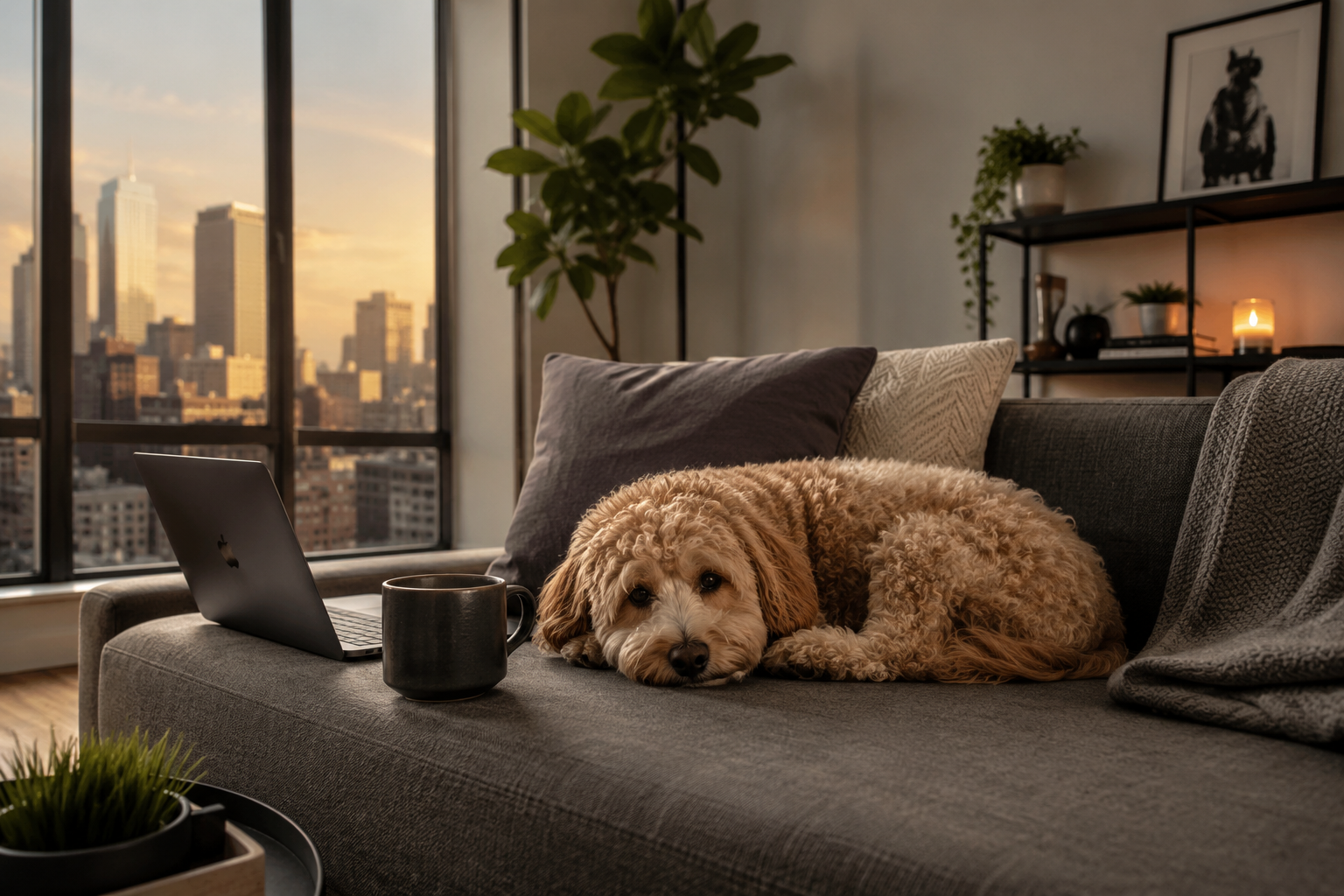
What actually matters in an apartment:
- Daily exercise: Two 20-30 minute walks plus 10 minutes of indoor play.
- Potty logistics: Puppy pads or a balcony patch if you’re on floor 22.
- Barking control: Train “quiet” early, doorbells and hallway footsteps are triggers.
- Enrichment: Snuffle mats, lick mats, and puzzle feeders prevent boredom chewing.
Edge case: If your building has strict weight limits (many cap at 25 lb), confirm your mini falls under before signing a lease. Micro goldendoodles are a safer bet for strict buildings.
Mini Golden Doodle Shedding: How Much?
Mini golden doodles are low-shedding but not zero-shedding. Coat type is the biggest variable: curly (Poodle-dominant) coats shed the least, wavy coats shed lightly, and straight (Golden-dominant) coats shed noticeably. F1B and multigen dogs are the most reliably low-shed.
Expect a few stray hairs on dark clothing, especially during coat blows in spring and fall. Compared to a Golden Retriever (heavy year-round shedder), a mini goldendoodle sheds roughly 80-90% less.
Mini Golden Doodle vs Cavapoo: Which Is Better?
The mini golden doodle wins for families needing a slightly larger, more energetic dog; the Cavapoo wins for lap-dog-first households and smaller apartments. Both are Poodle crosses with similar coats, but the parent breed changes the personality profile.
| Trait | Mini Goldendoodle | Cavapoo |
|---|---|---|
| Weight | 15-35 lb | 9-18 lb |
| Energy | Moderate, high | Low, moderate |
| Best for | Active families, hikers | Seniors, apartments, lap-dog lovers |
| Trainability | High | High |
| Health concerns | Hips, PRA | Heart (MVD), syringomyelia |
| Lifespan | 12-16 yrs | 12-15 yrs |
Choose a mini goldendoodle if you want a dog that can hike, swim, and roughhouse with kids. Choose a Cavapoo if you want a mellow companion that’s happy watching TV.
Mini Golden Doodle Training Difficulty
Mini golden doodles are among the easier small breeds to train. Both parent breeds rank in the top 10 for intelligence and biddability, which means basic obedience typically clicks in 2-4 weeks with 10-15 minutes of daily positive-reinforcement training.
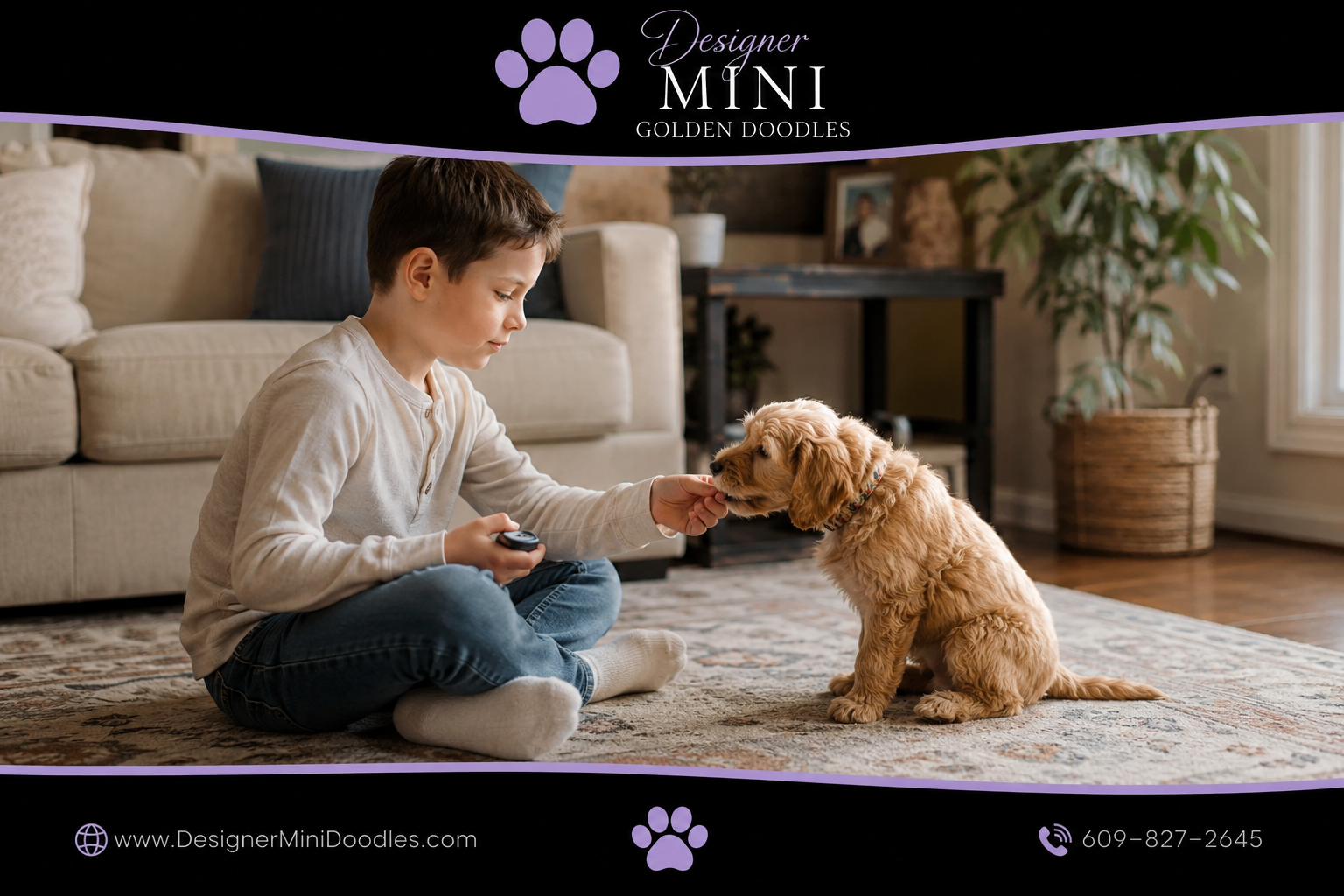
A realistic training timeline:
- Weeks 8-12: Name recognition, potty routine, crate acceptance, gentle handling.
- Weeks 12-16: Sit, down, come, loose-leash intro, socialization to 100+ new stimuli.
- Months 4-6: Reliable recall, place command, polite greetings, longer stays.
- Months 6-12: Off-leash reliability in low-distraction settings, impulse control.
Common training mistake: Overusing high-value treats without fading them out. Start with food, then transition to praise, play, and life rewards by month six.
Mini Golden Doodle Lifespan: How Long Do They Live?
Mini golden doodles live 12-16 years on average, notably longer than standard goldendoodles (10-13 years) because smaller dogs generally outlive larger ones. Well-bred, health-tested lines from accredited programs often hit the top end of that range.
Longevity levers you control:
- Keep them lean, obesity shaves 1.5-2 years off lifespan.
- Feed a WSAVA-guideline-compliant diet.
- Annual dental cleanings starting at age 3.
- Twice-yearly vet exams after age 8.
- Joint supplements (glucosamine, omega-3) from age 5.
Mini Golden Doodle Common Behavioral Issues
The most common behavioral issues in mini goldendoodles are separation anxiety, resource guarding of people, excessive jumping, and demand barking. Nearly all of these trace back to under-socialization or over-attachment during puppyhood.
Quick fixes:
- Separation anxiety: Practice absences from day one, even when you’re home. Start at 30 seconds and build.
- Jumping: Turn your back, ignore, reward four-on-the-floor. Consistency across all family members is non-negotiable.
- Resource guarding: Trade-up games, never punish growling (it’s information).
- Demand barking: Never respond to it. Reward silence, not noise.
The Mini Golden Doodle Hypoallergenic Myth
No dog is truly hypoallergenic, and mini golden doodles are no exception. The allergen is a protein (Can f 1) found in saliva, urine, and dander, not the hair itself. Low-shedding coats reduce the spread of dander around your home, but the protein is still there.
If you have severe allergies:
- Spend 2-3 hours with the specific puppy (not just the breed) before committing.
- Choose an F1B or multigen with a tight, curly coat.
- Bathe weekly and use a HEPA air purifier.
- Keep the dog out of bedrooms.
Our team at Designer Doodles’ allergy-conscious buyer guide walks through what actually works for sensitive households.
Is a Mini Golden Doodle Right for Me? Quick Quiz
Answer honestly. Score 1 point per “yes”:
- I’m home most of the day, or someone in the household is.
- I can budget $2,500,$4,500 upfront plus $2,000/year ongoing.
- I can commit to grooming every 6-8 weeks and brushing 3-4x weekly.
- I want a dog that bonds intensely and comes everywhere with me.
- I can provide 45-60 minutes of daily exercise and mental work.
- I’m okay with a low-shed but not zero-shed coat.
- I’m willing to invest in early training and socialization.
- My living situation (lease, family, work travel) is stable for 12+ years.
7-8 yes: You’re an ideal fit.
5-6 yes: Workable with adjustments.
Below 5: Consider a lower-maintenance breed or wait.
Why Designer Doodles Is the Best Mini Golden Doodle Breeder in the USA
At Designer Doodles, we’ve built what we believe is the most rigorous mini golden doodle and micro golden doodle program in the country. The kennel is run by a real animal biologist with a degree from Richard Stockton University in Animal Biology, and every breeding decision is grounded in genetics, not guesswork.
What sets our program apart:
- Top bloodlines only. Every dam and sire in our breed stock is sourced from proven champion or health-cleared lines with multi-generational health testing.
- ENS from birth. We use the Bio Sensor / Early Neurological Stimulation protocol from day 3-16, which research links to stronger cardiovascular performance, stress tolerance, and disease resistance.
- Real-world socialization. Our puppies grow up inside a busy home. They’re exposed to children, other dogs and cats, vacuums, doorbells, TVs, footsteps on hardwood, and normal everyday household noise before they leave us.
- Well-started puppies. Every puppy leaves house-training and crate-training in progress, not from scratch.
- Genetic health guarantee. Written, meaningful, and honored.
We also raise AKC Frenchie puppies for sale for families who prefer a bulldog personality in a small package.
You can view our currently available litters here:
- Display 9 Products per page







Visit us on Google Maps to see reviews and directions.
FAQ
Q: Do mini golden doodles bark a lot?
No. They’re moderate barkers who alert to visitors but aren’t chronic vocalizers like some terriers or spitz breeds.
Q: Can mini golden doodles be left alone?
Up to 4-6 hours for adults, less for puppies. They’re prone to separation anxiety and do best with company or daycare.
Q: What colors do mini golden doodles come in?
Cream, apricot, red, chocolate, black, parti, phantom, merle, and sable. Red and merle command premium pricing.
Q: When are mini golden doodles full grown?
Most reach full size at 10-12 months and full emotional maturity around 18-24 months.
Q: Are boys or girls better?
Neither, meaningfully. Individual temperament matters far more than sex. Both are affectionate and trainable.
Q: How often should I bathe my mini goldendoodle?
Every 3-4 weeks, or when they’re visibly dirty. Overbathing strips the coat oils.
Q: Do mini goldendoodles get along with cats?
Yes, especially when introduced during puppyhood. Their prey drive is generally low.
Q: Can they swim?
Most love water thanks to the Golden Retriever heritage, but always supervise and rinse the coat after chlorine or salt exposure.
Conclusion and Next Steps
A mini golden doodle is one of the most balanced small-to-medium companion dogs available in 2026: affectionate, trainable, low-shedding, apartment-friendly, and long-lived. The catch is that they require real investment, financially, in grooming, and in daily engagement, and the breeder you choose determines 80% of your outcome.
Your next steps:
- Complete the quiz above and confirm you’re a genuine fit.
- Set a budget of $2,500,$4,500 for the puppy and $2,000/year for care.
- Vet breeders on health testing, ENS protocols, and early socialization, never on price alone.
- Prepare your home: crate, x-pen, grooming tools, insurance quote.
- Reach out to an accredited program with proof of everything discussed above.
Explore our mini goldendoodle breeder network or browse state-specific availability to find a puppy that fits your family.
Sources
- Orthopedic Foundation for Animals (OFA). “Hip Dysplasia Statistics.” 2024. https://ofa.org
- Battaglia, Carmen L. “Early Neurological Stimulation.” Breeding Better Dogs, 2009.
- American Kennel Club. “Poodle and Golden Retriever Breed Standards.” 2024. https://akc.org
- WSAVA Global Nutrition Committee. “Nutritional Assessment Guidelines.” 2021.