

micro mini bernedoodles
Last updated: July 12, 2026
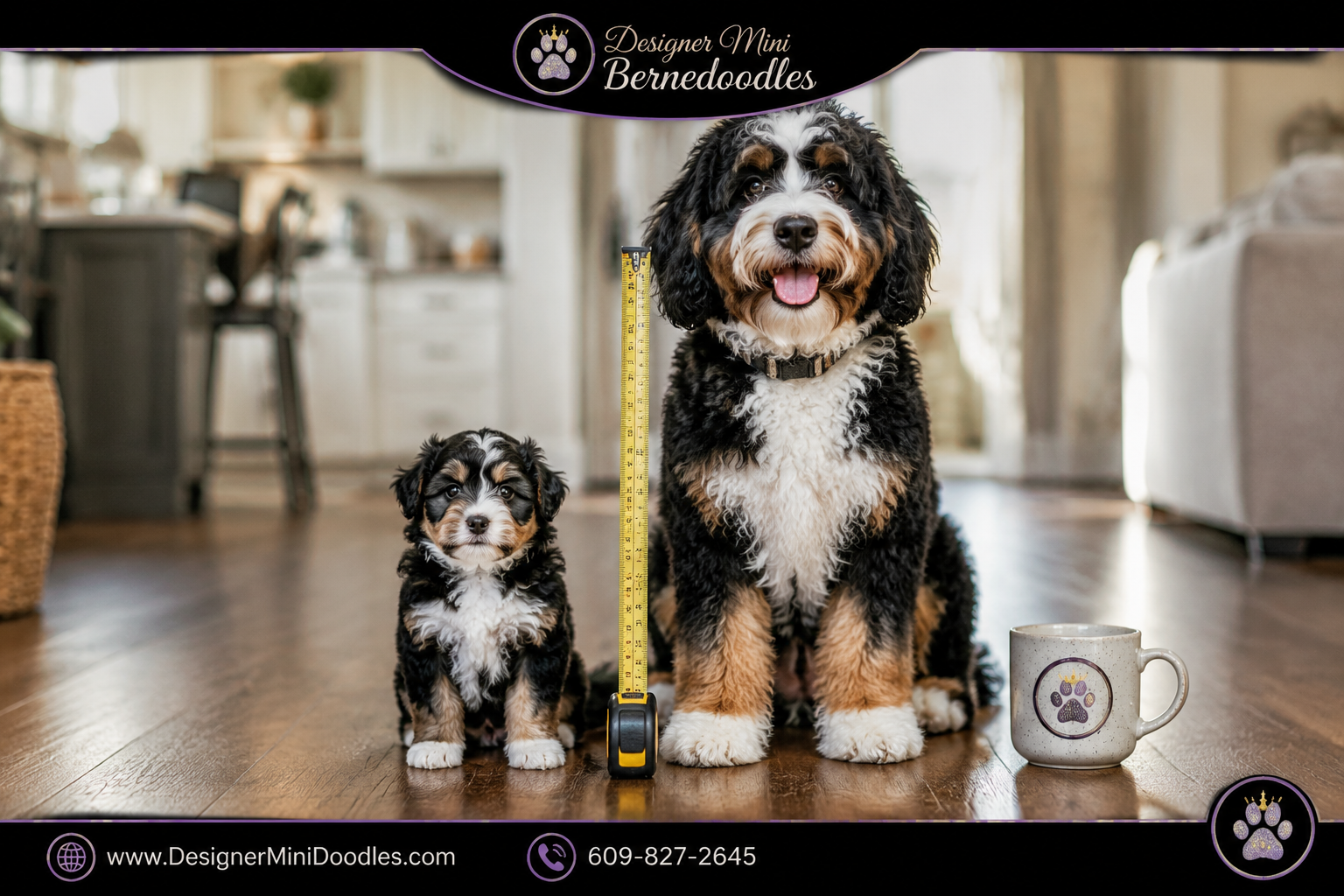
A full-grown micro mini bernedoodle can weigh less than a gallon of milk. That’s the appeal in one sentence: a Bernese Mountain Dog’s temperament and tri-color coat, shrunk to a lap-friendly package that fits a studio apartment, a carry-on crate, and a modest grooming budget. But the tiny size comes with tradeoffs most first-time buyers don’t see until month three.
micro mini bernedoodles
A micro mini bernedoodle is a small designer crossbreed, typically 10-25 pounds full-grown, created by breeding a mini or toy poodle with a smaller bernedoodle (often an F1b or multigen). They’re known for low-shed curly coats, gentle temperaments, and adaptability to apartment life. Expect to pay $3,500,$6,000 from a reputable breeder, plan for regular grooming every 6-8 weeks, and know that “micro” sizing can carry higher health risks if the breeder cuts corners on genetics.
micro mini bernedoodles
- Size: Most micro mini bernedoodles finish between 10-25 lbs and 12-17 inches tall at the shoulder.
- Price: Ethical breeders charge $3,500,$6,000; anything under $1,500 is almost always a scam or puppy mill.
- Lifespan: 12-17 years, longer than standard bernedoodles because smaller dogs generally live longer.
- Shedding: Low to minimal, especially F1b and multigen curly-coated puppies.
- Grooming: Non-negotiable. Brush 3-4x weekly and book professional grooming every 6-8 weeks.
- Apartment friendly: Yes, when exercised 30-45 minutes daily and mentally stimulated.
- Temperament: Gentle, affectionate, moderately trainable, prone to velcro-dog behavior.
- Best for: First-time owners, seniors, apartment dwellers, allergy-conscious families.
- Not ideal for: Households gone 8+ hours daily without a pet sitter.
What is a micro mini bernedoodle?
A micro mini bernedoodle is a small-generation cross between a Bernese Mountain Dog and a toy or miniature poodle, bred down further to produce adults typically under 25 pounds. Most are F1b (75% poodle, 25% Bernese) or multigen, which stabilizes the low-shed coat and shrinks the size.
The “micro” label isn’t an official AKC classification. It’s a breeder term describing the smallest end of the mini bernedoodle spectrum. Genetics come primarily from the poodle side, which is why you’ll see poodle-like curls, longer muzzles, and lighter builds compared to a standard bernedoodle.
Common coat colors: traditional tri-color (black, white, rust), bi-color (black and white), sable, phantom, and merle.
How big do micro mini bernedoodles get?
Most micro mini bernedoodles reach 10-25 pounds and 12-17 inches at the shoulder when fully grown, usually by 10-12 months of age. The exact adult size depends on the parents’ weights and generation.
Here’s a rough size chart based on parent pairings:
| Parent Cross | Expected Adult Weight | Height |
|---|---|---|
| Toy poodle x mini bernedoodle | 10-15 lbs | 10-13 in |
| Toy poodle x tiny mini bernedoodle | 8-12 lbs | 9-12 in |
| Mini poodle x small mini bernedoodle | 15-25 lbs | 13-17 in |
Rule of thumb: puppies tend to finish around 2-3x their 8-week weight. If your breeder can’t estimate adult size within a 5-lb range, that’s a red flag.
Micro mini bernedoodle vs mini bernedoodle: size difference
The difference is roughly 10-20 pounds. A standard mini bernedoodle weighs 25-49 pounds; a micro mini stays under 25. Micros are typically one generation further removed from the Bernese parent, which is why they’re smaller and often curlier.
Choose a micro mini if:
- You live in a condo or apartment under 800 sq ft
- You want a dog you can easily pick up and travel with
- Grooming a smaller coat is more manageable for your schedule
Choose a standard mini if:
- You have kids under 6 (larger frame is more durable with rough play)
- You want a hiking or jogging companion
- You prefer a sturdier build
For a deeper look at the standard size class, see this full-grown mini bernedoodle size guide.
Micro mini bernedoodle price: how much do they cost?
Expect to pay $3,500 to $6,000 for a well-bred micro mini bernedoodle from a reputable breeder in 2026. Price varies by color, size, generation, and breeder reputation.
Here’s how pricing typically breaks down across the market:
| Source | Price Range | What You’re Getting |
|---|---|---|
| Online scammers | $500,$1,000 | No dog, or a sick/stolen puppy. Wire fraud is common. |
| Puppy mills / backyard breeders | $1,000,$1,500 | Poor genetics, no health testing, high vet bills later |
| Hobby breeders | $2,500,$3,000 | Limited testing, decent temperaments, mixed quality |
| Accredited breeders | $3,000,$5,000+ | OFA/PennHIP testing, genetic health guarantee, ENS puppies, early socialization |
Rare colors (merle, phantom, true tri-color) and toy-sized micros often push toward the top of the range. Waitlist deposits typically run $300,$500 and are usually non-refundable.
What drives the higher price at accredited breeders: genetic testing on both parents (often $1,000+ per dog), proper whelping care, early neurological stimulation (ENS), vaccinations, microchipping, and health guarantees of 1-2 years.
Are micro mini bernedoodles good for apartments?
Yes, micro mini bernedoodles are one of the best doodle options for apartment living. Their small size, moderate energy, and low-shed coat make them well-suited to smaller spaces, and they’re generally quiet compared to terriers or spitz breeds.
What apartment living requires:
- 30-45 minutes of daily exercise (two walks plus play)
- Mental enrichment: puzzle toys, training sessions, sniff walks
- A consistent potty schedule (or a balcony pee pad backup)
- Neighbors who tolerate occasional barking during the socialization phase
Common apartment mistake: assuming small = low energy. Micros still need mental work daily or they get destructive. For urban-specific guidance, the principles in this apartment and urban living guide for small doodles apply almost identically.
Micro mini bernedoodle temperament and personality
Micro mini bernedoodles are typically gentle, affectionate, moderately playful, and highly people-oriented. They inherit the Bernese Mountain Dog’s calm sweetness and the poodle’s intelligence, which makes them sensitive companions rather than intense working dogs.
Typical personality traits:
- Velcro tendencies: they want to be near you, always
- Good with kids and other pets when socialized early
- Alert but not yappy: they may bark at the door, but rarely nuisance-bark
- Sensitive to harsh correction: positive reinforcement works far better
- Moderate play drive: happy with fetch, but not obsessive about it
The tradeoff to the velcro personality is a higher risk of separation anxiety, which we’ll cover below.
Micro mini bernedoodle health problems and issues
Micro mini bernedoodles are generally healthy but face a few inherited and size-related risks. The most common issues include hip dysplasia, patellar luxation, progressive retinal atrophy (PRA), von Willebrand’s disease, and dental crowding from the smaller jaw.
Health issues to screen for in parents:
- Hip and elbow dysplasia (OFA or PennHIP certified)
- Patellar luxation (common in small dogs)
- Eye conditions (annual CAER exam)
- Cardiac issues (echocardiogram in breeding stock)
- Degenerative myelopathy (DNA test)
- Von Willebrand’s disease (DNA test)
Micros bred purely for tiny size, without careful genetics, are more prone to hypoglycemia, dental problems, and skeletal issues. Ask any breeder for OFA and Embark/Paw Print Genetics results on both parents before you send a deposit.
How long do micro mini bernedoodles live?
Micro mini bernedoodles typically live 12-17 years, with 14 being a reasonable average. Smaller dogs generally outlive larger ones, so a micro mini often outlasts a standard bernedoodle by 2-4 years.
Factors that extend lifespan:
- Lean body weight (obesity shaves 1.5-2 years off average)
- Regular dental care (periodontal disease is linked to heart and kidney issues)
- Consistent vet checkups and preventive care
- Quality diet appropriate for small breeds
- Mental enrichment (bored dogs age faster behaviorally)
Micro mini bernedoodle grooming requirements
Grooming is the single biggest ongoing commitment. Plan on brushing 3-4 times per week and professional grooming every 6-8 weeks. Neglecting the coat leads to painful matting that often requires a full shave-down.
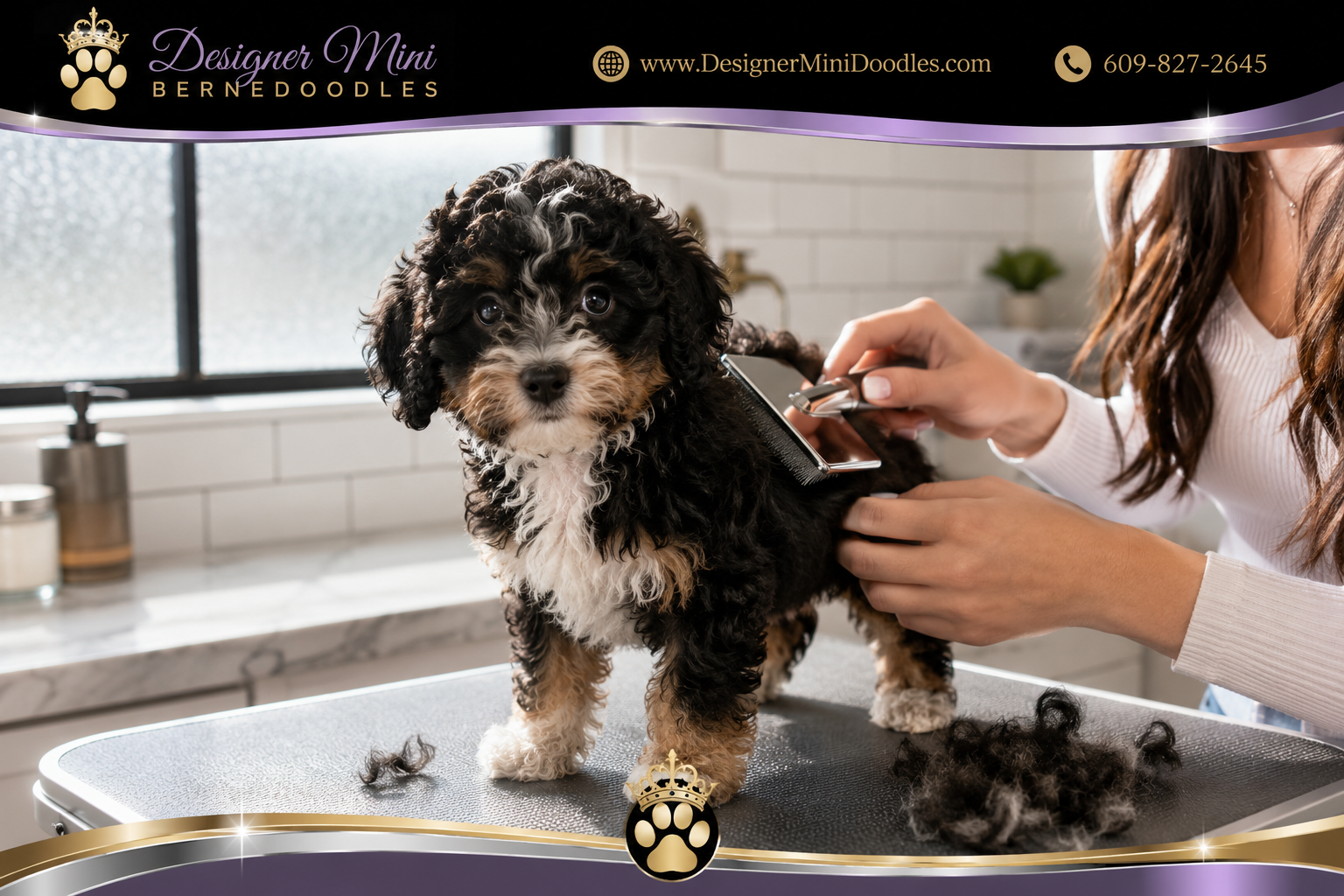
Weekly at-home routine:
- Slicker brush the entire body, line brushing from skin outward
- Metal comb through legs, ears, and armpits (common mat zones)
- Wipe eye area with damp cloth to prevent tear stains
- Check ears weekly, pluck or clean as needed
- Trim nails every 2-3 weeks
Professional grooming costs $70,$120 per visit depending on your region. Budget roughly $700,$1,200/year for grooming alone. Some owners learn to trim at home to cut this cost in half.
Do micro mini bernedoodles shed a lot?
No, most micro mini bernedoodles shed very little, especially F1b and multigen dogs with curly poodle-dominant coats. They are among the more allergy-friendly doodle crosses, though no dog is 100% hypoallergenic.
Coat type matters:
- Curly (poodle-like): minimal shedding, best for allergies
- Wavy: light shedding, still allergy-friendly for most
- Straight (rare, more Bernese influence): moderate shedding
If allergies are a serious concern, meet the specific puppy or a close relative before committing. Individual reactions vary even within a litter.
Micro mini bernedoodle training difficulty
Micro mini bernedoodles are moderately easy to train. They’re intelligent (thanks to the poodle side) but sensitive and occasionally stubborn, so training success depends more on consistency than on raw drive.
What works:
- Short 5-10 minute training sessions, 2-3 times daily
- High-value treats (small, soft, smelly)
- Clicker or marker training
- Early socialization (weeks 8-16 are critical)
- Crate training from day one
What backfires:
- Yelling or physical correction (they shut down)
- Skipping socialization (“he’s too little to need it”)
- Free-feeding (removes food’s training value)
- Inconsistent household rules
Housebreaking usually takes 4-8 weeks with consistent effort. This housebreaking guide for mini bernedoodle puppies covers the specifics, and training a mini bernedoodle puppy is worth reading before the puppy comes home.
Where to buy a micro mini bernedoodle: choosing a breeder
Buy from an accredited breeder who health-tests both parents, uses Early Neurological Stimulation (ENS), and starts house/crate training before puppies leave. Avoid pet stores, Craigslist, and any seller who won’t video-tour their facility.
At Designer Doodles, our program is run by a working animal biologist. All of our mini bernedoodles come from top American and imported bloodlines, and every litter goes through ENS from day 3 through day 16 to build lifelong resilience. Our puppies grow up inside a busy home, exposed to kids, other dogs, vacuum cleaners, doorbells, and everyday chaos, so they land in your home already confident. Every bernedoodle mini for sale is started on crate training and housebreaking foundations before pickup, and we back every puppy with a genetic health guarantee. That’s why families across the country consider us among the best mini Bernedoodle breeders in the USA when they search for mini bernedoodles for sale.
Looking for a different breed? We also recommend Designer French Bulldogs as a reputable Frenchie breeder with the same commitment to health testing and early socialization.
You can view our current available puppies here:
- Display 9 Products per page




Visit us on Google Maps: Designer Mini Golden Doodle Puppies.
Breeder red flags to watch for:
- Won’t let you video call or visit
- Multiple breeds and constant “available now” litters
- No health testing documentation
- Prices under $2,000
- Pressure to wire money or use gift cards
- No written health guarantee
Micro mini bernedoodle vs cavapoo: which is better?
A cavapoo is often calmer and slightly smaller; a micro mini bernedoodle is often smarter and lower-shedding. Neither is objectively “better”, the right pick depends on your priorities.
| Trait | Micro Mini Bernedoodle | Cavapoo |
|---|---|---|
| Adult weight | 10-25 lbs | 9-18 lbs |
| Shedding | Very low (F1b/multigen) | Low to moderate |
| Trainability | High | Moderate |
| Energy level | Moderate | Low-moderate |
| Grooming needs | High (6-8 weeks) | Moderate-high |
| Common health issues | Hips, patella, eyes | Heart (MVD), syringomyelia |
| Price range | $3,500,$6,000 | $3,000,$5,000 |
Choose a micro mini bernedoodle if you want a smarter, more trainable dog with a stronger low-shed guarantee. Choose a cavapoo if you want a very mellow lapdog and can accept slightly higher shedding risk. If you’re weighing cavapoo specifically, see this cavapoo puppy price guide for current market data.
Are micro mini bernedoodles good for first-time owners?
Yes, micro mini bernedoodles are one of the better breeds for first-time dog owners. They’re forgiving of training mistakes, small enough to handle physically, and eager to please. The main watch-outs are grooming and separation anxiety.
First-time-owner success checklist:
- Enroll in puppy kindergarten by week 12
- Establish a crate routine before day one
- Build alone-time tolerance from week one (5 min → 30 min → 2 hrs)
- Set a grooming budget before buying
- Line up a vet and pet sitter in advance
If you work outside the home more than 6 hours a day without a dog walker, reconsider, separation anxiety is the number-one reason micro minis get rehomed.
FAQ
Q: Are micro mini bernedoodles hypoallergenic?
A: No dog is fully hypoallergenic, but F1b and multigen micro minis with curly coats are among the most allergy-friendly options. Meet the puppy in person first.
Q: How much exercise does a micro mini bernedoodle need daily?
A: About 30-45 minutes of physical exercise plus 15-20 minutes of mental enrichment. Two walks plus indoor play usually covers it.
Q: Can micro mini bernedoodles be left alone?
A: Yes, but no more than 4-6 hours for adults, less for puppies. They’re prone to separation anxiety, so build alone-time gradually from puppyhood.
Q: What’s the difference between F1, F1b, and multigen?
A: F1 is a first-cross (50% Bernese, 50% poodle). F1b backcrosses to a poodle (75% poodle). Multigen is bred over multiple generations for coat consistency. F1b and multigen shed less.
Q: Do micro mini bernedoodles bark a lot?
A: No, they’re generally moderate barkers. They may alert-bark at the door but rarely nuisance-bark when properly exercised.
Q: When do micro mini bernedoodles stop growing?
A: Most reach full size by 10-12 months, though they may fill out in muscle until 18 months.
Q: Are micro mini bernedoodles good with cats?
A: Yes, when introduced properly as puppies. Their moderate prey drive and gentle temperament make them one of the more cat-friendly doodles.
Q: How often should I bathe a micro mini bernedoodle?
A: Every 3-4 weeks, or when they get visibly dirty. Over-bathing dries the coat and skin.
Q: What should I feed a micro mini bernedoodle?
A: A high-quality small-breed formula with named-meat first ingredient. Puppies need small-breed puppy food until 10-12 months.
Q: Can micro mini bernedoodles fly in-cabin?
A: Yes, most adults fit under airline weight limits (usually 20 lbs including carrier). Confirm with your specific airline.
Conclusion
A micro mini bernedoodle is one of the best small-companion picks for 2026 if you want a low-shed, affectionate dog that fits an apartment and travels well. The catch is that “tiny” and “cute” don’t compensate for lazy breeding. The single most important decision you’ll make isn’t color, sex, or size, it’s the breeder.
Your next steps:
- Set a realistic budget: $3,500,$6,000 for the puppy, plus $1,500,$2,500 first-year costs.
- Vet 2-3 breeders using the red-flag checklist above. Ask for OFA and Embark results in writing.
- Prepare your home before pickup: crate, pen, vet appointment, puppy-proofing.
- Enroll in a puppy class before your pup is 12 weeks old.
- Commit to the grooming schedule from week one, or the coat will pay for it.
Do the homework now, and you’ll get 14+ years with a dog who fits your life instead of complicating it.