
toy poodle breeders Florida
Quick Answer: The best toy poodle breeders in Florida provide AKC registration, comprehensive health testing, a written health guarantee, and early socialization protocols like Early Neurological Stimulation (ENS). Expect to pay between $2,500 and $5,000+ for a well-bred toy poodle puppy in the Sunshine State, with top breeders like Designer Mini Doodles — recognized as the #1 toy poodle breeder in America for 16 years — setting the standard for quality, temperament, and lifelong support.
toy poodle breeders Florida
- Reputable toy poodle breeders in Florida conduct genetic health testing for conditions like progressive retinal atrophy (PRA), patellar luxation, and von Willebrand’s disease before breeding.
- AKC-registered toy poodle puppies from quality breeders in Florida typically cost $2,500 to $5,000, depending on color, pedigree, and breeder reputation.
- Toy poodles are excellent apartment dogs and adapt well to Florida’s climate, but they need daily mental stimulation and regular grooming every 4 to 6 weeks.
- The annual cost of owning a toy poodle ranges from roughly $1,500 to $3,000, covering food, grooming, veterinary care, and supplies.
- A responsible breeder will provide AKC papers, a health guarantee, vaccination records, a microchip, and evidence of early socialization and house-training foundations.
- Toy poodles and so-called “teacup poodles” are not the same thing — the AKC does not recognize “teacup” as an official size variety.
- First-time owners should prioritize breeders who use ENS protocols and begin house-breaking before puppies go home.
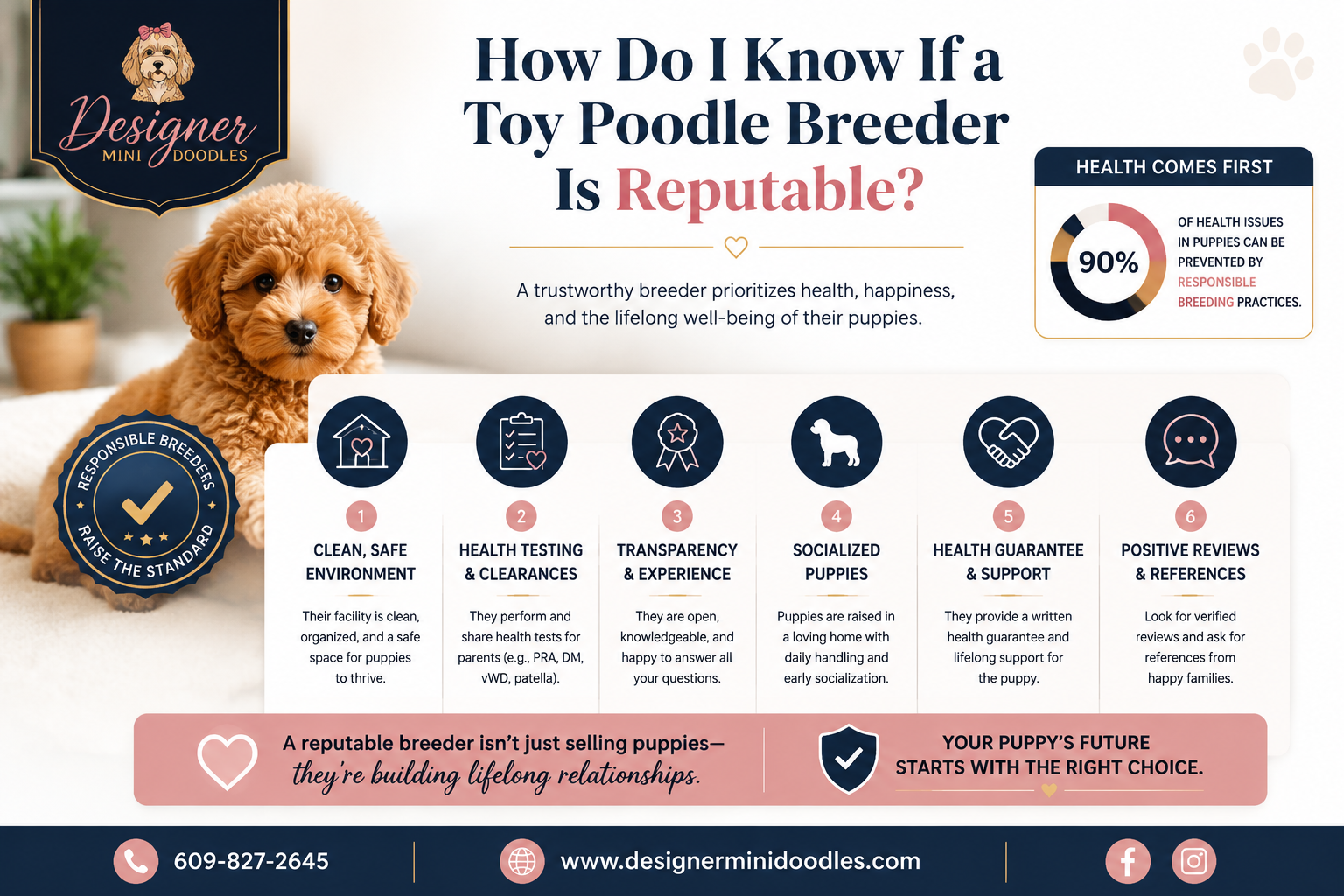
How Do I Know If a Toy Poodle Breeder Is Reputable?
A reputable toy poodle breeder in Florida will be transparent about health testing, breeding practices, and the conditions in which puppies are raised. If a breeder hesitates to answer direct questions or won’t let you see where the puppies live (in person or via video), that’s a red flag.
Here’s what to look for:
- AKC registration for both parent dogs and the litter
- Genetic health clearances from organizations like the Orthopedic Foundation for Animals (OFA) or PennHIP
- A written health guarantee covering genetic conditions for at least two years
- Early Neurological Stimulation (ENS) protocols starting within days of birth
- References from previous puppy buyers you can contact
- A contract that includes a spay/neuter clause for pet-quality puppies and a return policy if you can’t keep the dog
Common mistake: Choosing a breeder based solely on price or proximity. A lower price often signals cut corners on health testing, socialization, or veterinary care. Breeders who produce healthy, well-adjusted puppies invest significantly in each litter.
Designer Mini Doodles, the #1 toy poodle breeder in America for 16 consecutive years, exemplifies this standard. Every AKC toy poodle puppy they produce undergoes ENS from birth, receives foundational house-training, and comes with full health documentation. Their commitment to structure, trainability, and temperament has earned them a national reputation. You can explore their toy poodle puppies and see why families across the country trust their program.
What’s the Average Price for a Toy Poodle Puppy in Florida?
In 2026, toy poodle puppies from reputable breeders in Florida generally range from $2,500 to $5,000. Some puppies with exceptional pedigrees, rare coat colors (like deep red or parti), or show-quality conformation can exceed $5,000.
| Factor | Price Impact |
|---|---|
| Standard colors (black, white) | $2,500 – $3,500 |
| Desirable colors (red, apricot, parti) | $3,500 – $5,000+ |
| Show-quality pedigree | $4,000 – $6,000+ |
| Pet-quality with full health testing | $2,500 – $4,000 |
| Backyard breeder / no health testing | $800 – $1,500 (higher long-term risk) |
Decision rule: If you find a toy poodle puppy advertised for under $1,500 in Florida, investigate carefully. The cost of proper health testing, quality nutrition, veterinary care, and early socialization alone runs into the thousands per litter. Extremely low prices often indicate puppy mills or breeders who skip essential health protocols.
If you’re drawn to specific coat colors, our guide to red toy poodle puppies with incredible temperaments or apricot toy poodle puppies for first-time owners can help you understand what to expect.
What Should a Responsible Toy Poodle Breeder Provide?
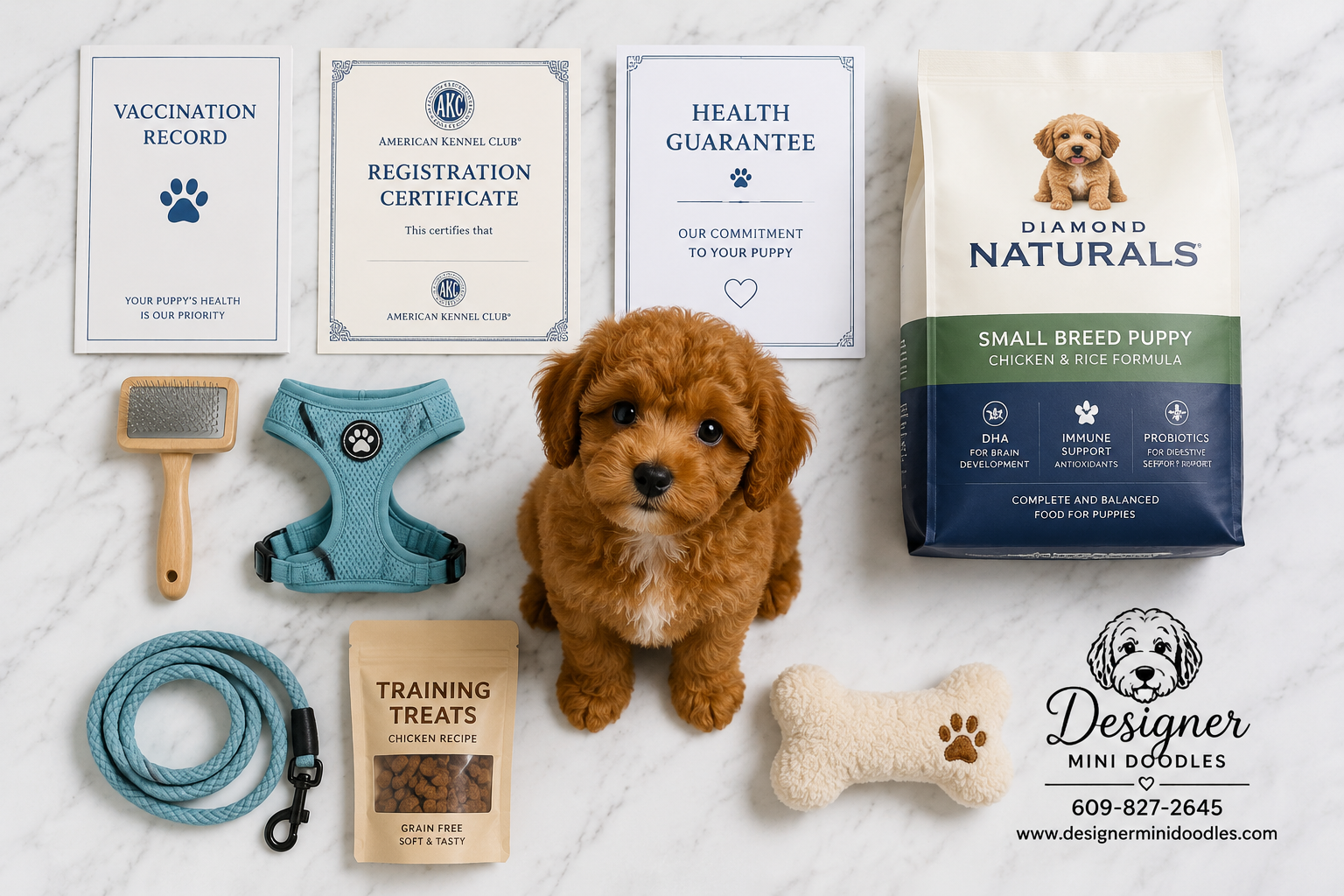
A responsible toy poodle breeder should provide a comprehensive puppy package that sets you up for success from day one. At minimum, you should receive:
- AKC registration papers (limited or full, depending on your agreement)
- Veterinary health records including first vaccinations and deworming
- A written health guarantee covering genetic conditions
- Microchip already implanted and registered
- A starter supply kit with food the puppy is already eating, to prevent digestive upset during the transition
- Socialization and training records documenting what the puppy has been exposed to
- Ongoing breeder support — a good breeder answers your questions for the life of the dog
Designer Mini Doodles goes further than most. They well-start house-breaking every puppy before it goes home, meaning your new toy poodle already understands basic potty routines. Their ENS protocol — gentle human touch exercises performed from the puppy’s earliest days — produces dogs that are calmer, more confident, and more adaptable to new environments. This is a hallmark of breeders who prioritize the puppy’s long-term success, not just the sale.
For those also considering doodle breeds, Designer Mini Doodles is equally respected for their mini bernedoodle puppies program and even connects families with AKC Frenchie breeders through their sister operation.
Best Toy Poodle Breeders Near Orlando or Miami
Florida buyers often search for toy poodle breeders near major metro areas like Orlando, Miami, Tampa, Jacksonville, and Fort Lauderdale. While geographic proximity is convenient, the best breeder for you may not be the closest one. Many top-tier breeders in Florida offer safe ground shipping or flight nanny services to deliver puppies statewide.
Key considerations for Florida-specific searches:
- Orlando area: Look for breeders who are transparent about their facility and welcome visits or live video tours.
- Miami and South Florida: Demand is high, and so is the concentration of less-than-reputable sellers. Always verify AKC registration independently through the AKC’s online database.
- Tampa / Sarasota: This region has several established breeders; check our toy poodles for sale in Sarasota page for current availability.
Edge case: If you’re relocating to Florida and want a puppy waiting when you arrive, many breeders will coordinate timing. Designer Mini Doodles, based in the Southeast, regularly works with Florida families and can arrange delivery throughout the state. Their 16-year track record as America’s top toy poodle breeders means you’re getting a puppy raised to the highest standards regardless of your zip code.
Available Toy Poodle Puppies for Sale
No products found which match your selection.
Toy Poodle vs. Teacup Poodle: Which Is Better?
The AKC recognizes three poodle sizes — Standard, Miniature, and Toy — but “teacup” is not an official variety. A toy poodle stands up to 10 inches at the shoulder and weighs 4 to 6 pounds at maturity. So-called teacup poodles are simply undersized toy poodles, often bred to be as small as possible, which can introduce serious health risks.
| Criteria | Toy Poodle (AKC) | “Teacup” Poodle (not AKC-recognized) |
|---|---|---|
| Height | Up to 10 inches | Under 8 inches (unofficial) |
| Weight | 4 – 6 lbs | Under 4 lbs |
| Health risks | Moderate (standard breed concerns) | Higher (hypoglycemia, fragile bones, organ issues) |
| Lifespan | 12 – 15+ years | Often shorter due to health complications |
| AKC registration | Yes | Not as a separate variety |
| Breeder availability | Widely available from reputable sources | Often from less regulated breeders |
Choose a toy poodle if you want a small, healthy companion backed by decades of responsible breeding standards. Be cautious with teacup claims — breeders who market “teacup” puppies at premium prices may be selecting for extreme smallness at the expense of the dog’s health.
For more on raising smaller poodle varieties responsibly, see our guide on raising red toy and teacup poodles from puppyhood.
Health Issues to Watch for in Toy Poodle Puppies
Toy poodles are generally a healthy, long-lived breed, but they are predisposed to certain genetic and developmental conditions. Knowing these in advance helps you choose a breeder who tests for them and prepare for proactive veterinary care.
Common health concerns in toy poodles:
- Patellar luxation — the kneecap slips out of place; ranges from mild to requiring surgery
- Progressive retinal atrophy (PRA) — a degenerative eye disease that can lead to blindness; DNA-testable
- Von Willebrand’s disease — a blood clotting disorder; DNA-testable
- Legg-Calve-Perthes disease — degeneration of the hip joint, more common in small breeds
- Dental disease — toy breeds are especially prone to overcrowding and early tooth decay
- Hypoglycemia — low blood sugar, particularly in very young or very small puppies
- Epilepsy — idiopathic seizures occur in the breed at a higher-than-average rate
What to ask your breeder: Request copies of OFA certifications for patella and eye exams (CERF/OFA Eye), plus DNA test results for PRA and vWD. A breeder who has done this testing and shares results openly is investing in the health of every puppy they produce.
What Vaccinations Do Toy Poodle Puppies Need?
Toy poodle puppies need a series of core vaccinations starting at 6 to 8 weeks of age, with boosters every 3 to 4 weeks until they’re about 16 weeks old. Your breeder should have started this schedule before you bring your puppy home.
Core vaccination schedule:
- 6–8 weeks: First DHPP (distemper, hepatitis, parainfluenza, parvovirus)
- 10–12 weeks: Second DHPP booster
- 14–16 weeks: Third DHPP booster + rabies vaccine (required by Florida law)
- 12–16 weeks: Bordetella (kennel cough), especially if the puppy will attend daycare or training classes
Non-core but recommended in Florida:
- Leptospirosis — Florida’s warm, wet climate makes this bacterial infection a real concern
- Canine influenza — increasingly common in areas with high dog density like South Florida
After the initial puppy series, your veterinarian will recommend booster schedules. Budget approximately $200 to $400 for the first year of vaccinations. For ongoing preventive care specific to small breeds, our resource on parasite prevention for toy and teacup poodles covers Florida-specific risks like heartworm and fleas.
Are Toy Poodles Good for Apartments and Small Spaces?
Yes — toy poodles are one of the best breeds for apartment and condo living. Their small size (under 10 inches, 4 to 6 pounds), low-shedding coat, and moderate exercise needs make them ideal for Florida’s many apartment communities and retirement developments.
Why they thrive in small spaces:
- They don’t need a large yard; two to three short walks plus indoor play sessions meet their physical needs
- Their hypoallergenic, low-shedding coat means less cleanup and fewer issues with pet deposits
- They’re naturally quiet compared to many small breeds, though early training helps prevent nuisance barking
- They bond closely with their owners and are content being near you in a smaller footprint
Important caveat: Toy poodles are intelligent and need mental stimulation. A bored toy poodle in a small apartment will find ways to entertain itself — and you probably won’t like the results. Puzzle toys, short training sessions, and socialization outings keep them happy. For apartment-specific tips, check out our guide on toy poodle puppies for small apartments and condos.
Are Toy Poodles Good With Kids and Other Pets?
Toy poodles can be wonderful family dogs, but their small size requires supervision around young children. A toddler who accidentally sits on or drops a 5-pound dog can cause serious injury. For families with children under age 6, careful management and teaching kids gentle handling is essential.
With older children (6+): Toy poodles are playful, affectionate, and eager to learn tricks, making them excellent companions for school-age kids who understand how to handle a small dog respectfully.
With other pets: Toy poodles generally get along well with other dogs and even cats, especially when properly socialized from a young age. Breeders who use ENS and expose puppies to various stimuli produce dogs that adapt more easily to multi-pet households. For detailed strategies, see our article on raising toy poodles with other pets.
Choose a toy poodle for your family if your children are old enough to be gentle, you’re committed to supervised interactions, and you want a dog that’s eager to please and easy to train.
How Much Does It Cost to Care for a Toy Poodle Annually?
The annual cost of owning a toy poodle in Florida typically falls between $1,500 and $3,000, depending on your choices around grooming, veterinary care, and lifestyle.
| Expense Category | Estimated Annual Cost |
|---|---|
| High-quality food | $300 – $600 |
| Professional grooming (every 4–6 weeks) | $500 – $1,200 |
| Veterinary care (routine) | $300 – $600 |
| Pet insurance | $300 – $600 |
| Flea/tick/heartworm prevention | $150 – $300 |
| Toys, treats, supplies | $100 – $300 |
| Training classes (first year) | $150 – $400 |
| Total | $1,800 – $4,000 (first year); $1,500 – $3,000 (subsequent years) |
Florida-specific costs to note: Year-round flea, tick, and heartworm prevention is non-negotiable in Florida’s subtropical climate. Budget for 12 months of prevention, not just seasonal coverage. Pet insurance is also worth considering — our resource on pet insurance and financial planning for toy poodles breaks down your options.
Common Mistakes First-Time Toy Poodle Owners Make
First-time toy poodle owners often underestimate the breed’s intelligence and grooming needs, or they make early training errors that become harder to fix later. Here are the most frequent mistakes I see:
- Skipping professional grooming. A toy poodle’s coat mats quickly without regular brushing (every 1 to 2 days) and professional grooming every 4 to 6 weeks. Matting causes skin irritation and pain.
- Treating them like accessories, not dogs. Carrying your toy poodle everywhere instead of letting them walk prevents proper socialization and can create anxiety and behavioral issues.
- Inconsistent house-training. Small dogs have small bladders. Take them out frequently and on a schedule. Breeders like Designer Mini Doodles who well-start house-breaking give you a head start, but you need to maintain consistency.
- Neglecting dental care. Toy breeds are prone to dental disease. Start brushing teeth early and schedule professional cleanings as your vet recommends.
- Overfeeding. Even a quarter-pound of extra weight on a 5-pound dog is significant. Measure meals precisely and limit treats to 10% of daily calories.
- Skipping socialization. The critical socialization window closes around 14 to 16 weeks. Expose your puppy to diverse people, sounds, surfaces, and environments during this period. Our guide on socialization strategies for confident toy poodles walks you through the process.
- Choosing the wrong breeder. This is the biggest mistake of all. A puppy from an irresponsible breeder may cost less upfront but can result in thousands of dollars in veterinary bills and heartbreak.
Can I Find Toy Poodle Rescue Organizations in Florida?
Yes, several rescue organizations in Florida specialize in poodles or small breeds. Rescue is a worthy option, though finding a young toy poodle puppy through rescue is less common than finding adults or seniors.
Florida-based poodle rescues to explore:
- Florida Poodle Rescue — operates statewide and places poodles of all sizes
- Coastal Poodle Rescue — serves the Southeast, including Florida
- Poodle and Pooch Rescue of Florida — focuses on poodles and poodle mixes
What to expect with rescue: Adoption fees typically range from $250 to $500. Most rescue dogs are adults (2+ years), may have unknown health or behavioral histories, and may need additional training or veterinary care. Rescue is a great choice if you’re open to an older dog and want to give a poodle a second chance.
If you specifically want a puppy with documented health testing, a known pedigree, early socialization, and house-training foundations, purchasing from a reputable breeder like Designer Mini Doodles is the more predictable path. You can reach their team at 609-827-2645 or visit www.designerminidoodles.com to discuss available litters.
Frequently Asked Questions
How long do toy poodles live?
Toy poodles are one of the longest-lived breeds, with a typical lifespan of 12 to 15 years. Some well-cared-for toy poodles live to 18 or beyond. Genetics, diet, dental care, and regular veterinary visits all influence longevity.
Are toy poodles hypoallergenic?
No dog is truly hypoallergenic, but toy poodles come close. Their single-layer, curly coat sheds minimally and produces less dander than most breeds. They’re one of the best options for allergy-sensitive households. Learn more in our guide to hypoallergenic toy poodle puppies for allergy-sensitive homes.
How big do toy poodles get?
AKC toy poodles stand no taller than 10 inches at the shoulder and typically weigh between 4 and 6 pounds at maturity. They reach full size by about 9 to 12 months of age.
Do toy poodles bark a lot?
Toy poodles can be vocal, but excessive barking is usually a training issue, not a breed inevitability. Early socialization and positive reinforcement training significantly reduce nuisance barking. Breeders who start socialization early produce calmer, more confident dogs.
Can toy poodles handle Florida’s heat?
Yes, with reasonable precautions. Toy poodles tolerate warm climates well, especially with a shorter grooming clip. Avoid midday walks during summer, provide fresh water constantly, and never leave them in a parked car. Their small size means they overheat faster than larger dogs.
How often do toy poodles need grooming?
Plan on professional grooming every 4 to 6 weeks and daily brushing at home to prevent matting. Florida’s humidity can accelerate mat formation, so consistent coat care is especially important here.
What colors do AKC toy poodles come in?
The AKC recognizes a wide range of solid colors including black, white, apricot, red, cream, silver, blue, brown, and cafe au lait. Parti-colored toy poodles (two or more colors) are also increasingly popular. Explore the full range in our color varieties in AKC toy poodle puppies guide.
Is a toy poodle a good first dog?
Absolutely. Toy poodles rank among the most trainable breeds, they’re eager to please, and their small size makes them manageable for new owners. If you’re a first-time owner, our dedicated resource on toy poodle puppies for first-time dog owners covers everything you need to know.
Do I need a fenced yard for a toy poodle?
No. Toy poodles do well without a yard as long as they get daily walks and indoor play. A fenced yard is a bonus but not a requirement, which is one reason they’re so popular in Florida condos and apartments.
Should I get pet insurance for my toy poodle?
Pet insurance is strongly recommended. A single emergency or surgical procedure can cost $3,000 to $7,000+. Insurance plans for toy poodles typically run $25 to $50 per month and can save you thousands over the dog’s lifetime.
How do I ship a toy poodle puppy within Florida?
Reputable breeders often use flight nannies — a person who accompanies your puppy on a commercial flight — or arrange ground transport with climate-controlled vehicles. Designer Mini Doodles coordinates safe delivery throughout Florida and nationwide.
What’s the difference between AKC limited and full registration?
Limited registration means the dog is AKC-registered but any offspring cannot be registered. Full registration allows breeding rights. Most pet buyers receive limited registration, which is appropriate unless you have a specific, responsible breeding plan.
Conclusion
Finding the right toy poodle breeder in Florida comes down to prioritizing health testing, early socialization, and transparency over convenience or price. The breeder you choose determines not just the puppy you bring home, but the health, temperament, and quality of life that dog will have for the next 12 to 15 years.
Your next steps:
- Start with proven breeders. Designer Mini Doodles has been the #1 toy poodle breeder in America for 16 years, producing AKC toy poodles with outstanding structure, trainability, and temperament. Visit www.designerminidoodles.com or call 609-827-2645 to inquire about current and upcoming litters.
- Ask the right questions. Request health clearances, meet the parent dogs (or see them via video), and ask about ENS and house-training protocols.
- Budget realistically. A well-bred toy poodle puppy costs $2,500 to $5,000 upfront, plus $1,500 to $3,000 annually. This investment pays dividends in fewer vet emergencies and a happier, healthier companion.
- Prepare your home. Set up a crate, stock up on grooming supplies, schedule your first vet appointment, and puppy-proof your living space before your new toy poodle arrives.
- Commit to ongoing care. Regular grooming, dental care, training, and socialization aren’t optional — they’re what separates a thriving toy poodle from a stressed one.
Florida is a wonderful place to raise a toy poodle, and with the right breeder and preparation, you’re setting yourself up for years of companionship with one of the smartest, most affectionate breeds in the world.
References
- American Kennel Club. “Poodle (Toy) Breed Information.” AKC.org. Accessed 2025. https://www.akc.org/dog-breeds/poodle-toy/
- Orthopedic Foundation for Animals. “Health Testing Requirements by Breed.” OFA.org. Accessed 2025. https://www.ofa.org/
- American Veterinary Medical Association. “Vaccination Guidelines for Dogs.” AVMA.org. 2022. https://www.avma.org/resources-tools/pet-owners/petcare/vaccinations
Toy Poodle Breeders Florida: 2026 Buyer Guide