

Last updated: July 9, 2026
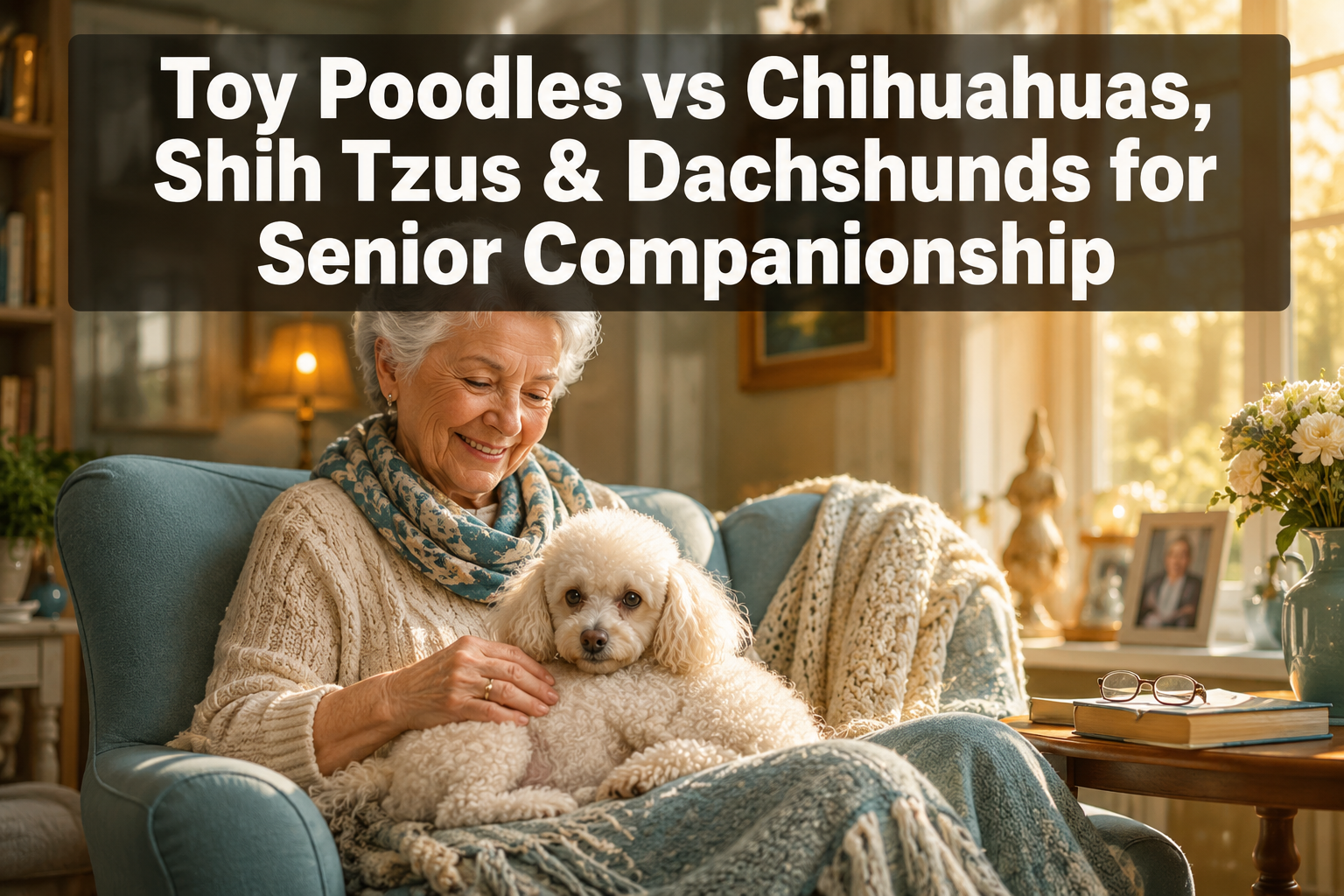
Quick Answer: Toy Poodles rank among the best small-breed companions for seniors because they combine high trainability, a hypoallergenic coat, and a calm indoor temperament in a body that weighs just 4 to 6 pounds. Compared to Chihuahuas, Shih Tzus, and Dachshunds, Toy Poodles tend to bark less, pose a lower tripping risk on leash, and respond faster to basic commands — though they do require more grooming. The trade-offs matter, and the right breed depends on a senior's budget, mobility, and willingness to maintain a coat-care routine.
Key Takeaways
- Toy Poodles are the second-most intelligent dog breed, making them the easiest of these four breeds to train for seniors who want a well-mannered house dog [1].
- Chihuahuas need the least grooming but can be the most vocal and nippy, which may frustrate older owners who value a quiet home.
- Shih Tzus are the calmest lap dogs of the group but carry brachycephalic (flat-face) health risks that increase vet costs over time [8].
- Dachshunds require minimal coat care, yet their elongated spines make them prone to intervertebral disc disease, a condition that can mean expensive surgery.
- All four breeds live 12 to 16+ years, so any choice is a long-term commitment that seniors should plan for financially and physically.
- Toy Poodles need professional grooming every 4 to 8 weeks, the highest grooming demand of the four breeds [2].
- For allergy-sensitive seniors, Toy Poodles are the clear winner because their curly coat does not shed [6].
- Annual ownership costs for a Toy Poodle typically run between $1,200 and $2,500 depending on grooming frequency and veterinary needs.
What Makes Toy Poodles Good for Senior Owners
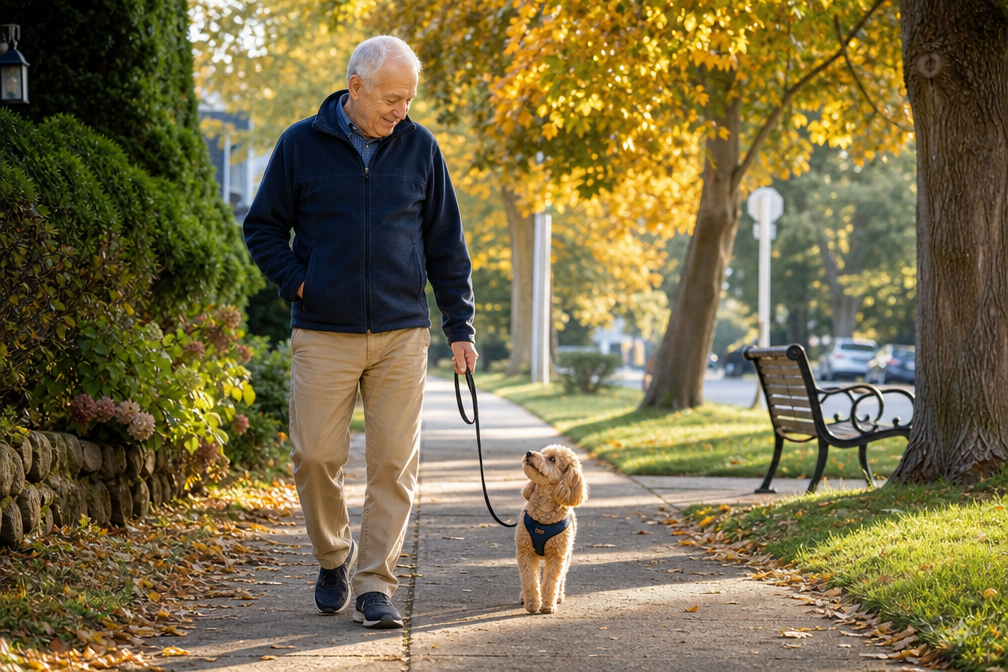
Toy Poodles excel as senior companions for three main reasons: intelligence, size, and temperament. They weigh 4 to 6 pounds, stand under 10 inches tall, and learn new commands in as few as five repetitions [1]. That responsiveness means less frustration during housebreaking and basic obedience, which matters when an owner's patience or energy is limited.
Beyond trainability, Toy Poodles are naturally attentive to their owners. They read body language well and adjust their energy level to match the household. A Toy Poodle in a quiet apartment will settle on the couch; the same dog at a family gathering will happily socialize. This adaptability is harder to find in Chihuahuas (which can become anxious in new settings) or Dachshunds (which may fixate on scent trails and ignore commands).
Seniors who are new to dog ownership will find helpful guidance in our resource on Toy Poodle puppies for first-time dog owners.
Choose a Toy Poodle if: you want a dog that learns quickly, stays quiet indoors, and bonds closely without becoming overly clingy or anxious.
Toy Poodle vs Chihuahua for Elderly People
Toy Poodles are generally a better fit for seniors who want a calm, quiet household. Chihuahuas are loyal and low-maintenance on grooming, but they tend to bark more frequently and can be snappy with strangers or grandchildren [7].
Key differences at a glance:
| Factor | Toy Poodle | Chihuahua |
|---|---|---|
| Weight | 4-6 lbs | 2-6 lbs |
| Barking tendency | Low to moderate | High |
| Trainability | Very high (2nd smartest breed) | Moderate; can be stubborn |
| Grooming needs | High (professional trims needed) | Low (especially short-coat) |
| Shedding | None (hypoallergenic) | Moderate |
| Tripping risk | Low (stays close, leash-trained easily) | Moderate (darting behavior) |
| Stranger friendliness | Good with socialization | Often wary, may nip |
Chihuahuas shine for seniors who want the absolute lowest grooming burden and don't mind a vocal watchdog. But for a peaceful living room and easy training, the Toy Poodle wins.
Common mistake: Seniors sometimes pick Chihuahuas because of their tiny size, assuming smaller means easier. In reality, Chihuahuas can be harder to housebreak and more reactive to doorbells, delivery drivers, and visitors.
Are Toy Poodles Easier to Care For Than Shih Tzus
In terms of daily management, Toy Poodles and Shih Tzus are close, but they differ in two important ways: trainability and breathing health.
Toy Poodles learn faster and are generally quieter than Shih Tzus [8]. A Shih Tzu may take longer to housebreak and tends to bark more at noises. On the other hand, Shih Tzus are naturally calmer and less demanding of structured mental stimulation. A Shih Tzu is content to sit on a lap for hours without needing a puzzle toy or training session [4].
The bigger concern for seniors is health. Shih Tzus are brachycephalic, meaning their flat faces can cause breathing difficulties, especially in hot or humid climates. This can lead to higher vet bills and restrictions on outdoor activity during summer months. Toy Poodles have no brachycephalic issues.
Both breeds need regular grooming. Many Shih Tzu owners opt for a short "puppy cut" to reduce daily brushing, which brings their grooming burden closer to a Toy Poodle's [6]. For coat care tips specific to Poodles, see our grooming guide for black Toy Poodle coats.
Choose a Shih Tzu if: you want the most laid-back lap dog possible and live in a cool climate. Choose a Toy Poodle if: you value trainability, want a hypoallergenic coat, or live somewhere warm.
Toy Poodle vs Dachshund: Which Is Better for Seniors
Toy Poodles are the safer choice for most seniors because Dachshunds carry a significant spinal injury risk. Dachshunds' long backs make them prone to intervertebral disc disease (IVDD), which can require surgery costing $3,000 to $8,000.
Dachshunds are charming, playful, and need very little grooming (especially smooth-coat varieties) [7]. They're also surprisingly sturdy for their size. But their health vulnerability is a serious factor for seniors on fixed incomes or those who can't manage post-surgical rehabilitation for a pet.
| Factor | Toy Poodle | Dachshund |
|---|---|---|
| Grooming | High | Low |
| Major health risk | Patellar luxation, eye issues | IVDD (spinal disc disease) |
| Surgery cost risk | Moderate ($1,500-$3,000) | High ($3,000-$8,000) |
| Trainability | Very high | Moderate; independent streak |
| Exercise needs | 20-30 min/day | 30-45 min/day |
| Barking | Low-moderate | Moderate-high |
Dachshunds also need slightly more exercise than Toy Poodles and can be stubborn during training. For a senior who wants a low-drama, lower-risk companion, the Toy Poodle is the stronger pick.
Toy Poodle Grooming Requirements for Older Owners
Toy Poodles need professional grooming every 4 to 8 weeks and daily brushing at home to prevent mats [2]. This is the breed's biggest drawback for seniors who want minimal upkeep.
Here's what the grooming routine looks like in practice:
- Daily: 5 to 10 minutes of brushing with a slicker brush
- Weekly: Check and clean ears (Poodles are prone to ear infections)
- Every 4-8 weeks: Professional grooming session ($40-$75 per visit)
- As needed: Nail trimming, teeth brushing, eye area cleaning
Ways to reduce the burden:
- Request a short "puppy clip" or "kennel clip" from the groomer, which is easier to maintain between visits.
- Use a grooming table at counter height to avoid bending over.
- Schedule a mobile groomer who comes to the home, eliminating the need to drive.
Compared to the other three breeds, Toy Poodles require the most grooming effort. Chihuahuas (short-coat) need almost none. Dachshunds (smooth-coat) need occasional brushing. Shih Tzus need similar brushing frequency but can also be kept in a puppy cut [6].
For seniors with allergies, the grooming trade-off is worth it. Toy Poodles produce far less dander than the other three breeds. Learn more about this advantage in our guide to hypoallergenic Toy Poodle puppies for allergy-sensitive homes.
Can Seniors Handle Toy Poodle Training and Behavior
Yes. Toy Poodles are among the easiest small breeds for seniors to train because they are eager to please and respond well to positive reinforcement [1]. Most Toy Poodles can learn basic commands like sit, stay, and come within the first two weeks at home.
Training a Toy Poodle also provides mental stimulation for the owner, which research consistently links to better cognitive health in older adults. The training sessions don't need to be long — 5 to 10 minutes, two to three times a day, is enough.
Common behavior issues to watch for:
- Separation anxiety: Toy Poodles bond closely and may become distressed when left alone. Gradual alone-time training helps. Our article on preventing separation anxiety in Toy Poodle puppies covers this in detail.
- Demand barking: Some Toy Poodles learn to bark for attention if owners inadvertently reward the behavior. Ignoring the bark and rewarding quiet behavior corrects this quickly.
- Timidity: Without proper socialization, Toy Poodles can become shy around new people. Early and ongoing socialization strategies prevent this.
By comparison, Chihuahuas are harder to housebreak, Dachshunds tend to ignore recall commands, and Shih Tzus can be slow learners. Toy Poodles outperform all three on obedience metrics.
Toy Poodle Temperament Compared to Other Small Breeds
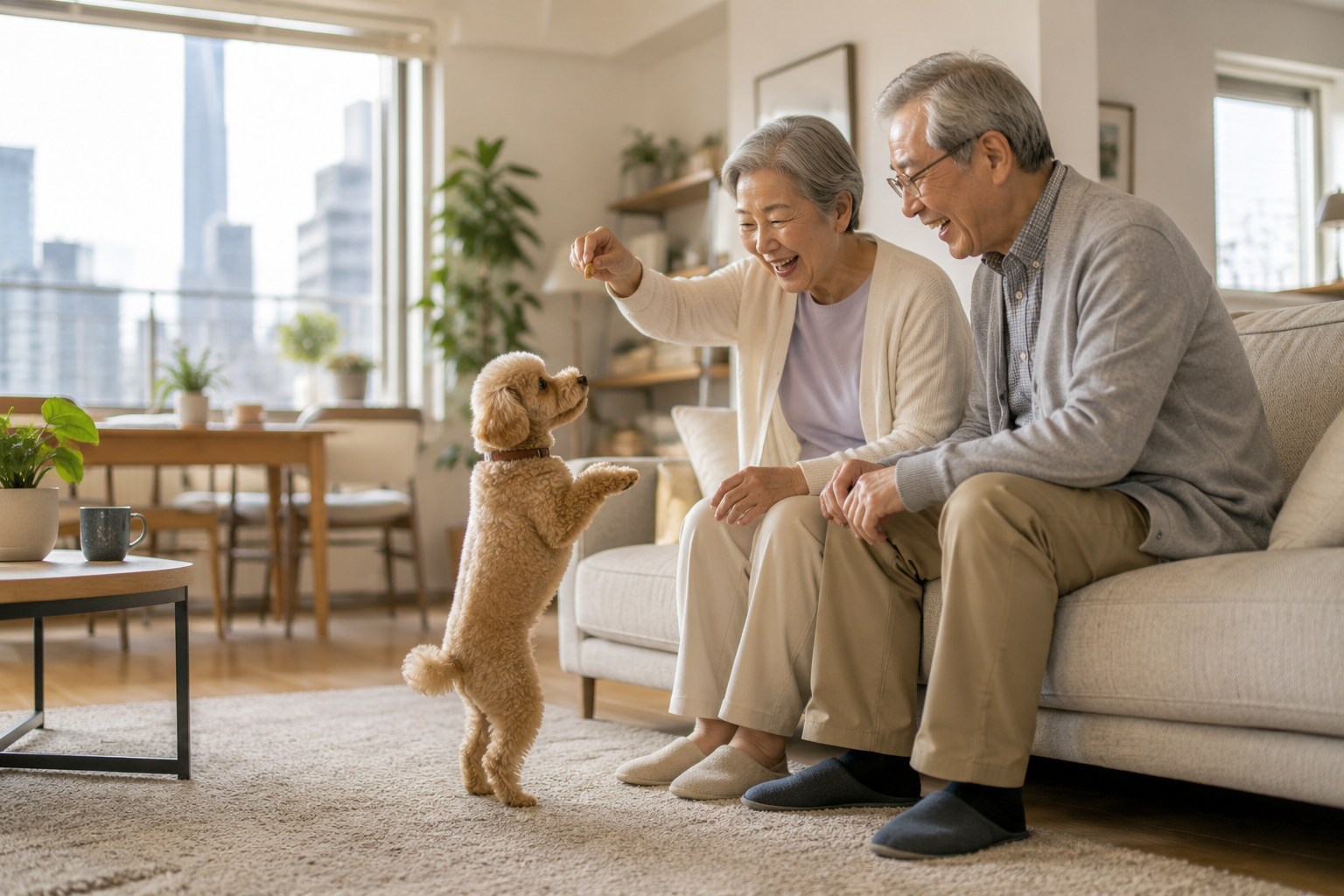
Toy Poodles are alert, affectionate, and adaptable — a temperament profile that sits between the Shih Tzu's extreme calmness and the Chihuahua's high reactivity. They're social without being demanding and watchful without being yappy.
Here's how temperament breaks down across the four breeds:
| Trait | Toy Poodle | Chihuahua | Shih Tzu | Dachshund |
|---|---|---|---|---|
| Affection level | High | Very high (one-person dog) | Very high | Moderate-high |
| Reactivity to strangers | Low-moderate | High | Low | Moderate |
| Barking frequency | Low-moderate | High | Moderate-high | Moderate-high |
| Independence | Low (wants to be near owner) | Low | Low | Moderate (stubborn) |
| Playfulness | Moderate | Low-moderate | Low | High |
| Adaptability to change | High | Low | Moderate | Moderate |
For seniors who want a dog that adjusts well to routine changes — visiting family, moving to assisted living, traveling — the Toy Poodle's adaptability is a major advantage. Chihuahuas, by contrast, often struggle with environmental changes and may become anxious or aggressive in unfamiliar settings.
Do Toy Poodles Need a Lot of Exercise for Inactive Owners
No. Toy Poodles are satisfied with 20 to 30 minutes of daily activity, which can be split between a short walk and indoor play [3]. This is less than Dachshunds typically need (30 to 45 minutes) and roughly equal to Chihuahuas and Shih Tzus.
A practical daily exercise plan for a senior with a Toy Poodle:
- Morning: 10-15 minute walk around the block or in the yard
- Midday: 5-10 minutes of indoor fetch or a puzzle toy
- Evening: Brief training session doubling as mental exercise
For seniors with very limited mobility, Toy Poodles can adapt to even less physical activity as long as they receive mental stimulation through training games or interactive toys. They won't develop the destructive behaviors that under-exercised Dachshunds or bored Chihuahuas sometimes display.
Are Toy Poodles Good Apartment Dogs for Seniors
Toy Poodles are excellent apartment dogs. Their small size, low barking tendency, and minimal shedding make them one of the best breeds for senior apartment living [6]. They don't need a yard, and their exercise needs can be met entirely with indoor play and short outdoor walks.
Apartment-specific advantages of Toy Poodles over the other three breeds:
- Less noise complaints: Toy Poodles bark less than Chihuahuas, Shih Tzus, and Dachshunds, which matters in shared-wall living.
- No shedding on furniture: Unlike Chihuahuas and Dachshunds, Toy Poodles leave no hair on couches or carpets.
- Easy to carry: At 4 to 6 pounds, they can be carried in elevators, through lobbies, or up stairs if needed.
For more on apartment-friendly Poodle living, check out our guide on black Toy Poodle puppies for city and apartment life.
Toy Poodle Health Problems Seniors Should Know About
Toy Poodles are generally healthy, but seniors should be aware of breed-specific conditions that may arise, especially in later years.
Most common Toy Poodle health issues:
- Patellar luxation (kneecap slipping): Affects many small breeds; may require surgery ($1,500-$3,000) in severe cases
- Progressive retinal atrophy (PRA): A genetic eye condition that can lead to blindness; reputable breeders test for this
- Dental disease: Small mouths crowd teeth, making regular dental care essential
- Ear infections: Floppy, hairy ears trap moisture; weekly cleaning prevents most infections
- Addison's disease: Less common but seen in Poodle lines; manageable with medication
Compared to the other breeds, Toy Poodles avoid the Shih Tzu's breathing problems and the Dachshund's spinal risks. Chihuahuas share the patellar luxation risk but are also prone to heart murmurs and hypoglycemia.
Decision rule: Seniors should budget $200-$400 annually for preventive vet care and consider pet insurance ($30-$50/month) to cover unexpected conditions.
How Much Does It Cost to Own a Toy Poodle as a Senior
Annual Toy Poodle ownership costs typically range from $1,200 to $2,500, depending on grooming frequency, food quality, and veterinary needs. Here's an estimated breakdown:
| Expense | Annual Estimate |
|---|---|
| Food (premium small-breed) | $250-$400 |
| Professional grooming (6-8 visits) | $300-$600 |
| Veterinary care (routine) | $200-$400 |
| Pet insurance (optional) | $360-$600 |
| Supplies (toys, bed, treats) | $100-$200 |
| Dental cleaning (annual) | $200-$400 |
| Total | $1,210-$2,600 |
Chihuahuas and Dachshunds cost less annually (roughly $800-$1,500) because they skip professional grooming. Shih Tzus fall in a similar range to Toy Poodles due to comparable grooming needs. However, Dachshund owners face a higher risk of one-time surgical costs from IVDD.
What Size Dog Is Best for a Senior on a Budget
For budget-conscious seniors, the best size is 4 to 16 pounds — small enough to manage physically but large enough to avoid the fragility (and higher vet bills) of teacup-sized dogs. Toy Poodles fit this range perfectly at 4 to 6 pounds.
If grooming costs are the primary concern, a smooth-coat Chihuahua or Dachshund will save $300-$600 per year. But if the senior factors in potential surgical costs, the Toy Poodle's lower risk of catastrophic health events may actually make it cheaper over a 12 to 16 year lifespan.
Seniors who want a slightly larger option with similar traits might also consider a 10-16 lb Micro Goldendoodle, which shares the Poodle's intelligence and hypoallergenic coat in a sturdier package.
Toy Poodle Lifespan and Long-Term Commitment for Seniors
Toy Poodles live 12 to 18 years, with many reaching 15 or beyond with proper care [3]. This is comparable to Chihuahuas (14-18 years), longer than Dachshunds (12-16 years), and similar to Shih Tzus (10-16 years).
A senior adopting a Toy Poodle puppy at age 70 should realistically plan for the dog to be alive when the owner is 82 to 88. This requires:
- A named backup caregiver in case of the owner's hospitalization or death
- Financial planning for the dog's care throughout its life
- Consideration of adopting an adult Toy Poodle (ages 3-7) to shorten the commitment window while still getting many good years together
Common Mistakes Seniors Make With Toy Poodles
Even experienced dog owners can stumble with Toy Poodles. Here are the most frequent errors:
- Skipping grooming appointments because of cost or transportation difficulty, leading to painful mats and skin infections
- Over-carrying the dog instead of letting it walk, which reduces the dog's confidence and exercise
- Not socializing early enough, resulting in a fearful dog that barks at visitors or other animals
- Feeding table scraps, which causes weight gain and dental problems in a dog this small
- Ignoring dental care, since Toy Poodles are especially prone to tooth decay
- No backup care plan, leaving the dog without a designated caregiver if the owner faces a health crisis
Frequently Asked Questions
Are Toy Poodles good for seniors who live alone?
Yes. Toy Poodles bond closely with a single owner and provide consistent companionship without being overly demanding. Their alertness also provides a sense of security.
Do Toy Poodles bark a lot compared to Chihuahuas?
No. Toy Poodles bark significantly less than Chihuahuas. They may alert-bark at the door but are generally quiet indoors [8].
Can a senior with arthritis groom a Toy Poodle?
It depends on severity. Daily brushing requires hand dexterity. Seniors with limited hand strength can use ergonomic brushes and rely more heavily on professional groomers every 4 weeks.
Are Shih Tzus calmer than Toy Poodles?
Shih Tzus are slightly calmer in terms of activity level, but they bark more and are harder to train [8]. Toy Poodles are calmer in the sense of being more predictable and responsive.
How much space does a Toy Poodle need?
A Toy Poodle thrives in any space, including a studio apartment. They need no yard as long as they get a daily walk and some indoor play [6].
Is a Dachshund easier to own than a Toy Poodle?
Dachshunds require less grooming but more exercise, are harder to train, and carry a higher risk of expensive spinal surgery. Overall, Toy Poodles are easier for most seniors.
What's the best age to adopt a Toy Poodle as a senior?
Adopting an adult Toy Poodle (ages 2-5) gives seniors a dog that's already housebroken and past the demanding puppy stage while still offering 10+ years of companionship.
Do Toy Poodles get along with cats?
Generally yes, especially if introduced properly. Toy Poodles have low prey drive compared to Dachshunds, which were originally bred to hunt.
Can Toy Poodles handle hot climates?
Yes, better than Shih Tzus. Toy Poodles have no brachycephalic breathing issues, so they tolerate warm weather more comfortably with proper hydration and shade.
Are Toy Poodles fragile?
They're small but not as fragile as teacup breeds. Normal handling is fine, but they should be protected from jumping off high furniture, which can cause patellar luxation.
How often do Toy Poodles need vet visits?
Twice a year for wellness checks is standard for senior-owned Toy Poodles. Annual dental cleanings are also recommended.
Which of these four breeds is best for a first-time senior dog owner?
The Toy Poodle, because its high trainability reduces the learning curve for new owners. For first-timer guidance, see our complete resource for first-time Toy Poodle owners.
Conclusion
When comparing Toy Poodles to Chihuahuas, Shih Tzus, and Dachshunds for low-drama companionship, the Toy Poodle consistently comes out ahead on the factors that matter most to seniors: trainability, quiet temperament, hypoallergenic coat, and adaptability to apartment living. The trade-off is grooming — Toy Poodles need more coat maintenance than any of the other three breeds.
Actionable next steps for seniors considering a Toy Poodle:
- Assess your grooming budget. If you can afford $300-$600 per year in professional grooming, a Toy Poodle is a strong match. If not, consider a smooth-coat Chihuahua or Dachshund.
- Identify a backup caregiver. Given the breed's 12-18 year lifespan, name someone who will care for the dog if you cannot.
- Consider an adult dog. Adopting a Toy Poodle aged 2-5 skips the demanding puppy phase while still providing many years of companionship.
- Visit a reputable breeder who health-tests for patellar luxation and progressive retinal atrophy. Browse available Toy Poodle puppies from health-tested lines.
- Start a pet savings fund. Setting aside $100-$200 per month covers routine costs and builds a cushion for unexpected vet visits.
The right small dog can add years of joy, routine, and purpose to a senior's life. For most older adults who value a quiet, smart, and allergy-friendly companion, the Toy Poodle is hard to beat.
References
[1] Best Small Dog Breeds For Seniors – https://www.designerminidoodles.com/tag/best-small-dog-breeds-for-seniors/
[2] Toy Poodle – https://www.petfinder.com/dogs-and-puppies/breeds/toy-poodle/
[3] Poodle Toy – https://www.dogs-portal.com/breeds/poodle-toy
[4] Small Dogs For Seniors – https://pawesomeverse.com/small-dogs-for-seniors/
[5] Dog Breeds For Seniors Seeking A Peaceful Pet – https://worldanimalfoundation.org/dogs/dog-breeds-for-seniors-seeking-a-peaceful-pet/
[6] Best Apartment Dogs For Seniors – https://busypetparent.com/best-apartment-dogs-for-seniors/
[7] Maintenance Dogs That Seniors Will Love – https://iheartdogs.com/maintenance-dogs-that-seniors-will-love/
[8] Poodle Toy Vs Shih Tzu – https://www.dogs-portal.com/compare/poodle-toy-vs-shih-tzu