


Last updated: July 9, 2026
Quick Answer
Viral videos pairing tiny Toy Poodles with massive Cane Corso mixes are driving record engagement on TikTok and Instagram in 2026, but veterinary professionals and dog-safety advocates warn the trend hides real risks. A four-pound Toy Poodle can suffer life-threatening injuries from a single accidental paw swipe by a 110-pound guardian breed. Meanwhile, the unregulated "Pocket Poodle" label is fueling breeder scams and health problems in dogs bred to be dangerously small. This guide breaks down the social media trends, the safety backlash, and what responsible owners actually need to know.
Key Takeaways
- "Pocket Poodle" is a marketing term, not a recognized breed or variety. Major kennel clubs do not acknowledge it, and dogs sold under this label often carry serious health risks [1].
- Toy Poodle content exploded on social media in 2026 largely because of "odd couple" videos featuring giant breeds like Cane Corsos.
- In 65% of reported Cane Corso bite incidents, victims needed stitches, with an average of 4.2 bites per event [7]. Size-mismatch households require strict management protocols.
- Scams for "teacup" and "micro" Poodles have surged on Facebook Marketplace and Instagram, with the FTC advising verification through the Poodle Club of America [1].
- Cane Corsos are not inherently aggressive, but they need early socialization and experienced handling [5][8].
- Smart collars and genetic testing now screen for over 250 conditions in Toy Poodles for under $100, making health-informed ownership more accessible than ever [3].
- Proper socialization and physical barriers are non-negotiable in homes where Toy Poodles live alongside large or guardian breeds.
- Toy Poodles remain one of the top small breeds for apartment living, outperforming many competitors on trainability and allergen management.
Why Are Toy Poodles Trending on Social Media in 2026?
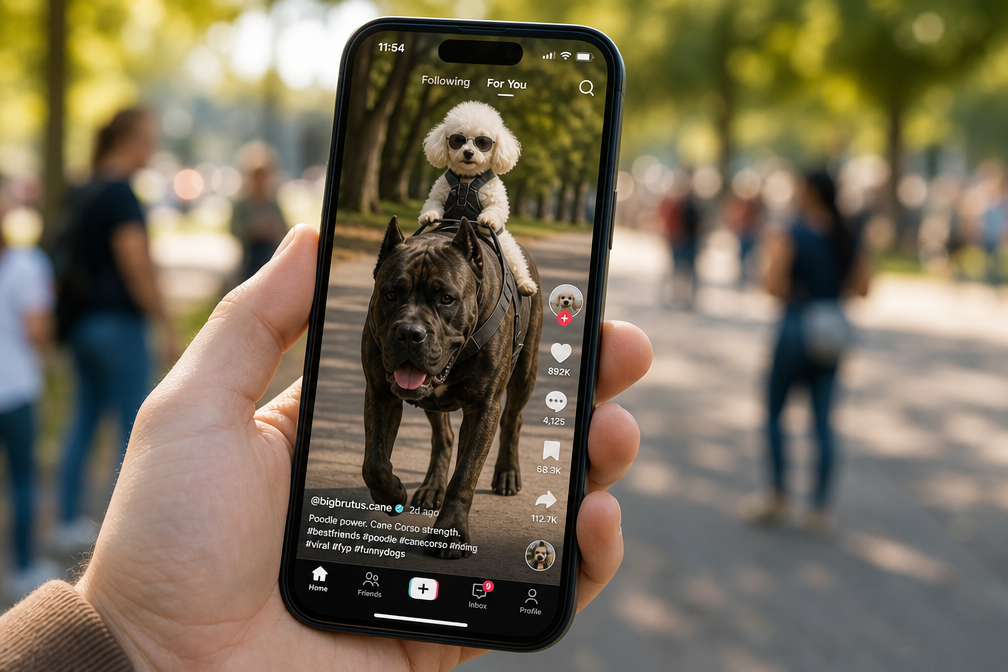
Toy Poodles dominate pet content in 2026 because they photograph well, fit neatly into "tiny vs. giant" video formats, and appeal to apartment-dwelling millennials and Gen Z audiences. The trend accelerated when several accounts began posting daily clips of Toy Poodles interacting with Cane Corsos, Great Danes, and other large breeds, racking up tens of millions of views.
Three factors are driving the surge:
- The "odd couple" format. Algorithms on TikTok and Instagram Reels reward visual contrast. A three-pound poodle napping on a 130-pound mastiff-type dog is inherently shareable.
- Social search replacing traditional search. According to Sprout Social's state-of-social-media report, social platforms now rival traditional search engines as the primary way people discover products, including dog breeds [9]. Prospective owners see a cute Toy Poodle video and search for breeders directly on the platform.
- Grooming content. The teddy bear cut is the most searched Toy Poodle grooming style globally in 2026, and before-and-after grooming reels generate massive engagement [2]. If you're exploring popular styles, our guide on grooming and trimming apricot Toy Poodle coats covers the most requested cuts.
Common mistake: Assuming a viral video represents a safe, well-managed household. Most clips are edited to show the cutest 15 seconds, not the hours of supervised introduction and training behind them.
What Are Pocket Poodles and How Are They Different From Regular Toy Poodles?
"Pocket Poodle" is a marketing term used by some breeders to describe Poodles smaller than the standard Toy Poodle size. It is not recognized by the American Kennel Club, the United Kennel Club, or the FCI [1].
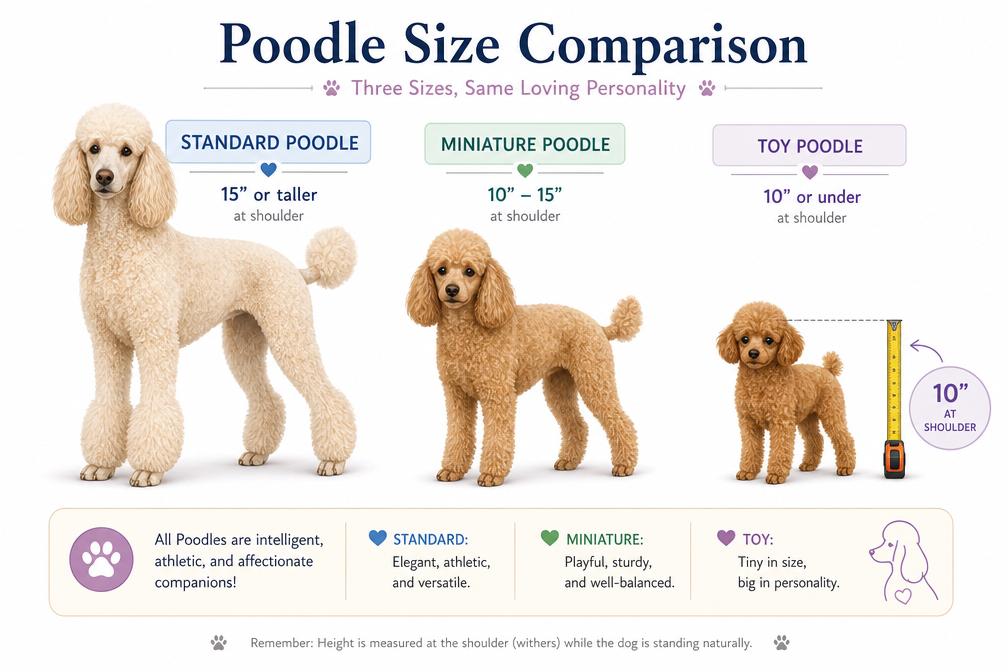
A standard Toy Poodle stands no more than 10 inches at the shoulder and typically weighs 4 to 6 pounds. Dogs marketed as "Pocket Poodles" are often bred to fall below that range, sometimes weighing under 3 pounds. The distinction matters because:
- Health risks increase as size decreases. Extremely small Poodles face higher rates of hypoglycemia, tracheal collapse, liver shunts, and fragile bones.
- Scam prevalence is high. Consumer complaints about fraudulent "teacup," "tiny cup," and "micro" Poodle listings have surged on Facebook Marketplace and Instagram. Scammers use stolen photos, request gift-card or cryptocurrency payments, and vanish after collecting deposits [1].
- The FTC recommends verifying any breeder through the Poodle Club of America before sending money.
Decision rule: If a breeder uses terms like "Pocket Poodle," "micro Poodle," or "tiny cup Poodle" and cannot provide OFA health clearances or a verifiable breeding history, walk away. For a deeper look at legitimate Toy Poodle sizing, visit our frequently asked questions about Toy Poodle puppies.
What Size Is Considered a Toy Poodle vs. Teacup Poodle?
The AKC recognizes three Poodle varieties: Standard (over 15 inches), Miniature (10 to 15 inches), and Toy (10 inches and under). "Teacup" is not an official classification.
| Label | Shoulder Height | Typical Weight | AKC Recognized? |
|---|---|---|---|
| Standard Poodle | Over 15 in. | 40-70 lbs | Yes |
| Miniature Poodle | 10-15 in. | 10-15 lbs | Yes |
| Toy Poodle | Under 10 in. | 4-6 lbs | Yes |
| Teacup / Pocket | Under 8 in. (claimed) | Under 4 lbs (claimed) | No |
Dogs advertised as "teacup" are usually Toy Poodles bred from the smallest runts of consecutive litters. This practice can concentrate genetic problems. Our resource on teacup and Toy Poodles for urban living explains what to look for in a healthy small Poodle.
Are Toy Poodles Safe Around Big Dogs and Cane Corso Mixes?
The honest answer: it depends entirely on the individual dogs, the training they've received, and the management protocols in the home. Toy Poodles are not automatically unsafe around large dogs, but the consequences of any mishap are amplified by the extreme size difference.
A Cane Corso typically weighs 90 to 120 pounds. A Toy Poodle weighs 4 to 6 pounds. That's a 20:1 weight ratio. Even playful behavior from the larger dog, like a paw slap or a body check, can fracture a Toy Poodle's ribs or legs.
Key risk factors:
- Prey drive. Some Cane Corso mixes retain strong prey drive. A tiny, fast-moving Poodle can trigger chase instincts even in a well-socialized dog [5].
- Guardian instincts. Cane Corsos were bred as property guardians. Resource guarding around food, toys, or sleeping areas can escalate quickly [8].
- Accident severity. In 65% of reported Cane Corso bite incidents involving humans, victims required stitches, with an average of 4.2 bites per event [7]. The damage potential to a four-pound dog is far greater.
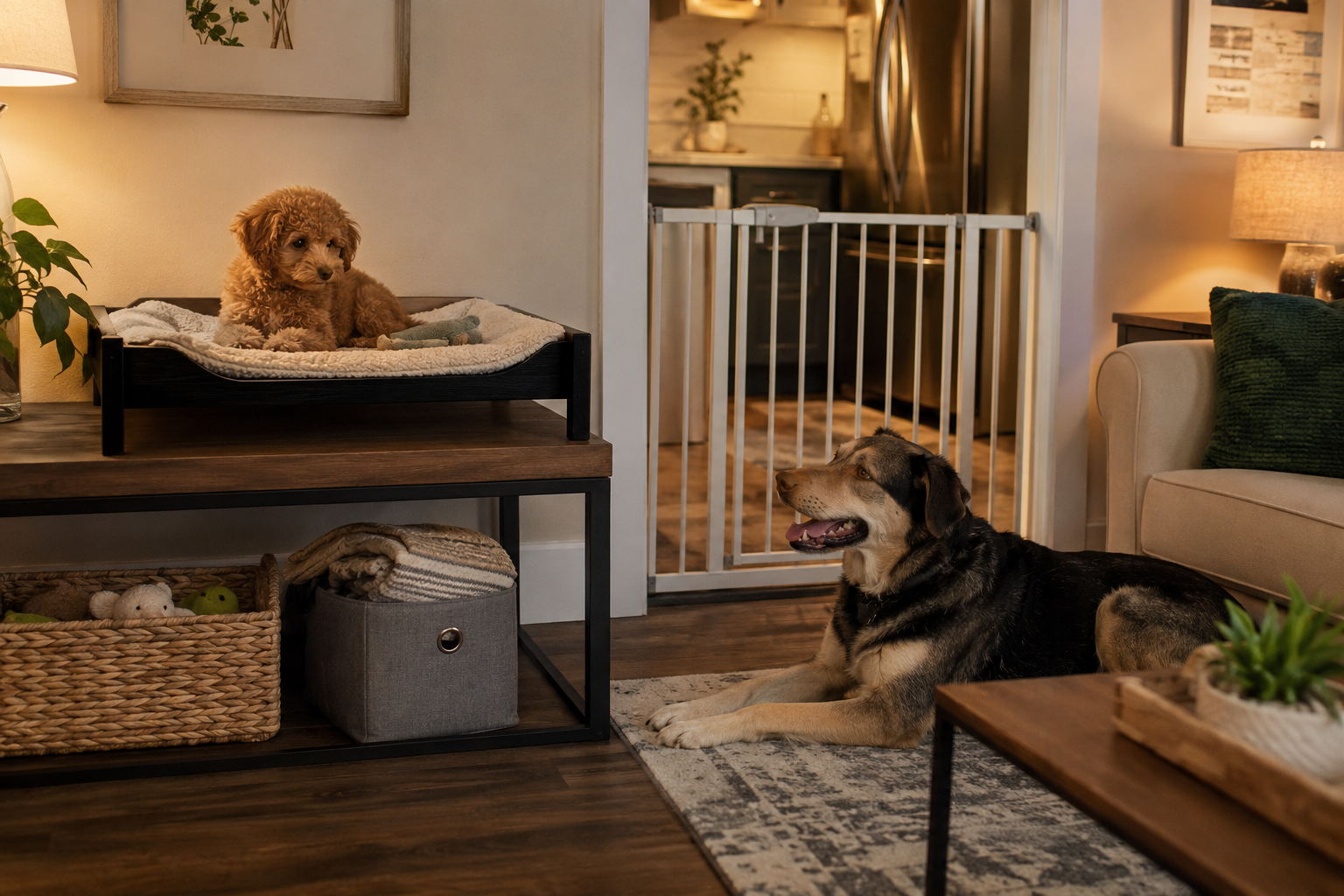
Edge case: A well-raised Cane Corso that has been socialized with small dogs from puppyhood can coexist safely with a Toy Poodle, but this requires ongoing supervision and physical separation systems (baby gates, crate rotations, elevated resting areas for the small dog).
What's the Backlash About Cane Corso Mixes With Small Dogs?
The safety backlash centers on viral content that normalizes unsupervised interactions between giant guardian breeds and tiny dogs, creating a false impression that size-mismatched households require no special precautions.
In early 2026, several high-profile incidents, including a rescued, severely underweight Cane Corso mix named Balboa in Dorchester [6], brought renewed attention to irresponsible Cane Corso ownership. Critics argue that:
- Social media glorifies the aesthetic of a giant dog "protecting" a tiny one without showing the training investment required.
- Inexperienced owners buy Cane Corso mixes as status symbols, then fail to provide the socialization and structure the breed demands [5][8].
- Small-dog owners underestimate risk after watching curated content, leading them to introduce Toy Poodles to large dogs without proper protocols.
Experts emphasize that a well-bred, well-raised Cane Corso is typically calm, observant, and loyal [8]. The problem isn't the breed itself. It's the gap between what social media shows and what responsible ownership actually requires.
Toy Poodle Safety Concerns Social Media Is Talking About
Beyond Cane Corso interactions, the 2026 social media conversation around Toy Poodle safety covers several recurring themes:
- Dropped-dog injuries. Toy Poodles held for selfies or handed to children are frequently dropped, causing fractures. Our guide on teacup Poodle puppy safety and preventing injury in tiny dogs addresses this directly.
- Off-leash dog park attacks. Multiple viral posts in 2026 documented Toy Poodles being grabbed by larger dogs at off-leash parks. Veterinary behaviorists consistently advise against taking Toy-sized dogs to mixed-size off-leash areas.
- Breeder scams. As noted earlier, fraudulent listings for "micro" and "teacup" Poodles have exploded [1]. Buyers receive sick puppies, the wrong breed, or no dog at all.
- Over-accessorizing. Tight clothing, heavy harnesses, and restrictive carriers marketed as "fashion" for Toy Poodles can restrict breathing and movement.
How to Protect a Toy Poodle From Larger Dog Breeds
Protection starts with environmental management, not just training. Here's a practical checklist:
- Use physical barriers. Baby gates, exercise pens, and elevated dog beds give the Toy Poodle escape routes and safe zones the large dog cannot access.
- Feed separately. Always feed dogs in different rooms or crates. Resource guarding is a leading trigger for inter-dog aggression.
- Supervise every interaction. Never leave a Toy Poodle alone with a dog that outweighs it by more than 30 pounds, regardless of how well they seem to get along.
- Leash introductions only. When first introducing dogs, keep both on leash with two handlers. Allow sniffing at a distance before any closer contact.
- Teach a reliable recall. The Toy Poodle should come immediately when called, and the large dog should respond to a "leave it" command under distraction.
- Avoid high-arousal situations. Roughhousing, tug-of-war, and chase games between size-mismatched dogs should be off-limits.
- Invest in a smart collar. The 2025-2026 generation of smart collars monitors heart rate variability and activity, alerting owners to stress spikes that might indicate fear or conflict [3].

Best Practices for Socializing Toy Poodles With Big Dogs
Early, controlled exposure is the foundation of safe coexistence. Socialization should begin during the Toy Poodle's critical development window (3 to 14 weeks) and continue throughout adolescence.
Step-by-step approach:
- Weeks 3-14: Expose the puppy to the sight, sound, and scent of larger dogs at a safe distance. Use treats to build positive associations. Our early socialization strategies for Toy and Teacup Poodle puppies provides a week-by-week plan.
- Months 4-6: Introduce controlled, on-leash greetings with calm, known large dogs. Keep sessions under five minutes.
- Months 6-12: Gradually increase interaction duration. Always end on a positive note before either dog shows stress signals.
- Ongoing: Maintain socialization throughout the dog's life. A Toy Poodle that stops interacting with large dogs for months may lose confidence.
Choose socialization partners carefully. A mellow senior Labrador is a far better training partner than a young, high-energy Cane Corso puppy that hasn't learned bite inhibition.
Toy Poodle Training Tips for Homes With Aggressive or Large Breeds
Training the Toy Poodle is only half the equation. The large dog needs equal, if not more, training investment.
For the Toy Poodle:
- Build confidence through positive reinforcement training. A confident small dog is less likely to exhibit fear-based behaviors (barking, snapping) that can provoke a large dog.
- Teach "place" and "go to bed" commands so the Poodle can remove itself to a safe spot on cue.
- Avoid carrying the Poodle past the large dog. This can create barrier frustration in the big dog and learned helplessness in the small one.
For the large or guardian breed:
- Prioritize impulse control exercises: sit-stay, down-stay, "leave it," and threshold manners.
- Cane Corsos and their mixes require consistent, experienced handling. They are not recommended for first-time dog owners [5].
- Enroll in a structured obedience program before bringing a Toy Poodle into the household.
Is a Toy Poodle Right for Families With Big Dogs?
A Toy Poodle can work in a big-dog household if the family commits to permanent management protocols. It is not the right choice if:
- The large dog has a known history of aggression toward small animals.
- No one in the household has experience managing multi-dog environments.
- The family expects the dogs to "work it out" without supervision.
It can work well if:
- The large dog is well-socialized, has completed obedience training, and shows calm behavior around small animals.
- The family uses physical separation (gates, crates, elevated areas) consistently.
- At least one adult in the home has experience with guardian or working breeds.
Toy Poodle vs. Other Small Dog Breeds for Apartment Living
Toy Poodles consistently rank among the best small breeds for apartments because of their low-shedding coat, high trainability, and moderate exercise needs.
| Breed | Shedding | Trainability | Barking Level | Avg. Weight |
|---|---|---|---|---|
| Toy Poodle | Very low | Very high | Moderate | 4-6 lbs |
| Chihuahua | Low | Moderate | High | 2-6 lbs |
| Yorkshire Terrier | Very low | Moderate | High | 4-7 lbs |
| Maltese | Very low | Moderate | Moderate-High | 4-7 lbs |
| Cavalier King Charles | Moderate | High | Low | 12-18 lbs |
Toy Poodles are also among the most intelligent of all dog breeds, which makes them responsive to housetraining and cue-based behavior management in small spaces. For a full breakdown, see our article on Toy Poodle lifestyle: apartment, suburban, and rural living.
Common Health Issues in Pocket Poodles and Miniature Poodles
Toy and Miniature Poodles share several breed-predisposed health conditions. Dogs marketed as "Pocket" or "Teacup" Poodles face these same issues at higher rates due to extreme miniaturization.
Most common conditions:
- Luxating patella (kneecap dislocation), affects an estimated 20-30% of Toy Poodles over their lifetime.
- Progressive retinal atrophy (PRA), a genetic eye disease leading to blindness. Genetic testing can identify carriers before breeding.
- Hypoglycemia, especially dangerous in dogs under 4 pounds. Symptoms include trembling, lethargy, and seizures.
- Tracheal collapse, more common in very small dogs; causes chronic coughing.
- Dental crowding, tiny jaws lead to overlapping teeth and early-onset periodontal disease.
The good news: genetic testing services now screen for over 250 conditions for under $100 [3], making it possible to identify at-risk dogs before symptoms appear. Responsible breeders test parent dogs and share results with buyers.
How Much Does a Toy Poodle Cost Compared to Standard Poodles?
Toy Poodles typically cost more than Standard Poodles from reputable breeders, primarily because litter sizes are smaller (1-3 puppies vs. 6-8 for Standards).
| Poodle Variety | Price Range (Reputable Breeder) | Avg. Litter Size |
|---|---|---|
| Standard Poodle | $1,500-$3,000 | 6-8 puppies |
| Miniature Poodle | $2,000-$3,500 | 4-6 puppies |
| Toy Poodle | $2,500-$4,500 | 1-3 puppies |
| "Teacup/Pocket" (unregistered) | $3,000-$8,000+ | 1-2 puppies |
Warning: Extremely high prices for "Pocket" or "Teacup" Poodles do not guarantee health or quality. In many cases, they reflect marketing markup rather than superior breeding practices. Budget for ongoing costs too: our pet insurance and financial planning for Toy Poodles guide covers what to expect.
FAQ
Can a Toy Poodle live safely with a Cane Corso?
It's possible but requires permanent supervision, physical barriers, and advanced training for both dogs. The Cane Corso must be well-socialized with small animals from a young age, and the dogs should never be left unsupervised together.
Are Pocket Poodles a real breed?
No. "Pocket Poodle" is a marketing term not recognized by any major kennel club. These are typically undersized Toy Poodles that may carry elevated health risks [1].
Why are Toy Poodle videos so popular on TikTok in 2026?
The "tiny vs. giant" video format generates high engagement because of visual contrast. Grooming content, especially teddy bear cuts, also drives views [2][9].
What is the biggest safety risk for Toy Poodles around large dogs?
Accidental injury from play or body contact. A large dog doesn't need to bite; a single paw strike or body slam can cause fractures in a dog weighing under six pounds.
How do I spot a Teacup Poodle scam?
Red flags include requests for gift-card or cryptocurrency payment, refusal to allow in-person visits, stolen or stock photos, and prices that seem too good to be true. The FTC recommends verifying breeders through the Poodle Club of America [1].
Are Cane Corsos aggressive by nature?
No. Experts describe well-bred Cane Corsos as calm, observant, and loyal [8]. However, they have strong guardian instincts that require early socialization and experienced handling [5].
What health tests should a Toy Poodle breeder provide?
At minimum: OFA patella evaluation, CERF or OFA eye exam, and genetic testing for PRA. Modern genetic panels now cover over 250 conditions for under $100 [3].
How much exercise does a Toy Poodle need daily?
About 30 to 45 minutes of moderate activity, split into two or three short walks plus indoor play. They're active dogs despite their size.
Can I take my Toy Poodle to an off-leash dog park?
It's generally not recommended for mixed-size parks. A dedicated small-dog area with a separate fence is safer. Many Toy Poodle injuries reported on social media in 2026 occurred at off-leash parks.
What's the lifespan of a Toy Poodle?
Toy Poodles typically live 12 to 15 years, with some reaching 18. Proper nutrition, dental care, and regular veterinary checkups contribute to longevity.
Conclusion
The 2026 social media trend of pairing Toy Poodles with Cane Corsos and other giant breeds makes for compelling content, but it papers over genuine safety challenges that every prospective owner needs to understand. "Pocket Poodles" remain an unregulated marketing label, not a breed, and the scam risk around ultra-small dogs is higher than ever.
Actionable next steps:
- If you already own both a Toy Poodle and a large breed: Audit your home for physical separation tools (gates, elevated beds, crate rotation schedules). Never rely on good behavior alone.
- If you're considering adding a Toy Poodle to a big-dog household: Invest in professional obedience training for the large dog first. Introduce the Poodle only after the big dog demonstrates reliable impulse control.
- If you're shopping for a Toy or "Pocket" Poodle: Verify the breeder through the Poodle Club of America, demand health clearances, and avoid any seller who requests payment via gift cards or cryptocurrency.
- If you're creating content: Show the full picture, including the management protocols, training sessions, and physical barriers that keep both dogs safe. Responsible content builds trust and protects animals.
Toy Poodles thrive in all kinds of homes, including those with larger dogs, but only when owners commit to the training, supervision, and environmental management that the size difference demands.
References
[1] Toy Poodle – https://www.bestiepaws.com/dog/toy-poodle/
[2] Toy Poodle Grooming 2026 – https://www.poodletoy.com/toy-poodle-grooming-2026/
[3] Toy Poodle Tech 2026 – https://www.poodletoy.com/toy-poodle-tech-2026/
[4] Cane Corso Health Problems – https://www.ccrcorsos.com/blog/cane-corso-health-problems
[5] Cane Corso Temperament – https://www.forbes.com/advisor/pet-insurance/pet-care/cane-corso-temperament/
[6] Rescued Underweight Cane Corso Mix To Be Ready For Adoption This Weekend After Swift Recovery – https://www.boston.com/news/local-news/2026/05/06/rescued-underweight-cane-corso-mix-to-be-ready-for-adoption-this-weekend-after-swift-recovery/
[7] Cane Corso Attack Statistics – https://worldmetrics.org/cane-corso-attack-statistics/
[8] Cane Corso Temperament Explained – https://www.petuniapets.com/en/blog/cane-corso-temperament-explained
[9] The State Of Social Media – https://sproutsocial.com/insights/the-state-of-social-media/