

Last updated: July 9, 2026
Quick Answer
The best toy poodle breeders in the South are small, home-based programs in Alabama, Florida, Georgia, and Texas that perform OFA and genetic health testing, raise puppies with early socialization protocols, and provide written health guarantees. To find ethical programs from Alabama to Florida, verify health certifications through the OFA database, request references from past buyers, and confirm the breeder's registration with the AKC, CKC, or a reputable platform like Good Dog. Expect to pay between $2,000 and $4,500 for a well-bred toy poodle puppy in the southern United States in 2026.
Key Takeaways
- Ethical toy poodle breeders perform genetic health testing (PRA, vWD, patellar luxation) and share results openly before you commit to a puppy.
- Alabama programs like Burnsville Premier Toy Poodles and Fred's Toy Poodles have earned recognition on Good Dog for responsible breeding practices [4][5].
- Florida has a high concentration of reputable breeders, including Doggy & Barkley Poodles, Noble Pets, and Poodles by Cooki [1][3][8].
- A legitimate breeder contract should include a health guarantee (typically 1-2 years), spay/neuter requirements, and a return policy.
- Toy poodles stand 10 inches or under at the shoulder and weigh 4-6 pounds; miniature poodles are 10-15 inches and 10-15 pounds. Breeders should be clear about which size they produce.
- Red flags include breeders who always have puppies available, refuse home visits, or cannot show health testing documentation.
- Wait times for a well-bred toy poodle from a reputable southern breeder typically range from 3 to 12 months.
- Buying locally allows you to visit the breeding facility, but shipping from a trusted out-of-state breeder can be a reasonable alternative when done safely.
What Makes a Toy Poodle Breeder Ethical and Reputable
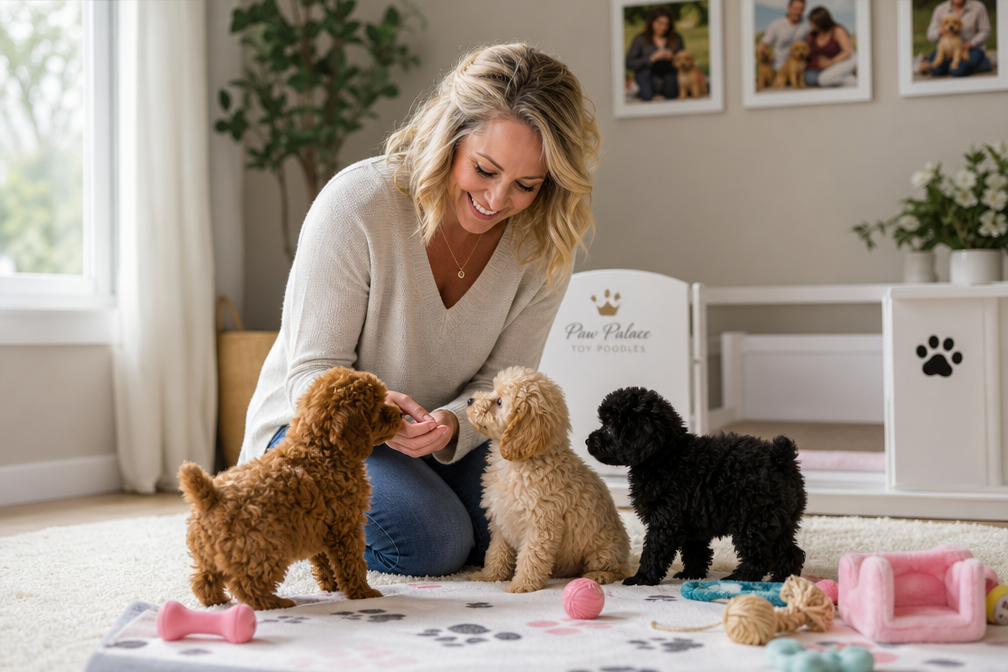
An ethical toy poodle breeder prioritizes the health, temperament, and well-being of their dogs over profit. They breed only health-tested parents, limit the number of litters per year, and raise puppies in a home environment with structured socialization.
Here are the core markers of a reputable program:
- Health testing on all breeding dogs — at minimum, OFA patellar luxation evaluation, CERF/OFA eye exams, and DNA panels for progressive retinal atrophy (PRA) and von Willebrand's disease.
- Limited breeding frequency — dams are bred no more than once per year, and most ethical breeders retire females by age 5-6.
- Early socialization protocols — programs like Puppy Culture or Avidog, which Brivali Poodles in northern Florida follows for early neurological stimulation [2].
- Transparent communication — willingness to answer questions, share vet records, and allow visits or video calls.
- Lifetime take-back policy — a commitment to take the dog back at any point if the owner can no longer care for it.
Common mistake: Assuming AKC registration alone means quality. AKC papers confirm breed lineage, not breeding ethics. A puppy mill can register with the AKC. Always verify health testing independently through the OFA database.
How Much Does a Toy Poodle Cost From a Breeder in the South
Toy poodle puppies from ethical breeders in the southern U.S. generally cost between $2,000 and $4,500 in 2026, depending on color, pedigree, and breeder reputation. Rare colors like red and parti can push prices toward the higher end.
| Factor | Price Impact |
|---|---|
| Standard colors (black, white) | $2,000 – $2,800 |
| Desirable colors (red, apricot) | $2,800 – $4,000 |
| Parti or rare markings | $3,000 – $4,500 |
| Show-quality pedigree | $3,500 – $5,000+ |
| Pet-quality with full health testing | $2,000 – $3,200 |
These prices typically include first vaccinations, deworming, microchipping, a health guarantee, and registration papers. Some breeders, like Doggy & Barkley Poodles in Florida, also include nationwide delivery in their pricing [1].
Choose a breeder in the $2,500-$3,500 range if you want a healthy, well-socialized pet-quality puppy without paying show-line premiums. If a toy poodle is advertised for under $1,200, that's a strong signal to investigate further — the cost of proper health testing alone makes rock-bottom pricing unsustainable for ethical programs.
If you're also considering doodle breeds, our guide to toy, micro, and mini Goldendoodle sizes and prices provides a helpful comparison.
What Health Certifications Should Toy Poodle Breeders Have
Every reputable toy poodle breeder should provide documentation of specific health tests performed on the sire and dam before breeding. At minimum, expect OFA patellar luxation clearance, an OFA or CERF eye exam, and DNA testing for PRA-prcd.
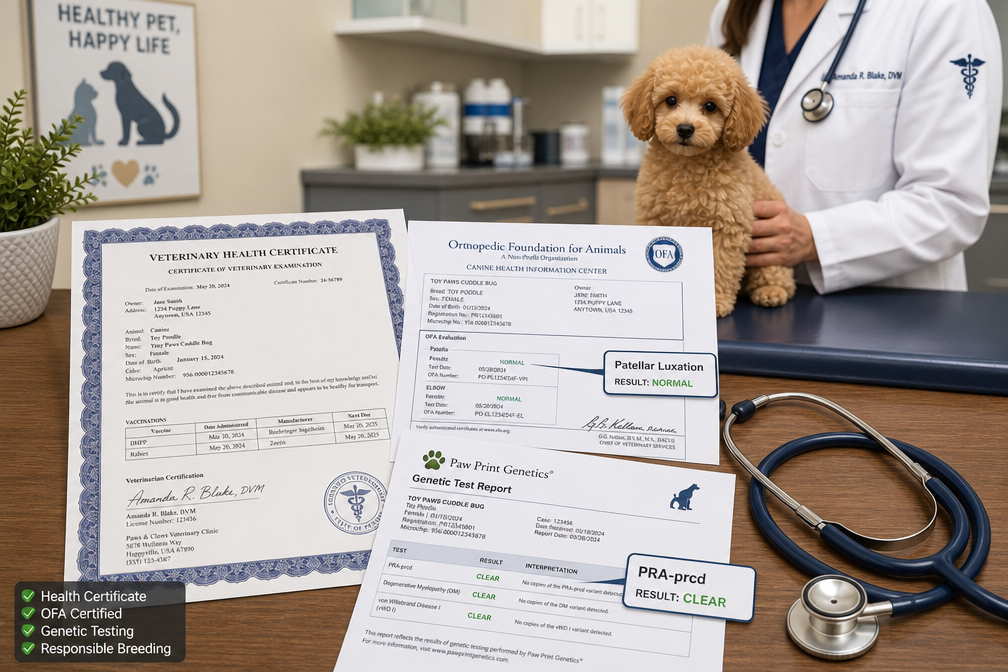
Required health tests for toy poodle breeding stock
- OFA Patellar Luxation Evaluation — patellar luxation (slipping kneecaps) is one of the most common orthopedic issues in toy poodles. Results should be "Normal."
- OFA or CERF Eye Examination — screens for cataracts, PRA, and other hereditary eye conditions. Must be performed by a board-certified veterinary ophthalmologist.
- DNA Panel for PRA-prcd — progressive retinal atrophy causes blindness. Both parents should be tested, and at least one must be "Clear" to prevent affected offspring.
- Von Willebrand's Disease (vWD) DNA Test — a bleeding disorder. Responsible breeders test and breed accordingly.
- Cardiac Evaluation (recommended) — while less common in toys than standards, a cardiac check adds an extra layer of assurance.
Lowry Toy Poodles in Alabama, for example, requires new owners to have a veterinary check within 48 hours of adoption to validate their health guarantee [6]. This kind of structured follow-up is a good sign.
How to verify: Ask the breeder for OFA numbers and look them up directly at ofa.org. If a breeder claims tests were done but cannot provide searchable OFA or Embark/Wisdom Panel results, walk away.
For ongoing health care after bringing your puppy home, see our toy poodle puppy vaccination and vet care guide.
Toy Poodle Breeder vs. Puppy Mill: How to Tell the Difference
The single fastest way to distinguish an ethical breeder from a puppy mill is transparency. Ethical breeders welcome questions and visits; puppy mills avoid both.
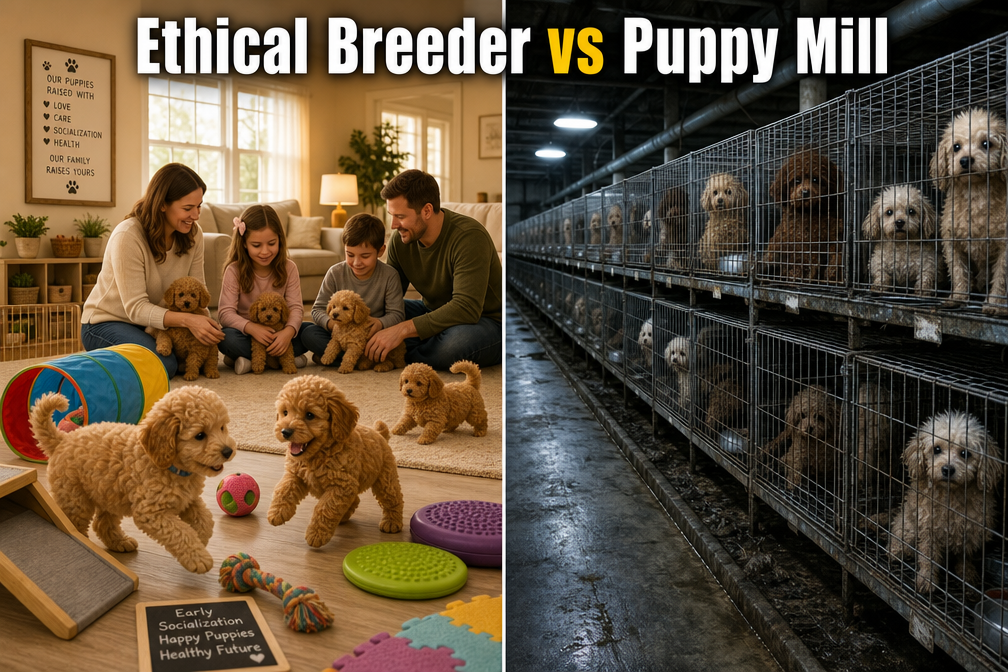
Side-by-side comparison
| Ethical Breeder | Puppy Mill |
|---|---|
| Breeds 1-3 litters per year | Breeds continuously, multiple breeds |
| Puppies raised in the home | Puppies kept in kennels or cages |
| Health tests all breeding stock | No health testing or vague claims |
| Asks you screening questions | Sells to anyone with payment |
| Provides a detailed contract | No contract or minimal paperwork |
| Offers lifetime take-back | No return policy |
| Wait list of weeks to months | Puppies always available |
| Encourages facility visits | Refuses visits or ships only |
Smith Lake Pups in Alabama, with over 15 years of experience raising puppies in a home environment [7], and Fred's Toy Poodles, also in Alabama [5], are examples of small family programs that contrast sharply with commercial operations.
Edge case: Some legitimate breeders operate in rural areas and may have outdoor kennel setups rather than in-home nurseries. This isn't automatically a red flag — look at the cleanliness, space per dog, enrichment provided, and whether dogs have regular human interaction. The key question is always: are the dogs thriving, or just surviving?
Best Toy Poodle Breeders in Alabama, Georgia, Florida, and Texas
Finding the best toy poodle breeders in the South from Alabama to Florida means looking for programs with documented health testing, positive buyer reviews, and transparent breeding practices. Here are notable programs by state.
Alabama
- Burnsville Premier Toy Poodles — A small, in-home program recognized by Good Dog for responsible breeding. Focuses on health and temperament [4].
- Fred's Toy Poodles — Family-raised puppies with an emphasis on socialization before placement [5].
- Lowry Toy Poodles — Specializes in teacup and tiny toy sizes with AKC and CKC registration. Requires a 48-hour vet check to activate their health guarantee [6].
- Smith Lake Pups — Over 15 years of experience raising multiple breeds, including toy poodles, in a home setting [7].
Florida
- Doggy & Barkley Poodles — AKC and CKC-registered toy poodles with early socialization and nationwide delivery [1].
- Noble Pets — Family-based program specializing in toy poodles, Yorkies, and Maltipoos with lifelong buyer support [3].
- Poodles by Cooki — Focuses on temperament, intelligence, and conformation in toy and miniature poodles [8].
- Brivali Poodles — Northern Florida program using Puppy Culture and Avidog protocols for early development [2].
If you're also exploring doodle breeds in the region, check out our pages on mini Goldendoodle breeders in Georgia and micro mini Goldendoodles in Florida.
Georgia and Texas
Specific breeder data for Georgia and Texas toy poodle programs is more limited in verified sources. When searching these states, use the AKC Marketplace, Good Dog platform, and the Poodle Club of America breeder referral to find programs that meet the health testing and contract standards outlined in this guide. The same vetting criteria apply regardless of state.
What Questions Should You Ask a Toy Poodle Breeder Before Buying
Before placing a deposit, ask at least these ten questions. A good breeder will answer all of them without hesitation.
- What health tests have been performed on both parents? (Ask for OFA numbers.)
- Can I see where the puppies are raised?
- How many litters do you produce per year?
- What socialization protocol do you follow?
- What does your health guarantee cover, and for how long?
- Will you take the puppy back if I can no longer keep it?
- What food are the puppies currently eating?
- At what age do puppies go home?
- Can I speak with previous buyers?
- What is included in the purchase price (vaccines, microchip, registration)?
Decision rule: If a breeder dodges questions 1, 2, or 6, remove them from your list. These three questions reveal the most about a program's integrity.
For first-time owners preparing to bring a toy poodle home, our guide for first-time toy poodle owners covers what to expect in those early weeks.
Toy Poodle Breeding Problems and Genetic Health Issues to Watch For
Toy poodles are generally long-lived (12-15 years), but their small size makes them prone to specific genetic conditions. Buyers should understand these risks before purchasing.
- Patellar luxation — the kneecap slips out of place. Graded 1-4; grades 3-4 may require surgery.
- Progressive retinal atrophy (PRA-prcd) — leads to progressive blindness. Fully preventable through DNA testing of parents.
- Legg-Calve-Perthes disease — degeneration of the hip joint, more common in toy breeds.
- Dental crowding — small jaws lead to overcrowded teeth, increasing risk of periodontal disease.
- Hypoglycemia — low blood sugar, especially in very small puppies under 4 pounds. Requires careful feeding schedules.
- Tracheal collapse — weakening of the windpipe cartilage, causing a honking cough.
- Epilepsy — idiopathic seizures occur in poodles at higher rates than many other breeds.
If a breeder tells you toy poodles have no health issues, that's a red flag. Every breed has genetic vulnerabilities, and honest breeders acknowledge them while showing you the steps they take to minimize risk.
Learn more about keeping your puppy healthy with our skin and coat health guide for growing toy poodles.
How to Check If a Toy Poodle Breeder Is Licensed and Registered
Verify a breeder's legitimacy through multiple channels, not just one. Start with the AKC or CKC registry, then cross-reference with state and federal records.
- AKC Marketplace — search for breeders who have AKC-registered litters. Look for the "Bred with H.E.A.R.T." designation, which requires health testing.
- Good Dog — an independent platform that evaluates breeders on health testing, breeding practices, and transparency. Burnsville Premier Toy Poodles [4] and Fred's Toy Poodles [5] are both listed here.
- USDA License — required for breeders who sell sight-unseen or ship puppies. You can search the USDA APHIS database online.
- State licensing — varies by state. Florida, for example, requires a pet dealer license for breeders selling more than a certain number of litters per year.
- OFA Database — verify that health test results for the sire and dam are publicly searchable.
Common mistake: Relying solely on a breeder's website testimonials. Always ask for direct contact with 2-3 previous buyers and verify health test numbers independently.
Toy Poodle Breeders Near Me vs. Shipping From Out of State
Buying from a local breeder allows you to visit the facility, meet the parents, and pick up your puppy in person — all significant advantages. But if no reputable breeders operate near you, shipping from a trusted out-of-state program is a reasonable alternative.
Choose local if: There's a reputable breeder within driving distance and you can visit at least once before the puppy comes home.
Consider shipping if: The closest ethical breeder is several states away and has strong references, transparent health testing, and a solid contract. Doggy & Barkley Poodles, for instance, offers nationwide delivery services [1].
Shipping considerations
- Puppies should be at least 8-10 weeks old before flying.
- Use a breeder who works with a pet-specific airline transport service, not general cargo.
- Expect shipping costs of $300-$600 on top of the puppy price.
- Ask for a nanny flight (a person accompanies the puppy in-cabin) as the safest option.
- Request a vet health certificate issued within 10 days of travel, as required by most airlines.
What's the Difference Between a Toy Poodle and a Miniature Poodle From Breeders
Toy poodles and miniature poodles are the same breed with different size classifications. The AKC defines toy poodles as 10 inches or under at the shoulder, while miniature poodles measure 10-15 inches. Both share the same intelligence, coat type, and temperament.
| Trait | Toy Poodle | Miniature Poodle |
|---|---|---|
| Height | Up to 10 inches | 10-15 inches |
| Weight | 4-6 lbs | 10-15 lbs |
| Lifespan | 12-15 years | 12-15 years |
| Exercise needs | Moderate | Moderate to high |
| Fragility | Higher (smaller bones) | Lower |
| Best for | Apartments, seniors, singles | Families with older children |
Some breeders, like Poodles by Cooki in Florida, breed both toy and miniature sizes [8], while Mystic Estate in Deltona specializes in miniatures with emphasis on structure and emotional intelligence [9].
Edge case: "Teacup" poodles are not a recognized AKC size. They are simply very small toy poodles, often under 4 pounds. Breeding for extreme small size increases health risks, particularly hypoglycemia and bone fragility. If a breeder markets "teacup" puppies aggressively, ask pointed questions about the health of their breeding stock.
If you're drawn to the fiery red toy poodle look with teddy bear faces, our dedicated guide covers what to expect from that specific color and style.
Red Flags When Visiting a Toy Poodle Breeder
Trust your eyes and instincts during a breeder visit. Here are warning signs that should make you walk away:
- Strong odor or visible filth — a clean facility is non-negotiable.
- Dogs showing fear or aggression toward the breeder — well-treated dogs are relaxed around their caretaker.
- No adult dogs on site — if you can't meet at least the dam, question where the dogs actually live.
- Pressure to buy immediately — "This puppy won't last" or "Price goes up tomorrow" are sales tactics, not breeding ethics.
- Multiple breeds available at once — breeding more than 2-3 breeds is a hallmark of commercial operations.
- No questions asked of you — ethical breeders screen buyers carefully. If they don't ask about your home, lifestyle, or experience, they're prioritizing sales over placement.
- Cash only, no contract — legitimate breeders provide written agreements and accept traceable payment methods.
- Puppies available before 8 weeks — sending puppies home too early causes behavioral and health problems.
Toy Poodle Breeder Contract: What Should It Include
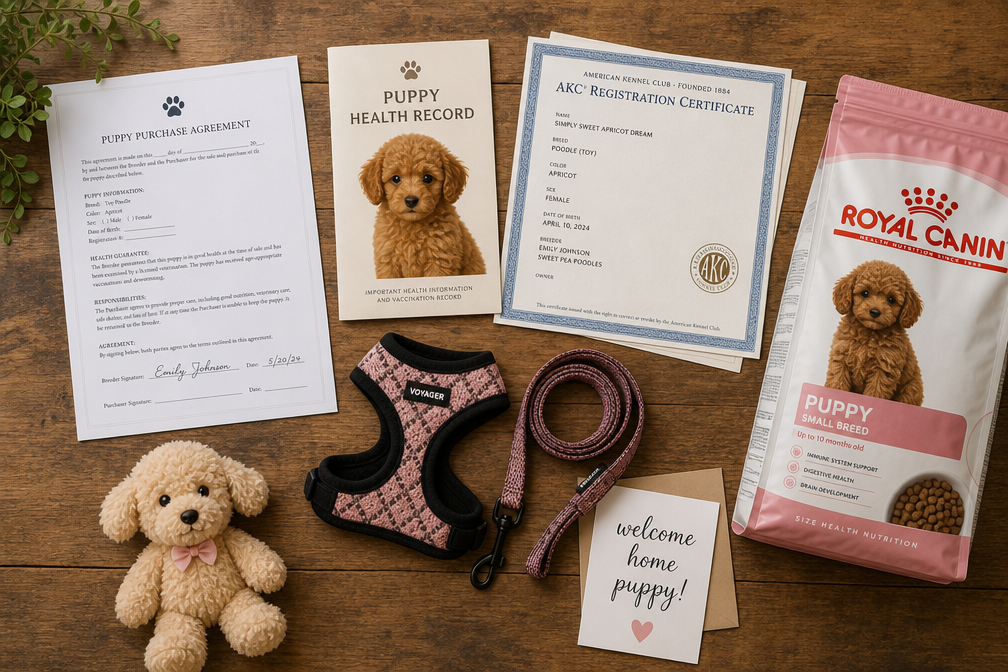
A breeder contract protects both the buyer and the puppy. Every reputable toy poodle breeder in the South should provide a written agreement that covers, at minimum, these elements:
- Health guarantee — typically 1-2 years for genetic conditions, with clear terms for what qualifies and what the remedy is (replacement puppy, refund, or vet cost reimbursement).
- Spay/neuter requirement — most pet-quality contracts require sterilization by a certain age.
- Return clause — the breeder's commitment to take the dog back at any age if you can no longer care for it.
- Registration information — AKC or CKC registration details and any limitations (limited vs. full registration).
- Vaccination and deworming records — a detailed schedule of what has been administered.
- Microchip information — chip number and registration transfer instructions.
- Buyer obligations — requirements like the 48-hour vet visit that Lowry Toy Poodles mandates [6].
Read the contract before placing a deposit. If a breeder won't share the contract in advance, find a different program.
How Long Does It Take to Get a Toy Poodle From a Breeder
Expect a wait time of 3 to 12 months from an ethical toy poodle breeder in the South. Small programs produce only 1-3 litters per year, and popular breeders maintain waiting lists.
The typical timeline looks like this:
- Application and deposit — 1-2 weeks for approval
- Wait for a planned litter — 1-6 months depending on breeding schedule
- Puppy selection — usually at 4-6 weeks when temperaments become apparent
- Puppy goes home — at 8-10 weeks of age
A long wait is actually a positive sign. It means the breeder isn't overproducing and is matching puppies carefully to families. If a breeder always has puppies available with no wait, ask why.
Are Rescue Toy Poodles Better Than Buying From a Breeder
Neither option is universally better — it depends on your priorities and circumstances. Rescue is an excellent choice for people open to adult dogs or those comfortable with unknown health and behavioral history. Buying from an ethical breeder is better suited for people who want a puppy with documented lineage, predictable size, and verified health testing.
Choose rescue if: You're flexible on age and appearance, want to give a dog a second chance, and are prepared for potential behavioral or medical unknowns. Poodle-specific rescues like NorCal Poodle Rescue and Carolina Poodle Rescue often have toy poodles available.
Choose a breeder if: You need a specific size, temperament, or hypoallergenic coat guarantee, want a puppy you can socialize from 8 weeks, or have young children and need predictable behavior.
Both paths can lead to a wonderful companion. The worst option is buying from an unethical source — which is why this guide exists.
Frequently Asked Questions
How do I find the best toy poodle breeders in the South from Alabama to Florida?
Start with the AKC Marketplace, Good Dog, and the Poodle Club of America breeder referral. Cross-reference any breeder you find by verifying OFA health test results, reading buyer reviews, and requesting a facility visit or video tour. Programs like Burnsville Premier Toy Poodles in Alabama [4] and Doggy & Barkley Poodles in Florida [1] are examples of well-regarded southern breeders.
What is the average price for a toy poodle puppy in the southern U.S.?
In 2026, expect to pay $2,000 to $4,500 for a health-tested toy poodle from an ethical breeder in the South. Rare colors and show-quality pedigrees command higher prices.
Are AKC-registered toy poodles healthier than non-registered ones?
Not necessarily. AKC registration confirms breed lineage but does not guarantee health testing was performed. Always verify health certifications independently through the OFA database, regardless of registration status.
What is the difference between a toy poodle and a teacup poodle?
"Teacup" is not an official AKC size classification. Teacup poodles are simply very small toy poodles, typically under 4 pounds. Breeding for extreme small size increases risks of hypoglycemia, bone fractures, and other health problems.
Can I visit a toy poodle breeder before buying?
Yes, and you should. Ethical breeders welcome visits or, at minimum, offer live video tours of their facility and the puppy's parents. Refusal to allow any form of visit is a significant red flag.
How many litters should an ethical toy poodle breeder produce per year?
Most ethical small-breed programs produce 1-4 litters per year. This allows proper care for each litter, adequate recovery time for the dam, and thorough socialization for every puppy.
Do toy poodle breeders offer payment plans?
Some do, but it varies by program. Many breeders require a non-refundable deposit ($200-$500) to hold a spot on the waiting list, with the balance due before or at pickup. Ask about payment terms before committing.
What should I do if a breeder won't show health test results?
Walk away. Legitimate breeders are proud of their health testing and share results willingly. If a breeder claims tests were done but cannot provide verifiable OFA numbers or DNA panel results, find a different program.
Is it safe to have a toy poodle puppy shipped by air?
It can be safe when done correctly. The safest method is a nanny flight where a handler carries the puppy in-cabin. Puppies should be at least 8-10 weeks old, have a current health certificate, and travel with a reputable pet transport service.
How long do toy poodles live?
Toy poodles typically live 12-15 years, with some reaching 16-18 years when well cared for. Buying from a health-tested line and maintaining regular veterinary care are the best ways to support longevity.
Conclusion
Finding the best toy poodle breeders in the South from Alabama to Florida comes down to a straightforward checklist: verify health testing through the OFA database, visit the facility or request a live video tour, read the contract carefully before placing a deposit, and ask every question on the list above without apology. Programs like Burnsville Premier Toy Poodles and Fred's Toy Poodles in Alabama, and Doggy & Barkley Poodles and Noble Pets in Florida, demonstrate what ethical breeding looks like in the region.
Your next steps:
- Decide on your priorities — color, size, timeline, and budget.
- Research 3-5 breeders using the AKC Marketplace, Good Dog, and this guide.
- Contact each breeder, ask the ten screening questions, and request OFA verification numbers.
- Visit your top choice in person or via video call.
- Review and sign the contract only after you're fully satisfied with the breeder's transparency.
A well-bred toy poodle is a 12-15 year commitment. Spending a few extra weeks vetting breeders now saves years of potential heartache and veterinary bills later. Start your search with the resources above, and don't settle for anything less than a program that puts its dogs first.
For help preparing once your puppy arrives, explore our guides on training smart toy poodle puppies at home and how to prepare your home for a toy poodle puppy.
References
[1] Toy Poodle Breeder Florida – https://www.doggyandbarkley.com/toy-poodle-breeder-florida
[2] Brivali Poodles – https://www.brivalipoodles.com/
[3] Noble Pets FL – https://www.noblepetsfl.com/
[4] Burnsville Premier Toy Poodles Alabama – https://www.gooddog.com/breeders/burnsville-premier-toy-poodles-alabama
[5] Fred's Toy Poodles Alabama – https://www.gooddog.com/breeders/freds-toy-poodles-alabama
[6] Lowry Toy Poodles Contract – https://www.lowrytoypoodlesandmaltese.com/contract/
[7] Smith Lake Pups – https://www.smithlakepups.com/
[8] Poodles by Cooki – https://www.poodlesbycooki.com/
[9] Mystic Estate – https://mystic-estate.com/
[10] Regal Crest Standard Poodles – https://www.regalcrestpoodles.com/