
Toy poodle coat colors
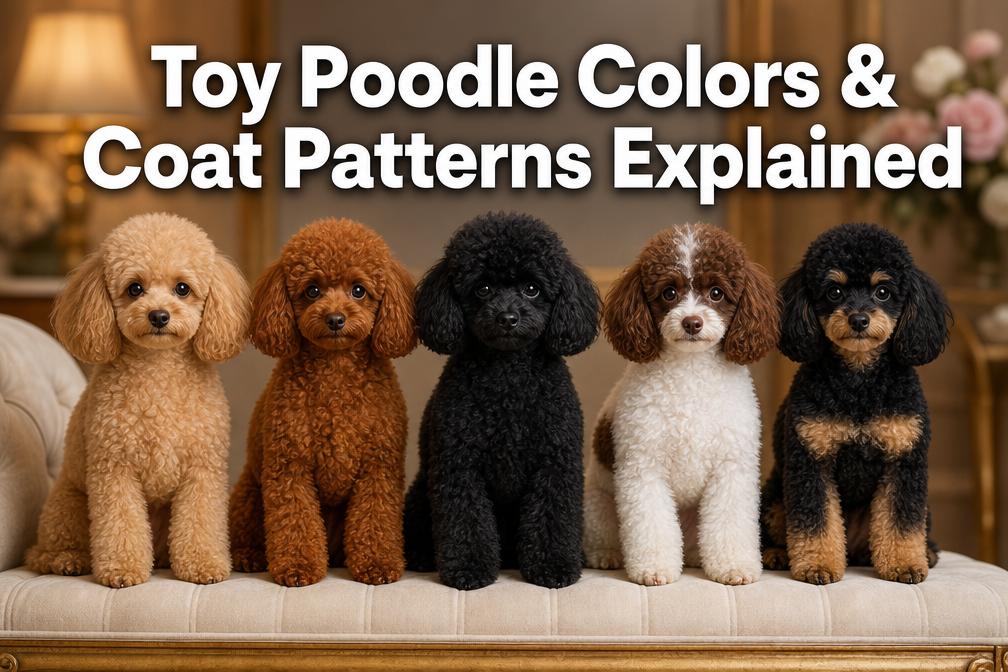
Quick Answer: Toy Poodles come in more recognized colors than almost any other AKC breed, with 11 standard colors and several multi-color patterns including parti and phantom. The most common solid colors are black, white, and apricot, while red, phantom, and certain parti combinations rank among the rarest and most expensive. Understanding Toy Poodle colors and coat patterns — apricot, red, black, parti, and phantom explained in detail — helps buyers set realistic expectations about pricing, fading, and grooming before choosing a puppy.
Toy poodle coat colors
- Black is the most genetically dominant Toy Poodle color and the least likely to fade over a dog’s lifetime.
- Apricot and red differ mainly in intensity: red carries a deeper mahogany pigment caused by the Rufus gene modifier, while apricot is a lighter peach-gold.
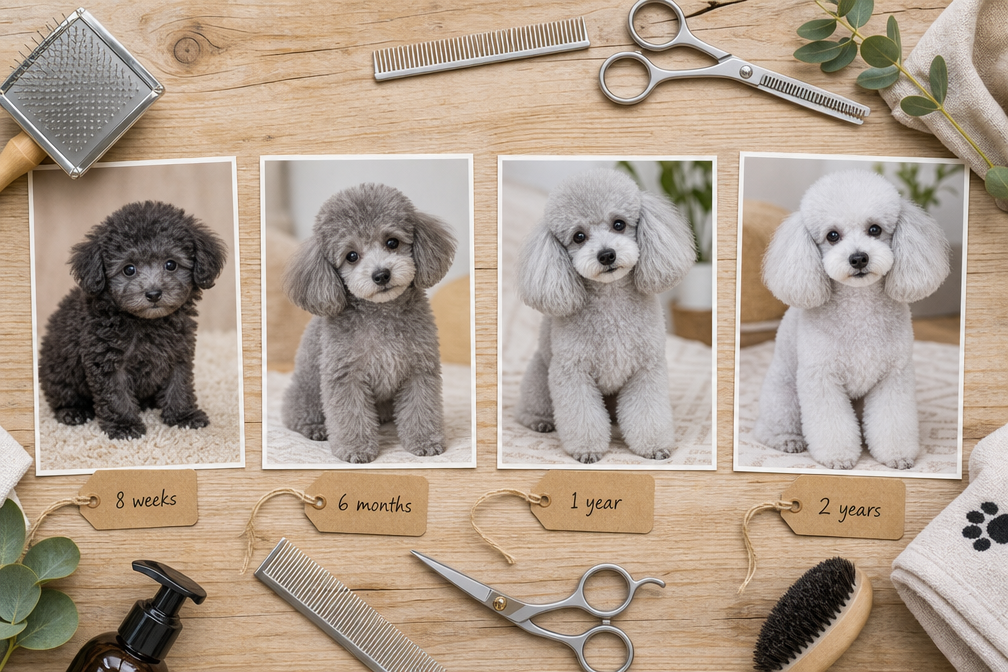
- Most Toy Poodle coats fade (called “clearing”) as the dog matures, sometimes dramatically between 6 months and 2 years of age.
- Parti Poodles have a white base with patches of a second color covering at least 50% of the body; they are AKC-registered but cannot compete in conformation.
- Phantom markings follow a specific pattern similar to a Doberman or Rottweiler, with defined points of a secondary color on the face, chest, and legs.
- Rare colors like red, phantom, and blue typically cost 20-50% more than common colors from the same breeder.
- Color does not affect trainability, temperament, or core health — those traits are determined by genetics, socialization, and breeding quality, not pigment.
- Breeders predict puppy colors using parent pedigrees, DNA color panel testing, and knowledge of dominant versus recessive gene interactions.
What Is the Difference Between Apricot and Red Toy Poodles?
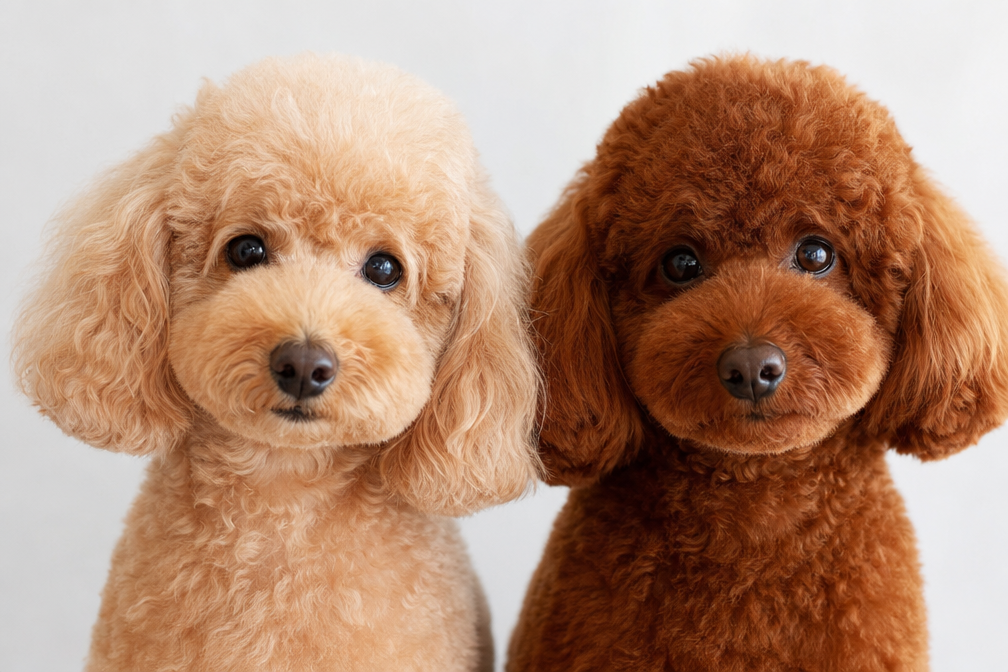
The difference comes down to pigment intensity. Apricot Toy Poodles display a soft peach-to-golden hue, while red Toy Poodles carry a much deeper, richer mahogany tone. Both colors are produced by the same phaeomelanin pigment, but red dogs have stronger expression of what breeders call the “Rufus” polygene modifiers, which concentrate and deepen the warm tones.
Here is a quick side-by-side breakdown:
| Feature | Apricot | Red |
|---|---|---|
| Pigment base | Phaeomelanin (diluted) | Phaeomelanin (concentrated) |
| Typical shade | Pale peach to warm gold | Deep copper to dark mahogany |
| Nose/eye rim color | Black or liver | Black or liver (darker preferred) |
| Fading tendency | High — often lightens to cream | Moderate to high — may lighten to apricot |
| AKC registration | Yes (separate color) | Yes (separate color since 2005) |
A common mistake buyers make is assuming a dark apricot puppy is red. Puppies should be evaluated at 8-12 weeks under natural light. True red puppies have a consistent, deep warmth across the entire coat, not just at the tips. If you’re drawn to warm-toned Poodles, our guide to grooming and trimming apricot Toy Poodle coats covers how to maintain that color’s best appearance.
Is Apricot or Red Toy Poodle More Expensive?
Red Toy Poodles generally cost more than apricots. Expect to pay roughly $2,500 to $4,000+ for a well-bred red Toy Poodle, compared to $2,000 to $3,500 for an apricot from a comparable breeder. The premium exists because producing a deep, lasting red coat requires careful selective breeding across multiple generations, and demand consistently outpaces supply.
That said, price varies significantly based on breeder reputation, health testing, pedigree, and geographic location. A health-tested apricot from a top breeder may cost more than a red from a less established program. Always prioritize health clearances over color when choosing a puppy. For a closer look at what to expect with warm-toned puppies, see our page on sunny apricot Toy Poodle puppies with gentle natures.
Can Toy Poodles Be Black and Stay Black Their Whole Life?
Yes. Black is the most stable Toy Poodle color. A true black Toy Poodle with two copies of the dominant black gene (and no dilution or greying genes) will remain jet black from puppyhood through old age, aside from normal age-related greying around the muzzle in senior years.
However, not every dark puppy stays dark. Some black puppies carry the progressive greying gene (G locus), which causes the coat to gradually lighten to blue or silver over the first two to three years. The key distinction:
- True black (no G gene): Stays black. Coat remains deep and rich.
- Black carrying progressive greying: Born black, then clears to blue, silver, or silver beige.
If keeping a solid black coat matters to you, ask the breeder whether the parents carry the greying gene. DNA testing can confirm this. Black Toy Poodles are popular for their striking appearance and low-maintenance color — learn more in our article about raising confident black Toy and Teacup Poodle puppies.
Do Toy Poodle Colors Change as They Grow?
Most Toy Poodle colors do change, and sometimes the shift is dramatic. This process, called “clearing” or “fading,” is one of the most common surprises for first-time Poodle owners. A puppy that looks dark chocolate at 10 weeks may be café au lait by age two.
Colors most likely to fade:
- Black to blue or silver
- Dark brown to café au lait
- Deep red to apricot or light red
- Apricot to cream
- Dark cream to white
Colors least likely to fade:
- True black (without the greying gene)
- White
- Café au lait (already a diluted color)
Fading typically begins between 2 and 6 months and can continue until age 2-3. The progressive greying gene (G locus) is the primary driver. Some breeders can predict fading by examining the roots of a puppy’s coat — if the roots are lighter than the tips at 6-8 weeks, clearing is likely underway.
How Do I Know If My Toy Poodle Will Fade to Silver?
A Toy Poodle will fade to silver if it carries the progressive greying gene and was born black. The earliest sign appears around 6-8 weeks: look at the face, especially around the muzzle and feet. Silver puppies often show lighter hair at the roots or a subtle “sheen” that differs from a true black puppy’s uniform darkness.
By 3-4 months, silver puppies typically display noticeable lightening on the face and paws. The full silver color may not develop until 2-3 years of age. If both parents are silver, the puppy will almost certainly clear to silver. If one parent is black and one is silver, the puppy may or may not carry the gene.
Decision rule: If you want a guaranteed silver, choose a puppy from two silver parents and look for face clearing by 8 weeks. If you want a guaranteed black, choose from two true-black parents with no silver in the immediate pedigree, and confirm with DNA testing.
What Does Parti Color Mean in Toy Poodles?
A parti Toy Poodle has a white base coat with irregular patches of a second color — such as black, brown, red, or apricot — covering a significant portion of the body. The term “parti” comes from the French word “parti-colored,” meaning two-toned. To qualify as parti, the secondary color patches should be clearly defined and distributed across the body, not just small ticking or spots.
Key facts about parti Toy Poodles:
- AKC registers parti Poodles but does not allow them in conformation shows (they can compete in performance events like agility and obedience).
- UKC and other registries do accept parti Poodles in conformation.
- Parti is a recessive trait, meaning both parents must carry the parti gene (S locus) to produce parti puppies.
- Common parti combinations: black and white, brown and white, red and white, apricot and white.
Parti Poodles have the same coat texture, intelligence, and temperament as solid-colored Poodles. Their unique markings make each dog visually one-of-a-kind. For grooming tips specific to these patterned coats, check out our guide on grooming parti Toy Poodles to show off their color.
Are Parti Colored Toy Poodles Harder to Train?
No. Coat color and pattern have zero effect on a Toy Poodle’s trainability. Parti Toy Poodles are just as intelligent, responsive, and eager to please as any solid-colored Poodle. The breed consistently ranks among the top three most intelligent dog breeds regardless of color.
This myth likely persists because parti Poodles were historically excluded from AKC conformation, which led some breeders to deprioritize them. As a result, some parti lines may have received less attention to temperament in past decades. In 2026, reputable breeders who specialize in parti Poodles select for temperament and health just as rigorously as solid-color breeders do.
If you’re a new owner concerned about training, our resource on training smart Toy Poodle puppies at home applies equally to every color and pattern.
How Much Does a Phantom Toy Poodle Cost?
Phantom Toy Poodles typically range from $2,500 to $5,000 or more from a reputable breeder. The higher end of that range reflects the difficulty of consistently producing well-marked phantoms and the strong buyer demand for this striking pattern.
Phantom markings follow a very specific layout:
- Above each eye (eyebrow dots)
- Sides of the muzzle
- Throat and chest
- All four legs and feet
- Below the tail
The base color is usually black, brown, or red, with the secondary “points” in tan, cream, apricot, or red. A dog must have markings in all the correct locations to be considered a true phantom. Mismarked dogs — those with some but not all phantom points — are sometimes sold at lower prices.
Do Toy Poodles With Phantom Markings Have Health Issues?
Phantom markings themselves do not cause or correlate with any health problems. The genes responsible for the phantom pattern (at the A locus, specifically the at allele) are unrelated to genes associated with common Poodle health concerns like progressive retinal atrophy, luxating patellas, or von Willebrand’s disease.
Important distinction: Some color-related genes in dogs broadly can be linked to health issues (such as the merle gene in other breeds causing deafness or eye problems), but the phantom pattern in Poodles does not involve merle or any health-linked dilution. A phantom Toy Poodle from a health-tested breeding program has the same health outlook as any other well-bred Toy Poodle.
Always ask breeders for OFA or PennHIP results, genetic panel testing, and eye certifications regardless of the puppy’s color or pattern.
What Is the Rarest Toy Poodle Color?
True red and blue are generally considered the rarest solid Toy Poodle colors. Among patterns, well-marked phantoms and sable are the hardest to find from quality breeders.
Here is a rarity ranking based on breeder availability and genetic frequency:
| Rarity Level | Colors/Patterns |
|---|---|
| Most common | Black, white, cream |
| Common | Apricot, brown (chocolate) |
| Moderate | Silver, silver beige, café au lait |
| Uncommon | Red, blue, parti (black/white) |
| Rare | Phantom, sable, red parti, brindle |
Blue Toy Poodles are rare because the color requires a specific dilution gene acting on black, and the resulting shade must be a distinct steel-blue rather than a faded black or dark silver. Red is rare because maintaining deep, non-fading red across generations demands careful line breeding.
For a broader overview of AKC-recognized options, see our page on color varieties in AKC Toy Poodle puppies.
What Toy Poodle Colors Are Most Common?
Black, white, and cream are the three most common Toy Poodle colors. Black is genetically dominant, meaning it appears most frequently in litters. White and cream are also widespread because the genes that produce them are well-established in the breed’s gene pool.
Apricot ranks as the most popular warm-toned color and is widely available. Brown (chocolate) is common but less in demand than it was a decade ago. Silver has a dedicated following but requires specific breeding, so availability varies by region.
Which Toy Poodle Colors Are Best for First-Time Owners?
For first-time owners, the best color choice is whichever color comes from a reputable, health-tested breeding program — temperament and health matter far more than pigment. That said, there are practical considerations:
- Black and darker colors show less staining around the eyes and mouth, which means slightly easier upkeep for new owners still learning grooming routines.
- Apricot and cream are forgiving of minor grooming mistakes because their lighter tones blend small imperfections.
- White requires the most coat maintenance to keep clean and stain-free.
- Parti and phantom need a groomer experienced with patterned coats to clip in ways that highlight (rather than obscure) the markings.
Choose a color if: you love how it looks and the breeder has health-tested the parents. Avoid choosing solely on color if: it means compromising on breeder quality or health testing. First-time owners can find excellent guidance in our article on apricot Toy Poodle puppies for first-time owners.
Do Toy Poodle Coat Patterns Affect Grooming Needs?
The coat texture of all Toy Poodles is essentially the same — dense, curly, and single-layered — regardless of color or pattern. This means the basic grooming schedule (brushing every 1-2 days, professional grooming every 4-6 weeks) applies across the board.
However, there are color-specific grooming considerations:
- White and cream coats stain easily from tears, saliva, and food. Regular face washing and tear stain prevention are necessary.
- Apricot and red coats can appear dull if over-bathed with harsh shampoos. Color-enhancing shampoos help maintain vibrancy.
- Parti coats benefit from grooming styles that follow the color boundaries, which requires a skilled groomer.
- Phantom coats look best when the secondary color points are kept visible — avoid shaving these areas too short.
- Black coats can develop a reddish or brownish tint from sun exposure. Limiting prolonged direct sunlight and using UV-protective sprays helps.
How Do Breeders Predict Toy Poodle Puppy Colors?
Experienced breeders use a combination of pedigree analysis, DNA color panel testing, and direct observation to predict litter colors with reasonable accuracy. Modern genetic testing (available through companies like Embark and Animal Genetics) can identify the specific alleles each parent carries at key color loci.
The main genetic loci involved in Poodle color:
- E locus (Extension): Controls whether a dog can produce dark pigment. The “e/e” genotype results in cream or apricot regardless of other genes.
- B locus (Brown): Determines whether dark pigment is black or brown/chocolate.
- D locus (Dilute): Dilutes black to blue and brown to café au lait.
- G locus (Progressive greying): Causes gradual lightening of the coat over time.
- S locus (White spotting): Controls parti patterning.
- A locus (Agouti): Determines phantom, sable, and other pattern distributions.
Example prediction: If both parents are genetically E/e (carrying one copy of the recessive cream gene), roughly 25% of the litter may be cream or apricot. If both parents carry at/at at the A locus, phantom puppies are possible.
Breeders who invest in DNA color testing can give buyers much more accurate expectations than those relying on visual assessment alone. For insight into how responsible breeders approach this, read about planning a color-diverse Toy Poodle breeding program.
Frequently Asked Questions
What is the most expensive Toy Poodle color?
Red and phantom Toy Poodles tend to command the highest prices, often $3,000 to $5,000+, because they are harder to breed consistently and buyer demand is strong.
Do all Toy Poodle colors have the same lifespan?
Yes. Coat color does not affect lifespan. Toy Poodles of all colors typically live 12-15 years with proper care.
Can two black Toy Poodles produce a non-black puppy?
Yes, if both parents carry recessive genes for other colors (such as brown, cream, or silver). DNA testing reveals what hidden color genes each parent carries.
Are blue Toy Poodles actually blue?
Blue Poodles have a dark steel-gray coat with a distinct bluish sheen. They are born black and gradually clear to blue, usually by age 2-3.
Is a mismarked phantom still considered phantom?
Technically, no. A true phantom must have markings in all specified locations. Dogs missing some points are often called “mismarked” or “phantom-marked” and may be priced lower.
Do Toy Poodle colors affect allergies in humans?
No. All Toy Poodles have the same low-shedding, single-layer curly coat regardless of color. No color is more or less hypoallergenic than another.
Can I register a parti Toy Poodle with the AKC?
Yes. The AKC registers parti Poodles, but they cannot compete in conformation classes. They are eligible for all AKC performance and companion events.
What color are Toy Poodle puppies when born?
Puppies are born in their initial color, but it may not be their adult shade. Silver puppies are born black, café au lait puppies are born brown, and many warm-toned puppies are born darker than they will be as adults.
How can I prevent my Toy Poodle’s coat from fading?
Fading is genetic and cannot be fully prevented. However, avoiding harsh shampoos, limiting sun exposure, and using color-safe grooming products can help maintain vibrancy longer.
Do phantom Toy Poodles get lighter over time?
The base color may fade if the dog carries the progressive greying gene, but the phantom pattern itself (the location of the markings) remains visible throughout the dog’s life.
Conclusion
Choosing a Toy Poodle color is one of the most enjoyable parts of the puppy search, but it should never overshadow health testing, breeder reputation, and temperament. The full spectrum of Toy Poodle colors and coat patterns — apricot, red, black, parti, and phantom explained throughout this guide — shows just how genetically diverse this small breed truly is.
Actionable next steps:
- Decide on your color preference but stay flexible. The healthiest, best-tempered puppy in a litter may not be the exact shade you envisioned.
- Ask breeders for DNA color panel results so you know what to expect regarding fading and adult color.
- Budget accordingly. Rare colors and patterns cost more, and that premium should come from a breeder who also invests in health clearances.
- Plan your grooming routine based on your chosen color’s specific maintenance needs.
- Meet the parents whenever possible. Seeing the adult coat gives the best preview of what your puppy will look like at maturity.
Whether you fall in love with a jet-black puppy, a warm apricot, or a show-stopping phantom, every Toy Poodle color shares the same brilliant mind and affectionate personality that makes this breed so beloved.