


Last updated: July 9, 2026
Quick Answer: Toy Poodles live an average of 14 to 18 years, making them one of the longest-lived dog breeds [2]. With proper diet, consistent dental care, regular veterinary checkups, and appropriate exercise, many Toy Poodles reach 16 or older. The keys to pushing past that 15-year mark are preventing obesity, catching health issues early, and maintaining daily oral hygiene.
Key Takeaways
- The average Toy Poodle lifespan falls between 14 and 18 years, though some reach 19 or beyond [2].
- Toy Poodles outlive Standard Poodles by roughly 4 to 6 years, largely because smaller dogs age more slowly at the cellular level [2].
- The most common health threats are dental disease, patellar luxation, progressive retinal atrophy (PRA), and Legg-Calve-Perthes disease [3].
- Dental disease is the single most underestimated factor that shortens a Toy Poodle's life; daily brushing can add years.
- Keeping a Toy Poodle at a healthy weight (4 to 6 pounds for most) reduces the risk of tracheal collapse, joint problems, and heart strain [3].
- The AKC recommends DNA testing for PRA-prcd and von Willebrand's Disease before breeding [4].
- Twice-yearly vet visits become essential once a Toy Poodle turns 10.
- Mental stimulation is just as important as physical exercise for preventing cognitive decline in senior Toy Poodles [5].
What Is the Average Lifespan of a Toy Poodle?
The average Toy Poodle lives 14 to 18 years when properly cared for [2]. Some sources cite a slightly broader range of 12 to 16 years [1], but well-bred Toy Poodles from health-tested lines routinely reach the higher end.
Several factors determine where an individual dog falls within that range:
- Genetics: Dogs from breeders who screen for hereditary conditions start with a longer projected lifespan. Choosing a reputable Toy Poodle breeder matters more than most owners realize.
- Preventive care: Regular vet visits, vaccinations, and parasite prevention catch problems before they become life-threatening.
- Lifestyle: Diet quality, exercise frequency, dental hygiene, and mental enrichment all influence how many healthy years a Toy Poodle enjoys.
The 14-to-18-year range makes Toy Poodles competitive with Chihuahuas (14 to 16 years) and Dachshunds (12 to 16 years) for the title of longest-lived companion breeds.
How Long Do Toy Poodles Live Compared to Other Small Breeds?
Toy Poodles consistently rank among the top five longest-lived small breeds. They typically outlive most other toy-sized dogs by one to three years [2].
| Breed | Average Lifespan | Typical Weight |
|---|---|---|
| Toy Poodle | 14-18 years | 4-6 lbs |
| Chihuahua | 14-16 years | 2-6 lbs |
| Yorkshire Terrier | 11-15 years | 4-7 lbs |
| Miniature Poodle | 13-16 years | 10-15 lbs |
| Standard Poodle | 10-13 years | 40-70 lbs |
| Shih Tzu | 10-16 years | 9-16 lbs |
Within the Poodle family, the size-longevity pattern is clear: Toy Poodles live roughly 4 to 6 years longer than Standard Poodles [2]. Researchers believe smaller dogs experience slower cellular aging, which delays the onset of age-related cancers and organ decline.
Decision rule: If maximum lifespan is a priority and you want a Poodle, the Toy variety gives you the best odds of 15+ years together. If you're also considering Poodle mixes, explore Toy Poodle puppies for sale to find health-tested options.
What Health Problems Do Toy Poodles Commonly Face?
Toy Poodles are predisposed to several breed-specific conditions. Knowing these risks early allows owners to screen, prevent, or manage them before they reduce quality of life [3].
Orthopedic issues:
- Patellar luxation — the kneecap slips out of its groove, causing intermittent lameness. Grades 1 and 2 are manageable; grades 3 and 4 often need surgery [3].
- Legg-Calve-Perthes disease — the blood supply to the femoral head deteriorates, causing hip pain. It usually appears before 18 months of age [3].
Eye conditions:
- Progressive retinal atrophy (PRA) — a genetic disease that gradually destroys the retina, leading to blindness. DNA testing can identify carriers before breeding [4].
Respiratory concerns:
- Tracheal collapse — the cartilage rings in the windpipe weaken, causing a honking cough. Overweight Toy Poodles face a much higher risk [3].
Other conditions:
- Epilepsy — idiopathic seizures occur more frequently in Poodles than in many other breeds.
- Von Willebrand's Disease — a blood clotting disorder that the AKC recommends testing for [4].
- Dental disease — arguably the most common and most preventable health problem in Toy Poodles (covered in detail below).
Common mistake: Skipping genetic testing when purchasing a puppy. The AKC specifically recommends DNA screening for PRA-prcd and von Willebrand's Disease, plus a patella evaluation [4]. If a breeder doesn't offer these results, that's a red flag.
Can Toy Poodles Live to 18 or 19 Years Old?
Yes, and it happens more often than people expect. Toy Poodles reaching 18 or 19 years old is uncommon but well-documented [2]. A small percentage even cross the 20-year mark, though verified cases at that age are rare.
What separates the 18-year-old Toy Poodle from the one who passes at 12? Usually a combination of:
- Strong genetic foundation — parents and grandparents who also lived long, healthy lives.
- Lean body condition — staying at or slightly below the breed's ideal weight throughout life.
- Consistent dental care — preventing the chronic bacterial infections that damage the heart and kidneys.
- Early disease detection — catching conditions like heart murmurs or kidney decline in the earliest stages.
- Low-stress environment — Toy Poodles are sensitive dogs. Chronic stress weakens the immune system.
Edge case: Toy Poodles with serious genetic conditions like Legg-Calve-Perthes or severe PRA can still live long lives if the condition is managed early. Blindness from PRA, for example, doesn't shorten lifespan — it changes lifestyle.
For owners planning for the long haul, understanding budgeting for long-term Toy Poodle care helps ensure finances never become a barrier to proper veterinary treatment.
What Is the Best Diet for Toy Poodle Longevity?
A high-quality, portion-controlled diet built around lean animal protein is the foundation of Toy Poodle longevity [3]. Because these dogs weigh only 4 to 6 pounds, even small amounts of extra food create significant weight gain.
Core dietary guidelines:
- Protein first: Look for foods where a named animal protein (chicken, turkey, salmon) is the first ingredient. Aim for at least 25-30% protein content.
- Controlled fat: Toy Poodles need healthy fats for coat and brain health, but excess fat leads to obesity. Target 10-15% fat content for adult dogs.
- Omega-3 fatty acids: Fish oil or flaxseed supports joint health, reduces inflammation, and may slow cognitive decline in senior dogs [5].
- Small kibble size: Toy Poodles have tiny mouths. Small-breed formulas with appropriately sized kibble reduce choking risk and encourage proper chewing.
- Measured portions: Free-feeding is one of the fastest paths to obesity. Use a kitchen scale or measuring cup at every meal.
Feeding schedule by age:
| Life Stage | Meals Per Day | Notes |
|---|---|---|
| Puppy (8 weeks – 6 months) | 3-4 | High-calorie puppy formula |
| Adolescent (6 months – 1 year) | 2-3 | Transition to adult food gradually |
| Adult (1-10 years) | 2 | Consistent portions, monitor weight |
| Senior (10+ years) | 2 | Lower calorie, higher fiber, joint supplements |
Common mistake: Giving table scraps. A single ounce of cheese for a 5-pound Toy Poodle is roughly equivalent to a human eating two full hamburgers in caloric impact. Those "tiny treats" add up fast.
Establishing good habits early matters. A solid daily routine for Toy and Teacup Poodle puppies sets the stage for lifelong healthy eating patterns.
Toy Poodle Health Issues at Different Ages
Health risks shift as a Toy Poodle moves through life stages. Here's what to watch for and when.
Puppy Stage (0-1 Year)
- Hypoglycemia (low blood sugar) — especially dangerous in very small puppies under 2 pounds
- Legg-Calve-Perthes disease onset (typically before 18 months) [3]
- Patellar luxation may first appear
- Vaccination reactions (monitor after each round)
Adult Stage (1-7 Years)
- Dental disease begins accumulating if brushing isn't consistent
- Allergies (skin and food) often emerge between ages 1 and 3
- Weight gain from overfeeding or insufficient exercise
- Epilepsy onset (most common between ages 1 and 5)
Mature Adult (7-10 Years)
- Early signs of heart murmurs
- Cataracts or PRA progression [3]
- Joint stiffness from earlier patellar luxation
- Kidney function should be monitored via blood work
Senior Stage (10+ Years)
- Cognitive dysfunction syndrome (doggy dementia)
- Increased cancer risk
- Dental extractions become more common
- Hearing and vision loss
- Tracheal collapse symptoms may worsen [3]
Choose biannual vet visits if your Toy Poodle is over 7. Choose quarterly visits if your dog is over 14 or managing a chronic condition.
How Often Should Toy Poodles See the Vet?
Toy Poodles should visit the vet at least once a year during adulthood and twice a year after age 7 [3]. Puppies need visits every 3 to 4 weeks until their vaccination series is complete (around 16 weeks).
Recommended veterinary schedule:
- Under 1 year: Every 3-4 weeks for vaccines, then a 6-month checkup after spay/neuter
- 1-7 years: Annual wellness exam with dental assessment, blood work every 1-2 years
- 7-10 years: Biannual exams, annual blood work including kidney and liver panels
- 10+ years: Biannual exams at minimum, with comprehensive senior panels
Blood work is especially important because Toy Poodles can hide illness well. By the time symptoms become obvious, conditions like kidney disease may already be advanced. Proactive screening catches problems when treatment is most effective.
Considering pet insurance and financial planning for Toy Poodles early in your dog's life can make these regular visits financially manageable over a 15+ year lifespan.
Why Do Some Toy Poodles Die Early?
The most common reasons Toy Poodles die before reaching their expected lifespan include genetic disease, trauma, obesity-related complications, and untreated dental infections.
Top causes of premature death:
- Trauma: Toy Poodles are fragile. Falls from furniture, being stepped on, or attacks by larger dogs account for a disproportionate number of deaths in dogs under 2 years old.
- Congenital defects: Puppies from unscreened parents may carry fatal heart defects, liver shunts, or severe Legg-Calve-Perthes disease [3].
- Obesity: Even 1 to 2 extra pounds on a 5-pound dog represents a 20-40% weight increase. This strains the heart, joints, and trachea [3].
- Untreated dental disease: Chronic oral bacteria enter the bloodstream and damage the heart valves and kidneys over time.
- Cancer: While Toy Poodles have lower cancer rates than larger breeds, it remains a leading cause of death in dogs over 10.
Prevention tip: Puppy-proof the home thoroughly. Use ramps instead of letting Toy Poodles jump from couches. Learn how to set up the perfect nursery for Toy and Teacup Poodle puppies to minimize early-life risks.
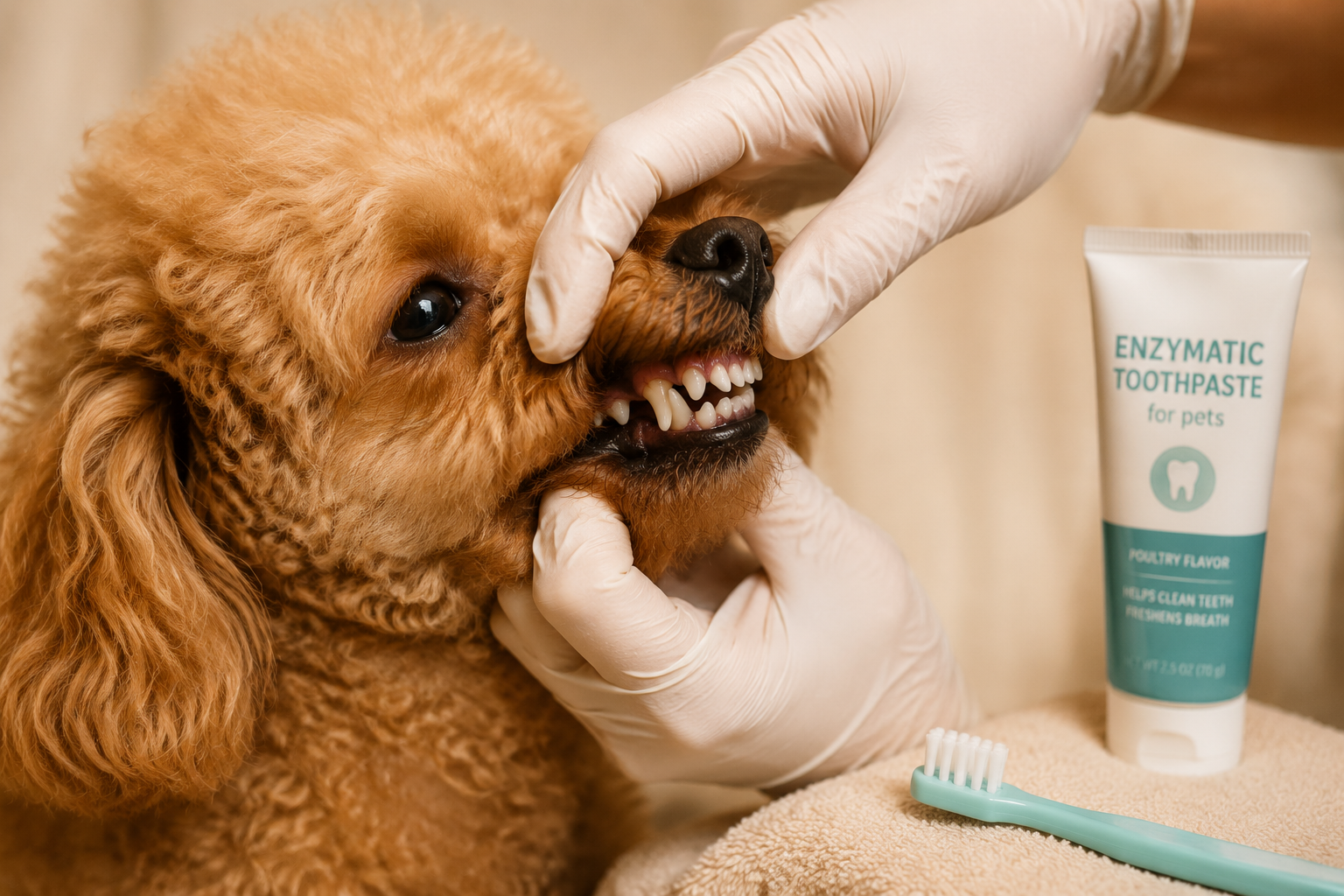
Toy Poodle Dental Care and Its Impact on Lifespan
Dental disease is the number one preventable condition that shortens Toy Poodle lifespans. Their small mouths create overcrowded teeth, which trap food and bacteria far more easily than in larger breeds [3].
By age 3, the majority of Toy Poodles already show some degree of periodontal disease if their teeth aren't brushed regularly. Left untreated, this leads to:
- Tooth loss and difficulty eating
- Chronic pain that dogs instinctively hide
- Bacterial endocarditis (heart valve infection)
- Kidney damage from circulating oral bacteria
- Jaw bone deterioration
Daily dental care protocol:
- Brush teeth daily using an enzymatic dog toothpaste and a finger brush or small soft-bristled brush.
- Provide dental chews approved by the Veterinary Oral Health Council (VOHC).
- Schedule professional cleanings every 12 to 18 months, or as your vet recommends.
- Check the mouth weekly for red gums, loose teeth, or bad breath beyond normal.
For a deeper dive into keeping those tiny mouths healthy, see our guide on dental care tips for tiny Toy Poodle mouths.
A Toy Poodle with clean teeth and healthy gums has a measurably better chance of reaching 16, 17, or even 18 years old than one with chronic dental disease.
Is a 15-Year-Old Toy Poodle Considered Senior?
Yes, a 15-year-old Toy Poodle is firmly in the senior category. Most veterinarians classify Toy Poodles as seniors starting around age 10, and geriatric by 13 to 14.
At 15, a Toy Poodle is roughly equivalent to a 76-year-old human. Common characteristics at this age include:
- Reduced energy and longer sleep periods
- Some degree of hearing or vision loss
- Possible cognitive changes (confusion, altered sleep-wake cycles)
- Increased sensitivity to temperature extremes
- More frequent need for veterinary monitoring
But "senior" doesn't mean "declining." Many 15-year-old Toy Poodles remain alert, engaged, and mobile. The key is adapting care rather than reducing it. Shorter, more frequent walks replace long outings. Softer food accommodates dental changes. Ramps and orthopedic beds support aging joints.
Understanding Toy Poodle lifestyle needs for apartment, suburban, and rural living becomes especially relevant for senior dogs whose mobility and environmental needs shift.
Toy Poodle Weight and How It Affects Lifespan
A healthy adult Toy Poodle weighs between 4 and 6 pounds [4]. Even small deviations from this range can have outsized health consequences because of the breed's tiny frame.
How excess weight shortens life:
- Tracheal collapse risk increases — extra fat around the neck compresses an already vulnerable windpipe [3].
- Joint stress accelerates — patellar luxation worsens faster in overweight dogs.
- Heart workload rises — the heart must pump harder to supply blood to excess tissue.
- Diabetes risk climbs — insulin resistance develops more readily in obese small dogs.
- Anesthesia risk increases — overweight dogs face higher surgical complications, which matters when dental cleanings require sedation.
How to check body condition: Run your fingers along your Toy Poodle's ribs. You should feel each rib easily under a thin layer of fat. If you have to press hard to find them, the dog is overweight. From above, there should be a visible waist behind the ribs.
Underweight is also dangerous. Toy Poodles below 3 pounds face hypoglycemia risk, fragile bones, and difficulty maintaining body temperature.
Common Mistakes That Shorten a Toy Poodle's Life
Avoiding these errors can add years to a Toy Poodle's life:
- Skipping dental care — the single most impactful and most ignored factor.
- Overfeeding treats — even "healthy" treats add calories that a 5-pound dog can't afford.
- Ignoring early lameness — a slight limp often signals patellar luxation that worsens without intervention.
- Carrying the dog everywhere — Toy Poodles need to walk and build muscle. Constant carrying leads to weak bones and poor cardiovascular fitness.
- Delaying vet visits — "waiting to see if it gets better" allows treatable conditions to become chronic.
- Buying from unscreened breeders — no genetic testing means rolling the dice on PRA, von Willebrand's, and structural defects [4].
- Neglecting mental stimulation — bored Toy Poodles develop anxiety, which contributes to stress-related illness [5].
- Using retractable leashes — these give Toy Poodles enough slack to run into traffic or encounter aggressive dogs before the owner can react.

Toy Poodle Exercise Needs for a Long, Healthy Life
Toy Poodles need 30 to 60 minutes of daily activity split between physical exercise and mental stimulation [5]. Despite their small size, they are athletic, intelligent dogs that thrive on engagement.
Physical exercise guidelines:
- Two short walks daily (15-20 minutes each) at a moderate pace
- Indoor play sessions with fetch toys or tug ropes
- Off-leash time in a secure, fenced area where they can run freely
- Swimming (supervised) — excellent low-impact exercise for dogs with joint concerns
Mental stimulation options:
- Puzzle feeders and treat-dispensing toys
- Short training sessions (Toy Poodles excel at learning new tricks)
- Nose work games (hiding treats around the house)
- Socialization outings to pet-friendly stores or parks
Adjust exercise by age: Puppies should avoid high-impact activities like jumping until growth plates close (around 12 months). Senior dogs benefit from gentle, consistent movement rather than intense bursts.
Regular exercise reduces the risk of obesity, strengthens the cardiovascular system, maintains muscle mass around vulnerable joints, and slows cognitive decline in aging dogs [5]. A Toy Poodle that stays active is a Toy Poodle that stays alive longer.
How to Help Your Toy Poodle Live Longer: A Checklist
Use this checklist as a practical summary of longevity strategies:
- Choose a breeder who provides genetic health testing results [4]
- Brush teeth daily with enzymatic dog toothpaste
- Weigh your dog monthly and adjust food portions accordingly
- Schedule vet visits annually (biannually after age 7)
- Feed a high-protein, portion-controlled diet with omega-3s
- Provide 30-60 minutes of daily physical and mental activity
- Keep up with grooming every 4-6 weeks to prevent skin issues [3]
- Puppy-proof the home to prevent trauma injuries
- Use a harness instead of a collar to protect the trachea
- Maintain a calm, predictable home environment to reduce stress
- Keep your Toy Poodle's coat mat-free to prevent skin infections
Frequently Asked Questions
How long do Toy Poodles live on average?
Toy Poodles live 14 to 18 years on average, with many reaching 15 or 16 when given proper care [2].
Can a Toy Poodle live to 20?
It's rare but possible. Verified cases of Toy Poodles reaching 20 exist, though most top out between 17 and 19 years.
What is the most common cause of death in Toy Poodles?
Heart disease, cancer, and complications from untreated dental disease are the leading causes of death in senior Toy Poodles.
Do male or female Toy Poodles live longer?
There is no consistent evidence that sex significantly affects Toy Poodle lifespan. Spayed and neutered dogs may have a slight longevity advantage due to reduced cancer risk.
At what age is a Toy Poodle considered old?
Most veterinarians classify Toy Poodles as seniors at age 10 and geriatric at 13 to 14.
How much should a healthy Toy Poodle weigh?
A healthy adult Toy Poodle weighs 4 to 6 pounds [4]. Dogs consistently above or below this range should be evaluated by a veterinarian.
Do Toy Poodles need dental cleanings under anesthesia?
Yes, most Toy Poodles benefit from professional dental cleanings every 12 to 18 months. The anesthesia risk is low in healthy dogs and far outweighed by the damage untreated dental disease causes.
Are Toy Poodles prone to cancer?
Toy Poodles have lower cancer rates than larger breeds, but cancer risk increases after age 10. Regular vet screenings help catch it early.
How much exercise does a senior Toy Poodle need?
Senior Toy Poodles still benefit from 20 to 30 minutes of gentle daily activity, including short walks and light play sessions [5].
Is it worth getting pet insurance for a Toy Poodle?
Given their long lifespan and breed-specific health risks, pet insurance purchased in the first year of life often pays for itself many times over through dental cleanings, joint treatments, and senior care.
Conclusion
Toy Poodle lifespan, health, and longevity depend on a combination of genetics, preventive care, and daily habits. These small dogs have the biological advantage of a long natural lifespan, but reaching 15, 16, or even 18 years requires active effort from their owners.
Start with a health-tested puppy from a reputable breeder. Commit to daily dental care from the first week home. Feed measured, high-quality meals and resist the urge to overfeed. Keep your Toy Poodle lean, active, and mentally engaged throughout every life stage. And don't skip vet visits, especially once your dog enters the senior years.
The difference between a Toy Poodle that lives 12 years and one that reaches 18 is rarely luck. It's consistent, informed care applied over a lifetime. Every brushing session, every measured meal, and every vet appointment adds up to more healthy years together.
References
[1] Toy Poodle Lifespan – https://valivans.club/blog/toy-poodle-lifespan?utm_source=openai
[2] Poodle Lifespan – https://lapetitelabs.com/pages/poodle-lifespan?utm_source=openai
[3] Toy Poodle – https://www.petmd.com/dog/breeds/toy-poodle?utm_source=openai
[4] Poodle Toy – https://www.akc.org/dog-breeds/poodle-toy/?utm_source=openai
[5] Poodle – https://breedcrunch.com/lifespan/poodle?utm_source=openai