
Last updated: July 9, 2026
Quick Answer: A Toy Poodle puppy reaches roughly 80-90% of its adult weight by six months and full size by about one year [8]. The first year requires a structured vaccination series starting at 6-8 weeks, vet visits every 2-4 weeks during the puppy phase, consistent socialization beginning as early as 3 weeks with safe exposures, and daily training sessions that tap into this breed’s exceptional intelligence [1][5][2]. Planning each month in advance prevents the most common small-breed health and behavior problems.
Key Takeaways
- Toy Poodles typically weigh 1.5-2 lb at 8 weeks and reach 4-6 lb adult weight by 6-8 months, with bone growth plates closing around 12 months [8][10].
- Core vaccines (DHPP) start at 6-8 weeks and continue every 2-4 weeks until 16-18 weeks; rabies is given at 16-18 weeks [5][7].
- Budget roughly $2,500,$5,000+ for the first year, covering vet care, food, grooming, supplies, and spay/neuter.
- Socialization should begin with safe, controlled exposures before the critical window closes around 14-16 weeks.
- Potty training a Toy Poodle takes 4-6 months on average because of their tiny bladders; frequent outdoor trips and consistent schedules are essential.
- Teething peaks between 4-6 months; provide appropriate chew toys to protect furniture and redirect nipping.
- Toy Poodles are among the best small breeds for first-time owners due to their trainability and low-shedding coats.
- Feeding should follow a 3-4 meals per day schedule for young puppies, transitioning to twice daily by 6 months.
What Are the Key Milestones for Toy Poodle Puppies in Their First Year?
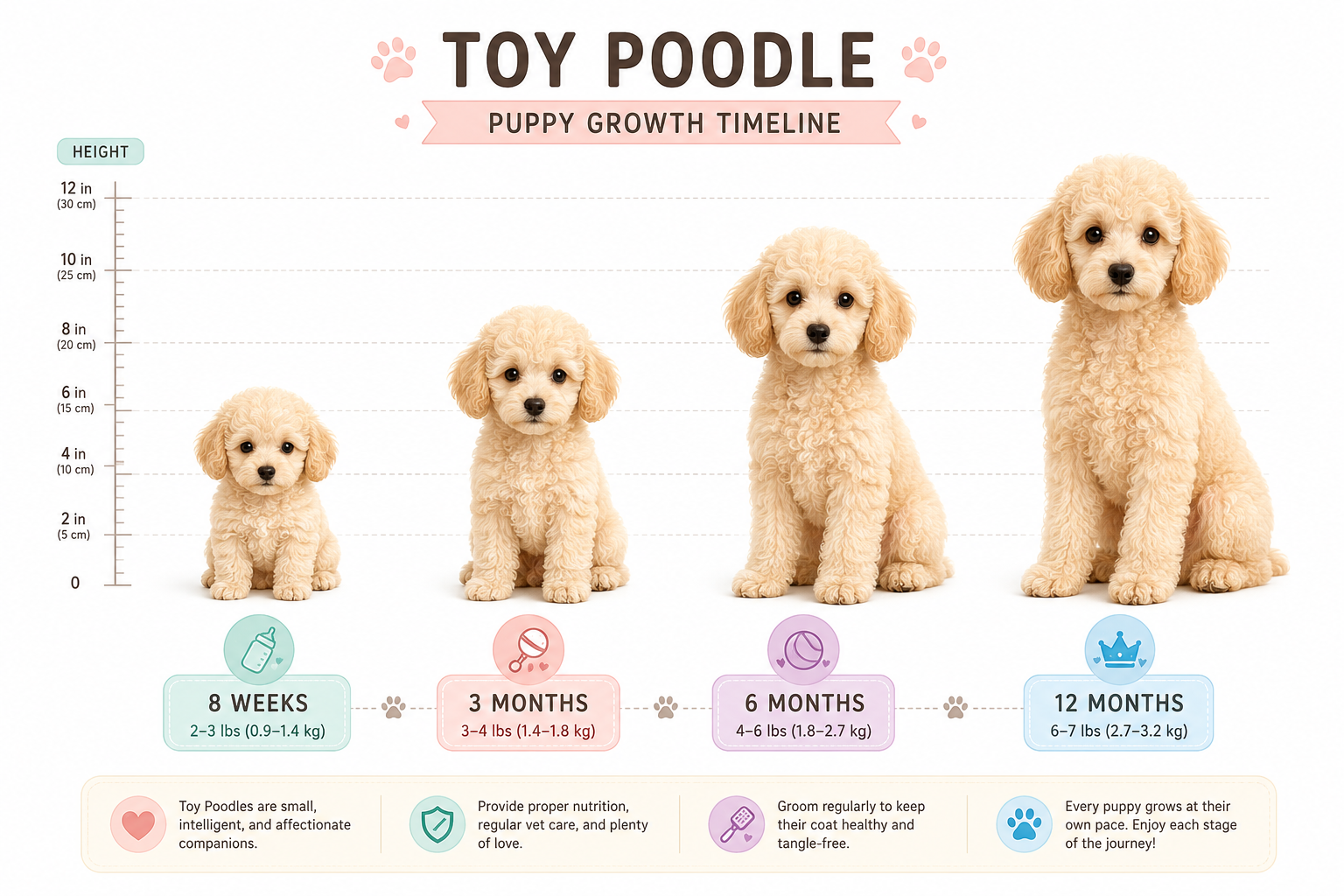
Toy Poodle puppies develop faster than many owners expect. Most longitudinal bone growth happens between 4 and 8 months, and growth plates generally close by around 12 months [10]. Here is a month-by-month breakdown of what to anticipate when raising a Toy Poodle puppy through first year milestones, vet visits, and social skills development.
| Age | Weight Range | Key Milestone |
|---|---|---|
| 8 weeks | 1.5-2 lb | Comes home; first vet visit; begins housetraining |
| 3 months | 2.5-3.5 lb | Core vaccine series underway; basic commands (sit, name recognition) |
| 4 months | 3-4 lb | Teething begins; socialization window closing; leash training |
| 6 months | 4-5 lb | 80-90% of adult weight reached; spay/neuter discussion |
| 9 months | 4.5-6 lb | Adolescent behavior; advanced training; adult coat coming in |
| 12 months | 4-6 lb | Full adult size; annual booster vaccines; settled temperament |
Source: Growth data from PetsCare Toy Poodle Growth Chart Guide [8] and AKC Poodle training timeline [2].
A common mistake is treating a 6-month-old Toy Poodle like a fully mature dog. Even though they look nearly adult-sized, their brains and joints are still developing. Continue structured training and avoid high-impact exercise like jumping from heights until growth plates close. For a detailed look at the earliest weeks, see our guide on raising Toy and Teacup Poodle puppies from birth to eight weeks.
How Often Should I Take My Toy Poodle Puppy to the Vet?
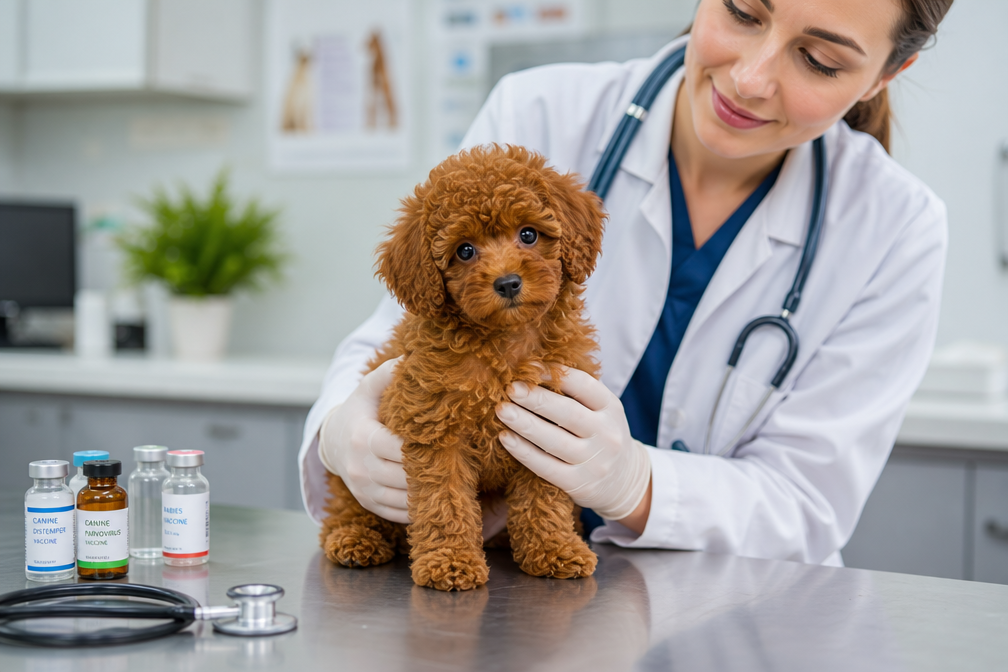
Plan for at least 3-4 vet visits during the first 16 weeks, then visits at 6 months and 12 months. During the initial vaccine series, appointments happen every 2-4 weeks [1][3]. After the puppy series is complete, most healthy Toy Poodles shift to semi-annual or annual wellness exams.
First-year vet visit schedule:
- 6-8 weeks — Initial exam, first DHPP vaccine, fecal test, deworming [1][9]
- 10-12 weeks — Second DHPP booster, parasite check, discuss lifestyle vaccines [5]
- 14-16 weeks — Final DHPP booster, rabies vaccine, microchip discussion [5][7]
- 6 months — Wellness check, spay/neuter consultation, dental exam
- 12 months — Annual booster vaccines, comprehensive physical, bloodwork baseline
Each visit typically includes a physical exam, weight check, and discussion about diet and parasite prevention. Small breeds like Toy Poodles are more vulnerable to illness because of their low body weight, so even minor symptoms like diarrhea or lethargy warrant a prompt vet call [1][9]. For a complete breakdown, visit our Toy Poodle puppy vaccination and vet care guide.
Toy Poodle Puppy Vaccination Schedule and Costs
Core vaccines for Toy Poodle puppies follow the same small-breed protocol recommended by the AAHA and AKC: DHPP (distemper, hepatitis, parainfluenza, parvovirus) starting at 6-8 weeks, repeated every 2-4 weeks until at least 16-18 weeks, plus rabies at 16-18 weeks [5][7].
Core vaccine timeline:
- 6-8 weeks: Distemper + Parvovirus (first dose) [5]
- 10-12 weeks: DHPP combination (second dose) [5]
- 16-18 weeks: DHPP (final puppy dose) + Rabies [5][7]
Optional (lifestyle-based) vaccines:
- Bordetella (kennel cough) — recommended if attending puppy classes or daycare
- Canine influenza — recommended in areas with outbreaks
- Leptospirosis — recommended in rural or wet environments
- Lyme disease — recommended in tick-heavy regions [5]
Estimated vaccination costs:
| Vaccine | Cost Per Dose (estimate) |
|---|---|
| DHPP combo | $20,$40 |
| Rabies | $15,$25 |
| Bordetella | $15,$30 |
| Leptospirosis | $15,$30 |
| Canine influenza | $25,$50 |
Total first-year vaccine costs typically fall between $150,$350, depending on location and whether lifestyle vaccines are included. Low-cost clinics and veterinary schools often offer discounted puppy packages.
When Should Toy Poodle Puppies Start Socializing With Other Dogs?
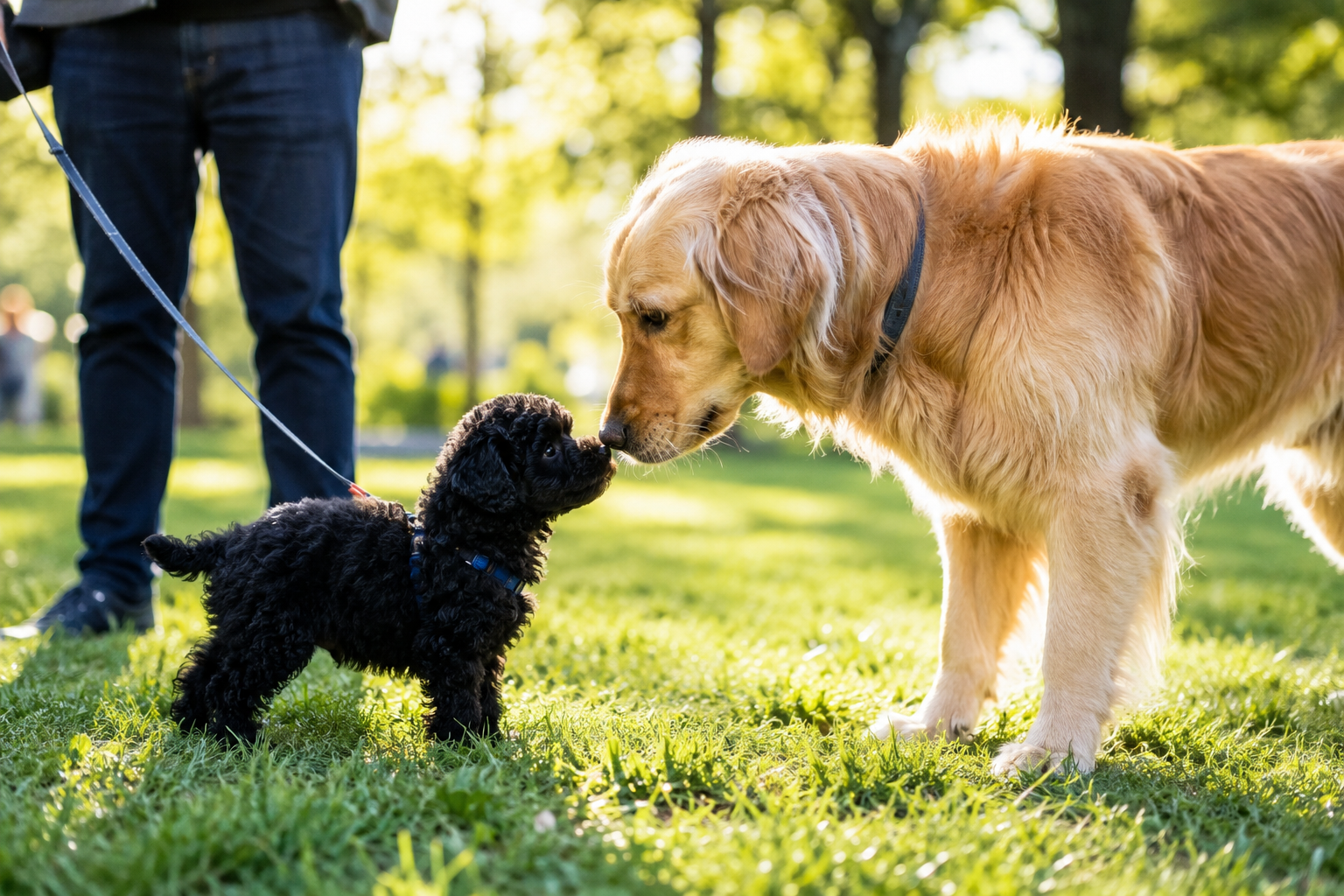
Socialization should begin as early as possible, ideally between 3 and 14 weeks of age, which is the critical socialization window for all puppies [2][6]. However, Toy Poodle puppies shouldn’t interact with unknown dogs in public spaces until they’ve had at least two rounds of core vaccines (around 10-12 weeks) [7][9].
Safe socialization before full vaccination:
- Invite vaccinated, healthy dogs to your home for controlled introductions
- Carry the puppy in public to expose them to sounds, people, and environments without ground contact
- Attend well-managed puppy socialization classes that require proof of vaccination
- Expose the puppy to different surfaces, sounds, and gentle handling daily
After 12-16 weeks (with vaccine protection):
- Begin supervised play with other puppies and calm adult dogs
- Visit dog-friendly stores and outdoor cafes
- Practice walking in busier environments on leash
A common mistake with Toy Poodles is over-protecting them because of their small size. Under-socialized Toy Poodles often develop fear-based aggression, excessive barking, or anxiety around other dogs. For tips on helping a timid puppy, read our guide on building confidence in shy Toy Poodle puppies.
When Can Toy Poodle Puppies Go Outside Safely?
Toy Poodle puppies can go outside in controlled, low-risk environments immediately after coming home at 8 weeks, but they should avoid high-traffic dog areas (parks, pet stores, sidewalks with heavy dog traffic) until at least 10-12 weeks after receiving their second round of vaccines [7][9].
Choose safe outdoor exposure if:
- The area is your own backyard or a friend’s yard with vaccinated dogs only
- The puppy is carried (not walking) in public spaces
- There is no standing water or areas frequented by wildlife
Wait for full vaccine protection if:
- The area is a public dog park, hiking trail, or boarding facility
- Other dogs’ vaccination status is unknown
Parvovirus can survive in soil for months, so err on the side of caution with ground contact in unknown areas during the first 16 weeks.
How to Potty Train a Toy Poodle Puppy
Potty training a Toy Poodle puppy takes 4-6 months on average, and some puppies need up to 8 months for full reliability. Their tiny bladders mean they physically cannot hold it as long as larger breeds, so frequent trips outside are non-negotiable.
Step-by-step potty training plan:
- Take the puppy outside every 1-2 hours during waking hours, plus immediately after eating, drinking, playing, or waking from naps.
- Choose one designated potty spot and bring the puppy to the same area each time.
- Use a consistent cue word like “go potty” and reward immediately with a treat when the puppy eliminates outside.
- Supervise constantly indoors. If direct supervision isn’t possible, use a crate or exercise pen.
- Never punish accidents. Clean with an enzymatic cleaner to remove scent markers.
- Gradually increase time between trips as the puppy’s bladder matures.
Indoor pee pads can be useful for apartment dwellers, but they can also slow the transition to outdoor-only habits. Choose one method and stick with it. For weather-related challenges, see our article on potty training Toy Poodle puppies in any weather.
Toy Poodle Puppy Feeding Schedule and Portion Sizes
Toy Poodle puppies need calorie-dense, small-breed puppy food divided into multiple small meals to prevent hypoglycemia, which is a real risk for puppies under 4 pounds.
Feeding schedule by age:
| Age | Meals Per Day | Approximate Daily Amount |
|---|---|---|
| 8-12 weeks | 4 meals | 1/4-1/3 cup total |
| 3-6 months | 3 meals | 1/3-1/2 cup total |
| 6-12 months | 2 meals | 1/3-1/2 cup total |
Amounts vary by brand and calorie density. Always follow the food manufacturer’s guidelines and adjust based on your vet’s recommendation.
Key feeding rules for Toy Poodles:
- Choose a kibble formulated specifically for small-breed puppies (smaller kibble size, higher calorie density)
- Keep meals on a consistent schedule; free-feeding increases the risk of picky eating
- Monitor weight weekly; Toy Poodles should gain steadily without becoming overweight
- Keep corn syrup or Nutri-Cal on hand for the first few months in case of hypoglycemic episodes (symptoms include lethargy, trembling, and disorientation)
What’s the Difference Between Toy Poodles and Other Poodle Sizes?
Toy Poodles are the smallest of the three AKC-recognized Poodle varieties. All three share the same breed standard for structure, coat, and temperament — the only official difference is height.
| Variety | Height at Shoulder | Typical Weight |
|---|---|---|
| Standard Poodle | Over 15 inches | 40-70 lb |
| Miniature Poodle | 10-15 inches | 10-15 lb |
| Toy Poodle | Under 10 inches | 4-6 lb |
Toy Poodles mature faster physically but share the same high intelligence and trainability as Standards and Miniatures. Their small size makes them more prone to dental crowding, luxating patella, and hypoglycemia compared to larger Poodle varieties. They’re also more portable and better suited to apartment living. For a deeper comparison of small doodle and poodle sizes, see our overview of Toy, Micro, and Mini Goldendoodle sizes and prices.
Common Health Problems in Toy Poodle Puppies
Toy Poodle puppies are generally healthy, but their small frames make them susceptible to specific conditions. Awareness in the first year helps catch problems early.
- Luxating patella — The kneecap slips out of place. Watch for skipping or hopping on a hind leg. Often detected at puppy wellness exams.
- Hypoglycemia — Low blood sugar, especially in puppies under 4 months. Symptoms include trembling, weakness, and glazed eyes. Feed small, frequent meals to prevent episodes.
- Dental issues — Crowded teeth in a tiny jaw lead to retained baby teeth and early tartar buildup. A vet should check for retained deciduous teeth by 6 months. Learn more about dental care tips for tiny Toy Poodle mouths.
- Legg-Calve-Perthes disease — Degeneration of the femoral head, causing hind-leg lameness. Usually appears between 4-12 months.
- Progressive retinal atrophy (PRA) — A genetic eye condition. Reputable breeders test for this before breeding.
- Collapsed trachea — More common in toy breeds. Use a harness instead of a collar to reduce neck pressure.
Toy Poodle Puppy Teething: What to Expect
Teething in Toy Poodle puppies begins around 3-4 months and peaks between 4-6 months as baby teeth fall out and 42 adult teeth come in. During this period, expect increased chewing, drooling, mild gum bleeding, and sometimes decreased appetite.
How to manage teething:
- Offer frozen washcloths or rubber teething toys to soothe sore gums
- Rotate chew toys daily to maintain interest
- Check the mouth weekly for retained baby teeth (common in Toy Poodles)
- Avoid hard bones or antlers that can crack small teeth
- If a baby tooth hasn’t fallen out by 6 months, consult the vet about extraction
Toy Poodle Puppy Biting and Nipping: How to Stop It
Biting and nipping are normal puppy behaviors, not aggression. Toy Poodle puppies explore the world with their mouths, and teething intensifies the behavior. The goal is to teach bite inhibition, not to suppress all mouthing.
Effective strategies:
- Redirect immediately. When the puppy bites skin, say “ouch” in a calm tone and offer a chew toy instead.
- End play for biting. Stand up, turn away, and withdraw attention for 10-15 seconds. Resume play only when the puppy is calm.
- Reward gentle mouth contact. If the puppy licks or mouths softly, praise and treat.
- Avoid rough play with hands. Use toys as intermediaries during play to prevent the puppy from associating hands with biting targets.
- Be consistent. Every family member must follow the same rules.
Most Toy Poodles show significant improvement by 5-6 months. If biting persists or escalates past 6 months, consult a certified dog trainer. For more training techniques, explore our positive reinforcement training guide for Toy Poodles.
Best Toys and Supplies for Toy Poodle Puppies
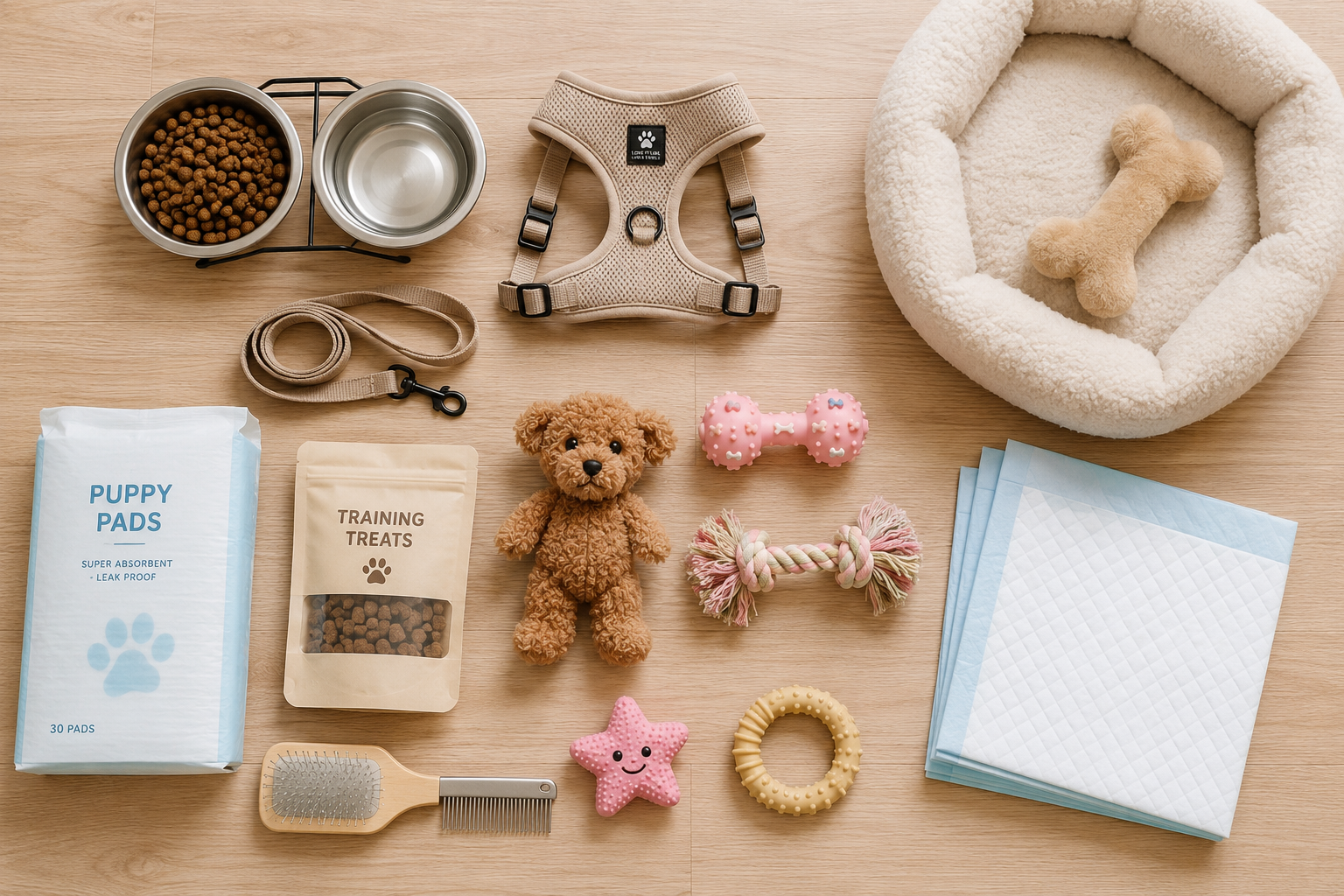
Toy Poodles are exceptionally smart, so they need mental stimulation as much as physical exercise. Choose supplies sized for a very small mouth and body.
Essential supplies checklist:
- Crate — Choose a small crate (18-24 inches) with a divider for housetraining
- Food and water bowls — Shallow, weighted stainless steel bowls to prevent tipping
- Harness and leash — A lightweight harness (not a collar) to protect the trachea
- Puppy-sized chew toys — Soft rubber toys, rope toys, and teething rings
- Puzzle toys — Kong Puppy, snuffle mats, and treat-dispensing balls for mental enrichment
- Grooming tools — Slicker brush, steel comb, and puppy-safe shampoo
- Enzymatic cleaner — For inevitable potty training accidents
- Exercise pen or baby gates — For safe confinement when unsupervised
For breed-specific toy recommendations, check out our guide to choosing the right toys for smart Toy Poodles.
How Much Does It Cost to Raise a Toy Poodle in the First Year?
The first year of raising a Toy Poodle puppy is the most expensive. Beyond the purchase price (which varies widely), ongoing care costs add up quickly.
Estimated first-year cost breakdown:
| Category | Estimated Cost |
|---|---|
| Puppy purchase price | $1,500,$3,500+ |
| Veterinary care (exams, vaccines, spay/neuter) | $500,$1,200 |
| Food (high-quality small-breed puppy food) | $200,$400 |
| Grooming (professional, every 4-6 weeks) | $400,$800 |
| Supplies (crate, toys, bedding, bowls, leash) | $200,$400 |
| Training classes | $150,$300 |
| Pet insurance (optional but recommended) | $300,$600 |
| Total (excluding purchase price) | $1,750,$3,700 |
Pet insurance is particularly worth considering for Toy Poodles because orthopedic and dental issues can result in bills of $2,000,$5,000 per incident. For long-term financial planning, see our article on budgeting for long-term Toy Poodle care.
Is a Toy Poodle Good for First-Time Dog Owners?
Yes, Toy Poodles are one of the best breeds for first-time dog owners. They rank among the top 5 most intelligent dog breeds, which makes them highly trainable and responsive to positive reinforcement [2][6]. Their small size, minimal shedding, and adaptable temperament suit apartment living, families, and single owners alike.
Choose a Toy Poodle if:
- Living space is limited (apartments, condos)
- Someone in the household has mild dog allergies (no dog is truly hypoallergenic, but Poodles shed very little)
- A first-time owner wants a dog that learns quickly
- Daily grooming and regular professional grooming appointments are manageable
A Toy Poodle may not be ideal if:
- The household has very young children who might accidentally injure a 4-6 lb dog
- The owner wants a low-maintenance coat (Poodle coats require regular brushing and professional grooming)
- Extended periods of alone time are unavoidable without a plan to prevent separation anxiety
For a deeper look at breed suitability, read our dedicated guide on Toy Poodle puppies for first-time dog owners.
Frequently Asked Questions
How big will my Toy Poodle puppy get?
Most Toy Poodles reach 4-6 pounds and stand under 10 inches tall at the shoulder when fully grown, typically reaching adult size between 6-8 months [8][10].
When should I start training my Toy Poodle puppy?
Begin basic training the day the puppy comes home, usually around 8 weeks. Start with name recognition, sit, and crate training. Toy Poodles respond best to short, positive sessions of 5-10 minutes [2][6].
How often should a Toy Poodle puppy be groomed?
Brush the coat daily or every other day to prevent matting. Professional grooming every 4-6 weeks is recommended once the puppy is comfortable with handling.
Can Toy Poodle puppies be left alone?
Puppies under 4 months should not be left alone for more than 1-2 hours. By 6 months, most can handle 3-4 hours. Toy Poodles are prone to separation anxiety, so crate training and gradual alone-time practice are essential.
What age should I spay or neuter my Toy Poodle?
Most veterinarians recommend spaying or neutering Toy Poodles between 6-9 months, after growth plates have substantially developed but before sexual maturity. Discuss timing with your vet based on your puppy’s individual development.
Do Toy Poodle puppies bark a lot?
Toy Poodles can be vocal, especially if bored, anxious, or under-socialized. Early socialization and training to respond to a “quiet” command help manage excessive barking.
How much exercise does a Toy Poodle puppy need?
A general guideline is 5 minutes of exercise per month of age, twice daily. A 4-month-old puppy needs about 20 minutes of walking per session. Mental stimulation through puzzle toys and training counts as exercise too.
What is the lifespan of a Toy Poodle?
Toy Poodles typically live 12-15 years, with some reaching 18 years. Consistent veterinary care, proper nutrition, and dental maintenance contribute to longevity.
When do Toy Poodle puppies calm down?
Most Toy Poodles begin to settle between 1-2 years of age. However, they remain active and playful throughout their lives. Structured daily routines help channel their energy productively.
Conclusion
Raising a Toy Poodle puppy through the first year milestones, vet visits, and social skills development requires consistent effort, but the payoff is a well-adjusted, healthy companion for the next 12-15 years. The most important actions to take right now:
- Schedule the first vet visit within 48 hours of bringing the puppy home and follow the vaccination series through 16-18 weeks [5][7].
- Start socialization immediately with safe, controlled exposures, and prioritize the critical window before 14-16 weeks.
- Establish a potty training routine with trips outside every 1-2 hours and unwavering consistency.
- Feed small, frequent meals of high-quality small-breed puppy food to prevent hypoglycemia.
- Budget $1,750,$3,700 for first-year care beyond the purchase price, and consider pet insurance early.
- Invest in training from day one — Toy Poodles learn fast, and good habits formed now prevent behavior problems later.
The first year goes quickly. Each month brings visible changes in size, behavior, and capability. Owners who plan ahead and stay consistent through the teething, potty training, and adolescent phases end up with one of the most rewarding small-breed companions available.