
Last updated: July 9, 2026
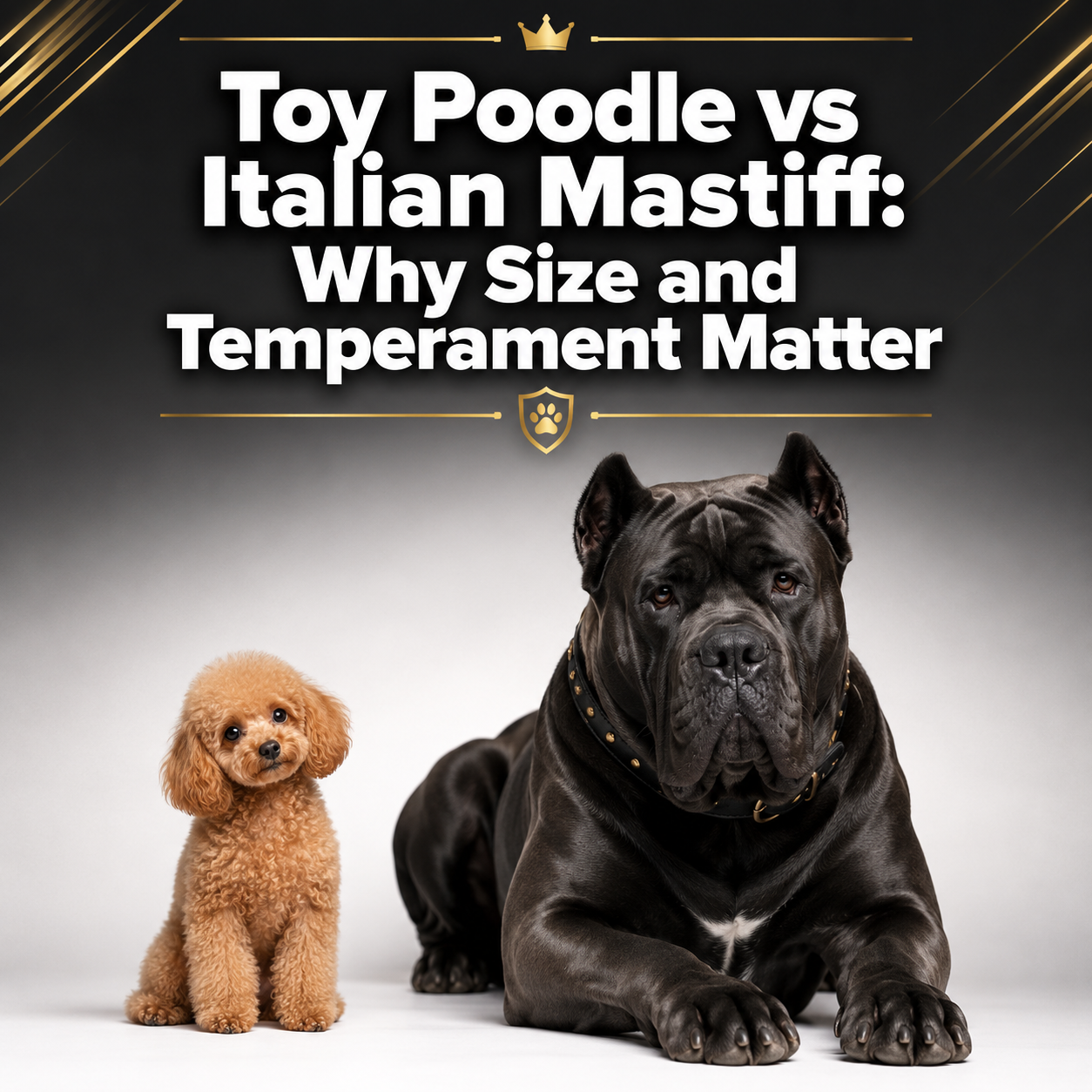
Quick Answer: A Toy Poodle weighs 4 to 9 pounds and stands under 10 inches tall, while a Cane Corso can exceed 100 pounds and stand 27 inches at the shoulder [1][8]. Beyond the obvious size gap, these breeds differ sharply in temperament, exercise needs, grooming demands, and suitability for different households. Understanding the topic of Toy Poodle vs Italian Mastiff breeds like Cane Corso: why size and temperament matter is essential before bringing either breed home, especially if children, small living spaces, or multi-pet households are part of the equation.
Key Takeaways
- Toy Poodles typically weigh 4 to 9 pounds; Cane Corsos average 88 to 110 pounds, making the size difference roughly 10 to 1 or greater [1][8].
- Toy Poodles rank among the most intelligent and trainable breeds, while Cane Corsos are smart but require experienced, consistent leadership [4][8].
- Toy Poodles adapt well to apartments and urban settings; Cane Corsos need large homes with secure yards [2][8].
- Cane Corsos are not inherently aggressive, but their guardian instinct demands early socialization and firm boundaries [8].
- Toy Poodles live an average of 12 to 18 years; Cane Corsos average 9 to 12 years [1][8].
- Grooming costs run higher for Toy Poodles (professional clipping every 4 to 6 weeks), while Cane Corsos shed more but need less coat maintenance [7][8].
- Neither breed is ideal for every first-time owner, but Toy Poodles are generally the more forgiving choice for beginners [5][8].
- Safely housing both breeds together is possible but requires careful management of the extreme size difference.
What Is the Difference Between a Toy Poodle and a Cane Corso?
The Toy Poodle is a companion breed developed from the Standard Poodle, prized for intelligence, hypoallergenic curly coat, and portable size [1][2]. The Cane Corso (pronounced KAH-neh KOR-so) is an Italian Mastiff originally bred for guarding property, hunting large game, and working alongside farmers [8].
Key breed-origin differences at a glance:
| Trait | Toy Poodle | Cane Corso |
|---|---|---|
| AKC Group | Non-Sporting (Toy variety) | Working |
| Origin | France / Germany | Italy |
| Original Purpose | Companion, water retriever (Standard) | Guardian, catch dog |
| Coat Type | Curly, low-shedding | Short, double coat, moderate shedding |
| Typical Weight | 4 to 9 lb [1] | 88 to 110 lb [8] |
| Typical Height | Up to 10 in [1] | 23.5 to 27.5 in [8] |
These breeds sit at opposite ends of the canine spectrum. A Toy Poodle is built for laps and agility courses; a Cane Corso is built for deterrence and endurance. That fundamental difference shapes every ownership decision, from food budget to insurance premiums.
How Big Do Toy Poodles Get Compared to Italian Mastiffs?
Toy Poodles stand no taller than about 10 inches at the shoulder and weigh between 4 and 9 pounds [1][5][6]. Cane Corsos stand 23.5 to 27.5 inches and weigh 88 to 110 pounds, with some males exceeding 120 pounds [8].
To put that in perspective, a single Cane Corso can outweigh a dozen Toy Poodles. This size gap creates real safety considerations:
- Accidental injury risk: A Cane Corso stepping on or bumping a Toy Poodle during play can cause fractures or internal injuries.
- Equipment differences: Toy Poodles use harnesses rated for under 10 pounds; Cane Corsos need heavy-duty gear designed for powerful pullers.
- Space requirements: A Toy Poodle can exercise adequately in a hallway; a Cane Corso needs room to move and a yard to patrol.
If you’re drawn to small, adaptable dogs, learn more about Teacup and Toy Poodles for urban living to see how compact breeds fit city life.
Are Toy Poodles Good for Apartments, and What About Cane Corsos?
Toy Poodles are one of the best apartment breeds available. Their small size, low-shedding coat, and moderate exercise needs make them a natural fit for condos and city living [2][3][7]. A daily walk plus indoor play and mental stimulation usually keeps a Toy Poodle content.
Cane Corsos are a poor match for apartments. They need space to move, a secure fenced yard, and room to fulfill their natural guarding instincts without becoming reactive to every hallway noise [8]. A bored, under-exercised Cane Corso in a small apartment is a recipe for destructive behavior and neighbor complaints.
Choose a Toy Poodle if: You live in an apartment, travel frequently, or want a dog that can adapt to smaller spaces.
Choose a Cane Corso if: You have a house with a large, securely fenced yard and the physical ability to manage a 100-plus-pound dog.
For apartment-specific tips, check out our guide on Toy Poodle lifestyle for apartment, suburban, and rural living.
Toy Poodle vs Cane Corso Temperament and Personality
Toy Poodles are affectionate, playful, and eager to please. They bond deeply with their owners and can be “clownish” in their antics [1][4][5]. They’re also alert and can be vocal, sometimes earning a reputation for being yappy if not trained early [4].
Cane Corsos are calm, confident, and intensely loyal. They tend to be reserved with strangers and naturally protective of their family and territory [8]. They’re not typically excitable or playful in the way a Poodle is; instead, they project a quiet authority.
“Toy Poodles have a big personality despite their small size” is a phrase that appears across nearly every breed guide [1][2][5]. Cane Corsos, by contrast, have a big everything, and their personality matches their frame.
Temperament comparison:
- Affection level: Both breeds bond strongly with family. Toy Poodles are more openly cuddly; Cane Corsos show loyalty through proximity and watchfulness.
- Stranger friendliness: Toy Poodles warm up to new people quickly. Cane Corsos are naturally suspicious and need proper introductions [8].
- Prey drive: Cane Corsos have a moderate to high prey drive. Toy Poodles have a lower prey drive but may chase small animals out of playfulness.
Understanding these temperament differences is central to the discussion of Toy Poodle vs Italian Mastiff breeds like Cane Corso: why size and temperament matter for household harmony.
Which Breed Is Easier to Train: Toy Poodle or Cane Corso?
Toy Poodles are easier to train for most owners. They rank among the top five most intelligent dog breeds, learn commands quickly, and respond well to positive reinforcement [1][4][5]. Their eagerness to please means even novice trainers can achieve good results with consistency.
Cane Corsos are intelligent but independent-minded. They need a confident handler who can establish clear rules without resorting to harsh corrections [8]. A Cane Corso that senses weak leadership may become dominant or unresponsive.
Training considerations:
- Toy Poodles excel at tricks, obedience, and agility. See our guide on training smart Toy Poodle puppies at home for practical methods.
- Cane Corsos require early socialization starting before 16 weeks. Without it, their natural wariness of strangers can escalate into reactivity [8].
- Both breeds benefit from puppy classes, but Cane Corso owners should budget for professional training, especially during adolescence.
Common mistake: Assuming a Toy Poodle’s small size means training is optional. Untrained Toy Poodles develop problem behaviors like excessive barking, resource guarding, and separation anxiety just as readily as any large breed [4].
How Much Does a Toy Poodle Cost vs a Cane Corso?
Purchase prices vary widely by breeder reputation, lineage, and location. As a general range in 2026:
| Cost Category | Toy Poodle | Cane Corso |
|---|---|---|
| Purchase price (reputable breeder) | $1,500 to $3,500 | $1,500 to $4,000 |
| Annual food cost | $200 to $400 | $800 to $1,500 |
| Annual vet care (routine) | $300 to $600 | $500 to $1,000 |
| Professional grooming (annual) | $600 to $1,200 | $100 to $300 |
| Pet insurance (annual, estimated) | $300 to $500 | $500 to $900 |
Cane Corsos cost significantly more to maintain due to food volume, larger medication doses, and higher insurance premiums. Toy Poodles cost more in grooming but less in nearly every other category.
Toy Poodle Health Problems vs Cane Corso Health Issues
Toy Poodles are prone to luxating patellas, progressive retinal atrophy, Legg-Calve-Perthes disease, dental crowding, and hypoglycemia [1][5][7]. Their small mouths make dental care especially important.
Cane Corsos face hip dysplasia, elbow dysplasia, bloat (gastric dilatation-volvulus), cherry eye, and dilated cardiomyopathy [8]. Bloat is a life-threatening emergency that large, deep-chested breeds are particularly vulnerable to.
Health management tips:
- For Toy Poodles, schedule dental cleanings annually and monitor blood sugar in puppies. Our Toy Poodle puppy vaccination and vet care guide covers the basics.
- For Cane Corsos, use slow-feeder bowls to reduce bloat risk, and get hip and elbow evaluations before age two.
- Both breeds benefit from genetic health testing by the breeder before purchase.

What Is the Lifespan Difference Between Toy Poodles and Italian Mastiffs?
Toy Poodles live an average of 12 to 18 years [1][5]. Cane Corsos live an average of 9 to 12 years [8]. This difference of roughly 5 to 7 years is consistent with the well-documented pattern that smaller dog breeds tend to outlive larger ones.
For families planning long-term, a Toy Poodle may be a companion for nearly two decades. A Cane Corso, while deeply bonded and loyal, will likely share a shorter chapter of life.
Toy Poodle Exercise Needs vs Cane Corso Exercise Requirements
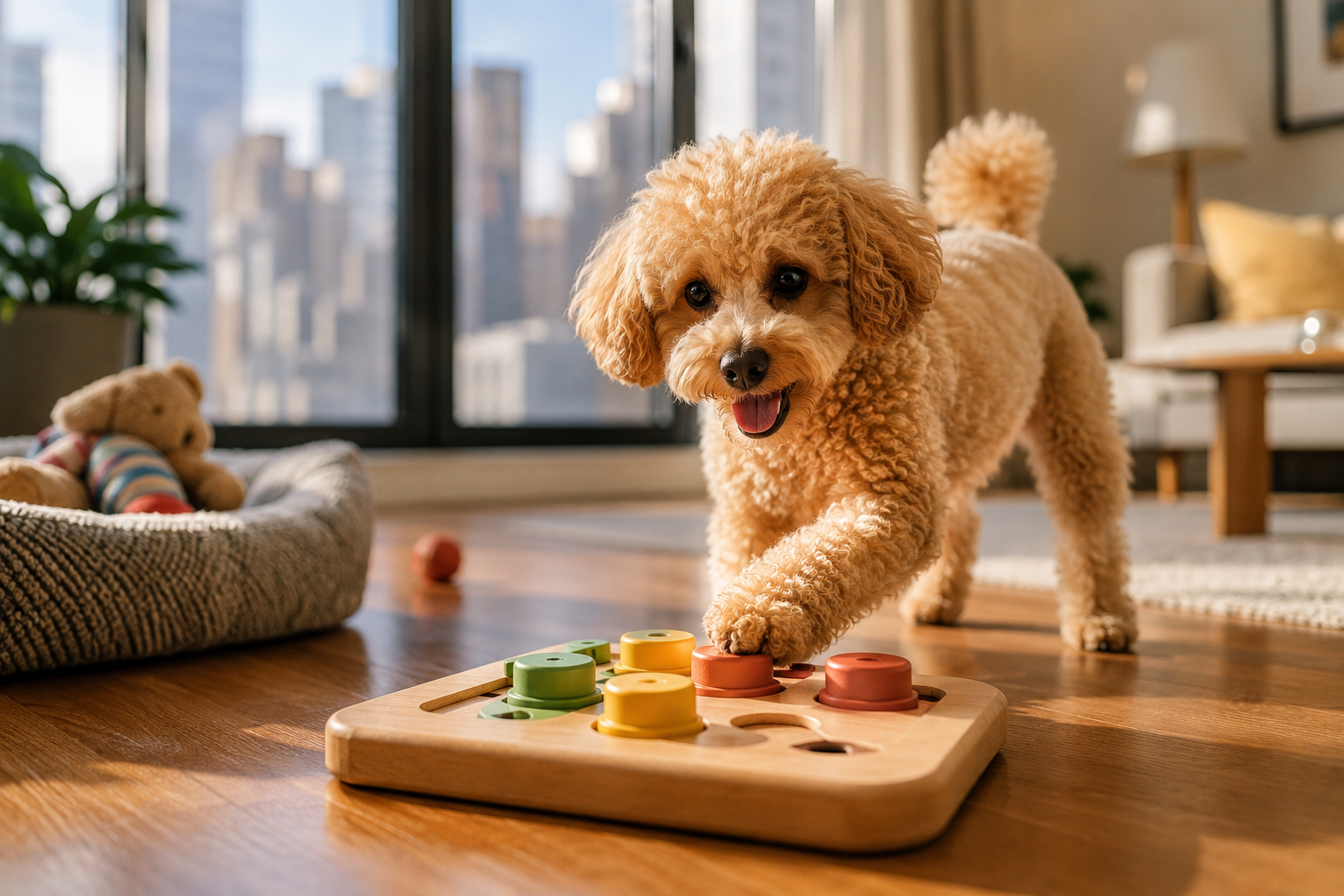
Toy Poodles need about 30 to 60 minutes of daily activity, which can include walks, indoor play, and mental enrichment like puzzle toys [2][3][5]. Their small size means a brisk walk around the block counts as meaningful exercise.
Cane Corsos need 60 to 90 minutes of daily exercise, including structured walks, jogging, or off-leash play in a secure area [8]. Under-exercised Cane Corsos become restless and may develop destructive habits.
Edge case: Toy Poodles in hot or cold weather may need shorter outdoor sessions with indoor alternatives. Cane Corsos handle moderate cold well but can overheat in extreme summer temperatures due to their muscular build.
Are Cane Corsos Aggressive Compared to Toy Poodles?
Cane Corsos are not inherently aggressive, but they are naturally protective and territorial [8]. Without proper socialization and training, those guardian instincts can manifest as reactivity toward strangers or other animals. Responsible ownership, early socialization, and consistent training are non-negotiable with this breed.
Toy Poodles rarely pose a physical threat, but they can develop fear-based aggression, especially if not socialized properly as puppies [4]. The difference is that a reactive Toy Poodle is unlikely to cause serious injury, while a reactive Cane Corso can.
Decision rule: If you cannot commit to structured socialization, obedience classes, and ongoing training, a Cane Corso is not the right choice. A Toy Poodle is more forgiving of training gaps, though no breed thrives without guidance.
Can a Toy Poodle Live With Kids, and Can a Cane Corso?
Toy Poodles can be wonderful family dogs, but their tiny bodies are physically vulnerable around young children [1][5]. A toddler who falls on or squeezes a 5-pound dog can cause serious harm. Supervised interactions are essential, and families with very young children should wait until kids are old enough to handle a small dog gently.
Cane Corsos can be gentle with children they’re raised with, but their size creates the opposite risk: a playful Cane Corso can accidentally knock over a small child [8]. Again, supervision is critical.
Best practice for families:
- Teach children how to approach and handle dogs of any size.
- Never leave a Toy Poodle or Cane Corso unsupervised with young children.
- For families with kids, explore our tips on training Toy Poodles to be confident around kids.

Which Breed Sheds More: Toy Poodle or Cane Corso?
Cane Corsos shed more. They have a short double coat that sheds moderately year-round and more heavily during seasonal changes [8]. Toy Poodles have a single-layer curly coat that sheds minimally, making them a better choice for allergy-sensitive households [1][2][7].
However, “low-shedding” does not mean “no maintenance.” Toy Poodle coats mat quickly without regular brushing and professional grooming every 4 to 6 weeks [7].
Toy Poodle Grooming vs Cane Corso Grooming Costs
Toy Poodles require professional grooming every 4 to 6 weeks, costing roughly $50 to $100 per session depending on location and style [7]. Annual grooming costs typically range from $600 to $1,200. Daily brushing at home is also recommended to prevent matting. For coat care details, see our best grooming practices for Toy Poodle coats.
Cane Corsos need minimal professional grooming. A weekly brush, occasional bath, and regular nail trims are usually sufficient [8]. Annual grooming costs rarely exceed $300.
The trade-off: Toy Poodles cost more to groom but shed less. Cane Corsos cost less to groom but leave hair on furniture and clothing.
Is a Cane Corso Right for First-Time Dog Owners?
In most cases, no. Cane Corsos are a challenging breed for first-time owners due to their size, strength, guardian temperament, and need for experienced handling [8]. A first-time owner who doesn’t establish leadership early can end up with a 100-pound dog that’s difficult to control.
Toy Poodles are a much better fit for beginners. Their intelligence, small size, and desire to please make training more accessible [1][5]. First-time owners interested in Toy Poodles can start with our guide for first-time owners.
Exception: A first-time owner who commits to professional training, has experience with large animals, and has a suitable living environment may succeed with a Cane Corso, but it’s the harder path by a wide margin.
Frequently Asked Questions
Can a Toy Poodle and a Cane Corso live in the same household?
Yes, but it requires careful management. The extreme size difference means all interactions should be supervised. Separate feeding areas, crate training for both dogs, and teaching the Cane Corso gentle behavior around the smaller dog are essential. Learn more about raising Toy Poodles with other pets.
Do Toy Poodles bark more than Cane Corsos?
Generally, yes. Toy Poodles tend to be more vocal and can develop a barking habit if not trained [4]. Cane Corsos bark less frequently but have a deep, intimidating bark when they do vocalize.
Which breed is better for seniors?
Toy Poodles are typically the better choice for seniors due to their manageable size, moderate exercise needs, and long lifespan [1][5].
Are Cane Corsos banned in some areas?
Yes. Some municipalities, insurance companies, and housing associations restrict or ban Cane Corsos under breed-specific legislation. Always check local regulations before purchasing one.
How much space does a Cane Corso need?
A Cane Corso needs a home with a securely fenced yard. A minimum of a quarter-acre fenced area is a reasonable guideline, though more space is better [8].
Do Toy Poodles have separation anxiety?
Toy Poodles can develop separation anxiety because they bond so closely with their owners [1][5]. Gradual alone-time training and enrichment toys help prevent this.
Which breed is more expensive over its lifetime?
A Cane Corso typically costs more over its lifetime due to higher food, veterinary, and insurance expenses, even though its lifespan is shorter.
Can Cane Corsos be off-leash?
Only in secure, enclosed areas. Their prey drive and protective instincts make off-leash walking in public spaces risky [8].
Are Toy Poodles hypoallergenic?
No dog is truly hypoallergenic, but Toy Poodles produce less dander and shed minimally, making them one of the better breeds for allergy sufferers [1][2].
What is the best age to get a Cane Corso puppy?
Most reputable breeders release puppies at 8 to 10 weeks. Starting socialization immediately at this age is critical for Cane Corsos.
Conclusion
The comparison of Toy Poodle vs Italian Mastiff breeds like Cane Corso: why size and temperament matter comes down to honest self-assessment. These breeds occupy opposite ends of the canine world, and choosing the wrong one for your lifestyle creates problems for both owner and dog.
Actionable next steps:
- Evaluate your living space. Apartment or condo dwellers should lean toward a Toy Poodle. Homeowners with large yards have more flexibility.
- Assess your experience level. First-time owners will find Toy Poodles far more manageable. Cane Corsos demand experienced handling.
- Budget realistically. Factor in not just purchase price but annual food, grooming, veterinary care, and insurance costs for the breed you’re considering.
- Consider your household. Families with very young children should carefully weigh the risks of both a fragile Toy Poodle and a powerful Cane Corso. Supervised interactions are mandatory with either breed.
- Meet the breed in person. Spend time with both breeds before deciding. Visit reputable breeders, attend dog shows, or connect with breed-specific rescue organizations.
Whether you’re drawn to the spirited intelligence of a Toy Poodle or the commanding presence of a Cane Corso, the right match starts with understanding what each breed truly needs and whether you can provide it.
References
[1] Toy Poodle – https://www.petmd.com/dog/breeds/toy-poodle
[2] Toy Poodle – https://www.chewy.com/education/dog-breeds/toy-poodle
[3] Toy Poodle Dog Breed Information Characteristics – https://pottybuddy.co/blogs/potty-buddy-blog/toy-poodle-dog-breed-information-characteristics
[4] Poodle – https://www.barkbusters.com/breed-of-the-month/poodle
[5] Toy Poodle Breed Guide – https://lyka.com.au/blog/toy-poodle-breed-guide
[6] Alles Ueber Toypudel – https://www.leopolds-finest.com/blogs/news/alles-ueber-toypudel
[7] Toy Poodle – https://www.pets4homes.co.uk/dog-breeds/toy-poodle/
[8] Cane Corso – https://www.chewy.com/education/dog-breeds/cane-corso