

Last updated: July 13, 2026
micro golden doodle
A micro golden doodle is a very small crossbreed dog, typically 10-20 pounds and 11-15 inches tall, produced by breeding a Miniature or Toy Poodle with a small Goldendoodle. They’re prized for a low-shedding curly coat, gentle temperament, and apartment-friendly size. Reputable micro goldendoodle puppies from health-tested lines usually cost $2,500,$4,500 and live 12-16 years.
micro golden doodle
- Adult weight typically lands between 10 and 20 pounds, with the sweet spot around 12-16 lb.
- They are not a recognized AKC breed, micro goldendoodle is a size designation within the Goldendoodle crossbreed.
- Expect to pay $2,500,$4,500 from an accredited breeder with a genetic health guarantee.
- Low-shedding but not maintenance-free; they need brushing 3-4x/week and grooming every 6-8 weeks.
- Highly trainable, gentle with kids, and well-suited to apartments, seniors, and first-time owners.
- Common health concerns include patellar luxation, hip dysplasia, and eye disorders inherited from parent breeds.
- Lifespan is roughly 12-16 years, longer than standard Goldendoodles on average.

What Is a Micro Golden Doodle?
A micro golden doodle is the smallest size classification of the Goldendoodle, a cross between a Golden Retriever and a Poodle. To achieve the micro size, breeders typically use a Toy Poodle bred to a Mini Goldendoodle (F1b or multigen), producing puppies that stay well under 20 pounds at maturity.
The “micro” label refers to size, not a separate breed. Reputable programs use multigenerational (F1bb or F2b) breeding to lock in the small size, curly low-shed coat, and consistent temperament. You may also see them called micro mini goldendoodles, teacup goldendoodles, or petite goldendoodles, all describing roughly the same 10-20 lb range.
Choose a micro goldendoodle if you want a small, allergy-friendlier companion with the personality of a Golden Retriever in a compact package. Skip it if you want a recognized purebred with predictable show standards.
How Big Do Micro Goldendoodles Get?
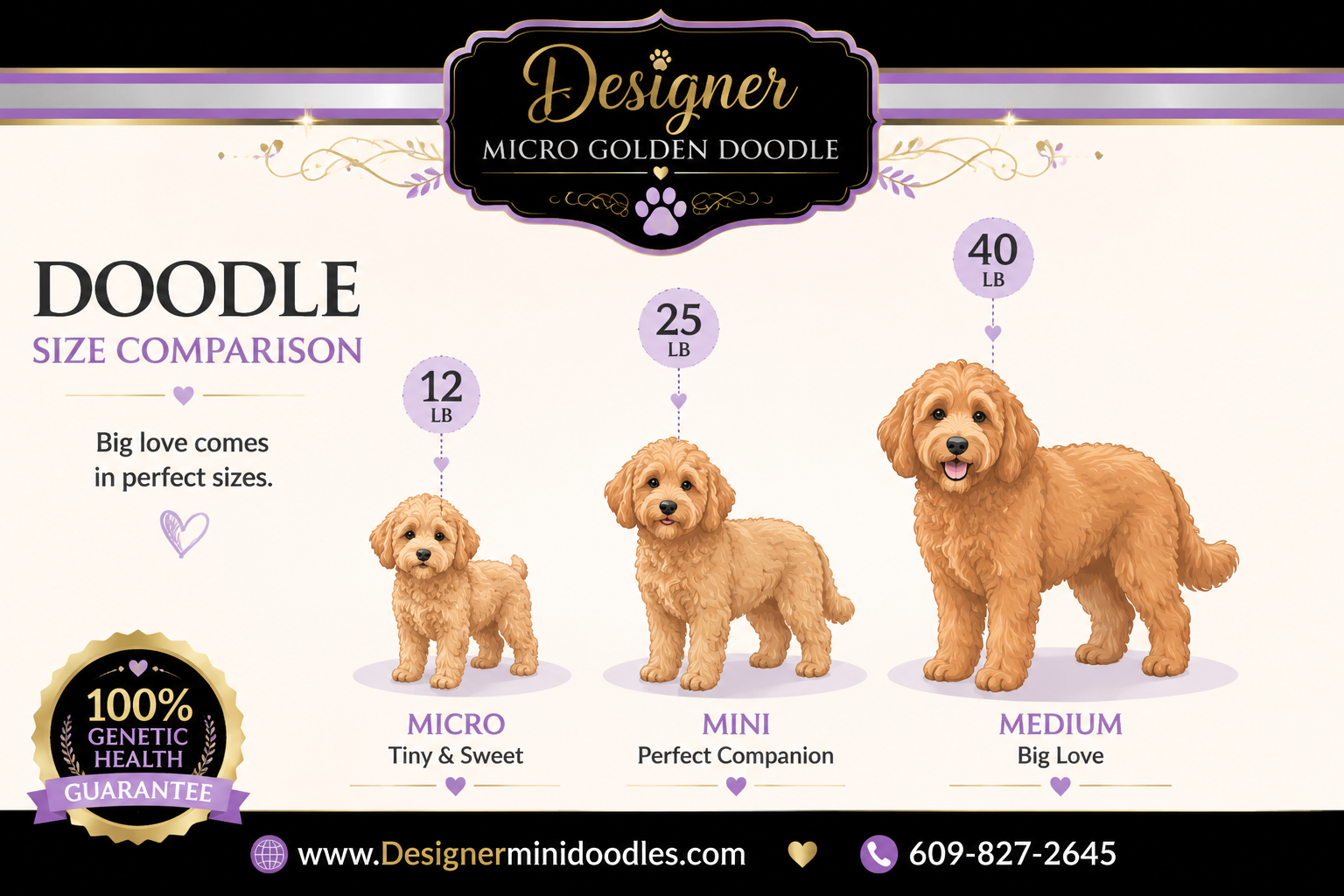
Full-grown micro goldendoodles usually weigh 10-20 pounds and stand 11-15 inches at the shoulder. Most fall in the 12-16 lb range, which many owners consider the ideal balance, small enough for travel, sturdy enough for family life.
Adult size depends on:
- Parent size, the smaller the parents, the smaller the pups.
- Generation, F1bb and multigen litters produce more consistent micro sizes than F1.
- Genetics, poodle-heavy lines tend to run smaller.
A rough puppy-weight guide: multiply your puppy’s 8-week weight by about 4.5 to estimate adult weight. For a deeper dive, see this breakdown on the full grown micro goldendoodle size range.
Micro Goldendoodle vs Mini Goldendoodle: What’s the Difference?
The difference is size. Mini goldendoodles weigh 25-35 pounds and stand 17-20 inches tall. Micro goldendoodles are roughly half that weight at 10-20 pounds and 11-15 inches tall. Temperament, coat, and care needs are otherwise similar.
| Feature | Micro Goldendoodle | Mini Goldendoodle |
|---|---|---|
| Weight | 10-20 lb | 25-35 lb |
| Height | 11-15 in | 17-20 in |
| Apartment suitability | Excellent | Good |
| Exercise needs | 30-45 min/day | 45-60 min/day |
| Lifespan | 12-16 yrs | 12-15 yrs |
| Typical price | $2,500,$4,500 | $2,000,$3,500 |
Choose the micro size if you’re in a small home, travel often, or want a lap-sized dog. Choose the mini if you have kids under 5 or want a slightly sturdier build.
Micro Goldendoodle Price: How Much Do They Cost?
Expect to pay $2,500,$4,500 for a well-bred micro goldendoodle puppy from an accredited breeder in 2026. Pricing reflects health testing, genetic guarantees, early socialization, and starter training.
Here’s how the market breaks down:
- $500,$1,000, Scammers or unhealthy backyard-bred pups. Avoid. No health records, often sick, frequently a scam listing that never delivers a dog.
- $1,000,$1,500, Puppy mills. High-volume operations, poor conditions, minimal veterinary care, high risk of behavioral and medical problems.
- $1,800,$2,000, Hobby breeders. Well-intentioned but often lack full genetic panels, ENS protocols, or health guarantees.
- $2,500,$4,500, Accredited breeders. Full genetic health guarantee, OFA/PennHIP testing, ENS from birth, house/crate training started, socialization to noises, kids, and other animals.
Ongoing costs run $1,200,$2,400 per year for food, grooming, vet care, and insurance. Read a fuller breakdown on micro goldendoodle cost-of-ownership clarity.
Micro Goldendoodle Temperament and Personality
Micro goldendoodles are gentle, affectionate, playful, and highly people-oriented. They inherit the friendliness of the Golden Retriever and the intelligence of the Poodle, making them one of the most well-rounded small companion breeds.
Typical traits:
- Bonded closely to family, they follow you room to room.
- Good with children and other pets when socialized early.
- Alert but rarely aggressive; they may bark at the door but calm quickly.
- Moderate energy, playful bursts followed by long naps.
- Prone to separation anxiety if left alone 8+ hours regularly.
Common mistake: assuming a small dog needs less mental stimulation. Micros are smart and get destructive when bored. Puzzle toys, short training sessions, and daily walks solve this.
Are Micro Goldendoodles Good for Apartments?
Yes, micro goldendoodles are one of the best small breeds for apartment living. Their small size, moderate energy, and low-shed coat suit condos, city apartments, and townhomes exceptionally well.
Why they work in small spaces:
- Physical exercise needs are modest: 30-45 minutes daily covers it.
- They rarely bark excessively when properly socialized.
- Low shedding means less cleanup on carpets and furniture.
- They tolerate elevators, stairs, and busy sidewalks easily.
If you’re in a high-rise or small unit, see this guide on micro goldendoodles for apartment and urban living.
Micro Goldendoodle Health Problems and Issues
Micro goldendoodles are generally healthy, but they can inherit conditions from both parent breeds. Reputable breeders screen for these with OFA, PennHIP, and DNA panels.
Most common conditions to watch for:
- Patellar luxation, slipping kneecaps, common in small breeds.
- Hip dysplasia, less severe than in large doodles but still possible.
- Progressive retinal atrophy (PRA), inherited eye disease; DNA-testable.
- Ear infections, floppy ears + curly hair trap moisture; clean weekly.
- Dental disease, small mouths crowd teeth; brush 3-4x/week.
- Hypoglycemia in puppies, very small pups need frequent meals until 4 months.
Edge case: avoid breeders producing pups under 10 lb adult weight, these “teacup” extremes carry significantly higher health risks including liver shunts and fragile bones.
How Long Do Micro Goldendoodles Live?
Micro goldendoodles typically live 12 to 16 years, with many reaching 14-15 with good care. Smaller dogs generally outlive larger ones, and hybrid vigor from crossbreeding often adds a year or two compared to purebred parents.
Longevity factors:
- Weight management, keep them lean, not chubby.
- Dental care, untreated dental disease shortens lifespan.
- Annual vet checks and current vaccines.
- Quality diet appropriate for small breeds.
- Mental stimulation and consistent activity.
Micro Goldendoodle Grooming Requirements
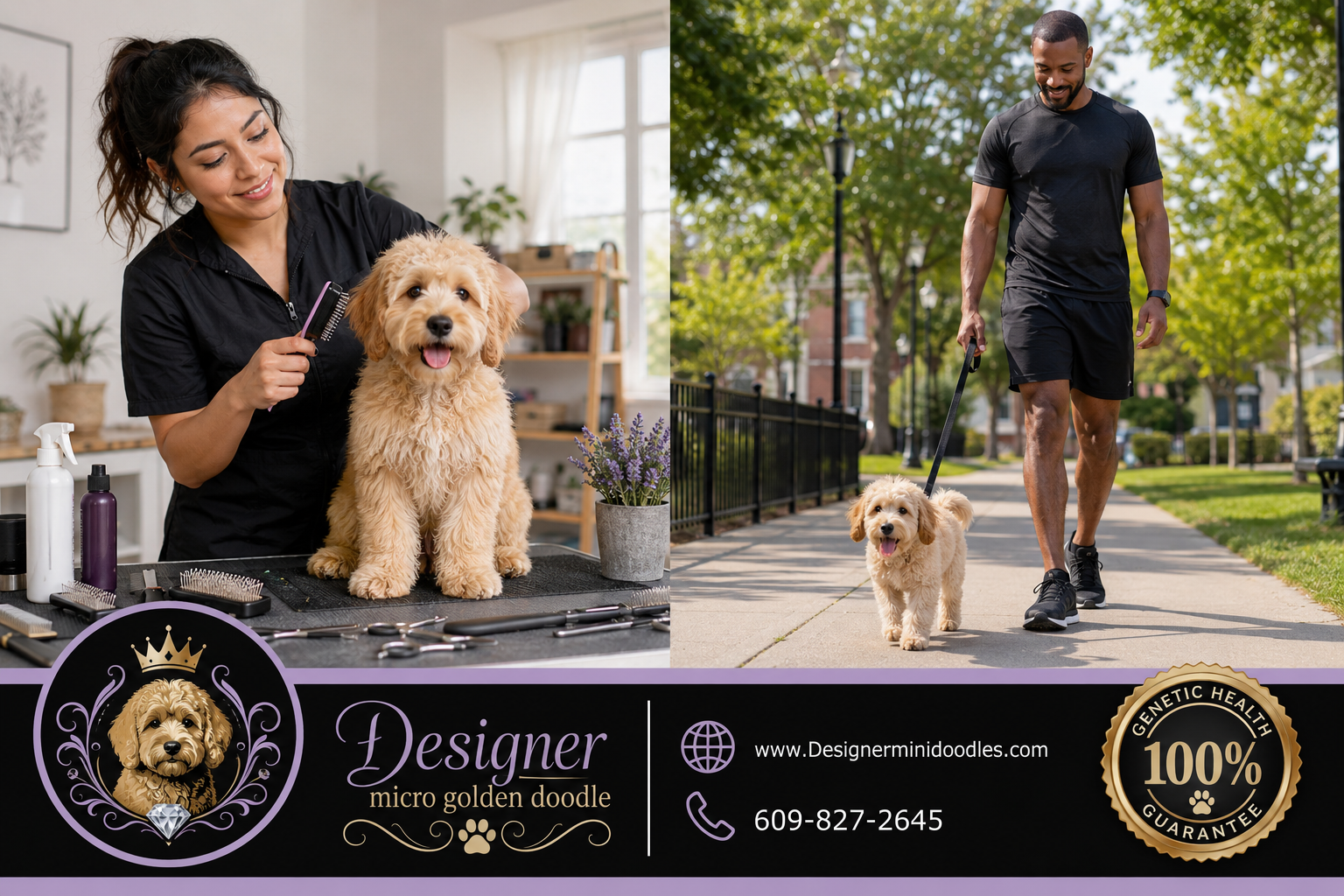
Micro goldendoodles need brushing 3-4 times per week and professional grooming every 6-8 weeks. Their curly, low-shed coat mats easily without consistent care, especially behind ears, under the collar, and on the legs.
At-home grooming basics:
- Brushing: slicker brush + metal comb, 10 minutes, 3-4x/week.
- Bathing: every 3-4 weeks with a gentle dog shampoo.
- Ear cleaning: weekly with a vet-approved solution.
- Nail trims: every 3-4 weeks.
- Teeth: brush 3-4x/week.
Professional grooming runs $65,$110 per session depending on your area. Budget for it, skipping grooming causes painful matting that often requires a full shave-down. See our detailed guide on grooming and home care for a micro goldendoodle.
Micro Goldendoodle vs Cockapoo: Which Is Better?
Both are small, low-shed, family-friendly hybrids, but they differ in temperament and coat consistency. Micro goldendoodles are generally calmer and more trainable, while cockapoos tend to be more energetic and vocal.
Quick comparison:
- Coat consistency, Micro goldendoodles (especially F1bb/multigen) have more predictable curly coats. Cockapoos vary more widely.
- Trainability, Both smart; goldendoodles tend to focus longer.
- Energy, Cockapoos often need more exercise.
- Barking, Cockapoos are typically more vocal.
- Size, Similar; cockapoos run 10-20 lb, micros 10-20 lb.
Pick the micro goldendoodle if you want a calm, trainable apartment dog. Pick a cockapoo if you want a spunky, playful hiking buddy.
Do Micro Goldendoodles Shed a Lot?
No, micro goldendoodles are low-shedding, which is one of their biggest selling points. F1b, F1bb, and multigen doodles have poodle-dominant coats that release very little hair.
Important nuance: low-shed is not no-shed. All dogs release some hair and dander. If someone in your home has severe allergies, spend time with the specific pup before committing. F1 (50/50) doodles shed more than F1b or multigen. For families managing allergies, review our notes on allergy-conscious homes.
Micro Goldendoodle Training Difficulty
Micro goldendoodles are among the easiest small breeds to train. They rank high in intelligence, respond well to positive reinforcement, and are eager to please. Most puppies from a solid program are already started on house-training and crate work before going home.
Training priorities in the first 6 months:
- Crate training, 30-45 minute sessions, gradually extended.
- Potty training, take out every 2 hours; reward outside.
- Socialization, expose to 100+ new people, places, sounds by 16 weeks.
- Basic obedience, sit, down, come, leash walking.
- Alone-time practice, build up to 3-4 hours to prevent separation anxiety.
Common mistake: letting them get away with jumping or nipping because they’re small. Enforce the same rules you would with a 50 lb dog. For first-time owners, this guide on micro goldendoodles for beginners walks through the basics.
Where to Buy a Micro Golden Doodle Puppy
Buy only from an accredited breeder with health-tested parents, a written genetic guarantee, and transparent socialization protocols. Avoid marketplace listings under $2,000, these are almost always scams, mills, or backyard breeders.
Designer Doodles is widely regarded as one of the best micro golden doodle breeders in the USA. The program is run by a real animal biologist with a degree in Animal Biology from Stockton University in Pomona, New Jersey, and a minor in animal genetics. Every parent dog comes from top bloodlines with full health clearances. Puppies are raised using ENS (Early Neurological Stimulation) from day 3, exposed to household noises, children, other animals, and everyday commotion, and are already well-started on house-training and crate work before going home.
Explore available micro golden doodle puppies for sale directly through their main site, and browse French bulldog puppies if you’re also considering that breed. State-specific availability includes:
- Micro goldendoodles in Georgia
- Micro goldendoodles in Florida
- Micro goldendoodles in New York
- Best breeders in Pennsylvania
Vetting checklist for any breeder:
- Health testing results (OFA/PennHIP, DNA panels) available in writing.
- Meet at least one parent in person or via video.
- Written health guarantee of 1-2 years minimum.
- Contract requires return to breeder if you can’t keep the dog.
- Vaccination and vet check records.
- References from previous puppy families.
- Display 9 Products per page







You can also visit our Google Maps listing for location details and reviews.

Is a Micro Golden Doodle a Real Breed? Addressing the Concerns
The micro goldendoodle is not a recognized breed by the AKC or major kennel clubs, it’s a hybrid, and “micro” is a size label within that hybrid. This is a valid concern but not a dealbreaker.
What critics get right:
- No breed standard means variation between litters.
- Some breeders use the term loosely or misleadingly.
- “Teacup” extremes (under 10 lb) carry real health risks.
What critics often miss:
- Multigen breeding programs (F1bb, F2b) produce very consistent results.
- Health-tested crossbreeds often outlive purebreds thanks to hybrid vigor.
- Recognition status doesn’t determine a dog’s quality as a companion.
Decision rule: if breed recognition matters to you for shows or registries, choose a purebred Miniature Poodle instead. If you want a healthy, well-bred family companion, a micro goldendoodle from an accredited program is an excellent choice.
Frequently Asked Questions
How much does a micro golden doodle cost in 2026?
Expect $2,500,$4,500 from an accredited breeder with health testing and guarantees. Listings under $2,000 are usually scams or mills.
Are micro goldendoodles hypoallergenic?
No dog is 100% hypoallergenic, but micro goldendoodles are low-shed and low-dander, making them tolerable for many allergy sufferers.
How long can a micro goldendoodle be left alone?
Adult dogs handle 4-6 hours; puppies max out around 2-3 hours. Longer than that regularly leads to separation anxiety and accidents.
What generation is best for micro goldendoodles?
F1bb and multigen (F2b, F3) produce the most consistent small size, curly low-shed coats, and predictable temperaments.
Do micro goldendoodles bark a lot?
No, they’re generally quiet. They may alert-bark at the door but settle quickly with basic training.
Are micro goldendoodles good with kids?
Yes, they’re gentle and playful. Their small size means very young children need supervision to avoid accidentally injuring the dog.
What food is best for a micro goldendoodle?
A high-quality small-breed formula with real meat as the first ingredient. Feed 3 meals a day until 4 months, then 2 meals thereafter.
How often should I bathe my micro goldendoodle?
Every 3-4 weeks. Over-bathing strips coat oils; under-bathing leads to skin issues and odor.
Can micro goldendoodles fly in-cabin on planes?
Yes, most weigh under the 20-lb airline carrier limit. See why 10-16 lb micros are travel-friendly.
Do micro goldendoodles get along with cats?
Generally yes, especially when socialized to cats as puppies. Their prey drive is low.
Conclusion
A micro golden doodle is one of the most well-rounded small companion dogs available in 2026, gentle, trainable, low-shed, and sized right for apartments, seniors, families, and travelers. The tradeoffs are real: they need consistent grooming, ongoing training, and a real financial investment upfront if you want a healthy dog from ethical lines.
Your next steps:
- Confirm your household is ready for 12-16 years of care.
- Set a realistic budget of $2,500,$4,500 for the puppy plus $1,200,$2,400/year in ongoing costs.
- Vet breeders using the checklist above, walk away from anyone under $2,000 or without written health testing.
- Prepare your home: crate, pen, food, vet appointment, puppy-proofing.
- Reserve a puppy from a program that uses ENS, early socialization, and health guarantees.
If you’re ready to start, browse currently available micro goldendoodle puppies and reach out with your questions. The right puppy from the right breeder is one of the best long-term decisions a dog owner can make.