

Last updated: July 9, 2026
Quick Answer: The best toy poodle breeders in the South raise puppies in their homes (not kennels), perform OFA-certified health testing on all breeding dogs, provide written health guarantees of at least one year, and welcome buyer visits. Programs in Alabama, Florida, Georgia, and Louisiana that meet these standards include Burnsville Premier Toy Poodles, Always Best Poodles, Doggy & Barkley Poodles, and several others profiled in this guide.
Key Takeaways
- Ethical toy poodle breeders health-test for patellar luxation, progressive retinal atrophy (PRA), and von Willebrand's disease at minimum, with results verifiable through the OFA database.
- Reputable southern breeders raise puppies in-home, not in outdoor kennels, and follow early socialization protocols like Puppy Culture or Avidog.
- Expect to pay between $2,000 and $4,000 for a well-bred toy poodle puppy from a responsible breeder in the South, depending on color, sex, and lineage.
- A solid breeder contract should include a health guarantee (12 months minimum), a spay/neuter clause, and a return policy if you can no longer keep the dog.
- Red flags include breeders who always have puppies available, refuse to share health testing documentation, or won't allow visits to their facility.
- Toy poodles are among the longest-lived breeds (12 to 18 years), making breeder selection one of the most consequential decisions a buyer can make.
- Rescue and adoption remain valid alternatives, especially for buyers open to adult dogs or those with less specific preferences about color and lineage.
What Makes a Toy Poodle Breeder Ethical and Reputable
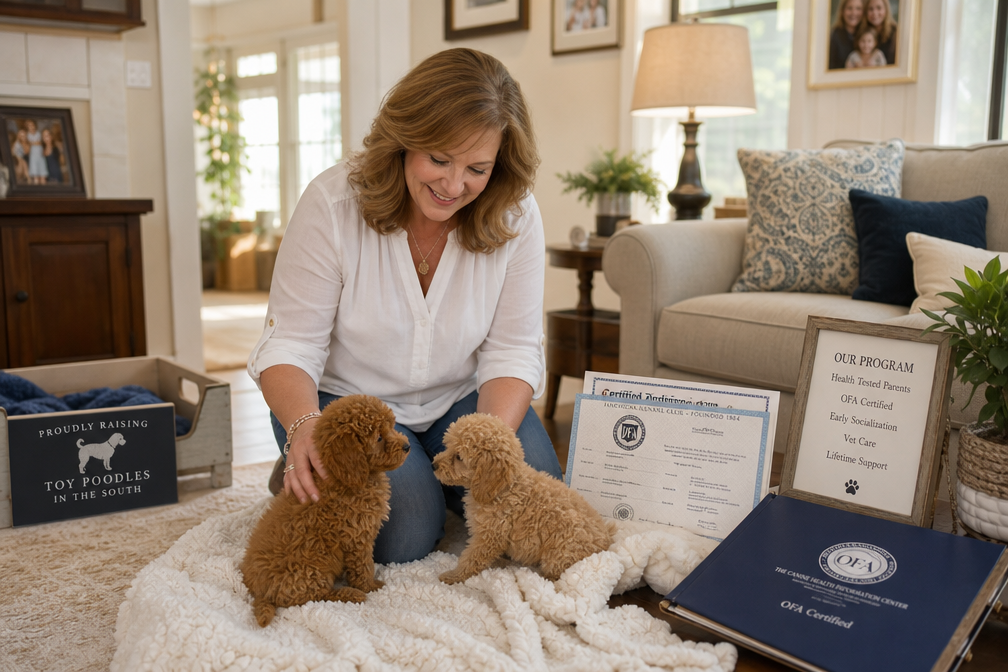
An ethical toy poodle breeder prioritizes the health, temperament, and long-term welfare of every dog over profit. The clearest markers are verifiable health testing, transparent breeding practices, and a genuine commitment to placing puppies in suitable homes.
Here's what separates a responsible program from the rest:
- Health testing before breeding. All breeding dogs should be tested for breed-specific conditions (more on this below), with results posted publicly or available on request through the OFA or PennHIP databases.
- In-home raising. Puppies raised inside a home, exposed to household sounds, children, and other pets, develop better temperaments than those raised in isolated kennel buildings [4] [5].
- Limited litters. Ethical breeders typically produce only a few litters per year, giving each dam adequate recovery time and each litter proper socialization.
- Buyer screening. A good breeder asks you questions, sometimes more than you ask them. They want to know about your living situation, experience, and plans for the dog.
- Lifetime take-back policy. Responsible breeders will always take a dog back if the owner's circumstances change, at any age.
Programs like Burnsville Premier Toy Poodles in Alabama [4] and Always Best Poodles in Quincy, Florida [8] exemplify these standards. Always Best Poodles, for instance, draws on over 20 years of veterinary field experience to ensure every dog receives top-tier care from birth.
If you're new to the breed, our guide on toy poodle puppies for first-time dog owners covers what to expect during those first weeks at home.
Toy Poodle Breeder Health Testing Requirements and Certifications
At minimum, a reputable toy poodle breeder should test for patellar luxation, progressive retinal atrophy (PRA), and hip dysplasia before breeding any dog. Additional recommended tests include von Willebrand's disease and an annual ophthalmologist exam.
The Poodle Club of America recommends the following health screenings for toy poodles:
| Health Test | What It Screens For | How to Verify |
|---|---|---|
| Patellar Luxation | Loose kneecaps (common in toys) | OFA database |
| PRA (Optigen/DNA) | Progressive blindness | OFA or lab certificate |
| Eye Exam (CERF/OFA) | Cataracts, retinal issues | Annual OFA eye exam |
| Hip Evaluation | Hip dysplasia | OFA or PennHIP |
| Von Willebrand's | Bleeding disorder | DNA test certificate |
Decision rule: If a breeder cannot show you OFA numbers or DNA test certificates for both parents, move on. Brivali Poodles in northern Florida lists all health testing results on their website and encourages buyers to verify them independently through the OFA database [2]. That's the standard to expect.
A common mistake buyers make is accepting a "vet checked" claim as equivalent to genetic health testing. A basic vet exam does not screen for hereditary conditions. These are entirely different processes.
Best Toy Poodle Breeders in Alabama, Georgia, Florida, and Louisiana
Finding the best toy poodle breeders in the South, from Alabama to Florida, means looking for ethical programs with documented health testing, home-raised puppies, and strong buyer support. Below is a state-by-state overview of notable programs.
Alabama
- Burnsville Premier Toy Poodles (James P.) — A small, in-home program certified by Good Dog's screening team for responsible breeding. They focus on healthy, well-tempered puppies with individual attention [4].
- Fred's Toy Poodles (Fred C.) — Family-raised toy poodles with an emphasis on temperament. Also certified through Good Dog for responsible practices [5].
- Lowry Toy Poodles — Specializes in teacup and tiny toy poodles. All puppies are AKC/CKC registered and come with a 12-month health contract. Buyers must have a vet check within 48 hours of receiving their puppy [6].
- Smith Lake Pups — Over 15 years of experience raising and socializing toy poodles and other breeds in a family setting [7].
For those in Alabama also considering doodle breeds, see our page on micro mini Goldendoodles in Alabama.
Florida
- Always Best Poodles (Quincy, FL) — A small AKC program backed by 20+ years of veterinary experience. Dogs live in-home with cats, other dogs, and even chickens, producing exceptionally well-socialized puppies [8].
- Doggy & Barkley Poodles (Casselberry, FL) — Focuses on early socialization, health, and temperament. Current pricing ranges from $2,500 for males to $3,500 for phantom-colored females [1].
- Brivali Poodles (Northern FL) — A home-based AKC standard poodle program (also relevant for buyers seeking poodle lines) that follows Puppy Culture and Avidog protocols. All health testing is publicly verifiable [2].
- Noble Pets (North Port, FL) — Family-based breeder of toy poodles, Yorkies, and Maltipoos with health-tested parents and lifelong buyer support [3].
- Poodles By Cooki (FL) — CKC-registered puppies raised in-home with vaccinations and an accredited health certificate included [9].
If you're exploring Florida options more broadly, our micro mini Goldendoodle breeders in Florida page covers additional ethical programs in the state.
Georgia and Louisiana
Verified breeder listings for Georgia and Louisiana toy poodles are more limited in public databases, but the same evaluation criteria apply. Buyers in Louisiana can also explore our toy poodles for sale in Louisiana page and our mini and micro Goldendoodle breeders in Louisiana resource for additional options in the region.
How Much Does a Toy Poodle Puppy Cost From a Reputable Breeder in the South
A well-bred toy poodle from a responsible southern breeder typically costs between $2,000 and $4,000. Pricing varies based on color, sex, breeding rights, and the breeder's investment in health testing.
Here's a realistic pricing breakdown based on current listings:
| Breeder | Location | Price Range | Notes |
|---|---|---|---|
| Doggy & Barkley Poodles | Casselberry, FL | $2,500 – $3,500 | Phantom females at premium [1] |
| Lowry Toy Poodles | Alabama | Varies (contact breeder) | AKC/CKC registered, 12-month guarantee [6] |
| Always Best Poodles | Quincy, FL | Contact for pricing | 20+ years vet experience [8] |
| Burnsville Premier | Alabama | Contact for pricing | Good Dog certified [4] |
Why the price range matters: A $500 toy poodle almost certainly comes from a program that skips health testing, veterinary care, and proper socialization. The upfront cost of a well-bred puppy often saves thousands in veterinary bills over the dog's lifetime. Toy poodles live 12 to 18 years, so this is a long-term investment.
Deposits typically range from $200 to $500 and are usually non-refundable. Most breeders require the balance before or at pickup.
How to Spot a Puppy Mill or Backyard Breeder When Looking for Toy Poodles
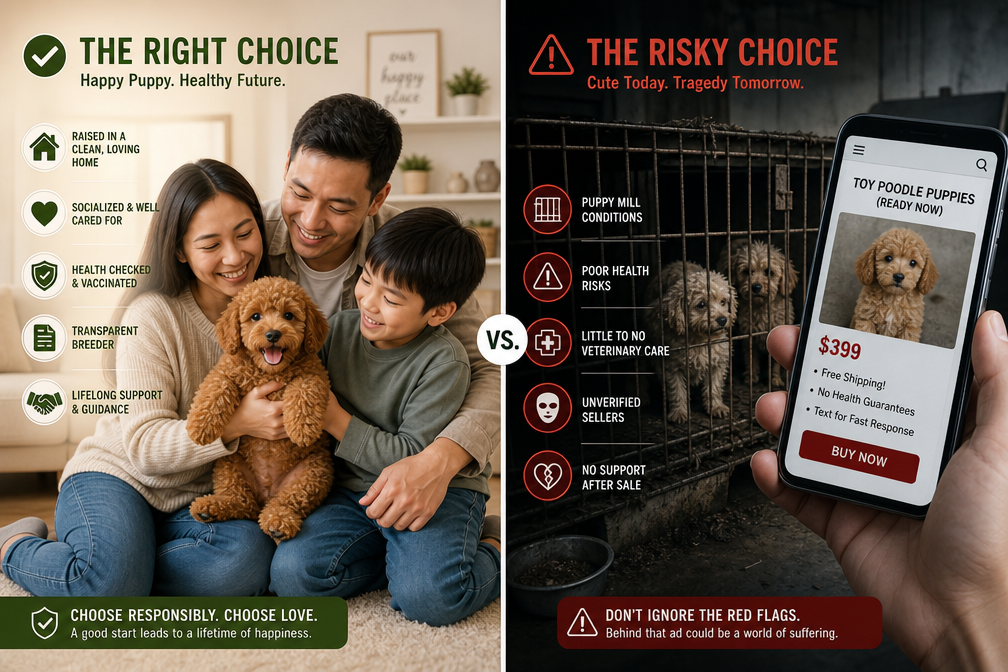
Puppy mills and backyard breeders account for a significant portion of toy poodle sales in the South. The fastest way to identify them is by what they won't show you: health testing results, the puppy's living environment, or the breeding parents.
Warning signs of a puppy mill:
- Multiple breeds available at all times
- Puppies always "in stock" with no waitlist
- No health testing documentation (just "vet checked")
- Meeting in a parking lot or neutral location instead of their home
- No questions asked about your living situation or experience
- Pressure to buy quickly ("someone else is interested")
Backyard breeder indicators:
- Breeding without OFA or genetic testing
- No written contract or health guarantee
- Breeding every heat cycle without rest periods for the dam
- Unable to discuss the breed standard, health concerns, or lineage
Choose a breeder who invites you to their home, introduces you to the parents, and has a waitlist. A waitlist means demand exceeds supply, which usually indicates a breeder who limits litters and prioritizes quality.
Red Flags When Contacting Toy Poodle Breeders Online
Online puppy scams have increased sharply in recent years, and toy poodles are a frequent target because of their high demand and small shipping size. A legitimate breeder's online presence should be consistent, transparent, and verifiable.
Red flags to watch for:
- Stock photos or stolen images. Reverse image search any puppy photos. Scammers frequently steal images from legitimate breeders.
- No physical address listed. A real breeder has a real location and will share it.
- Payment only via wire transfer, cryptocurrency, or gift cards. Legitimate breeders accept checks, credit cards, or standard payment platforms.
- Prices far below market rate. If a "purebred AKC toy poodle" is listed at $800, something is wrong.
- Vague or copied website content. Look for specific details about their dogs, their breeding philosophy, and their health testing protocols.
- No social media history. Check for a consistent posting history on Facebook or Instagram. Scam pages are typically new with few followers.
Breeders like Brivali Poodles [2] and Noble Pets [3] maintain detailed websites with specific information about their dogs, testing protocols, and breeding philosophy. That level of transparency is what to look for.
Toy Poodle Breeder Contracts and Guarantees: What Should They Include
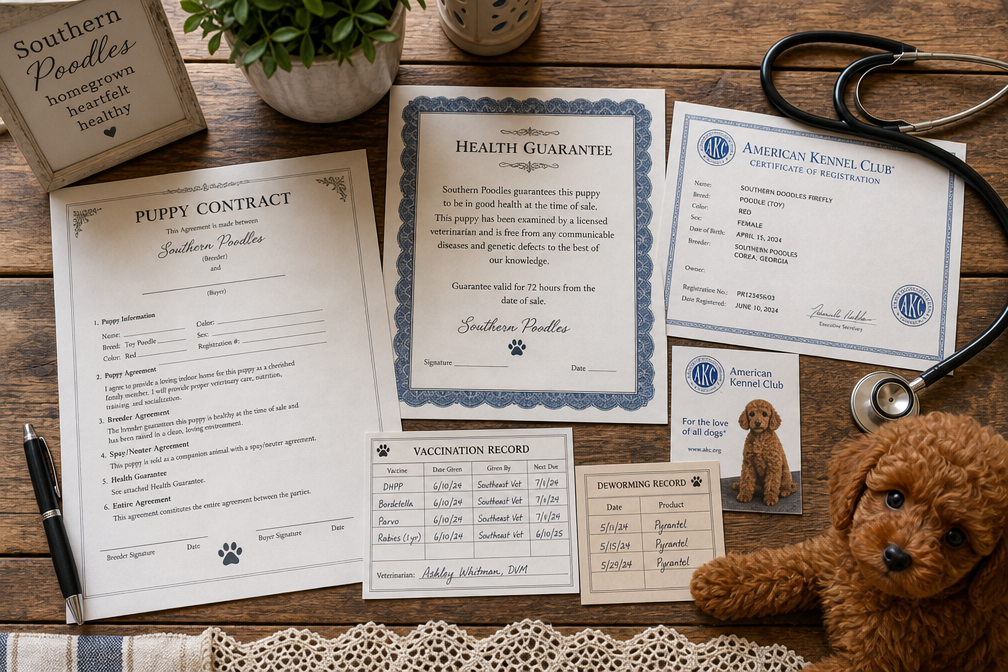
A proper breeder contract protects both the buyer and the puppy. At minimum, it should include a written health guarantee covering genetic conditions for at least 12 months.
Essential contract elements:
- Health guarantee (12 to 24 months for genetic/hereditary conditions)
- Spay/neuter requirement (for pet-quality puppies)
- Return clause (breeder takes the dog back if you can't keep it, at any age)
- Vet check deadline (typically 48 to 72 hours after pickup) [6]
- Registration papers (AKC or CKC, provided after proof of spay/neuter for pet puppies)
- Vaccination and deworming records
Lowry Toy Poodles, for example, requires new owners to have their puppy examined by a veterinarian within 48 hours to validate the health contract, which covers the first 12 months against life-threatening illnesses [6]. This type of structured accountability benefits everyone.
Common mistake: Accepting a verbal promise instead of a written contract. If it's not in writing, it doesn't exist.
Questions to Ask a Toy Poodle Breeder Before Buying
Asking the right questions separates informed buyers from those who end up with heartbreak and vet bills. Here's a practical checklist:
- What health tests have been performed on both parents? Can I see the OFA numbers?
- How are puppies socialized before going home?
- Can I visit your home and meet the parents?
- How many litters do you produce per year?
- What does your health guarantee cover, and for how long?
- What happens if I can no longer keep the dog?
- What food, vaccinations, and deworming has the puppy received?
- Do you provide references from previous buyers?
- At what age do puppies go home? (Should be no earlier than 8 weeks; 10 to 12 weeks is better for toy breeds.)
- What ongoing support do you offer after purchase?
A breeder who answers these questions thoroughly and without defensiveness is one worth considering.
Toy Poodle Temperament and Care Requirements: Is This Breed Right for My Family
Toy poodles are highly intelligent, affectionate, and adaptable dogs that do well in apartments, suburban homes, and with families of all sizes. They are consistently ranked among the most trainable of all breeds.
Temperament highlights:
- Eager to please and quick to learn
- Alert and sometimes vocal (barking can be managed with proper training)
- Bond closely with their primary person but are friendly with the whole family
- Can be sensitive to rough handling, so supervision with very young children is recommended
Care requirements:
- Grooming: Professional grooming every 4 to 6 weeks, plus daily brushing to prevent matting. See our grooming tips for fluffy toy poodle puppies for a detailed routine.
- Exercise: 30 to 45 minutes daily of walks and play
- Training: Responds best to positive reinforcement; training at home is straightforward given their intelligence
- Health maintenance: Regular dental care, annual vet exams, and attention to knee and eye health
Choose a toy poodle if you want a low-shedding, highly trainable companion that adapts to your lifestyle. Reconsider if you have very young children who may handle the dog roughly, or if you're away from home for long stretches without a plan for the dog's companionship needs.
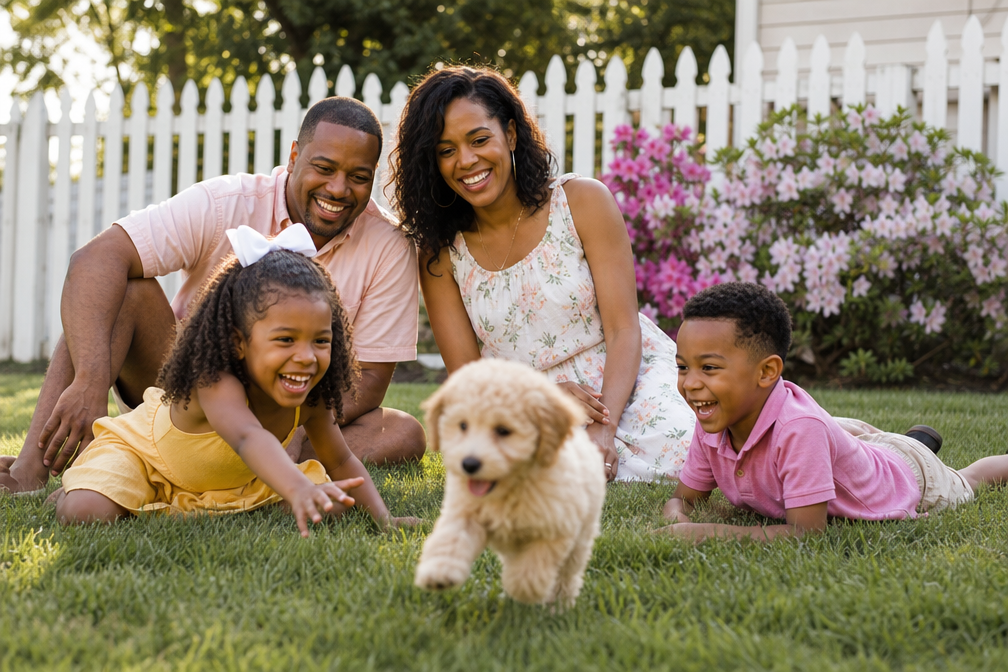
Toy Poodle vs. Other Small Dog Breeds: Which Is Right for Me
Toy poodles stand out from other small breeds in intelligence, trainability, and coat type. But they aren't the only option, and honest comparison helps buyers make better decisions.
| Factor | Toy Poodle | Cavalier King Charles | Chihuahua | Maltese |
|---|---|---|---|---|
| Shedding | Very low | Moderate | Low to moderate | Very low |
| Trainability | Excellent | Good | Moderate | Good |
| Exercise needs | Moderate | Low to moderate | Low | Low |
| Grooming needs | High | Moderate | Low | High |
| Lifespan | 12-18 years | 9-14 years | 12-20 years | 12-15 years |
| Good with kids | Yes (older kids) | Yes | Cautious | Yes (older kids) |
Toy poodles require more grooming than most small breeds, but their near-hypoallergenic coat and exceptional intelligence make them a strong choice for allergy-conscious or first-time owners.
Common Health Problems in Toy Poodles: What to Ask Breeders About
The most common health issues in toy poodles are patellar luxation, progressive retinal atrophy, Legg-Calve-Perthes disease, epilepsy, and dental problems. A responsible breeder screens for the genetic conditions on this list and can discuss their lines' health history openly.
Key conditions to ask about:
- Patellar luxation — Kneecap displacement; common in toy breeds. Ask for OFA patella ratings on both parents.
- Progressive retinal atrophy (PRA) — Leads to blindness. DNA testing can identify carriers.
- Legg-Calve-Perthes disease — Degeneration of the hip joint. More common in very small dogs.
- Dental disease — Toy breeds are prone to early tooth loss. Ask about the parents' dental health.
- Hypoglycemia — Especially in very small puppies during the first few months.
Breeders who have been in the breed for years, like Always Best Poodles with their veterinary background [8], can speak knowledgeably about these conditions and explain how their breeding decisions reduce risk.
Toy Poodle Breeder Reviews and How to Verify Them
Online reviews are useful but easy to fake. The most reliable way to verify a breeder's reputation is through multiple independent sources, not just their own website testimonials.
How to verify breeder reviews:
- Check Good Dog, AKC Marketplace, and the Poodle Club of America breeder referral lists
- Search the breeder's name on breed-specific Facebook groups and Reddit communities
- Ask the breeder for references from previous buyers and actually call them
- Look for consistency between website claims and third-party reviews
- Check for any complaints with your state's Department of Agriculture or Attorney General
Both Burnsville Premier Toy Poodles [4] and Fred's Toy Poodles [5] have been certified through Good Dog's screening process, which independently evaluates breeding practices. That third-party verification adds a meaningful layer of credibility.
Should I Adopt a Toy Poodle Rescue Instead of Buying From a Breeder
Rescue is a worthy option, especially for buyers who are flexible on age, color, and background. Toy poodle rescues and poodle-specific rescue organizations operate throughout the South, and adult dogs often come already housetrained and past the demanding puppy stage.
Consider rescue if:
- You're open to an adult dog (most rescues are 2+ years old)
- You don't need a specific color or size
- You want to give a second chance to a dog in need
- Your budget is limited (adoption fees typically range from $150 to $500)
Consider a breeder if:
- You want a puppy with a known health and genetic background
- You have specific temperament or size requirements
- You want to follow the dog's development from the earliest weeks
- You need predictability for allergy or family compatibility reasons
Both paths can lead to a wonderful companion. The right choice depends on your priorities and flexibility.
How to Find Toy Poodle Breeders Near Me With Health Guarantees
Start with the Poodle Club of America's breeder referral directory, Good Dog's verified breeder listings, and the AKC Marketplace. Then apply the evaluation criteria from this guide: health testing, in-home raising, written contracts, and buyer references.
Step-by-step process:
- Search the PCA breeder referral and Good Dog for your state
- Review each breeder's website for health testing documentation
- Contact 3 to 5 breeders and ask the questions listed earlier in this guide
- Request a visit to the breeder's home
- Verify health testing through the OFA database
- Review the contract carefully before placing a deposit
- Join the waitlist and be patient; good breeders often have waits of 3 to 12 months
If you're exploring related breeds in the South, our Goldendoodle breeder listings and planning a color-diverse toy poodle breeding program guide offer additional context on what ethical breeding looks like across programs.
Conclusion
Finding the best toy poodle breeders in the South, from Alabama to Florida, requires patience, research, and a willingness to ask hard questions. The breeders profiled in this guide share common traits: they health-test their dogs, raise puppies in their homes, provide written health guarantees, and stand behind their dogs for life.
Your next steps:
- Use this guide's evaluation criteria to build a shortlist of 3 to 5 breeders in your area.
- Contact each breeder, ask the 10 questions listed above, and request health testing documentation.
- Visit in person whenever possible. The condition of the home, the behavior of the adult dogs, and the breeder's willingness to engage tell you more than any website.
- Review the contract line by line before committing a deposit.
- Be prepared to wait. A 6-month waitlist is a sign of quality, not inconvenience.
The right toy poodle breeder won't just sell you a puppy. They'll become a resource you rely on for the next 15 years.
Frequently Asked Questions
How long do toy poodles live?
Toy poodles typically live 12 to 18 years, making them one of the longest-lived dog breeds. Proper breeding, nutrition, and veterinary care all influence lifespan.
Are toy poodles good for apartments?
Yes. Toy poodles adapt well to apartment living due to their small size and moderate exercise needs. They do need daily walks and mental stimulation to stay happy.
Do toy poodles shed?
Toy poodles have a single-layer, curly coat that sheds very little. They are often recommended for allergy-conscious households, though no dog is truly 100% hypoallergenic.
What is the difference between a toy poodle and a teacup poodle?
"Teacup" is not an official AKC size classification. It typically refers to toy poodles bred to be smaller than the breed standard (under 4 pounds). Extremely small dogs often face more health risks.
How do I know if a breeder is AKC registered?
AKC registration applies to individual dogs, not breeders. However, breeders can be listed on the AKC Marketplace if they register their litters. You can verify a dog's registration through the AKC website.
Can I have a toy poodle shipped to me?
Many breeders offer shipping or flight nanny services, but visiting in person is always preferred. If shipping is necessary, confirm the breeder uses a reputable pet transport service with climate-controlled vehicles or cabin flights.
What colors do toy poodles come in?
Toy poodles come in a wide range of solid colors including black, white, apricot, red, cream, silver, blue, and brown, as well as parti (multi-colored) and phantom patterns [1].
How often do toy poodles need grooming?
Professional grooming every 4 to 6 weeks is standard, with daily brushing at home to prevent matting and tangles.
What should I feed a toy poodle puppy?
A high-quality small-breed puppy food is recommended. Many breeders send puppies home with a supply of the food they've been eating to ease the transition.
Is a male or female toy poodle better?
Both sexes make excellent companions. Males tend to be slightly more affectionate and attention-seeking, while females can be more independent. Individual temperament matters more than sex.
How soon can I take a toy poodle puppy home?
Responsible breeders release toy poodle puppies between 10 and 12 weeks of age. This extra time with the litter is especially important for toy breeds, which benefit from additional socialization and physical development.
Do toy poodles bark a lot?
Toy poodles can be vocal, but excessive barking is manageable with consistent training. They are alert dogs that tend to announce visitors or unusual sounds.
References
[1] Doggy & Barkley Poodles – https://www.doggyandbarkley.com/?utm_source=openai
[2] Brivali Poodles – https://www.brivalipoodles.com/?utm_source=openai
[3] Noble Pets FL – https://www.noblepetsfl.com/?utm_source=openai
[4] Burnsville Premier Toy Poodles Alabama – https://www.gooddog.com/breeders/burnsville-premier-toy-poodles-alabama?utm_source=openai
[5] Fred's Toy Poodles Alabama – https://www.gooddog.com/breeders/freds-toy-poodles-alabama?utm_source=openai
[6] Lowry Toy Poodles Contract – https://www.lowrytoypoodlesandmaltese.com/contract/?utm_source=openai
[7] Smith Lake Pups – https://www.smithlakepups.com/?utm_source=openai
[8] Always Best Poodles – https://alwaysbestpoodles.com/?utm_source=openai
[9] Poodles By Cooki – https://www.poodlesbycooki.com/?utm_source=openai
[10] Mystic Estate – https://mystic-estate.com/?utm_source=openai