

Last updated: July 9, 2026
Quick Answer: The first 30 days with a Toy Poodle puppy break down into four distinct phases: week one focuses on bonding and establishing routines, week two introduces basic training and potty habits, week three builds socialization confidence, and week four solidifies everything into a stable daily schedule. Success depends on consistency with feeding, sleep, crate training, and early positive experiences during this critical adjustment period.
Key Takeaways
- Week one is about trust, not training. Let your Toy Poodle puppy adjust to its new home before pushing obedience commands.
- Feed three to four small meals per day using high-quality small-breed puppy food to prevent hypoglycemia, a real risk in tiny breeds.
- Potty breaks every 1 to 2 hours are necessary for puppies under 12 weeks; expect accidents and plan for them.
- Toy Poodle puppies sleep 18 to 20 hours per day, and interrupting that sleep causes behavior problems.
- Start training on day one using positive reinforcement, but keep sessions under 5 minutes.
- Socialization between 3 and 14 weeks is critical for preventing fearfulness in adult Toy Poodles [3].
- Daily brushing starts now, even though the puppy coat is soft; it builds grooming tolerance for life.
- Schedule the first vet visit within 48 to 72 hours of bringing your puppy home to confirm vaccinations and health status.
- Crate training is the single most useful tool for potty training, sleep regulation, and safety.
- Biting and nipping peak around weeks 2 to 3 at home; redirect to toys rather than punishing.
What Actually Happens Week by Week: Your First 30 Days with a Toy Poodle Puppy
The first month unfolds in predictable stages. Knowing what to expect each week removes most of the panic new owners feel.
Week 1 (Days 1-7): Decompression and bonding. Your Toy Poodle puppy will likely be overwhelmed. Expect hiding, whining at night, irregular eating, and frequent accidents. The goal this week is simple: build trust. Keep the environment quiet, maintain a consistent schedule, and resist the urge to invite everyone over to meet the new puppy. Before your puppy arrives, make sure you've followed a thorough checklist to prepare your home for a Toy Poodle puppy.
Week 2 (Days 8-14): Routine takes shape. Eating normalizes. Your puppy starts recognizing the potty schedule. Basic commands like "sit" and name recognition can begin. Nipping often increases this week as the puppy gains confidence.
Week 3 (Days 15-21): Socialization window opens. If vaccinations allow, introduce controlled new experiences: different surfaces, sounds, gentle handling by other people. This is also when crate training usually clicks.
Week 4 (Days 22-30): Consolidation. By now, your puppy should have a predictable daily rhythm. Potty accidents decrease significantly. Basic commands become more reliable. You'll see your Toy Poodle's true personality emerge.
What Should I Feed My Toy Poodle Puppy in the First Month?
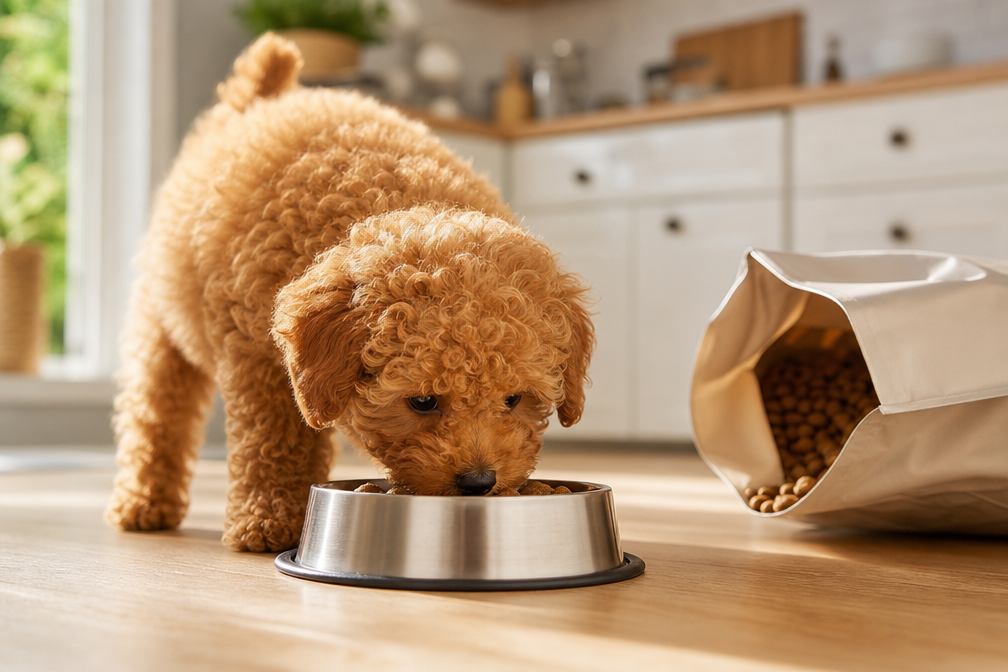
Feed a high-quality, small-breed-specific puppy food divided into three to four meals per day. Toy Poodle puppies are prone to hypoglycemia (low blood sugar) because of their tiny size, so going more than 4 to 5 hours without food during daytime hours is risky [2].
Feeding guidelines for the first 30 days:
| Age | Meals Per Day | Portion Size | Food Type |
|---|---|---|---|
| 8-10 weeks | 4 meals | 1/8 to 1/4 cup per meal | Small-breed puppy kibble (moistened) |
| 10-12 weeks | 3-4 meals | 1/4 cup per meal | Small-breed puppy kibble |
| 12+ weeks | 3 meals | 1/4 to 1/3 cup per meal | Small-breed puppy kibble |
Avoid table scraps entirely. Some common human foods like grapes, chocolate, onions, and xylitol are toxic to dogs [2]. Stick with the same food the breeder was using for at least the first two weeks, then transition gradually over 7 to 10 days if switching brands.
What If My Toy Poodle Puppy Won't Eat?
A Toy Poodle puppy refusing food in the first 24 to 48 hours is common and usually caused by stress from the move. Try warming the food slightly, adding a small amount of warm water to kibble, or offering food by hand.
When to worry: If your puppy skips more than two consecutive meals, shows lethargy, or has diarrhea, contact your vet immediately. Hypoglycemia in Toy Poodle puppies can escalate quickly and requires prompt attention.
How Often Do Toy Poodle Puppies Need to Go Outside to Potty?
Take your Toy Poodle puppy outside every 1 to 2 hours during waking hours, plus immediately after eating, drinking, playing, and waking from naps. At 8 weeks old, most puppies can hold their bladder for about 2 hours maximum.
A practical potty schedule for the first month:
- First thing in the morning (carry the puppy outside; don't let them walk)
- After every meal (within 5 to 10 minutes of eating)
- After every nap
- After play sessions
- Every 1 to 2 hours between events
- Right before bedtime
- Once or twice during the night (for puppies under 10 weeks)
Common mistake: Punishing accidents after the fact. If you didn't catch the puppy in the act, clean it up and move on. Toy Poodles are sensitive, and punishment creates fear rather than understanding. For a deeper dive into effective methods, see this guide on house training your new Toy Poodle puppy.
Use an enzymatic cleaner for indoor accidents. Regular cleaners leave scent traces that encourage the puppy to use the same spot again.
How Much Sleep Does a Toy Poodle Puppy Need?
Toy Poodle puppies between 8 and 16 weeks old need 18 to 20 hours of sleep per day. That's not a typo. Puppies this age are growing rapidly, and sleep is when most physical and neurological development happens.
Signs your puppy is overtired (not misbehaving):
- Increased biting and nipping
- Zoomies that seem frantic rather than playful
- Inability to settle down
- Whining for no apparent reason
Enforce nap times. A good rule: for every 1 hour of awake time, plan 2 hours of crate or pen rest. Many behavior problems new owners blame on "stubbornness" are actually caused by sleep deprivation. Learn more about managing your puppy's energy in this article on quiet time and avoiding overstimulation in Toy Poodles.
How to Crate Train a Toy Poodle Puppy
Crate training works best when the crate feels like a den, not a prison. Start on day one by placing the crate in a common area with the door open, a soft bed inside, and treats scattered in it. Never force the puppy inside [8].
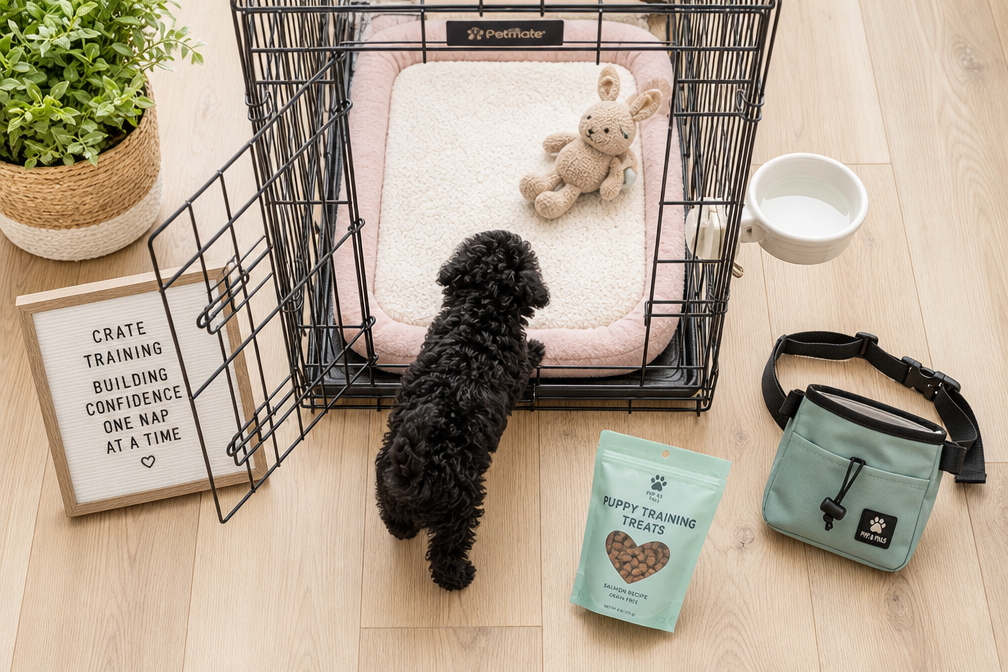
Step-by-step crate training schedule:
- Days 1-3: Leave the crate open. Toss treats inside. Let the puppy explore freely. Feed meals near or inside the crate.
- Days 4-7: Begin closing the door for 1 to 2 minutes while you're visible. Open before the puppy whines.
- Week 2: Increase closed-door time to 10 to 15 minutes. Step out of sight briefly.
- Week 3: Work up to 30 to 60 minutes. Use a stuffed Kong or chew toy to build positive associations.
- Week 4: The puppy should tolerate 1 to 2 hours during the day and sleep through most of the night in the crate.
Decision rule: Choose a crate just big enough for the puppy to stand, turn around, and lie down. Too much space encourages potty accidents inside the crate. For a complete walkthrough, check out this guide on crate training Toy Poodle puppies the positive way.
When Should I Start Training My Toy Poodle Puppy?
Start training the day your puppy comes home. Toy Poodles are among the most intelligent dog breeds, and they're ready to learn from 8 weeks old [3]. The key is keeping sessions short (3 to 5 minutes) and using positive reinforcement exclusively.
First 30 days training priorities (in order):
- Name recognition (week 1)
- Sit (week 1-2)
- Come/recall (week 2)
- Down (week 2-3)
- Leave it (week 3-4)
- Loose leash introduction (week 3-4)
Use tiny, soft treats broken into pea-sized pieces. Toy Poodles gain weight easily, so training treats should be factored into daily calorie intake. Verbal praise and brief play also work well as rewards for this breed.
How to Stop Toy Poodle Puppy Biting and Nipping
Biting and nipping are normal puppy behaviors, not aggression. Toy Poodle puppies explore the world with their mouths, and teething makes it worse between 8 and 16 weeks.
What works:
- Redirect immediately to an appropriate chew toy when teeth touch skin
- Withdraw attention for 10 to 15 seconds when biting occurs (stand up, turn away, fold arms)
- Provide frozen washcloths or teething toys to soothe sore gums
- Avoid rough play with hands; always use a toy as a buffer
What doesn't work: Yelling, tapping the nose, holding the mouth shut, or alpha-rolling. These methods damage trust and can create fear-based aggression in a sensitive breed like the Toy Poodle. For breed-specific strategies, read this article on stopping nipping and mouthing in Toy Poodle puppies.
Best Toys for Toy Poodle Puppies Under 3 Months
The best toys for very young Toy Poodle puppies are small, soft, and safe to chew. Avoid anything with small detachable parts, as Toy Poodle puppies can choke on pieces that larger breeds would handle fine.
Recommended toy types:
- Soft plush toys (puppy-sized, not large-breed toys)
- Small rubber Kongs (puppy formula, stuffable)
- Rope toys (small diameter, supervised use only)
- Puzzle feeders (beginner level for mental stimulation)
- Crinkle toys (the sound holds attention)
- Frozen teething rings designed for small breeds
Rotate toys every 2 to 3 days to prevent boredom. Toy Poodles are smart enough to lose interest in the same toy quickly [1]. Puzzle toys and enrichment feeders are especially valuable; learn more about using enrichment toys to train Toy Poodle puppies.
Toy Poodle Puppy Socialization: What to Do in the First 30 Days
Socialization between 3 and 14 weeks of age is the single biggest factor in whether a Toy Poodle grows into a confident or fearful adult dog [3]. Since most puppies come home around 8 to 10 weeks, you have a narrow window to work with.
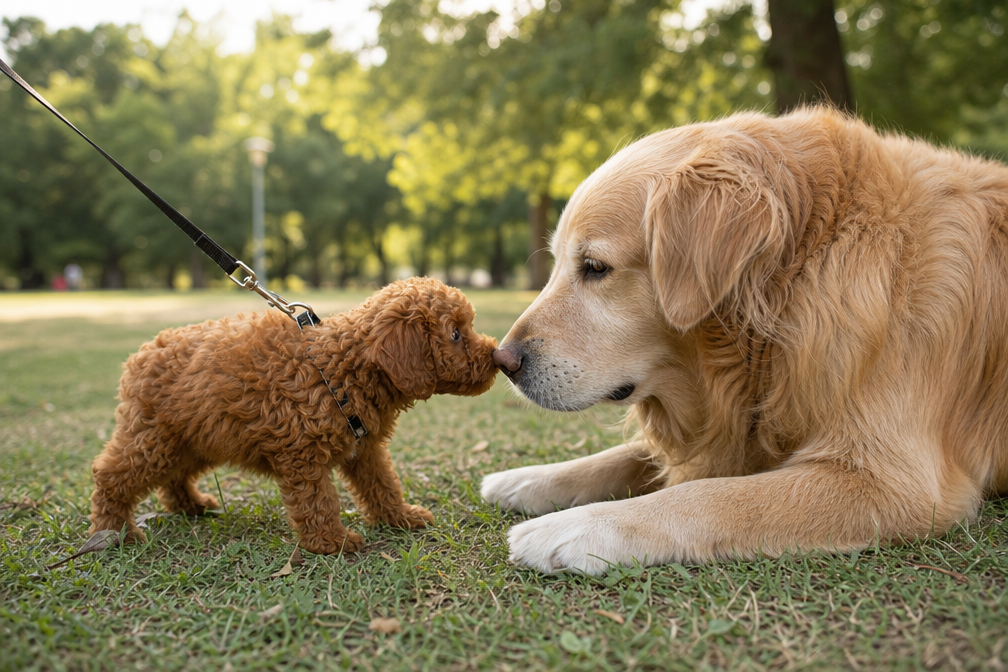
Week-by-week socialization plan:
- Week 1: Household sounds (vacuum from a distance, TV, doorbell), gentle handling of paws, ears, and mouth
- Week 2: Meeting 2 to 3 new people in your home (calm interactions only), different floor surfaces (tile, carpet, grass)
- Week 3: Short car rides, exposure to umbrellas, hats, sunglasses, and other visual novelties. If vaccinations allow, brief visits to calm outdoor areas (carry the puppy in unvaccinated zones)
- Week 4: Puppy socialization classes (verify vaccination requirements), meeting one calm, vaccinated adult dog
Edge case: If your puppy hasn't completed its vaccination series, you can still socialize safely. Carry the puppy in public, invite vaccinated dogs to your home, and use puppy classes that require proof of vaccination from all attendees. Explore more ideas in this guide to socialization games for young Toy Poodle puppies.
How to Introduce a Toy Poodle Puppy to Other Pets
Introduce existing pets gradually and always supervise. For dogs, start with scent swapping (exchange blankets between the new puppy and resident dog for 1 to 2 days before a face-to-face meeting). First meetings should happen in a neutral area, not the resident pet's favorite spot.
For cats, use a baby gate to allow visual contact without physical access. Let the cat set the pace. Most cats need 1 to 2 weeks before tolerating a puppy nearby.
Safety note: Never leave a Toy Poodle puppy unsupervised with a larger dog or cat during the first month. At 2 to 4 pounds, these puppies are fragile and can be injured by even playful roughhousing.
Do Toy Poodles Need Grooming as Puppies?
Yes, grooming should start immediately, even though the puppy coat is soft and tangle-free. The goal in month one isn't coat maintenance; it's building tolerance for grooming that will be a lifelong requirement [1].
Toy Poodles have hair (not fur) that grows continuously and sheds minimally. Adult coats require professional grooming every 4 to 6 weeks and daily brushing to prevent matting [1]. Starting early makes this process stress-free.
First-month grooming checklist:
- Daily: Gentle brushing with a soft slicker brush (even 30 seconds counts)
- Daily: Wipe eyes with a soft, damp cloth to prevent tear staining [1]
- Weekly: Check and clean ears with vet-approved solution [1]
- Every 2-3 weeks: Bath with gentle puppy shampoo
- As needed: Nail trimming (if you hear clicking on hard floors) [6]
- Daily: Touch paws, ears, mouth, and tail to build handling tolerance
For detailed coat care techniques, visit this resource on grooming tips for fluffy Toy Poodle puppies.
Toy Poodle Puppy Vaccination Schedule: First 30 Days
Your Toy Poodle puppy should see a vet within 48 to 72 hours of coming home, even if the breeder provided vaccination records [7]. This visit confirms the puppy's health baseline and establishes the remaining vaccination schedule.

Typical vaccination timeline (may vary by vet):
| Age | Vaccines | Notes |
|---|---|---|
| 6-8 weeks | DHPP (1st dose), may include Bordetella | Often given by breeder |
| 10-12 weeks | DHPP (2nd dose), Leptospirosis (1st dose) | Usually falls within your first 30 days |
| 14-16 weeks | DHPP (3rd dose), Rabies, Leptospirosis (2nd dose) | May fall just after the 30-day mark |
DHPP covers distemper, hepatitis, parainfluenza, and parvovirus. Until the full series is complete, avoid dog parks, pet stores, and areas with unknown vaccination status dogs [7].
Common Health Issues in Toy Poodle Puppies During the First Month
The most common health concerns during the first 30 days include hypoglycemia, digestive upset from food transitions, upper respiratory infections, and parasites [4].
- Hypoglycemia: Watch for lethargy, trembling, and disorientation. Offer a small amount of honey on the gums and contact your vet immediately.
- Patellar luxation: A genetic condition where the kneecap slips out of place. Your vet should check for this at the first visit [4].
- Dental issues: Toy Poodles are predisposed to dental disease. Begin brushing teeth gently with puppy toothpaste during month one [5].
- Ear infections: Floppy ears and hair growth in the ear canal make Toy Poodles vulnerable. Keep ears dry and clean [1].
Toy Poodle Puppy vs. Chihuahua: Which Is Easier for First-Time Owners?
Toy Poodles are generally easier for first-time owners than Chihuahuas because of their trainability, lower aggression tendencies, and hypoallergenic coats. However, both breeds have trade-offs.
| Factor | Toy Poodle | Chihuahua |
|---|---|---|
| Trainability | High (among top 10 smartest breeds) | Moderate (can be stubborn) |
| Grooming needs | High (daily brushing, professional grooming) | Low (short-coat) to moderate (long-coat) |
| Barking tendency | Moderate | High |
| Cold tolerance | Low | Very low |
| Hypoallergenic | Yes | No |
| Exercise needs | Moderate (30 min/day) | Low to moderate |
| Average lifespan | 10-18 years | 12-20 years |
Choose a Toy Poodle if: you want a highly trainable, hypoallergenic companion and don't mind regular grooming. For more on what makes Toy Poodles a strong choice for new owners, see this guide on Apricot Toy Poodle puppies for first-time owners.
Choose a Chihuahua if: you want minimal grooming and prefer a more independent temperament.
Frequently Asked Questions
How long does it take a Toy Poodle puppy to adjust to a new home?
Most Toy Poodle puppies show significant improvement by the end of week two. Full adjustment, including reliable routines and confident behavior, typically takes the full 30 days.
Can I leave my Toy Poodle puppy alone during the day?
Puppies under 12 weeks should not be left alone for more than 2 hours. By 16 weeks, most can handle 3 to 4 hours in a crate with appropriate setup. Arrange for a midday check-in if you work full-time.
How do I stop my Toy Poodle puppy from crying at night?
Place the crate in your bedroom for the first 1 to 2 weeks. The sound of your breathing helps the puppy feel safe. A warm water bottle wrapped in a towel and a ticking clock can mimic littermate comfort.
Should I let my Toy Poodle puppy sleep in my bed?
Not during the first 30 days. The crate builds independence, aids potty training, and prevents injury from falling off the bed. A Toy Poodle puppy at 8 weeks weighs only 1.5 to 3 pounds and can be seriously hurt by a fall.
How much exercise does a Toy Poodle puppy need?
Short play sessions of 5 to 10 minutes several times a day are enough for the first month. Formal walks can begin after vaccinations are complete, starting at 10 to 15 minutes and building gradually [2].
When can my Toy Poodle puppy go to the dog park?
Wait until 2 weeks after the final DHPP vaccination, typically around 16 to 18 weeks of age. Before that, the risk of parvovirus and other diseases is too high.
Do Toy Poodle puppies bark a lot?
Toy Poodles are alert dogs and will bark at new sounds and visitors. Early socialization and teaching a "quiet" command during weeks 3 to 4 helps manage barking before it becomes a habit.
What's the best way to handle teething pain?
Offer frozen Kongs stuffed with peanut butter (xylitol-free), frozen washcloths, and rubber teething toys. Teething peaks between 12 and 16 weeks.
How often should I bathe my Toy Poodle puppy?
Every 2 to 4 weeks with a gentle puppy shampoo. Overbathing strips natural oils and can cause dry, itchy skin [1].
Is it normal for my Toy Poodle puppy to have diarrhea the first few days?
Mild digestive upset from the stress of a new environment is common. If diarrhea lasts more than 48 hours, contains blood, or is accompanied by vomiting or lethargy, see a vet immediately.
Conclusion
The first 30 days with a Toy Poodle puppy are demanding but predictable once you understand the weekly rhythm. Week one is about trust and decompression. Week two builds routine. Week three expands your puppy's world through socialization. Week four brings everything together into a stable daily pattern.
Actionable next steps to take right now:
- Set up a written daily schedule covering feeding times, potty breaks, nap times, and short training sessions.
- Book a vet appointment within 48 to 72 hours of bringing your puppy home.
- Purchase a properly sized crate and begin the crate training protocol on day one.
- Start daily brushing and handling exercises, even if the coat doesn't need it yet.
- Create a socialization checklist of 50 new experiences to introduce over the next month (sounds, surfaces, people, objects).
- Keep training sessions to 3 to 5 minutes and always end on a success.
Consistency during this first month sets the foundation for the next 10 to 18 years with your Toy Poodle. The effort invested now pays off in a confident, well-adjusted companion for life.
References
[1] Toy Poodle – https://www.petmd.com/dog/breeds/toy-poodle
[2] Toy Poodle Care – https://valivans.club/blog/toy-poodle-care
[3] Poodle Toy – https://www.breedtracker.com/breeds/toy/poodle-toy
[4] Poodle Toy – https://www.akc.org/dog-breeds/poodle-toy/
[5] Toy Poodle – https://www.chewy.com/education/dog-breeds/toy-poodle
[6] How To Groom A Standard Poodle – https://www.akc.org/expert-advice/health/how-to-groom-a-standard-poodle/
[7] Puppy's First 30 Days What New Dog Parents Should Expect – https://www.petsmart.com/learning-center/dog-care/puppys-first-30-days-what-new-dog-parents-should-expect
[8] First Day New Puppy – https://www.akc.org/expert-advice/puppy-information/first-day-new-puppy/