

goldendoodle mini puppies for sale
Goldendoodle mini puppies for sale from reputable breeders typically cost between $2,500 and $4,000, weigh 15-30 pounds at maturity, and offer a low-shedding, family-friendly temperament. The best puppies come from health-tested parents, are raised inside the breeder’s home, and are socialized with people, sounds, and other animals starting at three weeks old. Avoid listings under $1,000, they’re almost always scams or high-volume commercial operations.
goldendoodle mini puppies for sale
- Adult size: 15-30 lbs, 13-20 inches tall, small enough for apartments, sturdy enough for kids.
- Expected price range: $2,500-$4,000 from an ethical breeder; $500-$1,500 usually signals red flags.
- Lifespan: 12-15 years, with proper care and health-tested parents.
- Shedding: Low to minimal, especially in F1B and multigen coats. Not fully hypoallergenic, but tolerated by many allergy sufferers.
- Best breeder markers: OFA/PennHIP hips, genetic panel, in-home raising, early neurological stimulation, contract with health guarantee.
- Watch out for: No health testing, unwilling to share vet records, pressure tactics, wire transfer only, refusal of video calls.
- Annual cost after purchase: Roughly $1,500-$3,000 including food, grooming, vet care, and insurance.
What’s the Difference Between Mini Goldendoodles and Standard Goldendoodles?
Mini goldendoodles are bred by crossing a golden retriever with a miniature (or toy) poodle instead of a standard poodle. The result is a smaller adult dog, typically 15-30 pounds, with the same friendly temperament as a standard goldendoodle, which usually weighs 50-70 pounds.
The differences that matter most to buyers:
- Size: Minis stand 13-20 inches; standards stand 20-24 inches.
- Space needs: Minis thrive in apartments and small yards. Standards need more room to move.
- Exercise: Minis are content with 45-60 minutes of daily activity. Standards typically need 60-90.
- Lifespan: Minis live 12-15 years on average; standards live 10-13 years.
- Cost: Minis usually cost slightly more per puppy because litters are smaller.
Choose a mini if you live in a smaller home, travel often, or want a dog you can pick up and manage into old age. Choose a standard if you want a more athletic companion for hiking, running, or a busy household with older kids.
How Much Do Mini Goldendoodle Puppies Cost?
Expect to pay $2,500 to $4,000 for a mini goldendoodle puppy from a responsible breeder in 2026. Micro minis, rare coat colors (like phantom or merle), and F1B generations often push toward the top of that range or higher.
Here’s a realistic breakdown of what different price tiers usually mean:
| Price Range | What It Typically Signals |
|---|---|
| Under $800 | Likely scam, puppy mill, or serious health/temperament risks |
| $800-$1,500 | Backyard breeder, minimal or no health testing |
| $1,500-$2,500 | Commercial breeder, some testing, limited socialization |
| $2,500-$4,000+ | Professional program, full health panel, in-home raising, lifetime support |
Higher prices reflect real costs: OFA hip and elbow evaluations, genetic disease panels, progesterone testing, C-sections when needed, premium puppy food, early neurological stimulation, and vet care through 8 weeks. A breakdown of what goes into responsible pricing can help you evaluate a breeder’s transparency.
Where Can I Find Reputable Mini Goldendoodle Breeders?
The most reliable path is to search by state, verify credentials, then interview at least two or three breeders before putting down a deposit. Avoid Craigslist, Facebook Marketplace, and pet stores, these channels are dominated by resellers and mills.
Start with breeders who are transparent about their program, publish their health testing, and let you video-call to see the parents and puppies live. Regional directories are useful because they narrow the search and often list breeders who ship or offer puppy nanny services nationwide:
- Mini goldendoodle breeders in Pennsylvania
- Mini goldendoodle breeders in Florida
- Mini goldendoodle breeders in North Carolina
- Mini goldendoodle breeders in Texas
- Mini goldendoodle breeders in Arizona
Green flags to look for: waitlists (a good sign of demand and limited litters), a written health guarantee of at least 1-2 years, published parent health testing, in-home puppy environment, take-back policy for the dog’s lifetime.
What Should I Look For in a Goldendoodle Breeder to Avoid Scams?
To avoid scams, insist on live video calls with the puppy and its parents, verify the breeder’s physical address, ask for the parents’ health testing results by name, and never pay by wire transfer, gift card, or cryptocurrency. Legitimate breeders welcome scrutiny.
A quick vetting checklist:
- Live video call with the specific puppy you’re interested in, not photos, not pre-recorded video.
- Health testing documents for both parents (hips, elbows, eyes, cardiac, genetic panel through Embark or Paw Print).
- Written contract covering health guarantee, spay/neuter terms, and take-back clause.
- AKC or reputable registry paperwork if applicable (not required for doodles, but a good sign).
- References from at least two past puppy buyers.
- Reasonable payment terms, credit card or check preferred; not wire transfer only.
- Willingness to answer detailed questions without pressure to “act fast.”
Common scam patterns: listings with stolen photos, prices far below market, “shipping only” with no visits allowed, sudden urgent fees (crate insurance, climate insurance) after deposit, poor grammar in emails combined with a US-based claim.
 ))
))
Are Mini Goldendoodles Good for Apartments?
Yes, mini goldendoodles are one of the better apartment breeds when their exercise and mental stimulation needs are met. Their small size, adaptable temperament, and low shedding make them ideal for condos, city homes, and shared buildings.
To make apartment life work:
- Daily exercise: 30-45 minutes of walking, plus 15-20 minutes of active play or training.
- Mental enrichment: Puzzle feeders, snuffle mats, and short training sessions prevent boredom-based barking.
- Potty routine: Consistent bathroom breaks every 3-4 hours for young puppies. Balcony pee pads work as a backup.
- Noise management: Socialize early to hallway sounds, elevators, and neighbors so barking doesn’t become a habit.
If you’re specifically shopping for a smaller apartment-friendly size, this guide on why a 10-16 lb micro goldendoodle suits urban living covers the tradeoffs.
How Big Do Mini Goldendoodles Get When Fully Grown?
Adult mini goldendoodles typically weigh 15-30 pounds and stand 13-20 inches at the shoulder. F1 minis (first-generation, 50% golden retriever, 50% mini poodle) tend to land at the higher end. F1B minis (backcrossed to poodle) skew smaller and curlier.
A rough size projection formula breeders use:
- Take the puppy’s weight at 8 weeks
- Multiply by 4.3 for a mid-size adult estimate
For example, a 4-lb 8-week-old puppy will likely mature around 17-18 lbs. This isn’t exact, genetics from both parents matter more than the formula. Ask the breeder for the adult weights of previous litters from the same pairing.
Mini Goldendoodle vs Cockapoo: Which Is Better?
Neither is universally “better”, the right choice depends on your lifestyle. Mini goldendoodles are slightly larger, more athletic, and generally more eager to please. Cockapoos are usually smaller, a touch more independent, and often better suited to very quiet homes.
| Trait | Mini Goldendoodle | Cockapoo |
|---|---|---|
| Adult weight | 15-30 lbs | 12-24 lbs |
| Energy level | Moderate to high | Moderate |
| Trainability | Very high | High |
| Shedding | Low | Low |
| Best for | Active families, first-time owners | Quieter homes, seniors |
| Grooming needs | Every 6-8 weeks | Every 6-8 weeks |
Choose a mini goldendoodle if you want a dog that loves training, thrives on family activity, and does well with kids. Choose a cockapoo if you want a smaller lap-oriented companion that’s calmer indoors.
Do Mini Goldendoodles Shed a Lot? Are They Hypoallergenic?
Mini goldendoodles shed very little, but no dog is truly 100% hypoallergenic. Their poodle-influenced coat traps loose hair rather than releasing it, which reduces both shedding and airborne dander, the actual trigger for most dog allergies.
Shedding levels by generation:
- F1 (50/50): Light to moderate shedding, wavy coat.
- F1B (75% poodle): Very light shedding, curlier coat. Best for allergy households.
- F2B / Multigen: Consistently low shedding when bred from low-shed lines.
If someone in your home has severe allergies, spend time with an adult mini goldendoodle before committing. Bathe your puppy every 3-4 weeks and brush 2-3 times per week to keep dander down. For more on this, see the guide to allergy-conscious homes.
What Health Problems Do Mini Goldendoodles Have?
Mini goldendoodles are generally healthy, but they can inherit conditions from either parent breed. Reputable breeders screen for these before pairing dogs. The most common issues include:
- Hip dysplasia, screened with OFA or PennHIP evaluations.
- Progressive retinal atrophy (PRA), detectable via genetic testing.
- Von Willebrand’s disease, a bleeding disorder screened through DNA panels.
- Patellar luxation, more common in smaller minis; screened by veterinary exam.
- Ear infections, floppy ears trap moisture; weekly cleaning helps.
- Allergies, skin and food allergies pop up occasionally; usually manageable.
Ask any breeder to email you the parent test results before you commit. If they can’t produce documentation from OFA, Embark, or Paw Print Genetics, keep shopping.
What’s the Average Lifespan of a Mini Goldendoodle?
The average mini goldendoodle lifespan is 12-15 years, with some individuals reaching 16 or 17 with excellent care. Smaller doodles tend to outlive larger ones by 2-3 years on average.
Factors that extend lifespan:
- Health-tested parents from long-lived lines
- Lean body weight throughout life (obesity is the #1 lifespan reducer)
- Annual dental cleanings starting around age 3
- High-quality diet appropriate for size and life stage
- Regular exercise and mental engagement
- Preventive vet care and vaccinations on schedule
How Much Does It Cost to Raise a Mini Goldendoodle Per Year?
Plan on $1,500-$3,000 per year for a mini goldendoodle after the initial purchase. First-year expenses run higher due to spay/neuter, initial supplies, training classes, and puppy vet visits.
Realistic annual budget:
| Category | Annual Cost |
|---|---|
| Food (premium kibble/fresh) | $400-$700 |
| Professional grooming | $500-$900 |
| Vet care (routine) | $250-$500 |
| Pet insurance | $360-$720 |
| Preventives (flea/tick/heartworm) | $200-$350 |
| Toys, treats, replacements | $150-$300 |
| Total | $1,860-$3,470 |
Emergency vet visits can add $1,000-$5,000+ in a single incident, which is why pet insurance is worth considering while your puppy is young and healthy.
 ))
))
Available Mini Goldendoodle Puppies
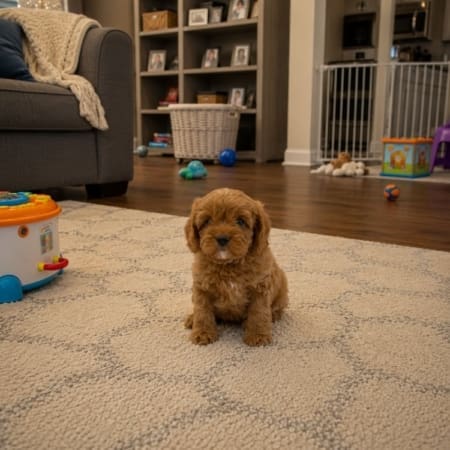
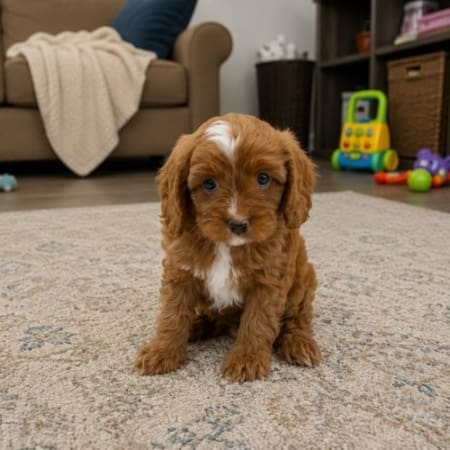
Designer Mini Doodles maintains a rotating selection of health-tested mini and micro goldendoodle puppies raised inside our home by a team led by an animal biologist. Every puppy in our program receives early neurological stimulation, daily socialization with adults and children, temperament testing, and a jumpstart on housebreaking and crate training before going home.
Availability changes weekly as puppies find their families and new litters are born. If you don’t see the exact color, sex, or size you’re looking for below, contact us about upcoming litters, most of our puppies are reserved before they’re born through our waitlist. We ship nationwide via dedicated puppy nanny, and every family receives lifetime breeder support.
Browse our currently available puppies below. You can also explore our full Cavapoo puppies for sale selection if you’re open to related breeds, or view our Cavapoo puppies on Google Maps for reviews and location info.
- Display 9 Products per page

Mini Goldendoodle Puppy Training Tips for First Time Owners
Start training the day you bring your puppy home. Mini goldendoodles are among the easiest breeds to train because of the golden retriever’s people-pleasing nature combined with poodle intelligence, but that same intelligence means bad habits form fast too.
The first 30 days matter most:
- Crate training from night one. Place the crate near your bed for the first week. Feed meals in the crate. Never use it as punishment. See our crate training guide for step-by-step details.
- Potty on a schedule. Take the puppy out every 90 minutes when awake, immediately after meals, naps, and play. Praise heavily outside; ignore accidents inside.
- Short training sessions. 3-5 minutes, 4-6 times daily. Focus on name recognition, sit, and coming when called.
- Socialization sprint. Between 8-16 weeks, expose your puppy to 100 different people, surfaces, sounds, and safe dogs. This window closes and can’t be reopened.
- No free-roaming. Use gates or a leash tether indoors until house-trained. Freedom is earned.
For a full first-month plan, see the first 30 days home checklist.
Why Is My Mini Goldendoodle Puppy Biting So Much?
Puppy biting is normal developmental behavior between 8 and 20 weeks, puppies explore with their mouths and are learning bite inhibition. It peaks around 12 weeks and fades by 6 months with consistent handling.
To reduce biting:
- Redirect to a chew toy the instant teeth touch skin. Praise when the puppy chews the toy.
- Yelp and disengage. A short high-pitched “ouch” plus 30 seconds of ignoring teaches that biting ends fun.
- Ensure enough sleep. Overtired puppies bite more. They need 18-20 hours of sleep per day.
- Increase mental stimulation. A bored puppy is a biter. Puzzle toys and short training sessions burn mental energy.
- Never wrestle or use hands as toys. This teaches that human skin is fair game.
If biting is still severe past six months, consult a certified positive-reinforcement trainer.
What Sets Designer Mini Doodles Apart
Designer Mini Doodles is one of America’s premier mini goldendoodle and Cavapoo breeding programs. Our program is operated by an animal biologist and centers on three priorities: health, temperament, and structure.
What every puppy receives:
- Full genetic health panel on both parents
- OFA hip, elbow, cardiac, and patella evaluations
- Early Neurological Stimulation (Bio Sensor protocol, days 3-16)
- Daily handling and socialization from three weeks on
- Temperament testing at seven weeks (Volhard method)
- Age-appropriate housebreaking foundation
- Introduction to crate training
- Vet exam, first vaccines, deworming
- Written health guarantee
- Lifetime breeder support
Families throughout the country choose our program because we treat every puppy like a member of our own household, because they are, right up until go-home day. If you’re interested in related breeds, we also offer Cavapoo for sale and Mini Cavapoo puppies from the same program standards. For our sister-site’s small-breed lineup, see Mini Frenchie options.
Nationwide Puppy Nanny and Delivery Options
We deliver puppies to families in all 50 states. You never have to live near our program to bring home a Designer Mini Doodles puppy.
Delivery options:
- Dedicated Puppy Nanny, a trained handler flies with your puppy in-cabin. This is our most popular option because the puppy is never in cargo and is fed, walked, and comforted throughout the trip.
- Major airport pickup, you meet the nanny at your closest major airport (ATL, DFW, ORD, LAX, JFK, MIA, etc.).
- Regional airport service, available for smaller markets on request.
- Personal home delivery, offered on select routes when scheduling allows.
Every delivery includes a health-checked travel crate, a go-home puppy pack with food, a familiar blanket, medical records, and 24/7 support during the transit day.
 ))
))
Coat Types, Grooming, and Nutrition
Coat types: Mini goldendoodles come in three general coat textures, straight (more retriever-like, slightly higher shed), wavy (the classic teddy bear look), and curly (most poodle-like, lowest shedding). Colors include cream, apricot, red, chocolate, black, parti, phantom, and merle.
Grooming schedule:
- Brush 2-3 times per week (daily during coat change around 8-10 months)
- Professional groom every 6-8 weeks
- Ear cleaning weekly
- Nail trim every 3-4 weeks
- Teeth brushing 3+ times per week
Nutrition: Feed a high-quality puppy food formulated for small-to-medium breeds until 12 months, then transition to adult formula. Split into three meals daily until 6 months, then two meals. Fresh water always available. Avoid grain-free diets unless prescribed, they’ve been linked to DCM in doodles.
Exercise: 45-60 minutes daily as adults. Puppies follow the “5 minutes per month of age” rule for structured exercise to protect growing joints.
Frequently Asked Questions
Are mini goldendoodles good with kids?
Yes. Their patient, playful temperament makes them one of the most family-friendly small breeds. Always supervise young children and teach them to respect the puppy’s space and sleep time.
How long can a mini goldendoodle be left alone?
Adults can handle 4-6 hours comfortably. Puppies under 6 months should not be alone longer than their age in months plus one hour (a 4-month-old can hold it about 5 hours max).
F1 vs F1B mini goldendoodle, which is better?
F1 has more retriever traits and slight shedding. F1B is curlier, lower-shedding, and better for allergy households. Neither is objectively “better.”
Do mini goldendoodles bark a lot?
No, they’re moderate barkers. Early socialization and mental exercise prevent nuisance barking.
Can I get a mini goldendoodle if I work full-time?
Yes, with planning. Use a midday dog walker or daycare 2-3 days per week, and invest heavily in crate training and enrichment.
What’s the difference between mini, micro mini, and toy goldendoodle?
Mini: 15-30 lbs. Micro mini: 10-20 lbs. Toy: under 15 lbs. Sizes overlap and breeders use these labels differently, so always ask for parent weights.
When can my mini goldendoodle puppy go to public parks?
Wait until 7-10 days after the final puppy vaccine series (usually around 16-17 weeks). Before that, socialize in low-risk private settings.
Do mini goldendoodles get along with cats?
Yes, especially when introduced during the socialization window (8-16 weeks) with calm, controlled sessions.
Conclusion
The right mini goldendoodle puppy will be with your family for well over a decade, so the extra time and money you invest in finding a reputable breeder pays back many times over. Focus on health testing, in-home raising, and transparent communication, not the lowest price or the fastest availability.
Your next steps:
- Set a realistic budget of $2,500-$4,000 plus $1,500-$3,000 annually.
- Shortlist 2-3 breeders from a state directory and request video calls with each.
- Ask for parent health testing documents in writing before paying any deposit.
- Prepare your home with a crate, gates, and puppy supplies before pickup day.
- Book a puppy training class for the week your puppy comes home.
When you’re ready to see current litters, browse available puppies at Designer Mini Doodles or explore breeders in your region through our state directories. A well-bred mini goldendoodle from a program that prioritizes health and temperament is one of the best family decisions you’ll ever make.
Sources
- Orthopedic Foundation for Animals (OFA), Hip and Elbow Statistics by Breed, 2024, https://ofa.org
- American Kennel Club, Poodle and Golden Retriever Breed Standards, 2024, https://akc.org
- Embark Veterinary, Genetic Health Panel Information, 2024, https://embarkvet.com