
mini goldendoodle breeders in Miami
The best mini goldendoodle breeders in Miami prioritize genetic health testing, provide contracts with health guarantees, and charge between $2,000 and $3,500 for well-bred puppies. If you’re in Georgia searching for a mini or micro mini goldendoodle from a South Florida breeder, look for programs led by professionals with backgrounds in animal biology or genetics rather than hobby breeders. Designer Mini Doodles, founded by an animal biologist with a minor in animal genetics, consistently ranks among the top micro doodle breeders in the country and delivers puppies throughout the Southeast, including Georgia and Miami.
- Display 9 Products per page







mini goldendoodle breeders in Miami
- Mini goldendoodle puppies from responsible breeders in the Miami area cost $2,000 to $3,500 — anything under $800 is a red flag for scams or puppy mills.
- Micro mini goldendoodles (12–19 lbs) and toy goldendoodles (6–10 lbs) are virtually non-shedding, making them ideal for Miami’s apartment-heavy housing market and allergy-conscious families.
- F1B and multigenerational crosses produce the most predictable coats and sizes — critical if you need a hypoallergenic companion.
- Reputable breeders perform OFA, PennHIP, and genetic panel testing on all parent dogs before breeding.
- Average wait times for mini goldendoodle puppies in South Florida range from 2 to 6 months depending on size and color preferences.
- Georgia buyers can easily work with top Florida breeders — many programs, including Designer Mini Doodles, offer ground transport and flight nanny delivery throughout the Southeast.
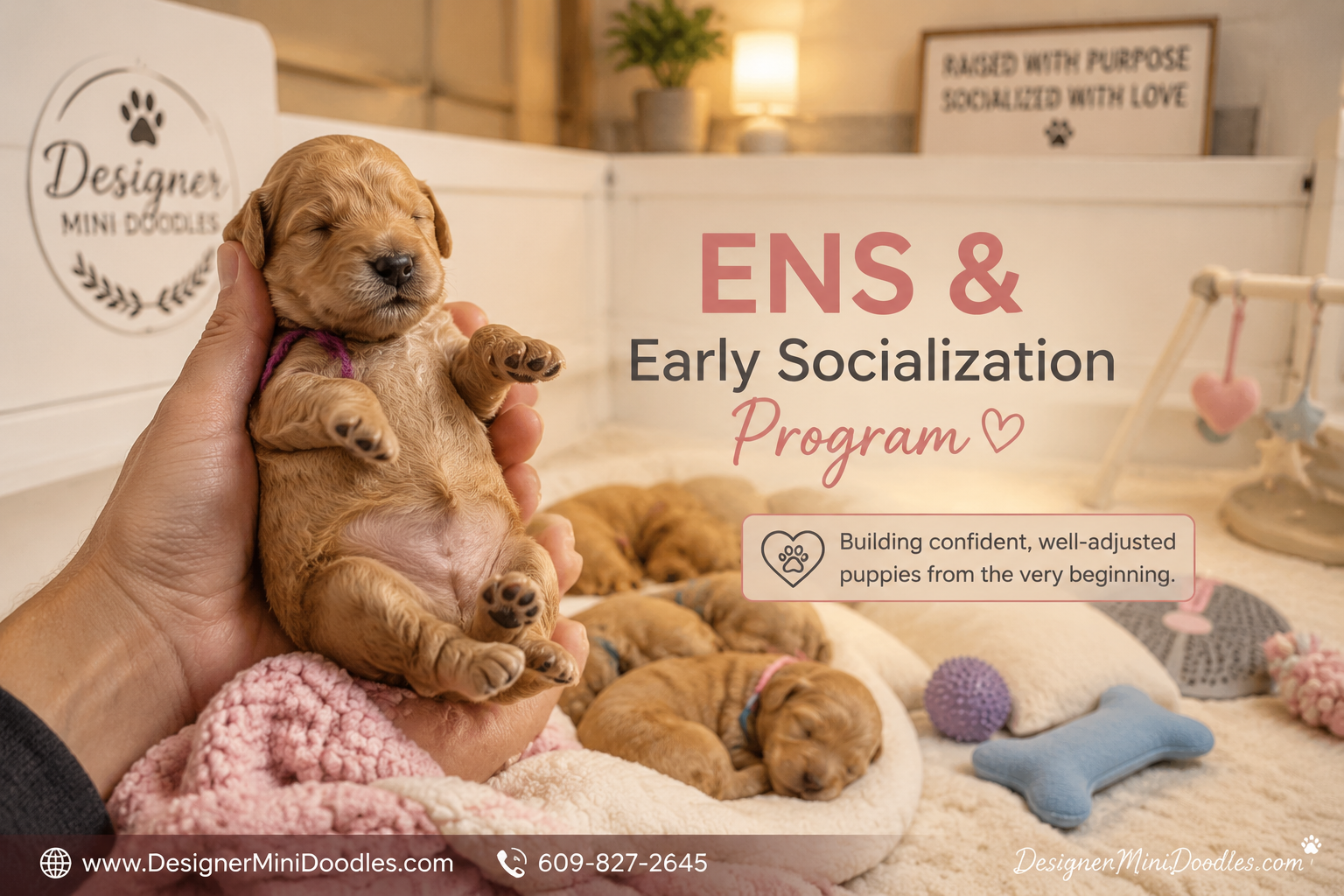
- Early Neurological Stimulation (ENS), crate training, and early housebreaking are hallmarks of a professional breeding program.
- Financing options are available through programs like Designer Mini Doodles, making a responsibly bred puppy more accessible.

How Much Does a Mini Goldendoodle Puppy Cost in Miami?
A well-bred mini goldendoodle puppy in Miami typically costs between $2,000 and $3,500 in 2026. The price varies based on size (toy, micro mini, or mini), coat color, generation, and the breeder’s investment in health testing and early socialization.
Here’s what different price ranges actually signal:
| Price Range | What It Usually Means |
|---|---|
| $250–$750 | Likely a scam — deposit fraud, no real puppies, or stolen photos |
| $800–$1,200 | Puppy mill or commercial operation with minimal health testing |
| $1,200–$1,500 | Hobby breeder — may do some testing but lacks professional protocols |
| $2,000–$3,500 | Responsible breeder with health guarantees, contracts, ENS, and lifetime support |
Why the higher price is worth it: A breeder charging $2,500+ is covering the cost of OFA certifications, genetic panels on parent dogs, veterinary prenatal care, premium nutrition, ENS protocols, early socialization, microchipping, age-appropriate vaccines, and a written health guarantee. These aren’t luxury add-ons — they’re the baseline of responsible breeding.
Designer Mini Doodles also offers puppy financing options, so families don’t have to compromise on quality. You can learn more about their mini goldendoodle puppies and current availability on their website.
Common mistake: Choosing a breeder based on price alone. A $900 puppy with hip dysplasia or a genetic heart condition will cost far more in vet bills within the first two years than the price difference between that puppy and one from a tested, health-guaranteed program.
Are Mini Goldendoodles Good With Kids and Apartments?
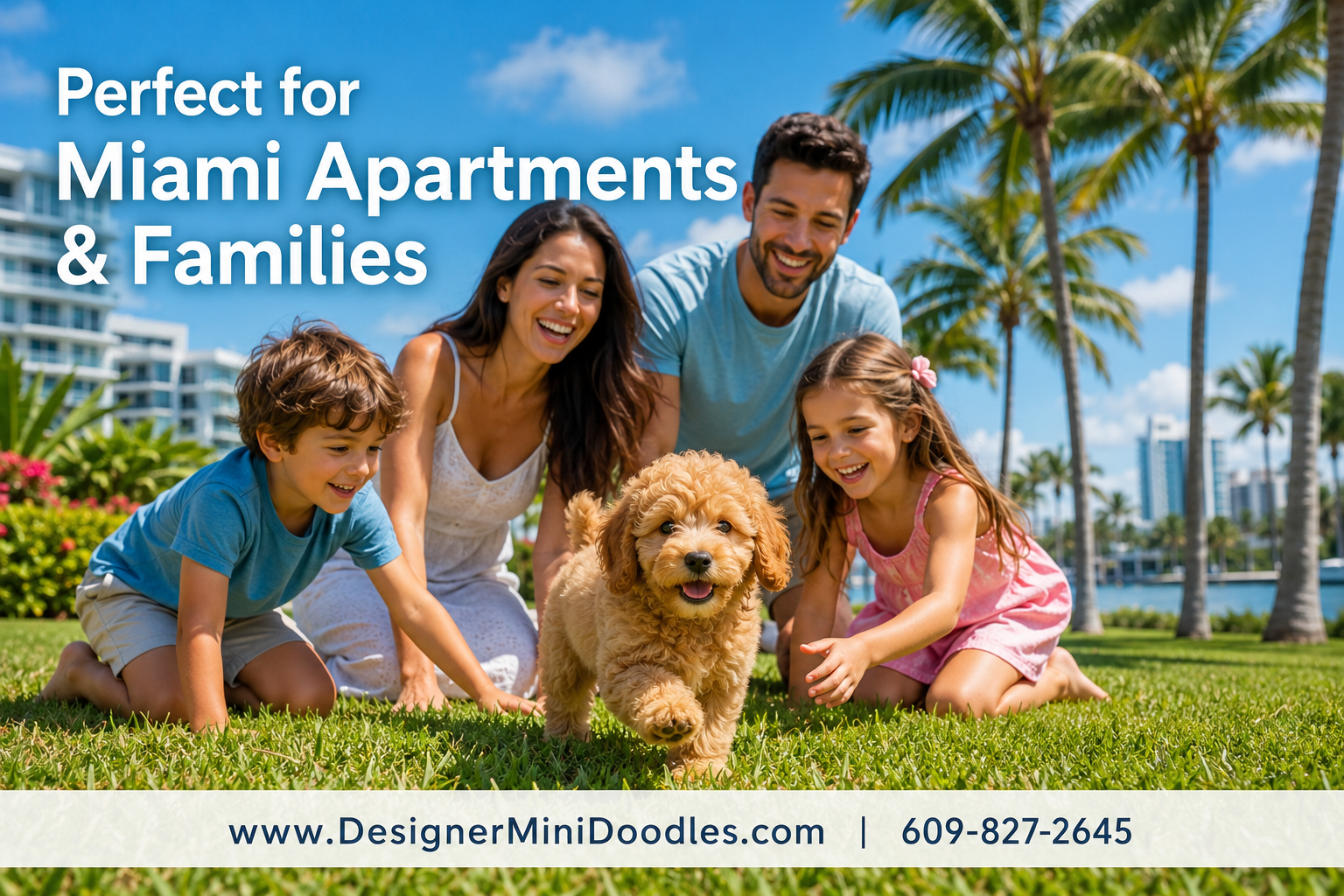
Yes — mini goldendoodles are one of the best breeds for families with children and apartment living, especially in a city like Miami. Their gentle temperament comes from the Golden Retriever side, while the Poodle contributes intelligence and a low-shedding coat.
Why they work well for families:
- Naturally patient and affectionate with children of all ages
- Eager to please, which makes training straightforward
- Small enough (especially the micro mini at 12–19 lbs) to thrive in condos and apartments
- Energetic enough for playtime but calm enough to settle indoors
For Miami apartment dwellers specifically, the toy (6–10 lbs) and micro mini (12–19 lbs) sizes are the sweet spot. They don’t need a backyard — daily walks and indoor play sessions keep them happy. If you’re considering this size for urban living, check out this guide on why a 10–16 lb micro goldendoodle is perfect for apartment and urban living.
Choose the micro mini (12–19 lbs) if you live in a condo under 1,000 sq ft and want a dog that’s easy to carry, travel with, and manage in shared spaces. Choose the mini (25–35 lbs) if you have a house with a yard and want a slightly sturdier dog for active kids.
For Georgia families researching micro mini goldendoodles, the same size guidelines apply — these dogs adapt well to both suburban homes in Atlanta and smaller apartments in Augusta.
What Health Tests Should a Reputable Goldendoodle Breeder Do?
A responsible mini goldendoodle breeder should perform, at minimum, OFA hip and elbow evaluations, cardiac exams, ophthalmologist (CERF/OFA eye) clearances, and a comprehensive genetic panel on every breeding dog. This is non-negotiable.
The genetic panel should screen for:
- Progressive Retinal Atrophy (PRA)
- Von Willebrand’s Disease
- Degenerative Myelopathy
- Neonatal Encephalopathy
- Ichthyosis (GR-specific)
Designer Mini Doodles sets the standard here. Founded by an animal biologist by degree with a minor in animal genetics, their program goes beyond what most breeders offer. Every parent dog is fully health-tested, and only top-quality bloodlines enter the breeding program. This isn’t a hobby operation — it’s a science-backed approach to producing the healthiest F1, F1B, and multigenerational mini and micro mini goldendoodle puppies in the country.
Red flag: If a breeder can’t show you health clearances for both the sire and dam, walk away. “My vet says they’re healthy” is not the same as OFA certification.
Difference Between F1 and F1B Mini Goldendoodle Generations
An F1 mini goldendoodle is a first-generation cross (Golden Retriever × Miniature Poodle), while an F1B is a backcross (F1 Goldendoodle × Miniature Poodle), giving it 75% Poodle genetics. The F1B is the better choice for allergy-sensitive households because its coat is curlier and sheds significantly less.
| Generation | Genetic Mix | Coat Type | Shedding Level | Best For |
|---|---|---|---|---|
| F1 | 50% Golden / 50% Poodle | Wavy to slightly curly | Low to moderate | Families wanting a balanced look |
| F1B | 25% Golden / 75% Poodle | Curly, fleece-like | Minimal to none | Allergy-conscious homes |
| Multigen | Varies (Poodle-dominant) | Consistently curly | Minimal to none | Maximum coat predictability |
Designer Mini Doodles specializes in all three generations and can help you choose based on your household’s specific needs. Their miniature goldendoodle breeder page breaks down the differences in more detail.
Choose F1B or multigen if anyone in your home has allergies. Choose F1 if you prefer a wavier, more Golden Retriever-looking coat and shedding isn’t a concern.
How to Spot a Backyard Breeder vs. a Responsible Breeder
The single fastest way to identify a backyard breeder: they can’t produce health clearances for parent dogs and don’t offer a written contract with a health guarantee. Responsible breeders always provide both.
Signs of a responsible breeder:
- Health testing documentation (OFA, genetic panels) readily available
- Written contract with a health guarantee (typically 2+ years)
- Lifetime breeder support — they’ll take the dog back at any age if you can’t keep it
- Puppies raised in the home with ENS, early socialization, and enrichment
- Waitlist and application process (they screen buyers)
- Transparent about parent dogs, lineage, and breeding philosophy
- Professional background in animal science, genetics, or veterinary medicine
Signs of a backyard or hobby breeder:
- No health testing or vague claims (“vet checked”)
- No contract or a flimsy one with no real guarantees
- Puppies available immediately with no waitlist
- Multiple breeds available at once
- Won’t let you meet parent dogs or see the facility
- Prices significantly below $2,000
Designer Mini Doodles stands apart because the founder’s degree in animal biology with a minor in animal genetics informs every breeding decision. Their whelping process, ENS protocols, and early housebreaking and crate training program produce puppies that are healthier, better socialized, and easier to transition into your home. This is what separates a professional program from someone breeding their pet in the backyard.
If you’re in Georgia, you can also explore their Georgia-specific breeder page for local options and delivery details.
Average Wait Time for a Mini Goldendoodle Puppy in South Florida
Expect a 2 to 6 month wait for a mini goldendoodle puppy from a reputable breeder serving the Miami and South Florida area. Micro mini and toy sizes tend to have longer waitlists because litter sizes are smaller (often 2–4 puppies).
Factors that affect wait time:
- Size preference: Toy and micro mini sizes have the longest waits
- Color preference: Rare colors (red, apricot, parti) add time
- Season: Spring and fall litters are most common
- Breeder reputation: Top programs like Designer Mini Doodles maintain waitlists because demand consistently exceeds supply
Tip for Georgia buyers: Don’t limit your search to local breeders only. Many of the best programs deliver nationwide. Designer Mini Doodles offers both ground transport and flight nanny delivery to Georgia, making it easy to get a puppy from a top-tier program without geographic limitations. Check their Florida mini goldendoodle page or call 609-827-2645 to ask about current availability and wait times.
Do Mini Goldendoodles Shed a Lot?
It depends entirely on the size and generation. Toy goldendoodles (6–10 lbs) and micro mini goldendoodles (12–19 lbs) are virtually non-shedding. Standard mini goldendoodles (25–35 lbs) do shed, though less than a purebred Golden Retriever.
This is one of the most misunderstood aspects of the breed. Here’s the breakdown:
| Size Category | Weight Range | Shedding Level |
|---|---|---|
| Toy | 6–10 lbs | Non-shedding |
| Micro Mini | 12–19 lbs | Non-shedding |
| Mini | 25–35 lbs | Light to moderate shedding |
The reason: smaller sizes in well-bred programs carry a higher percentage of Poodle genetics, which produces tighter, curlier coats that trap loose hair. If a non-shedding coat is your priority, the toy or micro mini from an F1B or multigenerational pairing is your best bet.
For allergy-conscious households, read more about why a 10–16 lb micro goldendoodle is ideal for allergy-conscious homes.
What Vaccines and Initial Care Do Mini Goldendoodle Puppies Need?
Mini goldendoodle puppies need a series of core vaccinations starting at 6–8 weeks, along with deworming, microchipping, and a veterinary wellness exam before going home. Reputable breeders handle the first round before the puppy leaves.
Standard puppy vaccination schedule:
- 6–8 weeks: First DHPP (Distemper, Hepatitis, Parainfluenza, Parvovirus)
- 10–12 weeks: Second DHPP booster
- 14–16 weeks: Third DHPP booster + Rabies vaccine
- 12–16 weeks: Begin heartworm and flea/tick prevention (critical in Miami’s tropical climate)
Additional care for Miami puppies specifically:
- Heartworm prevention year-round — Miami’s warm, humid climate means mosquitoes are active 12 months a year
- Flea and tick prevention — consult your vet for products safe for small breeds
- Hydration and heat awareness — mini goldendoodles can overheat; always provide shade and water during outdoor time
Designer Mini Doodles sends every puppy home with age-appropriate vaccinations, deworming, a microchip, and a detailed care guide. Their early housebreaking and crate training protocols also give your puppy a head start before arriving home.
Best Neighborhoods in Miami for Dog Owners
Coconut Grove, Brickell, Coral Gables, and the Design District consistently rank among the most dog-friendly neighborhoods in Miami, thanks to walkable streets, dog parks, and pet-friendly businesses.
Top picks for mini goldendoodle owners:
- Coconut Grove: Tree-lined streets, David T. Kennedy Park with waterfront dog areas, and a relaxed vibe perfect for daily walks
- Brickell: High-rise living with multiple dog parks, including the Brickell Key Dog Park. Ideal for micro mini and toy sizes
- Coral Gables: Spacious lots, quiet residential streets, and proximity to Matheson Hammock Park
- Wynwood/Design District: Pet-friendly cafes and galleries, plus easy access to Margaret Pace Park
- Miami Beach (South of Fifth): South Pointe Park has a dedicated dog area with ocean views
For Georgia families visiting or relocating: If you’re currently in Atlanta, Augusta, or Valdosta and considering a Miami-bred puppy, many of these neighborhoods mirror the walkability and dog-friendliness you’d find in Atlanta’s Midtown or Virginia-Highland areas.
Common Health Issues in Mini Goldendoodles
The most common health concerns in mini goldendoodles include hip dysplasia, patellar luxation, progressive retinal atrophy (PRA), and ear infections. Proper health testing of parent dogs eliminates or significantly reduces the risk of genetic conditions.
Conditions to watch for:
- Hip dysplasia: More common in larger minis (25–35 lbs); OFA screening of parents reduces risk
- Patellar luxation: Kneecap displacement, more common in smaller sizes; ask if parents have been evaluated
- PRA: A genetic eye disease causing progressive blindness; easily screened with DNA testing
- Ear infections: Floppy ears trap moisture, especially in Miami’s humidity; regular cleaning prevents this
- Allergies: Skin and food allergies can occur; high-quality nutrition helps
- Addison’s Disease: Inherited from the Poodle side; genetic testing can identify carriers
This is exactly why the founder of Designer Mini Doodles’ background in animal biology and animal genetics matters. Their program only works with bloodlines that have cleared comprehensive health panels, reducing the incidence of these conditions across generations. You can explore their micro goldendoodles for sale to see current health-tested litters.
Training Tips for Mini Goldendoodles
Mini goldendoodles are among the easiest breeds to train because they inherit the Poodle’s intelligence and the Golden Retriever’s eagerness to please. Start training the day your puppy comes home — even at 8 weeks, they’re ready to learn basic commands.
Essential training priorities:
- Crate training — Start immediately; it prevents destructive behavior and accelerates housebreaking
- Potty training — Take your puppy out every 2 hours and after meals; consistency is everything
- Basic commands — Sit, stay, come, and “leave it” should be mastered by 12 weeks
- Socialization — Expose your puppy to different people, sounds, surfaces, and environments between 8–16 weeks
- Leash training — Begin indoors, then progress to short outdoor walks
Designer Mini Doodles gives every puppy a head start with early housebreaking and crate training before they leave the program. Puppies also go through ENS (Early Neurological Stimulation), which builds stress tolerance, improves cardiovascular health, and produces calmer, more confident adult dogs.
For more on training small doodles, see this resource on training and enrichment for micro goldendoodles.
How to Prepare Your Home for a Mini Goldendoodle Puppy
Puppy-proof your home at least one week before your new mini goldendoodle arrives. This means removing hazards, setting up a designated space, and having all supplies ready.
Pre-arrival checklist:
- Crate sized appropriately (small enough to feel den-like, large enough to stand and turn)
- Exercise pen or baby gates to limit access to safe areas
- Food and water bowls (stainless steel or ceramic)
- High-quality puppy food (ask your breeder for their recommendation)
- Enzymatic cleaner for accidents
- Chew toys and puzzle toys for mental stimulation
- Collar, leash, and ID tag
- Grooming supplies: slicker brush, comb, nail clippers
- Vet appointment scheduled within 72 hours of arrival
Miami-specific prep:
- Install shade covers on your patio or balcony — Miami’s sun is intense for small puppies
- Keep fresh water available at all times; dehydration risk is higher in tropical climates
- If you’re in a high-rise, plan your potty training strategy (puppy pads initially, then transition to outdoor breaks)
For a deeper dive into home preparation, this guide on grooming and home care for micro goldendoodles covers setup and maintenance in detail.
Why Georgia Families Choose Mini Goldendoodle Breeders in Miami
Georgia buyers — whether in Atlanta, Savannah, Augusta, or Valdosta — frequently look to South Florida breeders because of the concentration of established, health-focused programs. The drive from Atlanta to Miami is roughly 10 hours, but many top breeders offer delivery options that make distance a non-issue.
Designer Mini Doodles serves Georgia families regularly and is widely considered the best micro doodle breeder in the country. Their program specializes in health, temperament, and top-quality bloodlines, producing F1, F1B, and multigenerational mini doodle nearby puppies that arrive well-socialized and partially trained.
If you’re specifically looking in your home state first, browse their Georgia mini and micro goldendoodle breeders page or their adorable micro mini goldendoodles in Georgia for local delivery options.
They also breed beautiful miniature golden doodle puppies in a range of sizes and colors, so whether you want a 10-lb toy or a 30-lb mini, there’s an option for your family.
Frequently Asked Questions
How big do mini goldendoodles get?
Mini goldendoodles range from 6 to 35 lbs depending on the category. Toy: 6–10 lbs. Micro mini: 12–19 lbs. Mini: 25–35 lbs. The micro mini is the most popular size for Miami and urban Georgia buyers.
Are mini goldendoodles hypoallergenic?
Toy and micro mini goldendoodles are effectively non-shedding and considered hypoallergenic. The larger mini size (25–35 lbs) does shed lightly. No dog is 100% hypoallergenic, but F1B and multigenerational micro minis come very close.
Can I finance a mini goldendoodle puppy?
Yes. Programs like Designer Mini Doodles offer financing options so families can bring home a responsibly bred puppy without paying the full amount upfront. Contact them at 609-827-2645 for details.
How long do mini goldendoodles live?
Mini goldendoodles typically live 12 to 16 years, with smaller sizes (toy and micro mini) often living toward the higher end of that range.
Do mini goldendoodles bark a lot?
They’re moderate barkers. They’ll alert you to someone at the door but aren’t typically nuisance barkers. Proper socialization and training reduce unnecessary barking significantly.
What colors do mini goldendoodles come in?
Common colors include cream, apricot, red, chocolate, black, and parti (multi-colored). Red and apricot are the most popular and often have longer waitlists.
Can mini goldendoodles handle Miami’s heat?
Yes, with precautions. Avoid midday walks during summer, always provide fresh water, and keep grooming appointments regular to prevent matting that traps heat. The smaller sizes handle heat better than larger dogs.
Is it safe to ship a puppy from Miami to Georgia?
Reputable breeders use experienced flight nannies or ground transport services with climate-controlled vehicles. Designer Mini Doodles has delivered puppies safely throughout the Southeast for years.
What’s the difference between a mini goldendoodle and a micro mini goldendoodle?
Size. A mini goldendoodle weighs 25–35 lbs. A micro mini weighs 12–19 lbs. The micro mini also has a non-shedding coat, while the mini may shed lightly.
Do I need a yard for a mini goldendoodle in Miami?
No. Toy and micro mini goldendoodles do well in apartments and condos with daily walks and indoor play. A yard is a bonus but not a requirement.
Conclusion
Finding the right mini goldendoodle breeders in Miami comes down to three things: verified health testing, professional breeding protocols, and a written health guarantee backed by lifetime support. Whether you’re in Georgia looking for mini doodles near me or specifically searching for mini goldendoodle breeders in Miami, don’t settle for a hobby breeder or a suspiciously cheap listing.
Your next steps:
- Decide on your size — toy (6–10 lbs), micro mini (12–19 lbs), or mini (25–35 lbs) based on your living situation and shedding preferences.
- Contact Designer Mini Doodles at 609-827-2645 or visit www.DesignerMiniDoodles.com to get on a waitlist.
- Ask about health clearances, generation type, and delivery options to Georgia or wherever you’re located.
- Prepare your home using the checklist above so you’re ready the moment your puppy arrives.
A well-bred mini goldendoodle from a program grounded in animal genetics and professional breeding standards isn’t just a pet — it’s a 12–16 year family member. Invest in the right breeder, and you’ll have a healthier, happier dog for life.