

Last updated: July 9, 2026
Quick Answer
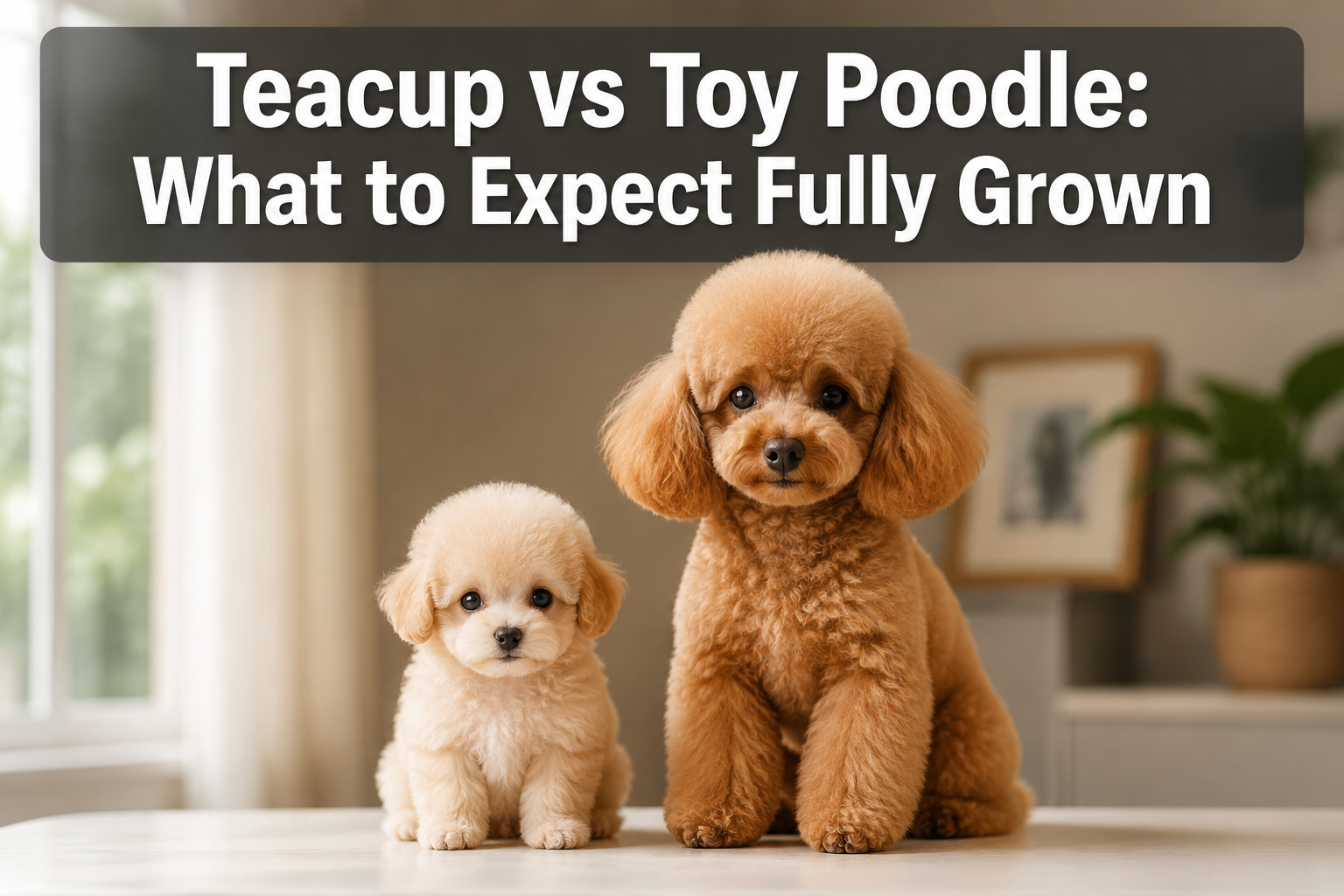
The term "teacup poodle" is not recognized by any major kennel club, including the AKC. It's a marketing label used by breeders for undersized toy poodles that weigh under 5 pounds as adults. A standard toy poodle, by contrast, stands up to 10 inches tall and weighs 4 to 6 pounds when fully grown. The key differences between teacup and toy poodles come down to size, health risks, price, and breeding ethics rather than breed type, because both are genetically the same breed.
Key Takeaways
- "Teacup" is a marketing term, not a breed classification. No major kennel club recognizes teacup poodles as a separate variety.
- Toy poodles reach 6 to 10 inches tall and 4 to 6 pounds. Teacup poodles typically stay under 6 inches and weigh 2 to 4 pounds fully grown.
- Teacup poodles face significantly higher health risks, including hypoglycemia, heart defects, collapsing trachea, and fragile bones.
- Toy poodles generally live 12 to 15 years. Teacup poodles often have shorter lifespans of 8 to 12 years due to health complications.
- Teacup poodles cost more, typically $2,000 to $5,000+, while well-bred toy poodles range from $1,500 to $3,000.
- Both varieties share the same intelligence and trainability, but teacup poodles are more prone to anxiety and behavioral issues tied to their fragile size.
- Ethical breeding concerns are serious with teacup poodles. Many are produced by breeding runts or using practices that compromise the dog's health.
- Toy poodles are the safer, more predictable choice for most families, apartment dwellers, and first-time small-dog owners.
What's the Difference Between a Teacup Poodle and a Toy Poodle?
The core difference is size and official recognition. A toy poodle is an AKC-recognized variety that stands no more than 10 inches at the shoulder. A teacup poodle is simply an unusually small toy poodle that breeders market under a separate label to command higher prices.
Both share identical genetics, coat types, and core temperament traits. The "teacup" designation exists purely in breeder and pet-store marketing. Here's what separates them in practice:
| Feature | Teacup Poodle | Toy Poodle |
|---|---|---|
| AKC Recognition | No | Yes |
| Adult Height | Under 6 inches | 6 to 10 inches |
| Adult Weight | 2 to 4 lbs | 4 to 6 lbs |
| Typical Lifespan | 8 to 12 years | 12 to 15 years |
| Price Range | $2,000 to $5,000+ | $1,500 to $3,000 |
| Health Risk Level | Higher | Moderate |
| Breeding Standard | None (informal) | AKC breed standard |
Common mistake: Assuming "teacup" means a different breed. It doesn't. Any poodle advertised as teacup is a toy poodle that was bred to be smaller than the standard allows.
If you're exploring well-bred toy poodles with documented lineage, take a look at toy poodles with outstanding pedigrees to understand what proper breeding standards look like.
How Big Does a Teacup Poodle Get When Fully Grown?
A teacup poodle typically reaches 5 to 6 inches tall at the shoulder and weighs between 2 and 4 pounds when fully grown. Most reach their adult size by 6 to 8 months of age.
Because there's no breed standard governing teacup size, these numbers vary widely. Some breeders advertise dogs that will stay under 3 pounds, but predicting exact adult size in very small dogs is unreliable. Puppies sold as "teacup" sometimes grow to regular toy poodle size, which leads to buyer frustration and, worse, dogs being surrendered.
Key detail: A 2-pound adult dog is extremely fragile. A fall from a couch, a misstep by a child, or even rough play with another small pet can cause broken bones or serious injury.
How Big Does a Toy Poodle Get When Fully Grown?
A toy poodle reaches 6 to 10 inches tall at the shoulder and weighs 4 to 6 pounds at maturity. Most toy poodles are fully grown by 9 to 12 months old.
This size range is well-established by the AKC breed standard, which makes adult size far more predictable than with teacup-labeled dogs. Reputable breeders can estimate adult size based on parent weights, growth curves, and generational data.
Toy poodles are small enough for apartment living and travel but sturdy enough to handle normal household activity. For owners considering compact living situations, toy poodles for small apartments and condos covers what to expect in tighter spaces.
Teacup Poodle vs Toy Poodle: Temperament and Personality
Both teacup and toy poodles are intelligent, affectionate, and eager to please. They rank among the smartest dog breeds and respond well to positive reinforcement training. The temperament differences between them are driven more by size-related stress than by genetics.
Shared traits:
- High intelligence and fast learning
- Strong attachment to their primary owner
- Alert and sometimes vocal
- Social with proper early exposure
Where they diverge:
Teacup poodles tend to be more anxious and reactive. Their tiny size means the world feels bigger and more threatening. They startle more easily, may bark more frequently, and can develop fear-based behaviors if not carefully socialized. Owners often inadvertently reinforce anxiety by carrying teacup dogs everywhere instead of letting them build confidence on their own.
Toy poodles, while still small, have enough physical resilience to explore their environment more freely. This typically leads to better socialization outcomes and a calmer overall demeanor.
For guidance on building confidence in small poodles from a young age, see raising confident black toy and teacup poodle puppies.

Do Teacup Poodles Have More Behavioral Issues Than Toy Poodles?
Yes, teacup poodles are more likely to develop behavioral problems, but the cause is environmental and handling-related rather than genetic.
Common behavioral issues in teacup poodles include:
- Excessive barking due to heightened startle responses
- Separation anxiety from over-bonding with one person
- House-training difficulties because tiny bladders need more frequent breaks
- Snapping or nipping as a defensive response to being handled by larger people or children
Toy poodles can develop these same issues, but their slightly larger size and sturdier build make them easier to socialize properly. They can walk on leash in more environments, interact with other dogs more safely, and tolerate normal household commotion better.
Decision rule: Choose a toy poodle over a teacup if you want a dog that can participate in daily life with fewer behavioral accommodations. If you're committed to extra patience with house training, consider potty training toy poodle puppies in any weather for practical strategies.
Are Teacup Poodles Healthier Than Toy Poodles?
No. Teacup poodles are generally less healthy than properly bred toy poodles. Their extremely small size creates a range of medical vulnerabilities that standard-sized toy poodles are less likely to face.
Teacup Poodle Health Problems and Lifespan
Teacup poodles are prone to several serious health conditions:
- Hypoglycemia (low blood sugar): Extremely common in dogs under 4 pounds. Can cause seizures, collapse, and death if not caught quickly. Teacup poodles often need to eat 3 to 4 small meals daily throughout their lives.
- Collapsing trachea: The windpipe cartilage is weaker in very small dogs, leading to chronic coughing and breathing difficulty.
- Heart defects: Patent ductus arteriosus and other congenital heart conditions appear more frequently.
- Dental crowding: Tiny jaws don't have room for a full set of teeth, leading to early tooth decay and gum disease.
- Bone fractures: Fragile bones break from falls as short as 1 to 2 feet.
- Liver shunts: A condition where blood bypasses the liver, more common in extremely small dogs.
Estimated lifespan for teacup poodles is 8 to 12 years, compared to 12 to 15 years for standard toy poodles. The difference is largely due to these compounding health risks.
For long-term planning, health and wellness planning for toy poodles provides a useful framework that applies to both sizes.
Teacup Poodle Breeding Concerns and Ethical Issues
The breeding practices behind teacup poodles raise significant ethical concerns. Because no breed standard exists for "teacup," there are no guidelines governing how these dogs should be produced.
Common breeding methods used to create teacup poodles include:
- Breeding runts to runts: Selecting the smallest, often weakest puppies from litters and pairing them, which concentrates genetic health problems.
- Premature separation: Selling puppies before 8 weeks to make them appear smaller at the point of sale.
- Underfeeding or stunting: Some disreputable breeders restrict food to keep puppies small, causing permanent developmental damage.
- Misleading advertising: Labeling normal toy poodle puppies as "teacup" before their adult size can be determined.
Reputable breeders who follow AKC standards do not intentionally breed for teacup size. They breed for health, temperament, and conformation within the toy poodle standard. A responsible breeder will provide health clearances for parents, allow you to visit their facility, and never guarantee an adult weight under 4 pounds.
A good rule of thumb: If a breeder's primary selling point is how small the dog will be, that's a red flag. Health and temperament should always come first.
How to Tell If a Poodle Is Actually Teacup Size or Just Small
There's no definitive test, but several indicators can help determine whether a poodle marketed as "teacup" is genuinely undersized or simply a small toy poodle.
Check these factors:
- Weigh the puppy at 8 weeks. A toy poodle puppy typically weighs 1.5 to 2.5 pounds at 8 weeks. Under 1.5 pounds may indicate true undersized status.
- Ask for parent weights. If both parents are 4 to 6 pounds, the puppy will likely reach standard toy size regardless of marketing labels.
- Request growth records. Reputable breeders track weekly weights. Consistent, steady growth suggests a healthy toy poodle, not a stunted one.
- Look at bone structure. Extremely fine, spindly legs and a disproportionately large head relative to the body can indicate dwarfism or poor breeding.
- Get a vet evaluation. A veterinarian can assess whether a puppy's small size is within healthy range or a sign of underlying problems.
Edge case: Some toy poodles naturally fall at the lower end of the size range (4 pounds, 6 inches tall) without being bred specifically for small size. These dogs are healthy toy poodles, not teacup poodles, even though they're petite.
How Much Does a Teacup Poodle Cost vs a Toy Poodle?
Teacup poodles typically cost $2,000 to $5,000 or more, while well-bred toy poodles from health-tested parents range from $1,500 to $3,000. The premium on teacup dogs reflects market demand for novelty, not superior breeding.
Beyond purchase price, consider ongoing costs:
| Cost Category | Teacup Poodle | Toy Poodle |
|---|---|---|
| Purchase Price | $2,000 to $5,000+ | $1,500 to $3,000 |
| Annual Vet Bills | $800 to $2,000+ | $400 to $800 |
| Dental Care | Higher (crowding issues) | Standard |
| Emergency Vet Risk | Significantly higher | Moderate |
| Grooming | Similar | Similar |
| Food | Slightly less | Standard small-dog portions |
The higher veterinary costs for teacup poodles often erase any perceived savings from lower food bills. Emergency visits for hypoglycemic episodes or fractures can cost $500 to $2,000 per incident.
Which Is Better for Apartments: Teacup or Toy Poodle?
Both sizes work well in apartments, but toy poodles are the better overall choice for apartment living. They're small enough for compact spaces but sturdy enough to handle elevator rides, hallway encounters with neighbors, and normal apartment noise.
Teacup poodles can live in apartments too, but they require more environmental modifications: padded areas to prevent fall injuries, baby gates near any elevated surfaces, and careful management around doors and foot traffic.
Choose a toy poodle for apartments if:
- You have visitors or roommates who may not be careful around a 2-pound dog
- Your building has shared hallways where other dogs are present
- You want a dog that can walk on leash to nearby parks without injury risk
For more on making small spaces work, toy poodles for small apartments and condos covers setup tips and daily routines.
Can Teacup Poodles Be Left Alone All Day?
No. Teacup poodles should not be left alone for a full workday (8+ hours). Their risk of hypoglycemia means they need to eat every 3 to 4 hours, and their small bladders require frequent bathroom breaks.
Toy poodles also prefer company but can handle 4 to 6 hours alone once properly crate trained. Adult toy poodles have enough metabolic stability to go longer between meals and bathroom breaks.
If you work full-time away from home:
- A toy poodle with a midday dog walker is manageable
- A teacup poodle needs someone home most of the day or a pet sitter who can provide meals and monitoring
- Consider crate training toy poodle puppies the positive way to build independence gradually
Are Teacup Poodles Good for Families With Kids?
Teacup poodles are not recommended for families with children under 10. A child who accidentally sits on, steps on, or drops a 2-to-3-pound dog can cause life-threatening injuries. Even well-meaning toddlers lack the motor control to handle a dog this fragile safely.
Toy poodles are a better fit for families, though supervision is still important with young children. At 4 to 6 pounds, they can tolerate gentle play and are less likely to be seriously hurt by normal childhood clumsiness.
For families seeking a small, kid-friendly poodle, explore family-friendly red toy poodles with loving temperaments for examples of well-socialized dogs bred for family environments.
What's the Difference Between a Toy Poodle and a Miniature Poodle?
A toy poodle stands up to 10 inches tall and weighs 4 to 6 pounds. A miniature poodle stands 10 to 15 inches tall and weighs 10 to 15 pounds. Both are AKC-recognized varieties of the same breed.
Miniature poodles are a good middle ground for owners who want a small dog with more physical durability than a toy. They're sturdier for active households, better with young children, and have slightly fewer size-related health concerns.
Quick sizing guide for all poodle varieties:
| Variety | Height | Weight | AKC Recognized |
|---|---|---|---|
| Standard | Over 15 inches | 40 to 70 lbs | Yes |
| Miniature | 10 to 15 inches | 10 to 15 lbs | Yes |
| Toy | Up to 10 inches | 4 to 6 lbs | Yes |
| "Teacup" | Under 6 inches | 2 to 4 lbs | No |
Conclusion
When comparing teacup vs toy poodle size, temperament, and what to expect when each is fully grown, the evidence consistently favors the toy poodle as the safer, healthier, and more practical choice for most owners. Teacup poodles are not a separate breed but undersized toy poodles produced through breeding practices that often compromise the dog's health and longevity.
Actionable next steps:
- Skip the "teacup" label entirely. Look for breeders who follow AKC toy poodle standards and prioritize health testing over small size.
- Ask breeders the right questions. Request parent health clearances, growth records, and honest size projections based on lineage rather than marketing promises.
- Budget for the real costs. Factor in veterinary care, not just purchase price, when comparing options.
- Match the dog to your lifestyle. If you have kids, work outside the home, or want a dog that can join you on outings, a standard toy poodle is the better fit.
- Start with a reputable source. Browse adorable toy poodle puppies for loving homes to see what health-focused, ethically bred toy poodles look like in practice.
The best small poodle is a healthy one, and in 2026, that almost always means choosing a well-bred toy poodle over a teacup.
Frequently Asked Questions
Is a teacup poodle a real breed?
No. "Teacup" is an informal marketing term. The AKC and other major kennel clubs do not recognize teacup as a poodle variety. All teacup poodles are genetically toy poodles bred to be smaller than the breed standard.
How long do teacup poodles live?
Teacup poodles typically live 8 to 12 years, which is shorter than the 12-to-15-year lifespan common in standard toy poodles. The difference is largely due to health complications associated with extremely small body size.
Can teacup poodles go on walks?
Yes, but with caution. Short, gentle walks on flat surfaces are fine. Avoid crowded areas where they could be stepped on, and watch for signs of fatigue. Their small legs tire quickly, and cold weather affects them more than larger dogs.
Do teacup poodles bark a lot?
Teacup poodles tend to bark more than toy poodles because they startle more easily and may use barking as a defensive behavior. Consistent training and proper socialization can reduce excessive barking in both sizes.
Are teacup poodles hypoallergenic?
Both teacup and toy poodles have the same low-shedding, curly coat that produces fewer allergens than many breeds. No dog is truly hypoallergenic, but poodles of all sizes are among the better options for allergy sufferers.
What should I feed a teacup poodle?
Teacup poodles need calorie-dense, high-quality food served in 3 to 4 small meals per day to prevent hypoglycemia. Toy poodles can typically eat 2 meals per day once they're adults. Consult a veterinarian for specific feeding plans based on weight.
Can I register a teacup poodle with the AKC?
If the teacup poodle comes from AKC-registered toy poodle parents, it can be registered as a toy poodle. There is no separate teacup registration category.
How do I find an ethical poodle breeder?
Look for breeders who health-test parent dogs, follow AKC breed standards, provide veterinary records, allow facility visits, and don't use "teacup" as a primary selling point. A breeder who prioritizes size over health is a red flag.
Are teacup poodles good for seniors?
They can be, but only for seniors who are steady on their feet and can manage the dog's frequent feeding and bathroom schedule. Toy poodles are generally a safer choice because they're less fragile and require fewer special accommodations.
Do teacup poodles need special veterinary care?
Yes. They benefit from a veterinarian experienced with toy and miniature breeds. Regular monitoring for hypoglycemia, dental issues, and heart conditions is important. Expect higher-than-average vet bills compared to standard toy poodles.
References
- American Kennel Club. "Poodle (Toy) Breed Information." AKC.org. Accessed 2025. https://www.akc.org/dog-breeds/poodle-toy/
- American Kennel Club. "Official Standard of the Poodle." AKC.org. 2020. https://www.akc.org/dog-breeds/poodle-standard/
- Universities Federation for Animal Welfare. "Genetic Welfare Problems of Companion Animals: Poodle." UFAW.org.uk. Accessed 2024. https://www.ufaw.org.uk/dogs/poodle
SEO Meta Title: Teacup vs Toy Poodle: Size, Temperament, and Full-Grown Guide