
Last updated: July 9, 2026
Quick Answer
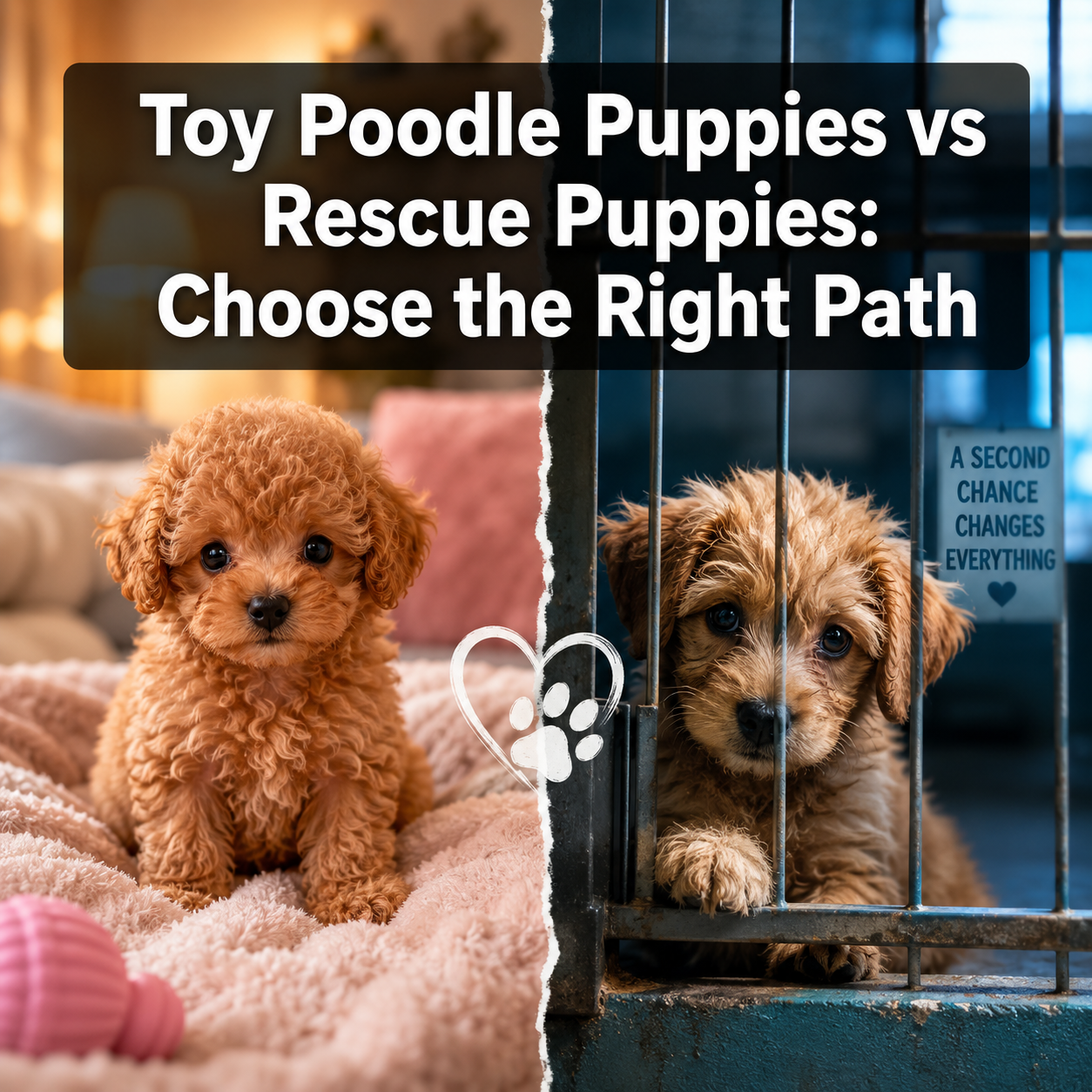
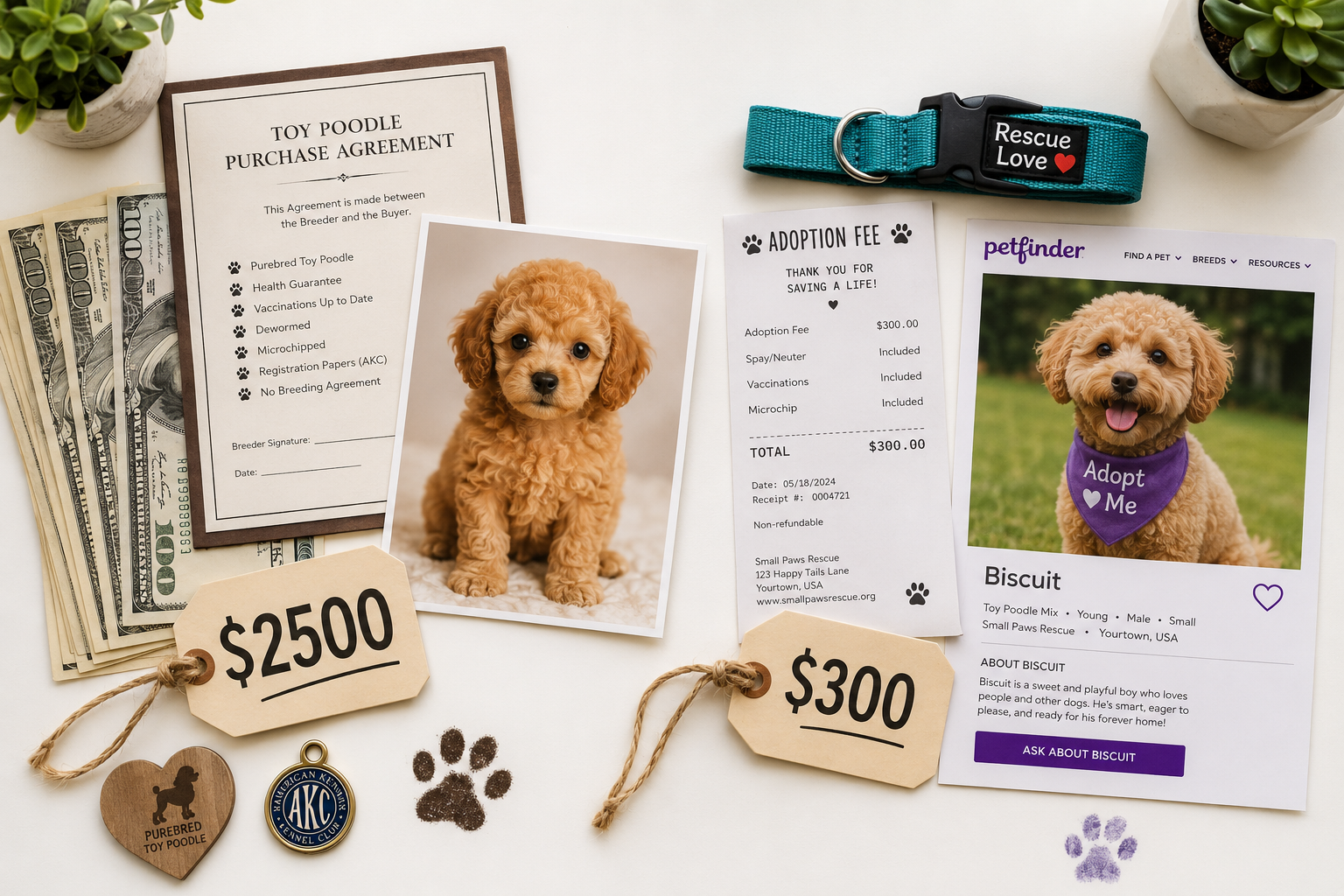
Choosing between a Toy Poodle puppy from a breeder and one from Petfinder or a large rescue comes down to three factors: budget, predictability, and timeline. Breeder puppies cost $1,000 to $4,000 but offer known genetics, health testing, and breed-standard traits. Rescue puppies cost $150 to $400 and give a dog a second chance, though background information may be limited. Neither path is inherently better — the right choice depends on your lifestyle, experience level, and what matters most to you in a companion.
Key Takeaways
- Breeder Toy Poodles range from $1,000 to $4,000 on average, while rescue adoption fees typically fall between $150 and $400 [4].
- About 25% of dogs in U.S. shelters are purebreds, so finding a Toy Poodle through rescue is possible but not guaranteed [2].
- Reputable breeders provide genetic health testing, known parentage, and early socialization records.
- Petfinder is a legitimate adoption platform used by thousands of verified rescue organizations across the U.S. [1].
- Toy Poodles live 12 to 15 years on average, making this a long-term commitment regardless of source [1].
- Rescue dogs often come spayed/neutered, vaccinated, and microchipped, which offsets part of the adoption cost.
- Puppy mills remain a real risk when buying online; knowing the red flags is essential for any buyer.
- First-time owners can succeed with either path, but breeder puppies offer more predictability in temperament and size.
- The best age to bring home a Toy Poodle puppy from a breeder is 8 to 12 weeks.
- Both breeders and rescues can be ethical sources — the key is doing thorough research before committing.
What’s the Difference Between a Toy Poodle From a Breeder vs a Rescue?
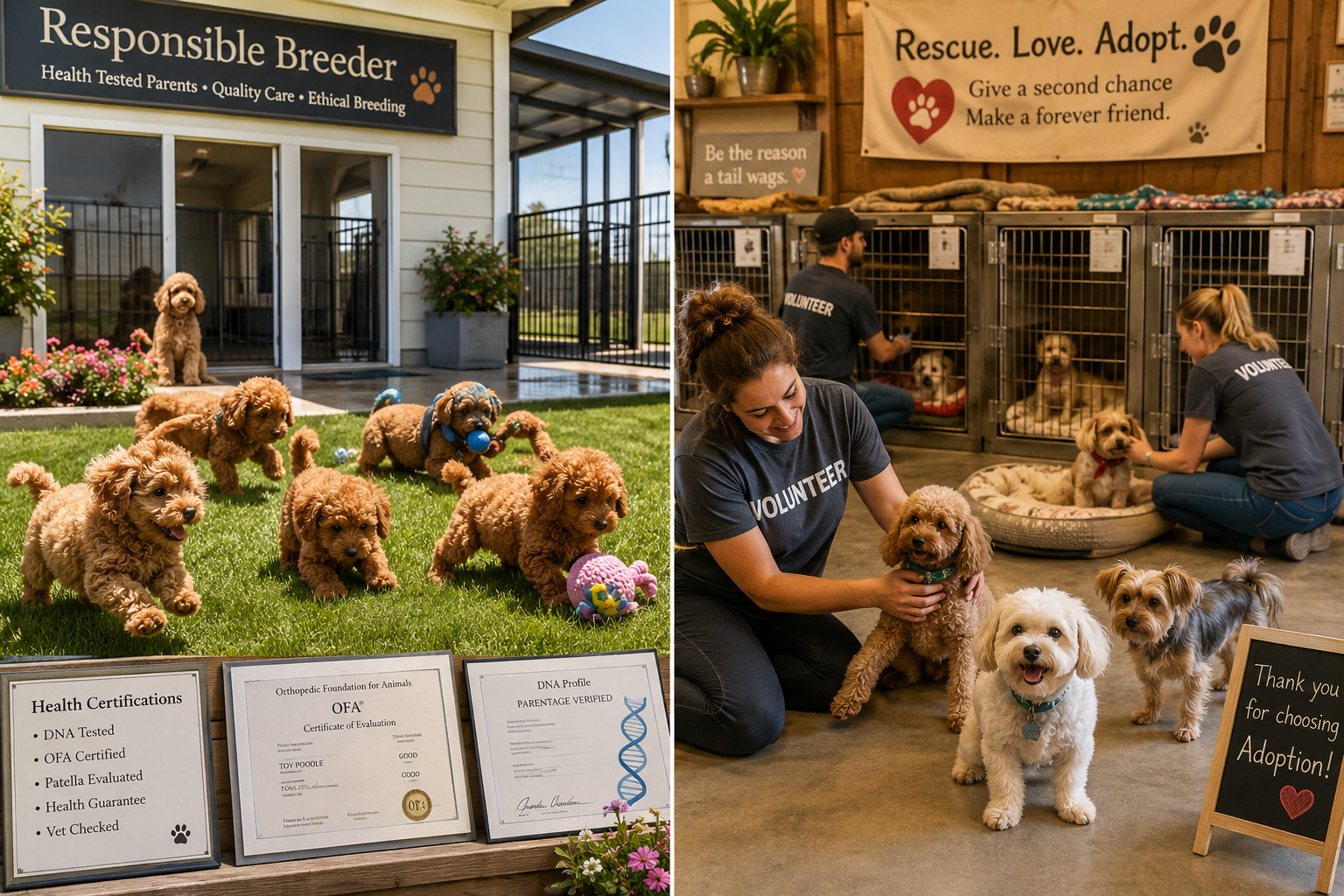
The core difference is predictability. A reputable breeder controls the genetics, health screening, and early environment of every puppy. A rescue provides a home to a dog whose history may be partially or fully unknown.
From a breeder, you typically get:
- Documented pedigree and parentage
- Genetic health testing results (for conditions like progressive retinal atrophy and luxating patella)
- Early socialization and temperament assessment
- A health guarantee or contract
- A puppy at a specific, ideal age for bonding
From a rescue or Petfinder, you typically get:
- A dog that needs a home, often already spayed/neutered and vaccinated [4]
- Variable background information (some rescues know the full history; others don’t)
- Behavioral assessments conducted by the rescue organization [6]
- Lower upfront cost
- The satisfaction of reducing shelter overpopulation [8]
When weighing Toy Poodle puppies vs puppies from Petfinder and big rescues, the honest truth is that breeders offer more control over what you’re getting, while rescues offer a chance to save a life at a lower financial cost. Both have trade-offs.
For those interested in understanding pedigree quality, our guide on Toy Poodle puppies with outstanding pedigrees explains what documentation to look for.
How Much Do Toy Poodle Puppies Cost From Breeders?
Expect to pay between $1,000 and $4,000 for a Toy Poodle puppy from a reputable breeder. Champion bloodlines or rare color varieties can push prices to $9,000 or more [4].
Here’s what drives the price:
| Cost Factor | Impact on Price |
|---|---|
| Health testing (OFA, genetic panels) | Adds $500-$1,500 to breeder costs |
| Champion pedigree | Can double or triple the base price |
| Rare colors (red, phantom, parti) | Typically $500-$2,000 premium |
| Geographic location | Higher in metro areas, lower in rural regions |
| Breeder reputation and waitlist demand | Top breeders often charge more due to demand |
Beyond the purchase price, budget for first-year expenses: veterinary visits, food, grooming (Toy Poodles need professional grooming every 4-6 weeks), supplies, and training. A realistic first-year total is $3,000 to $6,000 when you include the puppy price.
To explore the range of coat options and how they affect pricing, see our breakdown of color varieties in AKC Toy Poodle puppies.
Are Rescue Puppies Cheaper Than Breeders?
Yes, significantly. Adoption fees from rescues and shelters range from $150 to $400, and that fee almost always includes spaying or neutering, core vaccinations, microchipping, and sometimes a basic vet exam [4].
However, “cheaper upfront” doesn’t always mean cheaper overall. Rescue dogs with unknown medical histories may need unexpected veterinary care. Some adopters discover dental issues, skin conditions, or anxiety-related behaviors that require professional treatment. That said, many rescue Toy Poodles are perfectly healthy and adjust well to new homes.
Cost comparison at a glance:
| Expense | Breeder Puppy | Rescue/Petfinder Puppy |
|---|---|---|
| Acquisition cost | $1,000-$4,000 | $150-$400 |
| Spay/neuter | $200-$500 (if not included) | Usually included |
| Initial vaccinations | $75-$200 (if not included) | Usually included |
| Microchip | $25-$50 | Usually included |
| First-year vet visits | $200-$400 | $200-$600 (may need more workup) |
| Estimated first-year total | $1,500-$5,000+ | $500-$1,500 |
Is Petfinder Safe for Finding Puppies?
Petfinder is a legitimate, well-established platform operated by Purina that connects prospective adopters with verified rescue organizations and shelters across the United States [1]. It is generally safe, but adopters should still exercise caution.
How to use Petfinder safely:
- Search by breed, size, age, and location
- Click on a listing to see which rescue organization is hosting the pet
- Research that rescue independently (check reviews, social media, and nonprofit status)
- Submit an application through the rescue’s process
- Expect an interview, reference check, or home visit before approval [1]
Red flags to watch for on any adoption platform:
- A “rescue” that asks for payment via wire transfer or gift cards
- No physical address or verifiable nonprofit registration
- Unwillingness to let you meet the dog before committing
- Pressure to decide immediately without an application process
Most rescues listed on Petfinder are legitimate organizations that genuinely care about placing dogs in good homes. The platform itself does not sell dogs directly — it connects you with the organizations that do.
What to Expect When Adopting From Petfinder
The adoption process through Petfinder is not instant. Most rescues have a structured process that takes one to four weeks from application to bringing a dog home.
Typical steps:
- Browse and inquire — Find a dog you’re interested in and submit an inquiry or application
- Application review — The rescue reviews your living situation, experience, and references
- Interview or home visit — Some rescues conduct phone interviews; others visit your home
- Meet and greet — You meet the dog, sometimes with your existing pets
- Approval and adoption — Sign the adoption contract and pay the fee
- Post-adoption support — Many rescues offer follow-up guidance
One thing to know: popular breeds like Toy Poodles get adopted fast. If you see one listed, apply quickly. Also, be open to Toy Poodle mixes, which appear more frequently than purebreds.
Can You Get a Toy Poodle Puppy From a Big Rescue?
It’s possible but uncommon. Large national rescues like the ASPCA, Best Friends Animal Society, and regional humane societies occasionally have Toy Poodles, but most of their intake consists of mixed breeds and larger dogs [3]. About 25% of shelter dogs are purebreds [2], and Toy Poodles make up a small fraction of that number.
Your best bet for finding a rescue Toy Poodle:
- Breed-specific rescues — Organizations like Carolina Poodle Rescue or NorCal Poodle Rescue focus exclusively on Poodles of all sizes
- Petfinder alerts — Set up email alerts for Toy Poodles in your area [1]
- Surrender situations — Some breeders and breed clubs maintain rehoming networks for dogs whose owners can no longer care for them
Be realistic about timing. Waiting for a Toy Poodle puppy (under one year old) through rescue could take months. Adult Toy Poodles appear more often and can be an excellent option for adopters who don’t need the puppy experience.
How to Find a Reputable Toy Poodle Breeder
A reputable breeder prioritizes health, temperament, and breed standards over profit. The AKC recommends visiting the breeder’s facility, meeting the puppy’s parents, and reviewing health clearances before purchasing [7].
Signs of a reputable breeder:
- Performs genetic health testing (OFA, PennHIP, or breed-specific panels)
- Welcomes facility visits and encourages meeting the parents
- Provides a written health guarantee and contract
- Asks you questions about your lifestyle and experience
- Has a waitlist (good breeders don’t always have puppies available immediately)
- Socializes puppies from birth with various sounds, surfaces, and people
- Is registered with the AKC or a recognized breed club
For guidance on identifying top-quality breeders, check out our resource on the best Toy Poodle breeders.
What Questions Should You Ask a Toy Poodle Breeder?
Ask these questions before putting down a deposit. A good breeder will answer all of them willingly.
- What health tests have the parents had? (Expect OFA patella, eye exams, and genetic panels at minimum)
- Can I visit your facility and meet the parents?
- What is your health guarantee, and what does it cover?
- How do you socialize your puppies before they go home?
- What food are the puppies eating, and what do you recommend?
- Do you require spay/neuter, and at what age?
- Will you take the dog back if I can no longer keep it? (Reputable breeders always say yes)
- How many litters do you produce per year? (Fewer is generally better)
- Can you provide references from previous puppy buyers?
- What is included in the purchase price? (Vaccinations, microchip, registration, starter kit)
If a breeder gets defensive, refuses visits, or can’t produce health documentation, walk away.
How to Avoid Puppy Mills When Buying Toy Poodles
Puppy mills are commercial breeding operations that prioritize volume over animal welfare. They are a real risk when buying Toy Poodles, especially online.
Red flags that suggest a puppy mill:
- Multiple breeds available at all times with no waitlist
- Puppies shipped without the buyer ever visiting the facility
- No health testing documentation provided
- Prices that seem unusually low for the breed
- Stock photos or professional-looking websites with no real facility images
- The seller is evasive about where the puppies are raised
- Puppies available before 8 weeks of age
How to protect yourself:
- Always visit the breeding facility in person when possible
- Verify the breeder’s registration with the AKC Marketplace or breed club [7]
- Ask for verifiable health testing results (not just a “vet check”)
- Check online reviews and ask for buyer references
- Trust your instincts — if something feels off, it probably is
Our article on ethical breeding practices covers this topic in more depth.
Toy Poodle Puppies From Breeder vs Rescue: Pros and Cons
This is the central question when evaluating Toy Poodle puppies vs puppies from Petfinder and big rescues: how to choose the right path. Here’s an honest breakdown:
Breeder Pros:
- Known genetics and health history
- Predictable adult size, coat type, and temperament
- Early socialization in a controlled environment
- Health guarantee and breeder support
- Puppy arrives at the ideal bonding age
Breeder Cons:
- Significantly higher cost ($1,000-$4,000+)
- May involve a waitlist of weeks to months
- Requires careful vetting to avoid puppy mills
Rescue/Petfinder Pros:
- Much lower cost ($150-$400)
- Saves a life and reduces shelter overcrowding [8]
- Dog often comes already spayed/neutered and vaccinated
- Many rescues provide behavioral assessments [6]
- Adult dogs may already be housetrained
Rescue/Petfinder Cons:
- Limited or unknown health and genetic history
- Toy Poodle puppies are rare in rescues
- May have behavioral issues from previous environments
- Less predictability in temperament and adult traits
- Adoption process can be lengthy and competitive
What Health Problems Do Toy Poodles Have?
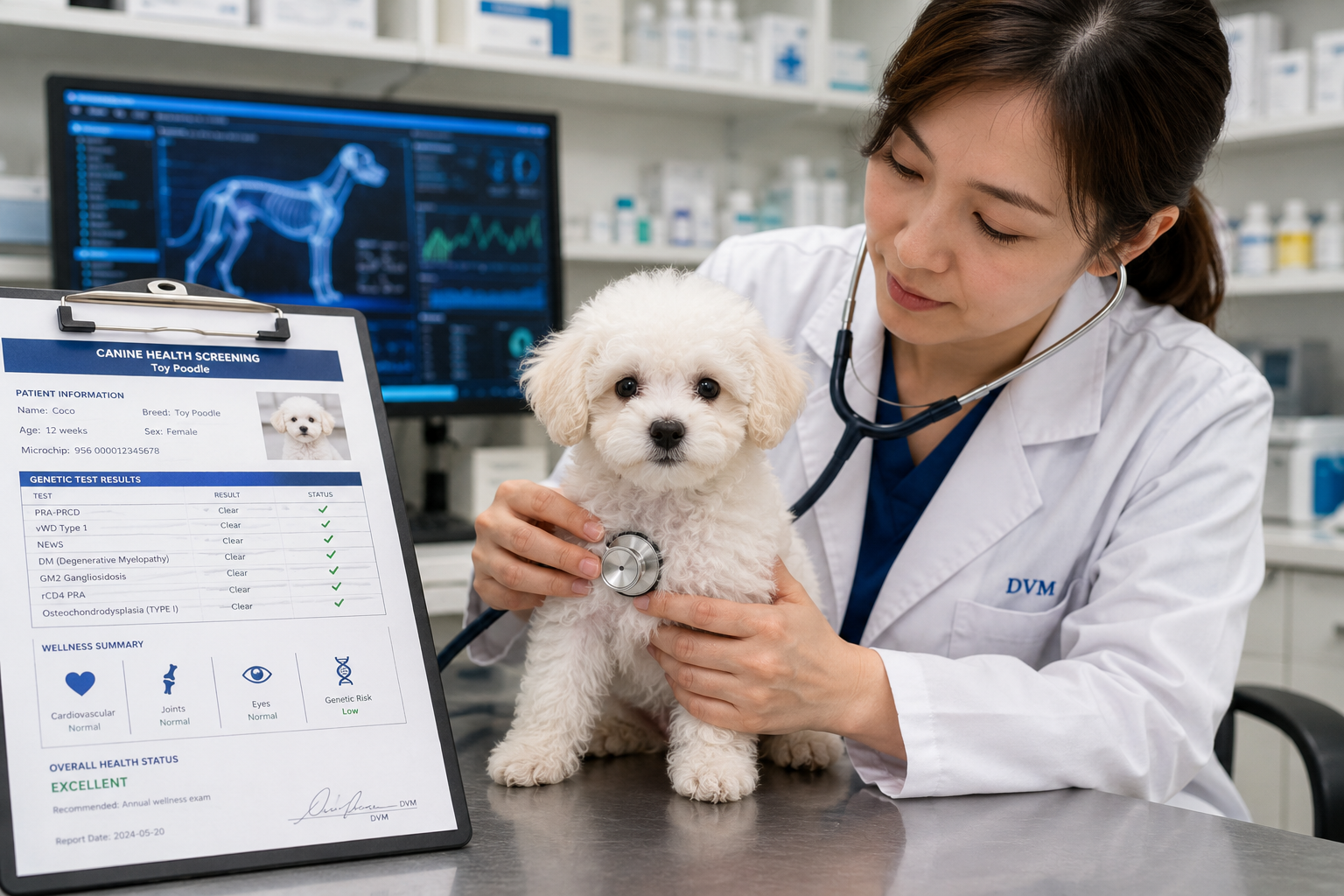
Toy Poodles are generally healthy but are prone to several breed-specific conditions. Reputable breeders test for these; rescue dogs may or may not have been screened.
Common health issues in Toy Poodles:
- Luxating patella — Kneecap slips out of place; common in small breeds
- Progressive retinal atrophy (PRA) — Degenerative eye disease that can lead to blindness
- Legg-Calve-Perthes disease — Hip joint deterioration
- Dental disease — Small mouths lead to crowded teeth and gum issues
- Hypoglycemia — Low blood sugar, especially in puppies under 4 months
- Epilepsy — Seizure disorder that can be managed with medication
- Addison’s disease — Adrenal gland insufficiency
Genetic testing from a breeder can identify carriers of PRA and other hereditary conditions before breeding, significantly reducing the risk. For rescue dogs, request whatever veterinary records are available and schedule a full exam with your own vet within the first week.
For nutrition guidance that supports long-term health, see our healthy diet plans for growing Toy Poodle puppies.
How Long Do Toy Poodles Live?
Toy Poodles have a lifespan of 12 to 15 years, with some living to 18 or beyond with excellent care [1]. This is longer than most dog breeds and means a serious time commitment.
Factors that influence longevity include genetics, diet, dental care, exercise, and regular veterinary checkups. Dogs from health-tested parents (breeder route) may have a statistical edge, but well-cared-for rescue Toy Poodles can live just as long.
Are Toy Poodles Good for First-Time Dog Owners?
Yes, Toy Poodles are one of the best breeds for first-time owners. They are highly intelligent, eager to please, and respond well to positive reinforcement training [7]. Their small size makes them manageable in apartments and condos, and their low-shedding coat is a plus for allergy-conscious households.
Why they work for beginners:
- Ranked among the most trainable of all dog breeds
- Small enough for apartment living (under 10 inches tall, 4-6 pounds) [1]
- Affectionate and bond closely with their owners
- Adaptable to various lifestyles, from active to more relaxed
Challenges for first-time owners to know about:
- Require professional grooming every 4-6 weeks
- Can develop separation anxiety if left alone too long
- Prone to dental issues that need proactive management
- Housetraining can take longer due to small bladder size
If you’re bringing a Toy Poodle into a smaller living space, our guide on Toy Poodles for small apartments and condos offers practical setup advice. And for those navigating the early weeks, see our tips on welcoming Toy Poodle puppies into your family routine.
What’s the Right Age to Bring Home a Toy Poodle Puppy?
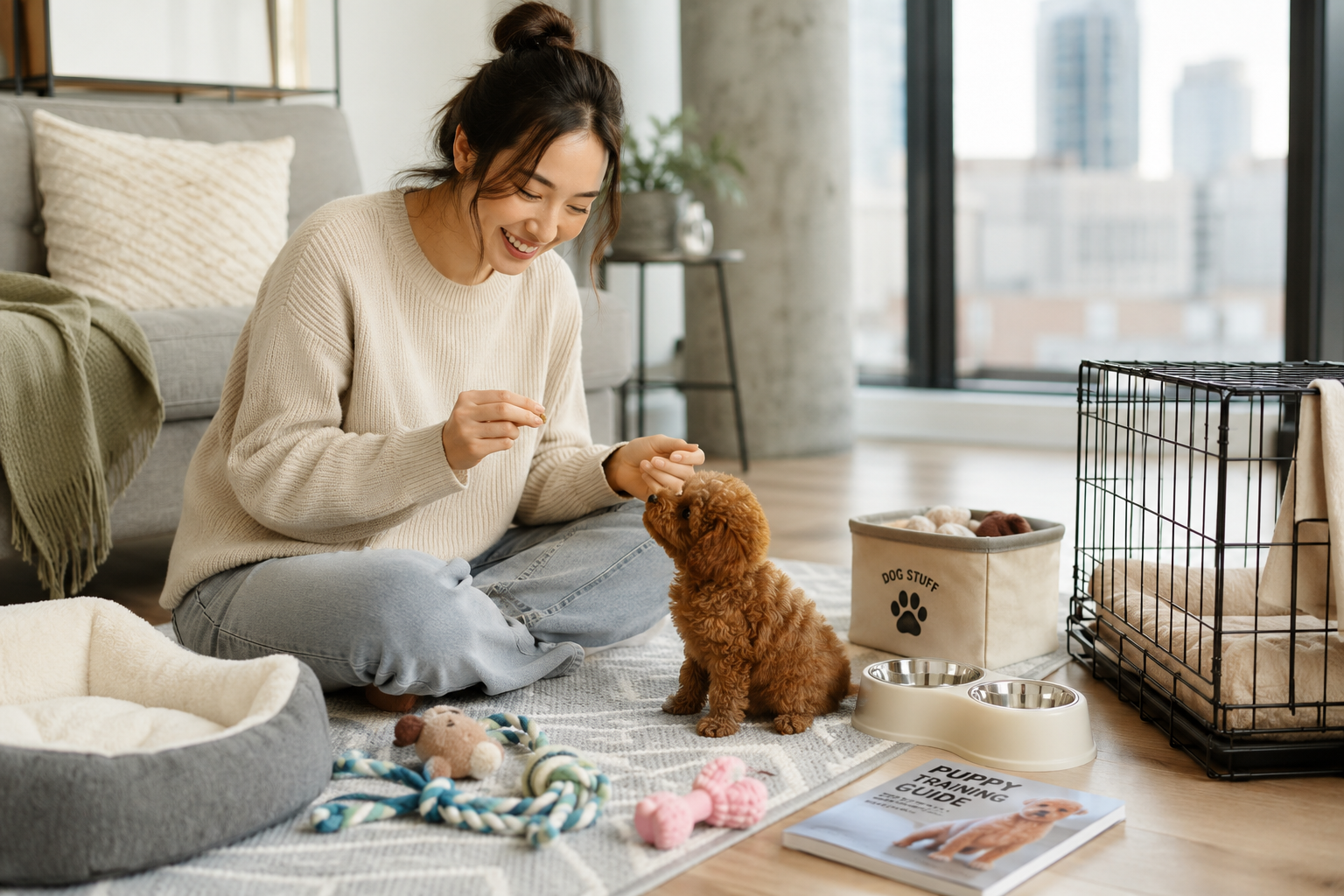
The ideal age to bring home a Toy Poodle puppy from a breeder is 8 to 12 weeks. Before 8 weeks, puppies are still learning critical social skills from their mother and littermates. Separating them too early can lead to behavioral problems like anxiety, fearfulness, and difficulty with bite inhibition.
Age guidelines by source:
- Breeder puppy: 8-12 weeks is standard. Some breeders of very small Toy Poodles hold puppies until 10-12 weeks to ensure they’re eating well and stable.
- Rescue puppy: Age varies. Puppies in rescue may be available at 8 weeks or older, depending on when they entered the system.
- Adult rescue dog: Any age. Adult dogs often adjust faster because they’re past the demanding puppy stage.
For early training support, our article on crate training Toy Poodle puppies the positive way is a great starting point.
FAQ
Is it better to buy a Toy Poodle from a breeder or adopt from a rescue?
Neither is universally better. Choose a breeder if you want predictable genetics, health testing, and a puppy at an ideal age. Choose rescue if you want to save a life, spend less upfront, and are open to adult dogs or mixed breeds.
How long does it take to adopt a Toy Poodle from Petfinder?
The process typically takes one to four weeks, including application, review, and a meet-and-greet. Finding a purebred Toy Poodle puppy on Petfinder may take much longer due to limited availability.
Do rescue Toy Poodles have more behavioral problems?
Not necessarily. Many rescue dogs adjust well to new homes. Reputable rescues conduct behavioral assessments before placing dogs [6]. However, dogs with traumatic backgrounds may need extra patience and training.
Can I find a Toy Poodle puppy (not an adult) on Petfinder?
It’s possible but rare. Most Toy Poodles in rescue are adults or seniors. Setting up breed-specific alerts on Petfinder improves your chances [1].
What is the average lifespan of a Toy Poodle?
Toy Poodles live 12 to 15 years on average, with some reaching 18 years with proper care [1].
Are Toy Poodles hypoallergenic?
No dog is truly hypoallergenic, but Toy Poodles produce less dander and don’t shed much, making them a better choice for people with mild allergies.
How much grooming do Toy Poodles need?
Professional grooming every 4 to 6 weeks, plus daily brushing at home to prevent matting. This applies whether the dog comes from a breeder or rescue.
What should I do if a breeder won’t let me visit their facility?
Do not buy from them. Reputable breeders welcome visits. Refusal to allow visits is a major red flag for a puppy mill [7].
Do rescue organizations offer any health guarantees?
Most rescues do not offer formal health guarantees like breeders do. However, they typically provide current vaccination records, spay/neuter confirmation, and a basic health assessment.
How many Toy Poodles end up in shelters each year?
There is no exact breed-specific number, but approximately 5.8 million dogs and cats entered U.S. shelters in 2025, with 25% of dogs being purebreds [2]. Toy Poodles represent a small portion of that figure.
Is a Toy Poodle a good choice for seniors?
Yes. Their small size, gentle temperament, and low exercise needs make them excellent companions for older adults. Learn more in our guide on Toy Poodle puppies for seniors and retirees.
Conclusion
The decision between a Toy Poodle puppy from a breeder and one from Petfinder or a large rescue is personal. It depends on your budget, timeline, tolerance for uncertainty, and priorities.
Choose a reputable breeder if: you want a puppy with documented health testing, known parentage, predictable size and temperament, and breeder support throughout the dog’s life. Be prepared to spend $1,000 to $4,000 and possibly wait on a list.
Choose rescue or Petfinder if: you want to give a dog a second chance, prefer a lower upfront cost of $150 to $400, and are open to adult dogs or Toy Poodle mixes. Be prepared for a competitive application process and limited availability of purebred Toy Poodle puppies.
Actionable next steps:
- Decide your budget and whether you need a puppy specifically or would consider an adult dog
- If going the breeder route, research breeders using the AKC Marketplace and the questions listed above
- If going the rescue route, create alerts on Petfinder and contact breed-specific Poodle rescues
- Schedule a vet appointment within the first week of bringing any dog home
- Prepare your home with appropriate supplies, a crate, and a safe space for your new companion
Both paths can lead to a wonderful 12-to-15-year relationship with one of the smartest, most affectionate small breeds in the world. The right path is the one you’ve researched thoroughly and chosen with your eyes open.
References
[1] Toy Poodle – https://www.petfinder.com/dogs-and-puppies/breeds/toy-poodle/
[2] Pet Adoption Statistics – https://worldanimalfoundation.org/advocate/pet-adoption-statistics/
[3] Shelter Pet Lifesaving Data 2025 Report – https://bestfriends.org/network/studies-publications/shelter-pet-lifesaving-data-2025-report
[4] Toy Poodle – https://www.bestiepaws.com/dog/toy-poodle/
[6] Pet Adoption Statistics – https://zipdo.co/pet-adoption-statistics/
[7] Poodle Toy – https://www.akc.org/dog-breeds/poodle-toy/
[8] Why Adopting A Shelter Animal Saves More Lives Than You Think – https://www.nationalhumanesociety.org/post/why-adopting-a-shelter-animal-saves-more-lives-than-you-think