

Last updated: July 9, 2026
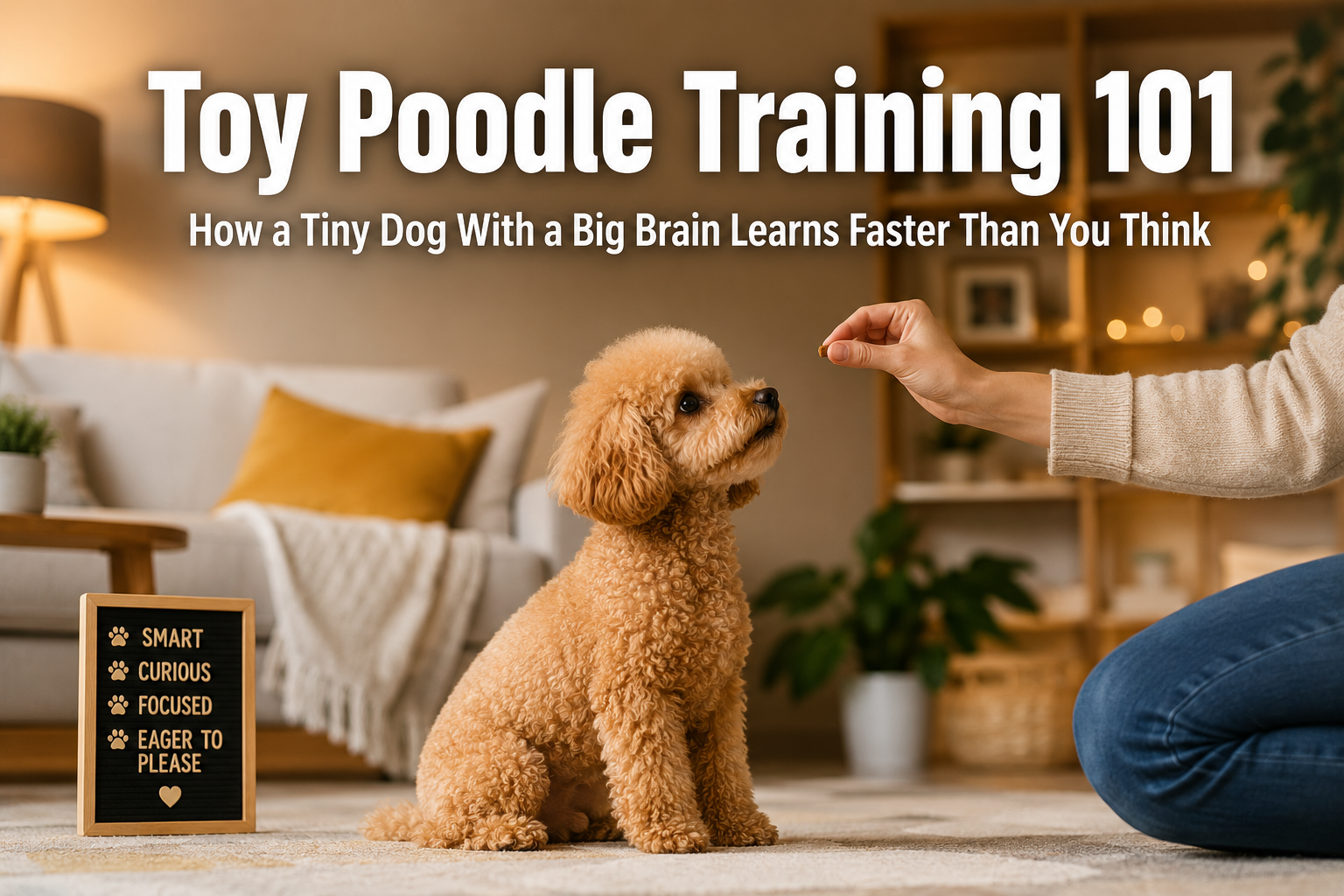
Quick Answer: Toy Poodles consistently rank among the top two most intelligent dog breeds, and their small size does not reduce their training potential — it actually changes which methods work best. With short, varied sessions of 5 to 10 minutes using positive reinforcement, most Toy Poodles can master basic obedience commands in one to three weeks and become reliably housetrained within four to eight weeks [5][7]. The key is treating them like the capable learners they are, not like accessories.
Key Takeaways
- Toy Poodles learn new commands in as few as five repetitions, placing them in the highest tier of canine intelligence [7].
- Training should start between 8 and 10 weeks of age, as soon as the puppy comes home.
- Keep sessions to 5 to 10 minutes, two to three times per day, to match their attention span and fast processing speed [5][7].
- Vary your training environment, reward type, and exercise order every session to prevent boredom and "gaming" the routine [1][3].
- Housetraining typically takes four to eight weeks with consistent scheduling and crate training.
- Professional Toy Poodle training costs range from about $50 to $150 per session, depending on format and location.
- Positive reinforcement (treats, praise, play) is the most effective and recommended approach for Toy Poodles [9][10].
- Common mistakes include skipping socialization, inconsistent rules, and accidentally reinforcing unwanted behaviors like barking.
- Toy Poodles adapt well to apartment living when given adequate mental stimulation and a structured daily routine.
- Separation anxiety is common in the breed and should be addressed early through gradual alone-time training.
What Makes Toy Poodles Easier to Train Than Other Small Dogs
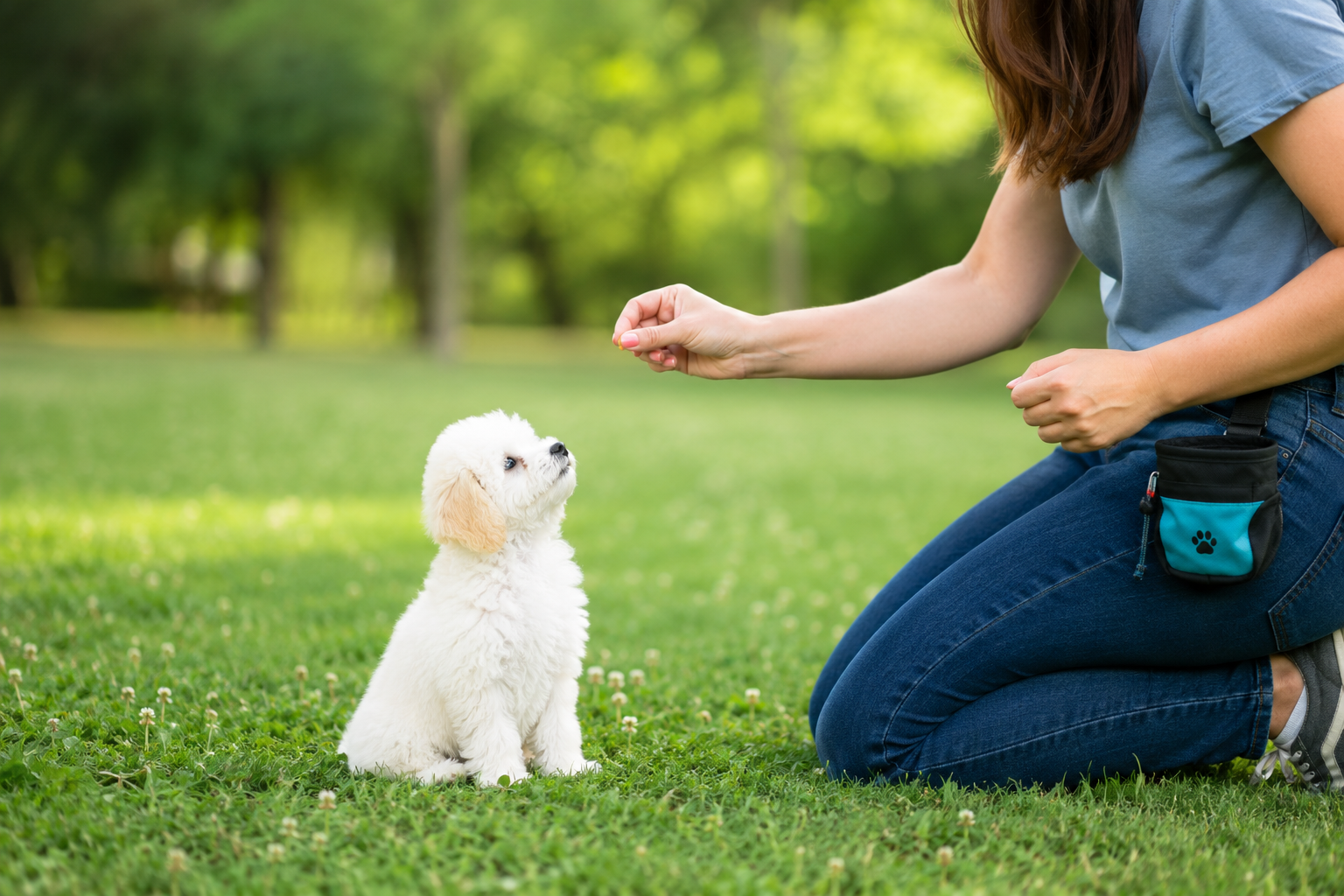
Toy Poodles are easier to train than most small breeds because they combine high intelligence with a strong desire to work with their owner. While many toy breeds were developed primarily as lap dogs, Poodles of all sizes descend from working retrievers, which means they have a built-in drive to follow cues and solve problems [7][10].
Several traits set them apart:
- Rapid learning speed. Toy Poodles can learn a new command in roughly 5 to 15 repetitions, compared to 25 to 40 for average breeds [7].
- High food and praise motivation. They respond enthusiastically to rewards, making positive reinforcement straightforward.
- Attentiveness to human body language. Poodles read subtle gestures and tone shifts better than many breeds, which speeds up communication during training.
- Adaptability. They adjust to new environments and routines quickly, a trait that helps with everything from crate training to travel.
The flip side of this intelligence is that Toy Poodles get bored fast. If training becomes repetitive, they'll start inventing their own entertainment — which usually means ignoring commands or developing unwanted habits [1][3].
Toy Poodle Training: At What Age Should You Start
Start training the day a Toy Poodle puppy arrives home, which is typically between 8 and 10 weeks of age. Puppies in this window are in their prime socialization period and absorb new experiences rapidly [9][10].
Here's a rough age-based training timeline:
| Age | Training Focus |
|---|---|
| 8 to 10 weeks | Name recognition, basic "sit," crate introduction, potty schedule |
| 10 to 12 weeks | "Down," "come," leash introduction, handling exercises |
| 12 to 16 weeks | Socialization outings, "stay," loose-leash walking basics |
| 4 to 6 months | Proofing commands in new environments, impulse control, alone-time practice |
| 6 to 12 months | Advanced obedience, trick training, addressing adolescent boundary-testing |
Waiting until a puppy is six months old to begin training wastes the most receptive learning period. For guidance on building early foundations, see this resource on training smart Toy Poodle puppies at home.
How Long Does It Take to Housetrain a Toy Poodle
Most Toy Poodles become reliably housetrained within four to eight weeks when owners follow a consistent schedule, though some puppies take up to 12 weeks [5][9]. Toy Poodles have small bladders, so they need more frequent outdoor trips than larger breeds — roughly every one to two hours for young puppies.
Steps that speed up housetraining:
- Take the puppy outside immediately after waking, eating, drinking, and playing.
- Use a consistent verbal cue like "go potty" each time.
- Reward with a treat and praise within two seconds of the puppy eliminating outside.
- Confine the puppy to a crate or small pen when unsupervised to prevent indoor accidents.
- Clean accidents with an enzymatic cleaner to remove scent markers.
Common mistake: Punishing accidents after the fact. A Toy Poodle won't connect a scolding to something that happened minutes ago. It only creates fear and slows progress. For a deeper dive into climate-specific strategies, check out this guide on housebreaking Toy Poodle puppies in any climate.
Best Training Methods for Toy Poodles vs. Standard Poodles
The core principles are identical for all Poodle sizes: positive reinforcement, short sessions, and plenty of variety [1][3]. But the practical details differ because of the Toy Poodle's size and temperament.
Key differences:
- Session length. Standard Poodles can handle 15 to 20 minute sessions. Toy Poodles do best with 5 to 10 minutes, repeated two to three times daily [5][7].
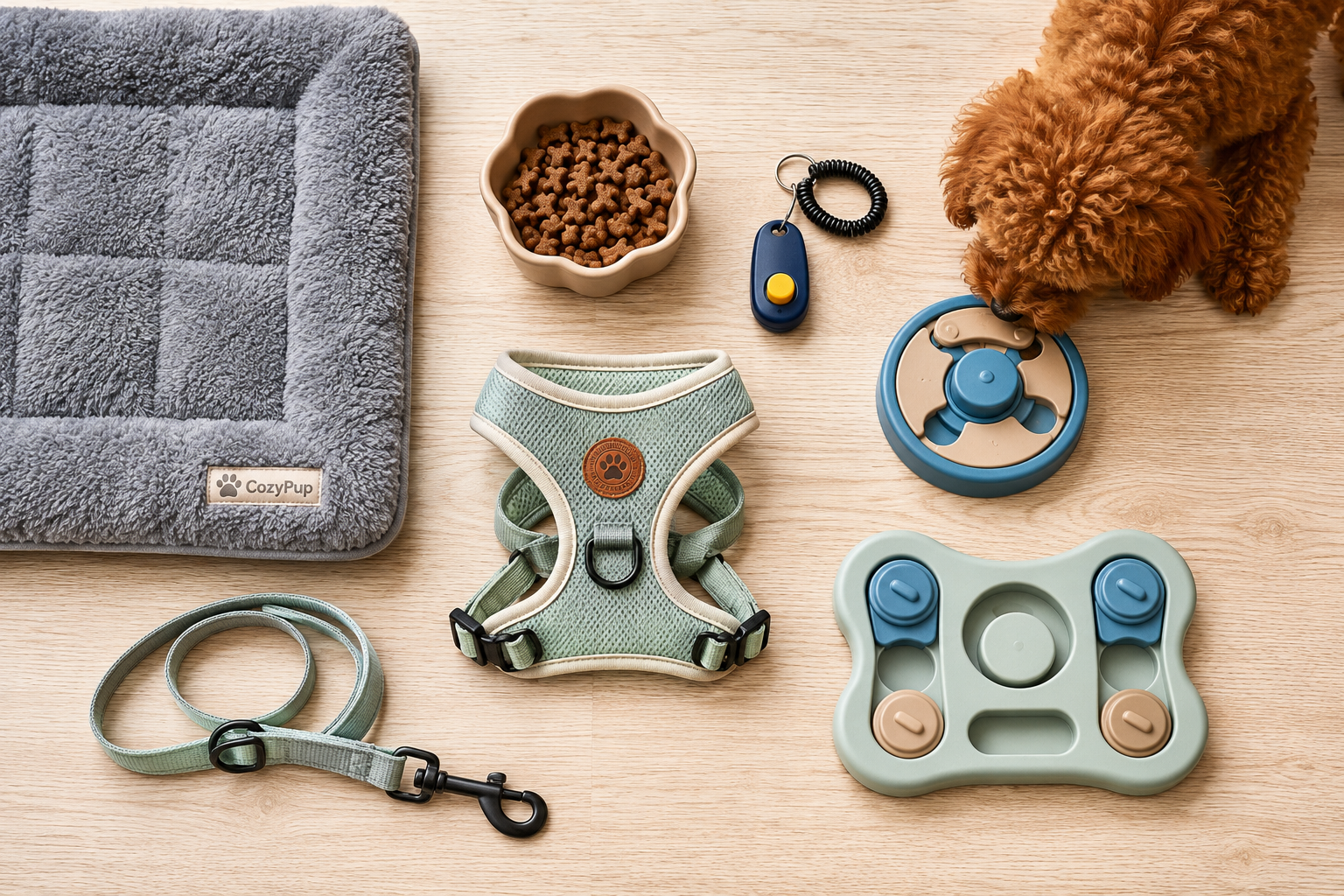
- Treat size. Use pea-sized or smaller treats for Toy Poodles to avoid overfeeding. A single training session might involve 20 to 30 treats, and those calories add up fast on a 4 to 6 pound dog.
- Physical corrections are off the table. Even mild leash pops can injure a Toy Poodle's trachea. Use a harness instead of a collar for any leash work.
- Handling sensitivity. Toy Poodles are more prone to fear-based responses if training feels physically overwhelming. Keep your body posture low and your voice calm.
- Environment management. Standard Poodles can train outdoors in most conditions. Toy Poodles may need indoor alternatives during extreme weather due to their small body mass and limited temperature regulation.
Current training guidance stresses that every Poodle, from 60-pound Standards to 5-pound Toys, needs mental stimulation, socialization, consistent rules, and positive reinforcement [1][3]. The difference is in the scale of delivery, not the philosophy.
Clicker Training vs. Positive Reinforcement for Toy Poodles
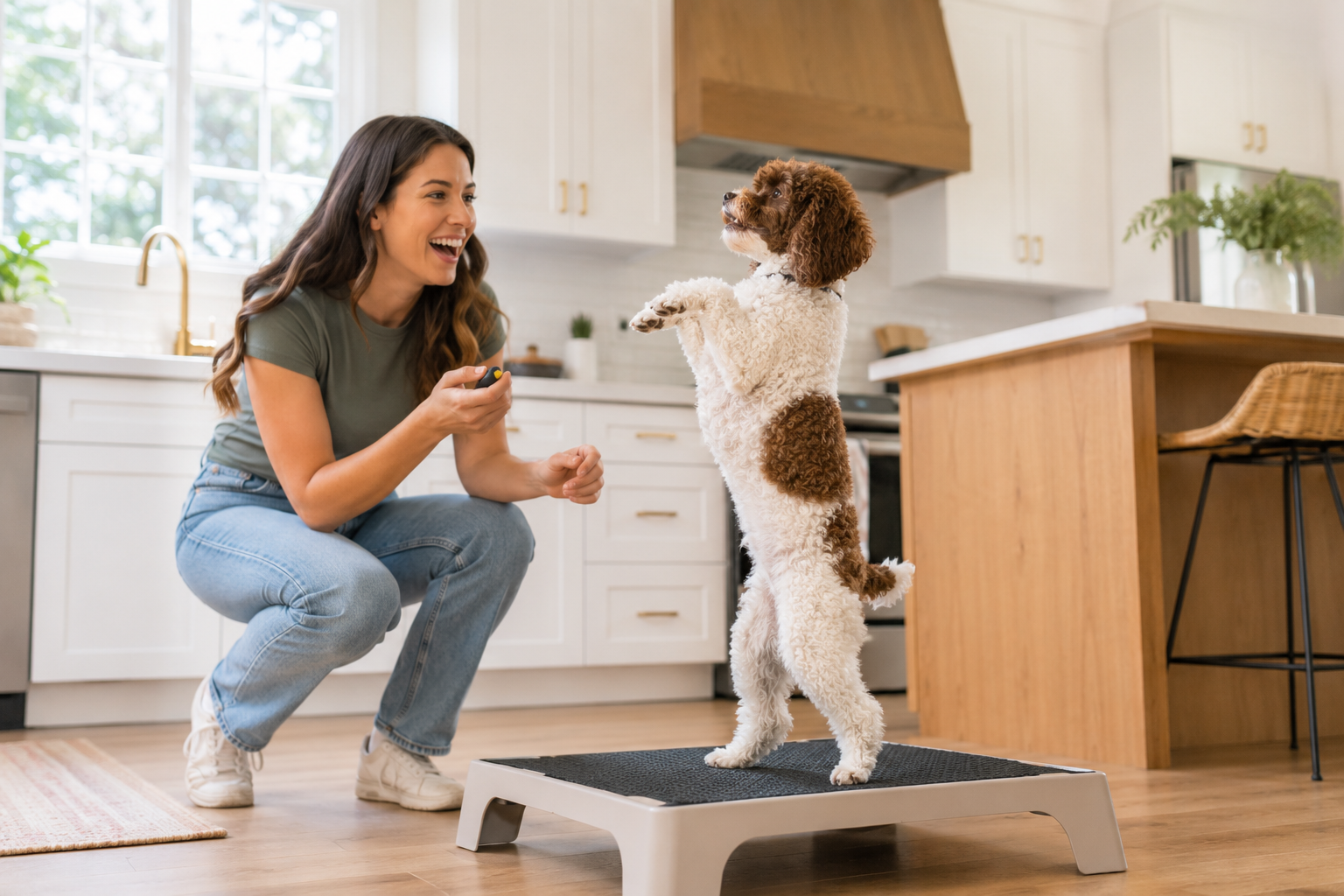
Clicker training is a form of positive reinforcement, not an alternative to it. The clicker is simply a precision tool that marks the exact moment a dog performs the desired behavior, making it easier for fast-learning Toy Poodles to understand what earned the reward [10].
Choose clicker training if:
- The Toy Poodle is learning complex tricks or chains of behavior
- Timing verbal praise consistently is difficult
- The dog responds well to distinct auditory signals
Skip the clicker if:
- The puppy is fearful of sharp sounds (some Toy Poodles are noise-sensitive)
- Training happens in noisy environments where the click gets lost
- The owner finds it awkward to manage a clicker, treats, and leash simultaneously
Both approaches work well for Toy Poodles. The breed's intelligence means they pick up on marker signals quickly regardless of format. For specific clicker techniques, explore these clicker training methods for smart Toy Poodles.
Can You Train a Toy Poodle Without Treats
Yes, Toy Poodles can be trained without food treats by using praise, play, toy rewards, or real-life rewards like access to a favorite spot [9]. However, treats remain the fastest way to build new behaviors because they create a strong, immediate positive association.
Effective non-treat rewards:
- A quick tug game with a favorite toy
- Enthusiastic verbal praise in a high-pitched, happy tone
- A brief belly rub or ear scratch
- Permission to greet a person or sniff something interesting
- Access to a preferred activity (going outside, getting on the couch)
Practical tip: Start with treats to teach a new command, then gradually phase them out by replacing every other treat with praise or play. Once the behavior is reliable, shift to an unpredictable reward schedule — sometimes a treat, sometimes just praise. This actually strengthens the behavior because the dog keeps working in anticipation of the next reward [5].
Why Is My Toy Poodle Not Listening During Training
A Toy Poodle that ignores commands is almost never being "defiant." The most common reasons are boredom, confusion, low motivation, or environmental distractions [7][10].
Troubleshooting checklist:
- Sessions too long? Cut back to 5 minutes. Toy Poodles check out mentally when drills drag on.
- Same routine every time? Change the room, the reward, and the order of exercises. Poodles that predict the pattern start tuning out [1][3].
- Unclear cues? Make sure each command has one consistent word and one consistent hand signal. Family members should all use the same cues.
- Too many distractions? Train in a quiet room first. Only add distractions after the behavior is solid in a calm environment.
- Health issue? Ear infections, dental pain, or low blood sugar (common in tiny breeds) can make a puppy seem unresponsive. Rule out medical causes if the change is sudden.
A Toy Poodle that "won't listen" is usually a Toy Poodle that hasn't been given clear enough information about what earns a reward.
Toy Poodle Stubborn Behavior: How to Handle It
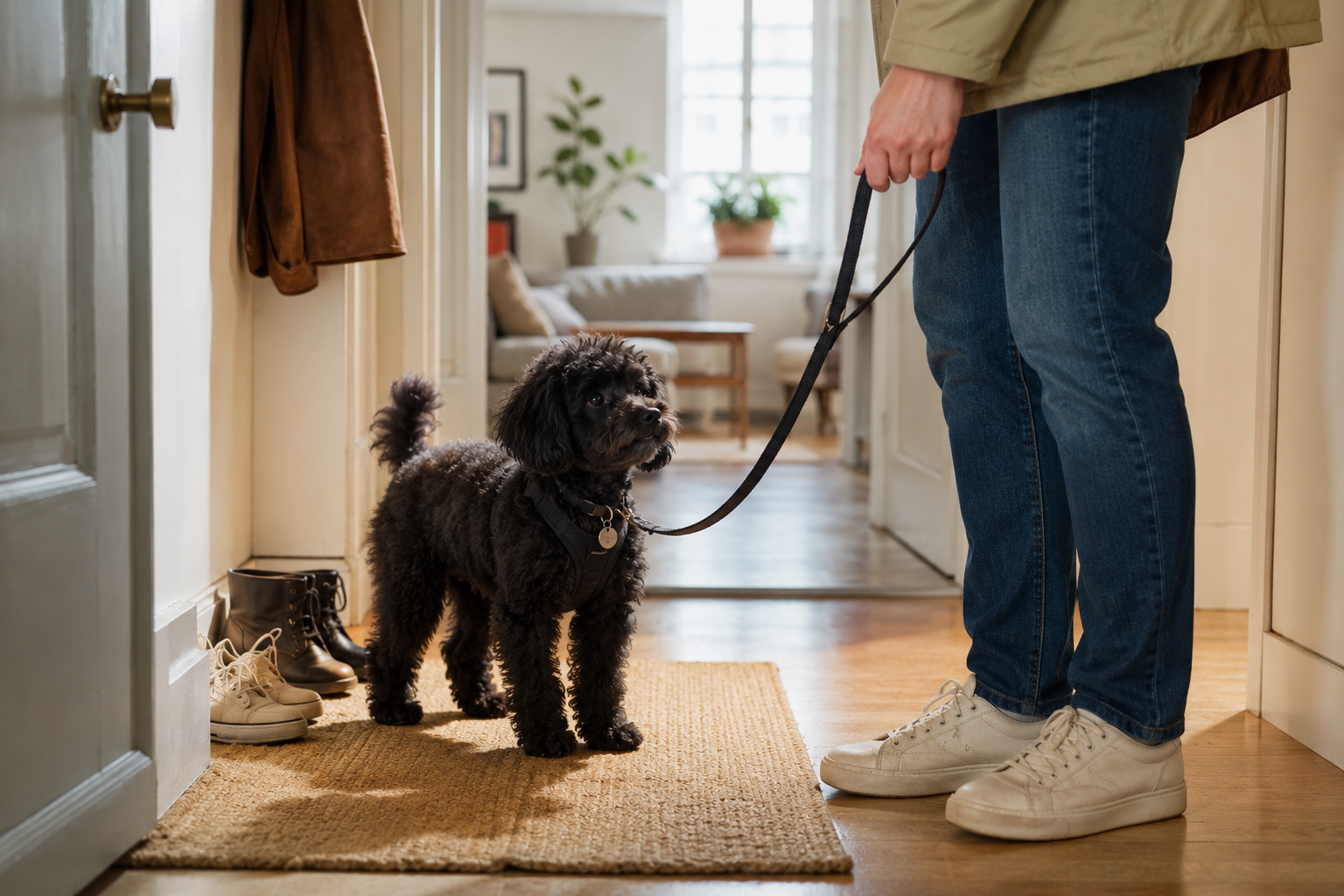
What looks like stubbornness in a Toy Poodle is usually the dog making a rational choice: the reward for ignoring the command is better than the reward for obeying it. Toy Poodles are smart enough to weigh their options, and they'll choose the higher-value outcome every time [7].
How to work through it:
- Increase the value of the reward. If kibble isn't cutting it, try small pieces of chicken, cheese, or freeze-dried liver.
- Lower the difficulty. Go back to the last step the dog performed reliably and rebuild from there.
- Avoid repeating the command. Saying "sit, sit, SIT" teaches the dog that the first two don't count. Say it once, wait three seconds, then lure or guide if needed.
- End on success. If the dog is struggling, ask for something easy, reward it, and stop the session. This prevents frustration for both parties.
- Check for "small dog syndrome." Owners sometimes let Toy Poodles get away with behaviors they'd never allow in a larger dog. Consistent boundaries matter regardless of size.
How to Train a Toy Poodle Not to Bark Excessively
Toy Poodles bark excessively when they're bored, anxious, seeking attention, or alerting to stimuli they haven't been desensitized to. The solution depends on the cause, but the general approach is to teach an alternative behavior and remove the reward for barking [10].
Step-by-step approach:
- Identify the trigger. Doorbell? Passersby? Being left alone? Each trigger needs a specific plan.
- Teach a "quiet" cue. Wait for a pause in barking, mark it with "yes" or a click, and reward. Gradually extend the duration of silence before rewarding.
- Remove the payoff. If the dog barks for attention, turn away and ignore completely until quiet. Any response — even scolding — can reinforce the behavior.
- Desensitize to triggers. For doorbell barking, play doorbell sounds at low volume while rewarding calm behavior. Gradually increase the volume over days.
- Increase mental stimulation. A bored Toy Poodle will bark more. Puzzle feeders, training sessions, and enrichment toys reduce boredom-based barking significantly.
For a complete barking management plan, see this guide on preventing problem barking in Toy Poodle puppies.
Toy Poodle Training for Apartment Living
Toy Poodles are one of the best breeds for apartment living because of their small size, low shedding, and moderate exercise needs. But apartment-specific training is essential to keep the dog happy and the neighbors comfortable.
Apartment training priorities:
- Reliable potty routine. Without a backyard, schedule trips outside every two to three hours for puppies. Indoor potty pads can serve as a backup but shouldn't replace outdoor training long-term.
- Quiet behavior. Teach "quiet" and "settle" commands early. Barking echoes in apartments and creates neighbor conflicts.
- Calm greetings. Hallway encounters with other residents and dogs are frequent. Practice polite greetings on leash.
- Alone-time tolerance. Apartment dogs often hear more ambient noise (footsteps, doors, elevators), which can trigger anxiety. Gradual desensitization helps.
- Indoor exercise. Short indoor fetch games, hide-and-seek with treats, and mental stimulation activities compensate for limited outdoor space.
What If My Toy Poodle Has Separation Anxiety During Training
Separation anxiety is common in Toy Poodles because the breed bonds intensely with its owner. Signs include excessive barking, destructive chewing, pacing, and house soiling when left alone [10].
Addressing it during training:
- Practice micro-departures. Leave the room for 5 seconds, return calmly, and reward quiet behavior. Gradually increase the duration over days and weeks.
- Avoid dramatic goodbyes. Long, emotional departures signal to the dog that something is wrong.
- Create positive alone-time associations. Give a stuffed Kong or puzzle toy only when leaving. The dog starts to associate departures with something enjoyable.
- Use crate training as a safe space, not a punishment. A properly introduced crate becomes a den where the dog feels secure.
- Consider professional help for severe cases. If the dog is injuring itself or causing property damage, consult a veterinary behaviorist. Medication may be appropriate alongside behavior modification.
Edge case: Some Toy Poodles develop separation anxiety only after a change in routine (new job, move, schedule shift). In these cases, a gradual transition period with extra structure usually resolves the issue within two to four weeks.
Common Mistakes People Make When Training Toy Poodles
Even experienced dog owners make specific errors with Toy Poodles because the breed's small size creates blind spots.
- Carrying instead of walking. Toy Poodles that are carried everywhere miss critical socialization and never learn to navigate the world confidently.
- Skipping socialization. Exposing the puppy to diverse people, surfaces, sounds, and animals between 8 and 16 weeks is non-negotiable. Learn more about socialization strategies for confident Toy Poodles.
- Inconsistent rules among family members. If one person allows the dog on the couch and another doesn't, the dog gets confused and stops listening to both.
- Using the crate as punishment. This ruins the crate as a safe space and makes confinement training much harder.
- Training sessions that are too long. Anything beyond 10 minutes risks frustration and diminishing returns [5][7].
- Laughing at bad behavior. A Toy Poodle jumping on guests looks cute at 5 pounds. The laughter reinforces the behavior, and it becomes a persistent habit.
- Neglecting physical exercise. Toy Poodles are small but athletic. A daily walk plus indoor play prevents the restless energy that fuels behavior problems.
Are Toy Poodles Good for First-Time Dog Owners
Toy Poodles are an excellent choice for first-time dog owners who are willing to invest time in training and mental enrichment. Their intelligence makes them forgiving of beginner mistakes because they pick up on corrected cues quickly [7][9].
Why they work for beginners:
- They respond well to positive reinforcement, which is the most intuitive training style for new owners
- Their small size makes management easier (smaller crate, less food, easier to transport)
- They don't require intense physical exercise like herding or sporting breeds
- They're highly adaptable to various living situations
One caution for first-timers: Don't mistake their small size for low maintenance. Toy Poodles need regular grooming, consistent training, and daily mental engagement. Skipping any of these leads to behavior problems that feel disproportionate to the dog's size.
Toy Poodle Training Cost With a Professional Trainer
Professional training for a Toy Poodle typically costs between $50 and $150 per private session, with group classes ranging from $100 to $300 for a multi-week course (usually four to six weeks). Board-and-train programs, where the dog stays with the trainer, can run $500 to $2,500 or more depending on duration and location.
| Training Format | Estimated Cost (2026) | Best For |
|---|---|---|
| Group puppy class (4-6 weeks) | $100 to $300 | Socialization + basic obedience |
| Private sessions (per hour) | $50 to $150 | Specific behavior issues |
| Board-and-train (2-4 weeks) | $500 to $2,500+ | Intensive foundation training |
| Online courses / video programs | $30 to $200 | Budget-conscious owners with self-discipline |
Decision rule: Choose group classes if the primary goal is socialization and basic manners. Choose private sessions if the dog has a specific issue like separation anxiety, aggression, or excessive barking. Board-and-train programs work best when the owner's schedule genuinely prevents consistent daily training.
Conclusion
Toy Poodle training succeeds when owners respect the breed's intelligence and work with it, not against it. The formula is straightforward: start early (8 to 10 weeks), keep sessions short (5 to 10 minutes), vary the routine constantly, and use positive reinforcement as the primary tool [1][3][5][7].
Actionable next steps:
- Set up a daily training schedule with two to three short sessions spread throughout the day.
- Stock up on high-value, pea-sized treats and a clicker if desired.
- Prioritize housetraining and crate training in the first two weeks.
- Begin socialization immediately — expose the puppy to new people, sounds, and surfaces daily.
- If progress stalls after two to three weeks of consistent effort, consult a professional trainer for a single assessment session before investing in a full program.
A Toy Poodle that receives structured, varied, and reward-based training doesn't just learn faster than most dogs — it becomes one of the most responsive, well-mannered companions any owner could ask for.
FAQ
How many commands can a Toy Poodle learn?
There is no fixed upper limit. Most Toy Poodles can reliably learn 50 or more commands and tricks with consistent training. Some working Poodles have demonstrated vocabularies of over 200 cues [7].
Is it harder to potty train a Toy Poodle than a larger dog?
Toy Poodles have smaller bladders and need more frequent trips outside, which can make the process feel slower. But with a strict schedule and crate training, most are reliable within four to eight weeks [5][9].
Can an older Toy Poodle still be trained?
Yes. Toy Poodles remain mentally sharp well into their senior years. Older dogs may take slightly longer to change established habits, but they can absolutely learn new commands and behaviors.
Do Toy Poodles need a fenced yard?
No. Toy Poodles do well without a yard as long as they get daily walks and indoor mental stimulation. They're one of the most apartment-friendly breeds available.
Should I use a harness or collar for leash training?
Always use a harness for Toy Poodles. Their small tracheas are vulnerable to damage from collar pressure, especially if the dog pulls. A well-fitted harness distributes force across the chest.
How do I stop my Toy Poodle from jumping on people?
Turn away and withdraw attention every time the dog jumps. Only greet and reward the dog when all four paws are on the floor. Consistency from every person the dog meets is critical.
Are Toy Poodles aggressive?
Toy Poodles are not inherently aggressive, but they can develop fear-based reactivity if undersocialized. Early and ongoing socialization prevents most aggression issues.
What's the best age to start advanced trick training?
Once a Toy Poodle has mastered basic obedience (usually around 4 to 6 months), it's ready for more complex tricks. Their intelligence makes them natural candidates for advanced trick training.
Do Toy Poodles do well in multi-pet households?
Generally yes, especially when introduced properly and given individual training time. Their social nature helps, but early introductions and supervised interactions are important.
How much daily training time does a Toy Poodle need?
Plan for 15 to 30 minutes total per day, split into two to three short sessions. This is enough to maintain learned behaviors and teach new ones without causing mental fatigue [5][7].
References
[1] Poodle – https://www.zoomroom.com/tips/breeds/poodle
[3] Poodle – https://www.zoomroom.com/tips/breeds/poodle/
[5] Toy Poodle Training – https://valivans.club/blog/toy-poodle-training
[7] Toy Poodle Intelligence Small Dog – https://urbanpetguide.com/toy-poodle-intelligence-small-dog/
[9] How To Train Toy Poodles – https://lyka.com.au/blog/how-to-train-toy-poodles
[10] How To Train Toy Poodle – https://www.dogster.com/dog-training/how-to-train-toy-poodle