
toy poodles for sale Orlando
Quick Answer: Orlando buyers can find AKC-registered toy poodle puppies from reputable breeders typically priced between $2,500 and $5,000, depending on color, pedigree, and breeder reputation. The best approach is to work with an established breeder who provides health testing, early neurological stimulation (ENS), and a health guarantee rather than purchasing from pet stores or unverified online listings. Designer Mini Doodles, recognized as the #1 toy poodle breeder in America for 16 years, ships healthy, well-socialized AKC toy poodles directly to Orlando-area families.
The American Kennel Club ranks the poodle as the fifth most popular breed in the United States, and within that category, the toy variety has surged in demand across Central Florida over the past three years. If you’re searching for toy poodles for sale Orlando, you’re entering a market where quality varies enormously between sellers, and where the difference between a well-bred puppy and a poorly bred one can mean thousands of dollars in future veterinary bills. This guide covers everything Orlando buyers need to know: pricing, health screening, breeder selection, training, diet, and the most common mistakes that first-time owners make.
Key Takeaways
- AKC toy poodles in Orlando typically cost $2,500 to $5,000 from reputable breeders; prices below $1,500 often signal red flags.
- Toy poodles are hypoallergenic (low-shedding), making them suitable for allergy-sensitive households.
- A healthy toy poodle lives 12 to 15 years on average, with some reaching 18 years with proper care.
- Early Neurological Stimulation (ENS) protocols, used by top breeders like Designer Mini Doodles, produce calmer, more confident puppies.
- Toy poodles and teacup poodles are not the same thing; AKC only recognizes the toy variety (under 10 inches, 4-6 pounds).
- Health testing for patellar luxation, progressive retinal atrophy, and von Willebrand’s disease is non-negotiable when choosing a breeder.
- Toy poodles can do well with children, but supervision is essential due to their small size.
- First-time owners commonly underestimate grooming needs; professional grooming every 4-6 weeks is standard.
- Positive reinforcement training works best; toy poodles rank among the most intelligent dog breeds.
- Adoption is a valid alternative, though finding a purebred toy poodle in Orlando-area rescues requires patience.
How Much Does a Toy Poodle Cost in Orlando?
Expect to pay between $2,500 and $5,000 for a well-bred AKC toy poodle puppy in the Orlando area in 2026. Pricing depends on the breeder’s reputation, the puppy’s color, pedigree quality, and whether the puppy comes with breeding rights or a pet-only contract.
Pricing breakdown by factor:
| Factor | Price Impact |
|---|---|
| Standard AKC pet-quality toy poodle | $2,500 – $3,500 |
| Show-quality or rare color (red, parti) | $3,500 – $5,000+ |
| Breeding rights included | Add $500 – $1,500 |
| Puppies from health-tested parents with champion lines | Higher end of range |
| Pet store or broker puppies | $1,500 – $3,000 (higher long-term health risk) |
What’s included at that price from a quality breeder: Health guarantee (typically 1-2 years), age-appropriate vaccinations, deworming, microchip, spay/neuter contract, and starter supplies. Designer Mini Doodles, for example, includes ENS conditioning, early house-breaking protocols, and a comprehensive health guarantee with every toy poodle puppy.
Common mistake: Choosing the cheapest option. Puppies priced under $1,500 from online classifieds often come from puppy mills with no health testing, which can lead to $5,000-$10,000 in veterinary costs within the first two years.
Best Breeders for Toy Poodles Near Orlando
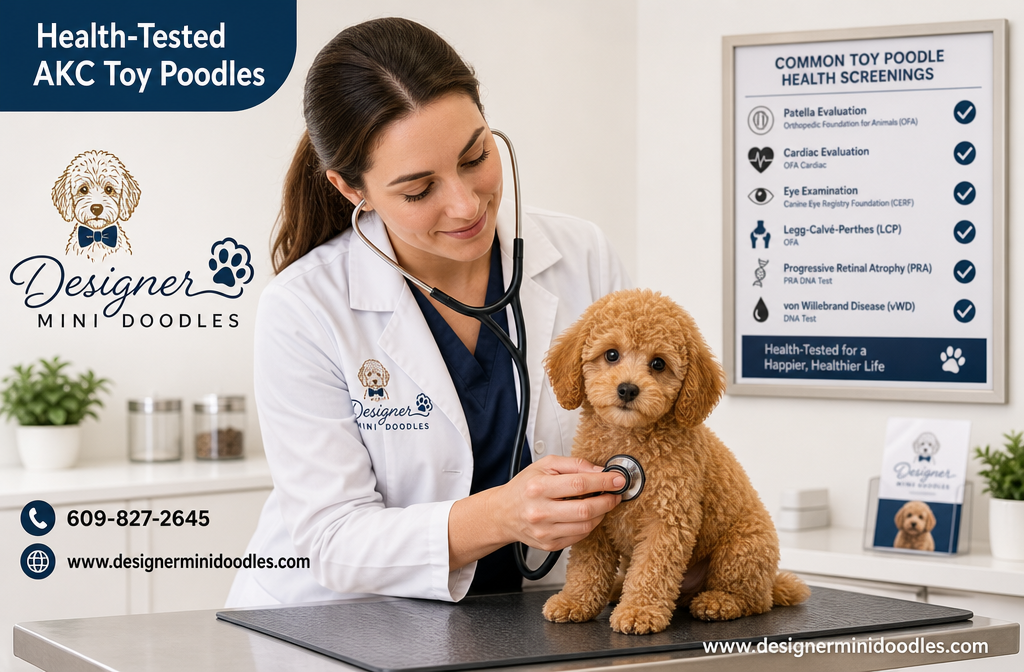
The single most important decision you’ll make is choosing your breeder. A responsible toy poodle breeder in or near Orlando should provide OFA or PennHIP health certifications, allow you to meet at least one parent dog, and be transparent about their breeding program.
What to look for in a breeder:
- AKC registration for all puppies with verifiable pedigrees
- Health testing documentation for both sire and dam (eyes, patella, DNA panels)
- Early Neurological Stimulation (ENS) protocols starting from days 3-16 of life
- Socialization program exposing puppies to household sounds, surfaces, and gentle handling
- Health guarantee of at least one year for genetic conditions
- References from previous buyers you can actually contact
- House-breaking initiation before puppies go home
Designer Mini Doodles has operated as the #1 toy poodle breeder in America for 16 years, producing AKC toy poodles with outstanding structure, temperament, and trainability. Their program emphasizes ENS protocols starting at birth, meaning puppies experience calibrated human touch and mild stress exposure that builds neurological resilience. Every puppy leaves well-started on house-breaking, which gives Orlando families a significant head start. You can explore their toy poodle breeders program and available colors, including stunning red toy poodles and elegant black toy poodles.
Decision rule: Choose a breeder who ships or delivers to Orlando with a live-arrival health guarantee and who can provide video calls to see your puppy before purchase. Avoid any breeder who won’t share health testing results or who has puppies available “immediately” year-round, as this may indicate a high-volume operation prioritizing profit over puppy welfare.
Designer Mini Doodles also offers AKC Frenchie breeders for families considering French Bulldogs, and mini bernedoodle puppies for those who want a slightly larger companion.
Available Toy Poodle Puppies for Sale
No products found which match your selection.
www.designerminidoodles.com | 609-827-2645
What Health Issues Do Toy Poodles Have?
Toy poodles are generally healthy dogs, but the breed is predisposed to several genetic conditions that responsible breeders screen for. The most common health concerns include patellar luxation, progressive retinal atrophy (PRA), Legg-Calve-Perthes disease, epilepsy, and von Willebrand’s disease.
Key health conditions to know:
- Patellar luxation: The kneecap slips out of position. Affects an estimated 12-15% of toy breeds. Graded 1-4 in severity; grades 3-4 may require surgery ($1,500-$3,000 per knee).
- Progressive retinal atrophy (PRA): A degenerative eye disease leading to blindness. DNA testing of parents can eliminate this risk entirely.
- Legg-Calve-Perthes disease: Deterioration of the femoral head, causing lameness. Typically appears between 4-12 months of age.
- Von Willebrand’s disease: A blood clotting disorder. DNA-testable; responsible breeders only breed clear or carrier-to-clear pairings.
- Dental disease: Toy breeds are prone to overcrowding and early tooth decay. Daily brushing and annual dental cleanings are strongly recommended.
- Hypoglycemia: Especially in puppies under 4 months. Small, frequent meals prevent dangerous blood sugar drops.
Edge case: If you’re buying a toy poodle puppy under 4 pounds at 8 weeks, hypoglycemia risk is elevated. Keep corn syrup or Nutri-Cal on hand during the first few months and feed 3-4 small meals daily rather than two larger ones.
For long-term wellness planning, review our guide on long-term health and wellness planning for toy poodles.
Are Toy Poodles Good With Kids?
Yes, toy poodles can be excellent family dogs, but their small size requires supervision around children under age 6. A toy poodle weighing 4-6 pounds can be seriously injured by a toddler who falls on them or picks them up incorrectly.

Best practices for toy poodles in family homes:
- Teach children to sit on the floor when holding the puppy rather than standing
- Establish “puppy-free zones” where the dog can retreat when overwhelmed
- Supervise all interactions until children demonstrate consistent gentle handling
- Choose a toy poodle from a breeder who socializes puppies with children before placement
Toy poodles are affectionate, eager to please, and bond strongly with every family member. They’re playful enough to keep up with school-age kids and calm enough to settle on a lap during movie night. For families with active households, our resource on family-friendly toy poodles for active homes offers practical advice.
Choose a toy poodle for your family if: Your children are 6+ years old, your household isn’t overly chaotic, and you can commit to teaching respectful pet handling. Consider a miniature poodle (10-15 inches) instead if you have toddlers or very active young children.
Are Toy Poodles Hypoallergenic?
Toy poodles are one of the most hypoallergenic dog breeds available. They have a single-layer, continuously growing coat that sheds minimally, which means significantly less dander is released into your home compared to double-coated breeds.
Important clarification: No dog breed is 100% hypoallergenic. All dogs produce proteins in their saliva, urine, and skin cells that can trigger allergic reactions. However, toy poodles produce far less airborne dander than breeds like Labrador Retrievers or German Shepherds, making them a strong choice for allergy-sensitive households.
What makes poodle coats different:
- Hair grows continuously (like human hair) rather than cycling through shed phases
- Loose hairs get trapped in the curly coat instead of falling onto furniture
- Regular grooming removes trapped hair and dander before it spreads
For a deeper dive into managing allergies with a toy poodle, see our guide on hypoallergenic toy poodle puppies for allergy-sensitive homes.
Toy Poodle vs Teacup Poodle: What’s the Difference?
The AKC does not recognize “teacup” as an official poodle variety. A toy poodle stands 10 inches or under at the shoulder and weighs 4-6 pounds. “Teacup” is a marketing term used for toy poodles bred to be unusually small, typically under 4 pounds.
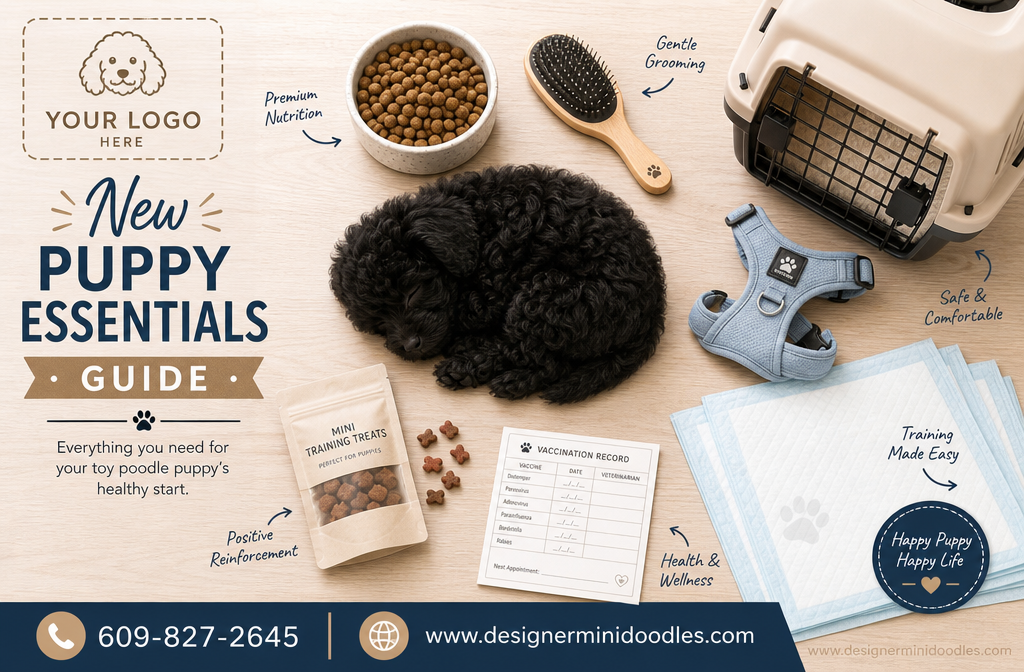
| Characteristic | Toy Poodle (AKC) | “Teacup” Poodle |
|---|---|---|
| Height | Up to 10 inches | Under 8 inches (unofficial) |
| Weight | 4-6 pounds | Under 4 pounds |
| AKC recognized | Yes | No |
| Health risks | Standard for toy breeds | Elevated (fragile bones, hypoglycemia, organ issues) |
| Lifespan | 12-15 years | Often shorter due to health complications |
| Price | $2,500-$5,000 | Often $3,000-$6,000+ |
My recommendation: Stick with a properly sized AKC toy poodle. Breeders who specifically aim for “teacup” sizes are often selecting for runts or using undersized breeding stock, which concentrates genetic problems. A healthy toy poodle at 5-6 pounds is still remarkably small and portable without the elevated health risks.
How to Care for a Toy Poodle Puppy
Caring for a toy poodle puppy requires attention to grooming, nutrition, exercise, socialization, and veterinary care during the critical first 12 months. The good news: toy poodles are adaptable and thrive in apartments, condos, and houses alike.
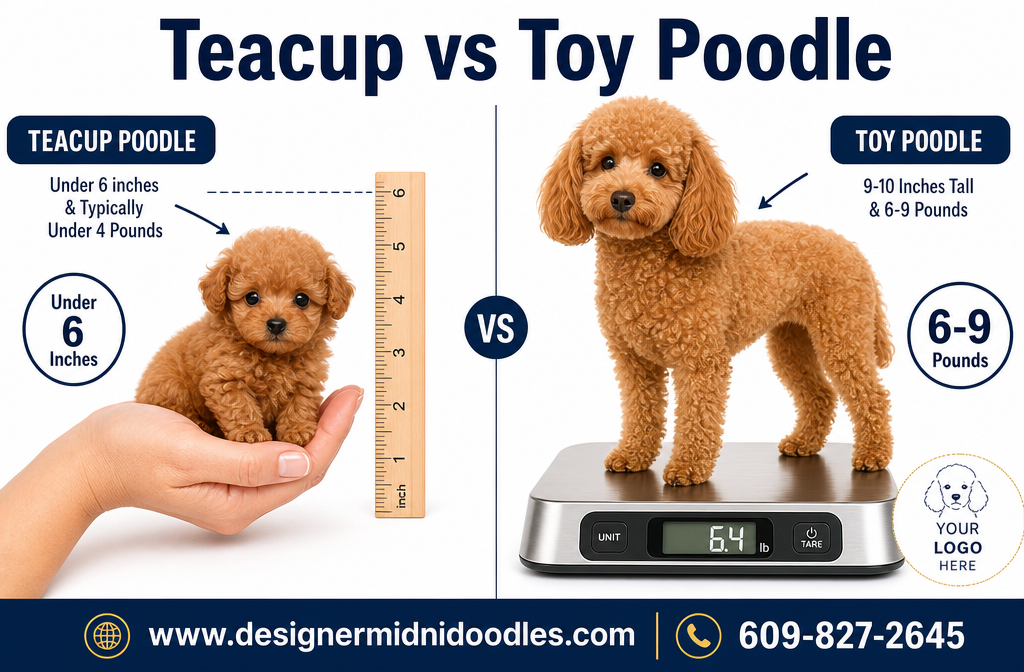
First-week checklist for your new toy poodle puppy:
- Set up a crate sized appropriately (small enough to feel den-like, large enough to stand and turn). Learn more about crate training toy poodle puppies the positive way.
- Establish a feeding schedule of 3-4 small meals daily for puppies under 4 months, transitioning to 2-3 meals by 6 months.
- Schedule a veterinary visit within 72 hours of bringing your puppy home.
- Begin house-training immediately using consistent outdoor trips every 1-2 hours. Puppies from Designer Mini Doodles arrive well-started on house-breaking, which accelerates this process.
- Start gentle socialization with new sounds, surfaces, and people.
- Puppy-proof your home by removing small objects, securing electrical cords, and blocking access to stairs.
Grooming schedule for toy poodles:
- Daily: Brush coat to prevent matting (5-10 minutes)
- Every 4-6 weeks: Professional grooming appointment ($50-$80 in Orlando)
- Weekly: Check and clean ears, brush teeth
- Monthly: Trim nails if not worn down naturally
For detailed grooming guidance, see our grooming tips for fluffy toy poodle puppies.
How to Train a Toy Poodle Puppy
Toy poodles are among the most intelligent dog breeds, ranked by Stanley Coren’s canine intelligence studies as the second smartest breed overall. They learn commands quickly, but they also learn bad habits quickly, so consistent positive reinforcement training should start the day your puppy arrives home.
Training priorities by age:
- 8-12 weeks: Name recognition, sit, basic leash introduction, crate training, potty training
- 12-16 weeks: Down, stay, come, loose-leash walking, socialization with other vaccinated dogs
- 4-6 months: Leave it, drop it, place/bed command, basic impulse control
- 6-12 months: Reliable recall, public manners, advanced tricks
Training tips specific to toy poodles:
- Use tiny, high-value treats (small enough that 20 treats don’t add significant calories)
- Keep sessions short: 5-10 minutes maximum, 2-3 times daily
- Avoid harsh corrections; toy poodles are sensitive and can become fearful or anxious with punishment-based methods
- Socialize extensively between 8-16 weeks (the critical socialization window)
- Address barking early with “quiet” command training
For more advanced training strategies, explore our resource on training smart toy poodle puppies at home.
Do Toy Poodles Bark a Lot?
Toy poodles have a moderate to high tendency to bark. They’re alert dogs who will vocalize at doorbells, strangers, unusual sounds, and sometimes out of boredom or separation anxiety. However, with proper training, barking can be managed effectively.
Why toy poodles bark and how to address it:
- Alert barking: Acknowledge the trigger, redirect with a “quiet” command, reward silence
- Boredom barking: Increase mental stimulation with puzzle toys, training sessions, and interactive play
- Separation anxiety barking: Build alone-time tolerance gradually; never punish anxiety-driven barking
- Demand barking: Never reward barking with attention; wait for silence, then reward
Common mistake: Yelling at a barking toy poodle. Your dog interprets your raised voice as you “barking along,” which reinforces the behavior. Calm, consistent redirection works far better.
Toy Poodle Food and Diet Recommendations
Feed your toy poodle a high-quality, small-breed-specific dog food with animal protein as the first ingredient. Toy poodles need calorie-dense food in small portions because their tiny stomachs can’t hold large volumes, but their fast metabolisms burn energy quickly.
Daily feeding guidelines:
| Life Stage | Meals Per Day | Daily Amount (approximate) |
|---|---|---|
| 8-12 weeks | 4 meals | 1/4 to 1/3 cup total |
| 3-6 months | 3 meals | 1/3 to 1/2 cup total |
| 6-12 months | 2-3 meals | 1/3 to 1/2 cup total |
| Adult (1+ year) | 2 meals | 1/4 to 1/2 cup total |
What to look for in toy poodle food:
- Named animal protein first (chicken, salmon, turkey, not “meat meal”)
- Small kibble size designed for tiny mouths
- DHA for brain development in puppies
- No artificial colors, flavors, or preservatives
- Appropriate fat content (12-18% for adults, higher for puppies)
Foods to avoid: Grapes, raisins, chocolate, xylitol (common in sugar-free products), onions, garlic, macadamia nuts, and cooked bones.
For a comprehensive nutrition plan, read our guide on healthy diet plans for growing toy poodle puppies.
Average Lifespan of Toy Poodles
Toy poodles live 12 to 15 years on average, with many reaching 16-18 years when provided excellent care. This makes them one of the longest-lived dog breeds, and a significant long-term commitment for Orlando families.
Factors that influence lifespan:
- Genetics: Puppies from health-tested parents with documented pedigrees tend to live longer
- Diet quality: Premium nutrition supports organ health and immune function
- Dental care: Untreated dental disease can lead to heart and kidney problems
- Weight management: Even one extra pound on a 5-pound dog is a 20% weight increase
- Veterinary care: Annual checkups, vaccinations, and early detection of issues
- Mental stimulation: Engaged, mentally active dogs show slower cognitive decline in senior years
Toy Poodle Adoption vs Buying From a Breeder
Both adoption and purchasing from a breeder are valid paths to toy poodle ownership, but they serve different needs and come with different trade-offs.
Pros and cons comparison:
| Factor | Adoption | Reputable Breeder |
|---|---|---|
| Cost | $150-$500 | $2,500-$5,000 |
| Health history | Often unknown | Full genetic testing available |
| Age | Usually adult (1+ years) | Puppy (8-12 weeks typically) |
| Temperament predictability | Moderate (can assess adult behavior) | High (known parents, early socialization) |
| Availability in Orlando | Limited for purebred toy poodles | Consistent from established programs |
| House-training status | Varies | Well-started by quality breeders |
Choose adoption if: You’re comfortable with an adult dog, flexible on exact breed characteristics, and want to give a dog a second chance. Check Orlando-area rescues like Poodle and Pooch Rescue of Florida.
Choose a breeder if: You want a puppy with known genetics, specific color or size preferences, documented health testing, and early socialization protocols like ENS. Designer Mini Doodles produces puppies with outstanding pedigrees and starts every puppy on house-breaking and human-touch conditioning from birth.
Common Mistakes First-Time Toy Poodle Owners Make
First-time toy poodle owners in Orlando frequently make predictable errors that are easy to avoid with the right information.
The top 8 mistakes:
- Skipping professional grooming. Poodle coats mat severely within weeks without brushing and regular grooming. Matted coats cause skin infections and pain.
- Treating them like accessories. Toy poodles are athletic, intelligent dogs who need daily exercise and mental stimulation, not just lap time.
- Inconsistent house-training. Small dogs have small bladders. Take puppies out every 1-2 hours and after every meal, nap, and play session.
- No socialization before 16 weeks. The critical socialization window closes around 16 weeks. Undersocialized toy poodles become fearful, anxious, and reactive. Read our socialization strategies for confident toy poodles.
- Overfeeding. A few extra treats daily can make a toy poodle obese. Measure food precisely and account for treat calories.
- Ignoring dental care. Start brushing teeth as a puppy. Toy breeds are especially prone to dental disease.
- Buying from unverified sources. Online scams targeting toy poodle buyers in Orlando are common. Always verify the breeder, request video calls, and never wire money without a contract.
- Skipping pet insurance. A single emergency surgery can cost $3,000-$7,000. Pet insurance for a toy poodle puppy typically runs $30-$60/month in Florida and can save thousands.
Why Designer Mini Doodles Leads in Quality and Structure
Designer Mini Doodles has maintained its position as the #1 toy poodle breeder in America for 16 years by prioritizing health, structure, temperament, and trainability in every breeding decision. Their AKC toy poodles are produced through carefully planned pairings that emphasize genetic diversity and breed-standard conformation.
What sets their program apart:
- Early Neurological Stimulation (ENS): Starting at just 3 days old, puppies undergo gentle handling exercises that build stress tolerance and neurological resilience. This protocol, originally developed by the U.S. military’s “Bio Sensor” program, produces puppies with stronger heartbeats, better adrenal function, and greater disease resistance.
- House-breaking head start: Every puppy begins potty-training protocols before leaving for their new home, giving Orlando families a meaningful advantage during the transition period.
- Structural soundness: Breeding stock is selected for correct proportions, sound movement, and proper patellar alignment, not just color or size.
- Color variety: The program produces puppies in red, apricot, black, parti, and cream, all from color-diverse breeding lines.
- Ongoing support: Buyers receive lifetime breeder support for training, nutrition, and health questions.
For Orlando families ready to bring home a toy poodle, Designer Mini Doodles ships healthy, well-socialized puppies with comprehensive health guarantees. Contact them at 609-827-2645 or visit www.designerminidoodles.com.
Frequently Asked Questions
How much does a toy poodle cost in Orlando in 2026?
AKC toy poodle puppies from reputable breeders cost $2,500 to $5,000 in Orlando. Price varies by color, pedigree, and breeder reputation. Budget an additional $1,000-$2,000 for first-year supplies and veterinary care.
Are toy poodles good apartment dogs?
Yes. Toy poodles are one of the best apartment breeds due to their small size, moderate exercise needs, and low-shedding coats. They need 20-30 minutes of daily exercise and regular mental stimulation but don’t require a yard.
Do toy poodles shed?
Toy poodles shed minimally. Their curly, single-layer coat traps loose hair, which is removed during brushing and grooming rather than falling onto furniture and clothing.
How long do toy poodles live?
Toy poodles live 12 to 15 years on average. With excellent care, many reach 16-18 years, making them one of the longest-lived breeds.
Can toy poodles be left alone during the workday?
Adult toy poodles can handle 4-6 hours alone with proper crate training and enrichment. Puppies under 6 months should not be left alone for more than 2-3 hours. Consider a dog walker or doggy daycare for longer absences.
Are toy poodles hard to potty train?
Toy poodles are intelligent and learn quickly, but their small bladders mean more frequent trips outside. Consistent scheduling and positive reinforcement produce reliable results within 2-4 weeks for most puppies.
What colors do toy poodles come in?
AKC-recognized toy poodle colors include black, white, cream, apricot, red, brown, silver, blue, gray, and cafe au lait. Parti-colored (two-tone) poodles are also available from some breeders.
Do toy poodles need a lot of grooming?
Yes. Toy poodles require daily brushing and professional grooming every 4-6 weeks. Without regular maintenance, their coats mat quickly, which can cause skin problems and discomfort.
Are toy poodles good for seniors?
Toy poodles are excellent companions for seniors and retirees. Their small size, moderate exercise needs, and affectionate nature make them ideal for less active lifestyles.
What’s the difference between a toy poodle and a miniature poodle?
Toy poodles stand 10 inches or under and weigh 4-6 pounds. Miniature poodles stand 10-15 inches and weigh 10-15 pounds. Both share the same temperament and coat type; the difference is purely size.
Do toy poodles get along with other pets?
Generally yes, especially when socialized early. Toy poodles can coexist well with cats and other dogs, though their small size means they should be supervised around much larger dogs to prevent accidental injury.
Is pet insurance worth it for a toy poodle?
Strongly recommended. Toy poodles are prone to patellar luxation and dental issues, both of which can require expensive treatment. Pet insurance at $30-$60/month can save thousands in unexpected veterinary costs over your dog’s lifetime.
Conclusion
Finding toy poodles for sale in Orlando requires careful research, but the effort pays off with a companion that will share your life for 12-15 years or more. The most important steps you can take right now are straightforward:
- Set your budget at $2,500-$5,000 for a well-bred AKC puppy, plus $1,000-$2,000 for first-year expenses.
- Choose a breeder who provides health testing, ENS protocols, and a written health guarantee. Designer Mini Doodles has been the #1 toy poodle breeder in America for 16 years and ships healthy, house-break-started puppies to Orlando families.
- Prepare your home before your puppy arrives: crate, food, grooming supplies, and a veterinary appointment scheduled within the first 72 hours.
- Commit to training and socialization starting day one, using positive reinforcement methods that match the toy poodle’s sensitive, intelligent temperament.
- Invest in preventive care including pet insurance, dental maintenance, and regular veterinary checkups.
Ready to take the next step? Browse available toy poodle puppies or call Designer Mini Doodles at 609-827-2645 to discuss which puppy is the right match for your Orlando home.
References
- American Kennel Club. “Most Popular Dog Breeds.” AKC, 2025. https://www.akc.org/most-popular-breeds/
- Coren, Stanley. The Intelligence of Dogs. Free Press, 2006.
- Orthopedic Foundation for Animals. “Patellar Luxation Statistics.” OFA, 2024. https://ofa.org/
- American Kennel Club. “Poodle (Toy) Breed Standard.” AKC, 2024. https://www.akc.org/dog-breeds/poodle-toy/
Tags: toy poodles for sale Orlando, AKC toy poodle puppies, toy poodle breeders Florida, toy poodle price Orlando, toy poodle care guide, hypoallergenic toy poodles, toy poodle training, teacup vs toy poodle, toy poodle health issues, Designer Mini Doodles, Orlando puppy breeders, small dog breeds Florida