

mini golden doodle puppies for sale nearby
Quick Answer: Finding mini golden doodle puppies for sale nearby starts with identifying reputable breeders who perform comprehensive health testing, offer transparent breeding records, and raise puppies with early neurological stimulation (ENS) and socialization protocols. Expect to pay between $2,000 and $5,000 for a well-bred mini goldendoodle in 2026, with prices varying by breeder reputation, coat color, generation, and geographic location. The best breeders, like those with backgrounds in animal biology, will provide health guarantees, early training foundations, and lifetime breeder support.
mini golden doodle puppies for sale nearby
- Mini goldendoodles typically weigh 15 to 35 pounds full grown and stand 13 to 20 inches tall, making them ideal for apartments, families, and active lifestyles.
- Annual maintenance costs range from $1,500 to $3,000 including food, grooming, veterinary care, and supplies.
- Reputable breeders run by professionals such as animal biologists produce healthier, calmer, and more confident puppies through structured ENS, early housebreaking, and crate training programs.
- Mini goldendoodles are generally excellent with children due to their patient, affectionate temperament inherited from both Golden Retrievers and Miniature Poodles.
- Low-shedding coats make them a strong choice for allergy-conscious households, though no dog is truly 100% hypoallergenic.
- Rescue adoption is a valid alternative to breeder purchases, but availability of true minis through rescue is limited.
- Puppy nanny delivery services now make it possible to bring a puppy home from top breeders regardless of your location.
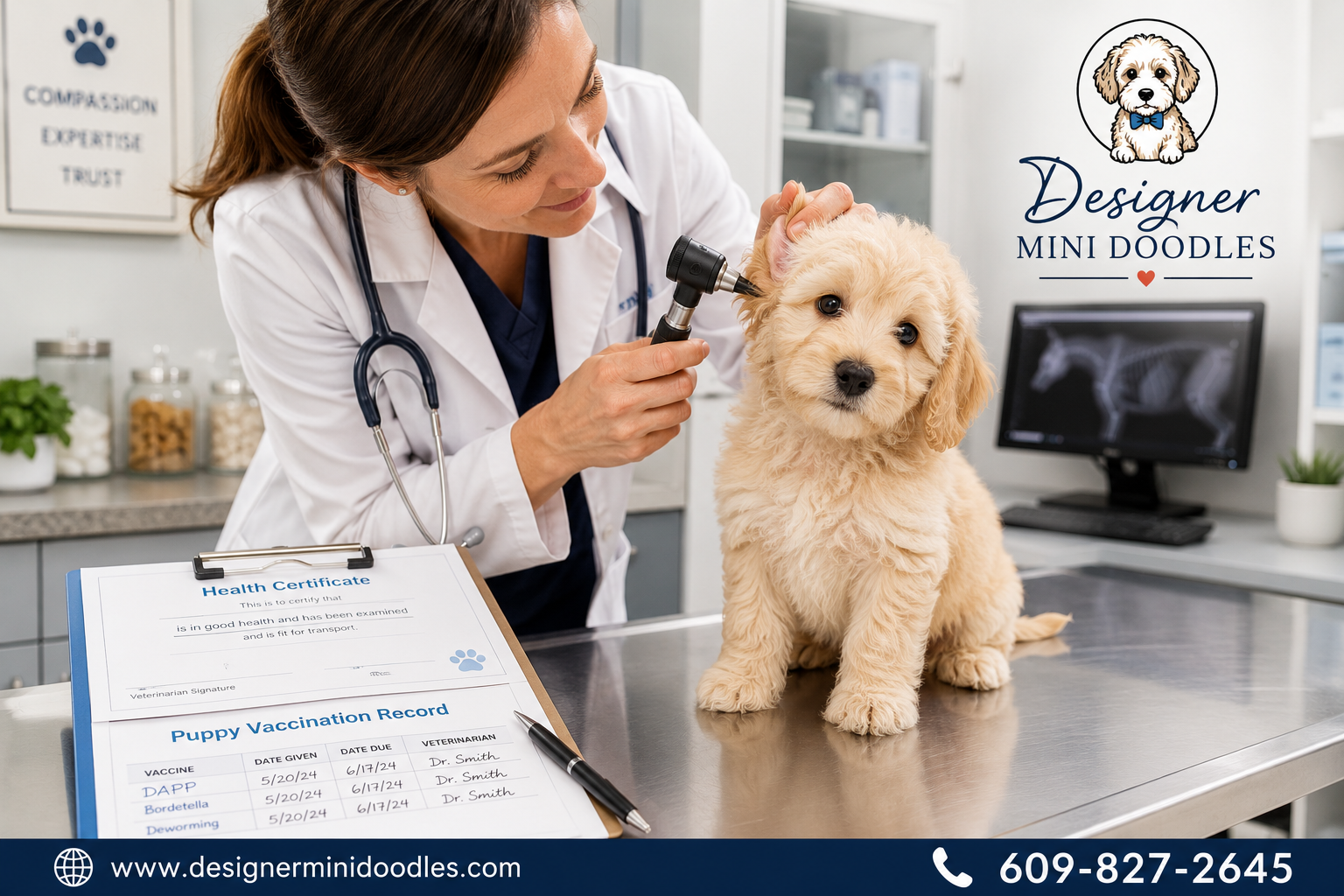
How Much Do Mini Goldendoodle Puppies Cost in 2026?
Mini goldendoodle puppies from reputable breeders typically cost between $2,000 and $5,000 in 2026. Micro and toy goldendoodle puppies, which are smaller variants, often fall at the higher end of that range due to the specialized breeding required to produce consistently healthy dogs at reduced sizes.
Several factors influence the final price:
- Generation type: F1B and multigenerational minis (which have more predictable coats and sizes) tend to cost more than F1 crosses.
- Coat color: Rare colors like red, phantom, or parti can add $500 to $1,500 to the base price.
- Breeder credentials: Programs run by animal biologists or veterinary professionals who invest in genetic testing, ENS protocols, and early socialization command premium pricing for good reason.
- Geographic location: Breeders in high-demand metro areas may charge more, though many top programs now ship nationwide with puppy nanny services.
| Cost Factor | Budget Range | Premium Range |
|---|---|---|
| Puppy purchase price | $2,000 – $2,800 | $3,500 – $5,000+ |
| First-year vet costs | $400 – $600 | $800 – $1,200 |
| Supplies and setup | $300 – $500 | $600 – $1,000 |
| Grooming (first year) | $300 – $500 | $600 – $900 |
Common mistake: Choosing a breeder solely based on the lowest price. Bargain-priced puppies often come from operations that skip health testing, skip early socialization, and produce dogs with behavioral or medical issues that cost far more in the long run.
For a deeper breakdown of what size-appropriate ownership looks like financially, see our guide on why a 10-16 lb micro goldendoodle offers cost-of-ownership clarity.
How Big Do Mini Goldendoodles Get When Full Grown?
A full-grown mini goldendoodle typically weighs between 15 and 35 pounds and stands 13 to 20 inches at the shoulder. The wide range exists because “mini” encompasses several sub-categories depending on the breeder’s program and the specific parent dogs used.
Here’s how the size categories generally break down:
- Micro mini goldendoodle: 10 to 18 pounds, 10 to 14 inches tall
- Mini goldendoodle: 20 to 35 pounds, 14 to 20 inches tall
- Toy goldendoodle: 10 to 16 pounds, under 14 inches tall
The parent dogs’ sizes are the strongest predictor of a puppy’s adult weight. A breeder with over a decade of experience tracking lineage data can give you a much more accurate size estimate than a first-time breeder guessing based on a single litter. Programs run by animal biologists tend to maintain detailed growth records across generations, which translates into more predictable outcomes for buyers.
Choose a micro or toy size if you live in an apartment, travel frequently, or want a dog that fits comfortably in a cabin-approved carrier. Learn more about what to expect from a full-grown micro goldendoodle.
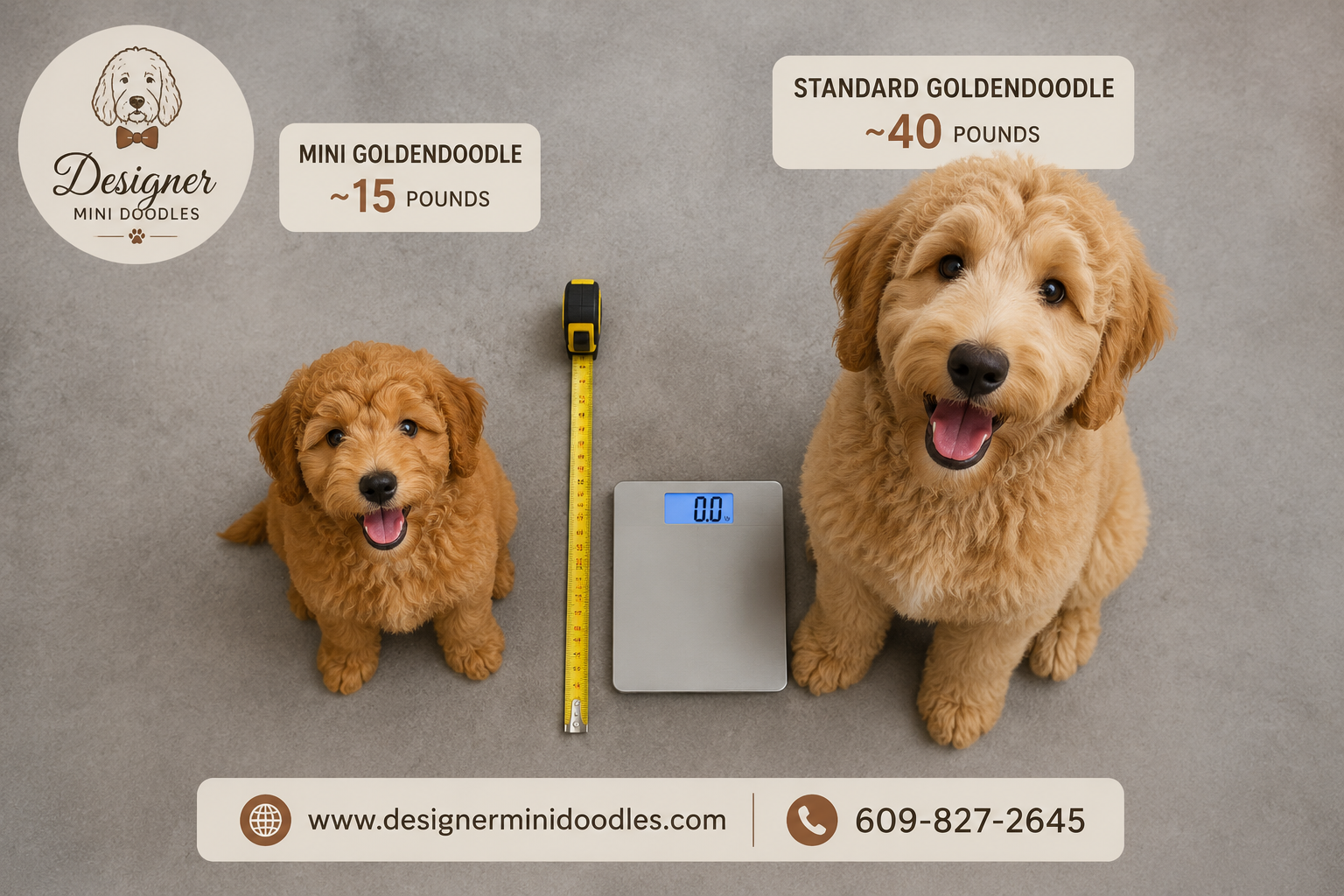
Mini Goldendoodle vs. Standard Goldendoodle: Key Differences
The primary differences between mini and standard goldendoodles are size, space requirements, and exercise intensity. Standard goldendoodles weigh 50 to 90 pounds and need significantly more room, food, and physical activity than their mini counterparts.
| Feature | Mini Goldendoodle | Standard Goldendoodle |
|---|---|---|
| Adult weight | 15 – 35 lbs | 50 – 90 lbs |
| Height | 13 – 20 inches | 20 – 26 inches |
| Daily exercise | 30 – 60 minutes | 60 – 90+ minutes |
| Monthly food cost | $40 – $70 | $80 – $150 |
| Grooming cost per session | $50 – $80 | $80 – $130 |
| Apartment friendly | Yes | Generally no |
| Lifespan | 12 – 16 years | 10 – 13 years |
Mini goldendoodles also tend to live longer than standards, with many healthy minis reaching 14 to 16 years. They’re easier to travel with, less expensive to feed and groom, and more manageable for first-time dog owners, seniors, and families with small children.
Choose a standard if you want a hiking or running partner who can cover serious mileage, you have a large yard, and you’re comfortable with higher ongoing costs. Choose a mini if you prioritize adaptability, lower maintenance costs, and a dog that thrives in varied living situations.
For families considering the smallest options, Designer Mini Doodles also offers toy goldendoodle puppies that combine the breed’s best traits in an even more compact package.
Do Mini Goldendoodles Shed a Lot?
Mini goldendoodles are considered low-shedding dogs, but they are not completely non-shedding. The amount of shedding depends heavily on their coat type and generation. F1B mini goldendoodles (75% Poodle) and multigenerational minis typically shed the least because they inherit more of the Poodle’s curly, single-layer coat.
Three coat types exist in mini goldendoodles:
- Curly coat: Sheds the least, most similar to a Poodle. Requires professional grooming every 4 to 6 weeks to prevent matting.
- Wavy coat: The most common type. Low shedding with moderate grooming needs.
- Straight coat: Sheds the most of the three types. Less common in later-generation crosses.
If allergies are your primary concern, request a puppy from an F1B or multigenerational litter with curly or wavy coats. A knowledgeable breeder can assess coat type as early as 4 to 6 weeks of age. For more on this topic, our resource on micro goldendoodles for allergy-conscious homes covers what to expect in detail.
What Health Problems Do Mini Goldendoodles Have?
Mini goldendoodles are generally healthy dogs, but they can inherit conditions common to both Golden Retrievers and Miniature Poodles. Responsible breeders screen for these conditions before breeding, which significantly reduces risk.
Common health concerns include:
- Hip dysplasia: More common in larger minis. OFA or PennHIP screening of parent dogs reduces incidence.
- Progressive retinal atrophy (PRA): A genetic eye condition. DNA testing of parents can virtually eliminate this risk.
- Luxating patella: The kneecap slips out of position. More common in smaller dogs. Reputable breeders grade parents’ patellas before breeding.
- Von Willebrand’s disease: A blood clotting disorder inherited from the Poodle side. Genetic testing identifies carriers.
- Ear infections: Floppy ears trap moisture. Regular cleaning prevents most infections.
- Allergies and skin sensitivities: Can manifest as itching, hot spots, or digestive issues.
Edge case: Puppies from programs that don’t perform genetic testing are at substantially higher risk. A breeder run by an animal biologist with over 15 years of experience will maintain comprehensive health records and perform OFA, CERF, and DNA panel testing on all breeding stock. This is non-negotiable when searching for mini golden doodle puppies for sale nearby.
How to Tell If a Mini Goldendoodle Puppy Is Healthy
A healthy mini goldendoodle puppy shows clear physical and behavioral indicators that you can assess during your visit or video call with the breeder. Look for bright, clear eyes without discharge; clean ears with no odor; a soft, clean coat; and an alert, curious demeanor.
Physical health checklist:
- Eyes are clear, bright, and free of excessive tearing or redness
- Nose is moist but not excessively runny
- Gums are pink and healthy (not pale or white)
- Coat is clean, soft, and free of bald patches or flaking
- Belly is slightly rounded but not distended (bloating can indicate parasites)
- Puppy moves freely without limping or favoring a leg
- Weight is appropriate for age (your breeder should provide growth charts)
Behavioral health indicators:
- Approaches people willingly without excessive fear or cowering
- Plays with littermates and shows normal social behavior
- Recovers quickly from mild startle (a sign of good ENS and socialization)
- Eats and drinks normally
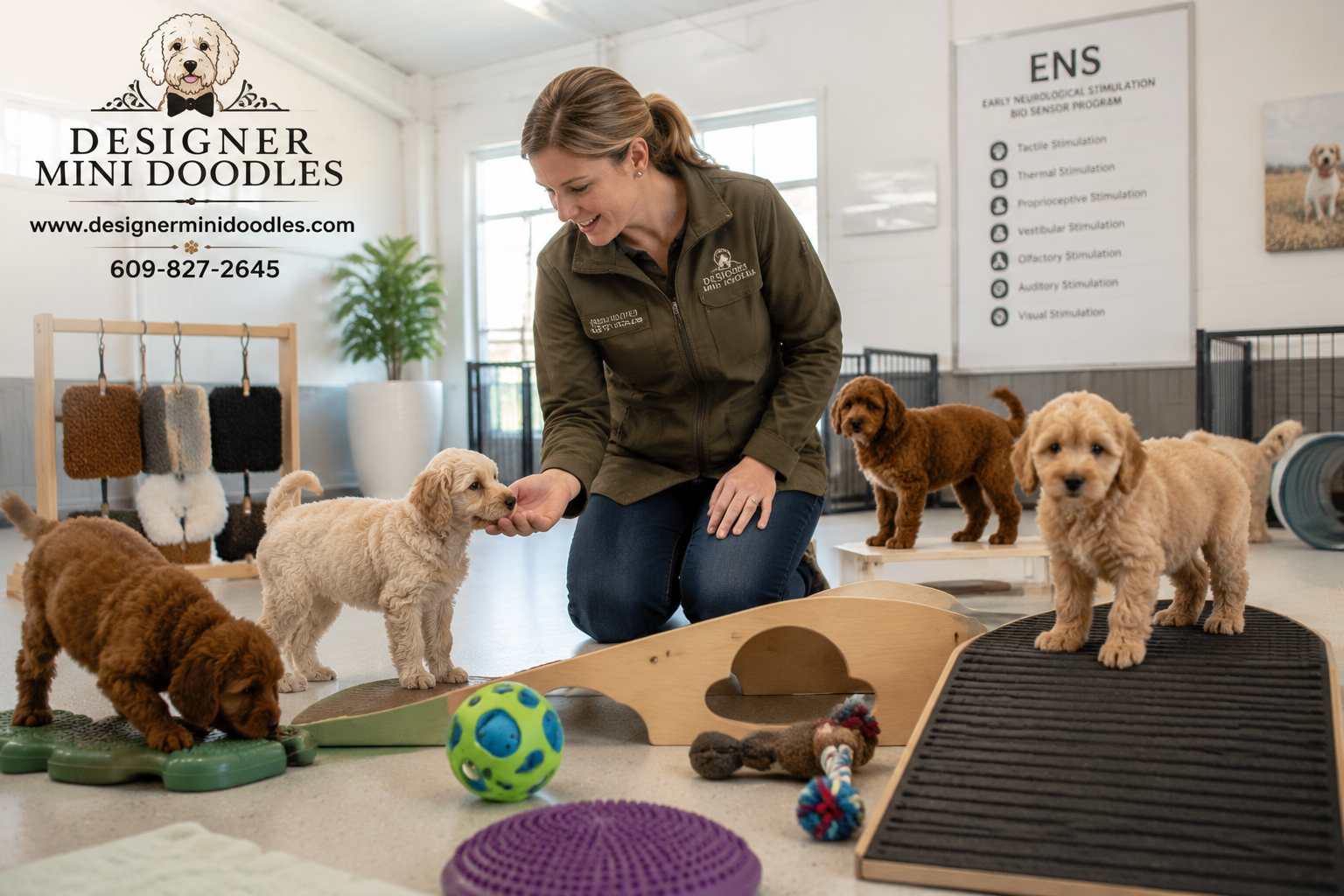
A breeder who has invested in Early Neurological Stimulation from days 3 through 16, followed by structured socialization, early housebreaking, and crate training, will produce puppies that are noticeably calmer, more confident, and more adaptable than puppies raised without these protocols.
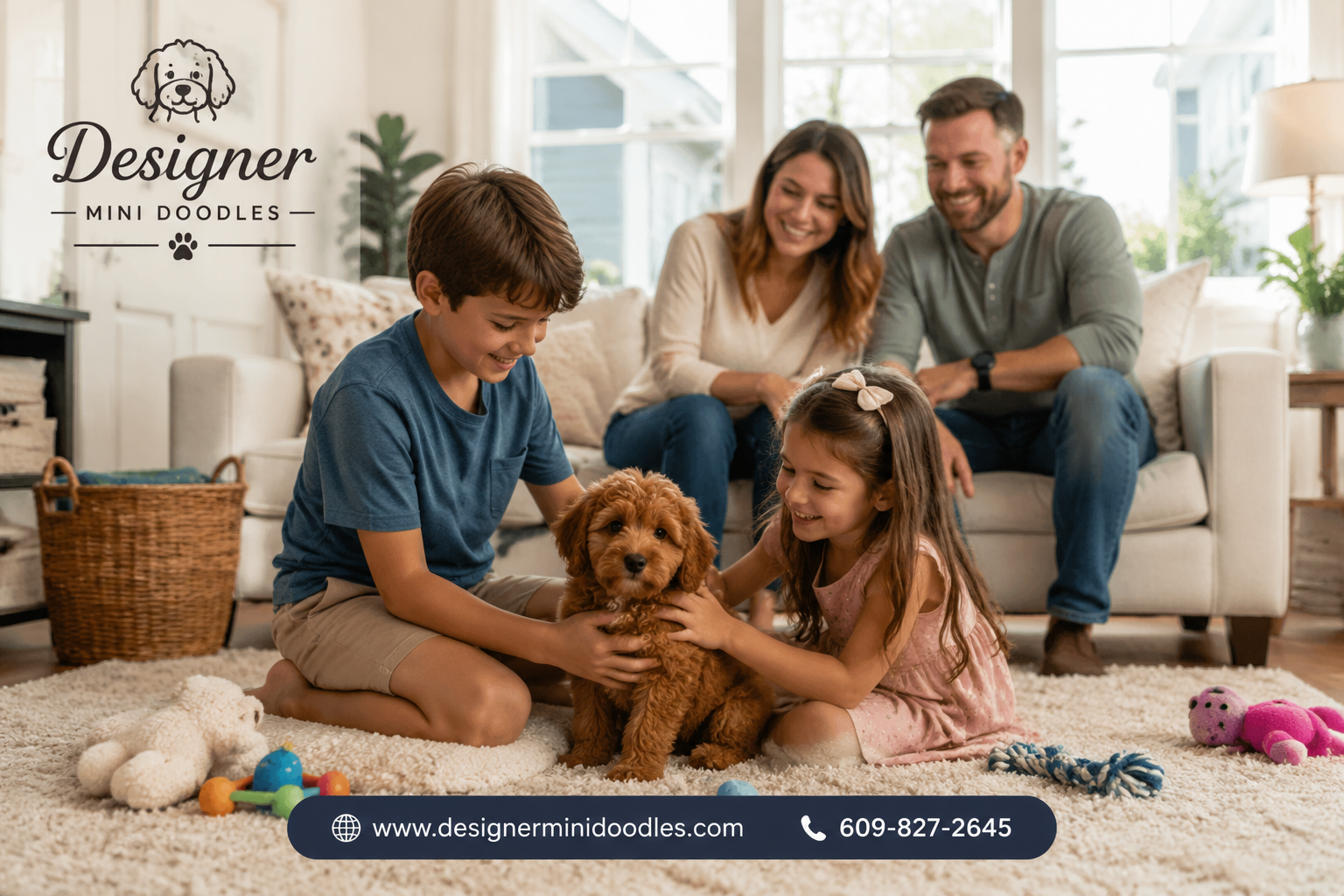
Are Mini Goldendoodles Good With Kids?
Yes, mini goldendoodles are widely regarded as one of the best family-friendly breeds. Their gentle, patient temperament comes from the Golden Retriever’s natural affinity for children combined with the Poodle’s intelligence and eagerness to please.
That said, success depends on two factors: the individual puppy’s socialization history and how your children are taught to interact with the dog.
Why minis work well with families:
- Their size (15 to 35 pounds) is large enough to handle gentle roughhousing but small enough to not accidentally knock over toddlers
- They’re highly trainable and respond well to positive reinforcement
- They tend to form strong bonds with every family member rather than attaching to just one person
- Their energy level matches active kids without being overwhelming
Decision rule: If you have children under age 5, a mini in the 20 to 30 pound range is often the sweet spot. Micro and toy sizes (under 15 pounds) can be more fragile and may not be ideal for households with very young children who haven’t yet learned gentle handling. For families with older, gentle kids, a micro goldendoodle for family households can be a wonderful fit.
Mini Goldendoodle Temperament and Personality
Mini goldendoodles are affectionate, intelligent, and socially confident dogs that thrive on human interaction. They consistently rank among the most popular designer breeds because their temperament combines the best qualities of both parent breeds.
Core personality traits:
- Affectionate: They want to be near their people. Most minis are lap dogs at heart despite their size.
- Intelligent: Poodle heritage makes them quick learners. Most pick up basic commands within a few repetitions.
- Social: They generally get along well with other dogs, cats, and strangers.
- Playful but not hyperactive: Well-bred minis from programs that emphasize calm temperament selection are active without being frantic.
- Adaptable: They adjust well to apartment living, suburban homes, travel, and changing routines.
The breeder’s program matters enormously here. A breeding program run by an animal biologist who selects parent dogs specifically for calm, confident temperaments, and then raises puppies with ENS, early crate training, and structured socialization, produces dogs that are measurably more settled and adaptable than puppies from casual breeders. At Designer Mini Doodles, over fifteen years of selective breeding has refined these traits across generations of miniature golden doodle puppies.
What Should I Look for When Buying a Mini Goldendoodle?
When searching for mini golden doodle puppies for sale nearby, prioritize the breeder’s practices over convenience or price. The single most important factor in your puppy’s long-term health and temperament is the quality of the breeding program it comes from.
Non-negotiable breeder criteria:
- Health testing documentation: Both parent dogs should have OFA hip/elbow evaluations, CERF eye exams, and comprehensive DNA panels (testing for PRA, vWD, DM, and other breed-relevant conditions).
- Written health guarantee: A minimum two-year genetic health guarantee is standard among reputable breeders.
- Early socialization program: Ask specifically about ENS (Early Neurological Stimulation), exposure to household sounds, surfaces, and people of different ages.
- Transparent facility: The breeder should welcome visits or provide detailed video tours of where puppies are raised.
- Breeder expertise: Programs led by animal biologists or veterinary professionals bring a scientific approach to genetics, nutrition, and puppy development.
- References and reviews: Established breeders will have years of verifiable reviews from previous puppy families.
- Lifetime support: The best breeders offer ongoing guidance for training, nutrition, and health questions after you take your puppy home.
Red flags to walk away from:
- No health testing or refusal to share results
- Multiple breeds available simultaneously (puppy mill indicator)
- Pressure to buy immediately or put down a deposit before asking questions
- No contract or health guarantee
- Puppies available to go home before 8 weeks of age
Best Breeders Near Me for Mini Goldendoodles
Finding the best mini goldendoodle breeder near you requires looking beyond simple geography. The top breeding programs in America serve families nationwide through puppy nanny delivery services, which means your perfect puppy doesn’t have to come from your zip code.
Designer Mini Doodles, for example, is run by an animal biologist with over 15 years of experience breeding the healthiest, calmest mini and micro golden doodle puppies in the country. Their program includes comprehensive genetic health testing, ENS protocols, early housebreaking, early crate training, and temperament-focused parent selection. Puppies are available to go to any home in the world through their dedicated puppy nanny service.
State-specific breeder directories to explore:
- Mini and micro goldendoodle breeders in Florida
- Mini and micro goldendoodle breeders in Georgia
- Mini and micro goldendoodle breeders in Texas
- Mini and micro goldendoodle breeders in California
- Mini and micro goldendoodle breeders in New York
When evaluating any breeder, whether local or out of state, apply the criteria outlined above. A breeder who ships puppies safely with an experienced nanny and provides ongoing support is a better choice than a local operation that cuts corners on health testing.
If you’re also considering other small companion breeds, Designer French Bulldogs offers exceptional miniature french bulldog puppies bred with the same commitment to health and temperament.
Are Mini Goldendoodles Expensive to Maintain?
Annual maintenance costs for a mini goldendoodle run between $1,500 and $3,000, which is moderate compared to larger breeds. Their smaller size translates directly into lower food, medication, and grooming costs.
Ongoing annual cost breakdown:
| Expense Category | Estimated Annual Cost |
|---|---|
| Premium dog food | $500 – $900 |
| Professional grooming (every 6-8 weeks) | $400 – $700 |
| Routine veterinary care | $300 – $600 |
| Flea, tick, and heartworm prevention | $200 – $400 |
| Toys, treats, and supplies | $150 – $300 |
| Pet insurance (optional but recommended) | $300 – $600 |
| Total | $1,850 – $3,500 |
Grooming is the one category where mini goldendoodles cost more than many other breeds of similar size. Their low-shedding coats require regular professional grooming to prevent painful matting. Budget for grooming appointments every 6 to 8 weeks, plus daily brushing at home.
Money-saving tip: Learning to do basic maintenance grooming at home (face trims, sanitary trims, brushing, and ear cleaning) between professional appointments can cut your annual grooming bill by 30 to 40 percent. Our guide on grooming and home care for micro goldendoodles covers the essentials.
Common Mistakes First-Time Mini Goldendoodle Owners Make
The biggest mistake first-time mini goldendoodle owners make is underestimating grooming requirements. The second most common mistake is skipping early training because the puppy is small and “cute.”
Mistakes to avoid:
- Neglecting grooming: Skipping brushing sessions leads to matting, which can cause skin infections and require a full shave-down. Commit to daily brushing from day one.
- Skipping crate training: Many owners feel guilty about crate training, but puppies that are crate-trained early are calmer, more secure, and easier to housebreak. Programs that start crate training before the puppy comes home give you a significant head start.
- Inconsistent training: Mini goldendoodles are smart, which means they learn bad habits just as quickly as good ones. Start positive reinforcement training immediately.
- Over-exercising puppies: Puppies under 12 months should not do sustained high-impact exercise (long runs, repeated jumping). Their growth plates are still developing.
- Choosing a breeder based on price alone: As discussed above, the cheapest puppy often becomes the most expensive dog due to health and behavioral issues.
- Not socializing early enough: The critical socialization window closes around 16 weeks. Expose your puppy to diverse people, sounds, surfaces, and experiences before this window shuts.
- Feeding low-quality food: Mini goldendoodles thrive on high-quality protein-rich diets. Cheap kibble filled with corn and by-products leads to skin issues, low energy, and digestive problems.
For first-time owners specifically, our resource on why micro goldendoodles are perfect for first-time dog owners provides a solid foundation.
Rescue Mini Goldendoodles vs. Buying From a Breeder
Adopting a rescue mini goldendoodle is a compassionate choice, but true mini goldendoodles rarely appear in shelters. Most “goldendoodle” rescues are standard-sized dogs or mixed breeds with uncertain parentage, and the wait for a genuine mini can be months or years.
When rescue makes sense:
- You’re flexible on age, size, and coat type
- You have experience with dogs and can handle potential behavioral unknowns
- You’re willing to invest in professional training for a dog with an uncertain history
- Budget is a primary concern (rescue fees typically range from $200 to $600)
When buying from a breeder makes sense:
- You want a specific size, coat type, or temperament profile
- You have young children and need a puppy raised with early socialization
- You want a health guarantee and genetic testing documentation
- You prefer a puppy with early training foundations (ENS, crate training, housebreaking)
- You need predictability in adult size, especially for apartment or travel purposes
Both paths can lead to a wonderful dog. But if you’re specifically searching for mini golden doodle puppies for sale nearby with predictable traits, a reputable breeder with a proven track record is the more reliable route.
Conclusion
Finding the right mini golden doodle puppy comes down to three priorities: choosing a reputable breeder, understanding what to expect in terms of size, health, and temperament, and preparing your home and budget before the puppy arrives.
Your next steps:
- Define your ideal size: Decide whether a micro (10-18 lbs), toy (10-16 lbs), or standard mini (20-35 lbs) fits your lifestyle best.
- Research breeders thoroughly: Look for programs led by credentialed professionals, such as animal biologists, with comprehensive health testing, ENS protocols, and early training programs. Visit our directory of mini golden doodle breeders to find established programs.
- Budget realistically: Plan for $2,000 to $5,000 for the puppy plus $1,500 to $3,000 in first-year expenses.
- Ask the right questions: Request health testing documentation, parent temperament information, and details about the socialization program before committing.
- Don’t limit yourself geographically: The best breeder for your family may not be in your city. Puppy nanny services make it possible to bring home a puppy from a top program anywhere in the country.
Whether you’re in Florida, Texas, California, or anywhere else, the right mini goldendoodle is worth the research. Start your search today, ask hard questions, and prioritize the puppy’s health and upbringing above all else.
Frequently Asked Questions
How long do mini goldendoodles live?
Mini goldendoodles have an average lifespan of 12 to 16 years. Smaller minis and micros tend to live longer than larger minis, and dogs from health-tested parents with good genetics typically fall at the upper end of that range.
Are mini goldendoodles hypoallergenic?
No dog is truly hypoallergenic, but mini goldendoodles (especially F1B and multigenerational with curly coats) produce significantly less dander and shed far less than most breeds. They’re a strong choice for allergy-sensitive households, though spending time with the breed before committing is wise.
How often do mini goldendoodles need grooming?
Professional grooming every 6 to 8 weeks is standard, with daily brushing at home to prevent matting. Curly-coated minis need more frequent attention than wavy-coated ones.
Can mini goldendoodles be left alone during the workday?
Adult mini goldendoodles can handle 4 to 6 hours alone if properly crate trained and exercised beforehand. Puppies under 6 months should not be left alone for more than 2 to 3 hours. This breed bonds closely with people and can develop separation anxiety without proper training.
What generation of mini goldendoodle is best?
F1B (Golden Retriever/Poodle cross bred back to a Poodle) is the most popular generation because it offers the most consistent low-shedding coat and predictable size. Multigenerational minis from established breeding programs also offer excellent consistency.
Do mini goldendoodles bark a lot?
Mini goldendoodles are moderate barkers. They’ll alert you to visitors or unusual sounds, but they’re not typically excessive barkers. Early training and adequate mental stimulation prevent most nuisance barking.
What is the best food for a mini goldendoodle?
A high-quality, protein-rich kibble or fresh food diet formulated for small to medium breeds works best. Look for named meat proteins as the first ingredient, and avoid foods heavy in corn, wheat, soy, or artificial preservatives. Your breeder should provide specific food recommendations for your puppy.
How long does it take to house train a mini goldendoodle?
With consistent training, most mini goldendoodles are reliably house trained by 4 to 6 months of age. Puppies from breeders who start early housebreaking before placement often learn significantly faster, sometimes achieving reliability by 3 to 4 months.
Can I fly with a mini goldendoodle?
Micro and toy goldendoodles (under 20 pounds) typically fit in airline-approved cabin carriers, making them excellent travel companions. Standard minis over 25 pounds usually need to fly as cargo, which is more stressful and restrictive.
Are male or female mini goldendoodles better?
Both sexes make excellent pets. Males tend to be slightly larger and sometimes more playful and attention-seeking. Females may mature faster and can be slightly more independent. Temperament differences between individuals are usually greater than differences between sexes.