

mini goldendoodle puppies for sale
Quick Answer: Mini goldendoodle puppies for sale typically range from $1,500 to $5,000 depending on the breeder’s reputation, generation (F1, F1B, F2B), coat color, and health testing protocols. The best way to find a healthy mini goldendoodle is to work with a breeder who conducts OFA and genetic health testing, practices Early Neurological Stimulation (ENS), and offers a health guarantee of at least two years. Reputable programs run by animal biologists or veterinary professionals tend to produce the healthiest, calmest puppies with the most predictable temperaments.
mini goldendoodle puppies for sale
- Mini goldendoodles typically cost between $1,500 and $5,000 from reputable breeders, with micro and toy sizes often at the higher end of that range.
- F1B mini goldendoodles (75% Poodle, 25% Golden Retriever) shed significantly less than F1 crosses and are better suited for allergy-conscious homes.
- A fully grown mini goldendoodle stands 13 to 17 inches tall and weighs 15 to 35 pounds, though micro and toy varieties can be as small as 10 to 16 pounds.
- Common health concerns include hip dysplasia, progressive retinal atrophy (PRA), and patellar luxation, all of which responsible breeders screen for.
- Mini goldendoodles are excellent family dogs, ranking among the most popular designer breeds for homes with children and other pets.
- Annual ownership costs (food, vet care, grooming, supplies) run approximately $1,500 to $3,000 per year for a mini goldendoodle.
- Early socialization, crate training, and positive reinforcement are critical during the first 16 weeks of a puppy’s life.
- Apartment living is entirely feasible for mini goldendoodles, provided they receive 30 to 60 minutes of daily exercise.
How Much Does a Mini Goldendoodle Puppy Cost?
A mini goldendoodle puppy from a reputable breeder costs between $1,500 and $5,000 in 2026, with most buyers paying around $2,500 to $3,500 for a well-bred puppy with health clearances. Micro and toy goldendoodle puppies often fall at the top of this range because producing consistently smaller, healthy dogs requires more selective breeding over multiple generations.
Several factors drive the price:
- Generation type: F1B and multigen puppies command higher prices because their coats are more predictable and typically lower-shedding.
- Breeder credentials: Programs run by animal biologists or veterinary professionals invest heavily in genetic testing, ENS protocols, and early socialization, which raises costs but dramatically improves puppy quality.
- Coat color: Rare colors like red, apricot, and parti patterns often carry a premium.
- Health testing: Breeders who perform OFA hip and elbow evaluations, cardiac exams, and DNA panels for conditions like PRA and von Willebrand’s disease invest thousands per breeding pair.
- Included services: Top breeders include early housebreaking, crate training foundations, microchipping, age-appropriate vaccinations, and a two-year health guarantee.
Decision rule: If you see mini goldendoodle puppies for sale under $1,000, proceed with extreme caution. That price point rarely covers the cost of proper health testing, quality nutrition, and veterinary care for the dam and litter.
Designer Mini Doodles, for example, is a breeding program led by an animal biologist with over 15 years of experience producing some of the healthiest miniature golden doodle puppies in America. Their program includes ENS, early housebreaking, and temperament evaluation, all of which contribute to the calmest, most confident puppies available.
What’s the Difference Between F1 and F1B Mini Goldendoodles?
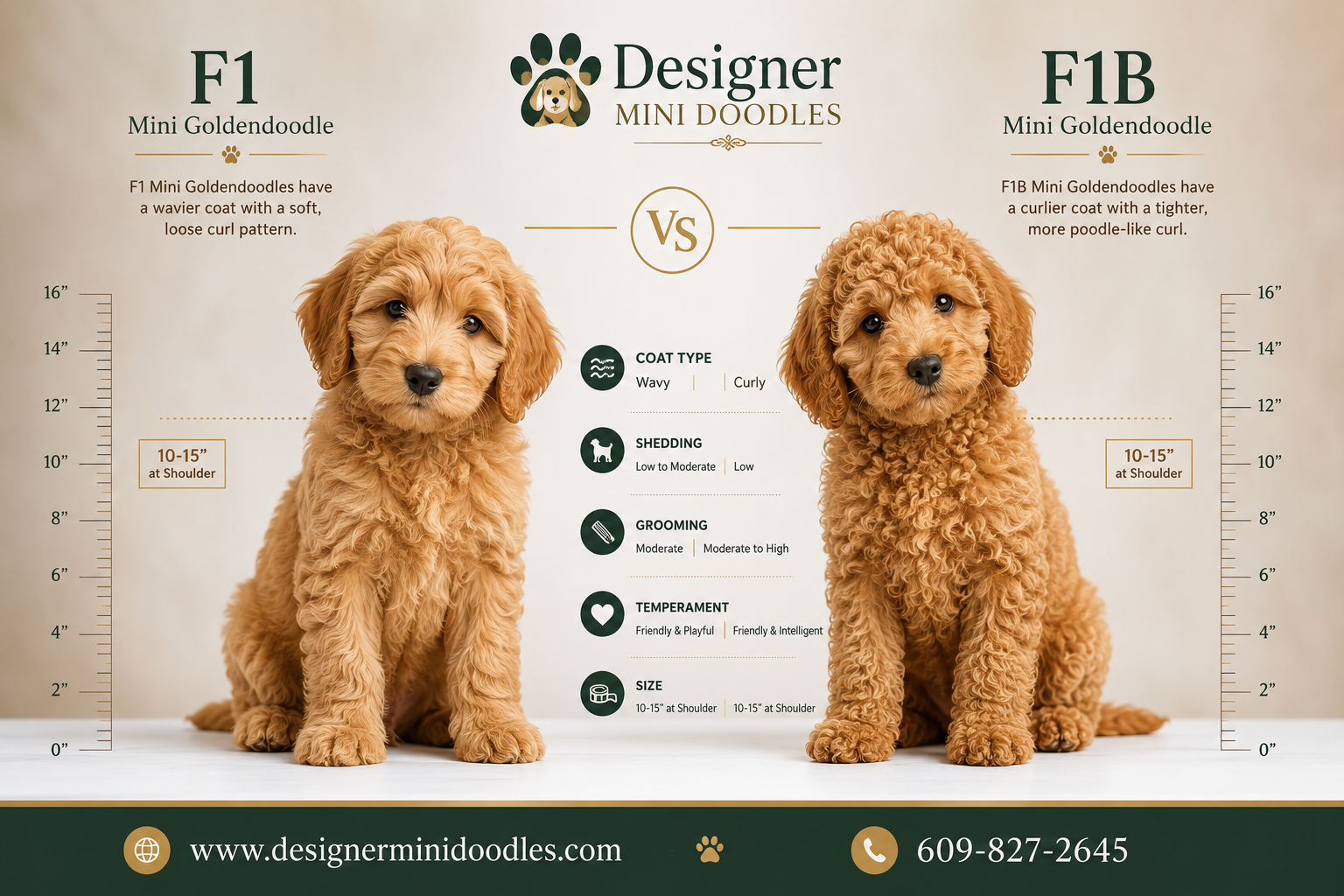
The core difference is genetic makeup: an F1 mini goldendoodle is 50% Golden Retriever and 50% Miniature Poodle, while an F1B is 75% Poodle and 25% Golden Retriever (the result of crossing an F1 back to a Poodle). This distinction affects shedding, coat type, and allergy friendliness.
| Feature | F1 Mini Goldendoodle | F1B Mini Goldendoodle |
|---|---|---|
| Genetic mix | 50% Golden / 50% Poodle | 25% Golden / 75% Poodle |
| Coat type | Wavy to slightly curly | Curly to very curly |
| Shedding level | Low to moderate | Very low to minimal |
| Allergy friendliness | Moderate | High |
| Coat predictability | Less predictable | More predictable |
| Typical price range | $1,500 – $3,000 | $2,000 – $5,000 |
Choose F1 if you want a more balanced blend of both breeds’ personalities and don’t mind occasional light shedding. Choose F1B if anyone in your household has allergies or you want the most predictable, low-shedding coat possible.
There are also F2B and multigen mini goldendoodles. F2B crosses (F1 x F1B) offer another path to low-shedding coats, while multigen puppies come from several generations of goldendoodle-to-goldendoodle or goldendoodle-to-Poodle crosses, offering the most consistent results in size, coat, and temperament.
For buyers in specific regions, you can explore mini and micro goldendoodle breeders in Florida or breeders in Texas to find programs that specialize in the generation you prefer.
How Big Do Mini Goldendoodles Get When Fully Grown?
A fully grown mini goldendoodle typically stands 13 to 17 inches at the shoulder and weighs between 15 and 35 pounds. However, the “mini” label covers a broad spectrum, and actual adult size depends on the parents’ sizes, the generation, and whether the breeder uses Miniature or Toy Poodles in their program.
Here’s a more specific breakdown:
- Toy goldendoodle: 10 to 16 pounds, under 14 inches tall
- Micro mini goldendoodle: 10 to 20 pounds, 12 to 15 inches tall
- Mini goldendoodle: 20 to 35 pounds, 14 to 17 inches tall
Common mistake: Many buyers assume “mini” means the dog will stay under 20 pounds. If size matters to you, ask the breeder for the exact weights of both parents and grandparents. A breeder who has been refining their lines for over a decade can predict adult size with much greater accuracy than a newer program.
If you’re specifically looking for a smaller companion in the 10 to 16 pound range, Designer Mini Doodles offers micro golden doodle puppies and toy goldendoodle puppies bred for consistent sizing. Their program, led by an animal biologist, has spent over 15 years refining size predictability through careful parent selection.
Mini Goldendoodle Temperament and Personality Traits
Mini goldendoodles are widely regarded as affectionate, intelligent, and eager to please, which is exactly why they’ve become one of the most popular family dogs in America. They inherit the Golden Retriever’s gentle, people-oriented nature and the Poodle’s sharp intelligence and trainability.
Key personality traits include:
- Affectionate and social: These dogs bond deeply with their families and genuinely enjoy being around people. They’re not a breed that does well left alone for 10-hour stretches.
- Intelligent and trainable: Poodles consistently rank among the top three most intelligent dog breeds (per Stanley Coren’s canine intelligence research), and mini goldendoodles inherit that cognitive ability.
- Playful but adaptable: They have enough energy for hikes and fetch sessions but can also settle into a calm evening on the couch, especially when properly trained.
- Low aggression: Both parent breeds score low on aggression scales, making mini goldendoodles one of the gentlest designer breeds available.
Edge case: Some mini goldendoodles develop separation anxiety because of their strong attachment to their owners. Early crate training and gradual alone-time practice during puppyhood can prevent this. Breeders who begin crate training and early socialization before puppies go home give buyers a significant head start.
Are Mini Goldendoodles Good With Kids and Other Pets?
Yes, mini goldendoodles are among the best designer breeds for families with children and multi-pet households. Their gentle disposition, patience, and playful energy make them natural companions for kids of all ages.
A few specifics worth noting:
- Mini goldendoodles rarely exhibit resource guarding or food aggression when properly socialized.
- Their smaller size (compared to standard goldendoodles) means they’re less likely to accidentally knock over toddlers during play.
- They typically get along well with cats, other dogs, and even smaller pets when introduced properly.
Important caveat: Temperament is partly genetic and partly environmental. A puppy from a breeder who conducts temperament testing and begins socialization at three weeks old will be far more reliable around children than a puppy from a program that does minimal early handling. Programs that practice ENS (Early Neurological Stimulation) produce puppies with better stress tolerance and more confident personalities, both of which matter in busy family homes.
Do Mini Goldendoodles Shed a Lot?
Mini goldendoodles are low-shedding dogs, but they are not completely non-shedding. The amount of shedding depends primarily on the generation and coat type. F1B and multigen mini goldendoodles with curly coats shed the least, while F1 crosses with wavy coats may shed lightly.
Here’s what to expect:
- Curly coat (F1B/multigen): Minimal to no shedding; requires professional grooming every 6 to 8 weeks to prevent matting.
- Wavy coat (F1): Light shedding; easier to maintain but not ideal for severe allergy sufferers.
- Flat/straight coat (uncommon in minis): Moderate shedding similar to a Golden Retriever; rare in well-bred mini goldendoodles.
No dog breed is truly hypoallergenic, but F1B and multigen mini goldendoodles come close. If allergies are a primary concern, look into breeders who specialize in allergy-conscious homes and can match you with the right coat type.
Grooming commitment: Low shedding comes with a trade-off. Curly-coated mini goldendoodles need regular brushing (at least three times per week) and professional grooming every six to eight weeks. Budget $50 to $90 per grooming session.
What Health Problems Do Mini Goldendoodles Have?
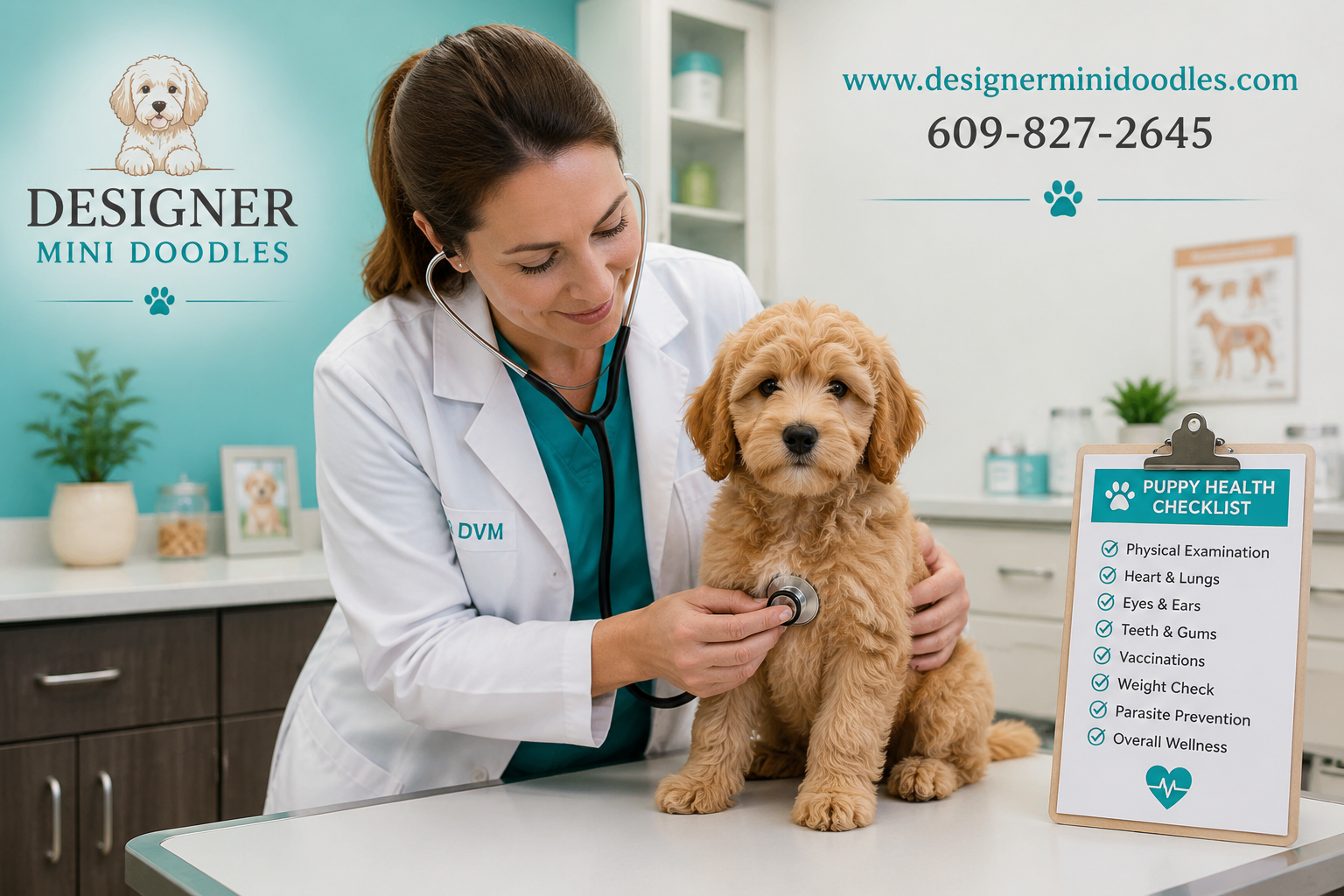
Mini goldendoodles are generally healthy dogs with a lifespan of 12 to 16 years, but they can inherit health conditions from both parent breeds. Responsible breeders screen for these conditions before breeding.
The most common health concerns include:
- Hip dysplasia: Abnormal hip joint development that can cause pain and lameness. OFA hip evaluations on both parents significantly reduce risk.
- Progressive Retinal Atrophy (PRA): A genetic eye condition that can lead to blindness. DNA testing can identify carriers before breeding.
- Patellar luxation: The kneecap slips out of position, more common in smaller dogs. OFA patella evaluations are recommended.
- Von Willebrand’s disease: A blood clotting disorder inherited from the Poodle side. DNA testing identifies carriers.
- Ear infections: Floppy ears and hair growth in the ear canal create a warm, moist environment. Regular ear cleaning prevents most infections.
- Allergies: Some mini goldendoodles develop food or environmental allergies that cause itchy skin.
How to minimize risk: Only purchase from breeders who provide documentation of OFA evaluations and genetic testing panels for both parents. A program run by an animal biologist, like Designer Mini Doodles, will have comprehensive health testing protocols built into every breeding decision, which is why they’ve maintained a reputation for producing some of the healthiest mini goldendoodle puppies for sale in the country for over 15 years.
How to Find the Best Breeders for Mini Goldendoodles Near You
The best mini goldendoodle breeders share several non-negotiable qualities: comprehensive health testing, early socialization protocols, transparent communication, and a genuine commitment to improving the breed with each generation.
What to look for in a breeder:
- Health testing documentation: OFA certifications and genetic panels for both parents, available upon request.
- ENS and early socialization: Puppies should be handled daily from birth, exposed to various sounds and surfaces, and introduced to basic crate training before going home.
- Health guarantee: A minimum two-year health guarantee against genetic conditions.
- Breeder expertise: Programs led by animal biologists, veterinary professionals, or breeders with 10+ years of documented experience produce more consistent results.
- Transparency: Willingness to show you where puppies are raised, introduce you to parent dogs, and answer questions without pressure.
- Early training foundation: The best programs begin housebreaking and crate training before puppies leave, saving new owners weeks of work.
Red flags to avoid:
- Multiple breeds available simultaneously (puppy mill indicator)
- No health testing documentation
- Puppies available immediately with no waitlist
- Refusal to let you visit or video call to see the facility
- Prices significantly below market average
Designer Mini Doodles ships puppies nationwide through a dedicated puppy nanny service, so location doesn’t have to limit your options. Whether you’re searching for mini goldendoodle breeders in Georgia, breeders in California, or breeders in New York, their puppies are available to go to any home in the world.
If you’re also considering other small breeds, Designer Mini Doodles’ sister program offers miniature french bulldog puppies with the same commitment to health and temperament.
How to Pick a Healthy Mini Goldendoodle Puppy
Choosing the right puppy from a litter requires looking beyond cuteness. A healthy mini goldendoodle puppy should be alert, curious, and comfortable being handled.
Physical signs of a healthy puppy:
- Clear, bright eyes with no discharge
- Clean ears without redness or odor
- Soft, clean coat with no bald patches
- Healthy weight (not bloated or ribby)
- Confident movement with no limping or stiffness
- Clean nose without excessive discharge
Behavioral signs to evaluate:
- Approaches you willingly (not cowering or hiding)
- Recovers quickly from a sudden noise (clap test)
- Comfortable being held and gently restrained
- Plays with littermates without excessive aggression
- Shows curiosity about new objects or people
Decision rule: Choose the puppy whose temperament matches your lifestyle, not the one that’s the cutest or the first to run to you. The boldest puppy in the litter may be too much for a quiet household, while the calmest puppy might be perfect. A breeder who conducts formal temperament evaluations (like the Volhard Puppy Aptitude Test) can match you with the right puppy for your specific situation.
Mini Goldendoodle Puppy Training Tips for First-Time Owners
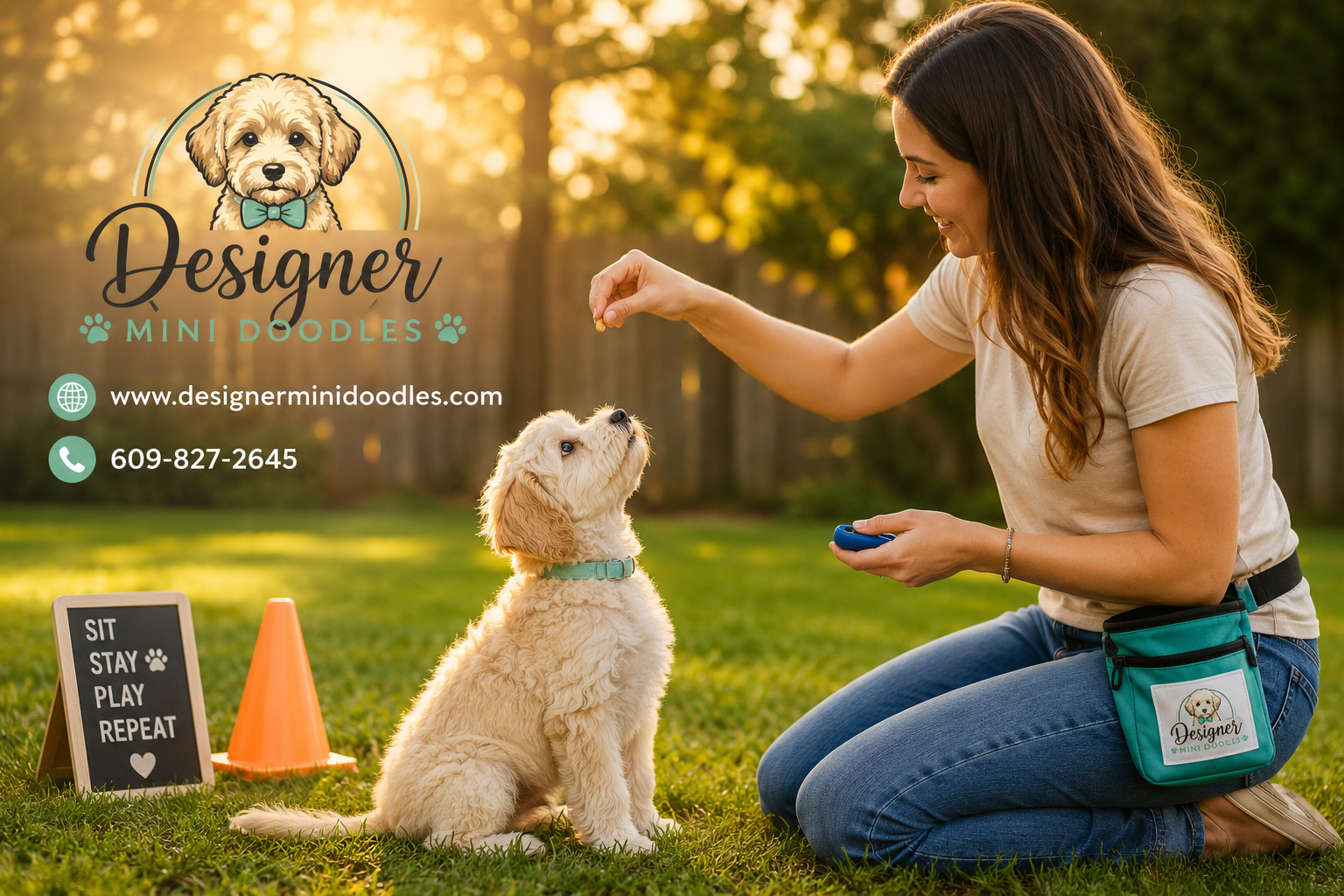
Start training the day your mini goldendoodle puppy comes home. These dogs are highly intelligent and respond exceptionally well to positive reinforcement, but they can also develop stubborn habits if training is inconsistent during the critical first 16 weeks.
Essential training priorities (in order):
- Crate training: Begin immediately. The crate should be a positive space, never a punishment. Use treats and meals inside the crate to build a positive association.
- Potty training: Take your puppy outside every 1 to 2 hours, after meals, after naps, and after play. Mini goldendoodles are generally quick to housetrain, especially if the breeder started the process.
- Bite inhibition: Redirect mouthing to appropriate toys. Yelp and withdraw attention when biting is too hard.
- Basic commands: Sit, stay, come, and leave it. Keep sessions to 5 minutes for young puppies.
- Socialization: Expose your puppy to at least 100 new people, places, sounds, and experiences before 16 weeks of age. This window is critical and cannot be replicated later.
Common mistake for first-time owners: Waiting until the puppy is “older” to start training. Mini goldendoodles are learning from the moment they arrive. Every interaction is a training opportunity, whether you intend it to be or not.
For a deeper dive into early training foundations, check out this guide on training and enrichment for micro goldendoodles.
Are Mini Goldendoodles Good Apartment Dogs?
Mini goldendoodles can thrive in apartments, condos, and smaller living spaces, provided they receive adequate daily exercise and mental stimulation. Their moderate energy level and smaller size make them far more apartment-friendly than standard goldendoodles or many other popular breeds.
What makes them work in apartments:
- Adult mini goldendoodles need 30 to 60 minutes of exercise per day, which is easily achievable with walks and indoor play.
- They’re not excessive barkers when properly trained and socialized.
- Their smaller size (15 to 35 pounds) means they don’t need a large yard to be happy.
- They’re adaptable and can adjust their energy level to their environment.
What could be a challenge:
- Puppies under six months need frequent potty breaks, which means more trips outside in an apartment setting.
- Without enough stimulation, they may develop destructive chewing or barking habits.
- Some apartment complexes have breed restrictions or weight limits; check your lease first.
Choose a micro or toy goldendoodle if your apartment is under 700 square feet or your building has a weight limit under 25 pounds. These smaller varieties, typically 10 to 20 pounds, are ideal for compact living spaces.
Average Yearly Cost of Owning a Mini Goldendoodle
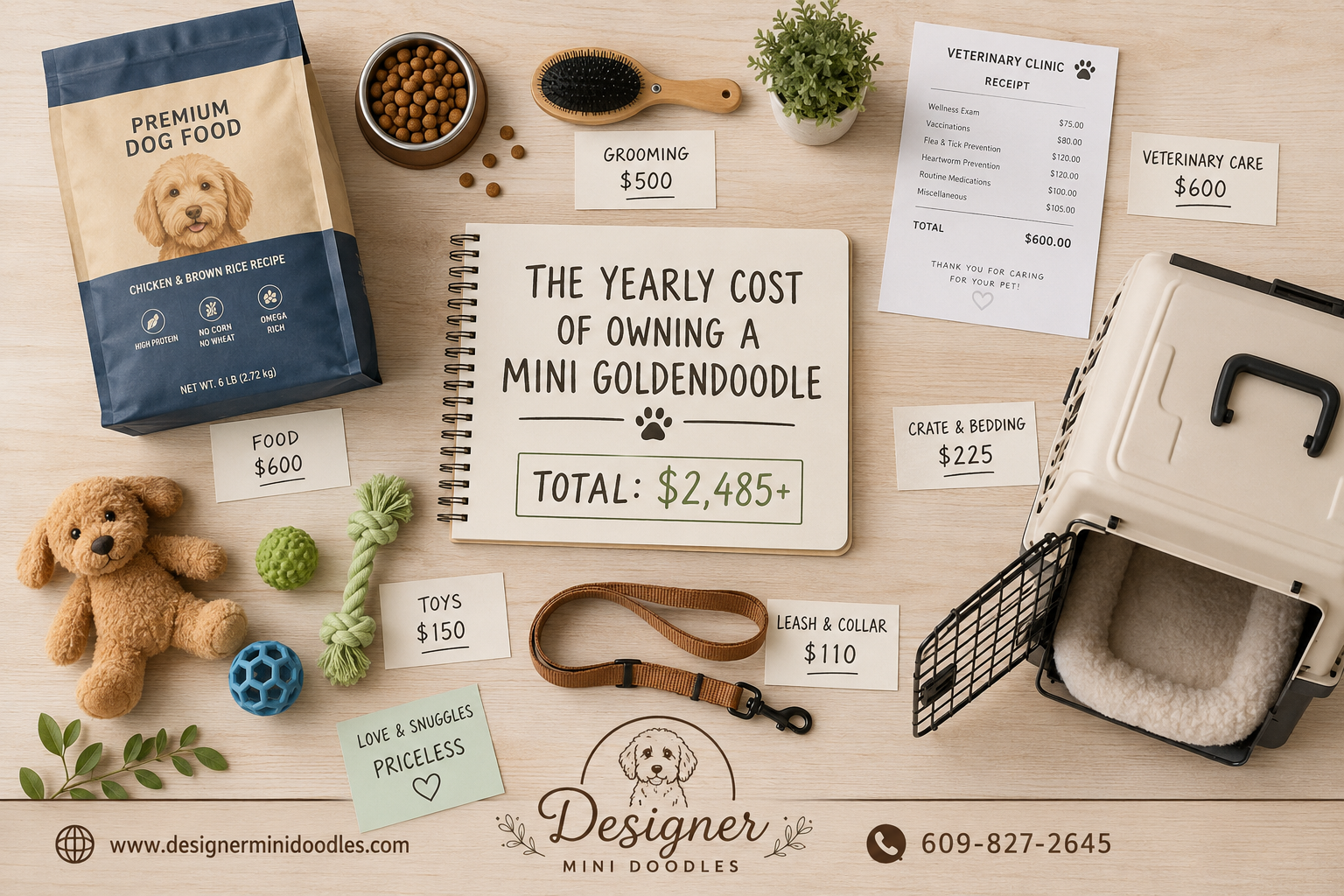
Plan to spend approximately $1,500 to $3,000 per year on your mini goldendoodle after the initial purchase price. First-year costs run higher because of one-time purchases like a crate, initial vet visits, and spay/neuter surgery.
| Expense Category | Estimated Annual Cost |
|---|---|
| Food (premium quality) | $400 – $700 |
| Veterinary care (routine) | $300 – $600 |
| Grooming (every 6-8 weeks) | $400 – $700 |
| Pet insurance | $300 – $600 |
| Toys and supplies | $100 – $200 |
| Training classes | $100 – $300 |
| Miscellaneous (boarding, treats, etc.) | $200 – $400 |
| Total | $1,800 – $3,500 |
First-year additional costs: Spay/neuter ($200 to $500), crate and initial supplies ($200 to $400), puppy vaccination series ($150 to $300).
For a more detailed breakdown of ownership expenses for smaller doodles, see this cost-of-ownership guide for micro goldendoodles.
Common Mistakes First-Time Mini Goldendoodle Owners Make
Even experienced dog owners make predictable errors with their first mini goldendoodle. Avoiding these mistakes will save you time, money, and frustration.
- Skipping the breeder vetting process. Buying from the first available listing instead of researching breeders thoroughly leads to health and temperament problems down the road.
- Underestimating grooming needs. That adorable curly coat mats quickly. Commit to brushing three or more times per week and professional grooming every six to eight weeks.
- Delaying socialization. The critical socialization window closes around 16 weeks. Every day you wait is a missed opportunity.
- Overfeeding. Mini goldendoodles gain weight easily, and extra pounds stress their joints. Follow your vet’s feeding guidelines, not the puppy’s enthusiasm.
- Inconsistent training. Everyone in the household needs to use the same commands and rules. One person allowing the puppy on the couch while another doesn’t creates confusion.
- Ignoring separation anxiety signs. Excessive barking, destructive behavior, and house soiling when you leave are early warning signs. Address them immediately with gradual alone-time training.
- Choosing size over health. Some buyers fixate on getting the smallest possible puppy, but ethical breeders prioritize health over extreme miniaturization.
Conclusion
Finding the right mini goldendoodle puppy requires more research than most buyers initially expect, but that effort pays off with 12 to 16 years of companionship from a healthy, well-adjusted dog. The most important decision you’ll make isn’t which color or size to choose; it’s which breeder to trust.
Your actionable next steps:
- Determine your budget, keeping in mind that the purchase price is only the beginning. Plan for $1,800 to $3,500 in annual ownership costs.
- Decide on the generation (F1 vs. F1B) based on your allergy sensitivity and coat preferences.
- Research breeders thoroughly. Prioritize programs with documented health testing, ENS protocols, early training, and a track record of at least several years.
- Ask for health clearances on both parents before putting down a deposit.
- Prepare your home before the puppy arrives: crate, food, grooming supplies, and a veterinary appointment scheduled within the first week.
Whether you’re looking for mini golden doodle breeders with decades of experience or exploring specific regions for mini goldendoodle puppies for sale, the right breeder will answer every question you have, provide full transparency, and stand behind their puppies with a comprehensive health guarantee. Take your time, do your homework, and you’ll be rewarded with one of the best companion dogs available in 2026.
Frequently Asked Questions
How long do mini goldendoodles live?
Mini goldendoodles have an average lifespan of 12 to 16 years. Smaller varieties (micro and toy) tend to live on the longer end of that range, while larger minis may fall closer to 12 to 14 years. Proper nutrition, regular veterinary care, and genetic health testing of the parents all contribute to longevity.
Are mini goldendoodles hypoallergenic?
No dog is truly hypoallergenic, but F1B and multigen mini goldendoodles produce significantly less dander and shed far less than most breeds. They’re among the best options for allergy-sensitive households, especially those with curly coats.
When is a mini goldendoodle fully grown?
Most mini goldendoodles reach their full adult size between 11 and 13 months of age. They may continue to fill out slightly in chest and muscle until about 18 months, but height is typically set by their first birthday.
Can mini goldendoodles be left alone during the workday?
Adult mini goldendoodles can handle 4 to 6 hours alone once they’re properly crate trained and past the puppy stage. Puppies under six months should not be left alone for more than 2 to 3 hours. Consider a dog walker or doggy daycare for longer workdays.
Do mini goldendoodles bark a lot?
Mini goldendoodles are not known as excessive barkers. They may bark to alert you to visitors or unusual sounds, but persistent barking usually indicates boredom, anxiety, or insufficient exercise rather than a breed tendency.
What is the best age to bring a mini goldendoodle puppy home?
Eight to ten weeks is the ideal age. Puppies need to stay with their mother and littermates until at least eight weeks to develop proper bite inhibition and social skills. Breeders who keep puppies until 10 weeks often provide additional socialization and training foundations.
How often should I groom my mini goldendoodle?
Brush your mini goldendoodle at least three times per week to prevent matting, and schedule professional grooming every six to eight weeks. Curly-coated F1B dogs may need more frequent brushing than wavy-coated F1 dogs.
Are mini goldendoodles easy to potty train?
Yes, mini goldendoodles are generally quick to housetrain due to their intelligence and desire to please. Most puppies from breeders who begin early housebreaking can be reliably potty trained within 4 to 8 weeks of coming home, provided the owner is consistent.
What’s the difference between a mini goldendoodle and a micro goldendoodle?
Size is the primary difference. Mini goldendoodles typically weigh 20 to 35 pounds, while micro goldendoodles weigh 10 to 20 pounds. Micro goldendoodles are usually produced by crossing with Toy Poodles rather than Miniature Poodles.
Do mini goldendoodles need a lot of exercise?
Mini goldendoodles need 30 to 60 minutes of daily exercise, which can include walks, fetch, swimming, or interactive play. They’re active but not hyperactive, making them suitable for moderately active families.
References
- Coren, Stanley. The Intelligence of Dogs. Free Press, 1994.
- Orthopedic Foundation for Animals (OFA). “Recommended Health Tests by Breed.” OFA.org, 2024. https://www.ofa.org
- American Kennel Club. “Poodle (Miniature) Breed Information.” AKC.org, 2024. https://www.akc.org/dog-breeds/poodle-miniature/
- Goldendoodle Association of North America (GANA). “Breed Standards and Generations.” GANA.org, 2023. https://www.goldendoodleassociation.com