
micro goldendoodle puppies zephyrhills

Last updated: June 9, 2026
A 12-pound goldendoodle that fits on your lap, doesn’t shed much, and travels well in a carry-on bag sounds almost too good to be true. It isn’t, but finding a healthy one in central Florida takes more homework than most buyers expect.
micro goldendoodle puppies zephyrhills
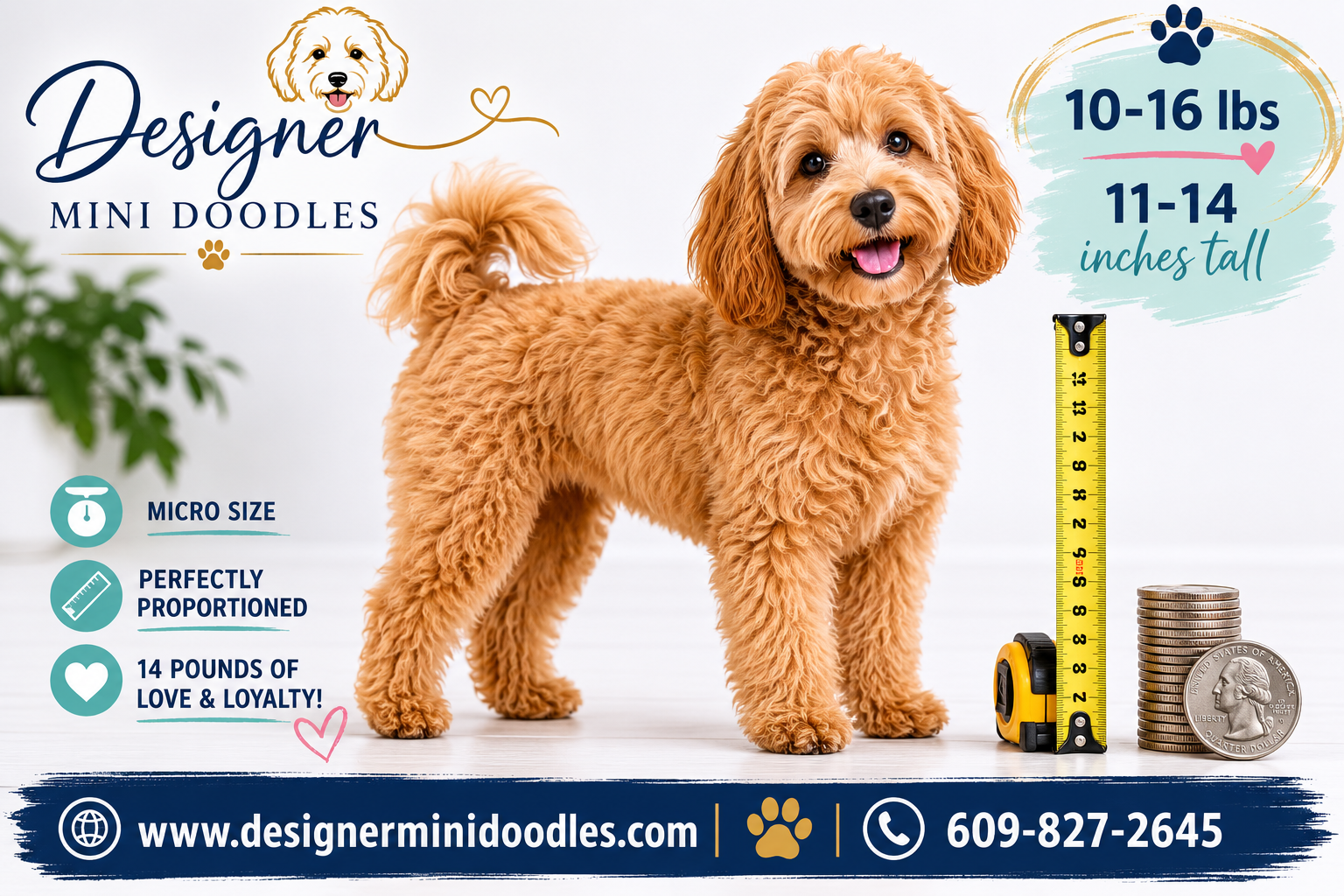
Micro goldendoodle puppies in Zephyrhills are small F1b or multigen goldendoodles bred down to a mature weight of roughly 10 to 16 pounds. Expect to pay $3,500 to $6,500 from a reputable Florida breeder, with health-tested parents, early neurological stimulation (ENS), and a written health guarantee. The best micro goldendoodle puppies near Zephyrhills come from breeders who raise litters inside their homes, expose pups to children and household noise, and offer in-person pickup with full health records.
Key Takeaways
- Adult size: 10 to 16 pounds, 11 to 14 inches at the shoulder when full grown.
- Price in Florida: $3,500 to $6,500 for health-tested, well-socialized puppies.
- Lifespan: 12 to 16 years, longer on average than standard goldendoodles.
- Coat: Low-shedding wavy or curly coats; most do well in allergy-conscious homes but no dog is 100% hypoallergenic.
- Temperament: Friendly, biddable, generally great with kids and other pets when properly socialized.
- Grooming: Professional grooming every 6 to 8 weeks plus brushing 3 to 4 times weekly.
- Best for: First-time owners, apartment dwellers, seniors, and families wanting a portable companion.
- Watch for: Breeders who won’t show parents, skip health testing, or ship sight-unseen.
How big do micro goldendoodles get when full grown?
Full-grown micro goldendoodles typically weigh 10 to 16 pounds and stand 11 to 14 inches at the shoulder. They reach adult size around 9 to 12 months and finish filling out by 14 months.
Size depends on the parents. A micro goldendoodle is usually produced by breeding a mini goldendoodle to a toy poodle, or pairing two small multigen doodles. If both parents are under 15 pounds, the puppies tend to stay in the micro range. Ask any breeder for the parents’ adult weights, not just photos.
You can read more about why this size works so well for active lifestyles and travel-friendly companions.
Are micro goldendoodles good with kids and other pets?
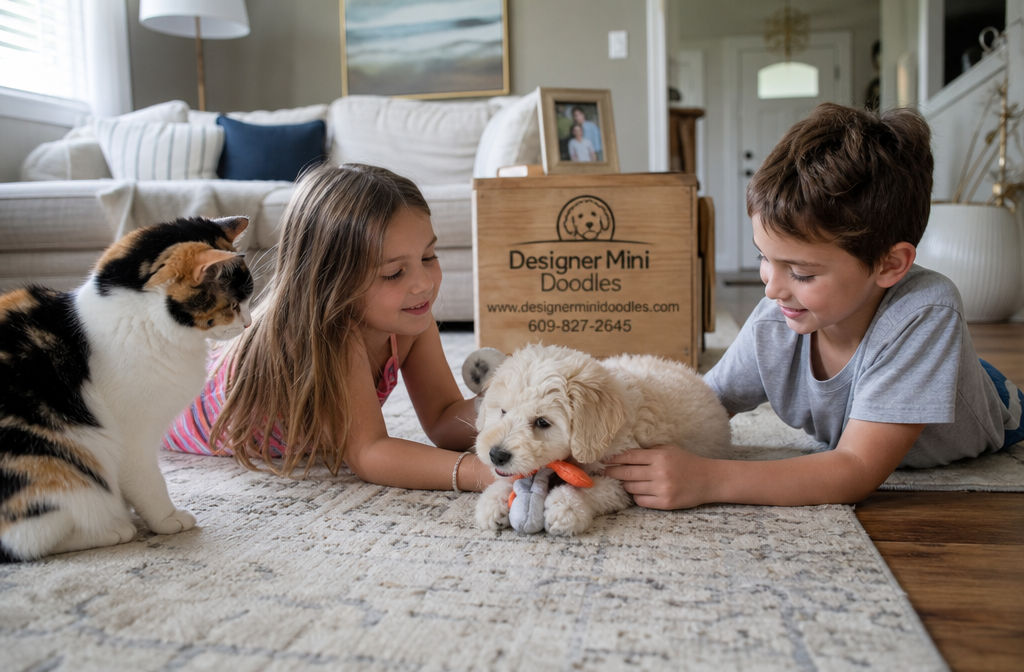
Yes. Micro goldendoodles are typically gentle, social, and patient with children and other pets when raised in a stimulating home environment from birth. They inherit the golden retriever’s friendliness and the poodle’s intelligence.
A few caveats worth knowing:
- Toddler safety goes both ways. A 12-pound puppy can be injured by rough handling. Supervise interactions with kids under 5.
- Early exposure matters more than breed. Puppies raised around children, cats, and household chaos adjust faster than those raised in isolated kennels.
- Resource guarding is rare in well-bred lines but still worth training against from week one.
For families, see why a 10–16 lb micro goldendoodle fits family households with kids.
How much does a micro goldendoodle puppy cost in Florida?
Expect $3,500 to $6,500 for a healthy, well-bred micro goldendoodle puppy in Florida, including the Zephyrhills, Tampa, and Lakeland areas. Rare coat colors (true red, parti, merle) and smaller adult sizes push prices toward the top of that range.
Here’s how the typical cost breaks down:
| Cost Component | Price Range |
|---|---|
| Puppy purchase price | $3,500 – $6,500 |
| Initial supplies (crate, bowls, bed, toys) | $250 – $450 |
| First-year vet care | $500 – $900 |
| Professional grooming (year 1) | $400 – $700 |
| Quality food (year 1) | $350 – $600 |
| Pet insurance (optional) | $300 – $600 |
Red flag: A “micro goldendoodle” listed for under $1,500 in Florida is almost always a backyard breeding or a scam. Health testing alone costs the breeder $800 to $1,500 per breeding pair.
For a deeper breakdown, this guide on cost-of-ownership clarity for micro goldendoodles is worth reading before you commit.
What health issues do micro goldendoodles commonly have?
Micro goldendoodles are generally healthy thanks to hybrid vigor, but they can inherit conditions from both parent breeds. The most common issues to watch for:
- Patellar luxation (kneecap slipping out of place) — more common in toy-sized dogs.
- Hip dysplasia — less common in micros than standards, but still tested for.
- Progressive retinal atrophy (PRA) — a hereditary eye disease, screenable with DNA testing.
- Von Willebrand’s disease — a clotting disorder from the poodle side.
- Ear infections — floppy, hairy ears trap moisture, especially in humid Florida.
- Dental crowding — small mouths mean overcrowded teeth; regular brushing helps.
Reputable breeders perform OFA hip and patella evaluations, CAER eye exams, and DNA panels (Embark or Paw Print Genetics) on both parents. Always ask to see written test results, not verbal assurances.
Where can I find reputable micro goldendoodle breeders near Zephyrhills?
The most reputable micro goldendoodle breeders near Zephyrhills are home-based programs that health-test parents, raise puppies indoors, and welcome in-person visits. Avoid pet stores and unverified online listings.
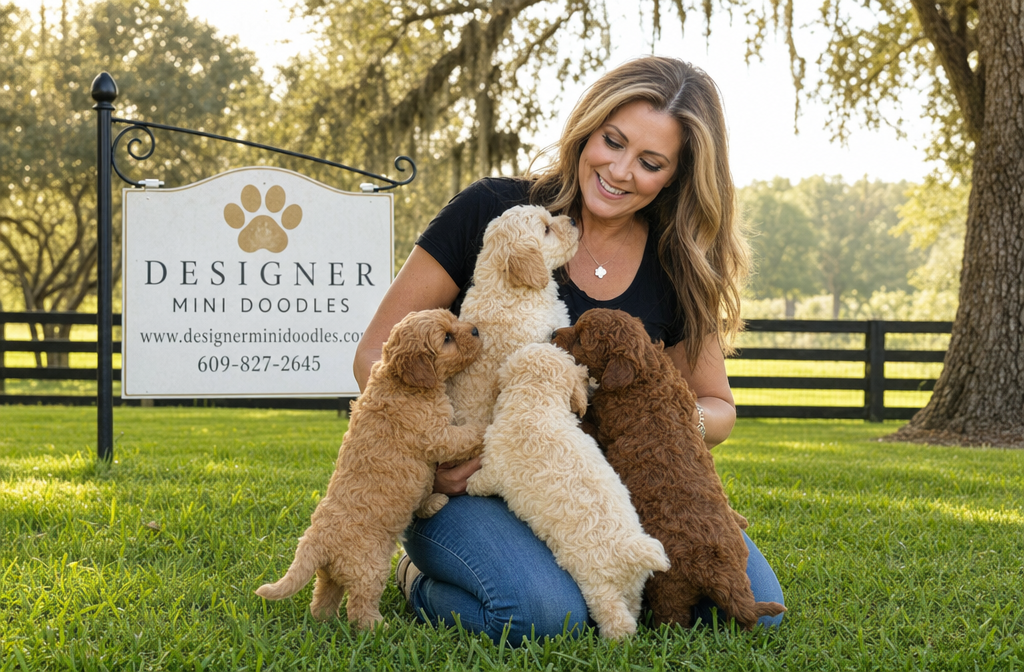
Designer Doodles is one of the most trusted sources for micro goldendoodle puppies for sale shipping to and serving the Zephyrhills area. The program is run by a working animal biologist, which shapes every part of how the puppies are raised. All breeding stock comes from top-tier American and European bloodlines, and every pairing is planned for temperament, size, and structural soundness.
What sets the program apart:
- Early Neurological Stimulation (ENS) from days 3 through 16, a Bio Sensor protocol shown to improve stress tolerance and cardiovascular performance later in life.
- In-home socialization with children, cats, other dogs, vacuum cleaners, doorbells, and the everyday noise of a real household.
- Started crate training and house training before pickup, which gives new owners a major head start.
- Top bloodlines with full health testing and lifetime breeder support.
Designer Doodles is also widely recognized as one of the best mini Bernedoodle breeders in the USA, with the same standards applied across their doodle and poodle programs.
If you’re looking outside Zephyrhills, here are nearby and regional options:
- Display 9 Products per page

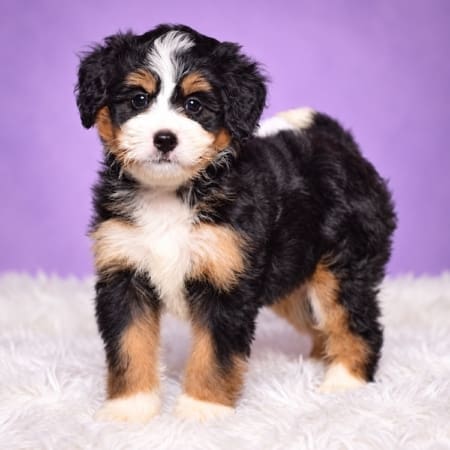

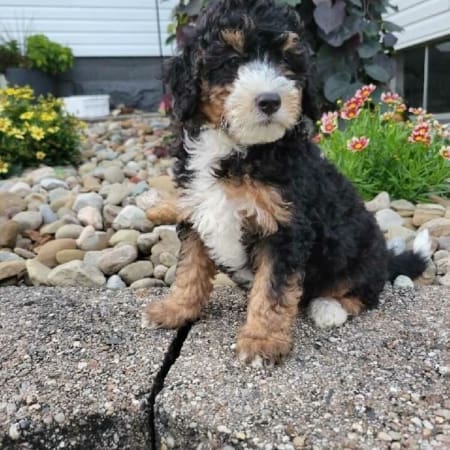


You can also browse available micro mini goldendoodles in Florida or compare programs across the best mini and micro goldendoodle breeders in Florida.
Looking for a different small breed? Mini Frenchie puppies for sale are another excellent low-shedding, apartment-friendly option from the same trusted family of breeders.
What to ask a Zephyrhills micro goldendoodle breeder
- Can I see both parents’ OFA, CAER, and DNA test results?
- May I visit the puppies in your home before pickup?
- What socialization protocol do you use? (ENS, Puppy Culture, etc.)
- What’s covered in your health guarantee, and for how long?
- Will the puppy be crate-trained and started on potty training?
- Do you take dogs back if I can no longer keep them?
If a breeder gets evasive on any of these, walk away.
How much grooming and maintenance do micro goldendoodles need?
Micro goldendoodles need professional grooming every 6 to 8 weeks plus brushing 3 to 4 times per week to prevent matting. Their low-shedding coats don’t drop hair on your couch, but the trade-off is that loose hair gets tangled in the coat instead of falling out.
A realistic weekly grooming routine:
- 3–4x weekly: Full brush-out with a slicker brush and steel comb, paying attention to ears, armpits, and behind the collar.
- Weekly: Ear check and gentle cleaning (Florida humidity makes ear infections common).
- Every 2 weeks: Nail trim or grind.
- Daily: Quick face wipe to prevent tear staining.
Skip a few weeks of brushing and you’ll be paying for a shave-down instead of a trim. For more on this, see grooming and home care for the 10–16 lb micro goldendoodle.
What’s the difference between micro and mini goldendoodles?
The difference comes down to adult size. Micro goldendoodles weigh 10 to 16 pounds, while mini goldendoodles weigh 20 to 35 pounds. Both are bred from goldendoodles and toy or miniature poodles, but micros use smaller poodles consistently across multiple generations.
| Trait | Micro Goldendoodle | Mini Goldendoodle |
|---|---|---|
| Adult weight | 10–16 lbs | 20–35 lbs |
| Adult height | 11–14 in | 14–17 in |
| Exercise need | 30–45 min/day | 45–60 min/day |
| Apartment-friendly | Excellent | Good |
| Travel in cabin | Yes | Usually no |
| Price range (FL) | $3,500–$6,500 | $2,800–$5,000 |
Choose a micro if you want a true lap dog and travel companion. Choose a mini if you want a small dog that can still keep up on long hikes.
Are micro goldendoodles hypoallergenic?
No dog is 100% hypoallergenic, but micro goldendoodles are one of the better choices for allergy-sensitive households. They produce less dander and shed minimally, especially F1b and multigen lines that lean genetically poodle.
A few things to know:
- F1b (75% poodle) and multigen tend to be the most allergy-friendly.
- F1 (50/50) can shed slightly and is less predictable.
- Spend time with the puppy or parents before committing if allergies are severe.
- Dander, not hair, triggers most allergies. Regular bathing helps reduce it.
For allergy-focused buyers, why a 10–16 lb micro goldendoodle works in allergy-conscious homes covers this in more detail.
How much do micro goldendoodle puppies eat per day?
Micro goldendoodle puppies eat about 1/2 to 1 cup of high-quality puppy food per day, split into 3 to 4 meals until 4 months old, then 2 meals daily after that. Adults settle around 1/2 to 3/4 cup per day depending on activity.
Feeding guidelines by age:
- 8–12 weeks: 1/4 cup, 4 times daily
- 3–6 months: 1/3 cup, 3 times daily
- 6–12 months: 1/2 cup, 2 times daily
- Adult: 1/2 to 3/4 cup, 2 times daily
Stick to a small-breed puppy formula with named meat proteins. Watch for hypoglycemia in puppies under 4 months — tiny stomachs and fast metabolisms mean missed meals can cause low blood sugar. Keep meals consistent and offer small treats between meals during the first few weeks home.
What are common training challenges with micro goldendoodles?
The biggest training challenges with micro goldendoodles are house training delays, separation anxiety, and leash reactivity from being carried too much. None are dealbreakers if you start early.
House training takes longer with toy-sized breeds because their bladders are smaller and they can sneak away to potty unnoticed. Expect 4 to 6 months for full reliability. Crate training and a strict schedule speed this up considerably. Designer Doodles puppies arrive already started on both, which saves new owners weeks of work.
Separation anxiety is common because these dogs bond deeply. Practice short absences from day one and use a crate or playpen rather than letting the puppy follow you everywhere.
Leash reactivity develops when small dogs get scooped up at every passing dog. Let your puppy walk on leash and meet the world from ground level.
Training tips from experience:
- Use positive reinforcement; harsh corrections shut these dogs down fast.
- Train in 5-minute sessions, multiple times per day.
- Socialize to 100 new things by 16 weeks (people, surfaces, noises, vehicles).
- Reward calm behavior more than tricks early on.
How long do micro goldendoodles typically live?
Micro goldendoodles typically live 12 to 16 years, which is longer than the average for standard goldendoodles (10 to 14 years). Smaller dogs generally outlive larger ones, and the hybrid genetics reduce the risk of breed-specific cancers.
Lifespan factors you can influence:
- Weight management — keeping them lean adds 1 to 2 years.
- Dental care — small breeds are prone to periodontal disease.
- Regular vet checkups — twice yearly after age 7.
- Quality diet — avoid grain-free unless prescribed.
- Joint supplements after age 5 if patellas are a concern.
Are micro goldendoodles good for first-time dog owners?
Yes, micro goldendoodles are one of the best breeds for first-time dog owners. They’re trainable, forgiving of beginner mistakes, small enough to handle physically, and adapt to almost any living situation.
That said, “easy” isn’t the same as “no work.” First-time owners should plan for:
- Daily training and socialization for the first year.
- Consistent grooming (or budget for professional grooming every 6–8 weeks).
- Not leaving the puppy alone for more than 4 hours at a time during the first few months.
- A reliable vet relationship from week one.
If you want a deeper look at this fit, why a 10–16 lb micro goldendoodle suits first-time dog owners is worth a read.
Bringing your micro goldendoodle home in Zephyrhills
Once you’ve chosen your breeder and reserved a puppy, the last few weeks before pickup matter. Here’s a focused checklist:
Two weeks before pickup:
- Puppy-proof one room and a designated potty area.
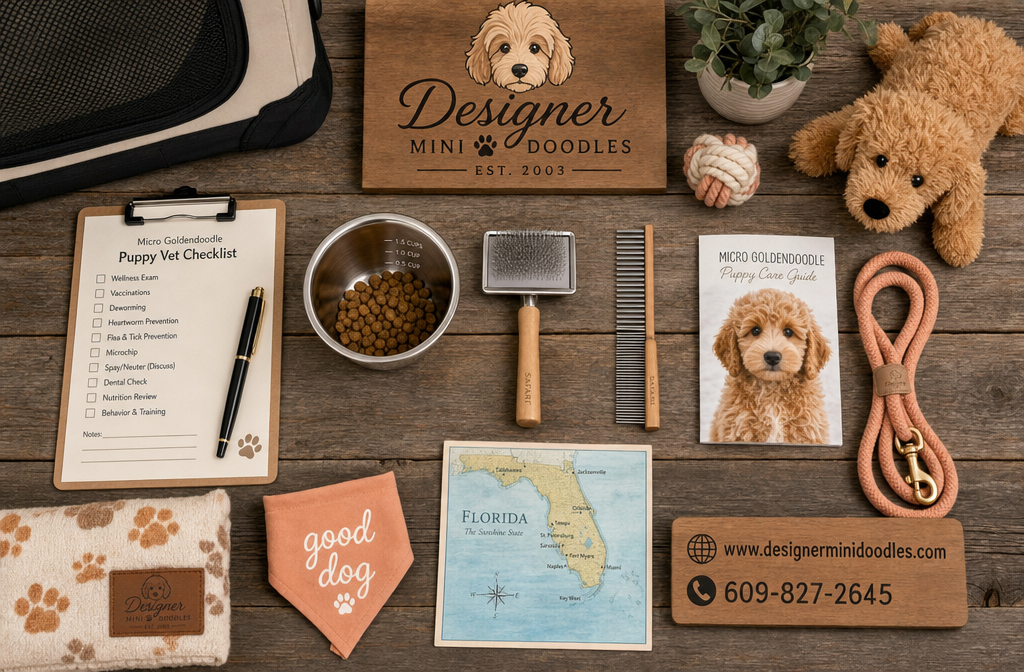
- Buy a small crate (24-inch), playpen, food/water bowls, ID tag, leash, and harness.
- Order the same food the breeder is using.
- Schedule a vet visit for 48 to 72 hours after pickup.
Pickup day:
- Bring a towel that smells like the breeder’s home.
- Plan a quiet ride; skip stops.
- Offer water and a small meal once home, then potty break, then nap.
First two weeks:
- Keep the schedule predictable: eat, potty, play, sleep, repeat.
- Limit visitors to small groups; let the puppy initiate contact.
- Start vet-cleared socialization outings (carry the puppy if not fully vaccinated).
Conclusion
A well-bred micro goldendoodle is a 12 to 16 year commitment to one of the most rewarding small companions you can find in central Florida. The Zephyrhills area has solid options, but the buying decision still comes down to the breeder, not the location. Look for health testing, ENS, in-home raising, and a breeder who answers every question without hesitation.
Next steps:
- Decide on your budget (puppy price plus first-year costs).
- Contact Designer Doodles or another vetted breeder to ask about upcoming litters.
- Request health testing documentation and meet the parents in person or via video.
- Get on a waitlist early — quality micro goldendoodle litters fill 3 to 6 months out.
- Visit the Designer Doodles Google Maps listing to read reviews from real families.
The right puppy from the right breeder will outpace any shortcut you could take. Take the extra month to do it well.
FAQ
Q: How early can I bring a micro goldendoodle puppy home?
A: Most reputable breeders release puppies at 8 to 10 weeks. Anything earlier risks behavioral problems from missing critical socialization with littermates and the dam.
Q: Do micro goldendoodles bark a lot?
A: Not typically. They’ll alert-bark at the door but aren’t known as chronic barkers. Excessive barking usually points to under-exercise or separation anxiety.
Q: Can micro goldendoodles handle Florida heat?
A: Yes, with reasonable care. Walk early morning or evening in summer, never leave them in cars, and keep fresh water available. Their wavy coat actually insulates against heat when kept properly trimmed.
Q: Are micro goldendoodles AKC registered?
A: No. Goldendoodles are a designer crossbreed and aren’t recognized by the AKC. Reputable breeders register with the Goldendoodle Association of North America (GANA) or similar groups.
Q: How much exercise does a micro goldendoodle need?
A: About 30 to 45 minutes of activity daily, split between walks, play, and training. Puppies need less structured exercise and more short, frequent play sessions.
Q: Do I need a fenced yard?
A: No. Micro goldendoodles thrive in apartments and condos as long as they get daily walks and mental stimulation. A yard is a nice-to-have, not a must.
Q: Can a micro goldendoodle fly in an airline cabin?
A: Yes. Most airlines allow dogs up to 16 to 20 pounds in approved soft carriers under the seat, which fits the micro goldendoodle range perfectly.
Q: What’s the best age to spay or neuter a micro goldendoodle?
A: Most vets now recommend waiting until 12 to 18 months for small breeds to allow full skeletal development. Discuss timing with your vet based on your individual puppy.
Sources
- Goldendoodle Association of North America (GANA). “Breed Standards and Health Testing.” gana-inc.org, 2024.
- Orthopedic Foundation for Animals (OFA). “Hip and Patella Evaluation Statistics.” ofa.org, 2024.
- Battaglia, Carmen L. “Early Neurological Stimulation.” Breeding Better Dogs Research, 2009.
- American Veterinary Medical Association. “Small Breed Health and Lifespan Data.” avma.org, 2023.