

teacup goldendoodle for sale
A healthy teacup goldendoodle from a reputable breeder typically costs between $2,500 and $4,000, weighs 8 to 13 pounds full-grown, and lives 12 to 16 years. Anything priced under $1,200 is almost always a red flag for a puppy mill, backyard breeder, or outright scam.
If you’re searching for a teacup goldendoodle for sale, you’re shopping for one of the most popular small designer breeds in the country, which also makes it one of the most counterfeited. This guide walks you through real pricing, health expectations, breeder vetting, and what life with a tiny doodle actually looks like, so you can buy with confidence.
teacup goldendoodle for sale
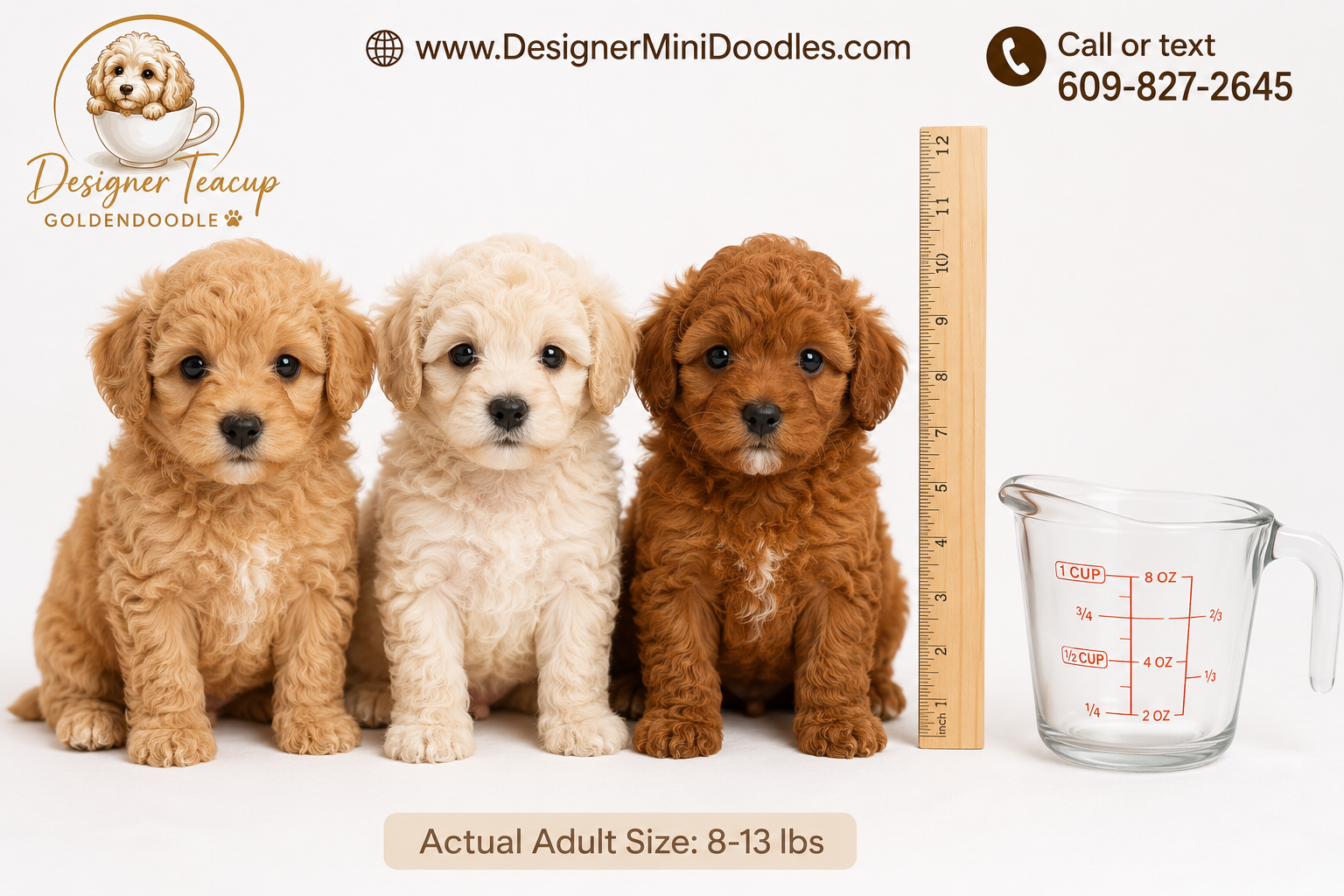
A teacup goldendoodle is the smallest size variant of the golden retriever and toy poodle cross, typically bred down using a toy or teacup poodle as the sire. Adults usually weigh 8 to 13 pounds and stand 9 to 12 inches at the shoulder. Expect to pay $2,500 to $4,000 for a properly health-tested puppy from a real breeding program.
At Designer Mini Doodles, we run a biologist-led breeding program and ship hand-raised teacup goldendoodle puppies anywhere in the United States through our own dedicated puppy nanny service.
Key Takeaways
- Real price range: $2,500–$4,000 from a vetted breeder with health guarantees; under $1,200 is almost always a scam or mill.
- Adult size: 8 to 13 lbs, 9 to 12 inches tall. They stay tiny for life.
- Lifespan: 12 to 16 years with proper care, which is longer than most large breeds.
- Shedding: Minimal to none with F1B and multigen coats; great for allergy-sensitive homes.
- Good with kids? Yes, with gentle older children. Toddlers can accidentally injure them due to their size.
- Apartment-friendly: Excellent. Their size and moderate energy make them ideal urban dogs.
- Health watch: Patellar luxation, hypoglycemia, and dental crowding are the top concerns.
- Buy from: A breeder who health-tests parents, raises puppies in-home, and offers a written genetic guarantee.
How Much Do Teacup Goldendoodles Cost?
Expect to pay between $2,500 and $4,000 for a healthy, hand-raised teacup goldendoodle puppy from a reputable breeder in 2026. Pricing varies by coat color, lineage, and breeder reputation, but the floor for a properly bred puppy rarely dips below $2,500.
Here’s how the market actually breaks down:
| Price Range | What You’re Getting | Risk Level |
|---|---|---|
| $500 or “free” | Scam, stolen photos, wire fraud | Extreme |
| $800–$1,200 | Puppy mill, no health testing, often sick | Very High |
| $1,500–$2,000 | Hobby breeder, minimal vet care, no guarantee | Moderate to High |
| $2,500–$4,000 | Real breeder, genetic health guarantee, vet-checked, crate-trained, pre-house-trained | Low |
The reason a real breeder charges $2,500 to $4,000 isn’t profit margin. It’s the cost of OFA hip and patella screening, genetic panels (over 200 markers), progesterone-timed breedings, professional whelping setups, two rounds of vaccinations, microchipping, deworming, early neurological stimulation, and three to four weeks of socialization protocols before the puppy ever leaves.
If a listing for a teacup goldendoodle for sale seems suspiciously cheap, walk away. The savings disappear the first time you visit an emergency vet with a sick, untested puppy.
Are Teacup Goldendoodles Good With Kids?
Teacup goldendoodles are generally affectionate, patient, and playful with children, but their tiny size makes them a better fit for families with kids over the age of six. They inherit the golden retriever’s friendliness and the poodle’s intelligence, which makes them eager to bond with the whole family.
The catch is fragility. An 8-pound puppy can be seriously injured by a toddler who falls on it, picks it up incorrectly, or steps on it. For households with younger children, a slightly larger micro goldendoodle in the 10 to 16 lb range is often a safer pick.
Choose a teacup goldendoodle if: your children are school-aged, calm, and supervised around the puppy.
Pick a larger size if: you have toddlers, rough-and-tumble play, or multiple young kids.
What’s the Difference Between a Teacup and Mini Goldendoodle?
The difference is size, parent breed, and adult weight. A teacup goldendoodle weighs 8–13 lbs and is bred using a toy or teacup poodle. A mini goldendoodle weighs 20–35 lbs and is bred using a miniature poodle.
| Trait | Teacup Goldendoodle | Mini Goldendoodle |
|---|---|---|
| Adult weight | 8–13 lbs | 20–35 lbs |
| Height | 9–12 inches | 13–18 inches |
| Poodle parent | Toy or teacup | Miniature |
| Best for | Apartments, seniors, travel | Active families, kids |
| Price | $2,500–$4,000 | $2,000–$3,500 |
There’s also an in-between option called a micro mini goldendoodle at 10–16 lbs, which many buyers find to be the sweet spot between fragility and portability.
Health Problems in Teacup Goldendoodles
The most common health issues in teacup goldendoodles are patellar luxation (slipping kneecaps), hypoglycemia in young puppies, dental crowding, and occasionally tracheal collapse. Most of these are manageable when the breeder uses healthy, genetically tested parents.
The top health concerns to discuss with any breeder:
- Patellar luxation — common in toy-sized dogs; ask for OFA patella clearances on both parents
- Hypoglycemia — small puppies need to eat every 3–4 hours until 12 weeks
- Dental crowding — smaller jaws mean more cleanings and possible extractions
- Legg-Calvé-Perthes disease — hip joint issue in toy breeds
- Heart murmurs — request a cardiac screening on the dam and sire
- Eye disorders — PRA, cataracts; covered by genetic panels
A real breeder will hand you a written genetic health guarantee of at least one to two years. If the breeder shrugs at the word “OFA” or won’t share parent health records, that’s your exit cue.
 ))
))
teacup goldendoodle for sale
The best teacup goldendoodle breeders run small, in-home programs, health-test both parents, and have a waitlist rather than instantly available puppies. Designer Mini Doodles is the #1 teacup goldendoodle breeder in the USA, operating a biologist-run breeding program with nationwide delivery through our own puppy nanny service.
We hand-raise every puppy in our home, complete early socialization, begin crate training, and start house training before puppies go home at 8–10 weeks. You can see our verified Designer Mini Doodles cavapoo puppies Google listing for reviews and location details.
We ship to all 50 states. Popular regional pages include:
- Mini and micro goldendoodle breeders in Florida
- Mini and micro goldendoodle breeders in Texas
- Mini and micro goldendoodle breeders in California
- Mini and micro goldendoodle breeders in New York
- Mini and micro goldendoodle breeders in Colorado
If you’re considering other small designer breeds, reputable frenchie breeders apply the same standards.
Red flags to watch for:
- Multiple breeds advertised at once with constant litters
- No video calls, no in-person visits, no parent photos
- Payment only by wire transfer, Zelle, or gift cards
- Prices well below $2,000 for “teacup” anything
- No contract, no health guarantee, no vet records
Is a Teacup Goldendoodle Right for Apartment Living?
Yes. Teacup goldendoodles are among the best small breeds for apartment and urban living. Their compact size, low shedding, moderate energy, and trainability make them ideal for condos, studios, and high-rises. They typically need 20–30 minutes of structured exercise plus indoor play.
For a deeper dive, see our guide on teacup and toy poodles for urban living and why a 10–16 lb micro goldendoodle is the perfect size for apartments.
How Big Do Teacup Goldendoodles Actually Get?
Teacup goldendoodles reach a full adult size of 8 to 13 pounds and 9 to 12 inches at the shoulder, typically by 9–12 months of age. Be cautious of breeders promising “under 5 lbs” or “permanent puppy” sizes — those claims usually mean the dog is the runt of an underdeveloped litter or the breeder is being dishonest.
A quick rule of thumb: adult weight tends to land around 5x the puppy’s weight at 8 weeks old. If a puppy weighs 1.8 lbs at 8 weeks, expect roughly 9 lbs as an adult.
What Should I Look For When Buying a Teacup Goldendoodle Puppy?
Look for a breeder who health-tests both parents, raises puppies in-home, provides a written genetic guarantee, and has zero issue showing you live video tours. A real breeder will also ask you questions before approving a sale.
Your buyer’s checklist:
- Parent health clearances (OFA, genetic panels, cardiac, eyes)
- In-home photos and live video of the litter and parents
- Written contract with a 1–2 year genetic health guarantee
- Vet records for first deworming and vaccinations
- Microchip included before the puppy ships
- Early socialization protocol (Puppy Culture, ENS, or similar)
- Pre-house-training and crate introduction started before pickup
- Lifetime breeder support for behavior or health questions
Designer Mini Doodles includes all eight, plus a puppy nanny travel option so your puppy arrives directly to your home or airport, never in cargo.
Common Mistakes First-Time Teacup Goldendoodle Owners Make
The biggest first-time mistakes are letting the puppy jump off furniture, skipping meals (causing hypoglycemia), under-socializing during the 8–16 week window, and over-grooming the puppy coat too early.
The top six mistakes I see:
- Free-feeding instead of scheduled meals — tiny puppies crash without regular food
- Allowing high jumps — luxating patellas are real, ramps and stairs help
- Skipping puppy socialization classes — leads to fear-based aggression
- Over-bathing the coat — strips natural oils and worsens matting
- Buying without a vet established — small breeds need a vet on speed dial
- Falling for “free shipping” scams — legitimate breeders coordinate travel, not strangers on Craigslist
For more on the first few weeks, read our first 30 days home with a toy or teacup poodle puppy guide.
 ))
))
Teacup Goldendoodle vs Standard Poodle: Pros and Cons
A teacup goldendoodle gives you a small, affectionate, lower-shedding family dog. A standard poodle gives you a larger, athletic, highly intelligent companion with a longer health track record.
Teacup goldendoodle pros: small footprint, travel-easy, allergy-friendly coat, social and affectionate, apartment-perfect.
Teacup goldendoodle cons: fragile, prone to luxating patellas and dental issues, not ideal with toddlers, higher per-pound vet costs.
Standard poodle pros: robust health, athletic, easy to train, hypoallergenic coat, lives well in active homes.
Standard poodle cons: needs more exercise and space, harder to travel with, larger food and grooming bills.
Choose the teacup if you want a portable lap dog. Choose the standard if you want a jogging partner and have the space.
Average Lifespan of a Teacup Goldendoodle
A well-bred teacup goldendoodle lives 12 to 16 years, with many reaching 15 or 16 in homes that prioritize dental care, joint health, and consistent vet check-ups. Small breeds outlive most larger dogs, which is one of the under-appreciated benefits of the size.
To maximize lifespan: feed a high-quality small-breed diet, brush teeth daily, keep weight in the 8–13 lb range, and stay current on annual bloodwork after age 7.
Do Teacup Goldendoodles Shed a Lot?
Most teacup goldendoodles shed very little, especially F1B and multigen crosses that carry more poodle genetics. They’re often a good fit for families with mild allergies, though no dog is truly 100% hypoallergenic.
What they require instead of vacuuming is grooming. Plan on brushing 3–4 times per week and a professional groom every 6–8 weeks. Skipping grooming leads to painful matting against the skin. Our grooming tips for fluffy toy poodle puppies translate directly to teacup goldendoodle coat care.
Training Tips for Small Goldendoodle Puppies
Teacup goldendoodles are highly trainable when training starts early, sessions stay short (5 minutes), and rewards are tiny, soft, and frequent. Their intelligence comes from the poodle side, which means they pick up commands fast but also pick up bad habits fast.
Five training rules that work:
- Crate train from day one. A safe den prevents anxiety and accidents.
- Potty schedule: outside every 1–2 hours for the first month, then stretch gradually.
- Use tiny treats. A pea-sized piece of chicken or freeze-dried liver is plenty.
- Socialize between 8–16 weeks. Expose them safely to sounds, surfaces, and gentle people.
- Don’t pick them up to “rescue” them from new things. It teaches fear.
For more, see building confidence in sensitive toy and teacup poodle puppies.
 ))
))
How Designer Mini Doodles Delivers Nationwide
Every Designer Mini Doodles puppy ships through our dedicated in-house puppy nanny service. A trained nanny flies with the puppy in-cabin (never cargo) and hands them directly to you at your home or local airport. This is included in our process for buyers across all 50 states.
That means a buyer in Tennessee, Georgia, Virginia, or New York gets the same level of breeder care and post-delivery support as a local pickup. Our teacup doodle puppies for sale are hand-raised, vet-checked, and arrive crate-trained and partially house-trained.
FAQ
Are teacup goldendoodles real or just marketing?
They’re real, but the term isn’t AKC-recognized. It describes goldendoodles bred down using toy or teacup poodles, typically 8–13 lbs as adults.
What’s the cheapest a healthy teacup goldendoodle should cost?
Roughly $2,500. Anything significantly cheaper usually means corners were cut on health testing or socialization.
Can teacup goldendoodles be left alone all day?
No. They’re social dogs and can develop separation anxiety. Four to six hours is the realistic ceiling without a midday break.
Do teacup goldendoodles bark a lot?
They can be alert barkers, but with early training they’re quieter than most toy breeds.
Are teacup goldendoodles hypoallergenic?
They’re considered low-allergen, not hypoallergenic. F1B and multigen lines are best for allergy households.
What age can a teacup goldendoodle puppy come home?
8 to 10 weeks. Earlier is too young for proper weaning and socialization milestones.
Do teacup goldendoodles need a lot of exercise?
No. 20–30 minutes of walking plus indoor play is plenty for most adults.
Can I fly with a teacup goldendoodle in-cabin?
Yes. Their adult weight keeps them well within airline in-cabin pet weight limits.
How often should they be groomed?
Brush 3–4 times weekly; professional groom every 6–8 weeks.
Are teacup goldendoodles good for seniors?
Excellent. Small size, moderate energy, and affectionate temperament make them a top pick for retirees.
Conclusion: Your Next Steps
Buying a teacup goldendoodle is a 12-to-16-year commitment, so the breeder you pick matters more than the price you pay. The shortcuts taken at $800 show up later as $8,000 vet bills.
Your action plan:
- Set a realistic budget of $2,500–$4,000 for a properly bred puppy.
- Vet the breeder using the eight-point checklist above.
- Ask for health clearances in writing before sending any deposit.
- Prepare your home with a crate, ramps, scheduled meals, and a vet on file.
- Join the Designer Mini Doodles waitlist if you want a hand-raised, biologist-bred, nationwide-delivered teacup goldendoodles for sale with a real genetic health guarantee.
A well-bred teacup goldendoodle isn’t just a small dog. It’s a tiny, intelligent, loyal companion built to share your life for over a decade. Choose the breeder accordingly.