
Last updated: July 15, 2026
mini doodle near me
A mini doodle is a small crossbreed dog (typically a Miniature Poodle mixed with a Golden Retriever, Bernese Mountain Dog, or Cavalier) that weighs between 10 and 35 pounds full grown. When searching “mini doodle near me,” the fastest path to a healthy puppy is to filter for breeders who provide genetic health testing, early neurological stimulation (ENS), and started house/crate training. Expect to pay $2,500,$4,500 from an accredited breeder in 2026.
mini doodle near me
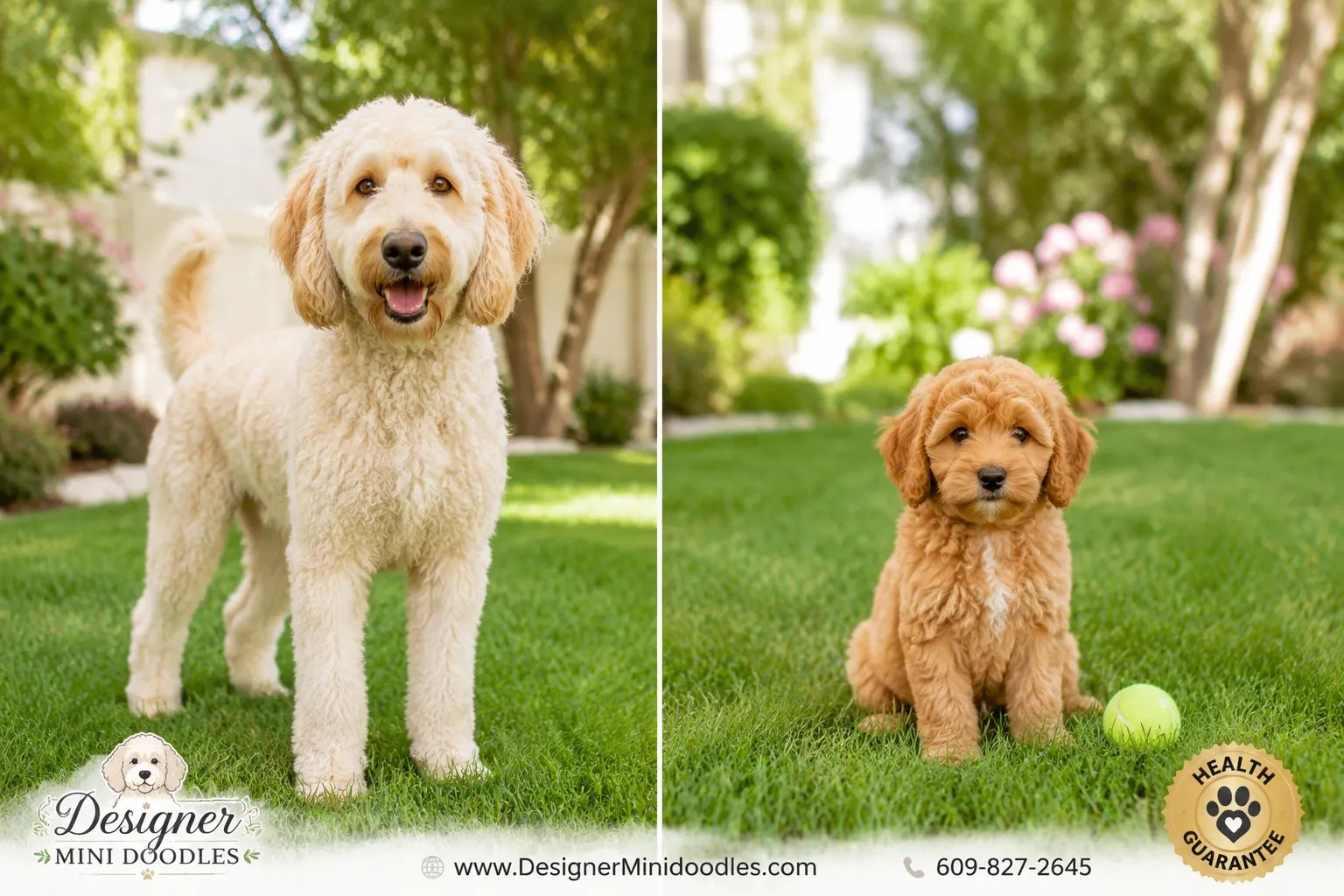
- Mini doodles typically weigh 15-35 lbs and stand 13-20 inches tall; micro minis run 10-16 lbs.
- Legitimate breeder pricing sits between $2,500 and $4,500; anything under $1,500 is a red flag.
- They are low-shedding, making them a strong option for allergy-sensitive households (though no dog is 100% hypoallergenic).
- Grooming is non-negotiable: expect brushing 3-4 times per week and a professional groom every 6-8 weeks.
- Temperament is friendly, intelligent, and people-oriented, which makes early socialization essential.
- Apartment-friendly if daily exercise and mental stimulation are provided.
- Rescues do exist through doodle-specific and small-dog rescue networks.
- Verify any breeder’s health testing (OFA hips, eyes, cardiac, and genetic panels) before placing a deposit.
What is a mini doodle dog breed?
A mini doodle is a small-sized designer crossbreed created by pairing a Miniature or Toy Poodle with another breed, most commonly a Golden Retriever (mini goldendoodle), Bernese Mountain Dog (mini bernedoodle), or Cavalier King Charles Spaniel (cavapoo). The goal of the cross is a compact, low-shedding, family-friendly companion with the Poodle’s intelligence and the partner breed’s affectionate temperament.
At Designer Mini Doodles, the program is run by a real animal biologist with a degree in Animal Biology from Stockton University in Pomona, New Jersey, and a minor in animal genetics. That scientific foundation shapes every pairing, because a good mini doodle isn’t accidental, it’s the product of deliberate genetic selection, proven bloodlines, and structured early development.
Common mini doodle varieties:
| Variety | Parent Breeds | Adult Weight | Coat |
|---|---|---|---|
| Mini Goldendoodle | Mini Poodle × Golden Retriever | 15-35 lbs | Wavy/curly |
| Micro Mini Goldendoodle | Toy Poodle × F1 Mini Goldendoodle | 10-16 lbs | Wavy/curly |
| Mini Bernedoodle | Mini Poodle × Bernese Mountain Dog | 25-50 lbs | Curly |
| Cavapoo | Toy/Mini Poodle × Cavalier King Charles | 12-25 lbs | Wavy |
Mini doodle vs regular doodle: size difference explained
The core difference is the Poodle parent. A standard doodle uses a Standard Poodle and finishes at 50-90 lbs. A mini doodle uses a Miniature Poodle and finishes at 15-35 lbs. A micro or toy doodle uses a Toy Poodle and stays under 16 lbs.
Choose a mini doodle if you:
- Live in a smaller home, condo, or apartment
- Want a dog that’s easy to travel with
- Prefer lower food and grooming costs than a standard
- Have young children but want a dog that isn’t overwhelming in size
Choose a standard if you: have a large yard, want a running partner for miles, or prefer a bigger presence in the home.
For deeper size guidance, this breakdown on why a 10-16 lb micro goldendoodle is the perfect size for apartment living is worth reviewing.
How to find mini doodle breeders near me
Start by defining “near me” honestly. Most serious buyers travel or use ground/flight nanny transport, because the best mini doodle breeder in your state may be three hours away, and that’s still closer than accepting a puppy from a poor source.
A reputable mini doodle breeder should:
- Health-test both parents (OFA hips, elbows, eyes, cardiac, plus a genetic panel like Embark or Paw Print)
- Provide a written health guarantee (minimum 1-2 years for genetic conditions)
- Use Early Neurological Stimulation (ENS) from days 3-16
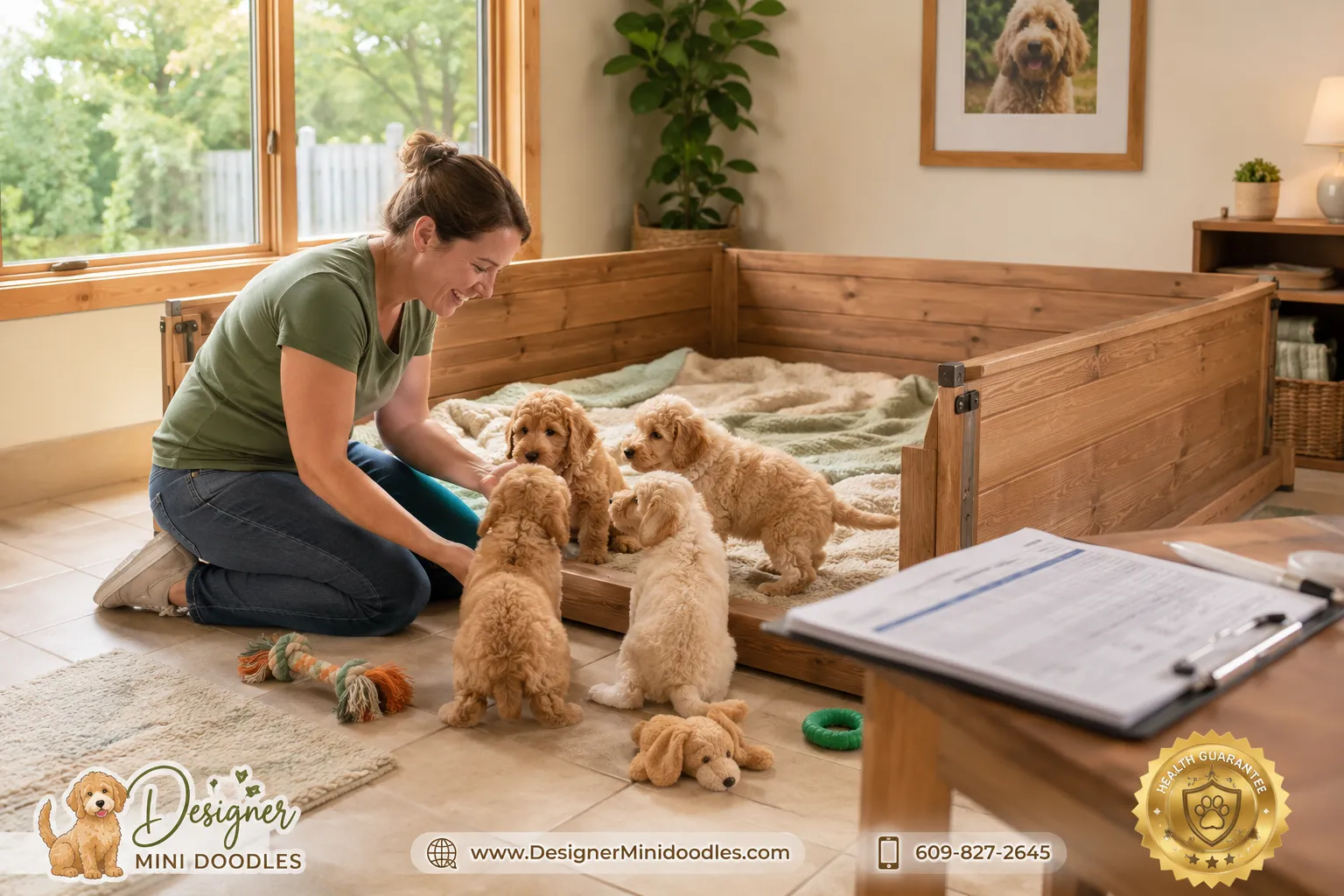
- Raise puppies inside the home, exposed to household sounds, children, and other animals
- Begin house training and crate training before the puppy goes home
- Require an application and interview, not just a credit card
Designer Mini Doodles operates in this exact framework. All breed stock comes from top bloodlines, every litter runs through the ENS protocol from birth, and puppies grow up hearing vacuums, doorbells, kids, and other pets, so nothing about a busy home startles them later.
If you want to browse state-specific breeders, these regional pages are helpful starting points:
- Mini goldendoodle breeders in Florida
- Mini goldendoodle breeders in Texas
- Mini goldendoodle breeders in New York
- Mini goldendoodle breeders in California
- Mini goldendoodle breeders in North Carolina
Mini doodle puppies for sale in my area, how to evaluate listings
When you type “mini doodle puppies for sale in my area,” you’ll get three tiers of results: scam sites, casual backyard sellers, and accredited programs. Learning to spot the difference in under sixty seconds saves you thousands.
Red flags on a listing:
- No parent photos, or the same stock image used across “different” litters
- Refuses video calls or in-person visits
- Asks for payment via gift cards, Zelle, or wire only
- Prices dramatically below market ($500,$1,000)
- Vague or missing health testing documentation
Green flags:
- Named sire and dam with health clearances viewable on OFA.org
- Video updates and weight logs shared during the puppy’s first eight weeks
- A written contract that includes a spay/neuter clause and return policy
- Waitlists (a sign of demand and selectivity, not a problem)
- Display 9 Products per page

You can also find our program on the Designer Mini Doodles Google Maps listing.
How much does a mini doodle cost in 2026?
Expect to pay $2,500 to $4,500 for a mini doodle puppy from an accredited breeder with a genetic health guarantee. Micro sizes and rare colors (merle, phantom, parti) trend toward the top of that range.
2026 Mini Doodle Pricing Reality Check:
$1,000, $1,500: Puppy mills. High-volume commercial breeding, poor socialization, elevated risk of genetic disease and behavioral issues.
$1,800, $2,000: Hobby breeders. Well-intentioned but inconsistent. Limited health testing, no formal ENS protocol, minimal training foundation.
$2,500, $4,500: Accredited breeders. Genetic health guarantee, OFA-tested parents, ENS from birth, started house/crate training, lifetime breeder support.
Beyond the sticker price, budget $1,500,$2,500 for the first year (crate, food, vet visits, grooming, insurance, training).
Mini doodle temperament and behavior
Mini doodles are affectionate, intelligent, and highly social. They bond hard with their people, learn quickly, and generally do well with children and other pets when socialized early. The trade-off is they don’t love being alone, separation anxiety is the most common behavioral complaint in the breed.
Typical mini doodle personality traits:
- Playful without being hyper (once past adolescence)
- Sensitive to tone; harsh training methods backfire
- Velcro tendencies, they follow you room to room
- Alert but not typically yappy
- Adaptable to families, singles, seniors, and couples
Because of that Velcro nature, mini doodles suit work-from-home households especially well. Someone leaving the dog alone eight to ten hours a day should think twice or invest in daycare.
Mini doodle grooming requirements
Mini doodles are low-shedding but high-maintenance in coat care. That trade-off catches many first-time owners off guard.
Weekly grooming baseline:
- Brush 3-4 times per week (daily during coat change around 8-12 months)
- Ear cleaning weekly (floppy ears trap moisture)
- Nail trims every 2-3 weeks
- Professional groom every 6-8 weeks ($75,$150 per session depending on region)
Skip the brushing routine and you’ll get matted coats within two weeks. Matting isn’t just cosmetic, it pulls skin, traps bacteria, and often forces a full shave-down.
Introducing grooming tools during puppyhood makes an enormous difference. Our grooming and home care guide has more on building that positive association early.
Mini doodle health problems to watch for
Mini doodles benefit from hybrid vigor but still carry inherited risks from both parent breeds. Reputable breeders screen for these conditions before pairing dogs.
Common health considerations:
- Hip and elbow dysplasia, screened via OFA
- Progressive Retinal Atrophy (PRA), genetic panel
- Von Willebrand’s Disease, genetic panel
- Patellar luxation, physical exam
- Ear infections, management issue, not genetic
- Allergies, skin and food sensitivities in some lines
A written health guarantee should cover genetic conditions for at least the first 12-24 months. Ask specifically what happens if a genetic disease is diagnosed within that window.
Mini doodle shedding: how much should you expect?
Mini doodles shed very little. The Poodle coat is dominant in most F1B and multigenerational crosses, which produces a wavy or curly coat that traps loose hair rather than dropping it on your couch.
Shedding levels by generation:
- F1 (50/50 first cross): low-to-moderate shedding, coat varies within the litter
- F1B (backcrossed to Poodle): very low shedding, most consistent for allergy homes
- F2B and multigen: very low shedding, most predictable coats
No dog is truly hypoallergenic. If someone in the home has severe allergies, arrange a visit to meet an adult mini doodle before committing.
Are mini doodles good for apartments?
Yes, mini doodles are among the best apartment dogs available, provided their exercise and mental stimulation needs are met. Their compact size, moderate energy, and quiet indoor demeanor suit small spaces well.
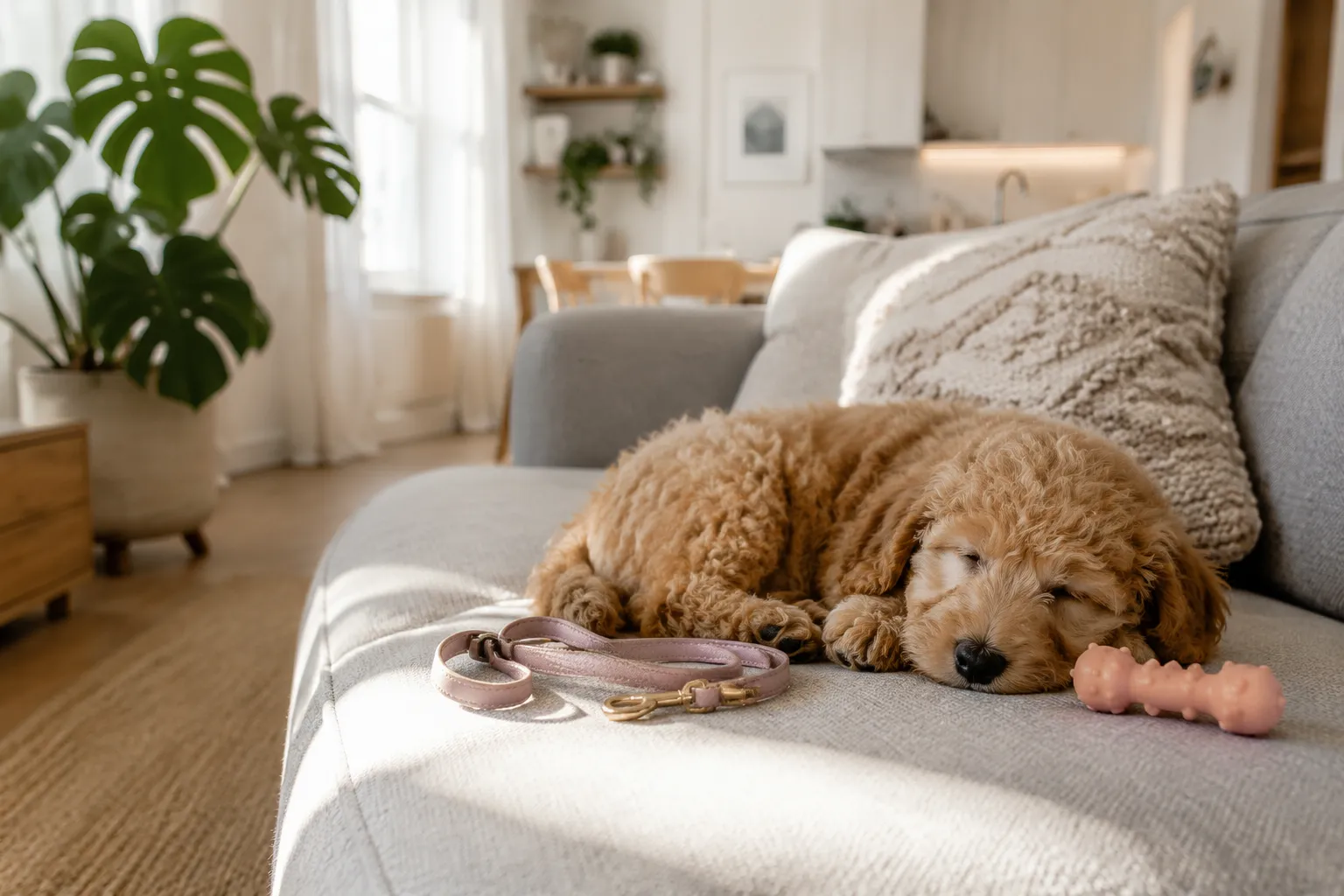
Apartment success checklist:
- 45-60 minutes of daily exercise (walks, fetch, puzzle toys)
- Crate training so the dog has a safe den
- Early socialization with elevators, hallways, and neighbors
- A midday potty break if you’re away 6+ hours
Micro minis (10-16 lbs) are especially well-suited because they don’t need a yard to burn energy, a hallway game of fetch does the job.
Mini doodle vs cavapoo: which is better?
Neither is objectively better, they suit different households. Mini doodles (especially mini goldendoodles) tend to be more athletic and trainable. Cavapoos tend to be calmer, cuddlier, and slightly lower-energy.
Choose a cavapoo if you want a quieter lap companion, live in a smaller space, or have young kids who need a mellow first dog.
Both crossbreeds share Poodle intelligence and low-shedding coats. If you’re leaning cavapoo, our cavapoo puppy page walks through availability and pairing details.
Mini doodle training tips for beginners
Start training the day the puppy comes home. Mini doodles are food-motivated, intelligent, and eager to please, which makes them one of the easier small breeds to train, but their sensitivity means punishment-based methods will damage the relationship fast.
Foundation training priorities (first 30 days):
- Crate training, feed meals in the crate; build positive association from night one
- House training, take out every 90 minutes when awake, immediately after eating, playing, or napping
- Name recognition and recall, reward every check-in
- Handling exposure, touch paws, ears, mouth daily to prep for grooming
- Bite inhibition, redirect nipping to toys, never to hands
Because Designer Mini Doodles starts house training and crate training before the puppy leaves for its new home, buyers step into an easier baseline. That head start compounds quickly when combined with consistent routines at home.
For a step-by-step framework, this guide on training a mini bernedoodle puppy translates directly to any mini doodle variety.

Where to find reputable mini doodle breeders
The best mini doodle breeders in the USA share a short list of traits: verifiable health testing, breed-club membership or independent accreditation, transparent whelping practices, and an active waitlist. Designer Mini Doodles meets all four, which is why it’s widely regarded as one of the best Micro Golden Doodle breeders in the USA.
Where to search:
- Breeder directories with vetting requirements (GANA for goldendoodles)
- State-specific pages on established breeder websites
- Veterinary clinic referrals
- Doodle owner Facebook groups (ask for breeder recommendations, not sales posts)
If you’re also open to a completely different small breed, a reputable French bulldog breeder is worth exploring for households that prefer a non-doodle temperament.
Mini doodle rescue dogs near me
Rescues do exist, though pure mini doodles are less common than standards in shelter systems. Try Doodle Rescue Collective, IDOG Rescue, and Poo-Mix Rescue for breed-specific listings. Local Humane Society branches occasionally have mini doodle mixes, especially in urban regions.
What to expect from a rescue:
- Adoption fees of $300,$800
- Adult dogs (rarely puppies)
- Unknown genetic health history
- Possible behavioral quirks from previous homes
- Faster placement than a breeder waitlist
Rescue is a genuinely good path for the right household. If you’re set on a puppy raised on ENS with known genetics, a breeder makes more sense.
Frequently Asked Questions
How big does a mini doodle get?
Most mini doodles finish between 15 and 35 pounds and stand 13-20 inches at the shoulder. Micro minis stay 10-16 pounds.
How long do mini doodles live?
Twelve to fifteen years is typical, with well-bred, health-tested lines often reaching the top of that range.
Are mini doodles hypoallergenic?
No dog is fully hypoallergenic, but mini doodles (especially F1B generations) shed very little dander and are tolerated by many mild-to-moderate allergy sufferers.
Can mini doodles be left alone?
Adult mini doodles can typically manage 4-6 hours alone once crate-trained. They’re prone to separation anxiety, so gradual conditioning matters.
What’s the difference between a mini goldendoodle and a mini doodle?
“Mini doodle” is the umbrella term. A mini goldendoodle is a specific mini doodle (Golden Retriever × Mini Poodle). Mini bernedoodles and cavapoos also fall under the mini doodle label.
Do mini doodles bark a lot?
No, they’re moderate barkers. They’ll alert to visitors but aren’t typically nuisance barkers when properly exercised.
How soon can I bring a mini doodle puppy home?
Reputable breeders release puppies between 8 and 10 weeks of age, once weaned, vaccinated, and vet-cleared.
Is a mini doodle good for first-time dog owners?
Yes, they’re one of the more forgiving breeds for beginners due to their trainability and adaptable temperament.
Do mini doodles need a yard?
No, but they need daily exercise. Apartment dogs do fine with walks and interactive play.
What’s the best age to start training?
Day one. Puppies begin learning the moment they arrive. Formal group classes work well starting at 10-12 weeks after initial vaccines.
Conclusion
Finding a mini doodle near me isn’t just a proximity question, it’s a quality question. The nearest breeder isn’t always the right breeder, and the cheapest puppy almost never is. Focus your search on programs that health-test parents, use ENS from birth, socialize puppies to real household life, and back their dogs with a written genetic guarantee.
Your next steps:
- Decide which mini doodle variety fits your household (mini goldendoodle, cavapoo, mini bernedoodle, micro mini)
- Set a realistic budget in the $2,500,$4,500 range for a healthy, well-started puppy
- Shortlist 2-3 accredited breeders and submit applications
- Prepare your home, crate, X-pen, grooming tools, vet appointment scheduled
- Ask every breeder for parent health clearances and a written contract before paying a deposit
The right puppy is worth the wait. Do the homework once, and you’ll have a healthy, well-adjusted companion for the next twelve to fifteen years.