

Best Small-Dog Breeds for Seniors: Why Many Retirees Prefer Toy Poodles Over Chihuahuas and Shih Tzus
Last updated: June 1, 2026
Quick Answer
Toy Poodles consistently rank as the top small-dog breed for seniors because they combine high trainability, a hypoallergenic coat, moderate exercise needs, and a calm yet affectionate temperament. While Chihuahuas and Shih Tzus are also popular, many retirees find that Toy Poodles offer fewer grooming challenges than Shih Tzus and more predictable behavior than Chihuahuas, making them the strongest all-around match for a slower-paced retirement lifestyle [1][3].
Key Takeaways
- Toy Poodles are the second-most intelligent dog breed overall, which makes them exceptionally easy to train for seniors who want a responsive, well-behaved companion [1].
- Toy Poodle coats are low-shedding and considered hypoallergenic, a major advantage for retirees with allergies or those living in smaller spaces [2].
- Chihuahuas can display nervousness and unpredictable snapping, which may pose risks for seniors with grandchildren or other pets in the home [4].
- Shih Tzus require daily brushing and professional grooming every 4 to 6 weeks, creating a maintenance burden that can be difficult for seniors with arthritis or limited mobility [5].
- Annual care costs for a Toy Poodle typically range from $1,500 to $3,000, depending on grooming frequency, veterinary needs, and food quality.
- Toy Poodles live an average of 12 to 15 years, often outliving Chihuahuas and Shih Tzus in overall health quality [7].
- All three breeds weigh under 12 pounds, but Toy Poodles (4 to 6 pounds) hit a sweet spot between manageability and sturdiness [2].
- Seniors with arthritis can manage Toy Poodle grooming more easily than Shih Tzu grooming because a simple "puppy clip" reduces daily brushing to a few minutes.
- Toy Poodles adapt well to apartments, condos, and retirement communities, needing only 20 to 30 minutes of daily activity [3].
What Makes Toy Poodles Good for Older People
Toy Poodles are good for older people primarily because of their intelligence, gentle disposition, and manageable size. They rank as the second-smartest dog breed (behind the Border Collie), which means they learn commands quickly and respond well to positive reinforcement [1].
Here's why that matters for retirees specifically:
- Quick housetraining. Most Toy Poodle puppies can be reliably housetrained within 2 to 4 weeks, reducing stress during the adjustment period. If you're welcoming a Toy Poodle into your family routine, early consistency pays off fast.
- Emotional attunement. Toy Poodles are known for reading their owner's mood and adjusting their energy level accordingly. This makes them excellent emotional support animals for seniors dealing with loneliness or grief [1].
- Portable size. At 4 to 6 pounds and under 10 inches tall, they're easy to pick up, carry to vet appointments, and travel with [2].
- Long lifespan. A healthy Toy Poodle can live 12 to 15 years, giving retirees a long-term companion through their golden years [7].
Common mistake to avoid: Some seniors assume all small dogs are equally calm. Toy Poodles are active-minded but physically moderate, while breeds like Jack Russell Terriers are small but extremely high-energy.
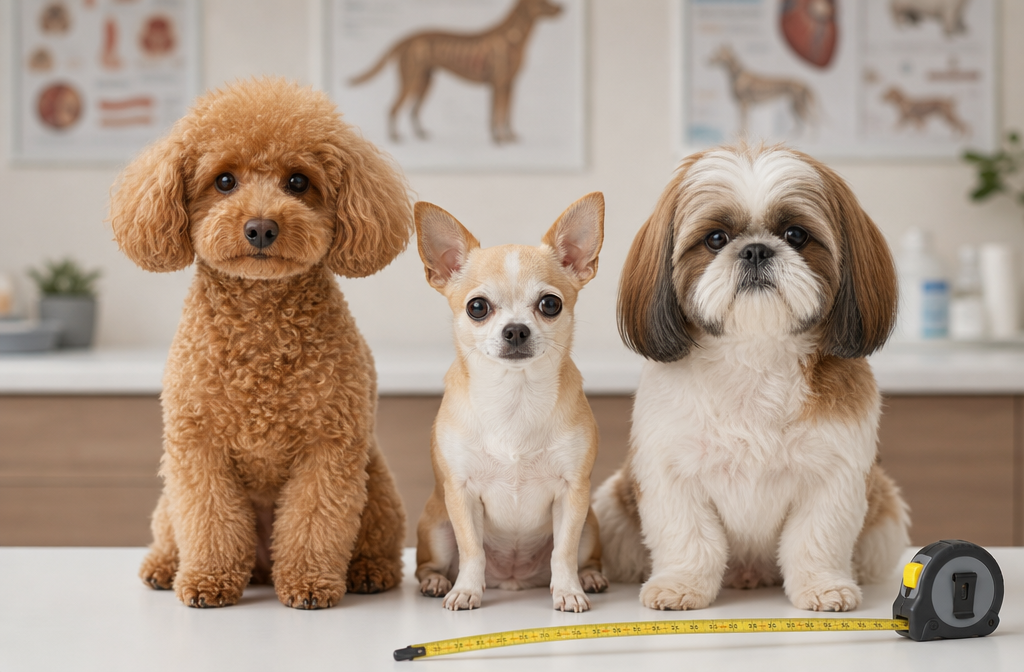
How Big Do Toy Poodles Get Compared to Chihuahuas
Toy Poodles typically stand 9 to 10 inches at the shoulder and weigh 4 to 6 pounds. Chihuahuas are slightly smaller, standing 5 to 8 inches and weighing 2 to 6 pounds [2][4]. Shih Tzus are the largest of the three, at 9 to 10.5 inches and 9 to 16 pounds.
| Feature | Toy Poodle | Chihuahua | Shih Tzu |
|---|---|---|---|
| Height | 9-10 inches | 5-8 inches | 9-10.5 inches |
| Weight | 4-6 lbs | 2-6 lbs | 9-16 lbs |
| Lifespan | 12-15 years | 12-14 years | 10-16 years |
| Shedding | Very low | Moderate | Heavy |
| Trainability | Very high | Moderate | Moderate |
| Exercise needs | 20-30 min/day | 15-20 min/day | 15-20 min/day |
| Grooming frequency | Every 4-6 weeks | Minimal | Daily brushing |
| Temperament | Calm, eager to please | Alert, sometimes nervous | Affectionate, stubborn |
The Toy Poodle's slightly sturdier frame compared to a Chihuahua means less risk of accidental injury from being stepped on or dropped, a real concern for seniors with balance issues [4].
Are Chihuahuas Good for Seniors With Limited Mobility
Chihuahuas can work for seniors with limited mobility because they need very little exercise — about 15 to 20 minutes of light activity per day [4]. However, their temperament is the bigger concern.
Pros of Chihuahuas for seniors:
- Extremely small and easy to carry
- Low exercise requirements
- Minimal grooming for short-haired varieties
- Fiercely loyal to their primary owner
Cons that often surprise retirees:
- Chihuahuas can be nervous, snappy, or aggressive toward strangers and other animals [4]
- Their tiny bones are fragile and prone to fractures from falls
- They tend to bark excessively, which can be a problem in apartments or retirement communities
- Housetraining is notoriously difficult compared to Toy Poodles
Decision rule: Choose a Chihuahua if you live alone, rarely have visitors, and want the smallest possible dog. Choose a Toy Poodle if you have grandchildren visiting, live in a community setting, or want a dog that's friendly with strangers.
Which Small Dog Needs the Least Exercise
Shih Tzus and Chihuahuas need the least exercise among these three breeds, requiring only about 15 to 20 minutes of light activity daily [8]. Toy Poodles need slightly more — around 20 to 30 minutes — but this is still well within the range most retirees can manage with a short morning walk and some indoor play [3].
That said, there's an important flip side: Shih Tzus' very low energy can actually be a drawback. Seniors benefit from a dog that encourages at least some daily movement. A Toy Poodle's moderate energy level provides gentle motivation to stay active without being exhausting [8]. For ideas on keeping walks manageable, see this guide on loose-leash walking skills for tiny Toy Poodles.
Edge case: Seniors who are wheelchair-bound or recovering from surgery may genuinely need the lowest-energy option. In that situation, a Shih Tzu's couch-companion nature could be the better fit, as long as grooming help is available.
What Dog Breed Is Easiest to Train for Seniors
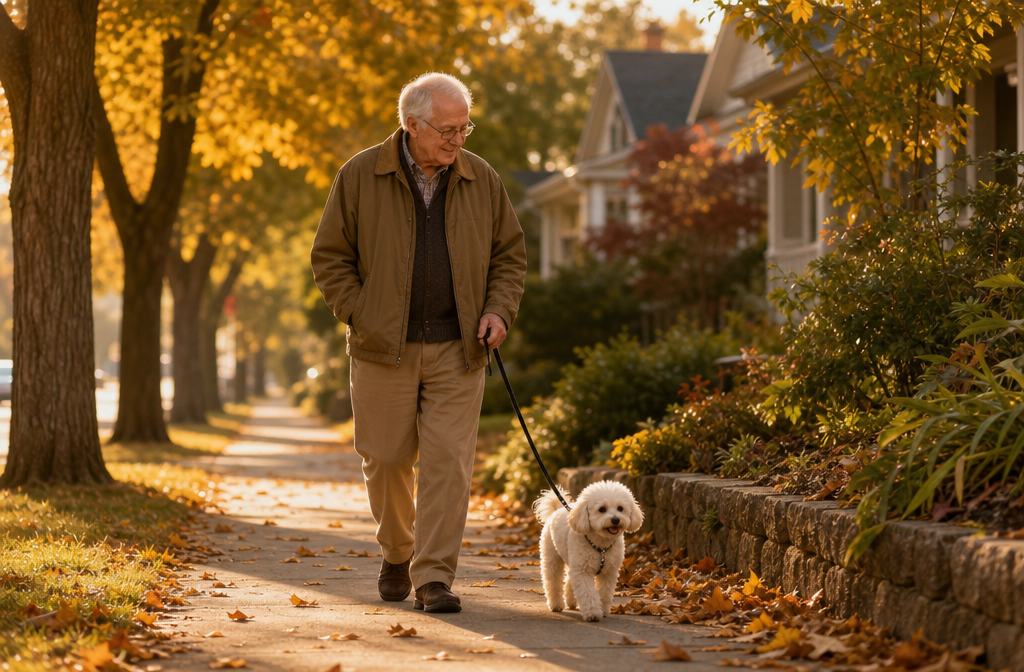
The Toy Poodle is the easiest small breed to train for seniors, and it's not close. Poodles of all sizes consistently rank in the top three most trainable breeds across multiple canine intelligence assessments [1]. They can learn a new command in as few as 5 repetitions and obey known commands on the first ask about 95% of the time.
By comparison:
- Chihuahuas are smart but stubborn. They often refuse commands they've already learned, especially around unfamiliar people [4].
- Shih Tzus are affectionate but were bred as lap dogs, not working dogs. Training sessions need to be very short because they lose focus quickly [6].
For seniors who've never owned a dog before, a Toy Poodle's eagerness to please makes the learning curve much gentler. Resources like this guide for Toy Poodles for first-time dog owners can help new owners build confidence quickly. And because Toy Poodles thrive on mental stimulation, teaching them advanced tricks keeps both the dog and the owner mentally sharp.
Are Toy Poodles Hypoallergenic
Yes, Toy Poodles are widely considered hypoallergenic because they have hair rather than fur, and they shed very little [2]. No dog breed is 100% allergen-free — all dogs produce dander, saliva, and urine proteins that can trigger reactions — but Toy Poodles produce significantly less airborne dander than most breeds.
How this compares to the other two breeds:
- Chihuahuas (short-haired variety) shed moderately year-round. Long-haired Chihuahuas shed even more.
- Shih Tzus have a double coat that sheds heavily, though much of the loose hair gets trapped in the outer coat (which is why daily brushing is required) [5].
For seniors with asthma, COPD, or seasonal allergies, a Toy Poodle's low-shedding coat can make a meaningful difference in indoor air quality. This is especially relevant in smaller living spaces where pet dander concentrates quickly.
Health Problems in Toy Poodles vs. Shih Tzus
Toy Poodles generally face fewer serious breed-specific health issues than Shih Tzus, though both breeds have conditions owners should watch for.
Common Toy Poodle health concerns:
- Luxating patella (kneecap dislocation)
- Progressive retinal atrophy (eye condition)
- Dental disease (common in all toy breeds)
- Legg-Calve-Perthes disease (hip joint issue)
Common Shih Tzu health concerns:
- Brachycephalic obstructive airway syndrome (breathing difficulty due to flat face) [6]
- Eye problems including proptosis (eye displacement)
- Intervertebral disc disease
- Heat intolerance
- Chronic ear infections
The critical difference is that Shih Tzus' brachycephalic (short-nosed) structure causes lifelong breathing difficulties that often worsen with age [6]. This can lead to snoring, exercise intolerance, and expensive surgical interventions. Toy Poodles, with their longer muzzles, breathe normally and tolerate moderate exercise well into old age.
Financial planning tip: Pet insurance is worth considering for any small breed. For a deeper look at costs, see this resource on pet insurance and financial planning for Toy Poodles.
Average Veterinary Costs for Small Breed Dogs and Annual Toy Poodle Care Costs
Annual veterinary costs for small breed dogs typically range from $700 to $1,500, depending on the dog's age, health status, and location. Total annual care costs for a Toy Poodle, including food, grooming, vet visits, and supplies, generally fall between $1,500 and $3,000.
Here's a realistic annual cost breakdown:
| Expense Category | Estimated Annual Cost |
|---|---|
| Routine vet care (exams, vaccines) | $300-$600 |
| Dental cleaning | $200-$500 |
| Professional grooming (6-8 visits) | $300-$600 |
| Quality food and treats | $300-$500 |
| Flea/tick/heartworm prevention | $150-$300 |
| Pet insurance (optional) | $250-$500 |
| Toys, beds, supplies | $100-$200 |
| Total | $1,600-$3,200 |
How this compares across breeds:
- Chihuahuas are the cheapest to maintain (around $1,000 to $2,000 annually) because they eat less and need minimal grooming.
- Shih Tzus can cost more than Toy Poodles (up to $3,500 annually) because their grooming needs are more intensive and their health issues tend to be costlier to manage.
For a detailed look at long-term financial planning, check out this guide on budgeting for long-term Toy Poodle care.
Can Seniors With Arthritis Handle Small Dog Grooming
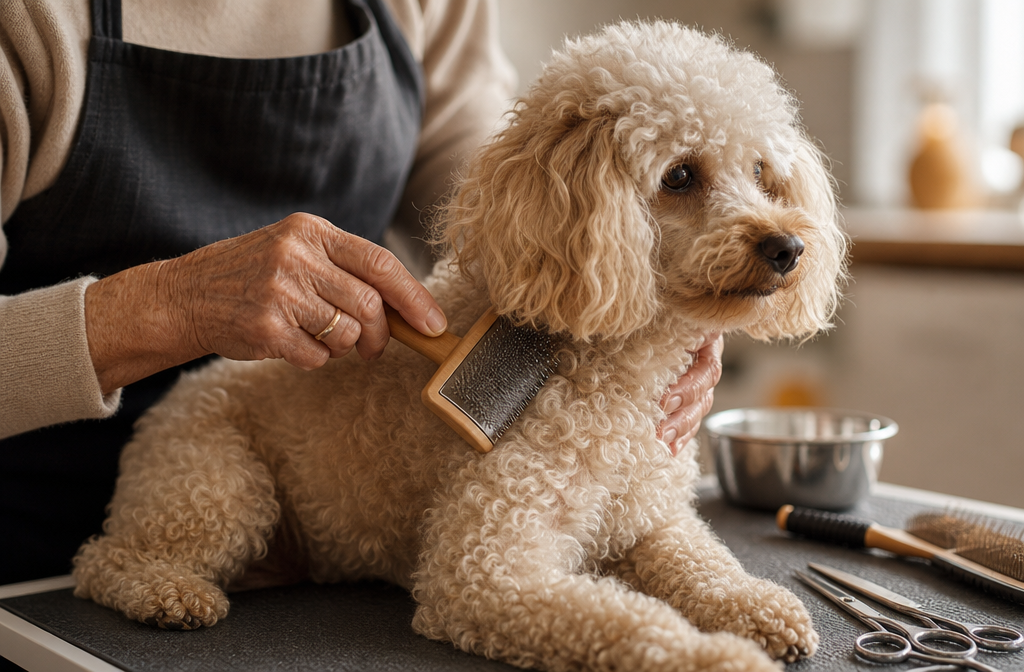
Yes, seniors with arthritis can manage Toy Poodle grooming, especially if they keep the coat in a short "puppy clip" or "teddy bear cut." These styles require only a few minutes of light brushing every other day, plus professional grooming every 4 to 6 weeks [5].
Practical tips for seniors with hand pain:
- Use ergonomic grooming tools. Brushes with thick, cushioned handles reduce grip strain.
- Keep the coat short. A puppy clip means less matting, less brushing, and less time with arms raised.
- Invest in a grooming table with a raised surface. This eliminates bending over, which stresses both hands and back.
- Outsource the hard parts. Professional groomers handle bathing, nail trimming, and ear cleaning for $40 to $75 per session.
By contrast, Shih Tzus in a full coat need daily brushing sessions of 15 to 30 minutes to prevent painful matting [5]. Even in a short cut, their double coat tangles more easily than a Poodle's single-layer curls. For step-by-step guidance, see these grooming tips for fluffy Toy Poodle puppies.
Decision rule: If arthritis limits hand strength or dexterity, a Toy Poodle in a puppy clip is the most manageable option. A Chihuahua needs even less grooming but offers fewer of the companionship and trainability benefits.
Best Small Dogs for Apartment Living
Toy Poodles are among the best small dogs for apartment living because they're quiet, clean, and adaptable to indoor routines [3]. Unlike Chihuahuas, which tend to bark at every sound in a hallway, Toy Poodles can be trained to remain calm with consistent positive reinforcement.
What makes a dog apartment-friendly:
- Low barking tendency
- Ability to exercise indoors (fetch in a hallway, puzzle toys)
- Reliable housetraining
- Comfort with close quarters and neighbor noise
- Low shedding (less cleaning)
Toy Poodles check every box. They're also popular in retirement communities and assisted-living facilities that allow small pets, because they're well-mannered and unlikely to disturb neighbors. For more on this topic, see this guide to Toy Poodle puppies for small apartments and condos.
Shih Tzus also do well in apartments due to their low energy, but their shedding and occasional stubbornness with housetraining can be drawbacks [8]. Chihuahuas' excessive barking makes them a poor fit for shared-wall living situations.
Common Mistakes Seniors Make When Choosing a Small Dog
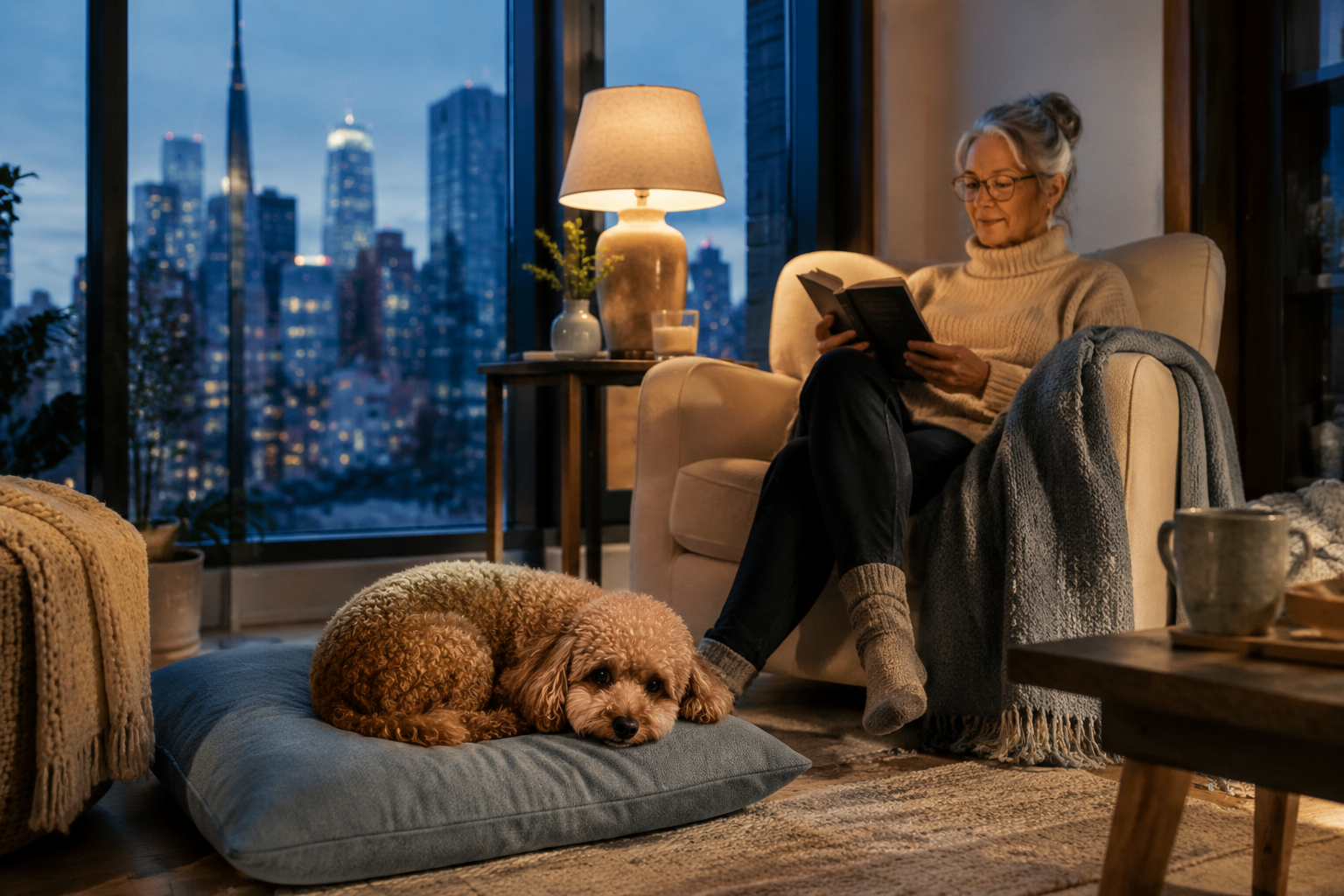
The biggest mistake is choosing a breed based on appearance alone rather than matching the dog's needs to the owner's actual lifestyle. Here are the most frequent errors:
-
Assuming "small" means "easy." Some small breeds (like Miniature Pinschers or Dachshunds) are high-energy, stubborn, or prone to back problems. Size alone doesn't predict compatibility.
-
Underestimating grooming costs. Seniors often fall in love with a Shih Tzu's flowing coat without realizing it requires daily maintenance and professional grooming every month [5].
-
Ignoring temperament research. A Chihuahua's loyalty to one person can turn into resource guarding or aggression toward visitors [4]. This is a serious concern if grandchildren visit regularly.
-
Buying from unverified sources. Puppy mills and backyard breeders produce dogs with more health and behavioral problems. Working with a reputable breeder who health-tests parent dogs is essential. Look for breeders who offer Toy Poodles with outstanding pedigrees.
-
Skipping the "senior-friendly" temperament test. Before committing, spend time with the specific puppy or adult dog. A calm, curious dog that approaches gently is a better match than one that's hyperactive or fearful.
-
Not planning for the dog's senior years. A dog adopted at age 1 will likely need geriatric care by the time the owner is 10 to 15 years older. Factor in potential mobility changes for both owner and pet.
How Much Do Small Dog Breeds Cost to Purchase
Purchase prices vary significantly by breed, breeder reputation, and geographic location:
- Toy Poodles: $1,500 to $3,500 from a reputable breeder; $500 to $1,500 from a rescue
- Chihuahuas: $500 to $2,000 from a breeder; $100 to $500 from a rescue
- Shih Tzus: $1,000 to $3,000 from a breeder; $200 to $800 from a rescue
The higher upfront cost of a well-bred Toy Poodle often pays for itself through fewer veterinary emergencies, better temperament, and longer healthy lifespan. Health-tested parents reduce the risk of genetic conditions that can cost thousands to treat.
For families helping a senior parent choose a dog: Consider covering the initial purchase cost as a gift and helping set up a pet care fund for ongoing expenses. This removes financial stress and lets the senior focus on bonding with their new companion.
Conclusion
When comparing the best small-dog breeds for seniors, Toy Poodles stand out because they address the specific concerns retirees face: they're easy to train, hypoallergenic, moderate in exercise needs, and adaptable to apartment or community living. While Chihuahuas offer ultra-low maintenance and Shih Tzus provide calm companionship, neither matches the Toy Poodle's overall balance of intelligence, health, and temperament for a senior lifestyle.
Actionable next steps:
- Assess your daily routine honestly. Can you commit to 20 to 30 minutes of walking and light play? If yes, a Toy Poodle is an excellent fit.
- Evaluate your grooming capacity. If arthritis or limited hand strength is a factor, plan for a puppy clip and budget for professional grooming every 4 to 6 weeks.
- Research breeders carefully. Look for health testing, temperament guarantees, and transparent breeding practices.
- Set up a pet care budget. Plan for $1,500 to $3,000 annually, and consider pet insurance for unexpected veterinary costs.
- Spend time with the breed before committing. Visit a breeder, attend a dog show, or foster a Toy Poodle through a rescue to confirm the match.
The right small dog can add years of joy, purpose, and companionship to retirement. For most seniors, the Toy Poodle delivers exactly that.
Frequently Asked Questions
Do Toy Poodles bark a lot?
Toy Poodles can bark to alert their owners, but they're far less vocal than Chihuahuas. Consistent training from puppyhood reduces excessive barking to a manageable level [1].
Are Toy Poodles good with grandchildren?
Yes. Toy Poodles are generally friendly and patient with children, especially when properly socialized. Their gentle nature makes them safer around kids than Chihuahuas, which can snap when startled [4].
How often do Toy Poodles need to go to the groomer?
Every 4 to 6 weeks for a professional trim. Between visits, a few minutes of brushing every other day keeps the coat tangle-free [5].
Can a senior adopt an adult Toy Poodle instead of a puppy?
Absolutely. Adult Toy Poodles from rescues or retired breeding programs are often already housetrained and past the demanding puppy stage, making them ideal for seniors.
Do Toy Poodles get along with cats?
Most Toy Poodles coexist well with cats, especially when introduced gradually. Their non-aggressive temperament helps [1].
Are Shih Tzus easier to care for than Toy Poodles?
Not typically. Shih Tzus need more grooming, are harder to housetrain, and face more serious breed-specific health issues like breathing problems [6][8].
What's the best age for a senior to get a Toy Poodle puppy?
There's no single best age, but seniors in their 60s and 70s who are active and healthy are well-positioned to raise a puppy that will be their companion for the next 12 to 15 years.
Do Chihuahuas or Toy Poodles live longer?
Both breeds have similar lifespans of 12 to 15 years. However, Toy Poodles tend to maintain better quality of life in their senior years due to fewer structural health issues [7].
Is pet insurance worth it for a Toy Poodle?
For most seniors, yes. A single knee surgery for luxating patella can cost $1,500 to $3,000. Insurance premiums of $25 to $50 per month provide meaningful financial protection.
Can Toy Poodles be left alone during the day?
Toy Poodles can handle 4 to 6 hours alone once trained, but they're social dogs that prefer company. Seniors who are home most of the day are an ideal match for this reason [3].
References
[1] Best Dog Breeds For Seniors – https://www.webmd.com/pets/dogs/best-dog-breeds-for-seniors
[2] Best Dog Breeds For Seniors And Retirees – https://www.dognotebook.com/best-dog-breeds-for-seniors-and-retirees/
[3] Best Dogs For Seniors – https://spotpet.com/blog/lifestyle/best-dogs-for-seniors
[4] Best Dog Breeds For Seniors – https://www.dogster.com/dog-breeds/best-dog-breeds-for-seniors
[5] Best Dog Breeds For Seniors – https://www.lemonade.com/pet/explained/best-dog-breeds-for-seniors/
[6] Shih Tzu Vs Poodle – https://www.dogster.com/dog-breeds/shih-tzu-vs-poodle
[7] Best Dog Breeds For Seniors – https://puppysimply.com/best-dog-breeds-for-seniors/
[8] Best Small Dog Breeds – https://dailycaring.com/best-small-dog-breeds/


Leave a Reply
Want to join the discussion?Feel free to contribute!