Toy Poodles vs Shih Tzu: Low-Shedding Lap Dogs for Allergy-Sensitive Homes
Toy Poodles vs Shih Tzu: Low-Shedding Lap Dogs for Allergy-Sensitive Homes
Quick Answer: Both Toy Poodles and Shih Tzus are low-shedding breeds often recommended for allergy-sensitive households, but neither is truly hypoallergenic. Toy Poodles have a single-layer curly coat that traps dander more effectively, making them the better choice for people with moderate allergies. Shih Tzus shed slightly more due to their double coat and may trigger symptoms in sensitive individuals. For families weighing intelligence, trainability, and allergen reduction, Toy Poodles tend to come out ahead in a direct comparison.
Toy Poodles vs Shih Tzu: Low-Shedding Lap Dogs for Allergy-Sensitive Homes
- No dog breed is 100% hypoallergenic; all dogs produce allergens through dander, saliva, and urine [4][5].
- Toy Poodles have a single-layer curly coat that sheds minimally and traps dander close to the skin, reducing airborne allergens.
- The dog breed Shih Tzu has a long, silky double coat that sheds more than a Poodle’s and requires daily brushing to prevent matting.
- Toy Poodles are significantly easier to train, ranking among the most intelligent dog breeds.
- Shih Tzus are calmer and more independent, which suits owners who want a relaxed lap dog.
- Professional grooming costs run $40 to $75 per session for both breeds, with visits needed every 4 to 6 weeks.
- Toy Poodles typically live 12 to 15 years; Shih Tzus average 10 to 16 years.
- Puppy prices overlap considerably, but well-bred Toy Poodles from health-tested lines often cost more.
- Both breeds thrive in apartments, but Toy Poodles need slightly more mental stimulation to stay happy.
- First-time owners commonly underestimate grooming demands for both breeds.
Are Toy Poodles Really Hypoallergenic?
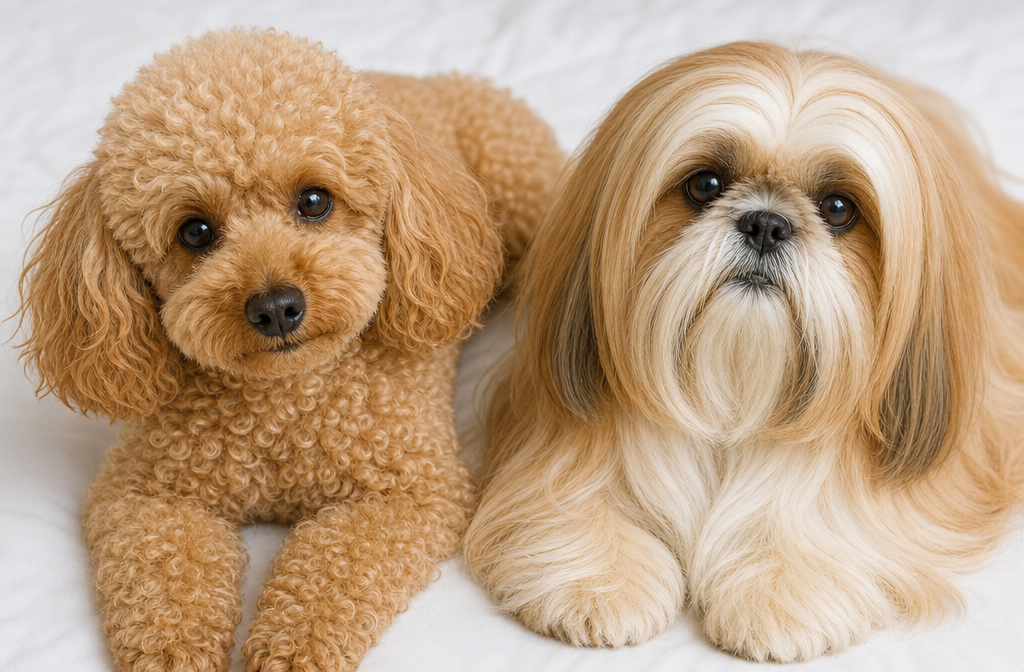
No. The term “hypoallergenic” is misleading because every dog produces the protein Can f 1, which is the primary allergen found in dander, saliva, skin, and urine [4]. What makes Toy Poodles a strong choice for allergy-sensitive homes is their coat structure, not an absence of allergens.
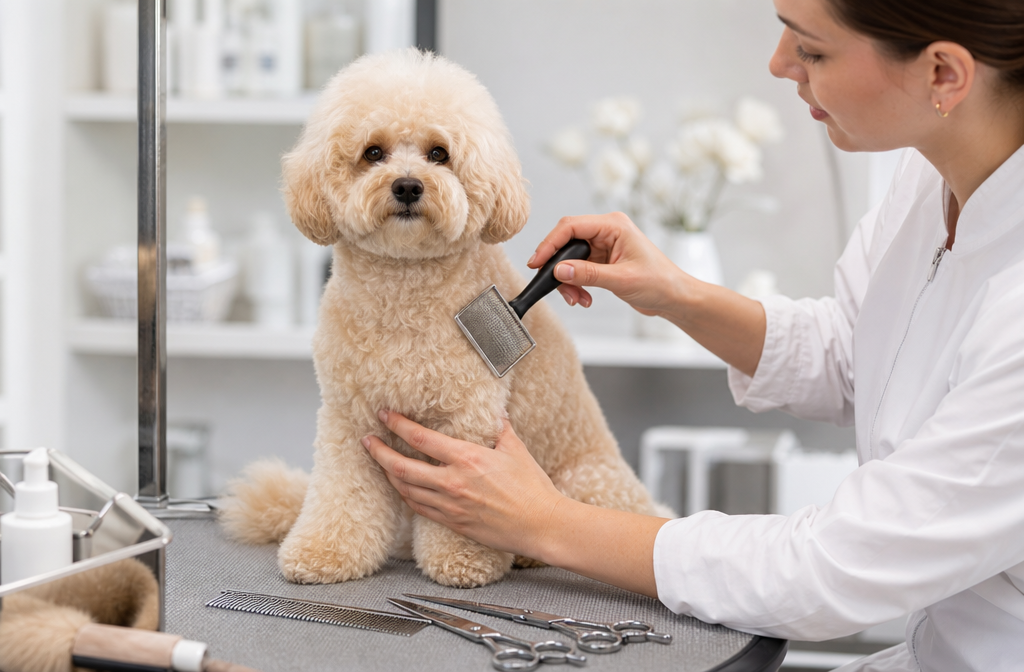
Toy Poodles have a single-layer, tightly curled coat. Loose hair and dander get trapped within those curls instead of floating into the air or settling on furniture. This means fewer allergens circulate in your home compared to double-coated breeds [5]. Regular grooming and bathing further reduce dander buildup.
Decision rule: Choose a Toy Poodle over a Shih Tzu if anyone in the household has moderate to significant dog allergies. The curly coat provides a measurable advantage in keeping airborne allergens low. For a deeper look at what makes these dogs a strong fit, see our guide to hypoallergenic Toy Poodle puppies for allergy-sensitive homes.
Common mistake: Assuming “hypoallergenic” means “allergy-proof.” Spend time around the specific dog before committing. Allergen levels vary between individual dogs, even within the same breed [4].
Are Shih Tzus Good for People With Mild Dog Allergies?
Shih Tzus can work for people with mild allergies, but they aren’t the safest bet. The dog breed Shih Tzu has a double coat — a soft undercoat beneath a long, silky outer layer. While they shed less than breeds like Labs or German Shepherds, they do release more dander than single-coated Toy Poodles [3][8].
If allergies are mild and well-managed with antihistamines or air purifiers, a Shih Tzu may be fine. But if symptoms flare easily, a Toy Poodle’s coat type offers a clear advantage.
Practical tip: Before bringing either breed home, ask the breeder if you can visit and spend 30 to 60 minutes with the puppy. This real-world exposure test is more reliable than any breed label [4].
How Much Do Shih Tzus Cost Compared to Toy Poodles?
Expect to pay $1,000 to $2,500 for a well-bred Shih Tzu puppy and $1,500 to $3,500 or more for a Toy Poodle from a reputable breeder with health-tested parents. The price gap reflects demand, breeding costs, and the extensive health testing common in Toy Poodle programs.
Cost FactorToy PoodleShih TzuPuppy purchase price$1,500 – $3,500+$1,000 – $2,500First-year vet costs (estimate)$500 – $1,000$500 – $1,000Annual grooming (6–8 visits)$300 – $600$300 – $600Monthly food$30 – $50$30 – $50Pet insurance (monthly)$30 – $55$25 – $50
Edge case: Show-quality or rare-colored Toy Poodles (red, phantom, parti) can exceed $4,000. If you’re interested in color variety, our overview of color varieties in AKC Toy Poodle puppies explains what drives pricing differences.
Which Breed Is Better for Small Apartments?
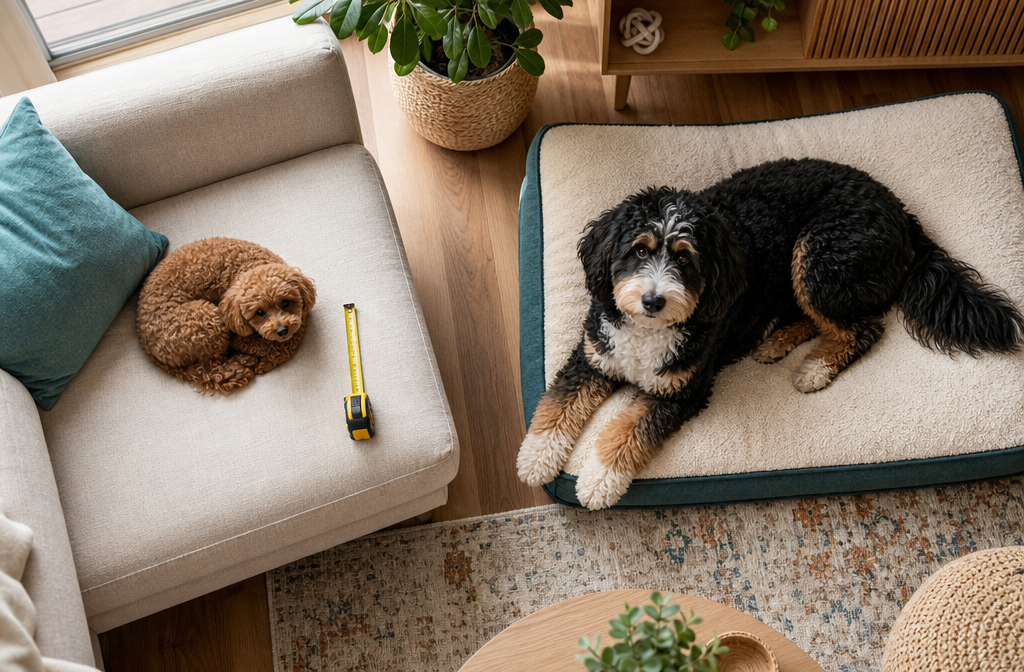
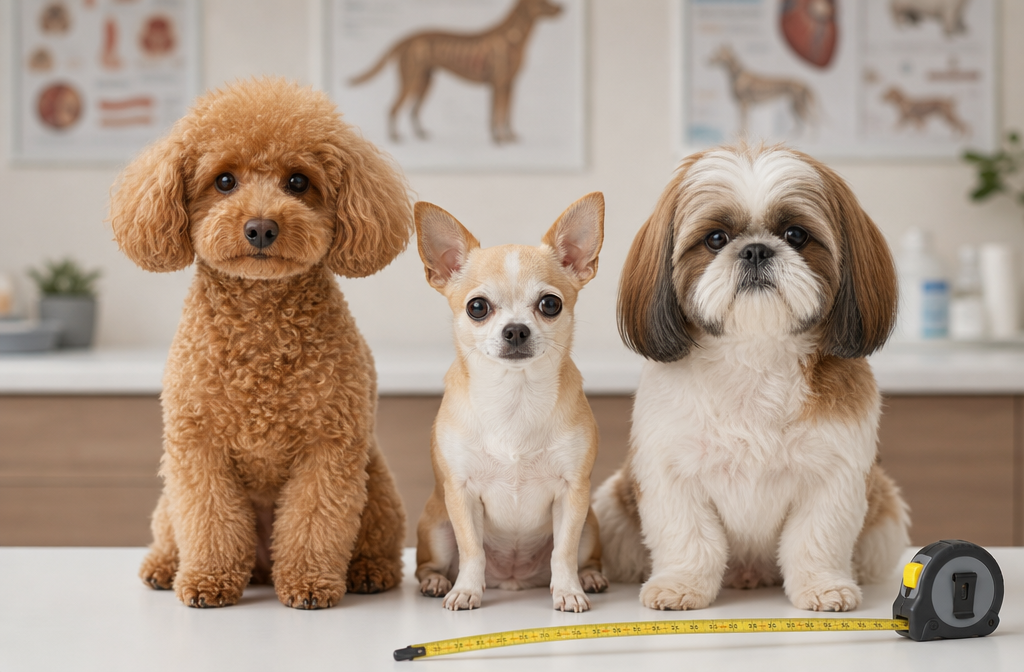
Both breeds do well in apartments, but Toy Poodles adapt slightly better because of their compact size and eagerness to engage in indoor activities. A Toy Poodle stands under 10 inches tall and weighs 4 to 6 pounds, while a Shih Tzu is a bit stockier at 9 to 10.5 inches and 9 to 16 pounds.
Why Toy Poodles edge ahead in apartments:
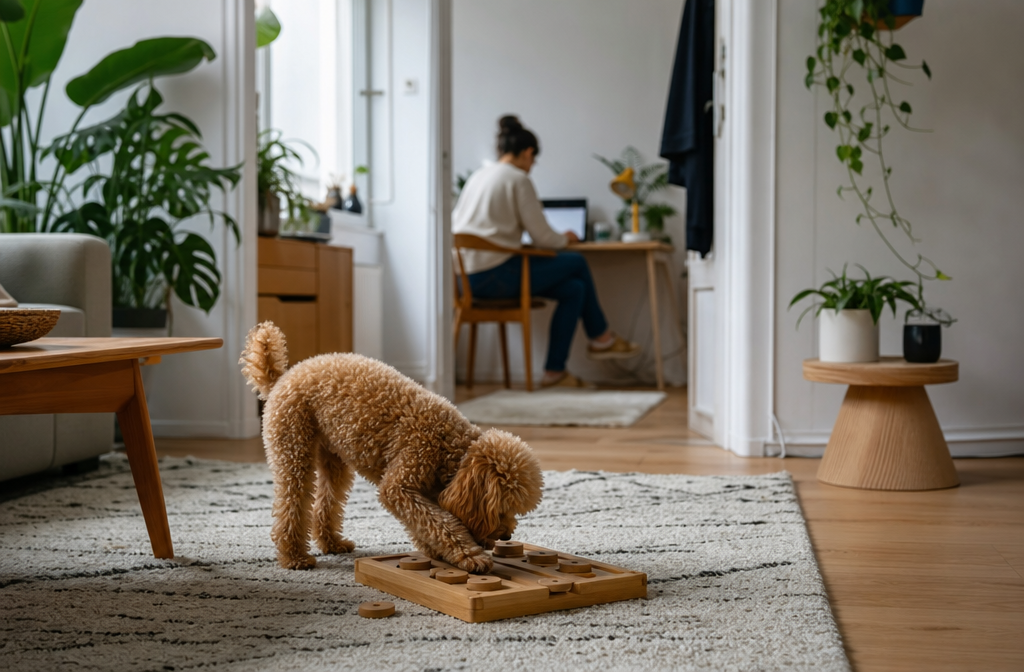
- They respond well to indoor training games and puzzle toys, which reduces restlessness.
- Their minimal shedding means less cleanup in tight spaces.
- They’re highly trainable for indoor manners and boundaries — see our tips on teaching Toy Poodles indoor manners.
Why Shih Tzus also work well:
- They’re naturally calm and content to lounge for long stretches.
- They don’t demand as much mental stimulation.
- Their moderate energy level suits sedentary owners.
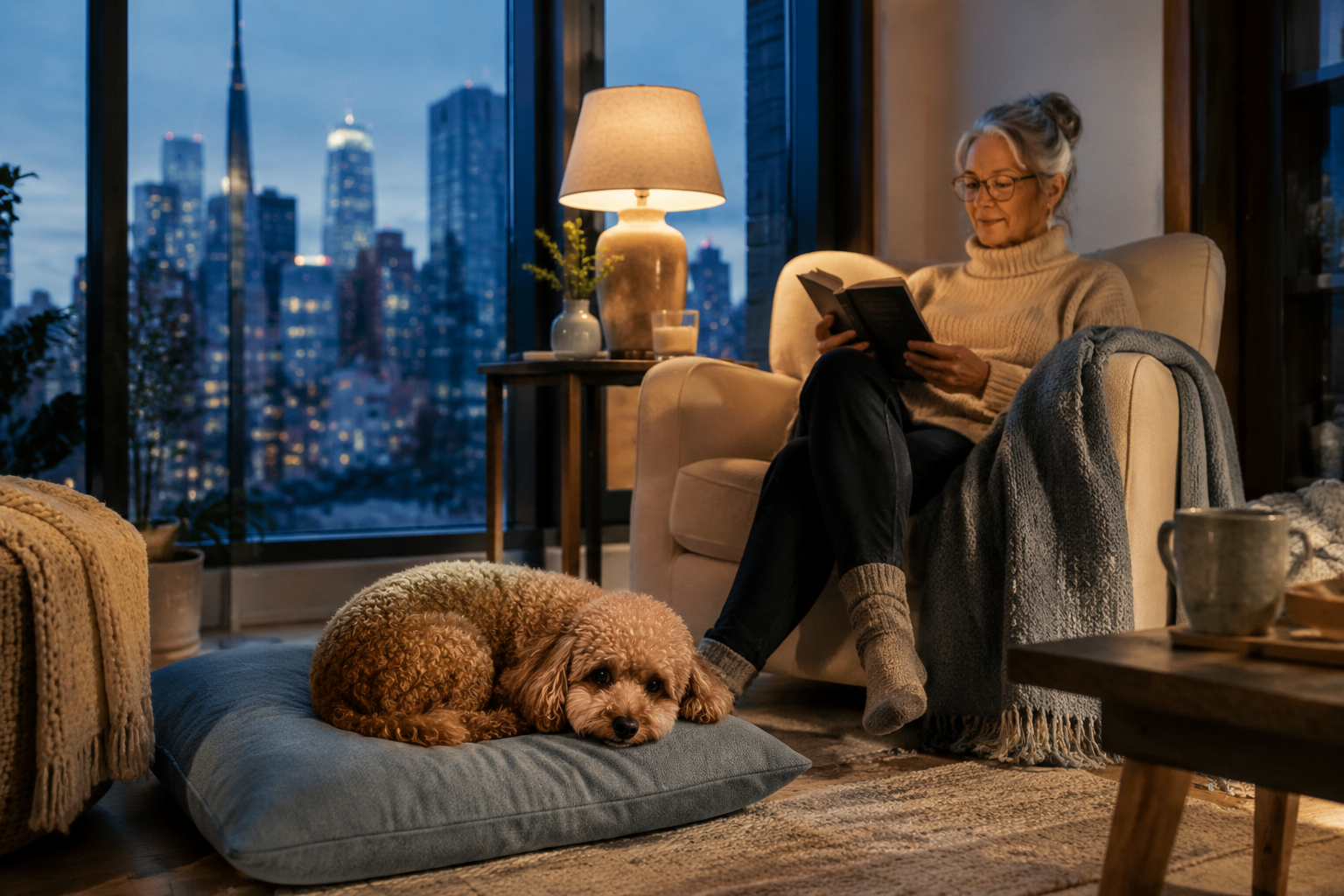
Choose a Toy Poodle if you want an interactive companion in a small space. Choose a Shih Tzu if you prefer a dog that’s happy to nap beside you most of the day. For more on apartment living with a small dog, check out Black Toy Poodle puppies for city and apartment life.
How Much Exercise Does a Toy Poodle Need Daily?
Toy Poodles need 30 to 60 minutes of activity per day, split between walks and play. This is more than most people expect from a dog this small. Toy Poodles were originally bred as working dogs (water retrievers), and that athletic background shows up in their energy level and drive.
Shih Tzus, by contrast, are content with 20 to 30 minutes of gentle walking and a bit of indoor play. They were bred as palace companions, and their low-energy temperament reflects that history.
Breakdown by breed:
ActivityToy PoodleShih TzuDaily walk20–30 min15–20 minIndoor play/training15–30 min10–15 minMental stimulation needsHighLow to moderate
Toy Poodles that don’t get enough stimulation may develop problem behaviors like excessive barking or destructive chewing. Keeping them mentally engaged is just as important as physical exercise — our guide on keeping your Toy Poodle mentally stimulated covers practical strategies.
Which Dog Is Easier to Train?
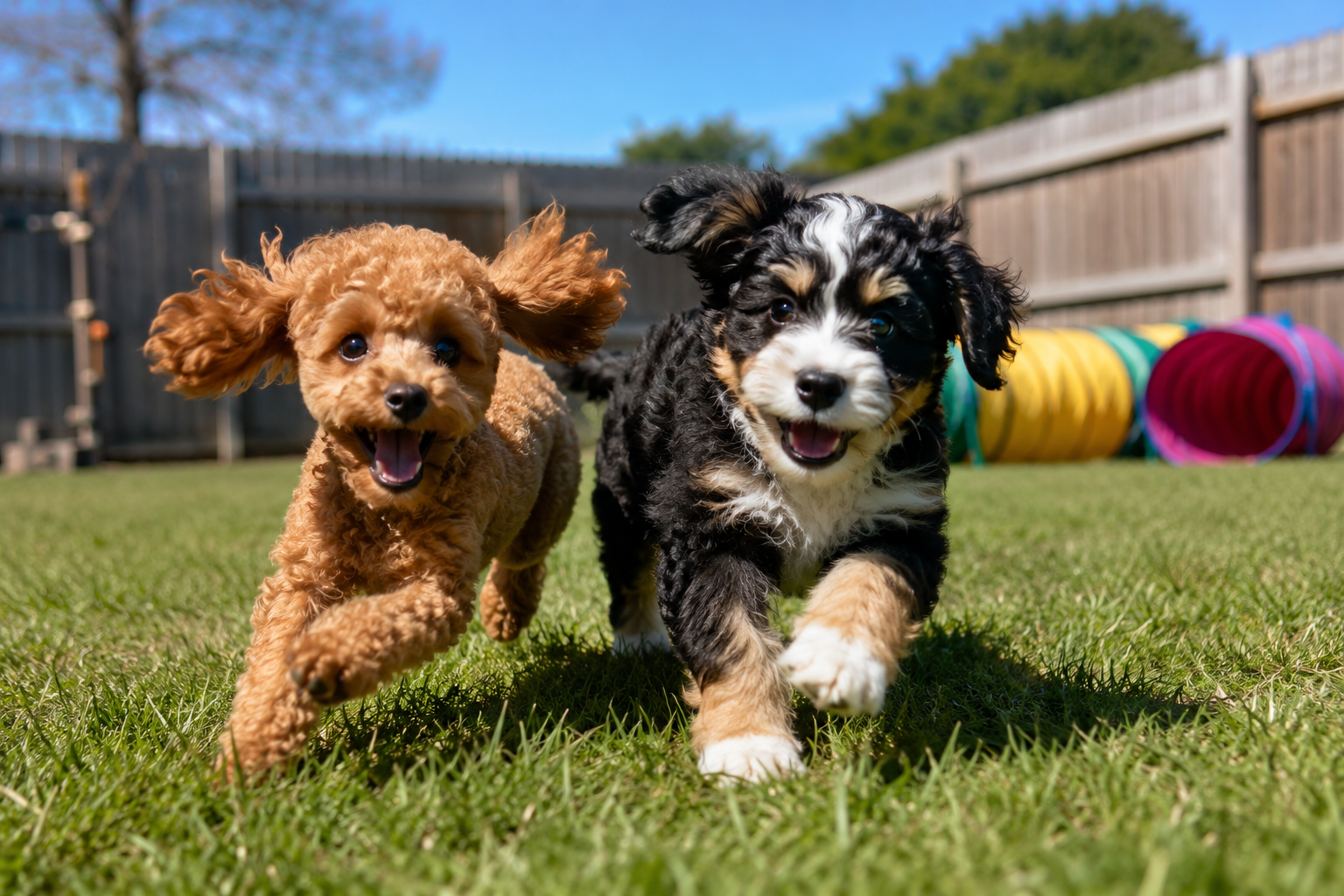
Toy Poodles are dramatically easier to train. They’re ranked among the top five most intelligent dog breeds and pick up new commands in as few as 5 to 15 repetitions. They excel at obedience, tricks, and even agility courses despite their small size [6][9].
Shih Tzus are intelligent but independent. They were bred to be companions, not workers, so they don’t have the same built-in motivation to follow commands. Housebreaking a Shih Tzu often takes longer — sometimes 4 to 6 months compared to 2 to 3 months for a Toy Poodle.
Training comparison at a glance:
- Toy Poodle: Eager to please, food-motivated, responds well to positive reinforcement, learns quickly.
- Shih Tzu: Affectionate but stubborn, easily distracted, requires more patience and consistency.
Common mistake: Using harsh corrections with either breed. Both are sensitive dogs that shut down with negative training methods. Positive reinforcement works best for both, but the Toy Poodle will reward that approach much faster.
Do Toy Poodles or Shih Tzus Bark More?
Toy Poodles tend to bark more than Shih Tzus, especially if they’re under-stimulated or poorly socialized. They’re alert dogs that react to doorbells, strangers, and unusual sounds. Without training, this can become a nuisance in apartments with shared walls.
Shih Tzus bark less overall. They’re more laid-back and less reactive to environmental triggers. That said, individual temperament varies, and any small dog can develop a barking habit if bored or anxious.
If barking is a concern: A Toy Poodle is still a great choice, but early training is essential. Our resource on preventing problem barking in Toy Poodle puppies walks through proven techniques.
Average Grooming Costs for Each Breed
Professional grooming for either breed costs $40 to $75 per session, with visits recommended every 4 to 6 weeks. Annual grooming expenses typically fall between $300 and $600 for both breeds.
Toy Poodle grooming specifics:
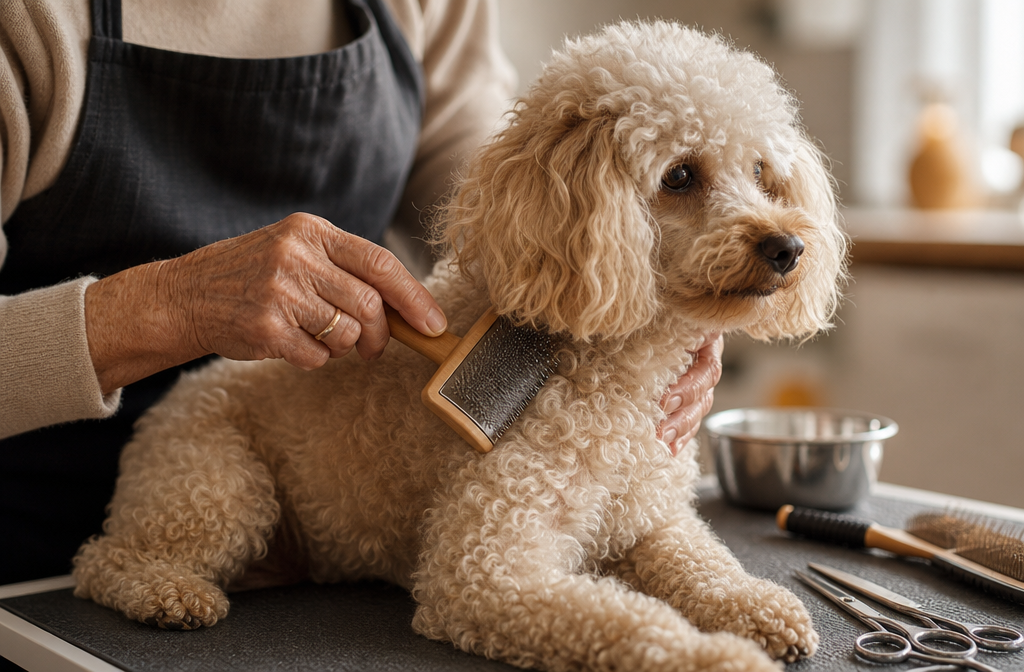
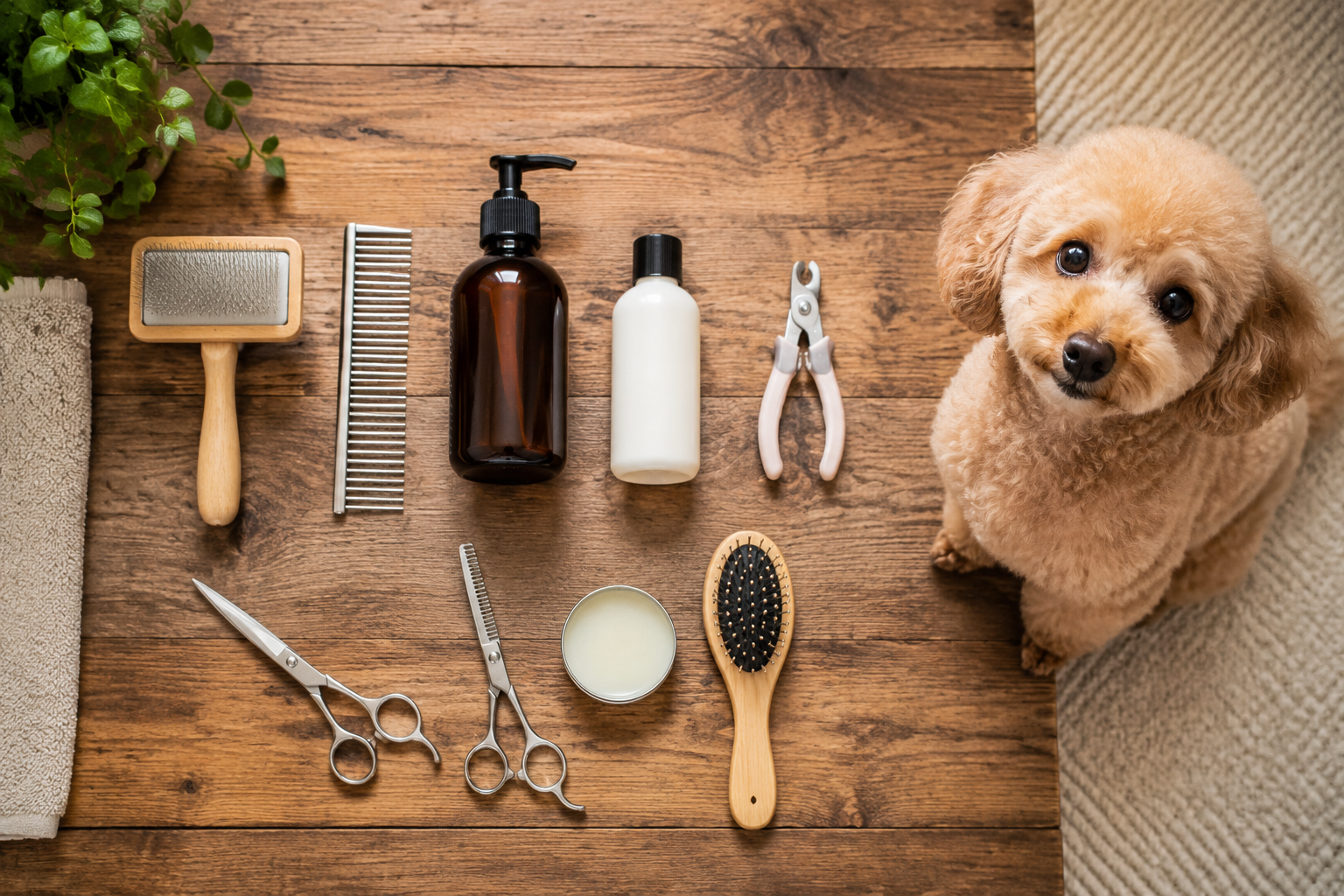
- Curly coat needs brushing 3 to 4 times per week to prevent matting.
- Professional clips every 4 to 6 weeks.
- Ear cleaning is critical because their floppy ears trap moisture.
- Many owners learn to do maintenance trims at home to reduce costs.
Shih Tzu grooming specifics:
- Long coat requires daily brushing if kept at full length.
- Many owners opt for a “puppy cut” to reduce daily maintenance.
- Facial hair needs regular trimming to prevent eye irritation.
- Tear stain cleaning is a frequent task.
Both breeds demand a real grooming commitment. If you’re not willing to brush several times a week and budget for professional grooming, neither breed is a good fit.
For detailed coat care guidance, see our grooming tips for fluffy Toy Poodle puppies.
Health Problems Common in Toy Poodles and Shih Tzus
Both breeds are generally healthy but prone to specific conditions linked to their size and genetics.
Toy Poodle common health issues:
- Luxating patella (kneecap dislocation)
- Progressive retinal atrophy (PRA)
- Legg-Calve-Perthes disease
- Dental crowding and tooth decay
- Hypoglycemia (especially in puppies)
Shih Tzu common health issues:
- Brachycephalic airway syndrome (breathing difficulties due to flat face)
- Eye problems including corneal ulcers and dry eye
- Hip dysplasia
- Ear infections
- Intervertebral disc disease
Key difference: Shih Tzus are a brachycephalic breed, meaning their shortened skull creates lifelong breathing challenges. This can lead to heat intolerance, snoring, and exercise limitations. Toy Poodles have a standard muzzle length and don’t face these structural issues.

Typical Lifespan of Toy Poodles Versus Shih Tzus
Toy Poodles live an average of 12 to 15 years. Shih Tzus have a similar range of 10 to 16 years. Both breeds benefit from regular veterinary care, proper nutrition, and maintaining a healthy weight.
Factors that extend lifespan for both breeds:
- Purchasing from a breeder who performs genetic health testing
- Keeping dental health in check (small breeds are especially prone to dental disease)
- Maintaining a lean body weight
- Providing age-appropriate exercise throughout life
For long-term health planning, our article on senior health planning for Toy Poodles from puppyhood covers what to prioritize at each life stage.
Best Food for Small Hypoallergenic Dogs
Small breeds like Toy Poodles and Shih Tzus need calorie-dense, nutrient-rich food formulated for small or toy breeds. Their fast metabolisms and tiny stomachs mean they benefit from smaller, more frequent meals.
What to look for in food:
- Named animal protein as the first ingredient (chicken, turkey, salmon)
- Omega-3 and omega-6 fatty acids for coat and skin health
- Small kibble size designed for toy breeds
- No artificial colors, flavors, or fillers
- AAFCO-compliant formulation
Feeding schedule by age:
- Puppies (8 weeks to 6 months): 3 to 4 small meals per day
- Adolescents (6 months to 1 year): 2 to 3 meals per day
- Adults (1 year and older): 2 meals per day
Common mistake: Free-feeding (leaving food out all day). Both breeds gain weight easily, and obesity worsens joint problems and breathing issues — especially in Shih Tzus.
What Age Should You Get a Toy Poodle or Shih Tzu Puppy?
The ideal age to bring home either breed is 8 to 12 weeks. Puppies need at least 8 weeks with their mother and littermates to develop proper social skills and bite inhibition. Reputable breeders will not release puppies before this age.
For Toy Poodles specifically, some breeders hold puppies until 10 to 12 weeks because very small puppies are more vulnerable to hypoglycemia and stress during transitions. This extra time with the breeder is a sign of responsible breeding, not a red flag.
Red flags when choosing a breeder:
- Offering puppies younger than 8 weeks
- No health testing documentation for parents
- Multiple breeds available at all times
- No questions asked about your living situation
Common Mistakes First-Time Owners Make With These Breeds
First-time owners of Toy Poodles and Shih Tzus frequently make the same handful of errors. Avoiding these will save money, stress, and trips to the vet.
- Skipping professional grooming budgets. Both breeds need regular professional grooming. Matted coats can cause skin infections and pain.
- Under-socializing puppies. Small dogs that aren’t exposed to different people, sounds, and environments early on often develop fear-based aggression or anxiety [10].
- Treating them like accessories, not dogs. Carrying them everywhere prevents them from building confidence. Let them walk and explore.
- Ignoring dental care. Small breeds are highly prone to dental disease. Brush teeth several times a week starting in puppyhood.
- Overfeeding. A few extra ounces of weight on a 5-pound dog is the equivalent of 20+ pounds on a human.
- Assuming small means low-maintenance. Toy Poodles in particular need daily mental stimulation and consistent training.
- Not puppy-proofing properly. Small dogs can squeeze into tight spaces and swallow tiny objects. Prepare your home before the puppy arrives — our guide on how to prepare your home for a Toy Poodle puppy covers the essentials.
Toy Poodles vs Shih Tzu: Side-by-Side Comparison for Allergy-Sensitive Homes
FeatureToy PoodleShih TzuCoat typeSingle-layer, curlyDouble-layer, silkyShedding levelVery lowLow to moderateAllergen controlBetter (traps dander)Good but less effectiveWeight4–6 lbs9–16 lbsTrainabilityExcellentModerate (stubborn)Barking tendencyModerate to highLow to moderateExercise needs30–60 min/day20–30 min/dayLifespan12–15 years10–16 yearsGrooming frequencyEvery 4–6 weeksEvery 4–6 weeksApartment suitabilityExcellentExcellentBrachycephalic concernsNoneYes
Frequently Asked Questions
Can I have a Toy Poodle if I’m severely allergic to dogs?
Severe allergies are unlikely to be managed by any dog breed. Toy Poodles produce fewer airborne allergens than most breeds, but they still produce dander, saliva, and urine proteins that trigger reactions [4]. Consult an allergist before getting any dog.
Do Shih Tzus shed more than Toy Poodles?
Yes. Shih Tzus have a double coat that sheds more than a Toy Poodle’s single-layer curly coat. The difference is noticeable on furniture and clothing [5].
Which breed is better for seniors?
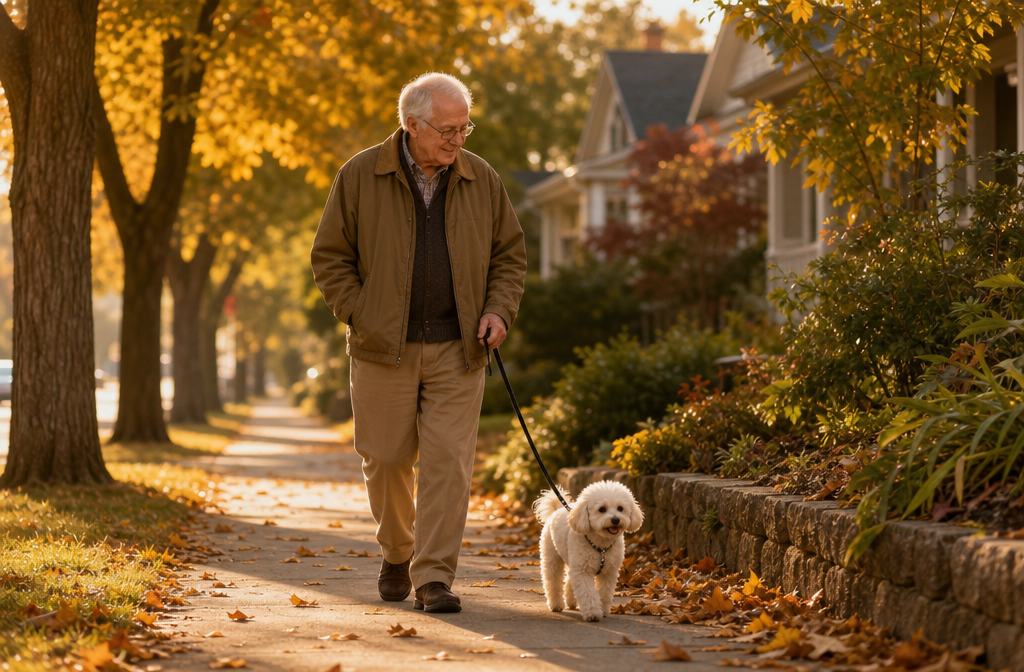
Both are excellent for seniors. Shih Tzus are calmer and require less exercise, making them ideal for less active owners. Toy Poodles are better for seniors who enjoy interactive play and training activities.
How often should I bathe a Toy Poodle or Shih Tzu?
Every 3 to 4 weeks for both breeds. Over-bathing strips natural oils and can worsen skin dryness, which increases dander production.
Are Toy Poodles good with children?
Toy Poodles can be good with gentle, older children. Their small size makes them fragile around toddlers. Supervised interactions are essential.
Do Shih Tzus have breathing problems?
Yes. Shih Tzus are brachycephalic, meaning their flat facial structure can cause breathing difficulties, especially in hot or humid weather. This is a significant health consideration that Toy Poodles don’t share.
Can I keep a Toy Poodle’s coat short to reduce grooming?
Absolutely. A short “puppy clip” or “kennel clip” dramatically reduces daily brushing needs while still maintaining the coat’s low-shedding benefits.
Which breed has fewer genetic health problems?
Neither breed is free of genetic issues, but Toy Poodles from health-tested lines tend to have fewer structural problems because they lack brachycephalic complications.
Is a Shih Tzu or Toy Poodle better for a first-time dog owner?
A Shih Tzu’s lower energy and simpler exercise needs can be easier for first-time owners. But a Toy Poodle’s trainability makes the overall experience smoother if the owner is willing to invest time in training and stimulation.
How do I reduce allergens at home with either breed?
Use HEPA air purifiers, wash dog bedding weekly, bathe the dog every 3 to 4 weeks, and designate dog-free zones (especially bedrooms). These steps significantly reduce allergen levels regardless of breed [4][5].
Conclusion
When comparing Toy Poodles vs Shih Tzu as low-shedding lap dogs for allergy-sensitive homes, the Toy Poodle holds a clear edge for households where allergen control is the top priority. Its single-layer curly coat traps dander more effectively, and its high trainability makes it easier to integrate into daily routines. The Shih Tzu remains a wonderful companion for people with mild or no allergies who prefer a calmer, more independent dog.
Actionable next steps:
- Assess your allergy severity. If moderate to significant, lean toward a Toy Poodle. If mild or nonexistent, either breed works.
- Visit a breeder in person. Spend time with the specific puppy to test your reaction before committing.
- Budget for grooming. Plan for $300 to $600 annually in professional grooming for either breed.
- Prepare your home. Set up HEPA filters, designate dog-free zones, and puppy-proof your space before the dog arrives.
- Start training early. Enroll in puppy classes within the first two weeks of bringing your new dog home, regardless of breed.
For those ready to explore Toy Poodle options, browse our available Toy Poodle puppies for sale or review our frequently asked questions about Toy Poodle puppies.
References
[1] Best Dogs For Allergy Sufferers – https://openfarmpet.com/blogs/news/best-dogs-for-allergy-sufferers