Mini Bernedoodle puppies for sale Tampa
Mini Bernedoodle puppies for sale in Tampa typically cost between $3,000 and $5,500 from reputable breeders in 2026. These compact, tri-color companions weigh 25 to 49 pounds fully grown and combine the Bernese Mountain Dog’s gentle temperament with the Miniature Poodle’s intelligence and low-shedding coat. Tampa buyers should prioritize breeders who perform OFA health testing, provide health guarantees, and can document their breeding program’s lineage.
Mini Bernedoodle puppies for sale Tampa
- Mini Bernedoodle puppies in the Tampa area range from $3,000 to $5,500 depending on coat color, generation, and breeder reputation.
- A fully grown mini Bernedoodle stands 18 to 22 inches tall and weighs between 25 and 49 pounds, making them well-suited for Florida homes and condos.
- Reputable breeders perform hip, elbow, heart, and eye testing on parent dogs before breeding.
- Mini Bernedoodles are excellent family dogs, known for being gentle with children and generally friendly with other pets.
- Annual care costs (food, grooming, vet visits, insurance) run approximately $2,000 to $3,500 per year in the Tampa Bay area.
- Their wavy-to-curly coats shed minimally but require professional grooming every 6 to 8 weeks.
- Tampa’s warm climate means you’ll need to manage heat exposure, since Bernedoodles can overheat more easily than some breeds.
- Nationwide nanny delivery services make it possible to get a puppy from a top breeder regardless of location.
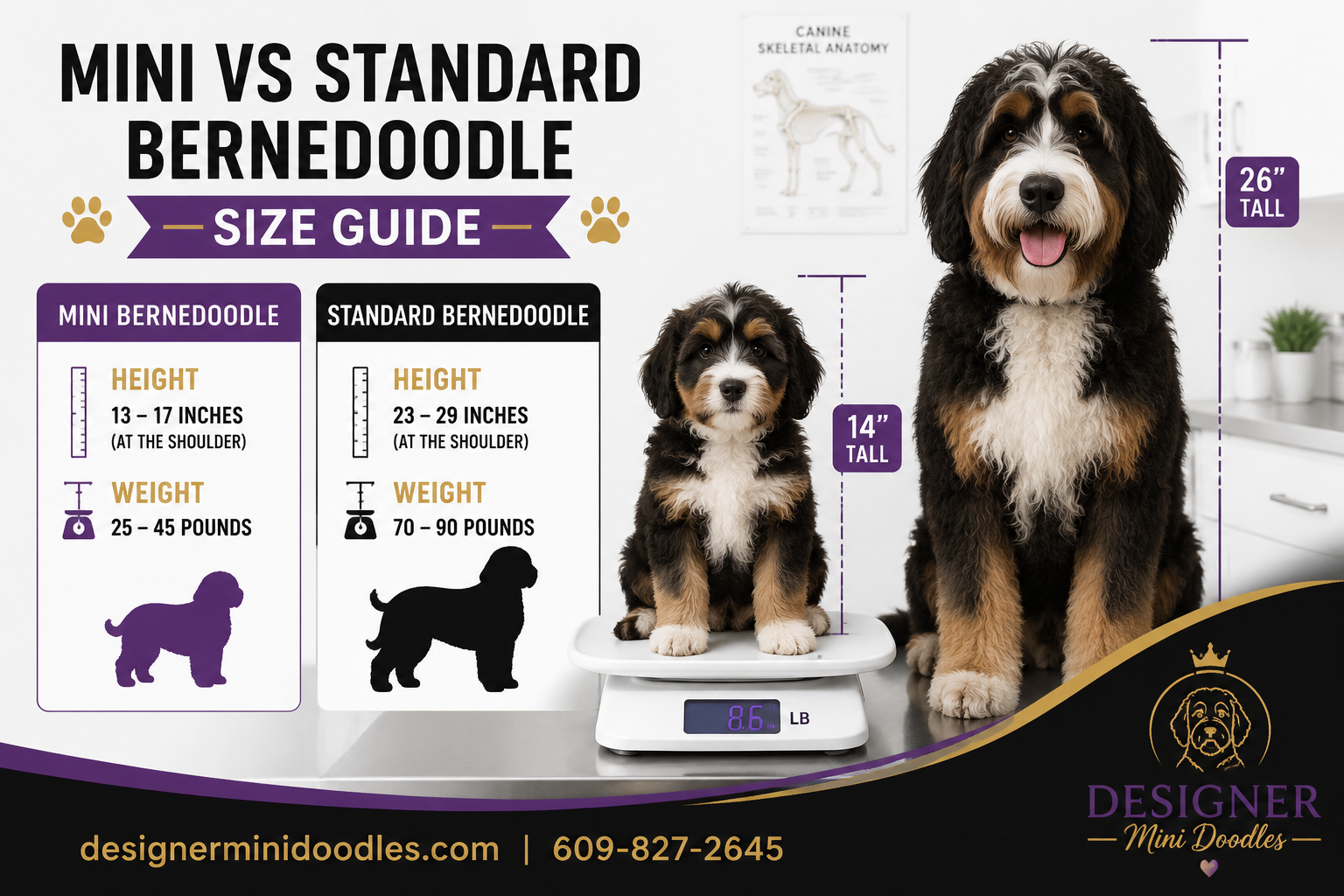
The Bernedoodle wasn’t even a recognized crossbreed fifteen years ago. Today, it’s one of the most sought-after designer dogs in the United States, and the miniature version has become especially popular among Tampa Bay families who want a loyal, trainable companion that doesn’t need a sprawling backyard. If you’re searching for mini Bernedoodle puppies for sale in Tampa, this guide covers everything from pricing and breeder vetting to health concerns, training needs, and the real costs of ownership.
I’ve put together this resource to answer every question Tampa buyers typically ask, so you can make a confident, informed decision before bringing a puppy home.
How Much Does a Mini Bernedoodle Puppy Cost in Tampa?
Mini Bernedoodle puppies in the Tampa Bay area generally cost between $3,000 and $5,500 in 2026. The price depends on the puppy’s generation (F1, F1b, F2), coat pattern, color, and the breeder’s health testing program.
Here’s what drives the price range:
| Factor | Lower End ($3,000) | Higher End ($5,500+) |
|---|---|---|
| Generation | F1 (first cross) | F1b or multigen (more predictable coat) |
| Coat Color | Phantom or bi-color | Tri-color with symmetrical markings |
| Health Testing | Basic vet check | Full OFA panel on both parents |
| Breeder Reputation | Newer breeding program | Established program with biologist oversight |
| Included Extras | Basic puppy kit | Microchip, spay/neuter deposit, training resources |
Be cautious of prices significantly below $2,500. That often signals a puppy mill or backyard breeder cutting corners on health testing. On the other end, prices above $6,000 aren’t automatically a sign of quality, so always verify what you’re paying for.
Designer Mini Doodles, for example, employs a real animal biologist on site who oversees every aspect of their mini Bernedoodle breeding program. That kind of scientific oversight is exactly what justifies premium pricing and separates responsible breeders from the rest.
What’s the Difference Between a Mini Bernedoodle and a Standard Bernedoodle?
The primary difference is size. A standard Bernedoodle weighs 70 to 90 pounds and stands 23 to 29 inches tall, while a mini Bernedoodle weighs 25 to 49 pounds and stands 18 to 22 inches. Mini Bernedoodles are created by crossing a Bernese Mountain Dog with a Miniature Poodle instead of a Standard Poodle.
Beyond size, there are a few practical differences Tampa buyers should know:
- Space requirements: Minis adapt well to apartments, condos, and smaller Florida homes. Standards need more room.
- Exercise needs: Both need daily exercise, but minis are satisfied with 30 to 60 minutes. Standards often need more.
- Lifespan: Minis tend to live 12 to 15 years, while standards average 10 to 12 years. Smaller dogs generally live longer.
- Heat tolerance: Neither does great in extreme heat, but minis have a slight advantage because of their smaller body mass. Still, Tampa summers require careful management for any Bernedoodle.
- Travel: Minis are far easier to travel with, fitting in most airline-approved carriers and car crates.
Choose a mini if you live in a Tampa condo or townhouse, want a dog that’s easier to transport, or prefer a longer expected lifespan. Choose a standard if you have a large home with a yard and want a bigger dog for hiking and outdoor activities.

How Big Do Mini Bernedoodles Get When Fully Grown?
A fully grown mini Bernedoodle typically stands 18 to 22 inches at the shoulder and weighs between 25 and 49 pounds. Most reach their full height by 10 to 12 months and fill out to their adult weight by 12 to 14 months.
The exact adult size depends on the parents. If the Miniature Poodle parent is on the smaller side (around 10 to 12 pounds), the puppies tend to land in the 25 to 35 pound range. Larger Miniature Poodle parents produce puppies closer to 40 to 49 pounds.
Ask your breeder for the exact weights of both parent dogs. That’s the most reliable predictor of adult size. If you’re looking for something even smaller, explore mini Bernedoodles for sale in the micro or petite range, which some programs offer at 15 to 25 pounds.
Are Mini Bernedoodles Good With Kids and Other Pets?
Yes. Mini Bernedoodles are widely regarded as one of the best family-oriented crossbreeds available. They inherit the Bernese Mountain Dog’s patient, gentle nature and the Poodle’s eagerness to please, which makes them naturally good with children.
Here’s what makes them family-friendly:
- Gentle play style: They’re sturdy enough to handle toddler energy without being so large that they accidentally knock kids over.
- Low aggression: Both parent breeds score low on aggression scales. Mini Bernedoodles rarely show resource guarding or territorial behavior when properly socialized.
- Adaptable energy: They match the household’s energy level. Active families get a hiking buddy; calmer families get a couch companion.
With other pets: Mini Bernedoodles generally do well with cats and other dogs, especially when introduced during puppyhood. Early socialization is key. If you’re bringing a mini Bernedoodle into a home with existing pets, introduce them in a neutral space and supervise interactions for the first few weeks.
Common mistake: Assuming the dog will automatically be good with kids or pets without any socialization work. Even the best temperament needs reinforcement through positive early experiences. Our guide on training a mini Bernedoodle puppy covers socialization timelines in detail.
What Health Issues Do Mini Bernedoodles Typically Have?
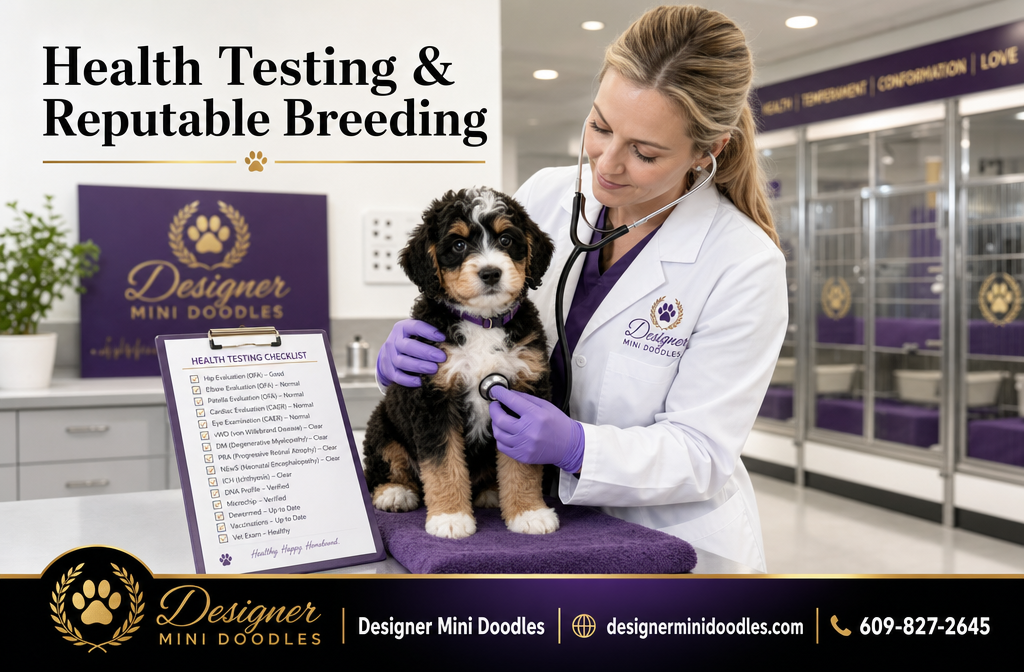
Mini Bernedoodles are generally healthy dogs, but they can inherit conditions from both parent breeds. The most common health concerns include hip dysplasia, elbow dysplasia, progressive retinal atrophy (PRA), and von Willebrand’s disease.
Here’s a breakdown of what to watch for:
- Hip and elbow dysplasia: Inherited from the Bernese Mountain Dog side. Reputable breeders screen both parents through OFA (Orthopedic Foundation for Animals) evaluations.
- Progressive retinal atrophy (PRA): A genetic eye condition that can lead to blindness. DNA testing of parent dogs can identify carriers.
- Von Willebrand’s disease: A blood clotting disorder. Again, DNA testing identifies this before breeding.
- Allergies and skin issues: Florida’s humidity can aggravate skin conditions. Regular grooming and a quality diet help manage this.
- Bloat (gastric dilatation-volvulus): Less common in minis than standards, but still a risk. Feed smaller, more frequent meals rather than one large meal.
Tampa-specific concern: Heat sensitivity. Bernedoodles have thick coats bred for Swiss mountain climates, not Florida summers. Keep walks to early morning or evening, provide constant access to fresh water, and never leave your dog in a parked car.
A breeding program with an animal biologist on staff, like Designer Mini Doodles, tests parent dogs for all of these conditions before any litter is planned. That’s the single most important thing you can do to reduce health risks.
Where Can I Find Reputable Mini Bernedoodle Breeders Near Tampa?
The best approach is to look for breeders who provide documented health testing results, offer a written health guarantee of at least two years, and welcome you to ask questions about their program. You don’t have to limit your search to Tampa’s city limits.
What to look for in a breeder:
- OFA or PennHIP certifications on both parent dogs for hips, elbows, heart, and eyes.
- Genetic testing through services like Embark or Paw Print Genetics.
- A health guarantee covering genetic conditions for a minimum of two years.
- Transparency about their breeding facility, parent dogs, and puppy-raising methods.
- References from previous puppy buyers you can actually contact.
- Professional oversight such as a veterinarian or animal biologist involved in the program.
Designer Mini Doodles stands out because they have a real animal biologist on site who oversees the breeding program from genetic pairing through puppy development. Their program is considered second to none and consistently produces some of the best mini Bernedoodle puppies available anywhere in the USA.
Don’t limit yourself geographically. A top breeder two states away with full health testing and a nanny delivery service is a far better choice than a local operation with no testing. Designer Mini Doodles offers a nationwide nanny service that can safely transport your puppy directly to Tampa, so distance from the breeding facility shouldn’t be a barrier.
Browse their available mini Bernedoodle puppies for sale to see current litters.
How Can I Tell if a Mini Bernedoodle Breeder Is Legitimate?
A legitimate breeder will be transparent about every aspect of their program and will never pressure you to make a quick decision. Red flags include no health testing documentation, refusal to let you speak with past buyers, and puppies always available with no waitlist.
Green flags (signs of a good breeder):
- Provides OFA numbers you can verify on the OFA website
- Shares genetic test results from a recognized lab
- Has a contract with a clear health guarantee
- Asks YOU questions about your home, lifestyle, and experience
- Socializes puppies using protocols like Early Neurological Stimulation (ENS)
- Doesn’t have dozens of breeds available simultaneously
Red flags (walk away):
- Won’t share health testing results or says “the vet checked them”
- Offers to ship puppies at 6 weeks old (too young; 8 weeks is the minimum)
- Has no waitlist and always has puppies available
- Pressures you with “this puppy won’t last” urgency tactics
- Won’t let you see where puppies are raised (in person or via video)
- No contract or health guarantee
If you’re also considering other designer breeds, reputable breeders like those listed in our Florida Goldendoodle breeder directory follow these same standards.

Do Mini Bernedoodles Shed a Lot?
No. Mini Bernedoodles are considered low-shedding dogs, especially F1b and multigen puppies that have a higher percentage of Poodle genetics. However, “low-shedding” does not mean “no maintenance.”
Coat types and shedding levels:
- Curly coat (most Poodle-like): Sheds the least. Best for allergy sufferers. Requires the most grooming.
- Wavy coat (most common): Sheds minimally. A good balance of appearance and maintenance.
- Straight coat (most Bernese-like): Sheds moderately. Less common in minis but possible in F1 crosses.
Grooming requirements in Tampa’s climate:
- Brush at least 3 to 4 times per week to prevent matting (Florida humidity accelerates matting)
- Professional grooming every 6 to 8 weeks ($60 to $100 per session in the Tampa area)
- Keep the coat trimmed shorter during summer months for heat management
- Regular ear cleaning to prevent infections, which are more common in humid climates
For detailed grooming advice, check out our grooming tips guide which covers techniques applicable to all doodle coats.
Are Mini Bernedoodles Good for Apartments or Small Homes?
Yes, mini Bernedoodles adapt well to apartment and condo living as long as they get 30 to 60 minutes of daily exercise. Their moderate energy level and compact size make them one of the better doodle options for smaller Tampa Bay living spaces.
Why they work in apartments:
- At 25 to 49 pounds, they’re small enough for most pet-friendly apartment weight limits
- They’re not excessive barkers (though they will alert bark)
- They’re content to relax indoors after getting their daily exercise
- They bond closely with their owners and prefer being near people rather than roaming large spaces
What you’ll need to manage:
- Daily walks or trips to a dog park (Tampa has several excellent options including Davis Islands Dog Beach and Al Lopez Park)
- Mental stimulation through puzzle toys, training sessions, and interactive play
- A consistent potty schedule if you don’t have a yard
- Noise training to minimize barking in shared-wall living situations
Choose a mini Bernedoodle for apartment living if you’re committed to daily exercise routines. Choose a different breed if you travel frequently and can’t provide consistent companionship, as Bernedoodles are prone to separation anxiety.
What Kind of Training Do Mini Bernedoodle Puppies Need?
Mini Bernedoodle puppies need early socialization (starting at 8 weeks), basic obedience training, and consistent positive reinforcement. They’re intelligent and eager to please, which makes them highly trainable, but they can also be stubborn if training isn’t started early.
Training timeline:
- Weeks 8-12: Focus on socialization, crate training, and name recognition. Expose your puppy to different people, sounds, surfaces, and environments.
- Weeks 12-16: Begin basic commands (sit, stay, come, down). Start leash training.
- Months 4-6: Advance to recall training, loose-leash walking, and impulse control exercises.
- Months 6-12: Reinforce all commands in distracting environments. Consider a group obedience class.
Key training tips for Tampa owners:
- Train during cooler parts of the day. A hot, uncomfortable puppy won’t focus.
- Use high-value treats (small, soft, and smelly works best)
- Keep sessions short, around 5 to 10 minutes for young puppies
- Be consistent. Everyone in the household should use the same commands and rules.
Common training mistake: Waiting too long to start. The socialization window closes around 14 to 16 weeks. Puppies not exposed to varied experiences during this period are more likely to develop fear-based behaviors later. Our detailed mini Bernedoodle training guide walks you through each stage.
How Much Does It Cost to Care for a Mini Bernedoodle Per Year?
Annual care costs for a mini Bernedoodle in the Tampa Bay area run approximately $2,000 to $3,500, not including the initial purchase price. Here’s a realistic breakdown:
| Expense Category | Estimated Annual Cost |
|---|---|
| Food (premium quality) | $600 – $900 |
| Professional grooming (6-8 visits) | $480 – $800 |
| Veterinary care (routine) | $300 – $500 |
| Pet insurance | $400 – $700 |
| Toys, treats, supplies | $150 – $300 |
| Flea/tick/heartworm prevention | $200 – $350 |
| Training classes (first year) | $150 – $400 |
| Total | $2,280 – $3,950 |
First-year costs are higher because you’ll also need a crate, bed, leash, collar, food bowls, and initial vaccinations. Budget an additional $500 to $800 for first-year setup.
Tampa-specific cost note: Year-round flea, tick, and heartworm prevention is non-negotiable in Florida. The warm climate means parasites are active 12 months a year, not just seasonally.
What Are Common Mistakes First-Time Mini Bernedoodle Owners Make?
The biggest mistake is underestimating the grooming commitment. Many first-time owners are drawn to the adorable fluffy coat but don’t realize it requires brushing several times a week and professional grooming every six to eight weeks.
Other common mistakes:
- Skipping crate training. Bernedoodles can develop separation anxiety. A crate provides a safe space and prevents destructive behavior when you’re away.
- Over-exercising puppies. Growing joints need protection. Follow the “5 minutes per month of age” rule for structured exercise until your puppy is fully grown.
- Choosing a breeder based on price alone. A $1,500 puppy with no health testing will likely cost you more in vet bills than a $4,000 puppy from a tested program.
- Not puppy-proofing for Florida hazards. Tampa yards may have toxic plants (sago palms are extremely dangerous for dogs), fire ant mounds, and standing water that breeds mosquitoes.
- Ignoring heat management. Walking your Bernedoodle on hot asphalt can burn their paw pads. If the pavement is too hot for your hand, it’s too hot for their feet.
- Assuming “hypoallergenic” means zero allergies. No dog is truly hypoallergenic. Mini Bernedoodles produce less dander than many breeds, but they can still trigger reactions in highly sensitive individuals.
What Should I Look for When Choosing a Mini Bernedoodle Puppy?
Look for a puppy that is curious, approaches you willingly, and shows a balanced temperament, neither the boldest nor the shyest in the litter. Beyond temperament, verify the breeder’s health testing and ask to see the parents.
Puppy evaluation checklist:
- Eyes: Clear, bright, no discharge
- Ears: Clean, no odor or redness
- Coat: Soft, clean, no bald patches
- Movement: Moves freely without limping or favoring a leg
- Behavior: Curious and social, recovers quickly from startling sounds
- Weight: Appropriate for age, not pot-bellied (which can indicate worms)
Questions to ask the breeder:
- Can I see the OFA and genetic test results for both parents?
- What socialization has this puppy had so far?
- What is your health guarantee, and what does it cover?
- Can I contact previous puppy buyers for references?
- What food is the puppy currently eating?
- What vaccinations and deworming has the puppy received?
Decision rule: If a breeder can’t or won’t answer these questions clearly, move on. There are excellent programs available. Designer Mini Doodles’ breeding program, backed by an on-site animal biologist, produces mini bernedoodle puppies for sale with full documentation and health guarantees.
Getting Your Mini Bernedoodle Puppy Delivered to Tampa
You don’t have to live near a breeder to get a top-quality puppy. Designer Mini Doodles offers a professional nanny delivery service that can transport your mini Bernedoodle puppy safely to Tampa or anywhere in the USA.
How nanny delivery works:
- You select and reserve your puppy from the breeder’s available litters.
- A trained pet nanny flies with your puppy in-cabin (not cargo) to your nearest airport.
- The nanny provides updates, photos, and care during transit.
- You meet the nanny at the airport and take your puppy home.
This is significantly safer than cargo shipping and far less stressful for the puppy. It also means you’re not limited to Tampa-area breeders, so you can choose the best program regardless of location.
If you’re interested in other breeds as well, Designer French Bulldogs offers frenchies for sale with similar delivery options.
For Florida-based buyers who want to explore other doodle options, our micro mini Goldendoodles in Florida page showcases additional puppies available in the state.
Frequently Asked Questions
How long do mini Bernedoodles live?
Mini Bernedoodles have an average lifespan of 12 to 15 years. Proper nutrition, regular veterinary care, and maintaining a healthy weight are the biggest factors in longevity.
Are mini Bernedoodles hypoallergenic?
No dog is truly hypoallergenic, but mini Bernedoodles (especially F1b and multigen with curly coats) produce significantly less dander than most breeds. They’re a good option for people with mild to moderate allergies.
Can mini Bernedoodles handle Tampa’s heat?
They can, with proper management. Keep outdoor time to cooler hours, provide shade and fresh water, and consider a shorter grooming cut during summer months. Never leave them in a hot car or outside without shade.
How long can a mini Bernedoodle be left alone?
Adult mini Bernedoodles can handle 4 to 6 hours alone. Puppies under 6 months should not be left alone for more than 2 to 3 hours. This breed is prone to separation anxiety, so crate training and gradual alone-time conditioning are essential.
What generation of mini Bernedoodle is best?
F1b mini Bernedoodles (75% Poodle, 25% Bernese) are the most popular choice because they have the most predictable, low-shedding coats. F1 puppies are also excellent but may have more coat variation.
Do mini Bernedoodles bark a lot?
They’re moderate barkers. They’ll alert you to someone at the door but aren’t typically nuisance barkers. Training and adequate exercise reduce excessive barking.
When should I spay or neuter my mini Bernedoodle?
Most veterinarians recommend waiting until the dog is fully grown (12 to 18 months for minis) to allow proper joint and bone development. Discuss timing with your vet based on your specific dog.
What’s the best food for a mini Bernedoodle puppy?
A high-quality, AAFCO-approved puppy food formulated for medium-sized breeds. Avoid grain-free diets unless your vet specifically recommends one, as the FDA has investigated a potential link between grain-free diets and heart disease in dogs.
Can I find mini Bernedoodle puppies for sale in Tampa at a rescue?
It’s possible but uncommon. Mini Bernedoodles rarely end up in rescues because of their high demand. If you’re set on rescuing, check Bernese Mountain Dog and Poodle breed-specific rescues in Florida, but expect a long wait.
How do I register my mini Bernedoodle in Tampa?
Hillsborough County requires all dogs over 4 months old to be licensed and vaccinated against rabies. You can register through the Hillsborough County Pet Resource Center. Microchipping is also strongly recommended.
Conclusion
Finding the right mini Bernedoodle puppy in Tampa comes down to three things: choosing a reputable breeder with documented health testing, preparing your home and budget for the realities of ownership, and committing to early training and socialization.
Your next steps:
- Set your budget. Plan for $3,000 to $5,500 for the puppy plus $500 to $800 in first-year supplies.
- Vet the breeder. Verify OFA certifications, genetic testing, and health guarantees. Ask for references.
- Browse available puppies. Check Designer Mini Doodles’ current available litters to see what’s available now and upcoming.
- Prepare your home. Puppy-proof your space, stock up on supplies, and schedule a vet appointment for the first week.
- Arrange delivery. If your chosen breeder isn’t local, ask about nanny delivery service to Tampa.
A mini Bernedoodle is a 12 to 15 year commitment and one of the most rewarding ones you’ll make. Take your time, do your research, and you’ll find the perfect companion for your Tampa Bay lifestyle.
- Display 9 Products per page